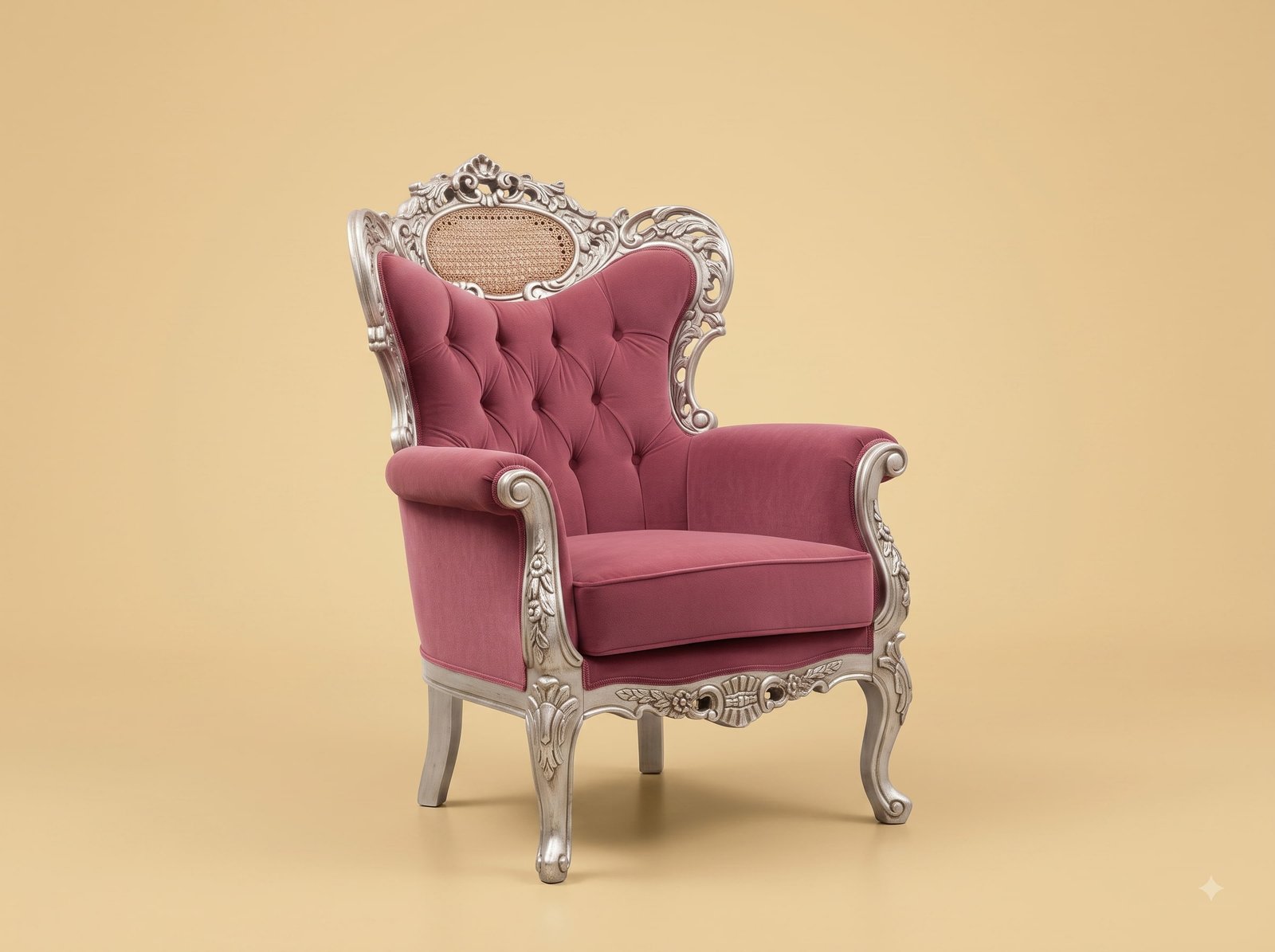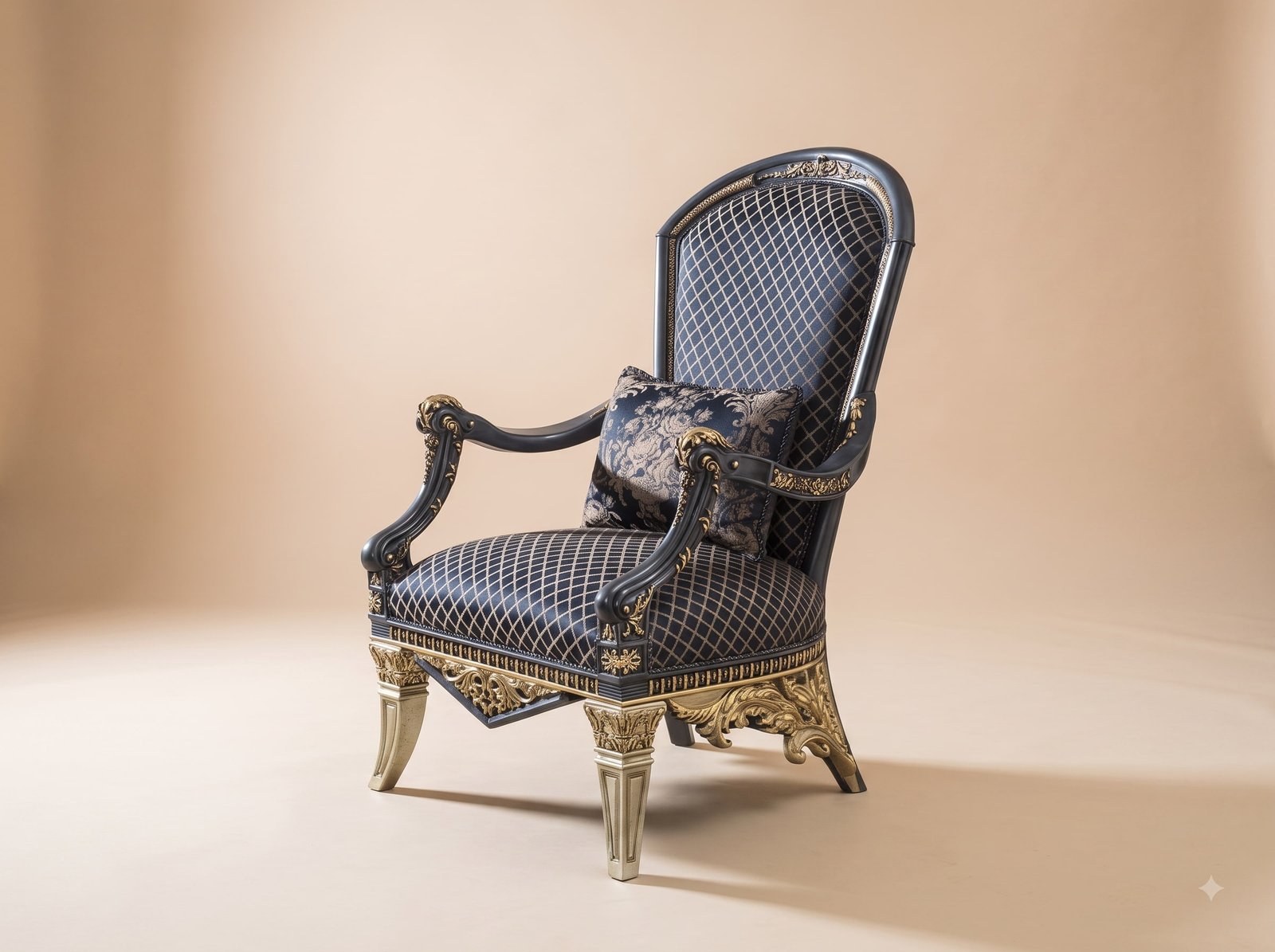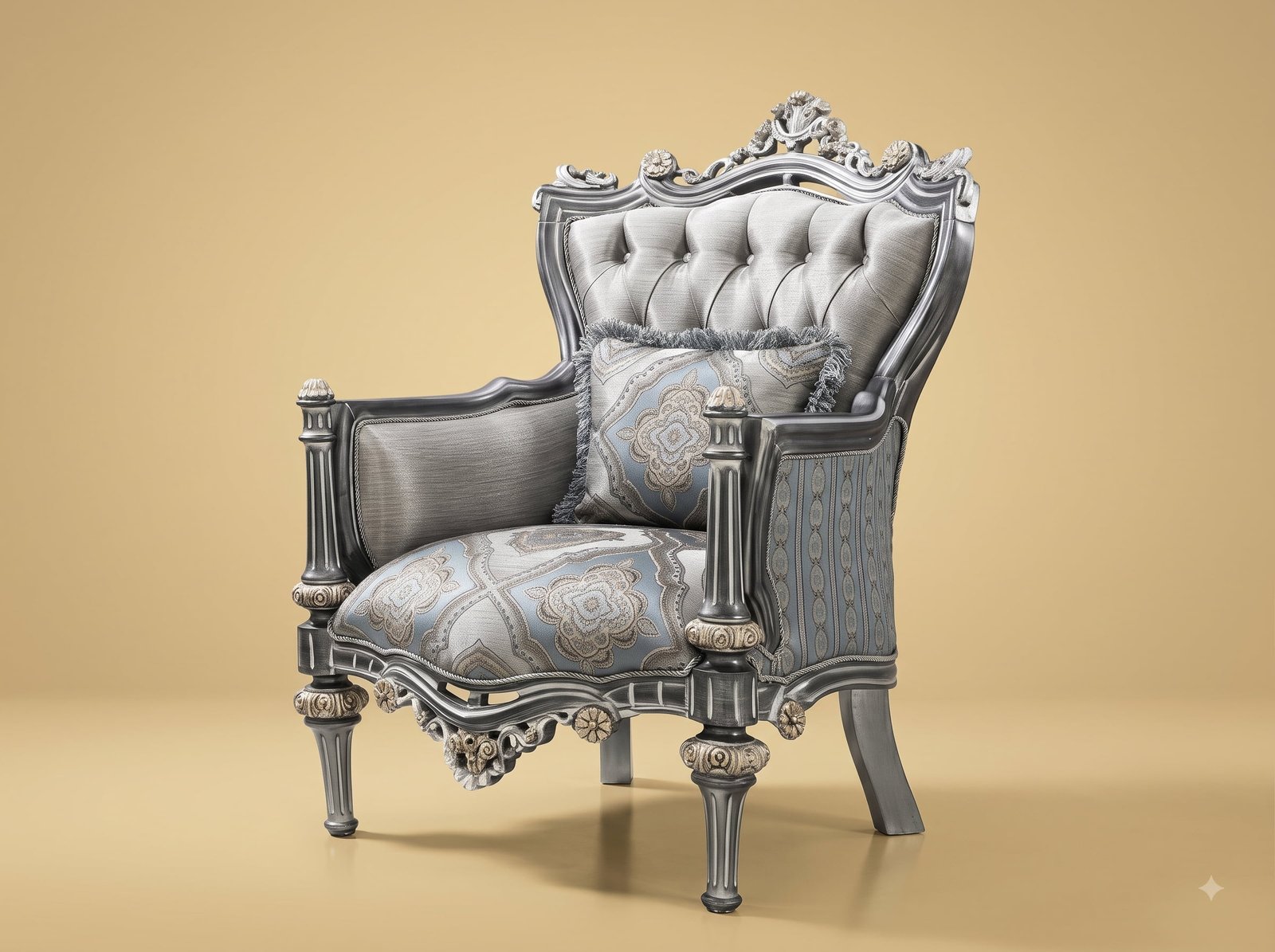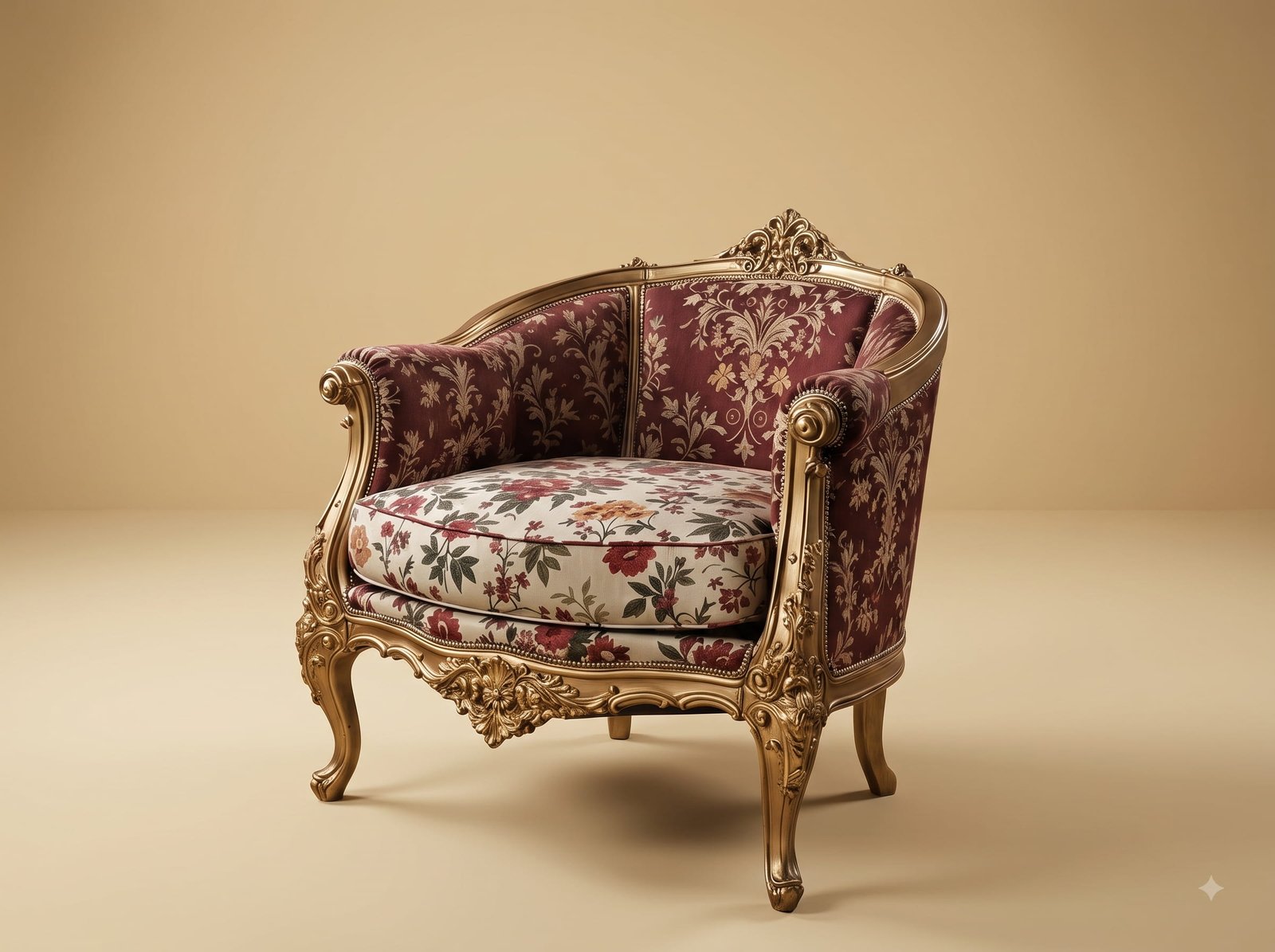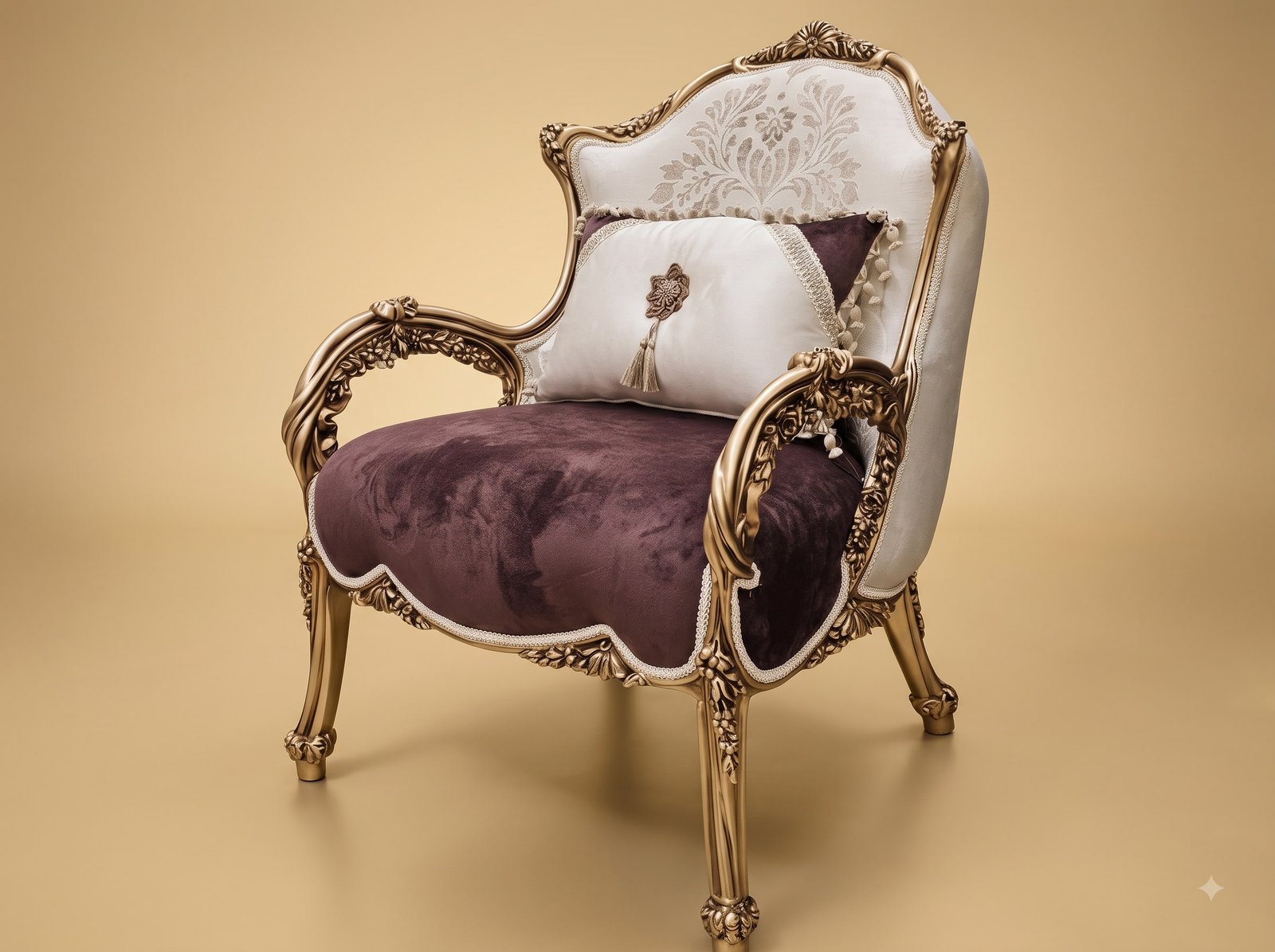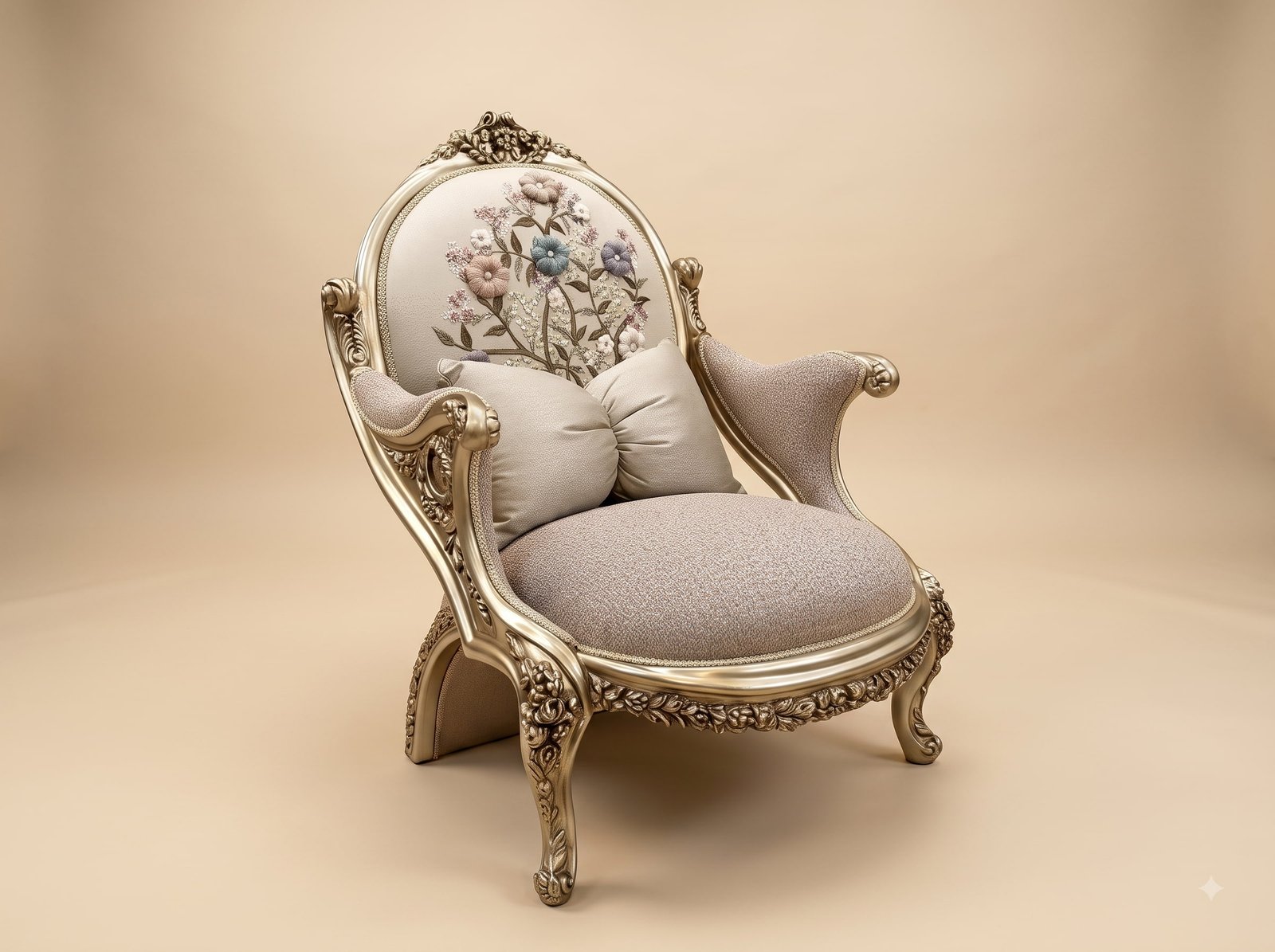
The embroidery on this chair is finished long before the chair is.
It is worked flat, stretched on a frame, while the seat and back are still bare wood. That is the only way to do raised thread work properly - the ground has to be under even tension across its whole surface, and you cannot tension cloth that is already stretched over a padded chair back.
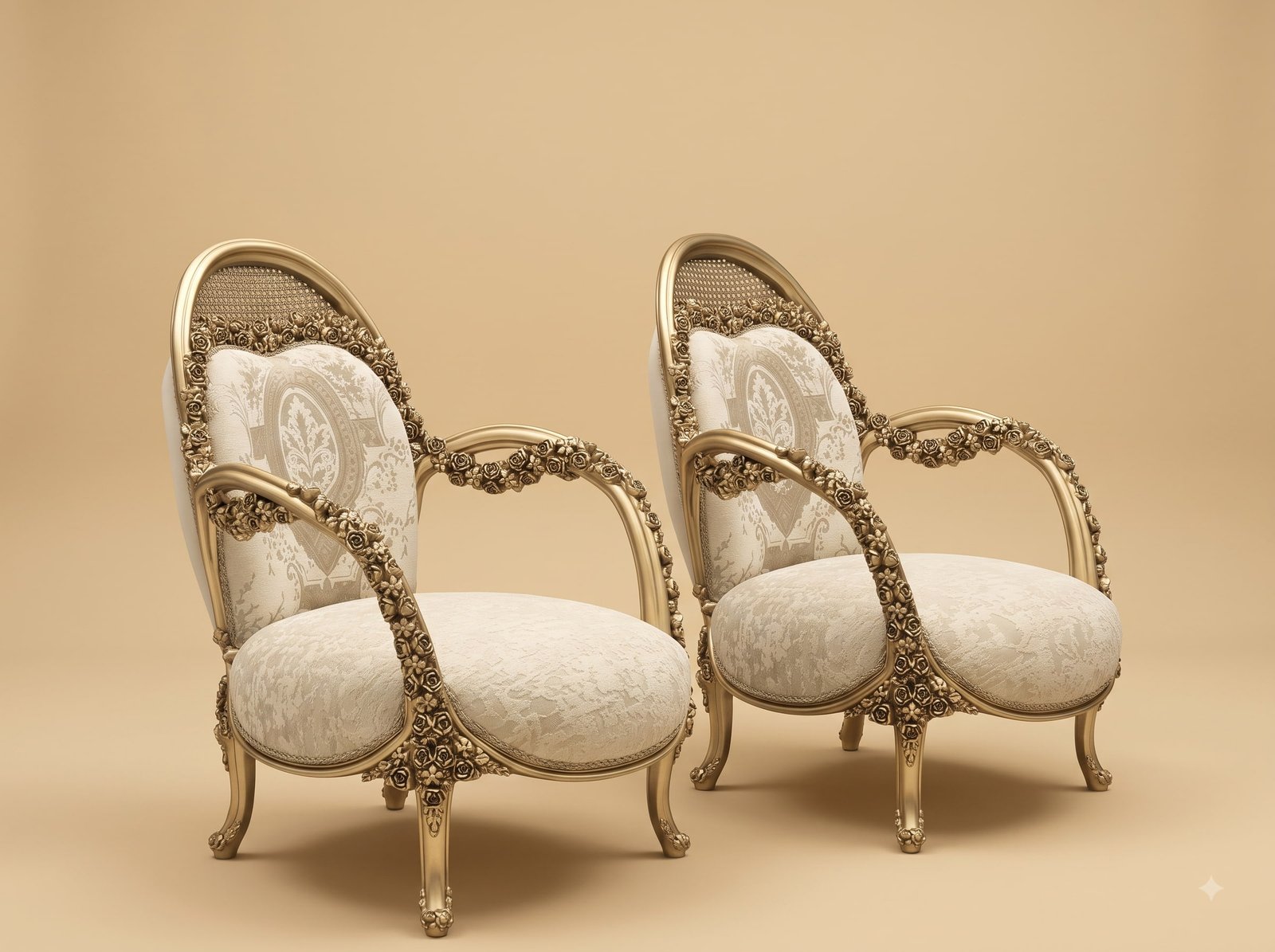
Which creates the problem the embroiderer has to solve at the start: the panel will not stay flat. It is going to be pulled over a domed, padded oval, and every part of it will move outward as it goes on. A design laid out to look correct on the flat comes out stretched at the centre and cramped at the edges once it is upholstered.
So the design is drawn to the finished shape, not to the flat cloth. The centre of the spray is set slightly smaller than it will appear, the outer stems are spaced a little wider, and the whole composition is planned so that it opens into balance at the moment it is pulled over the pad.
Raised work adds one more constraint: threads that stand off the surface cannot be dragged. So the panel is fitted last, worked outward from the centre by hand, with the tension taken through the plain ground between the stems and never across a bloom.
It is why an embroidered chair back is a different order of work from a printed or woven one.
 Ask Price On WhatsApp