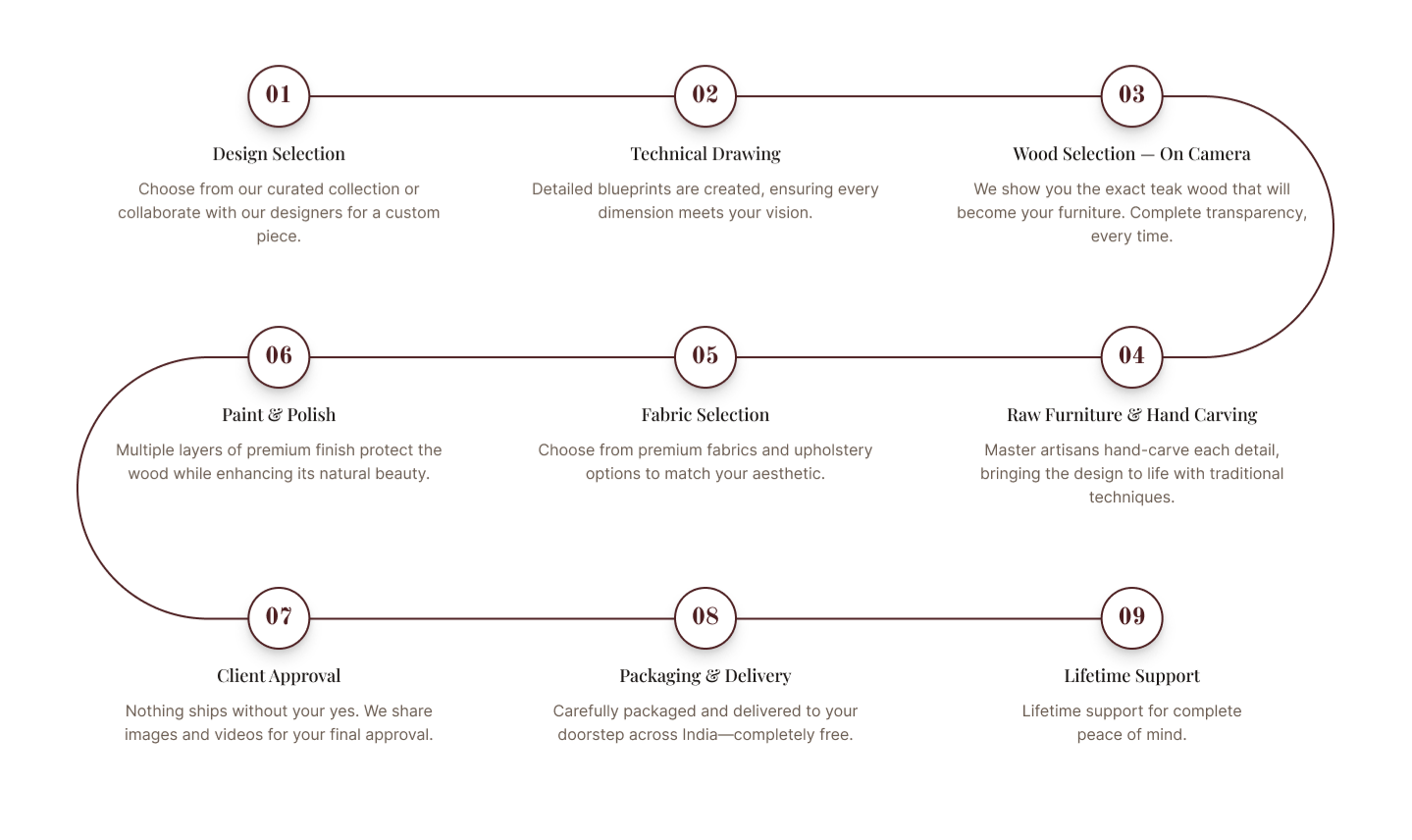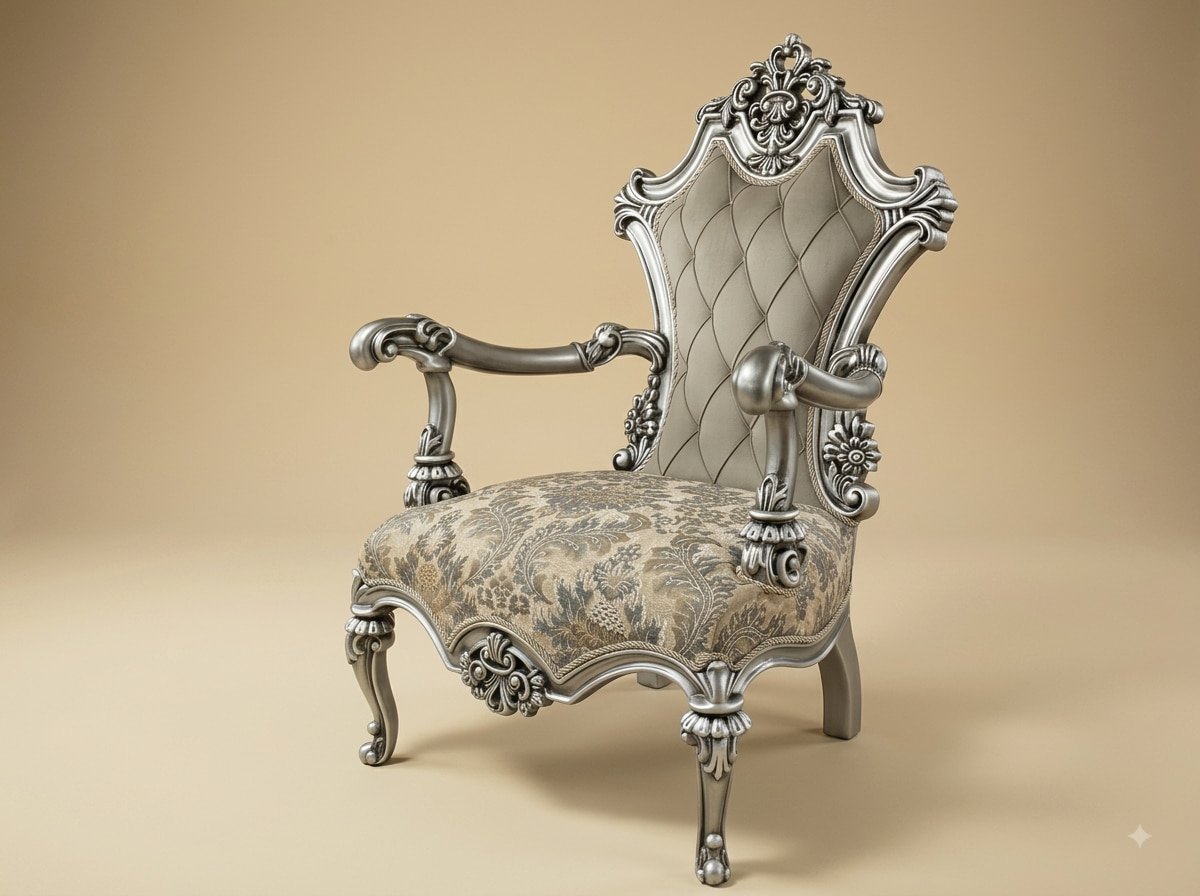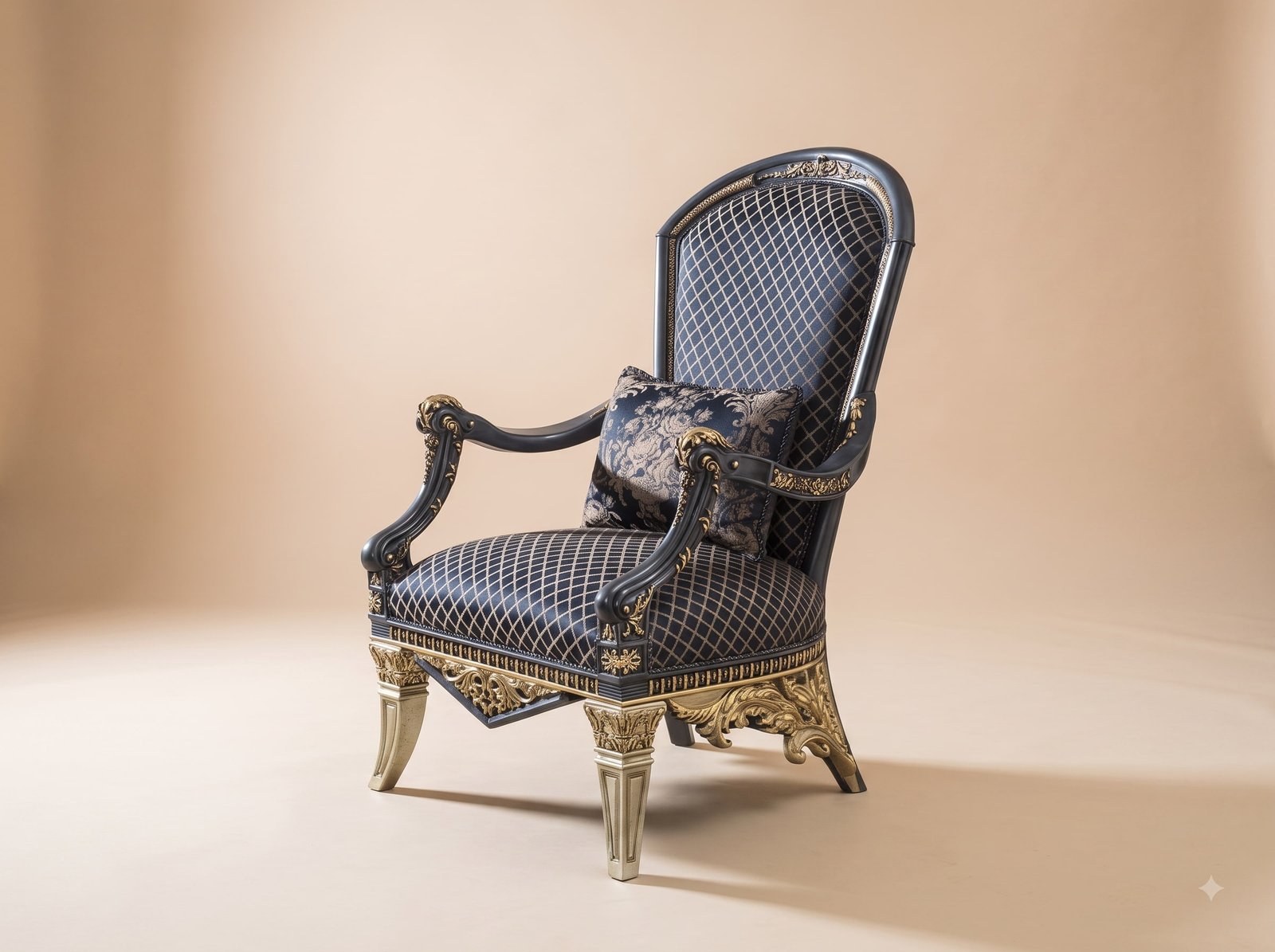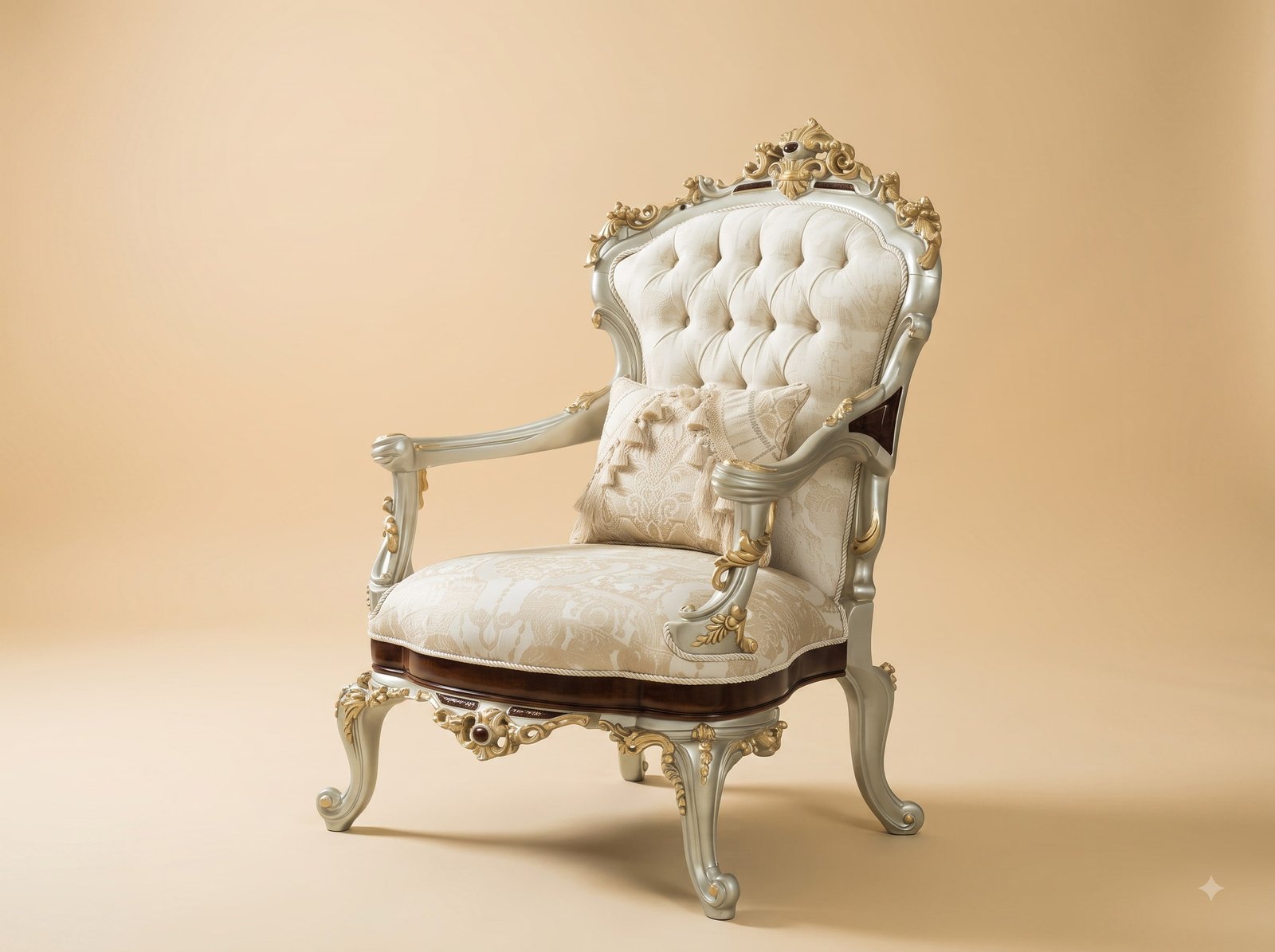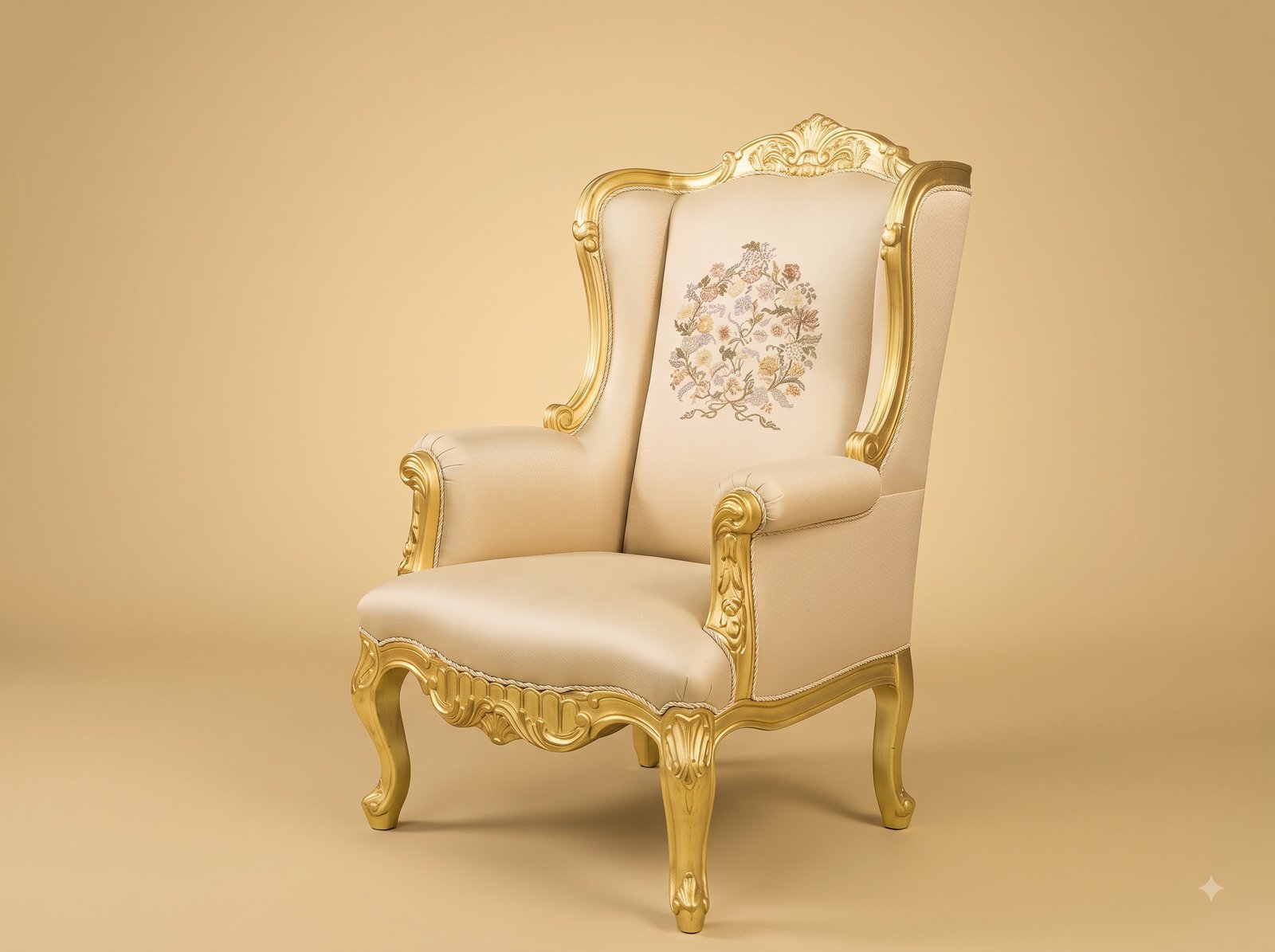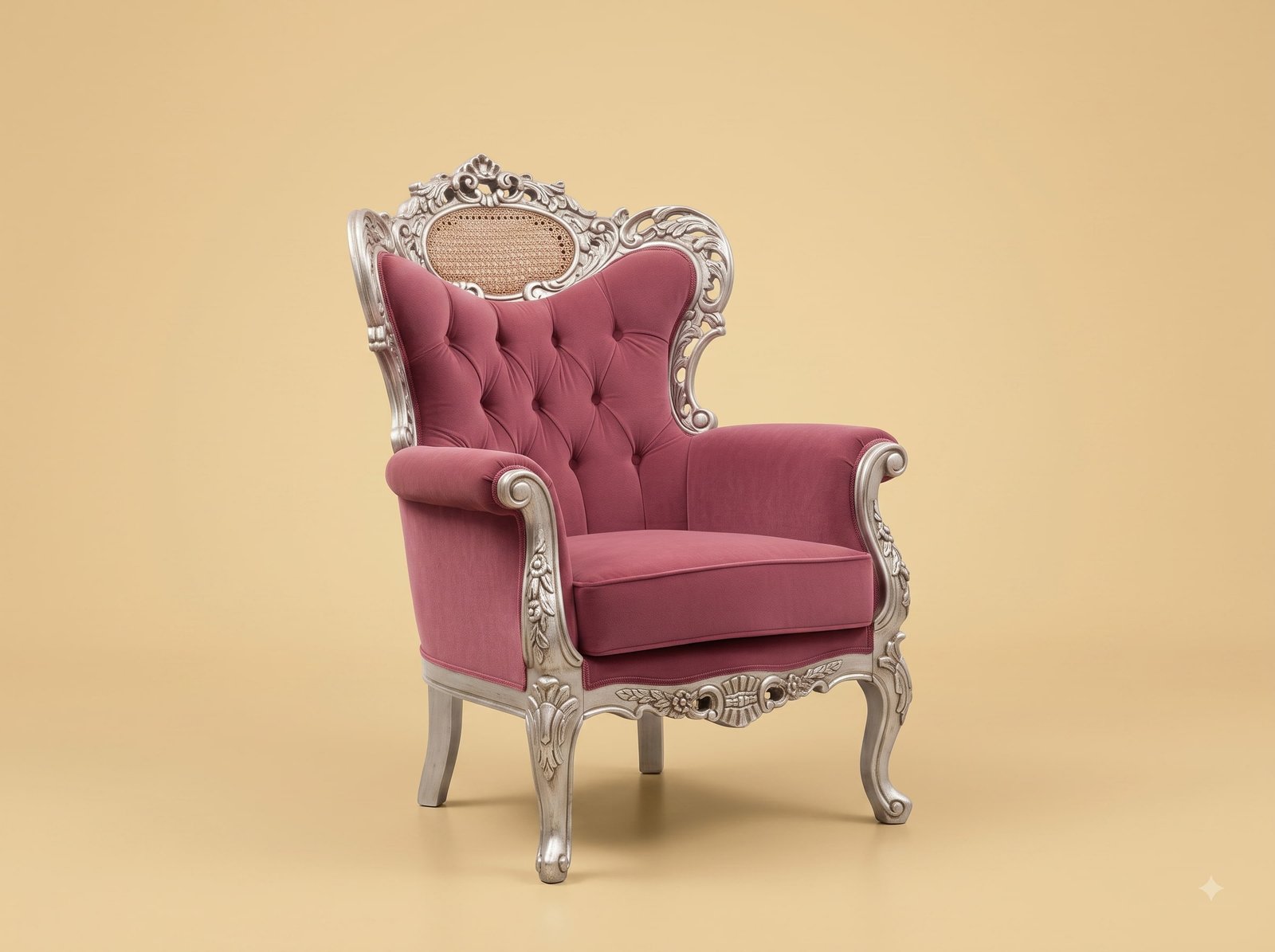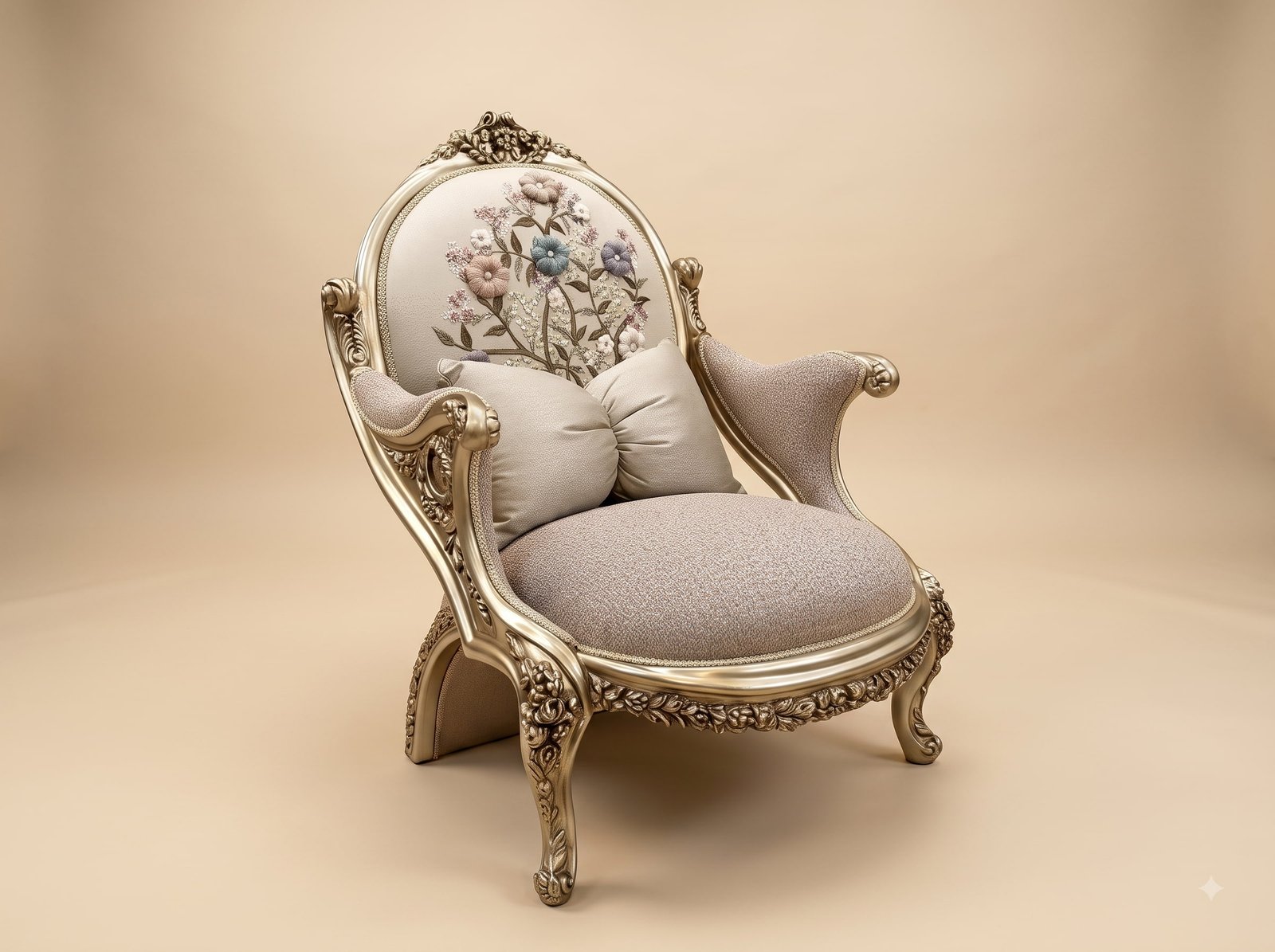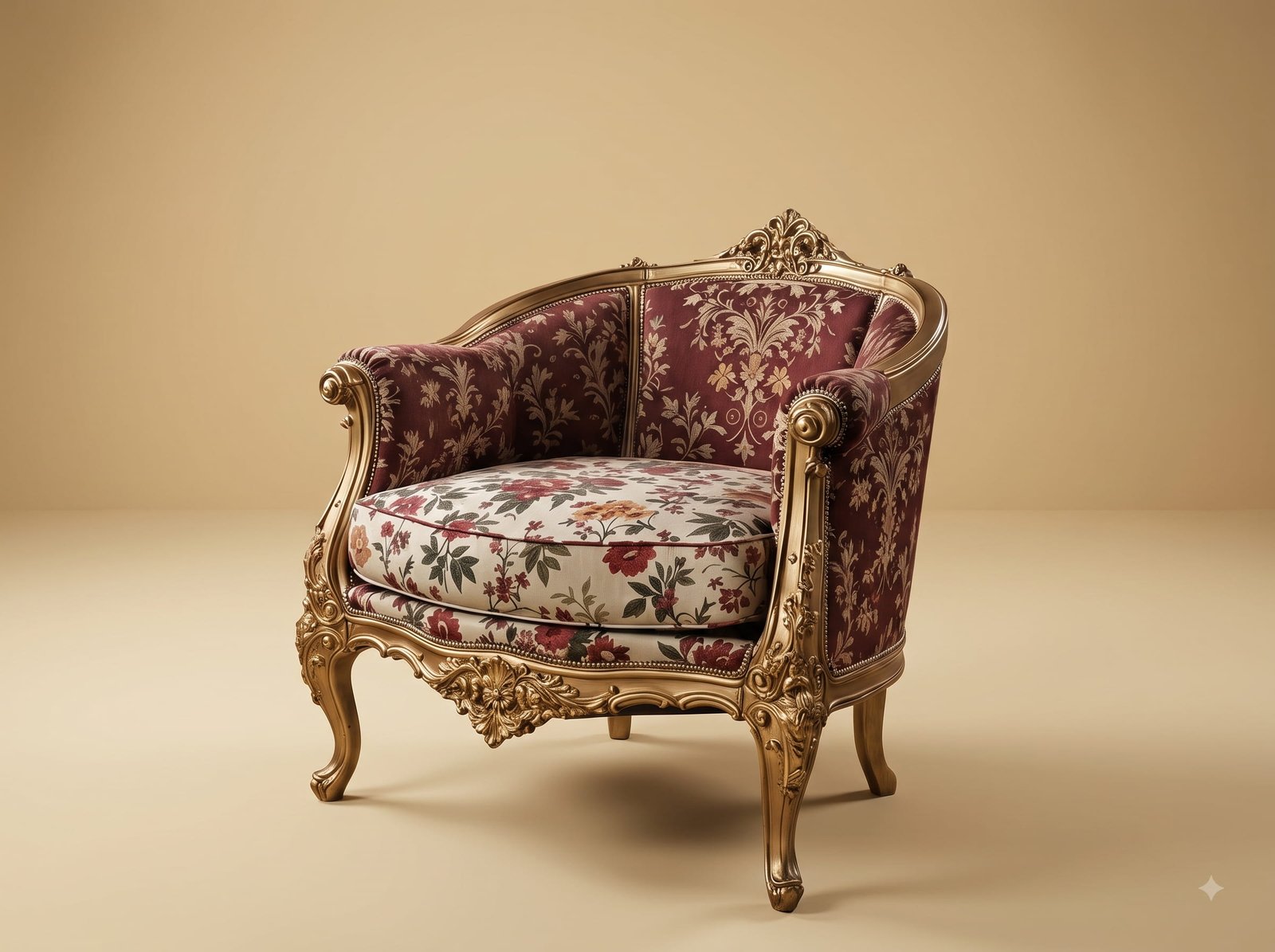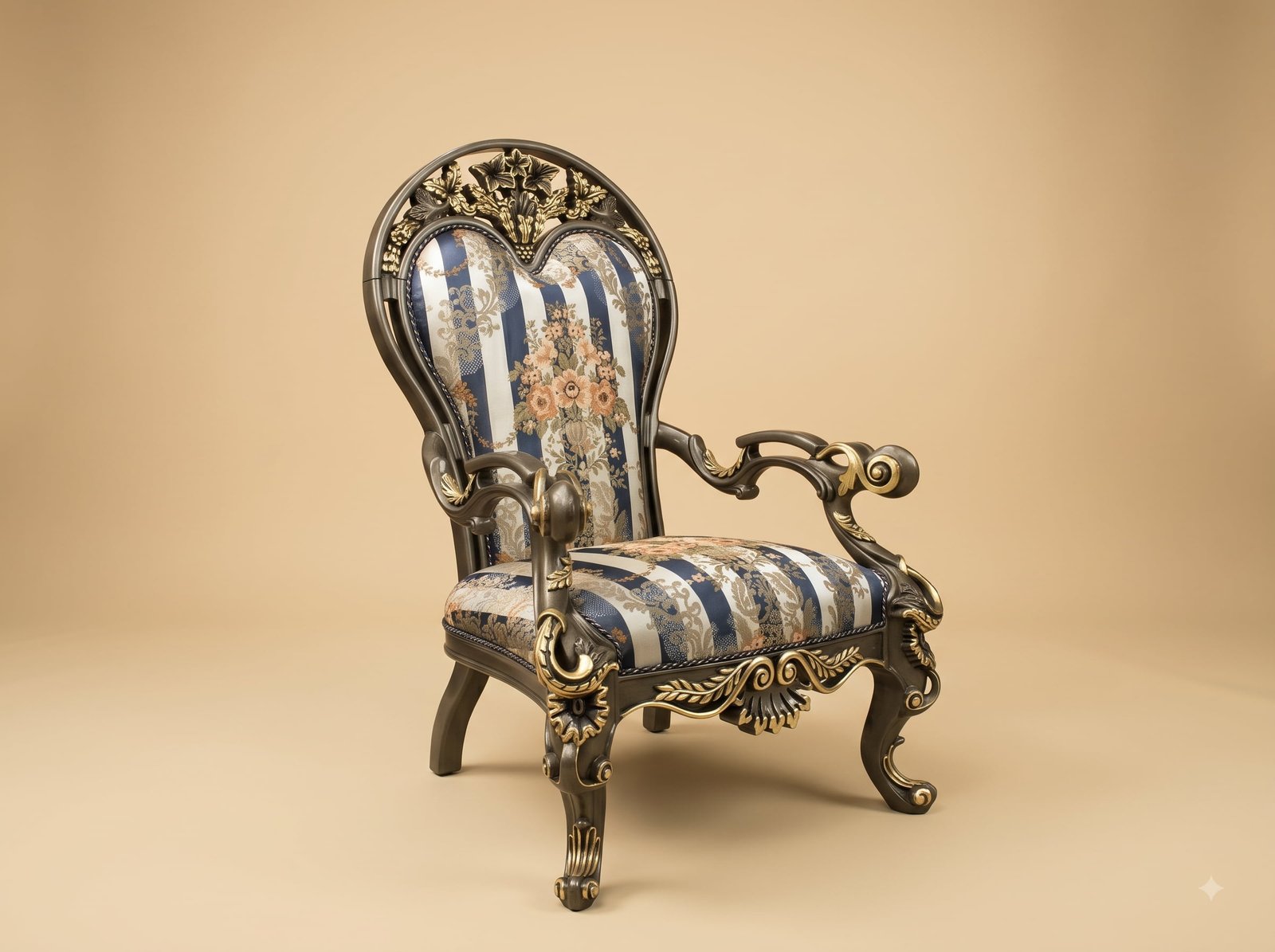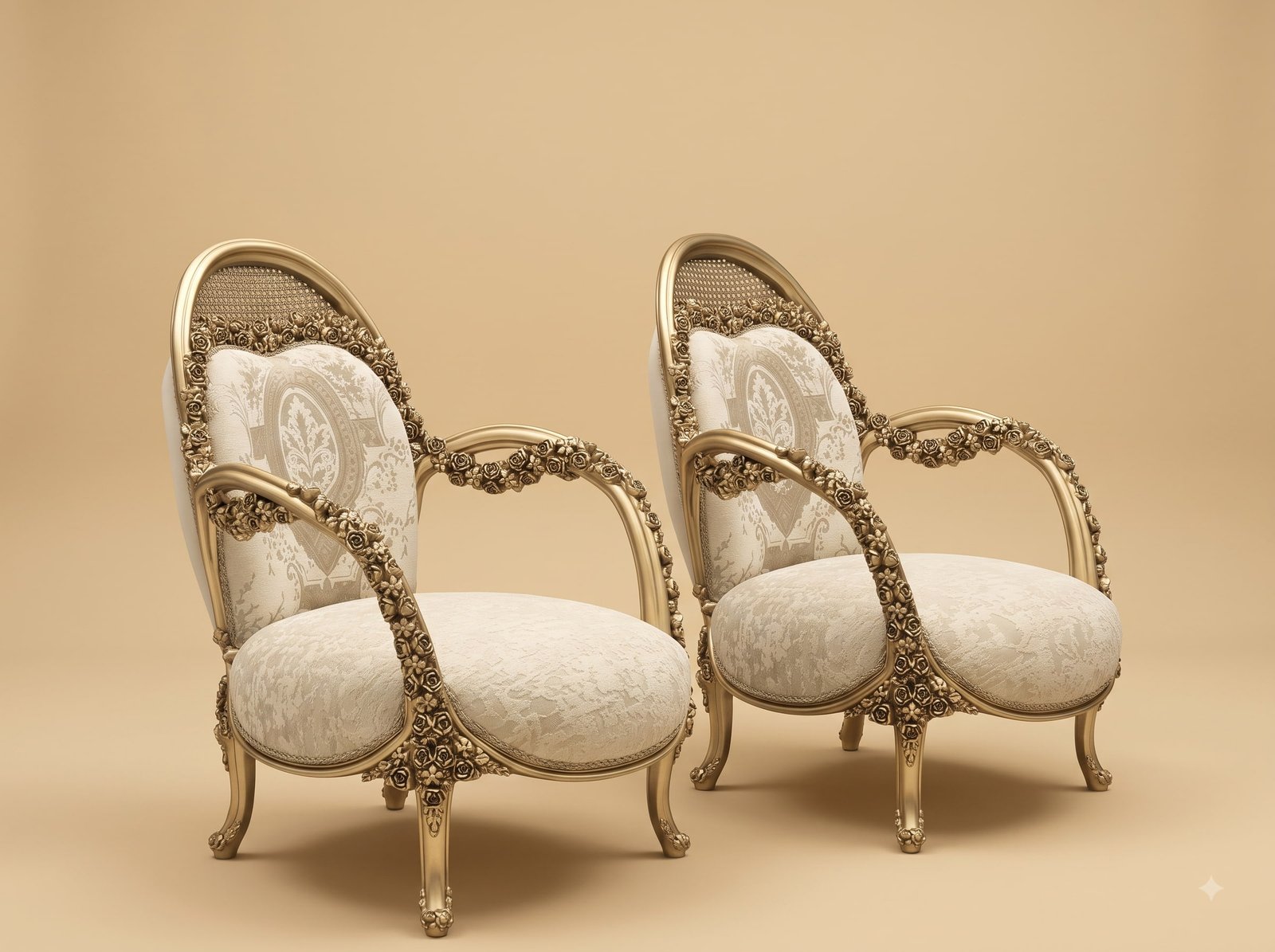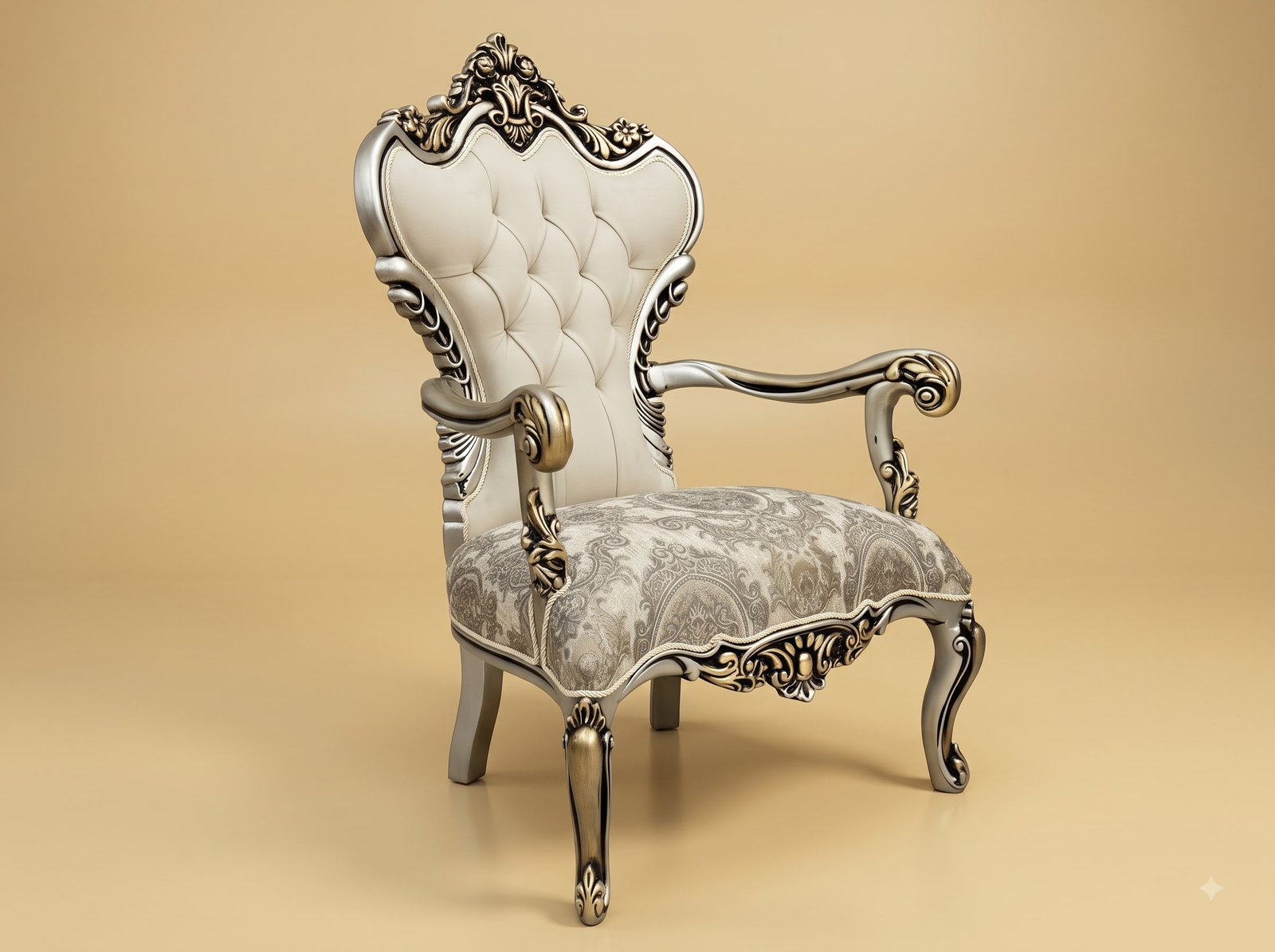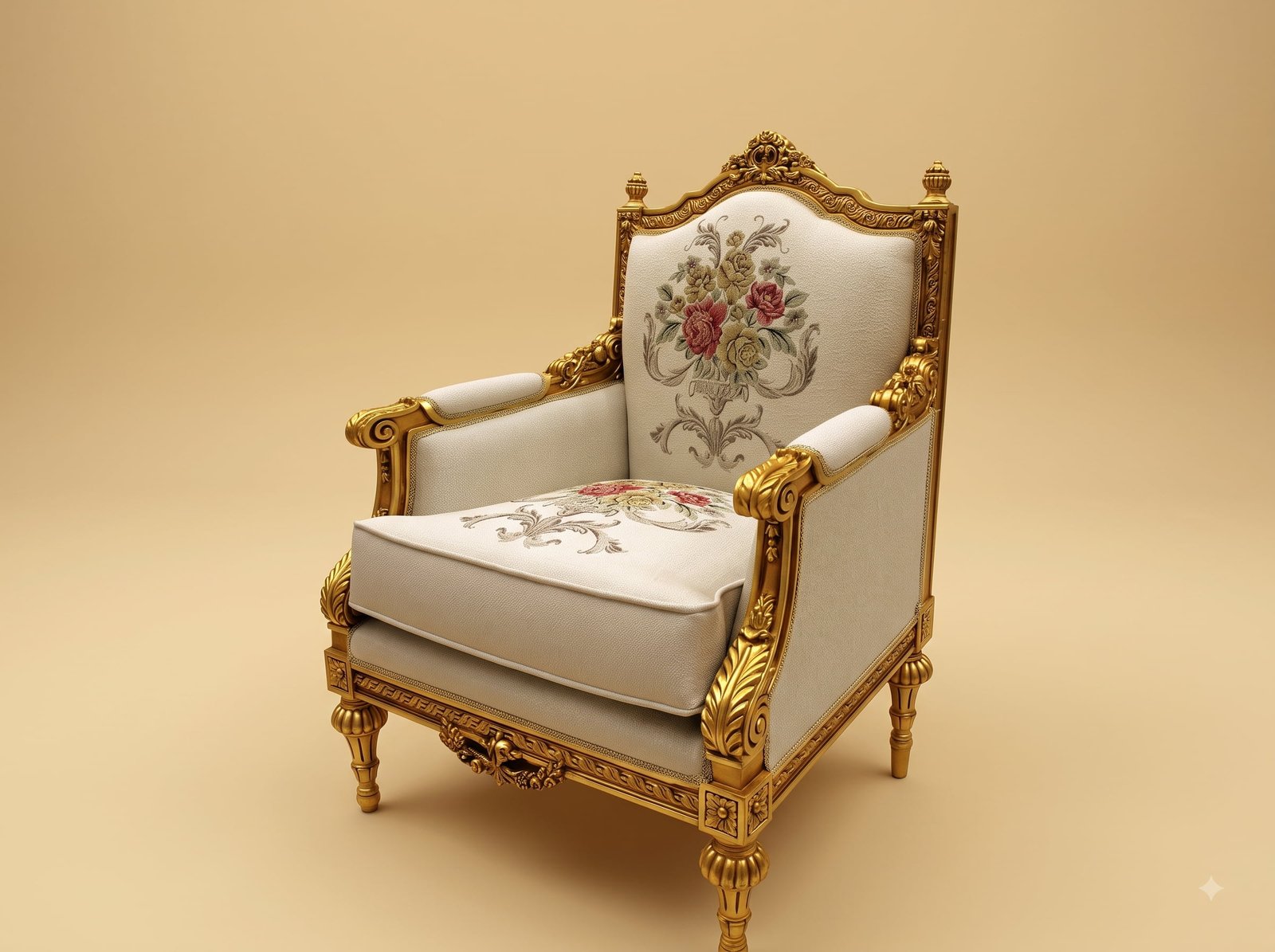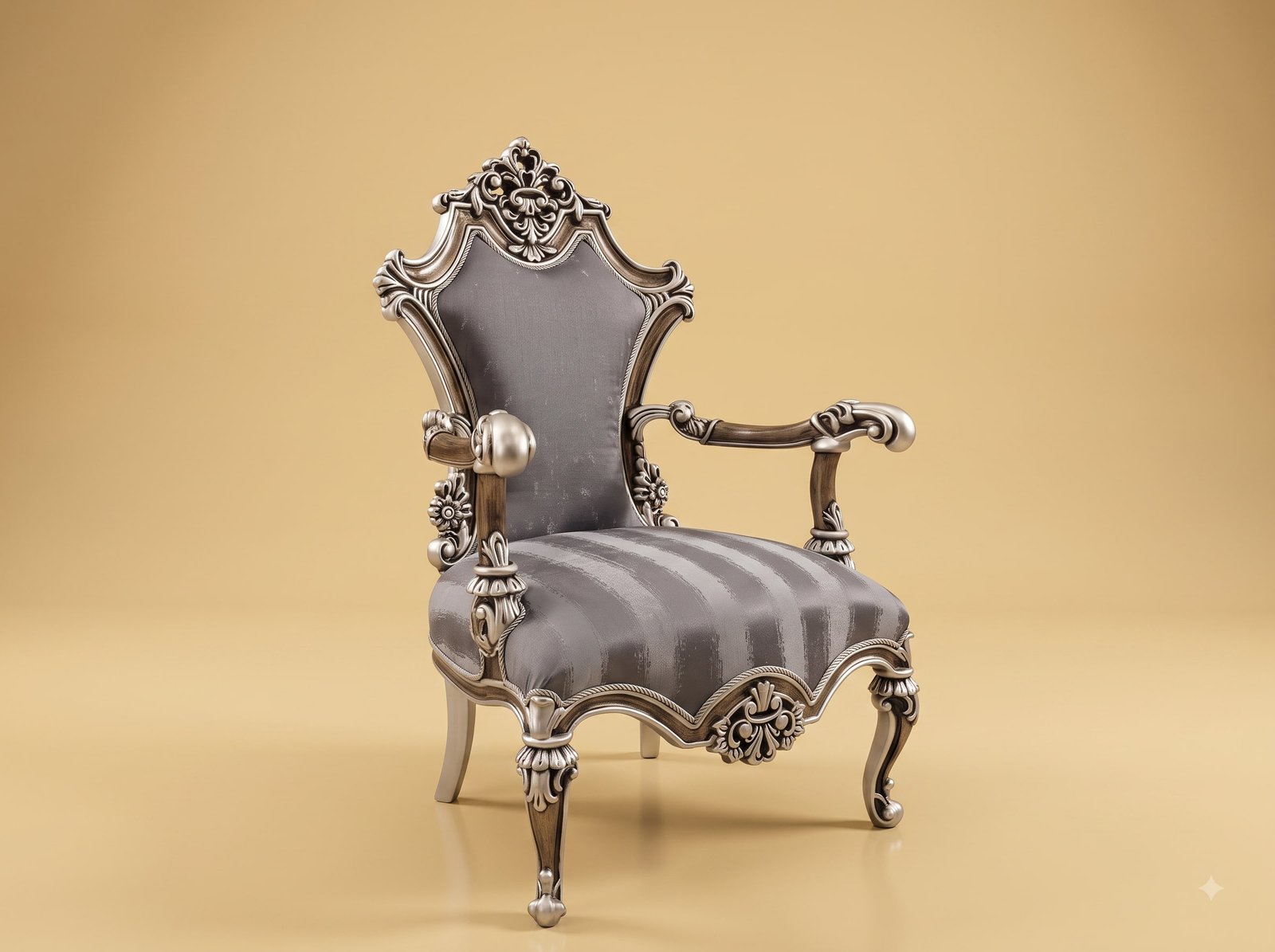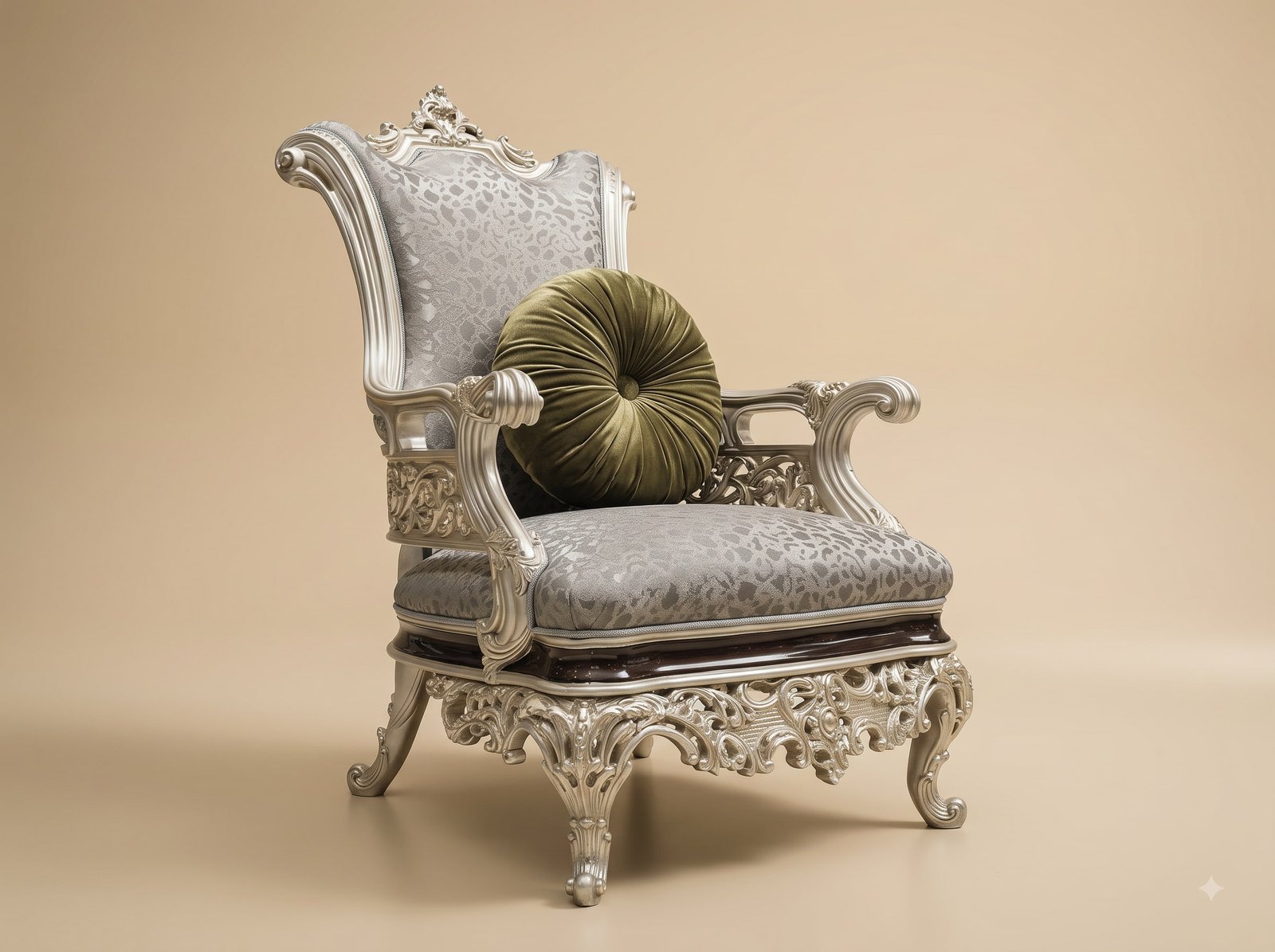
Carvers think about who is looking, and from where.
On a chair, that question has a clear answer. Anything above the seat is only visible when the chair is empty - the moment someone sits down, the back and the arms are covered by a person. Anything below the seat stays visible always, and it is what you see from a doorway or from across a room where a chair is read as an object rather than as a place to sit.
So the decision on this chair was to put the heaviest work where it will always be seen. The apron below the seat is pierced right through rather than carved in relief, which means it reads as a hard pattern of light and shadow even in flat lighting - and it keeps reading from ten feet away, where relief carving would soften into a texture.
Piercing there also does something for the proportions. A solid carved apron of the same depth would make the chair look heavy and close to the floor. Cutting through it lets the floor show behind, so the seat appears to float above the legs and the whole chair sits lighter in a room.
The brackets under the arms follow the same logic. They are pierced too, and they are placed exactly where the eye travels between the arm and the seat.
 Ask Price On WhatsApp