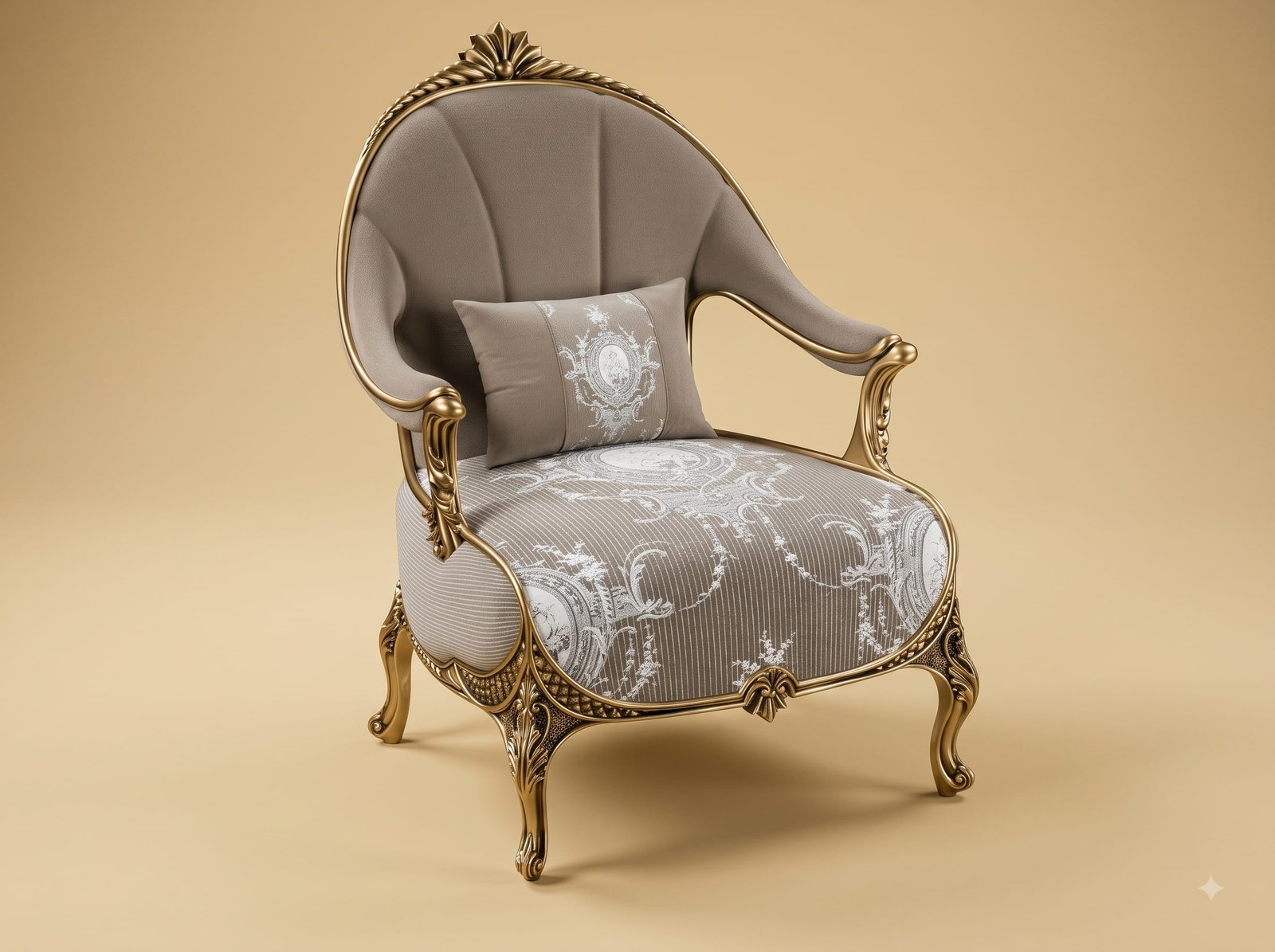
Fluting is buttoning's opposite. Buttoning pulls a surface in at points; fluting pushes it out in lines - and the two are built in completely different ways.
A fluted back is made from the inside out. The upholsterer marks the lines of the flutes onto the frame's base cloth, stitches along each line to create channels, and then fills each channel individually - working the stuffing down its whole length with a long tool until it is evenly firm from the seat to the top edge.
Even is the difficult word. A channel filled generously at the bottom and thinly at the top gives a flute that swells and dies, and once the cover is on there is no way to correct it. So each flute is filled, felt along its length, emptied and refilled until it is right - and only when all of them match is the outer cover pulled over.
On a curved back it is harder again, because the flutes have to converge slightly as the back narrows toward the top, and the amount of that convergence has to be identical on both sides of the centre.
The reward is a back that is soft to lean against but structured, and that catches light down every rib - which is why fluting has stayed in use for tub chairs for two hundred years while other treatments have come and gone.
 Ask Price On WhatsApp