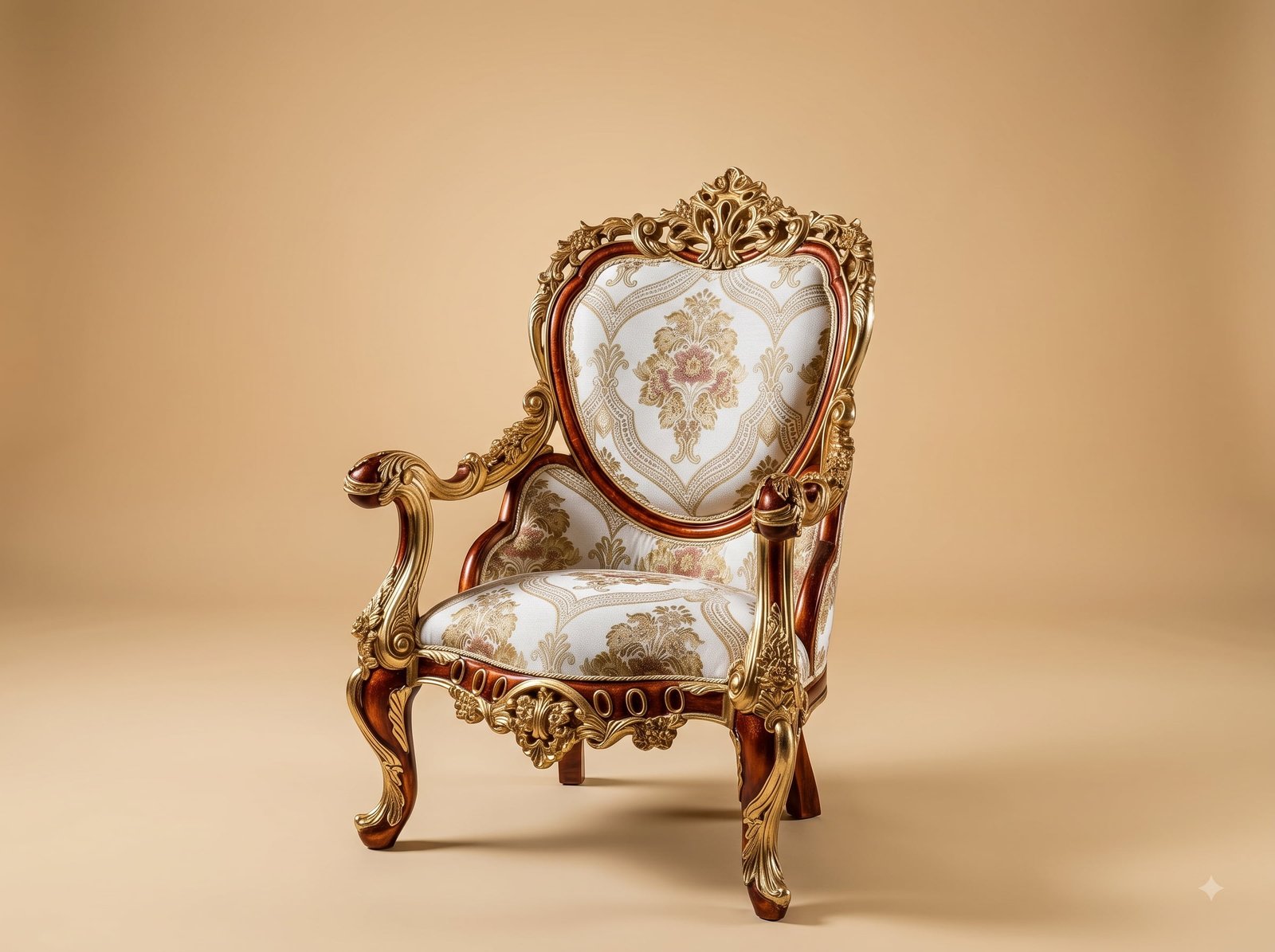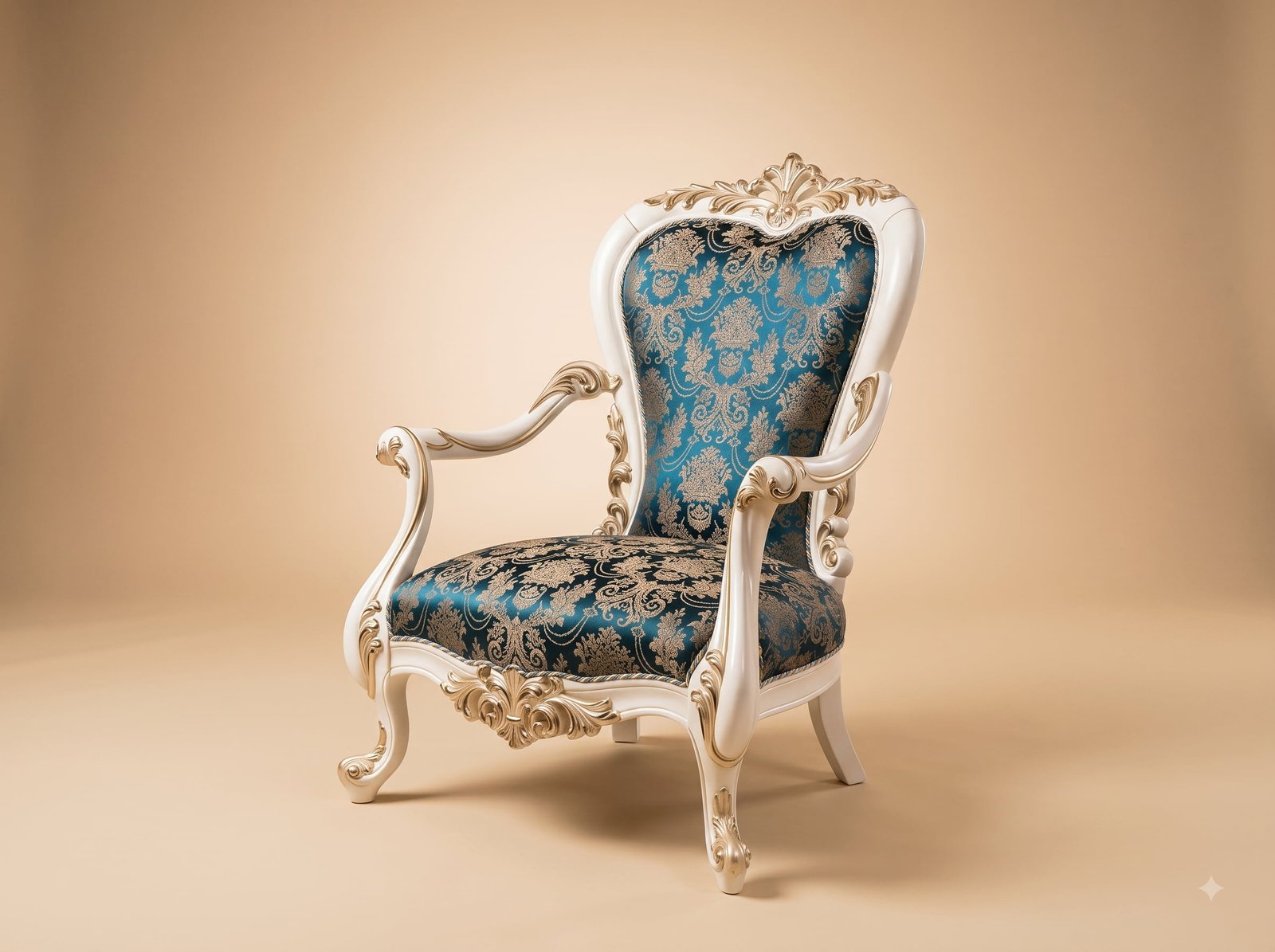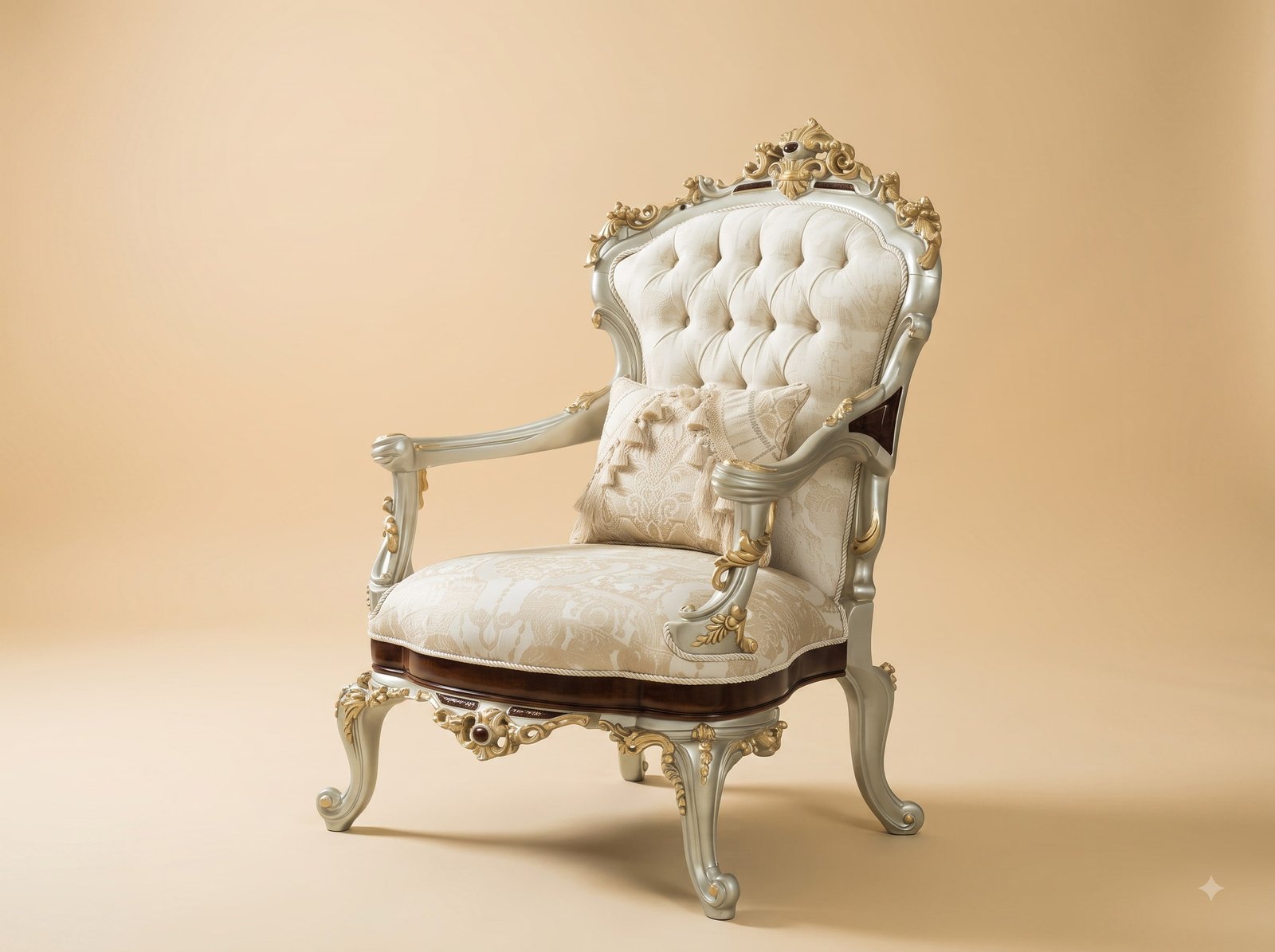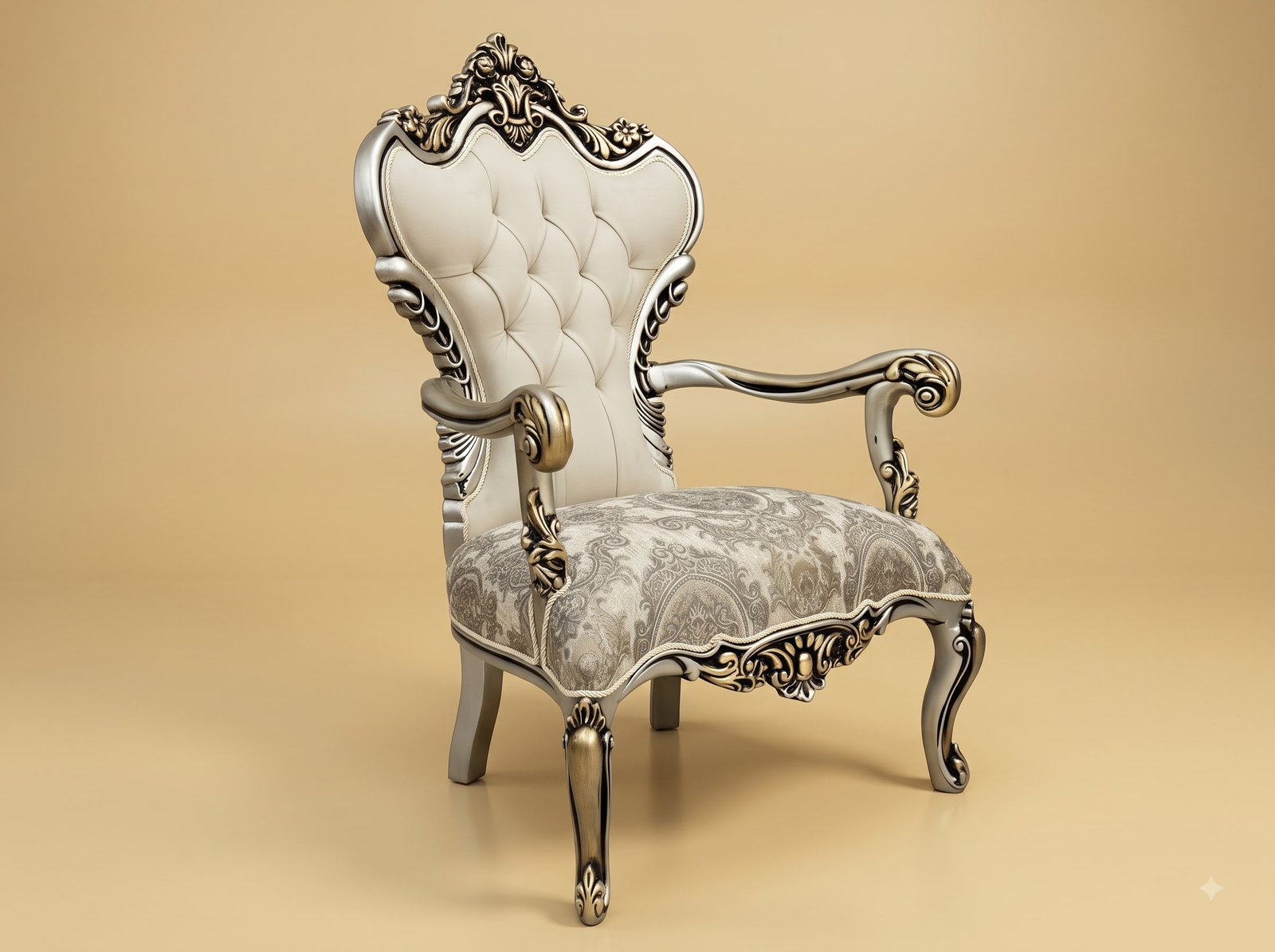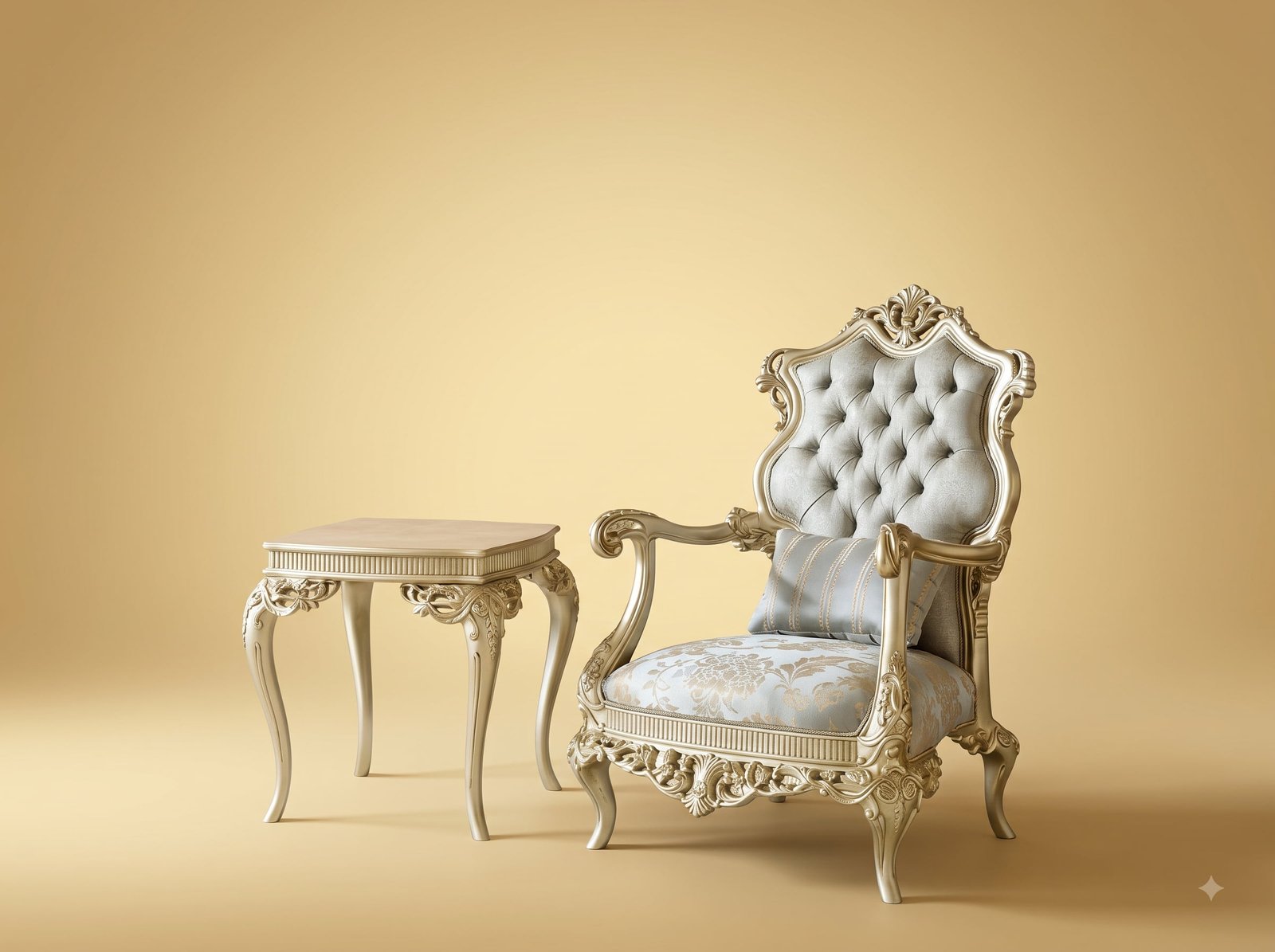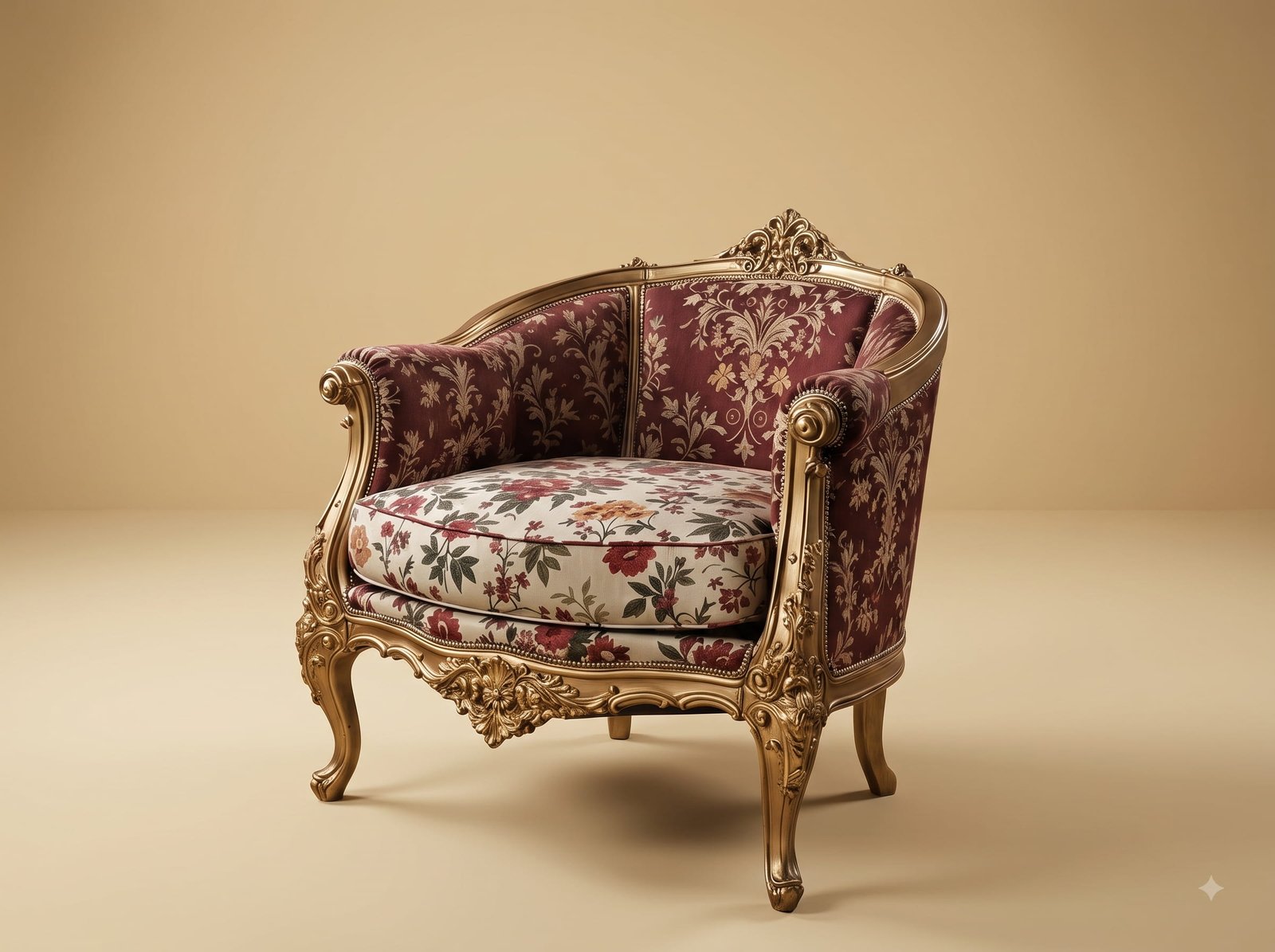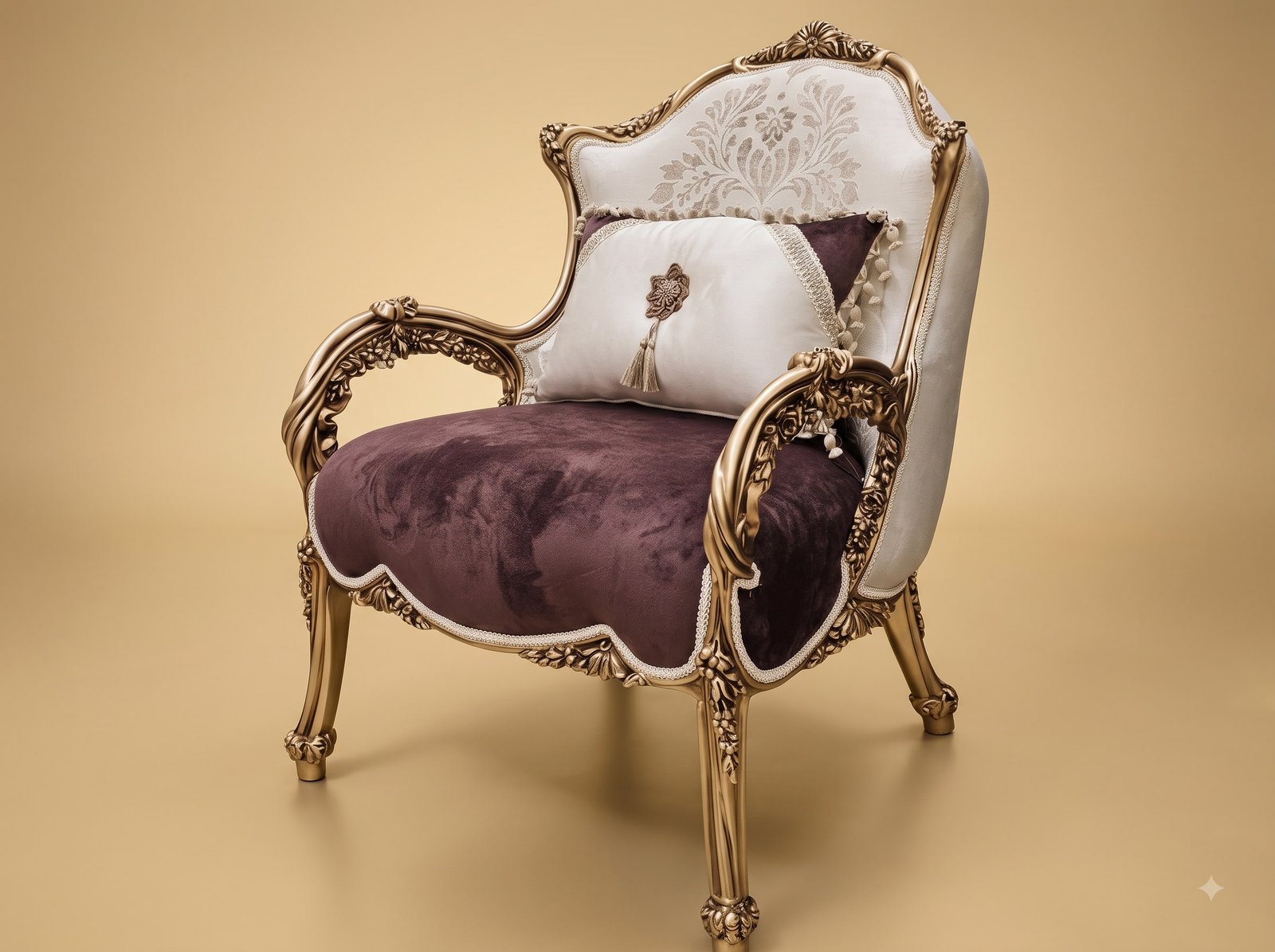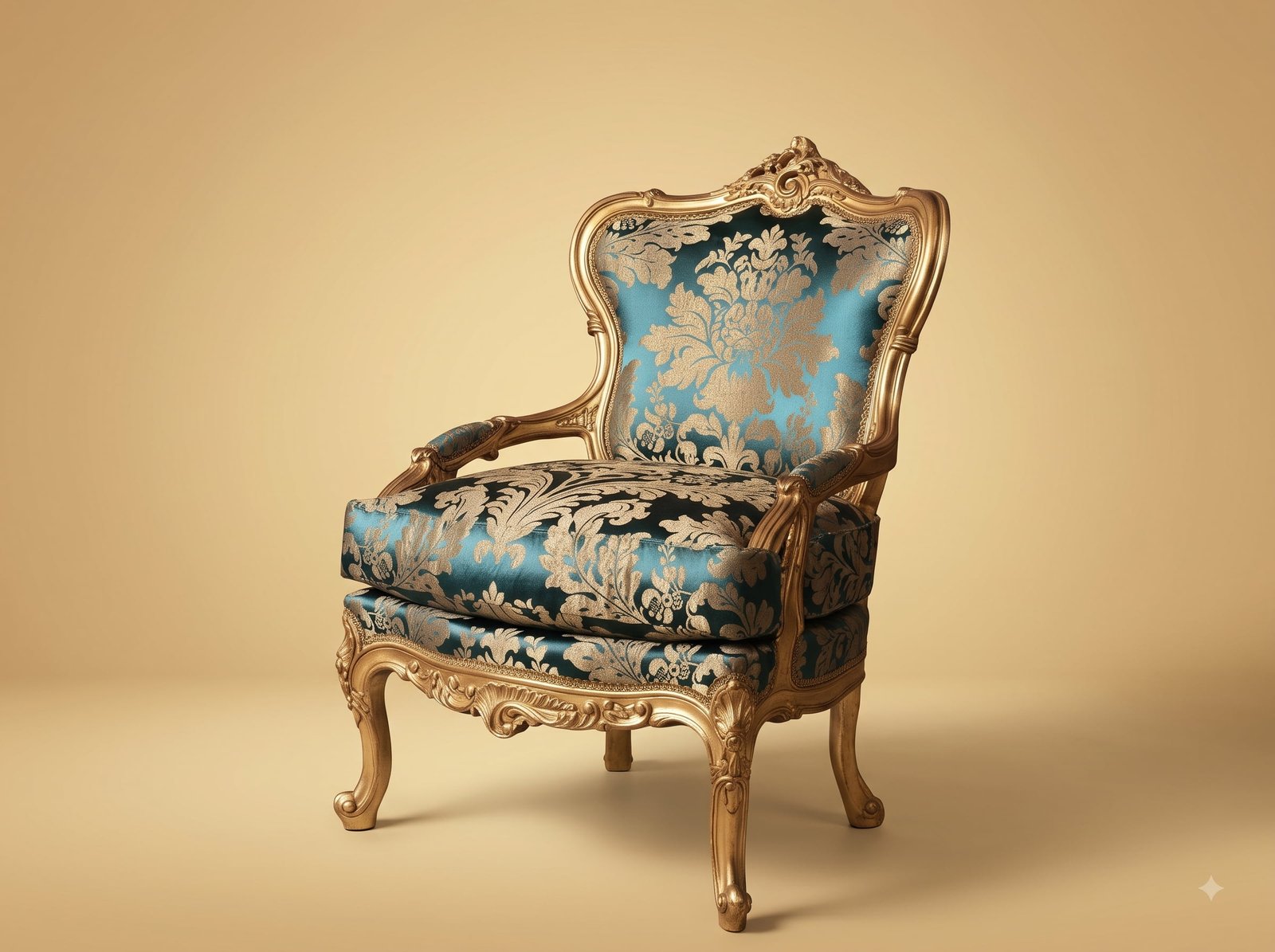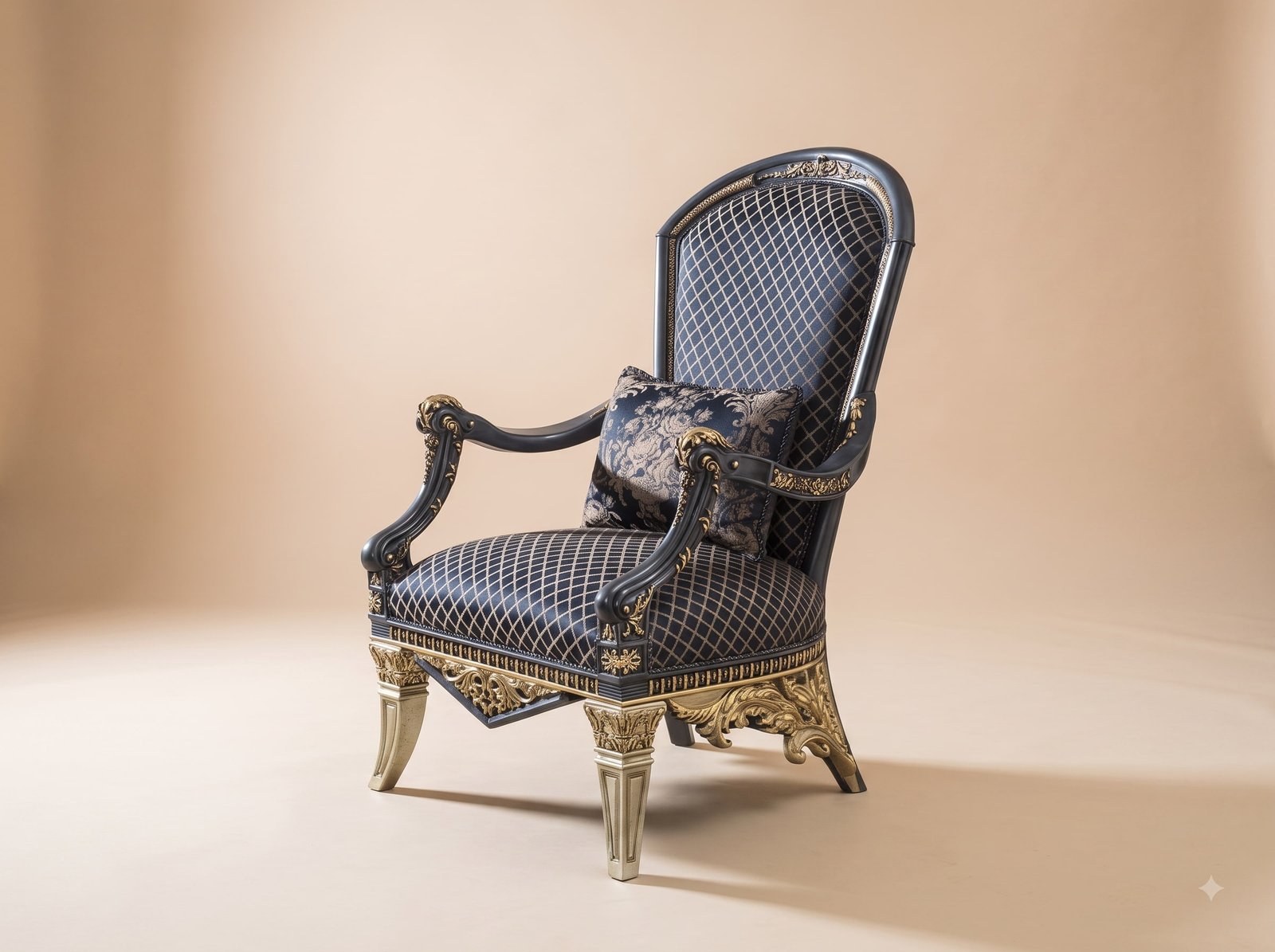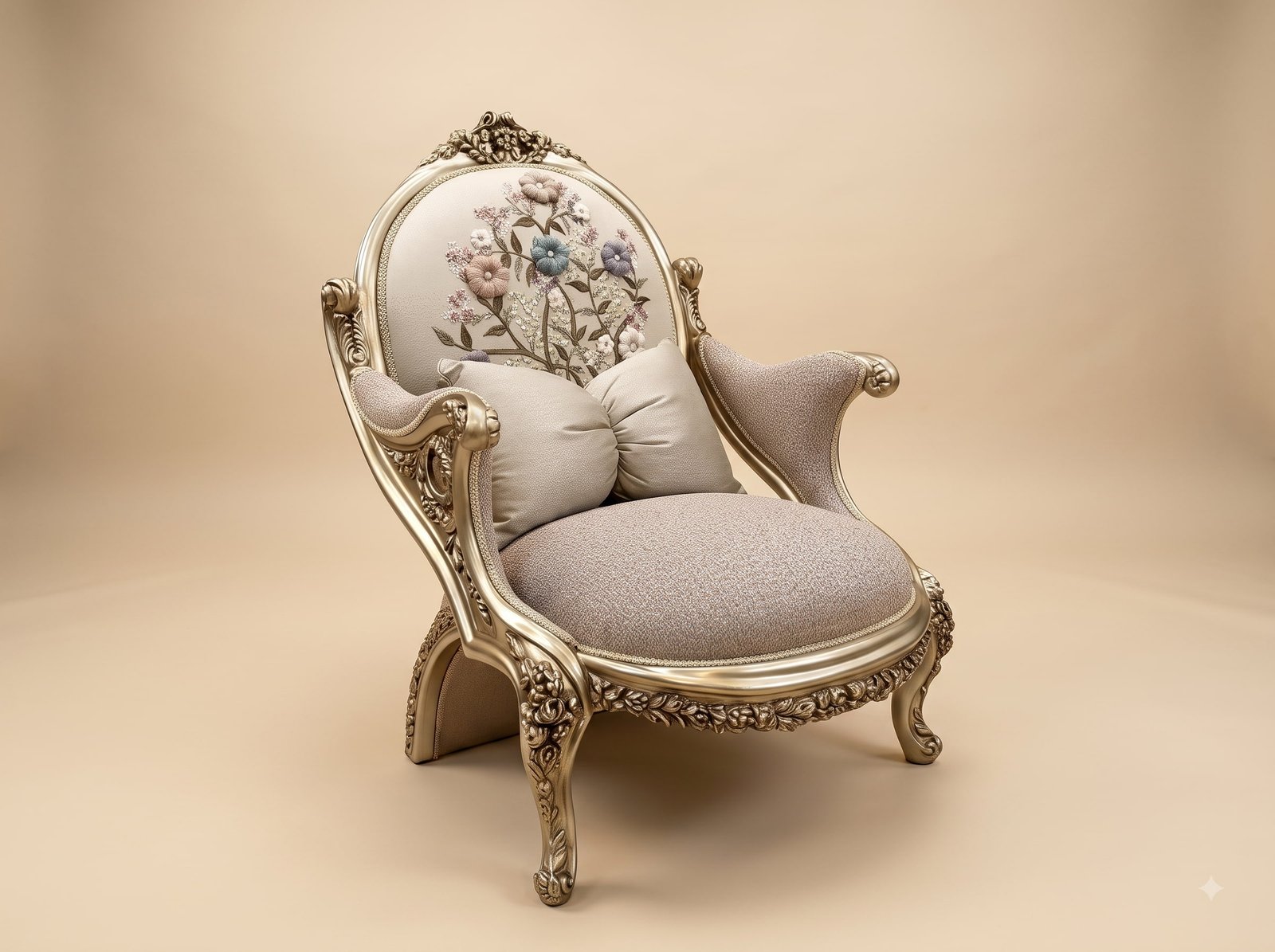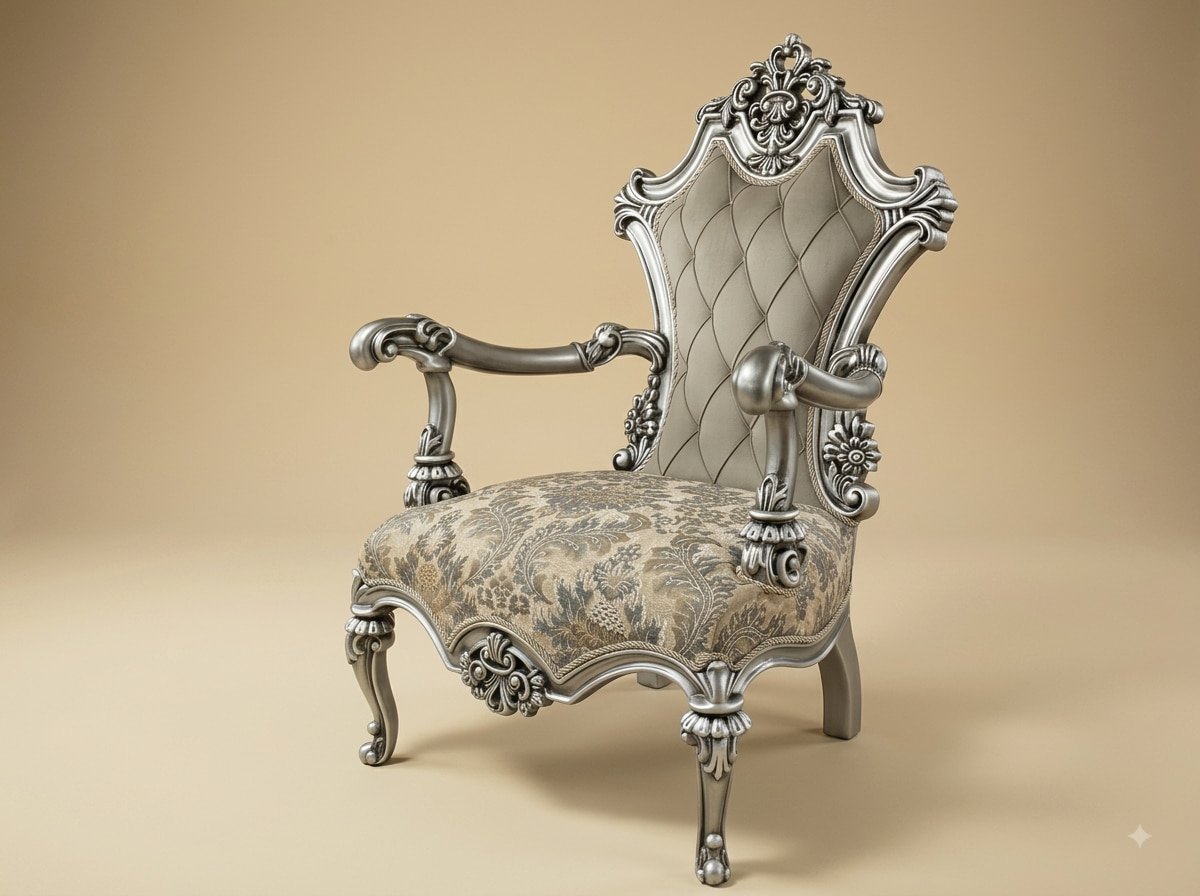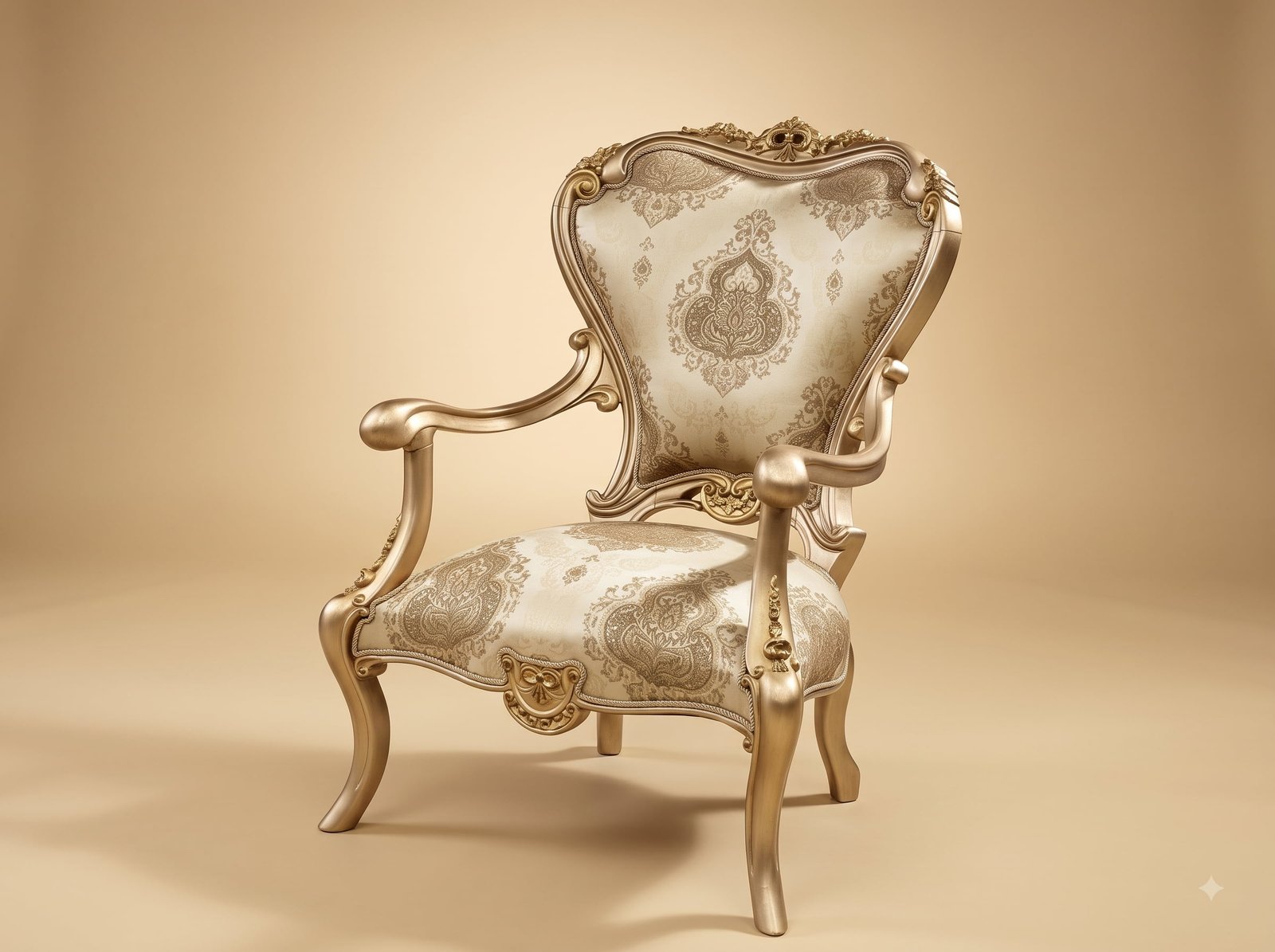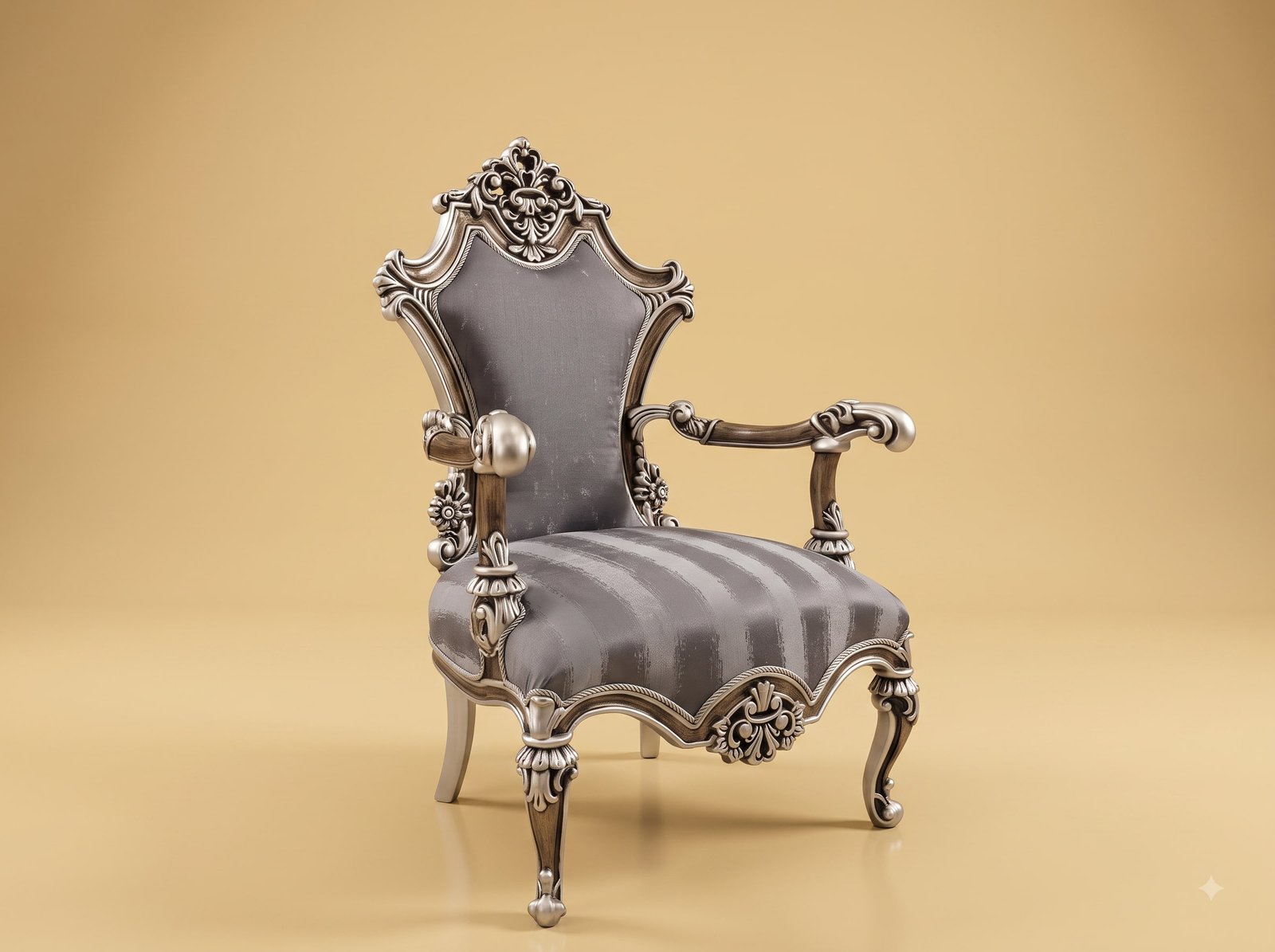
The open arm is one of the oldest pieces of practical thinking in chair design, and it was invented for exactly the reason it still matters.
Chairs with closed sides came first, and they suited people who sat down once and stayed. But as clothing became fuller - court dress in Europe, and drapes and saris everywhere - a chair that boxed the sitter in became difficult to use. You had to gather the cloth, lower yourself past the arm, and repeat the operation to stand.
Moving the arm support backwards solved it. Set the upright behind the front of the seat rail, leave the space beneath the arm open, and a person can sit down straight and stand straight up - with cloth falling through the gap rather than being trapped by it.
What that costs is structural. On a closed-arm chair the arm is supported at the front of the seat, right above a leg, and the load path is short and direct. On an open-arm chair the support stands mid-rail with no leg beneath it, so the whole weight of someone pushing down on the arm to stand up passes into the seat frame and has to be carried sideways to the legs.
Which is why the seat rails on this chair are deeper than they look, and why the arm supports are jointed into them rather than screwed on. The elegance at the front is paid for at the back of the joint.
 Ask Price On WhatsApp