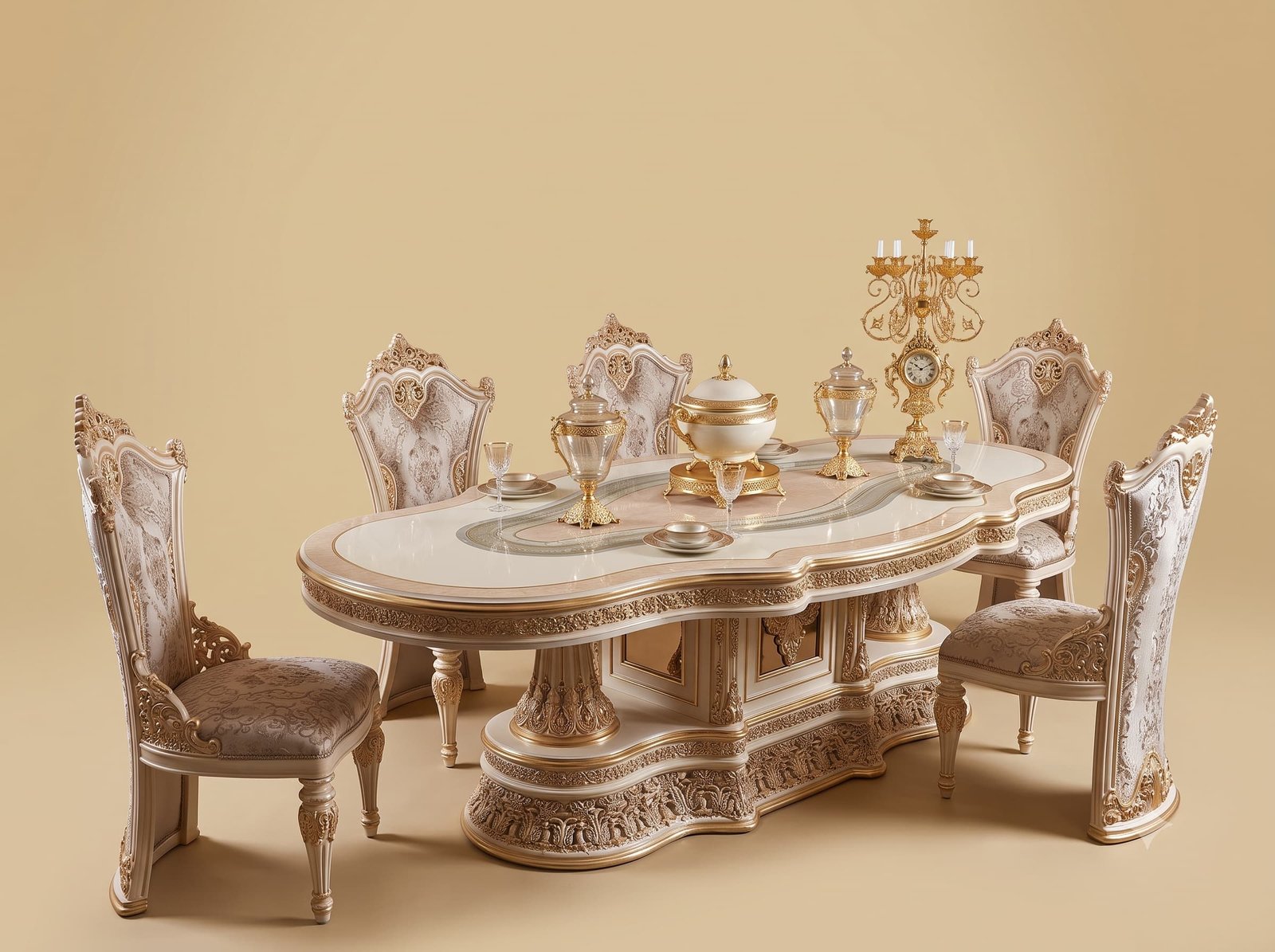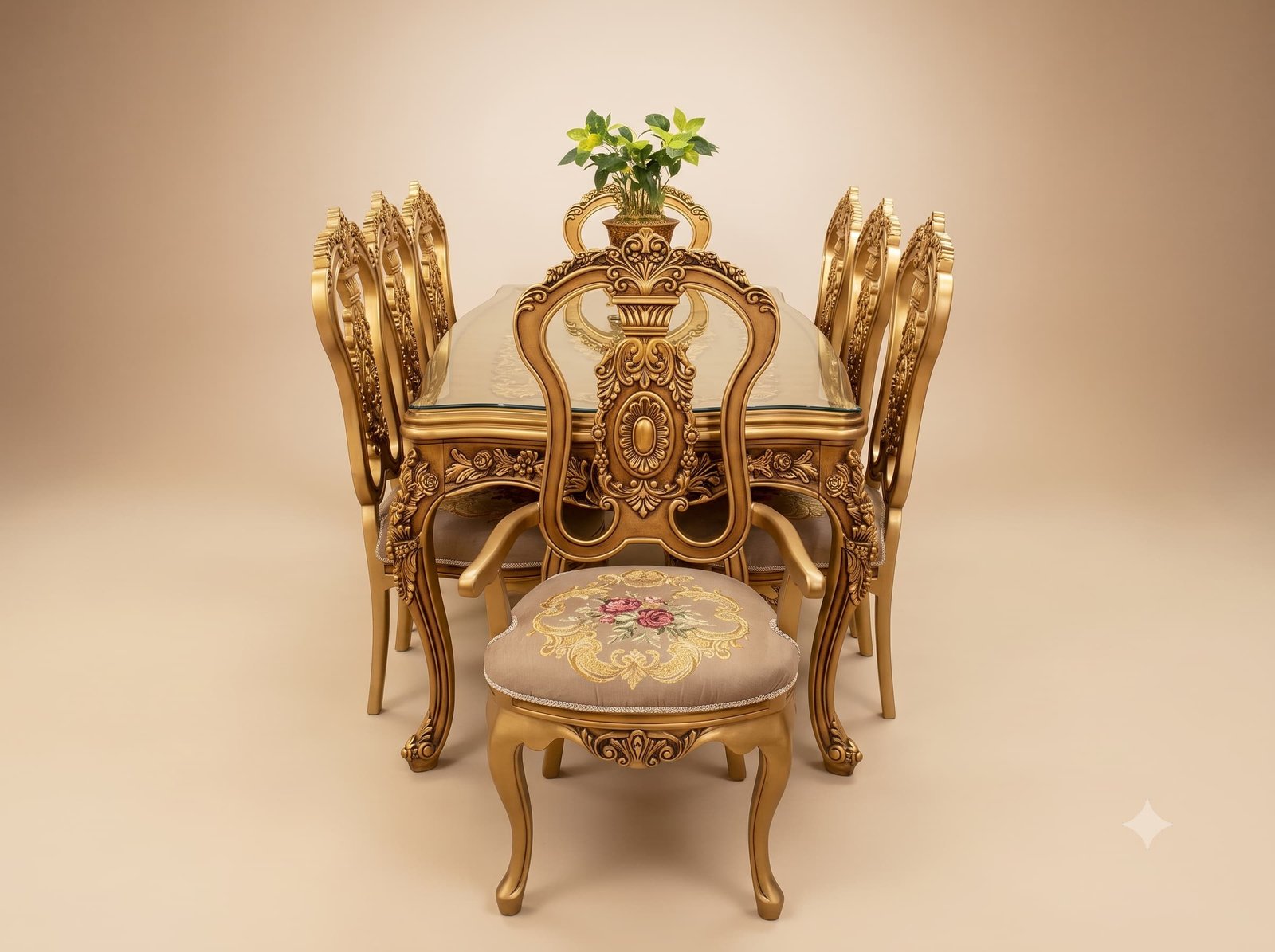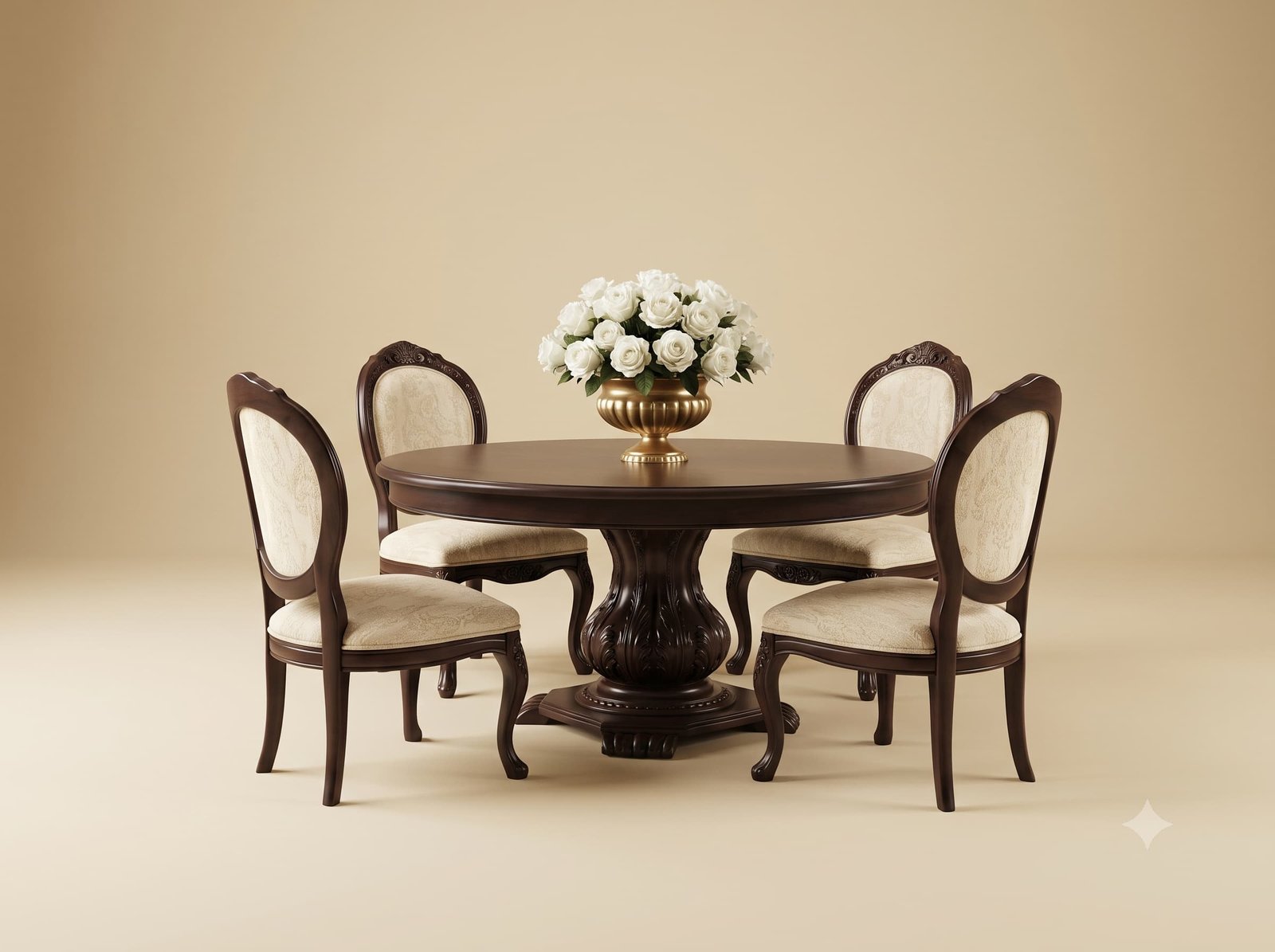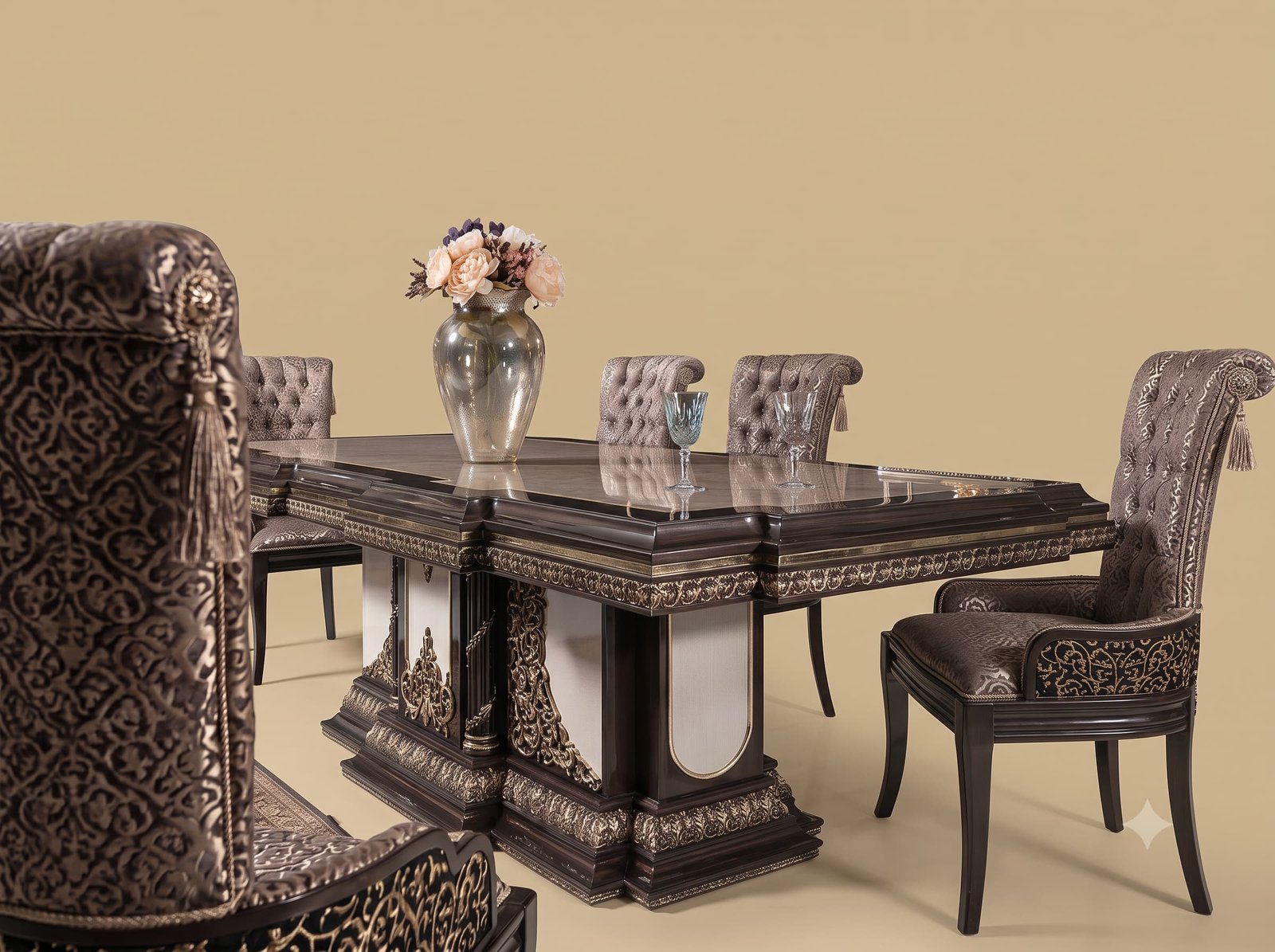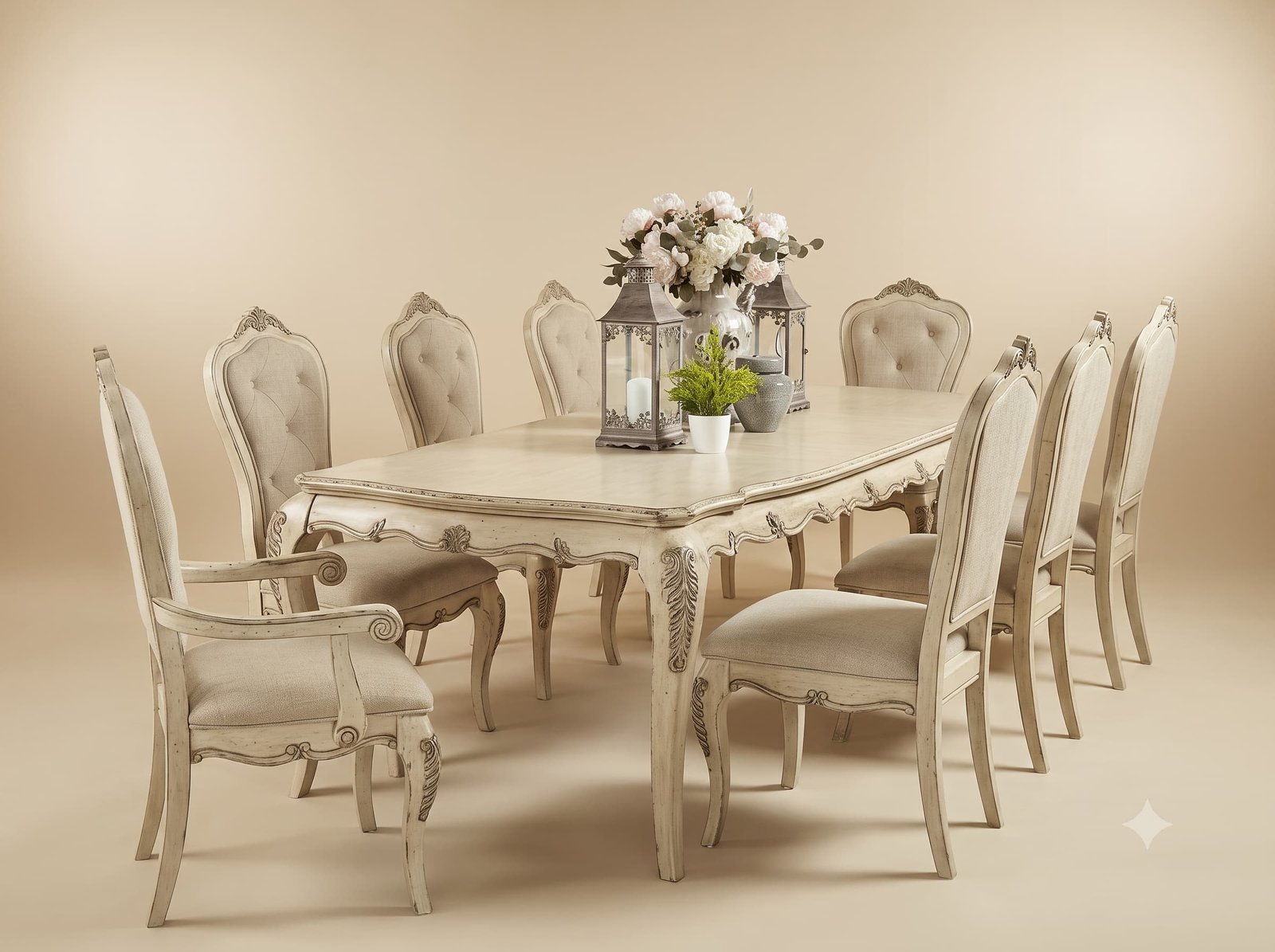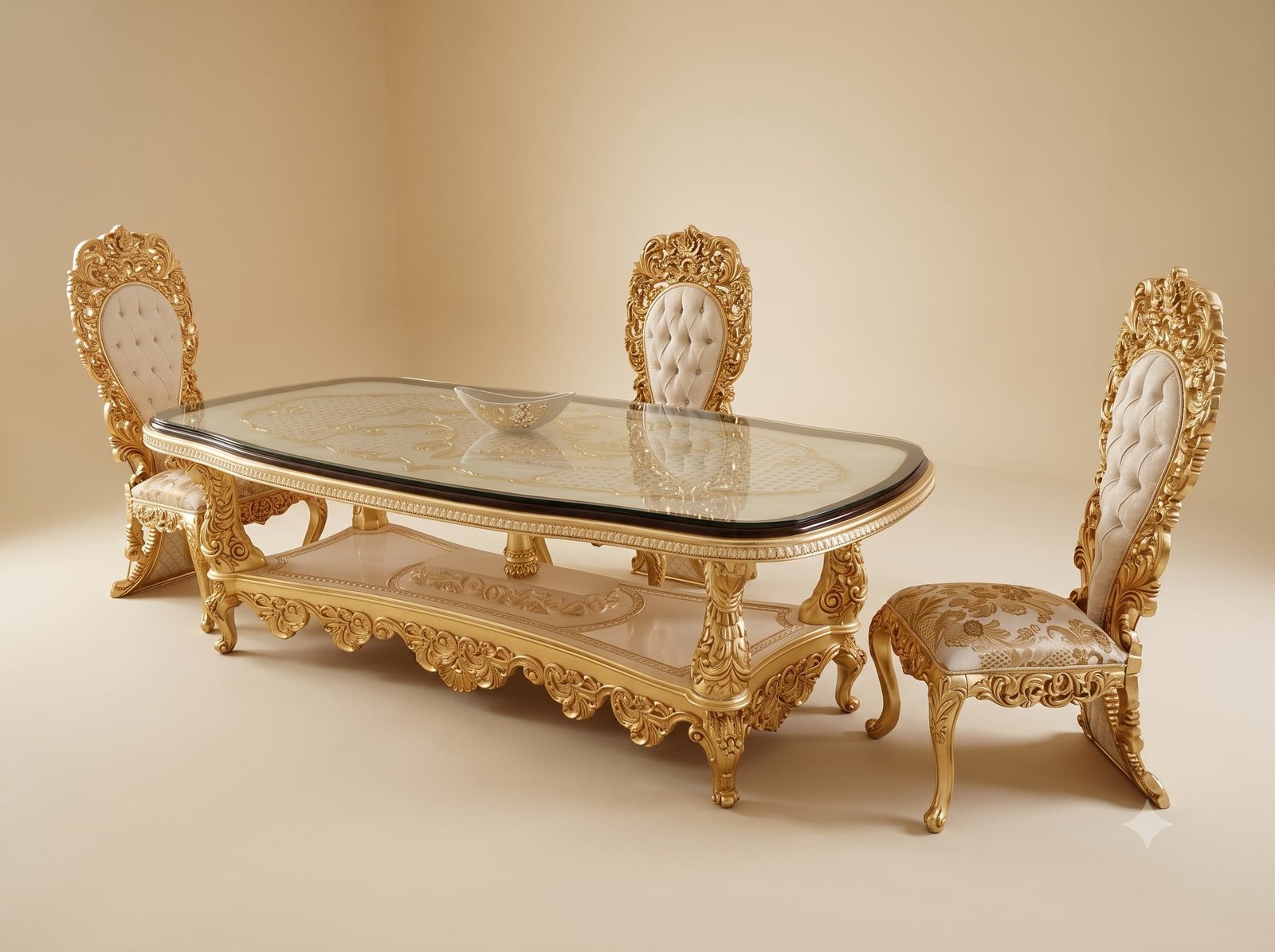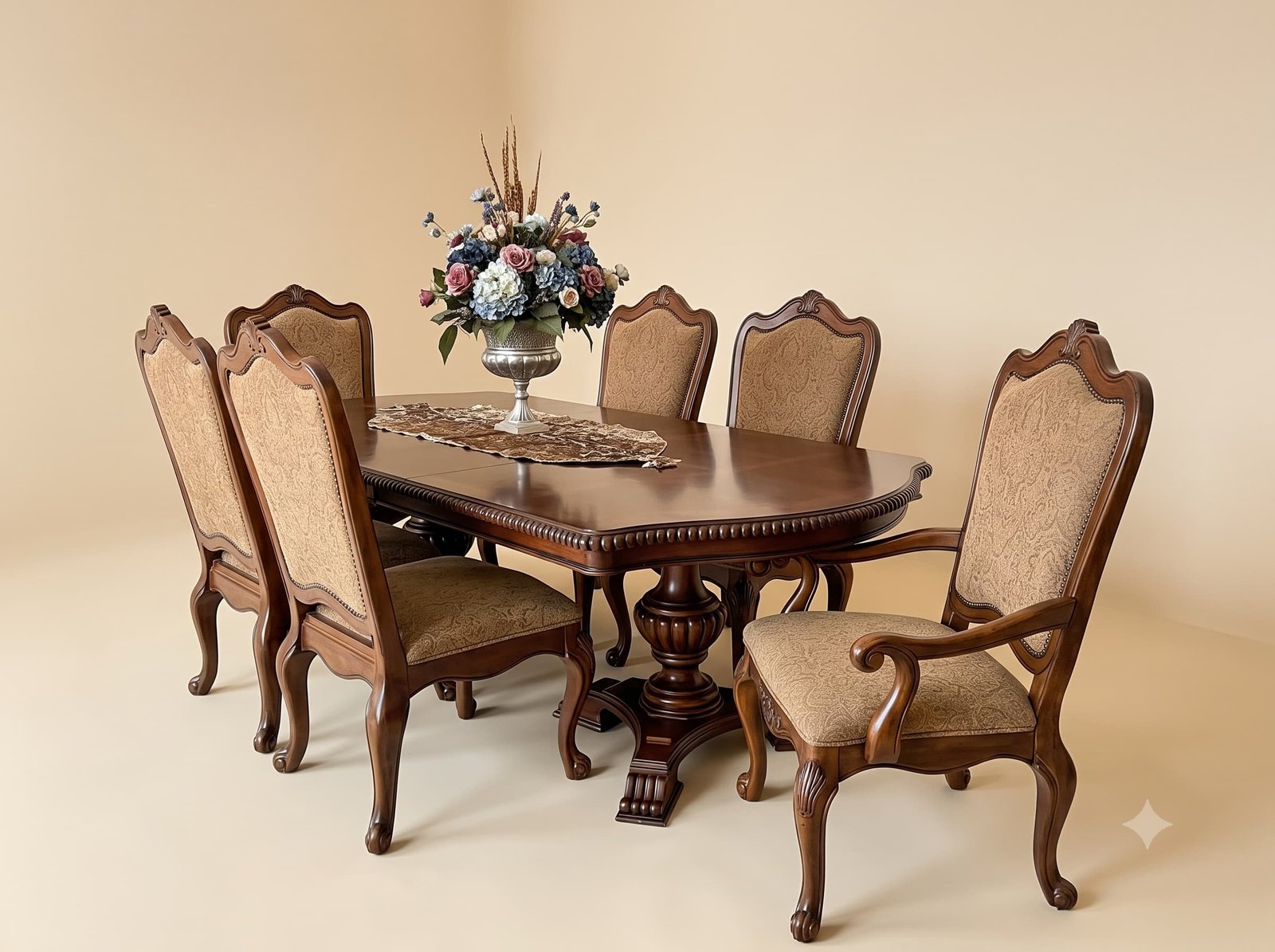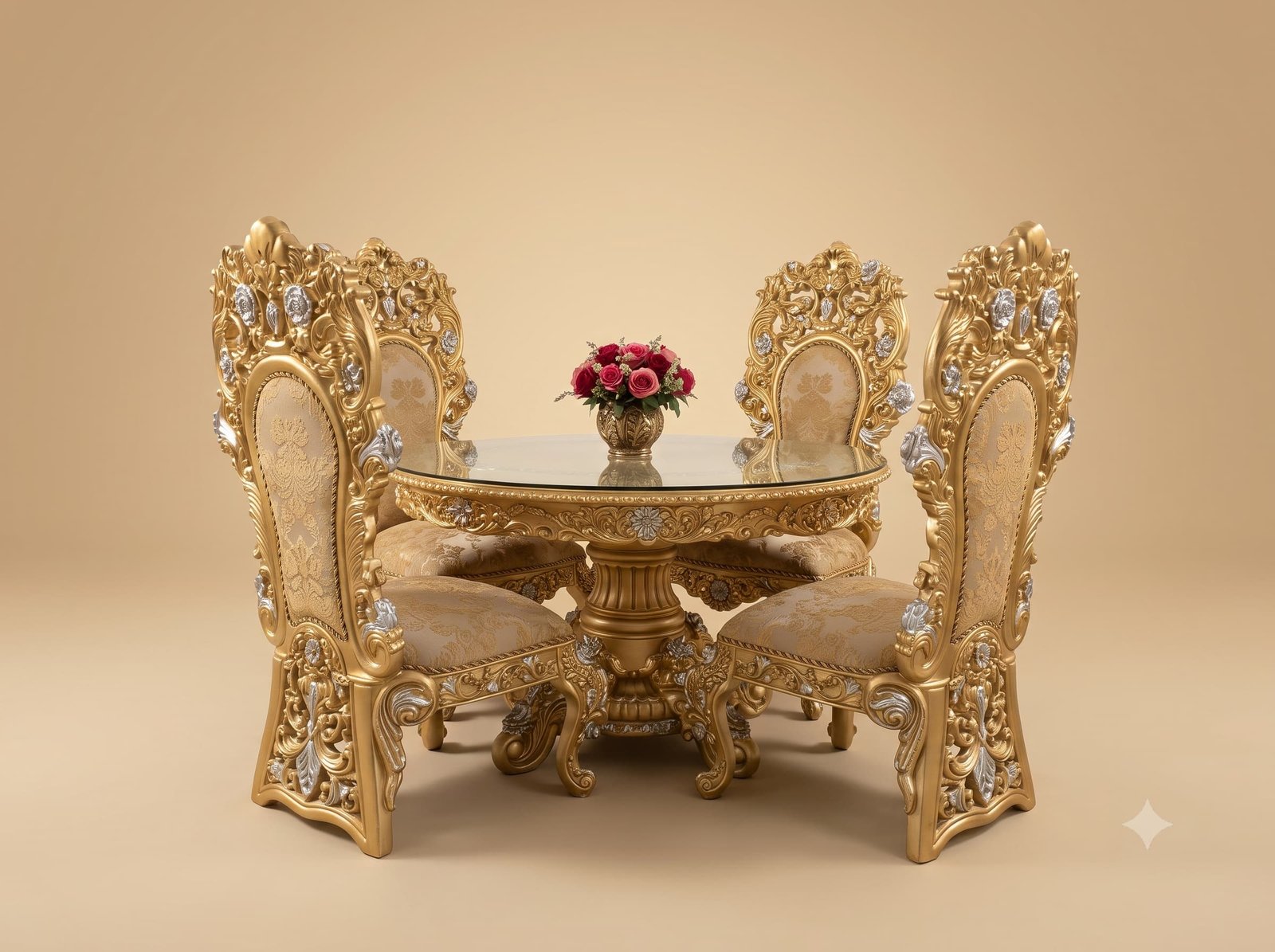
Tall chairs around a small round table create a problem that does not exist on a long one: the chairs meet each other before they meet the table.
On a rectangular table the chairs sit in parallel rows and there is space between them. Around a circle they converge - the closer to the table, the closer to each other - and when a chair is pushed fully in, its widest point is not at the seat but at the top of its back, which is the part furthest from the table's edge and closest to its neighbour.
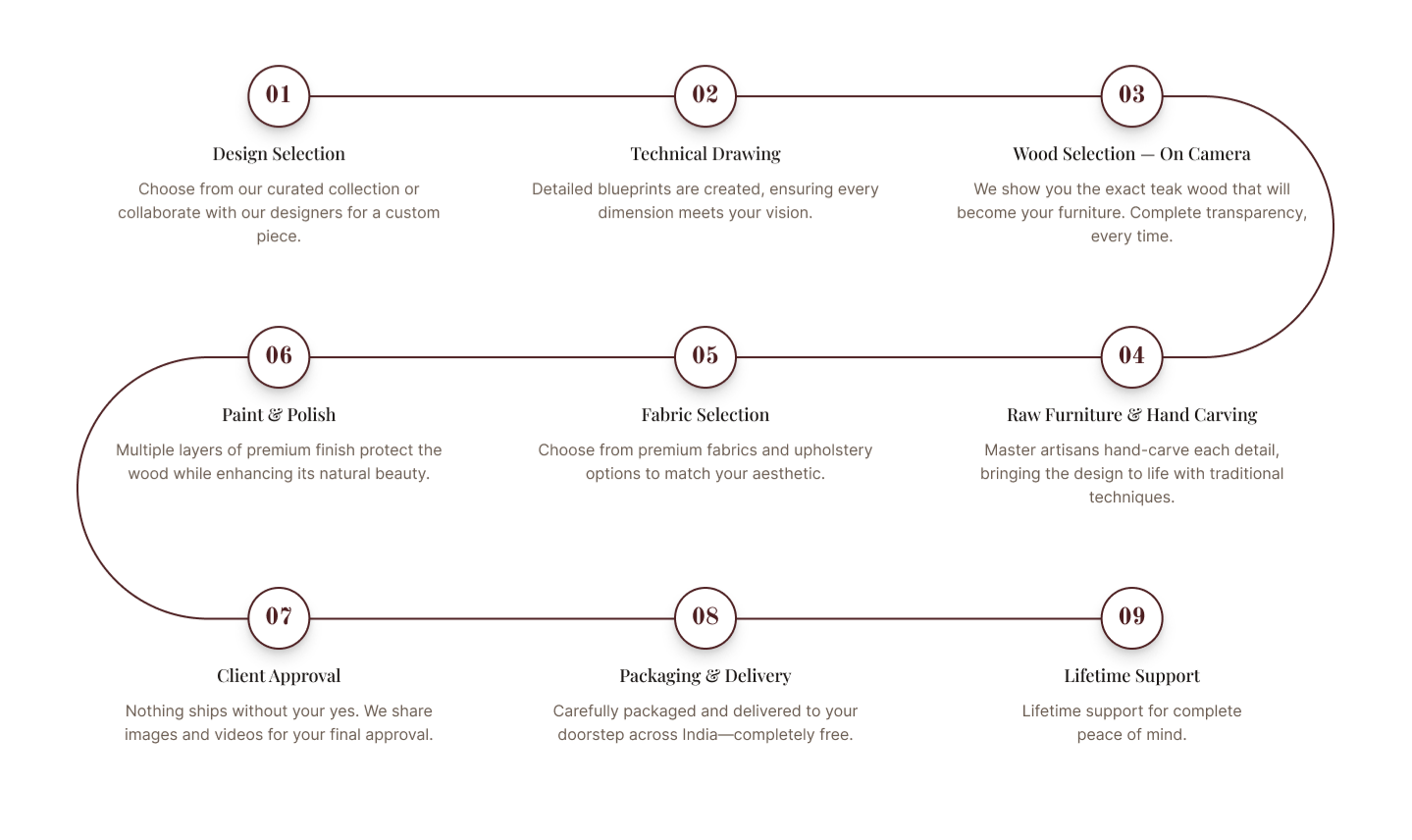
So the geometry has to be checked on a drawing before anything is cut, and it is checked at the crest height rather than at the seat. We set out the plan of the table, mark the four chair positions pushed home, and draw the outline of each chair back at its widest carved point. If those outlines touch, something changes - a slightly larger table, a narrower crest, or a shorter back.
Which of the three changes is the client's decision, not ours, and it is a conversation we would rather have at the drawing stage than at delivery. That is why we ask for the room dimensions and the seating number together, and why the chair back on a small set is drawn after the table rather than before it.
 Ask Price On WhatsApp