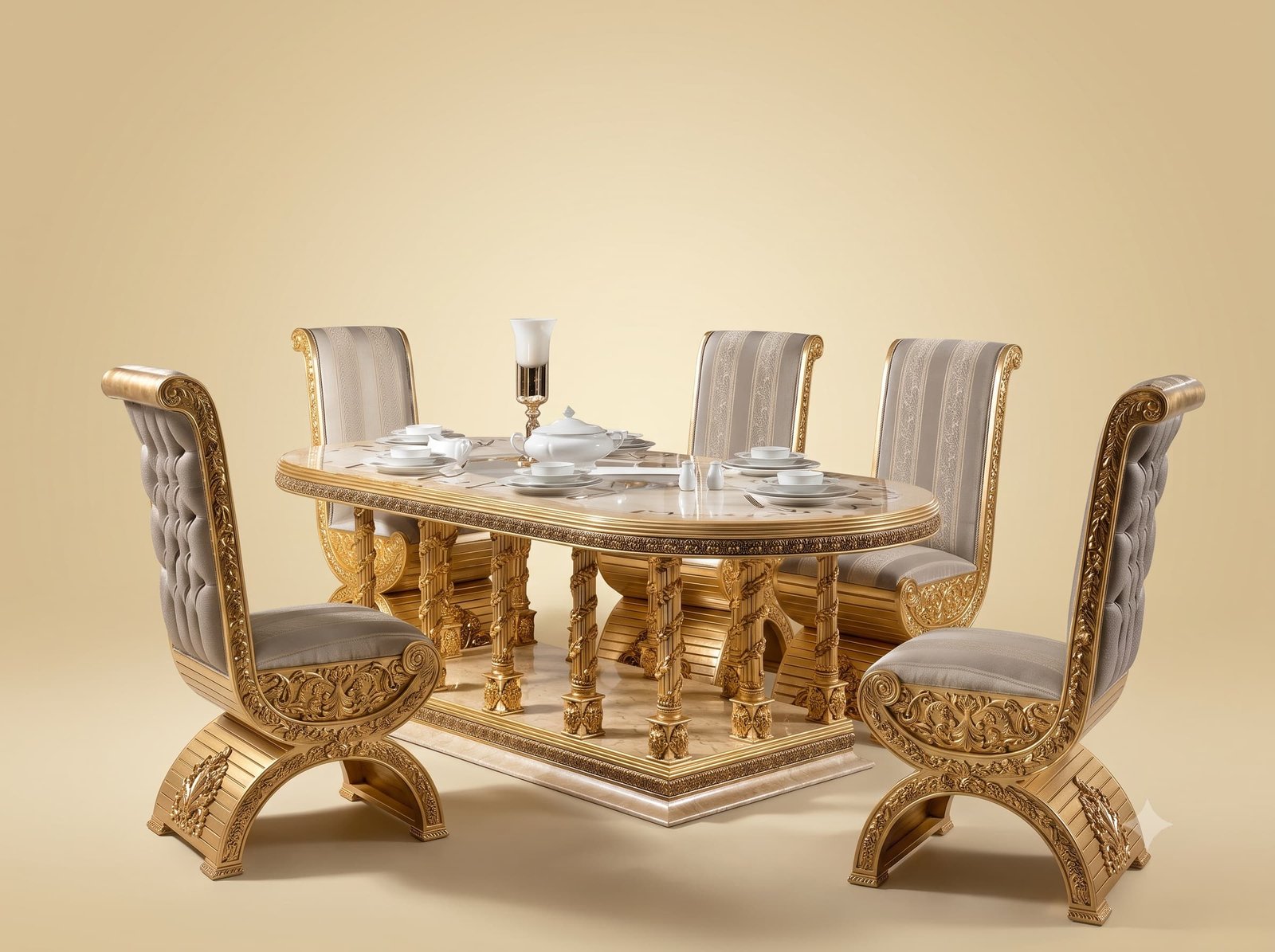
A chair standing on two curved arches instead of four legs has one joint that matters more than all the others: the point where the arch meets the seat frame. On a four-legged chair, load is shared four ways and each leg pushes straight down. On this chair, every bit of weight travels down through two curves, and a curve wants to spread outward under load.
So the arch is not butted to the seat rail and screwed. It is housed - a shallow socket is cut into the underside of the frame, the top of the arch is worked to fit it exactly, and the joint is then pegged straight through with teak dowel. The housing takes the sideways push that would otherwise open the joint; the peg takes the rest.
Both arches on a chair are cut from the same board, next to each other, so the two curves have the same grain running through them. Timber cut from different parts of a tree will flex by slightly different amounts, and on a two-point base that shows up as a chair that sits unevenly after a few years.
It is more work than a leg. It is also why a chair with no legs still sits perfectly still under someone leaning back at the end of a long meal.
 Ask Price On WhatsApp