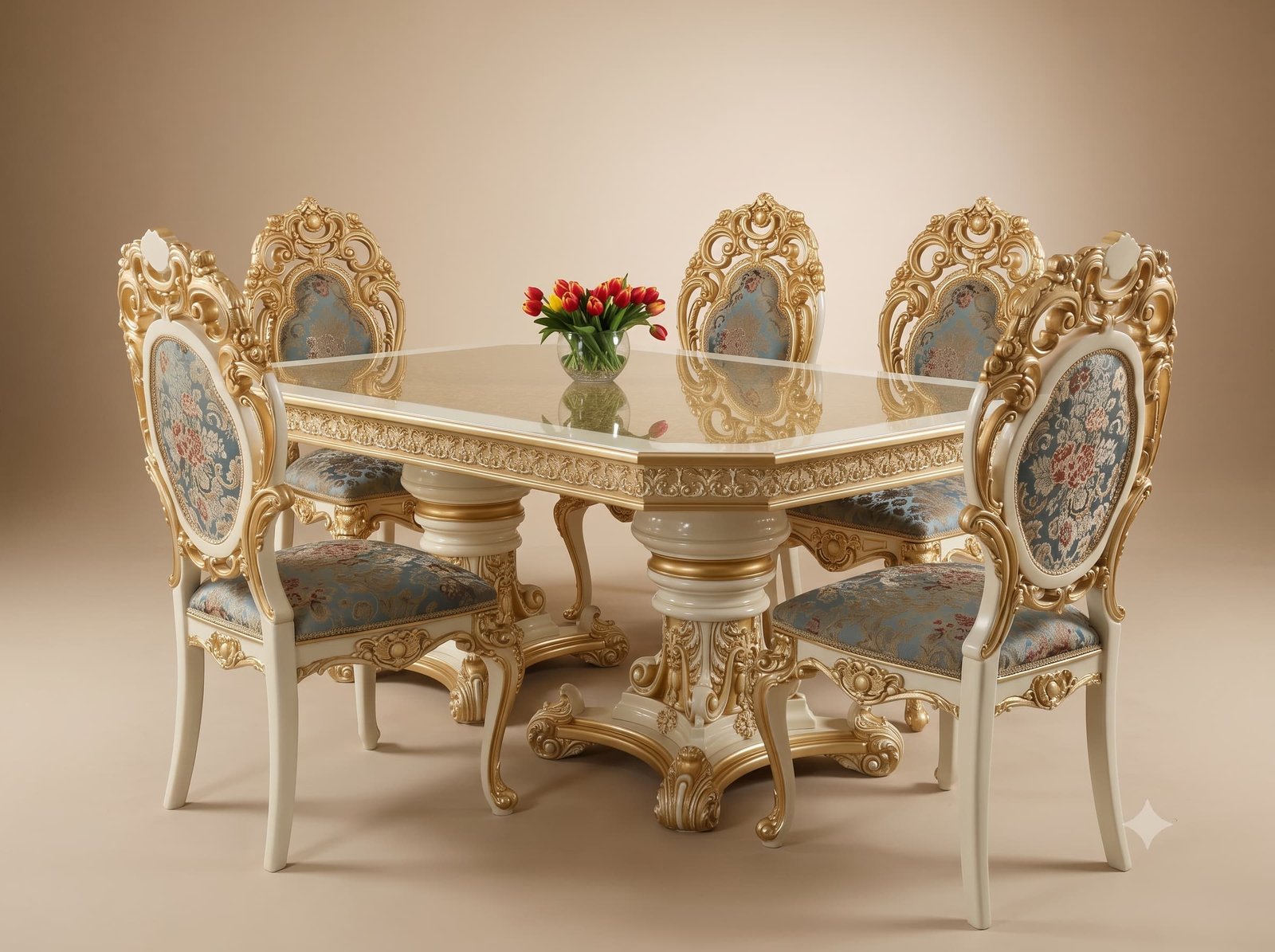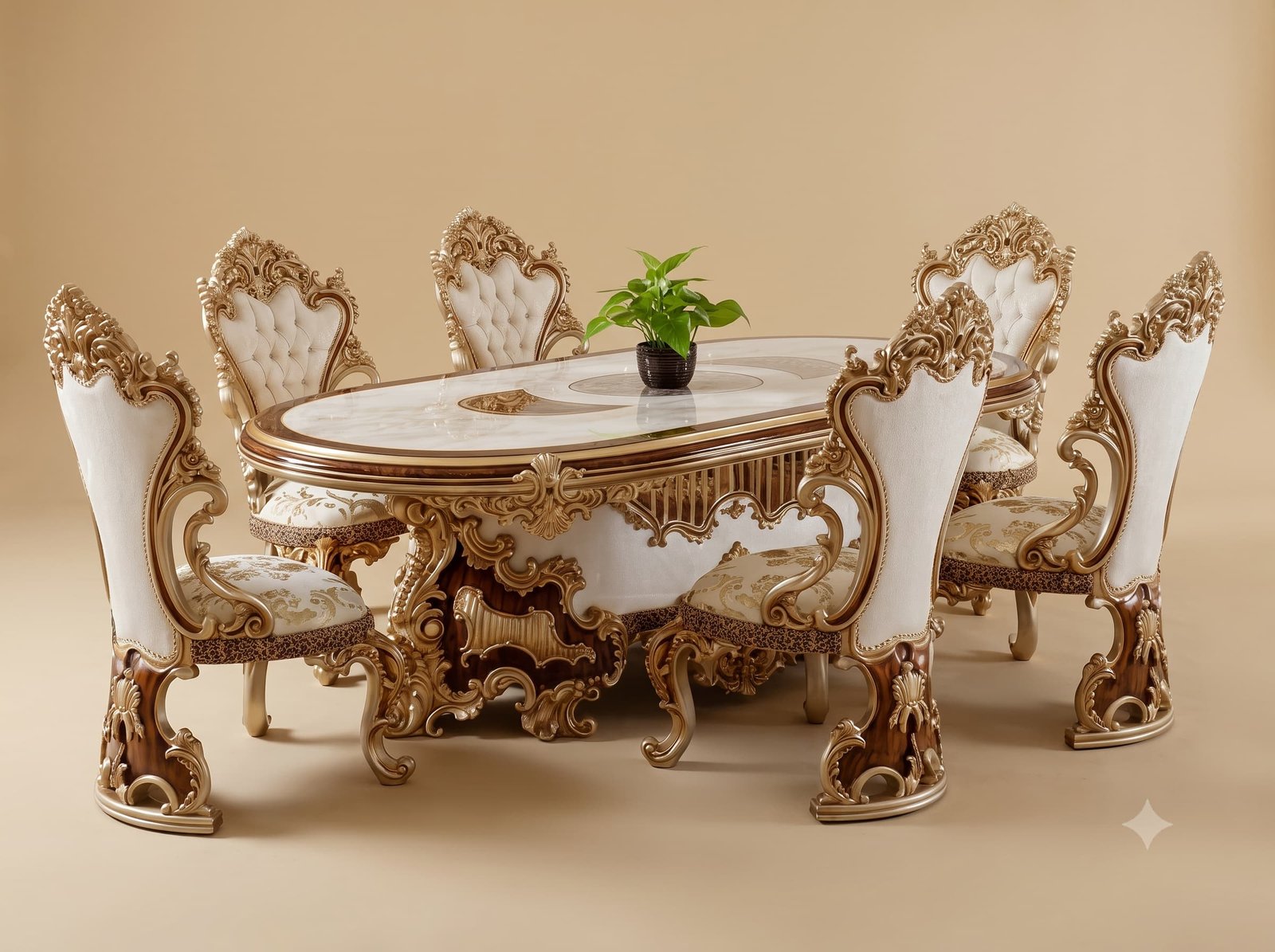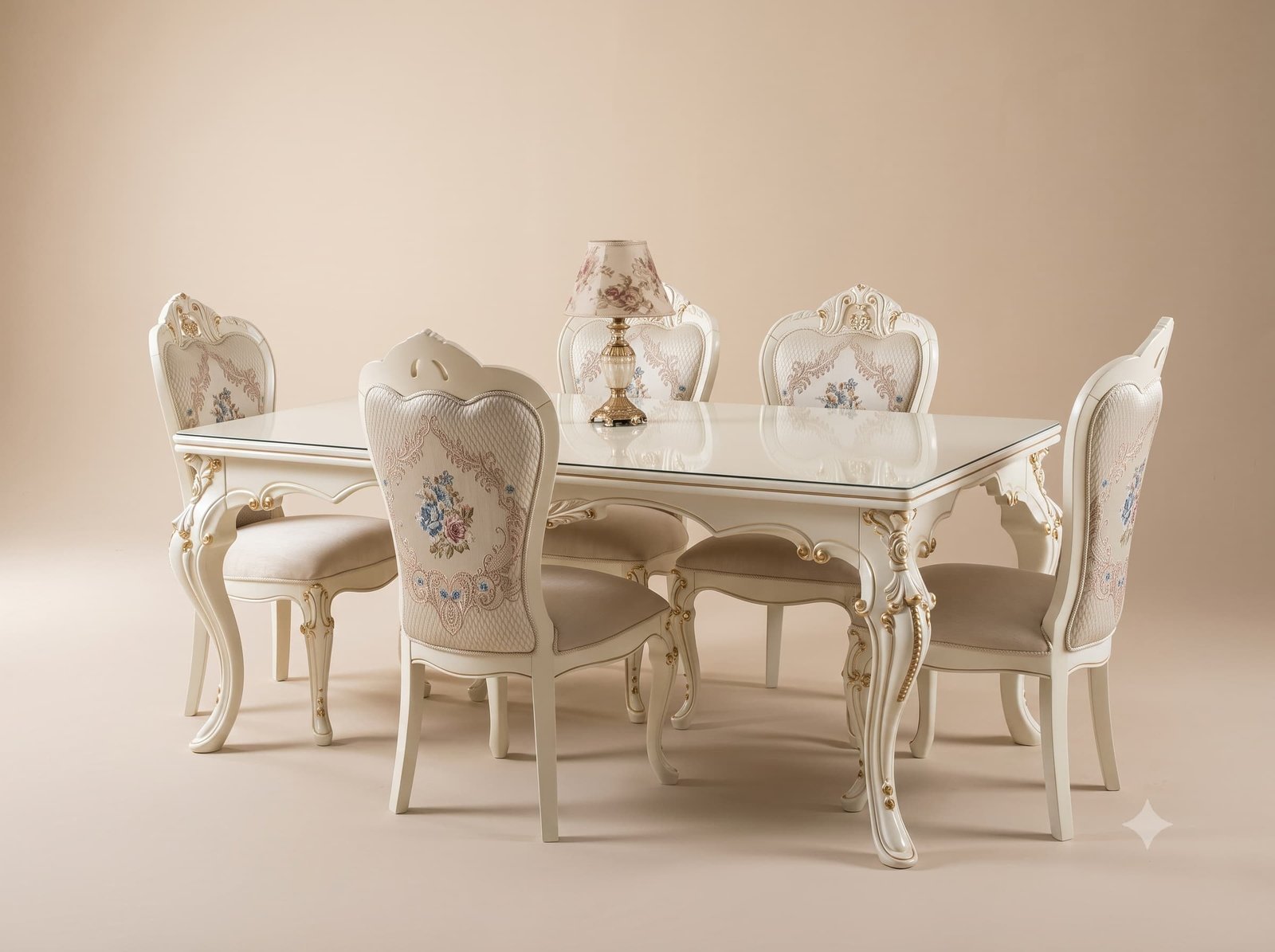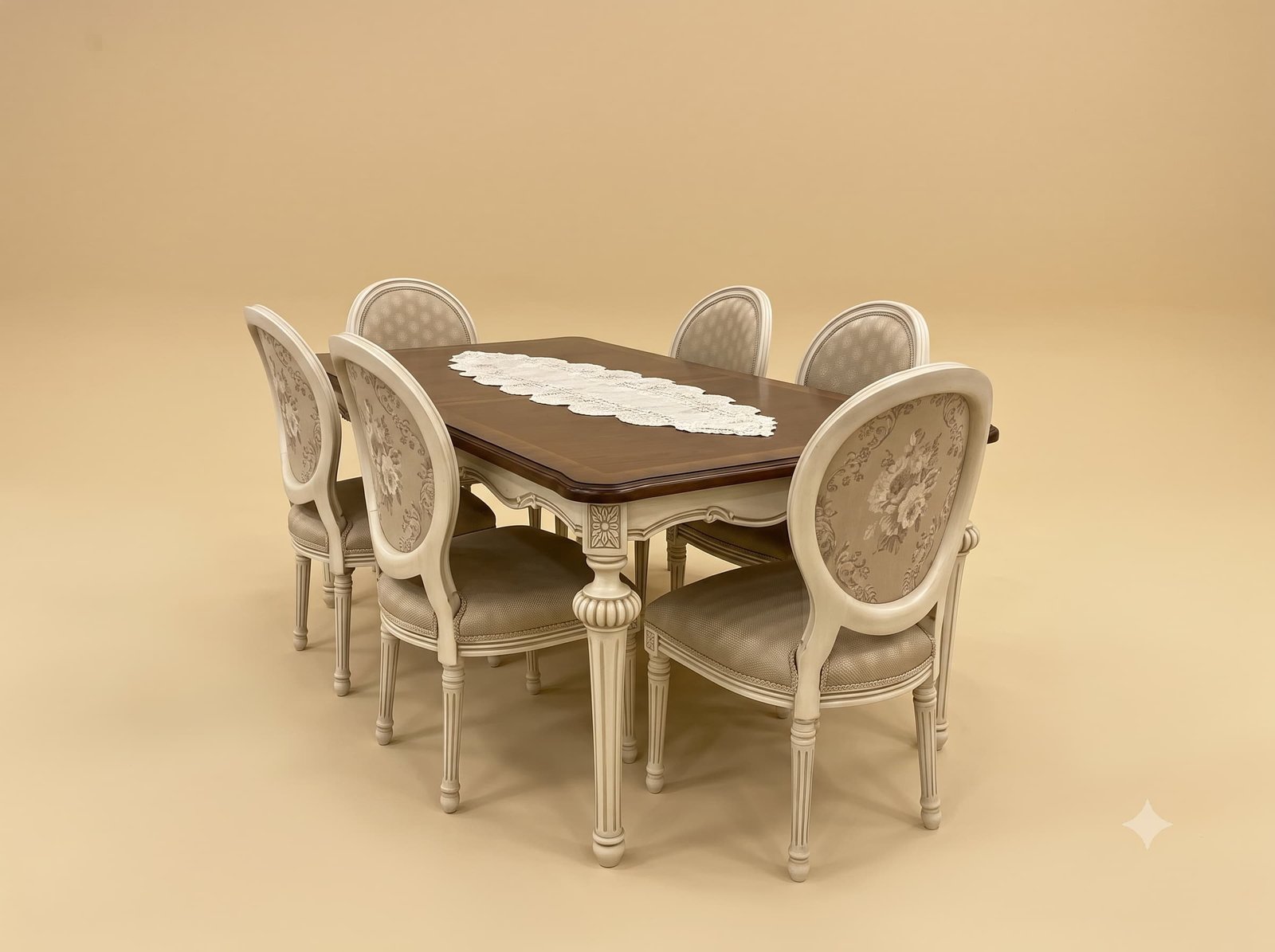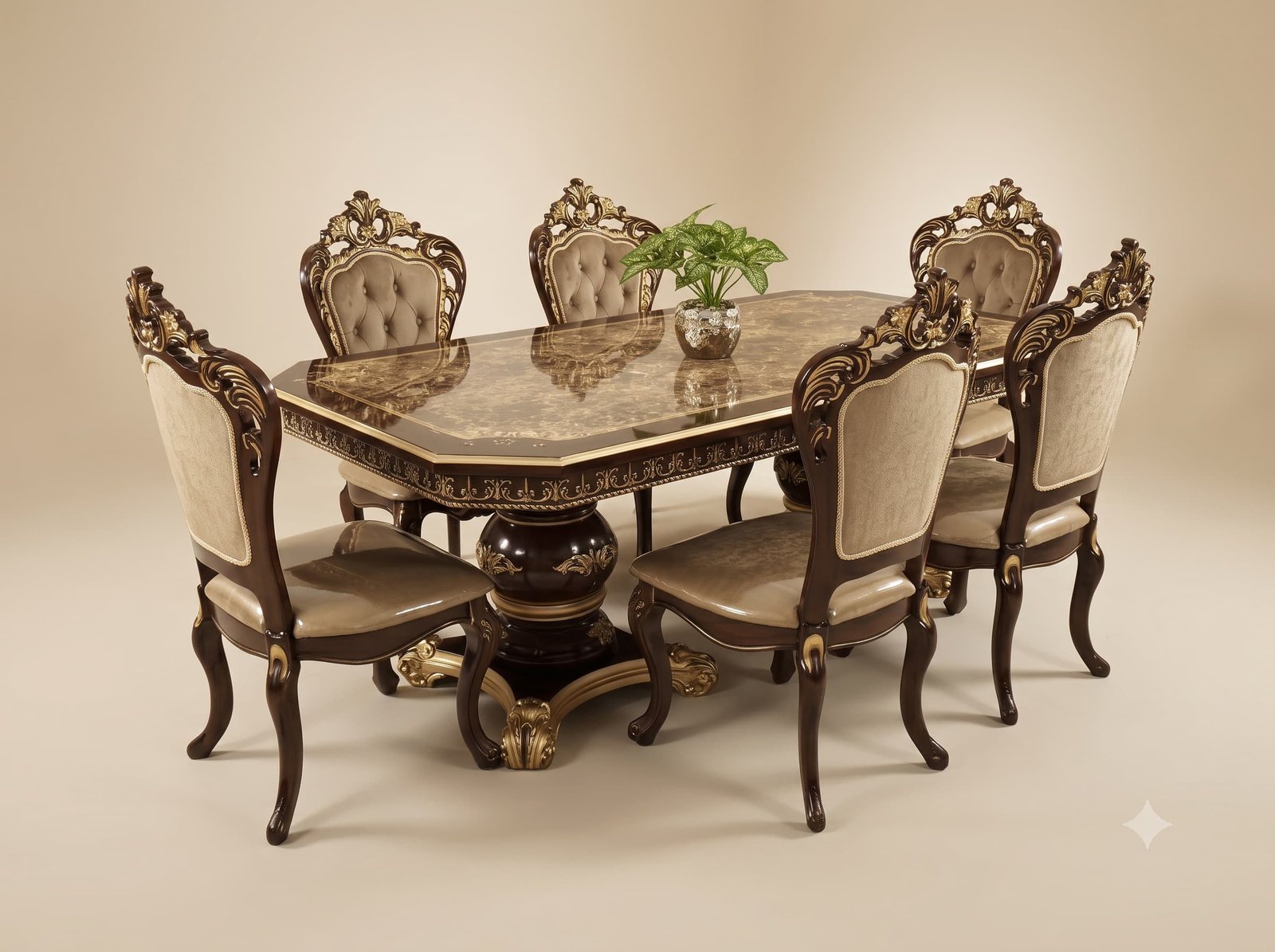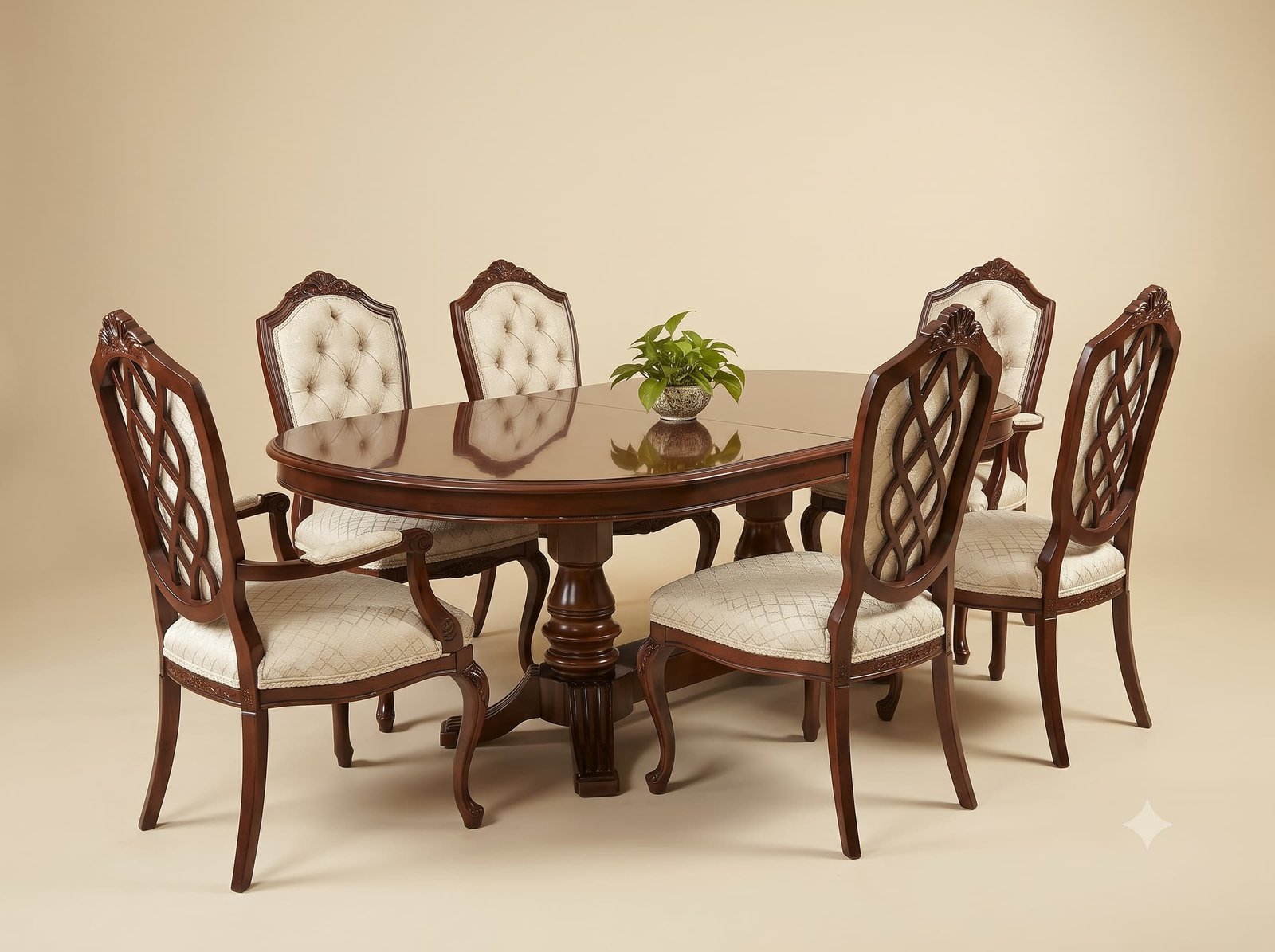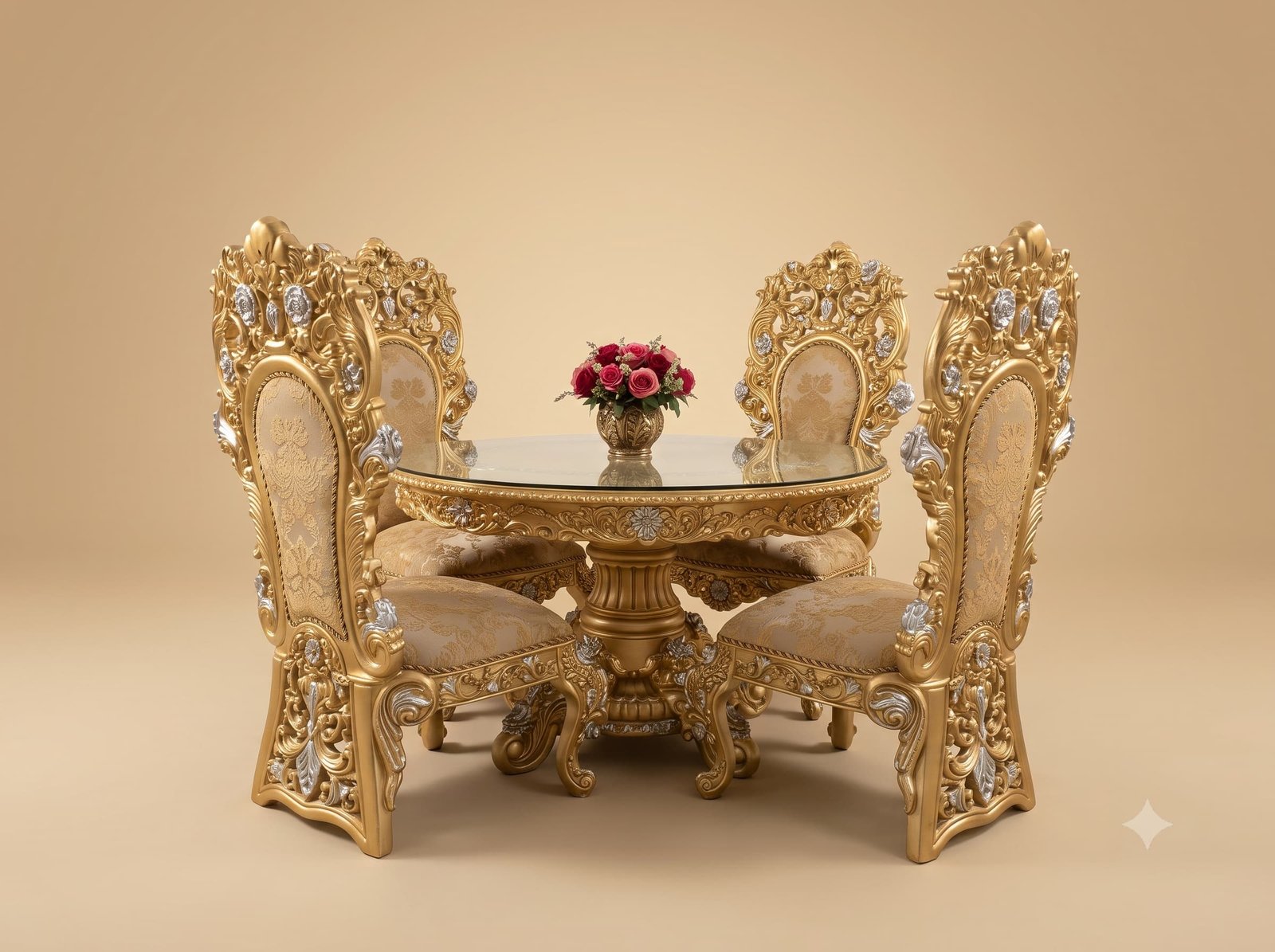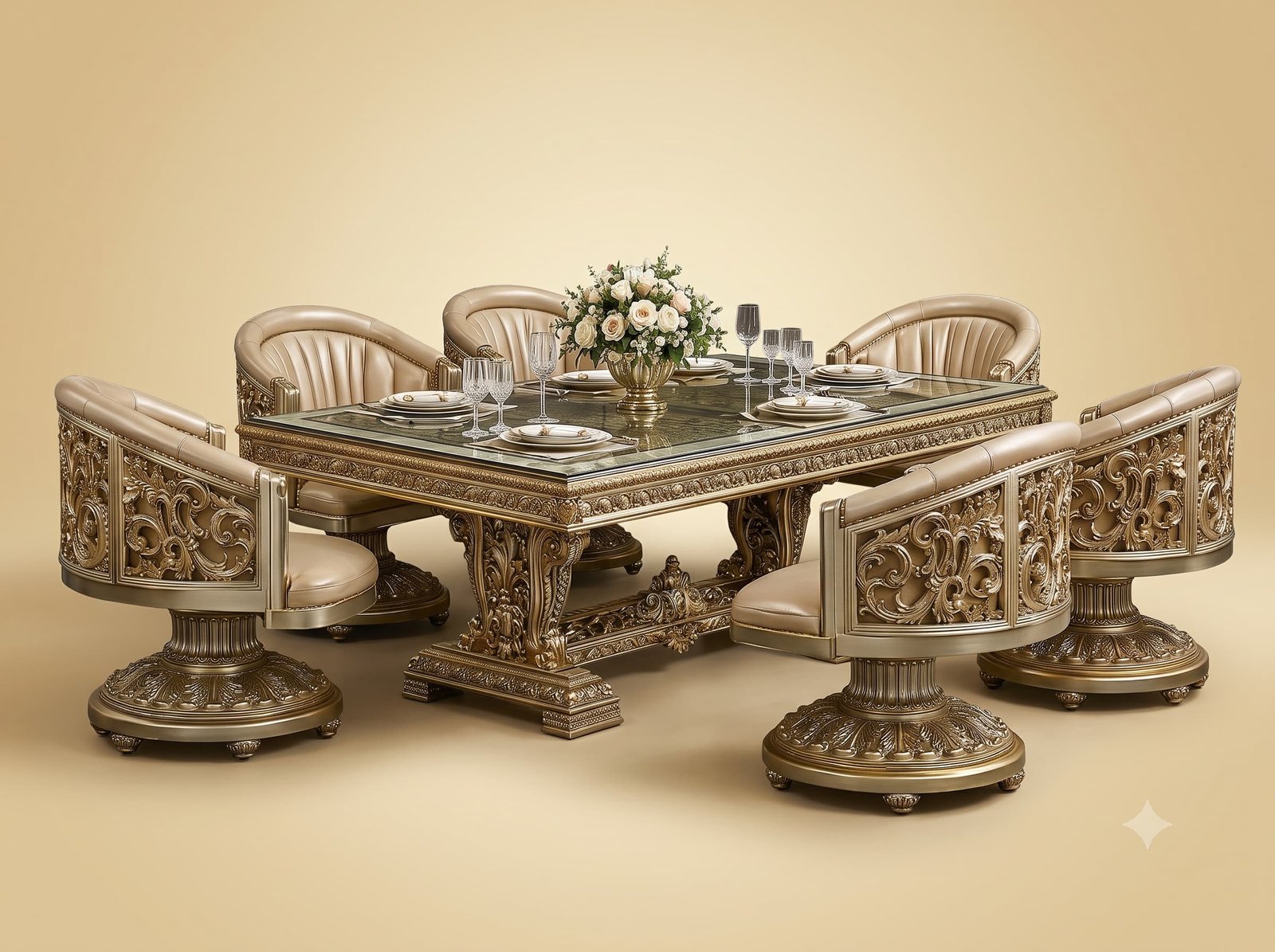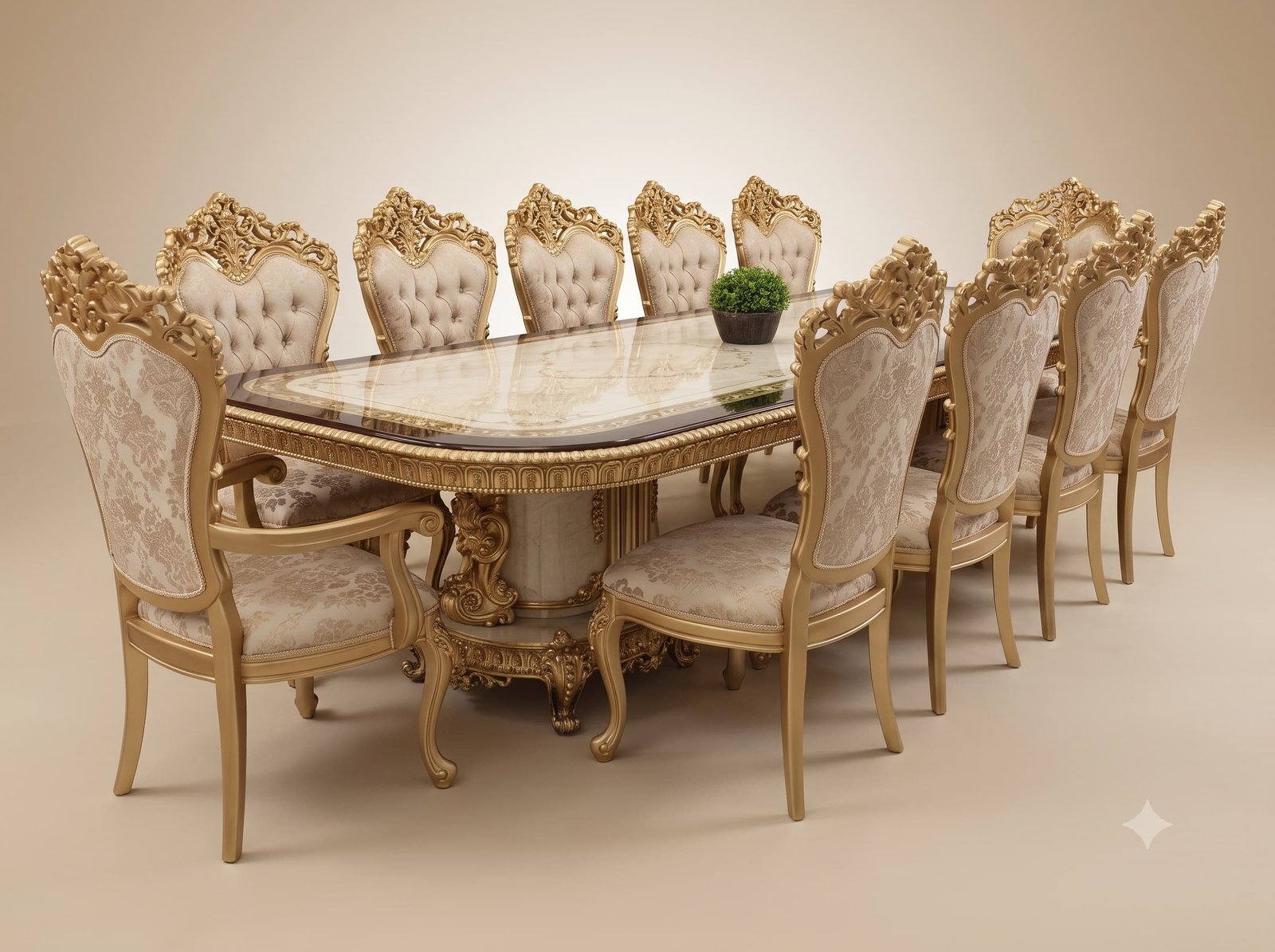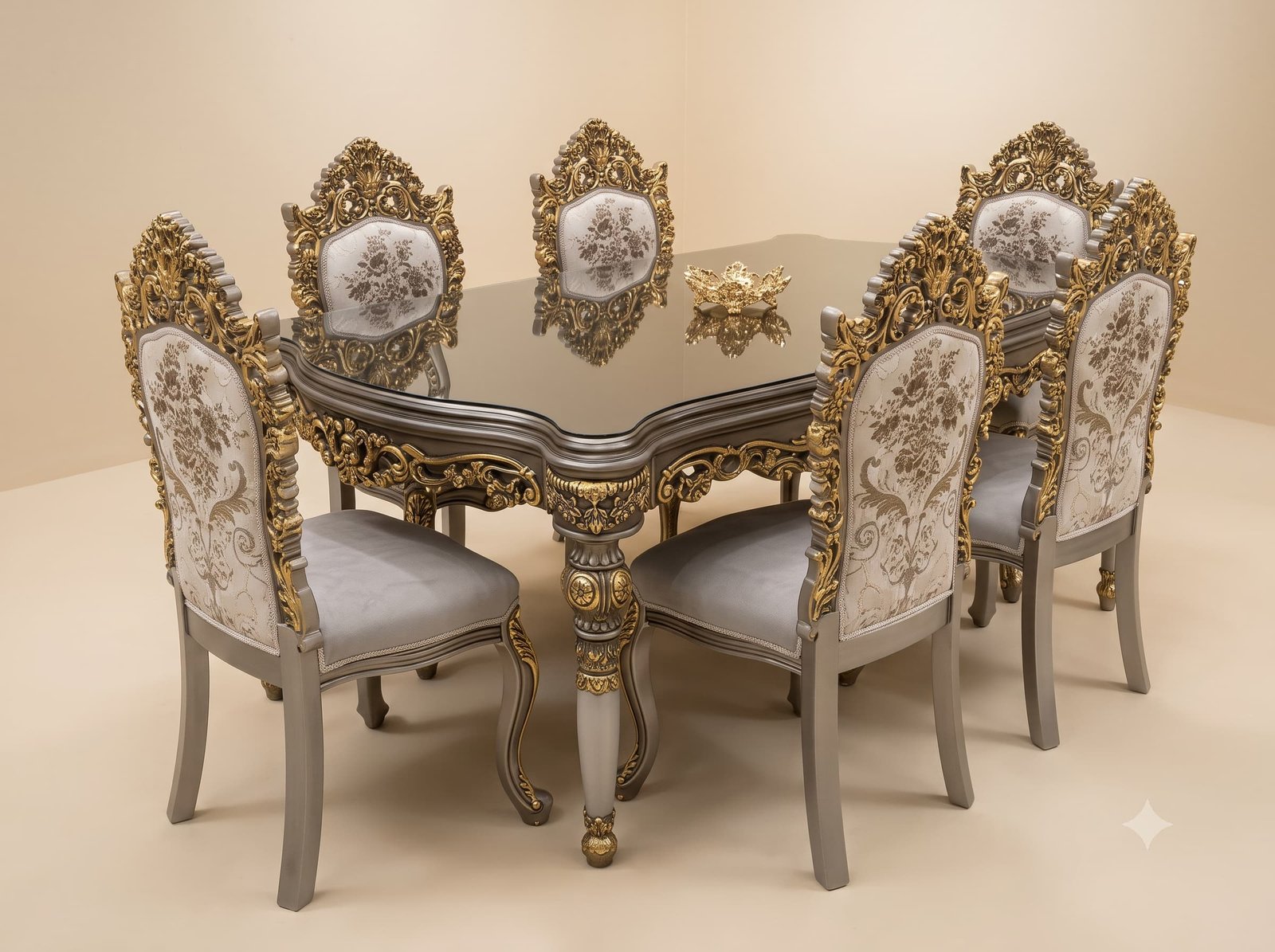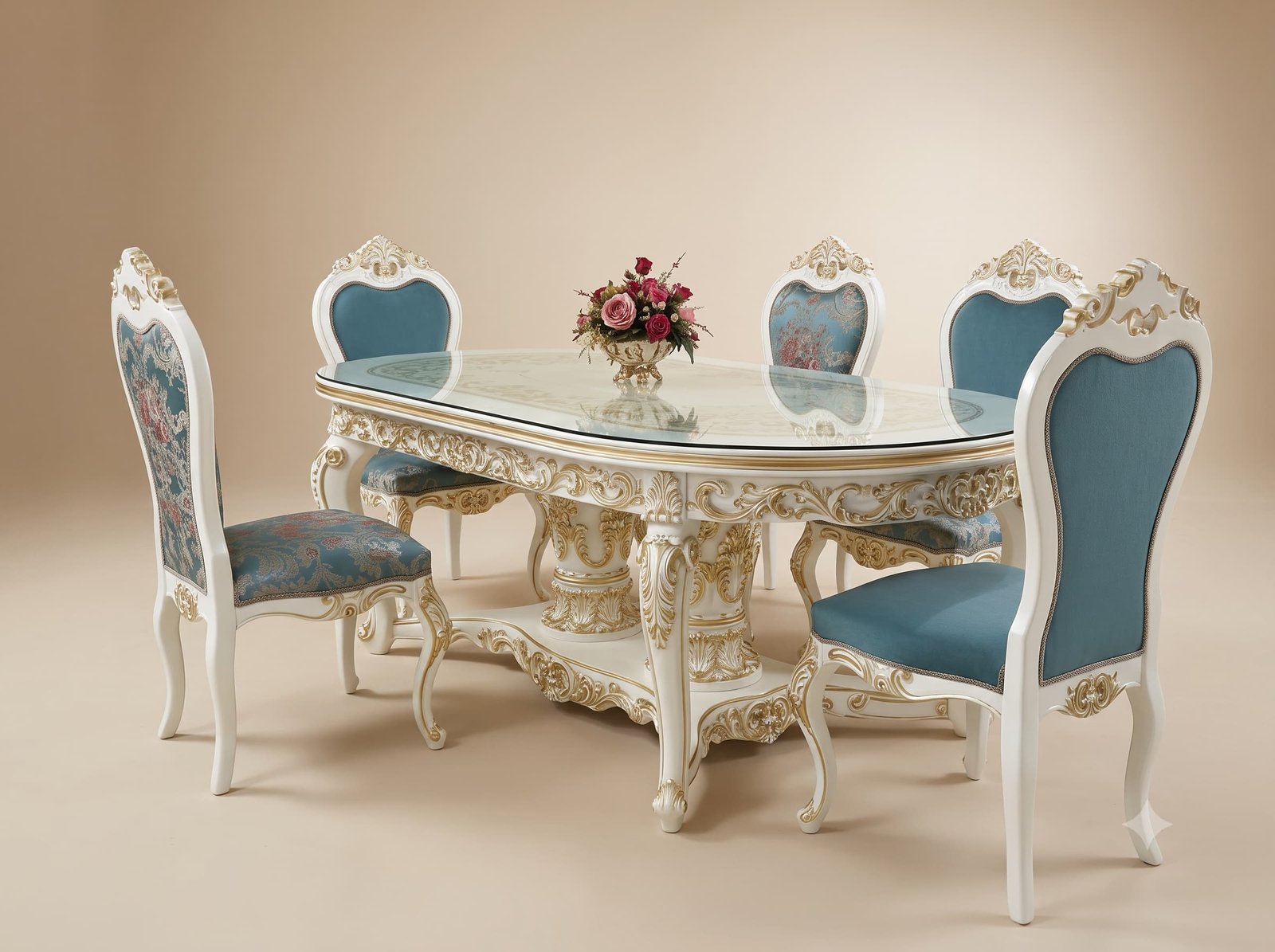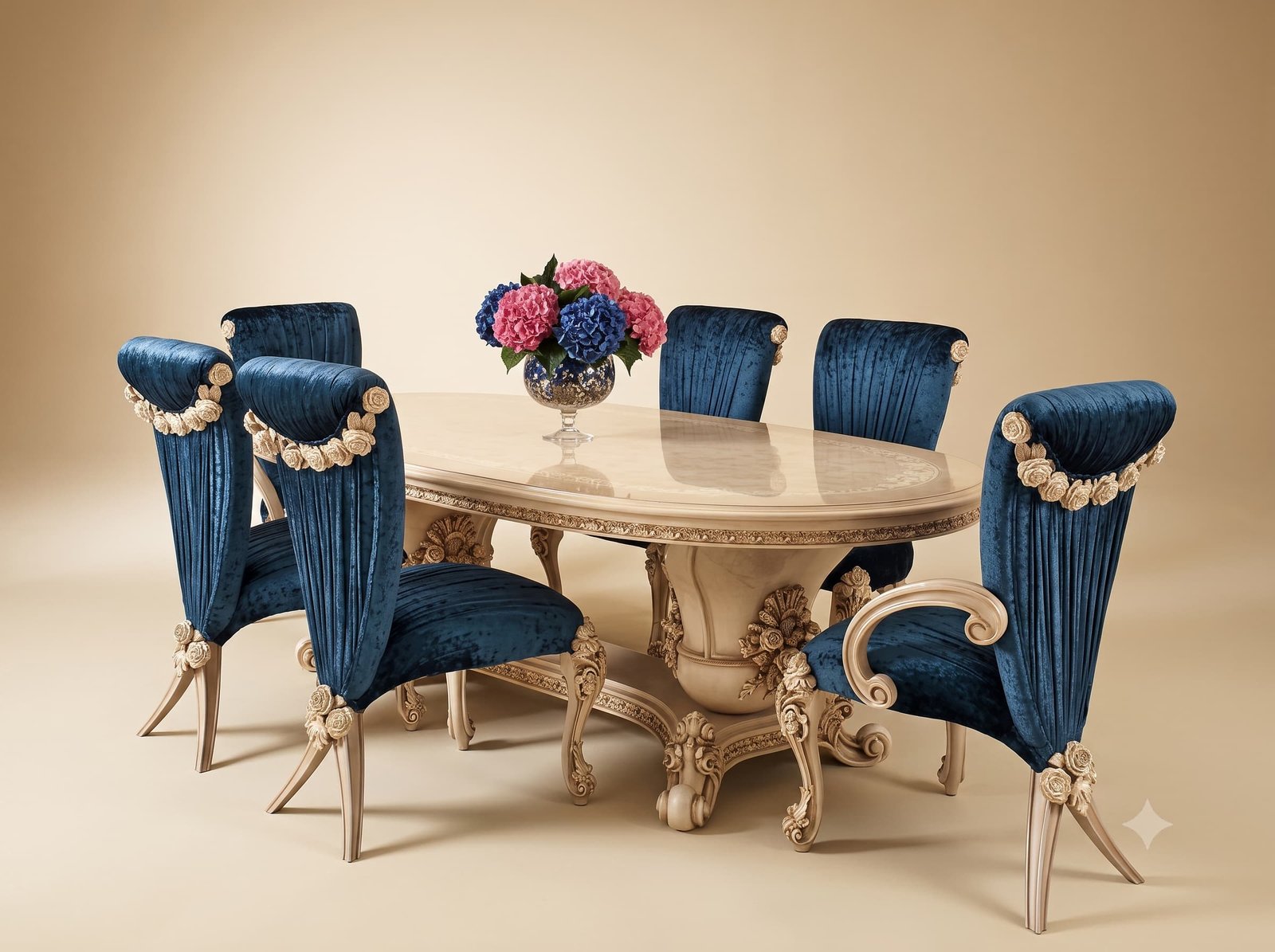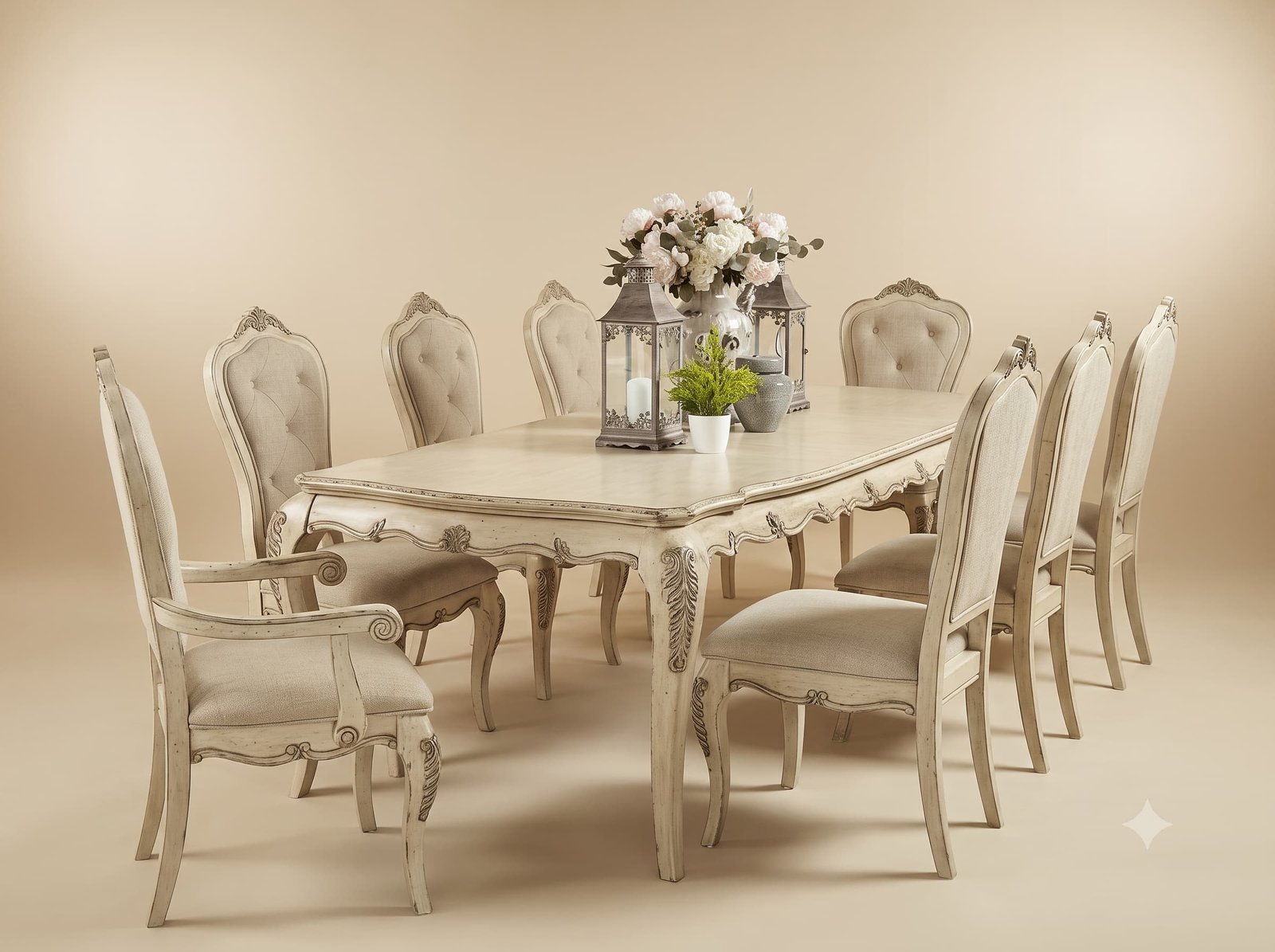
An antiqued finish fails when the wear is put in the wrong places. Rub a frame randomly and you get a piece of furniture that looks damaged. Rub it where a real chair actually wears, and it looks like it has been in a family for two generations.
So our finisher works from a map rather than by feel. On a dining chair, the wear points are specific and they are always the same: the top of the crest, where a hand grips to pull the chair out; the outer edge of the front seat rail, where legs brush past; the front of the arm on a carver, under a resting forearm; and the feet, particularly the outer front corner of each, where a chair is dragged rather than lifted. On the table, it is the edge of the top on the long sides and the outer face of the leg nearest the door.
Those points get the finish cut back to show the ground beneath. Everywhere else stays as laid. Nothing is worn on an inside face, in a recess, or under an apron, because nothing wears there in real life - and a recess rubbed through is the single clearest sign of a finish aged for effect rather than observed.
Across ten chairs, the map also keeps the set consistent. Ten chairs aged by feel would be ten different chairs; aged to the same map, they are one set that has been used together.
 Ask Price On WhatsApp