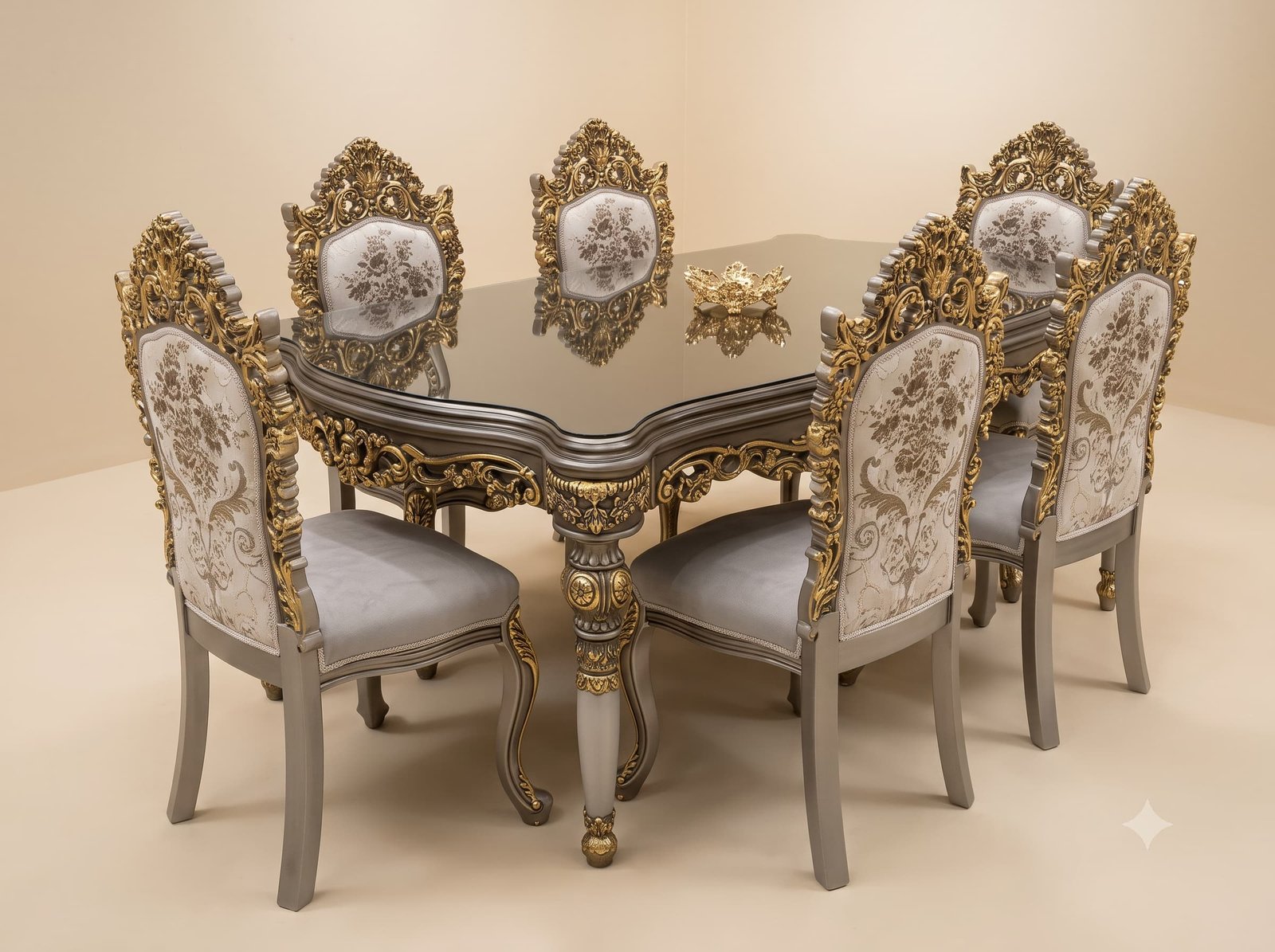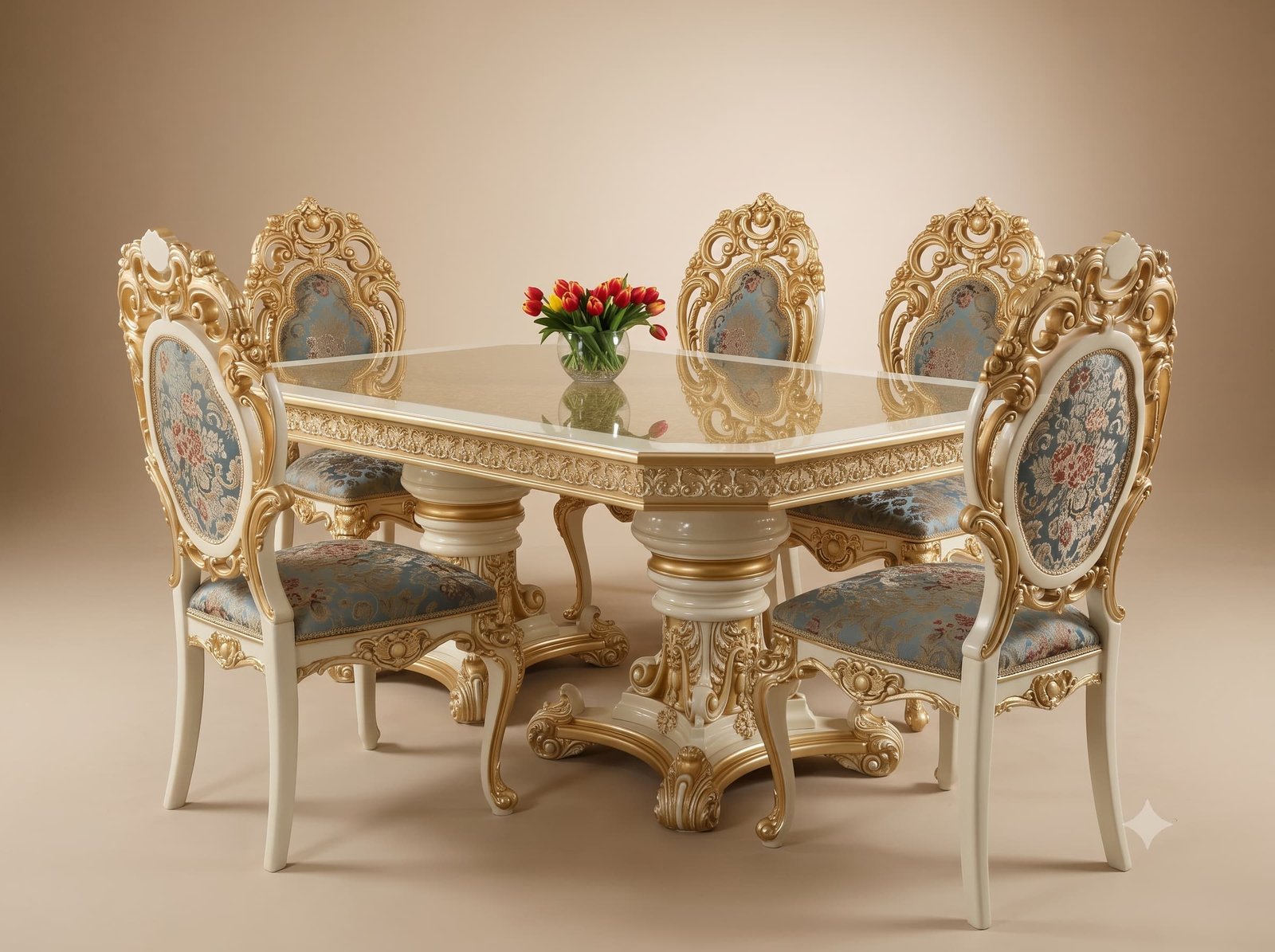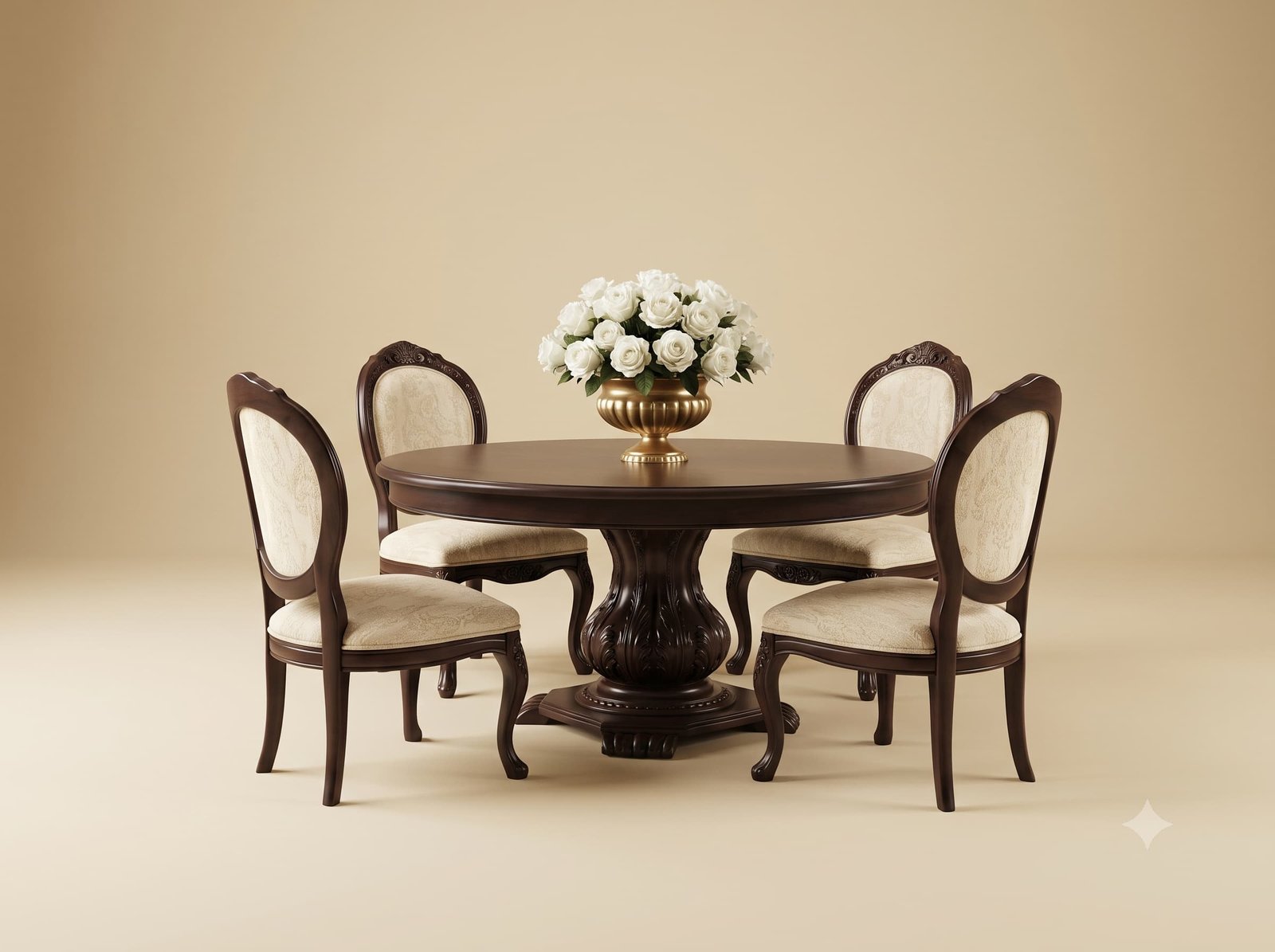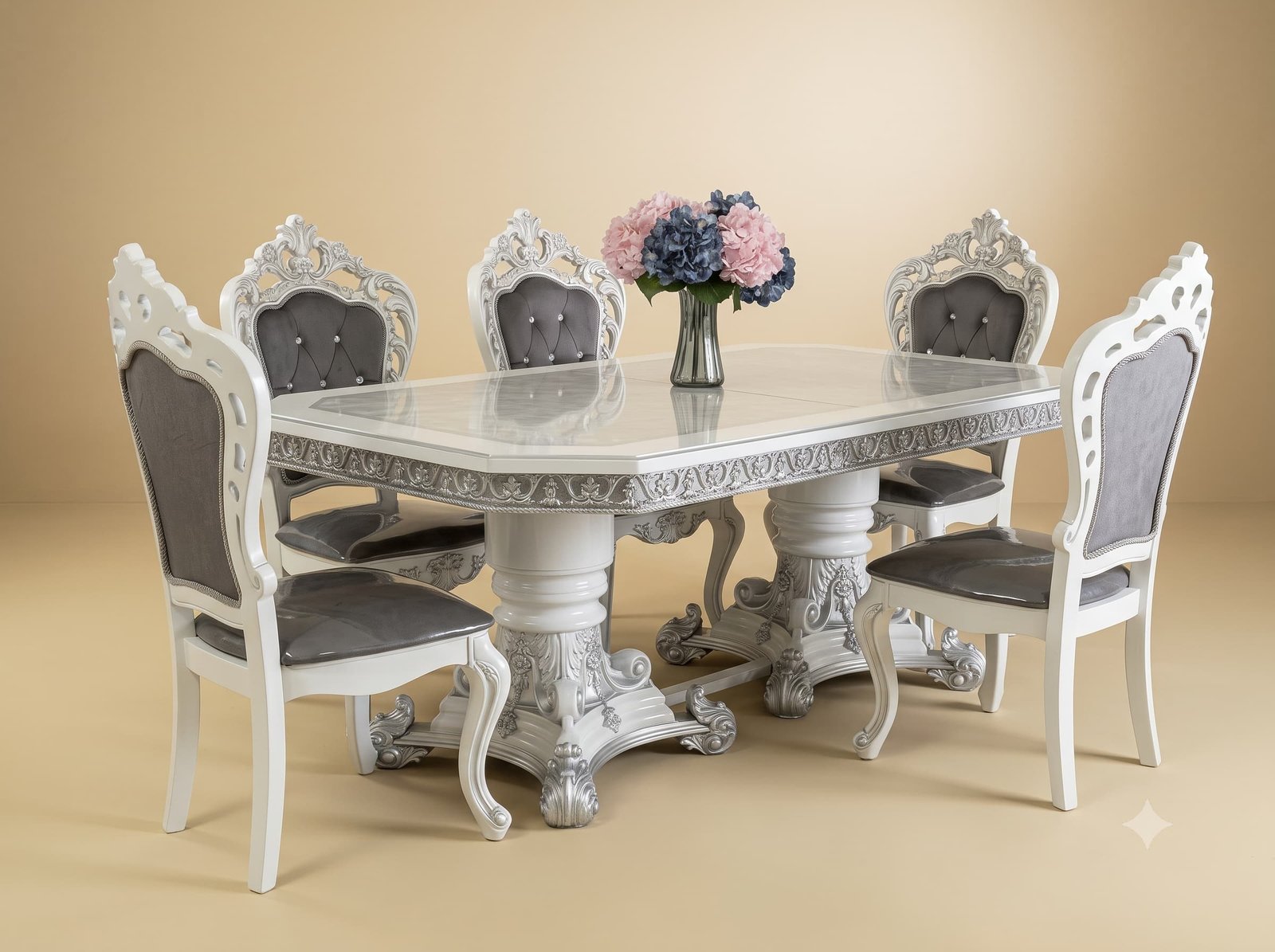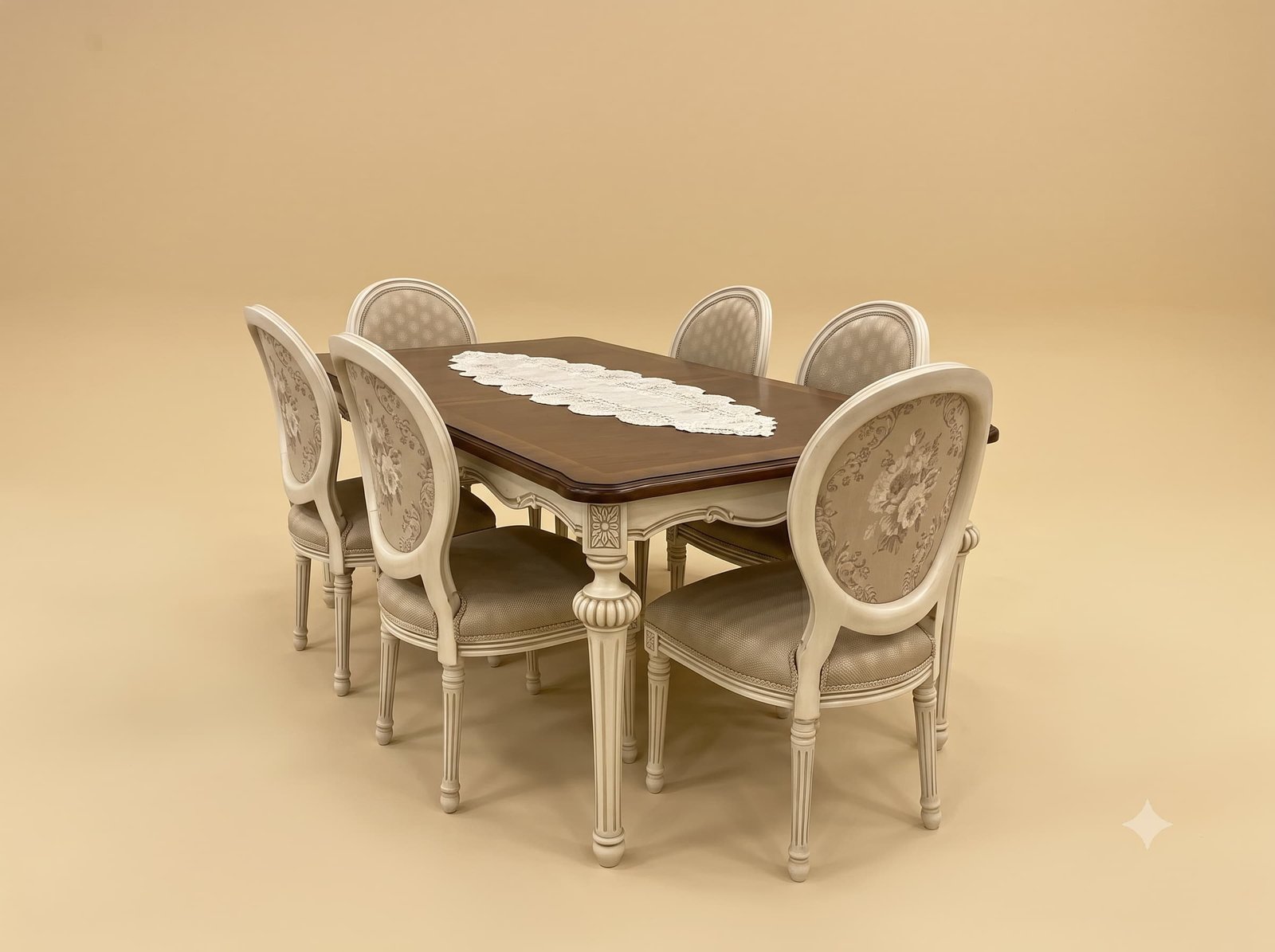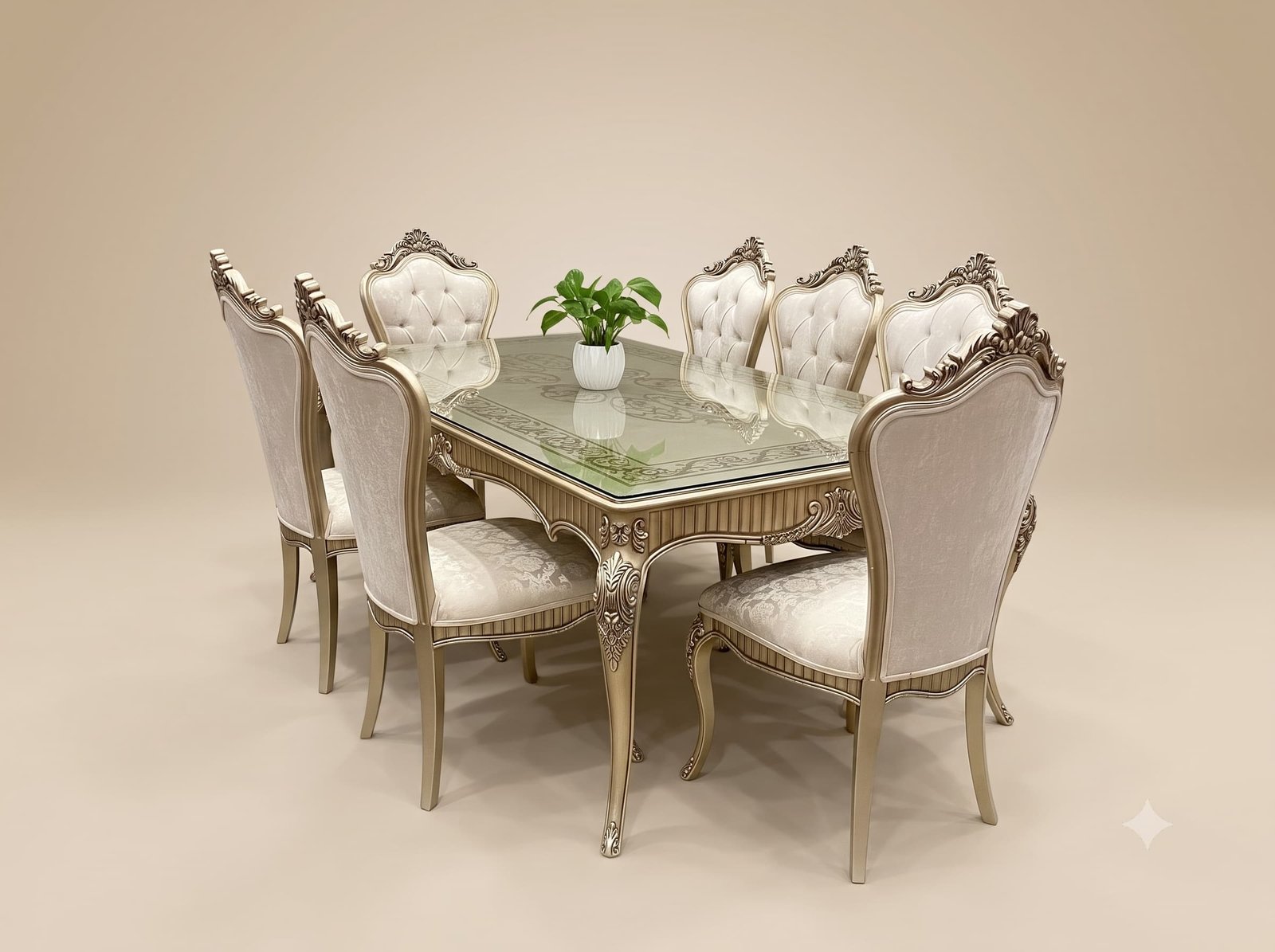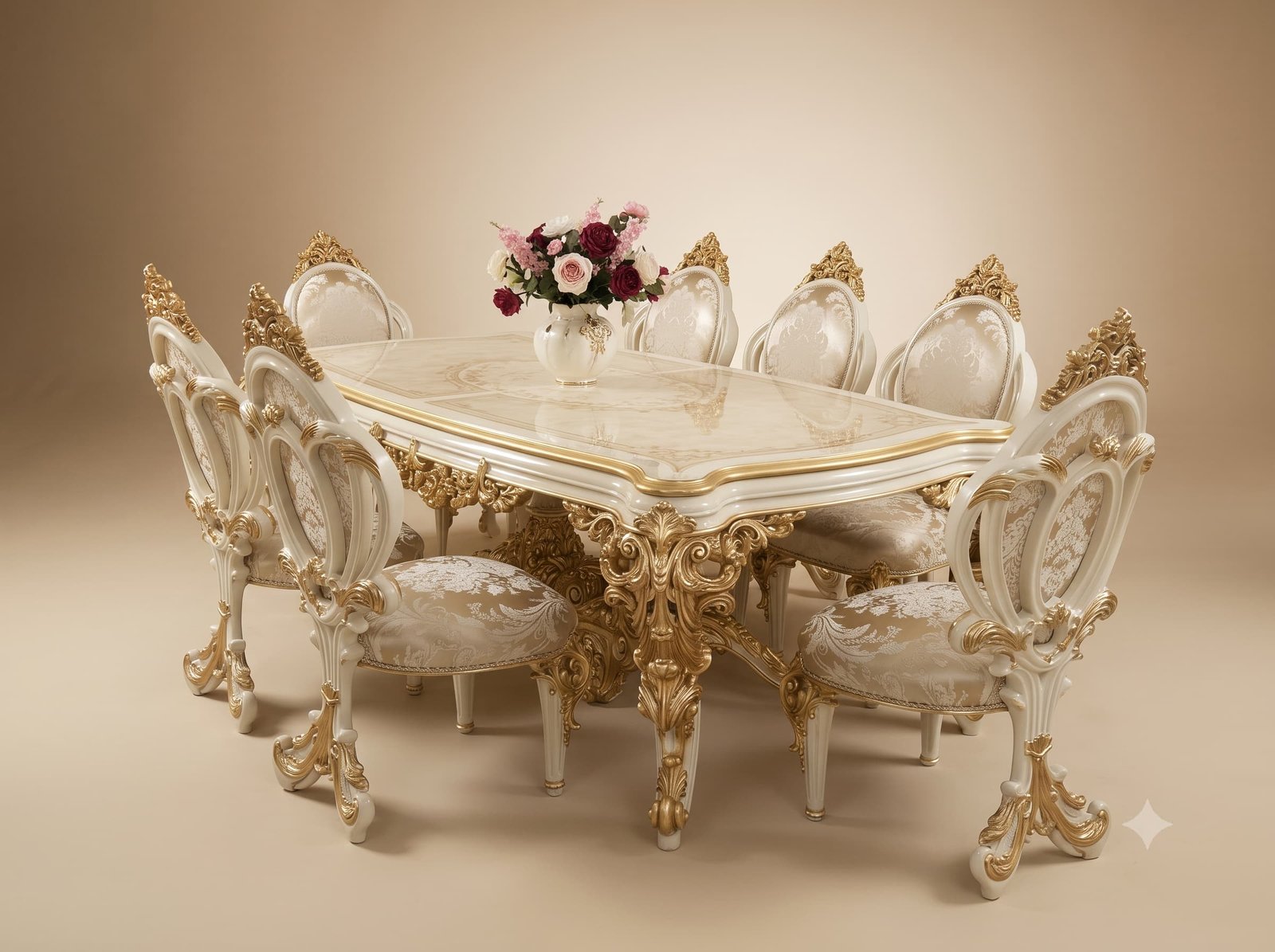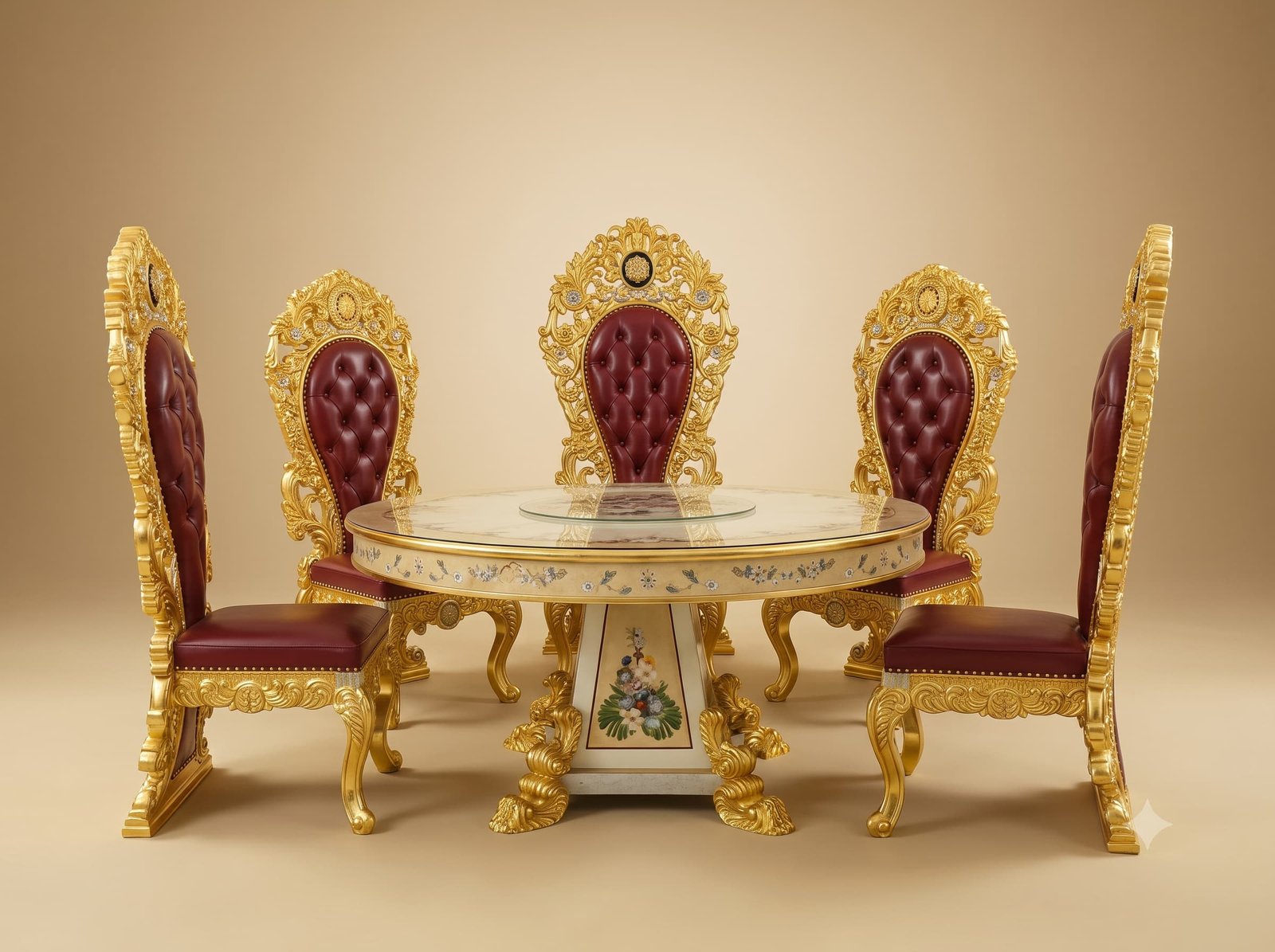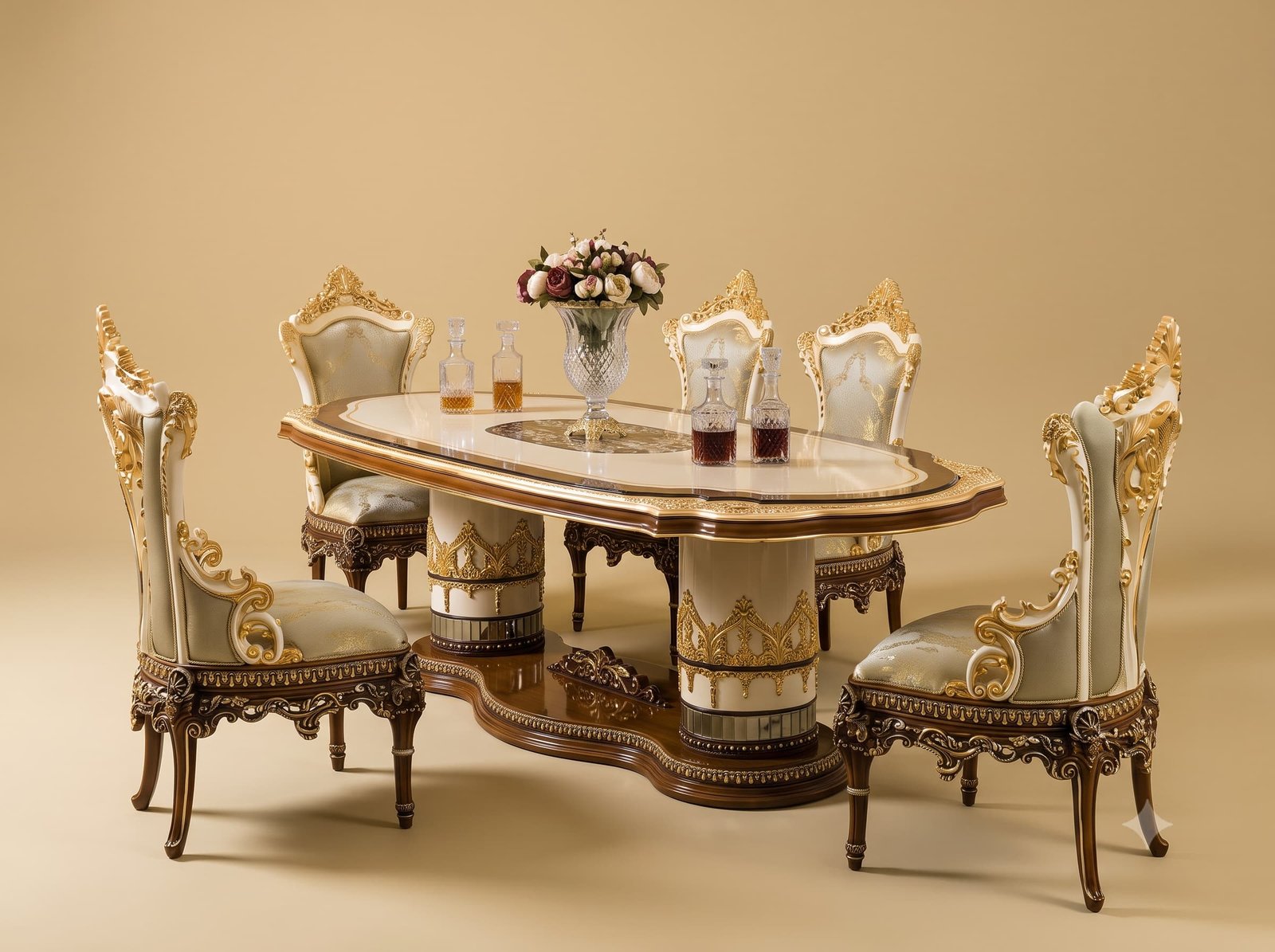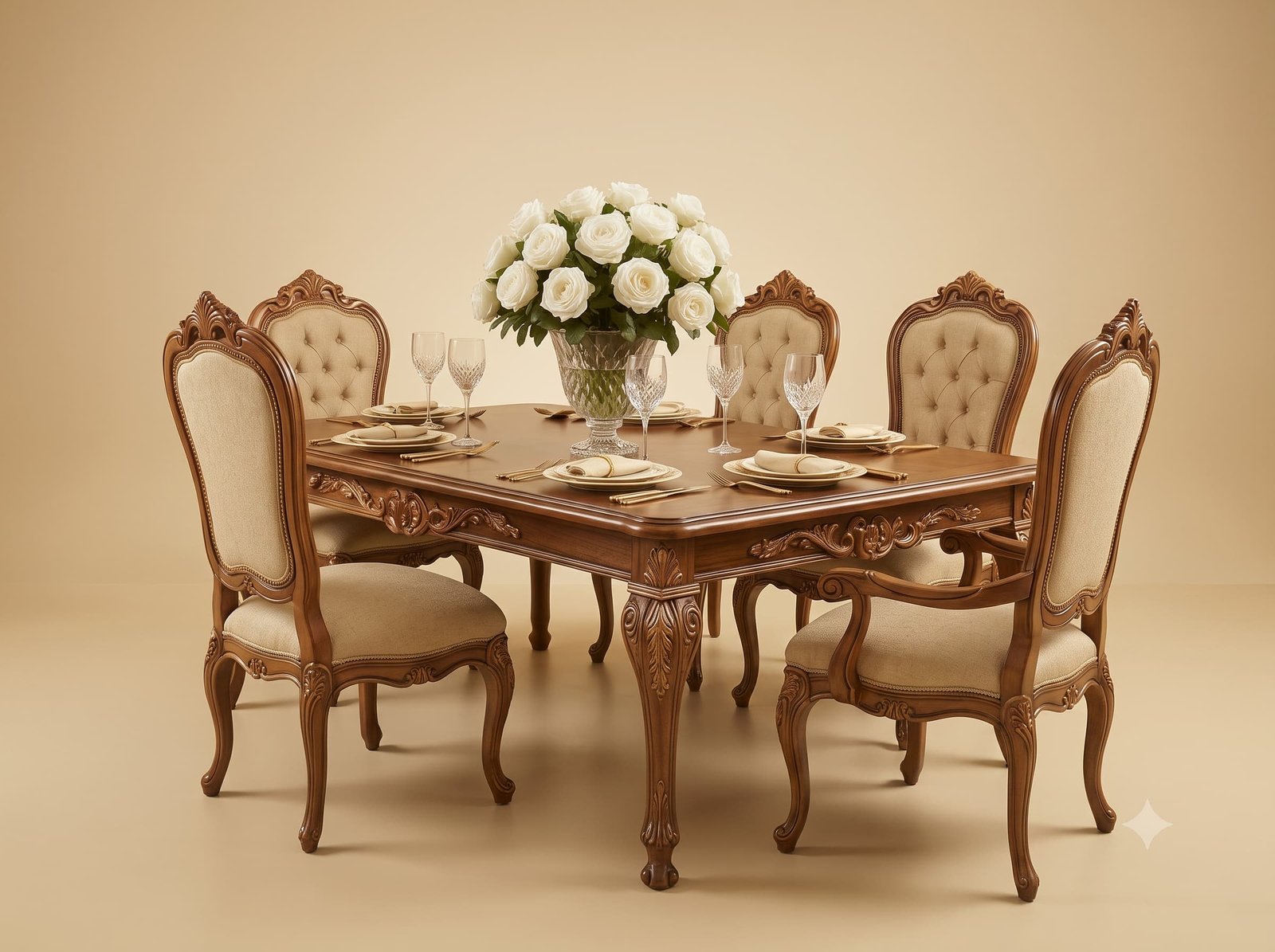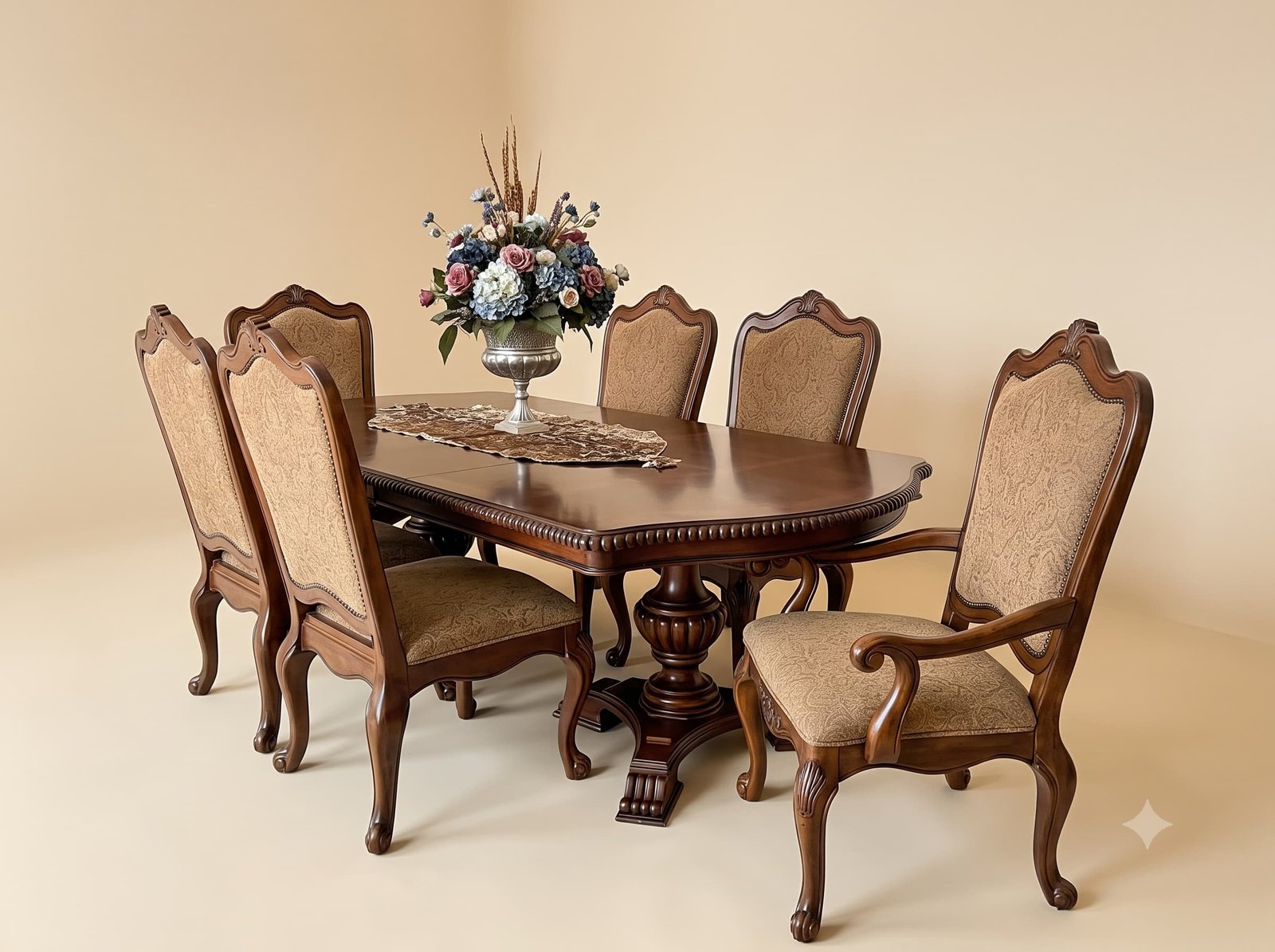
If a dining table is going to take an extension leaf, the decision has to be made before the top is cut, not after - and where the leaf comes from matters more than most people expect.
On a natural timber top, the grain is the pattern. Cut a leaf from a different board and it will be a perfectly good piece of teak that simply does not belong: the figure runs differently, and it takes the polish at a slightly different rate, so the extended table has a stripe through the middle for the rest of its life.
So when a client asks for a leaf, we cut the top oversize and take the leaf out of the middle of it. The two halves of the top and the leaf between them were all one board, in sequence, so when the table is opened the grain runs straight through the join as though the table had always been that length. Closed, the halves meet on the line where the leaf was removed, and the figure matches there too.
The alignment pins are set from the same cut, which is why the leaf drops in without persuasion. And because the leaf came out of the top, its thickness and its polish are identical - not matched, identical.
It costs a longer board. It is the only way a leaf disappears.
 Ask Price On WhatsApp