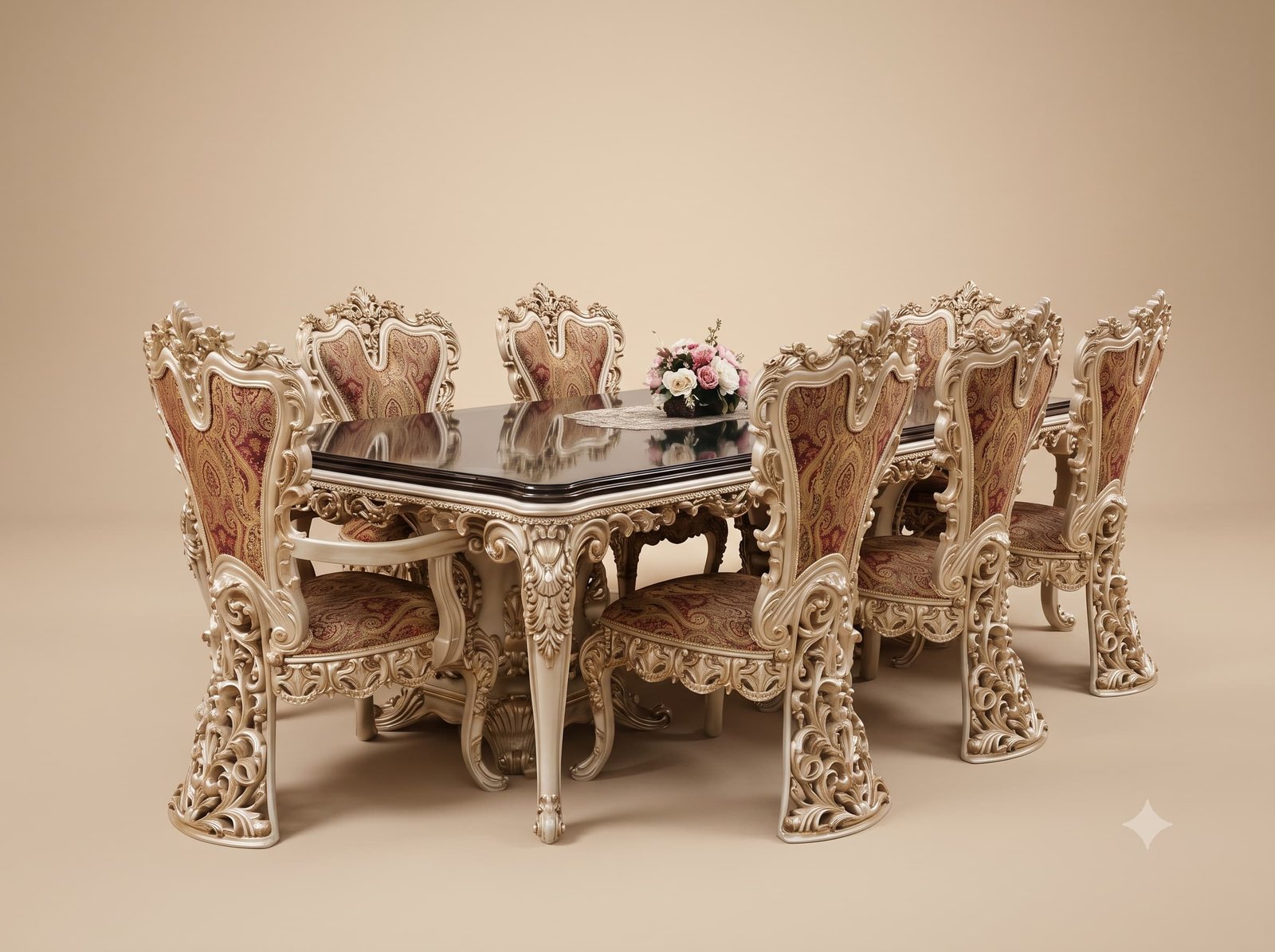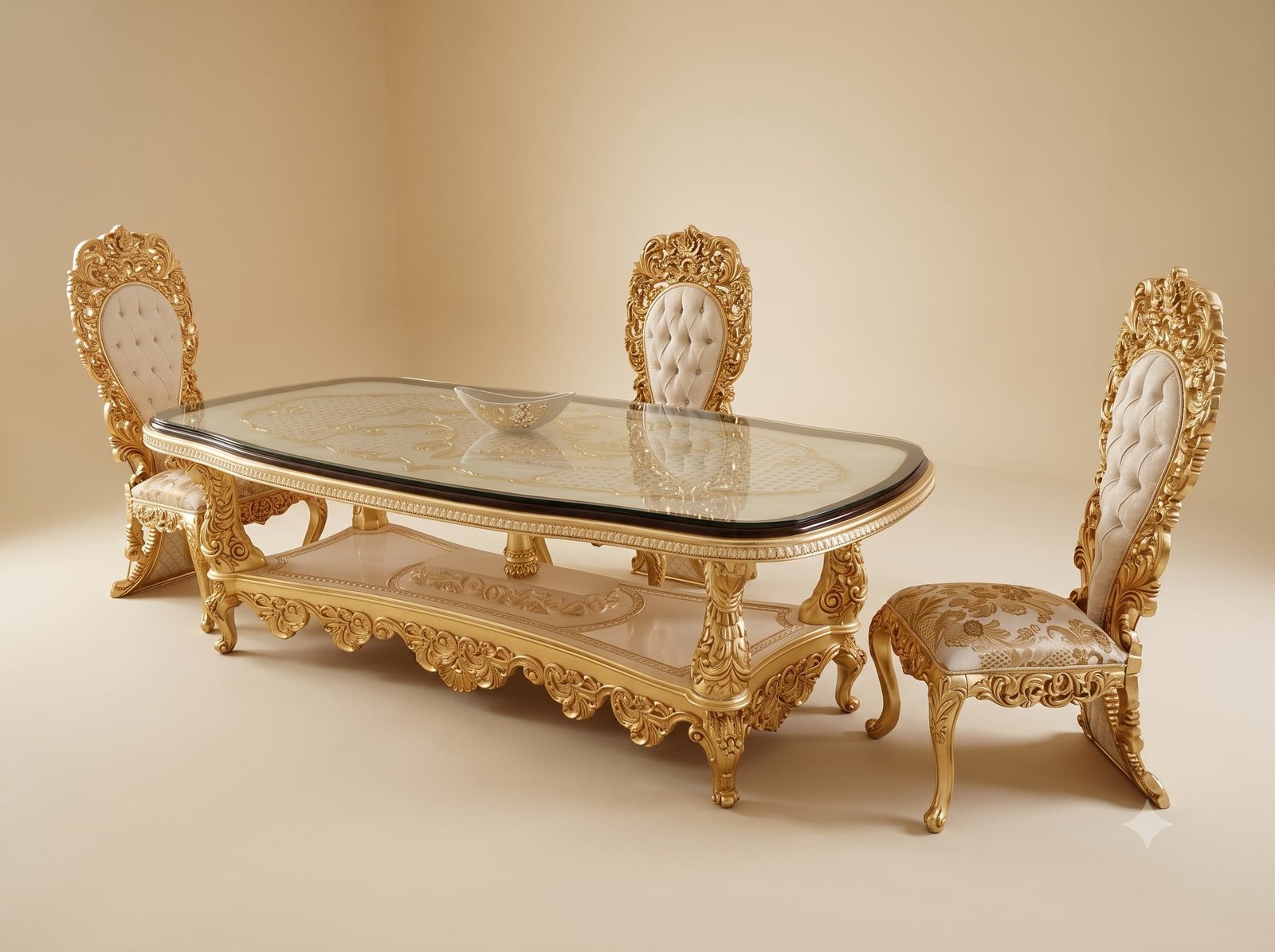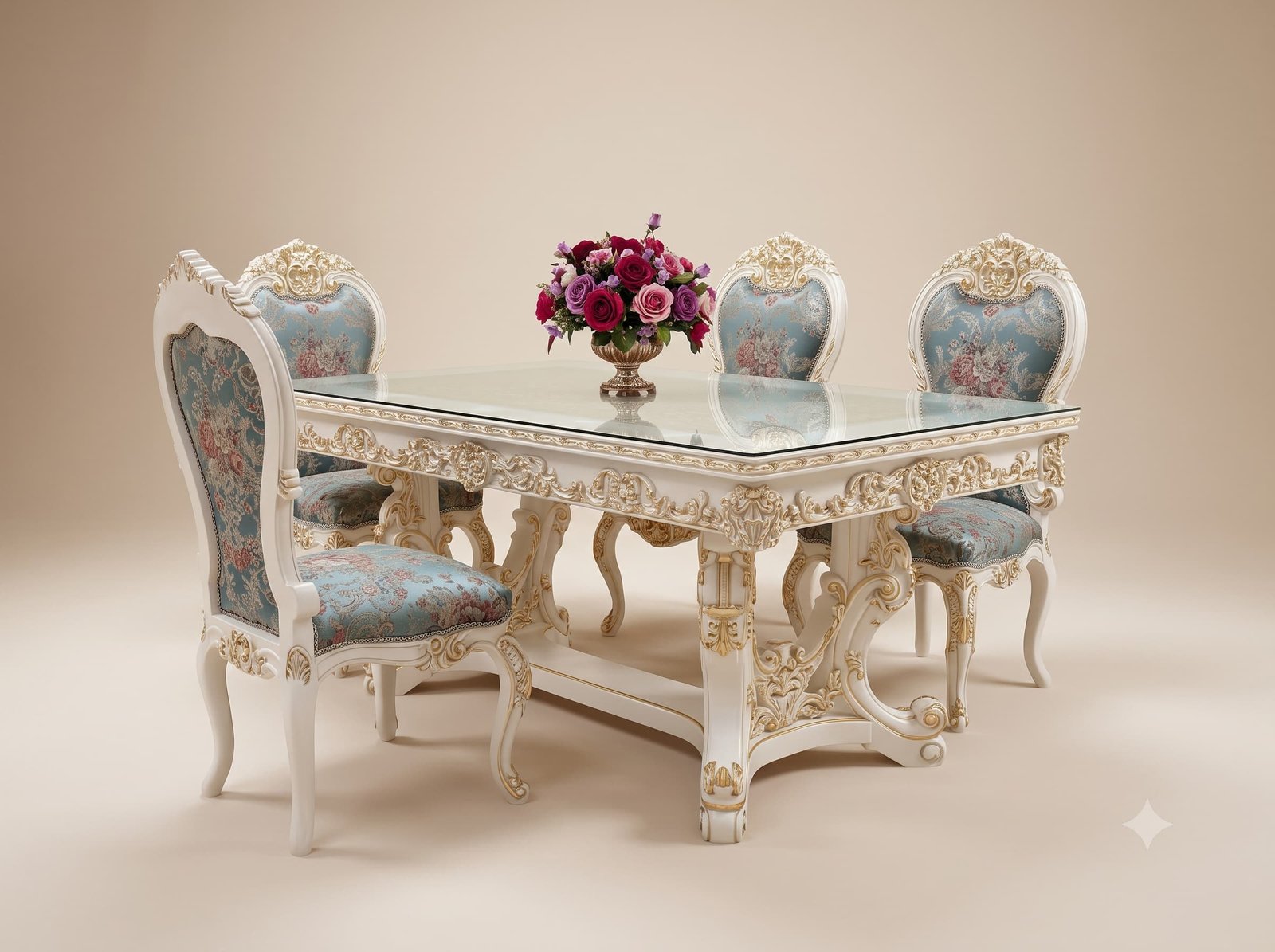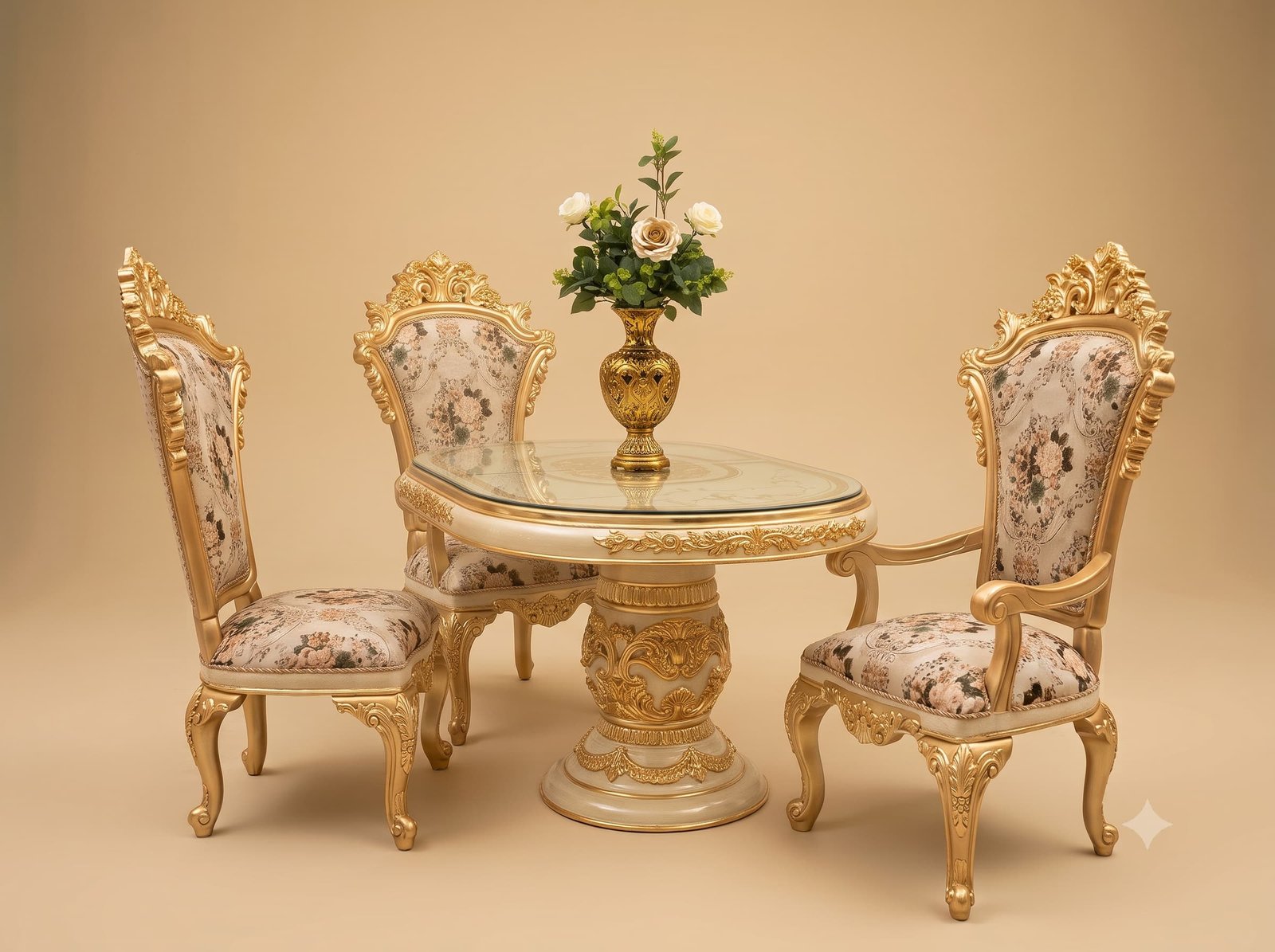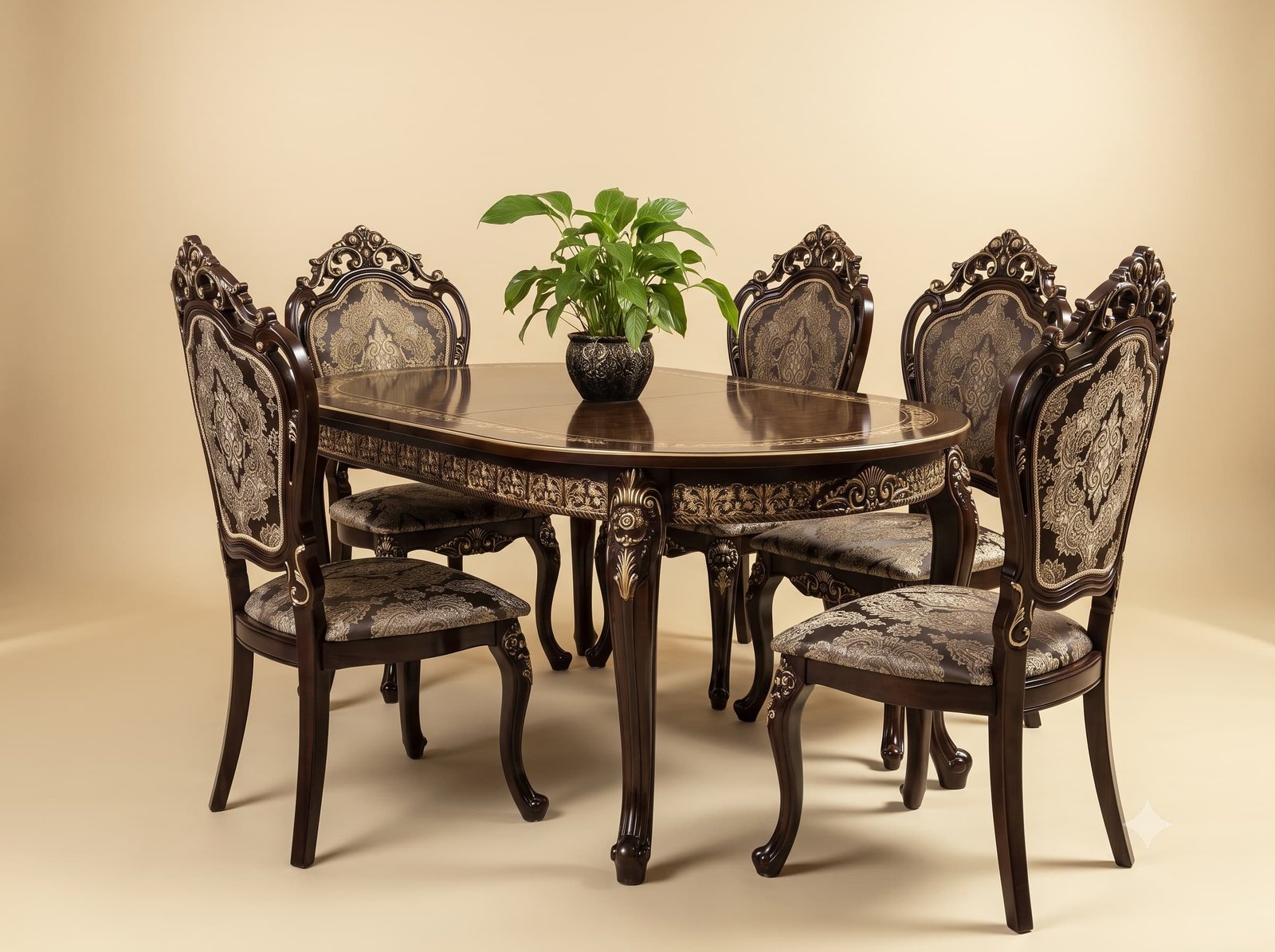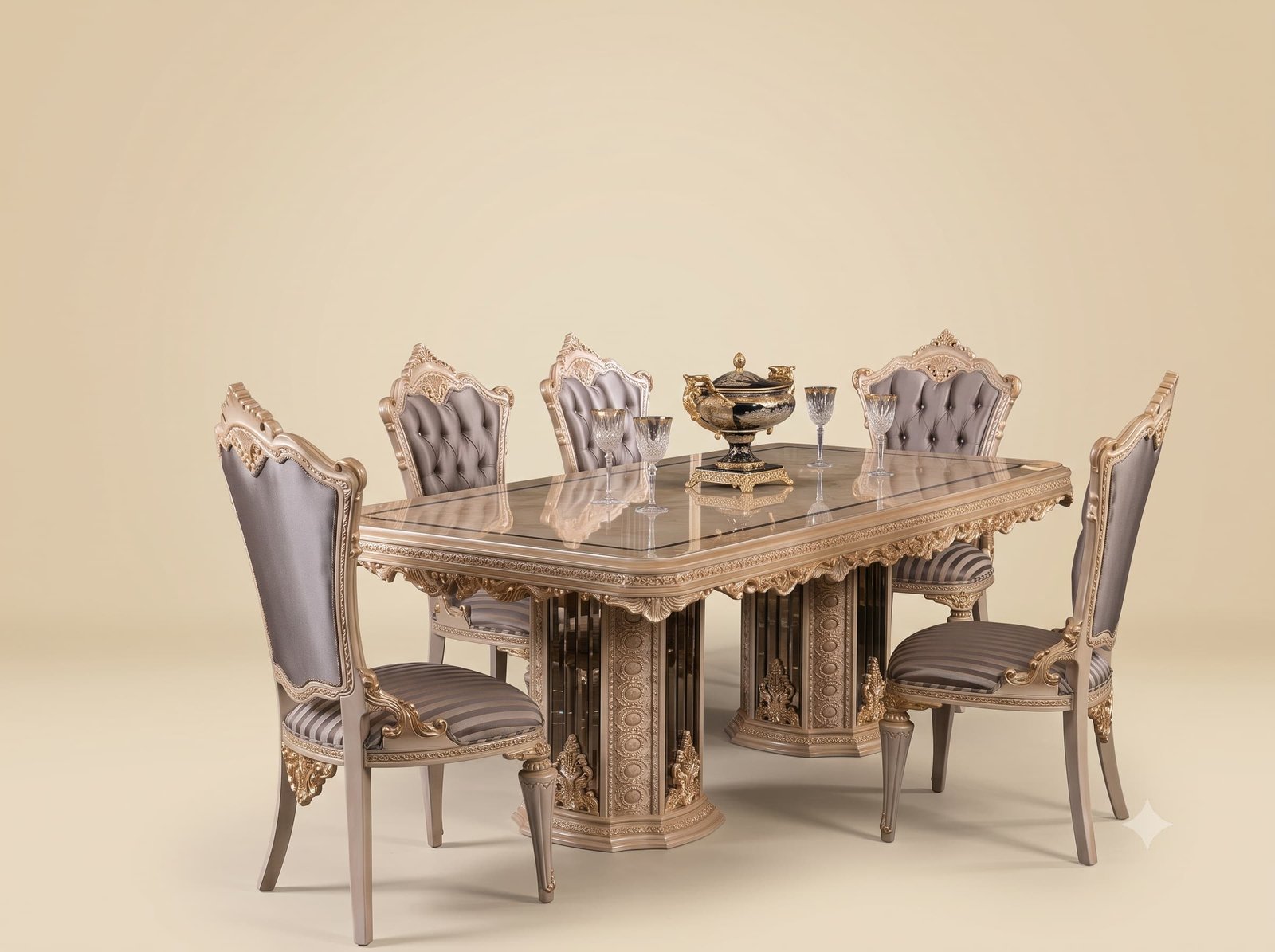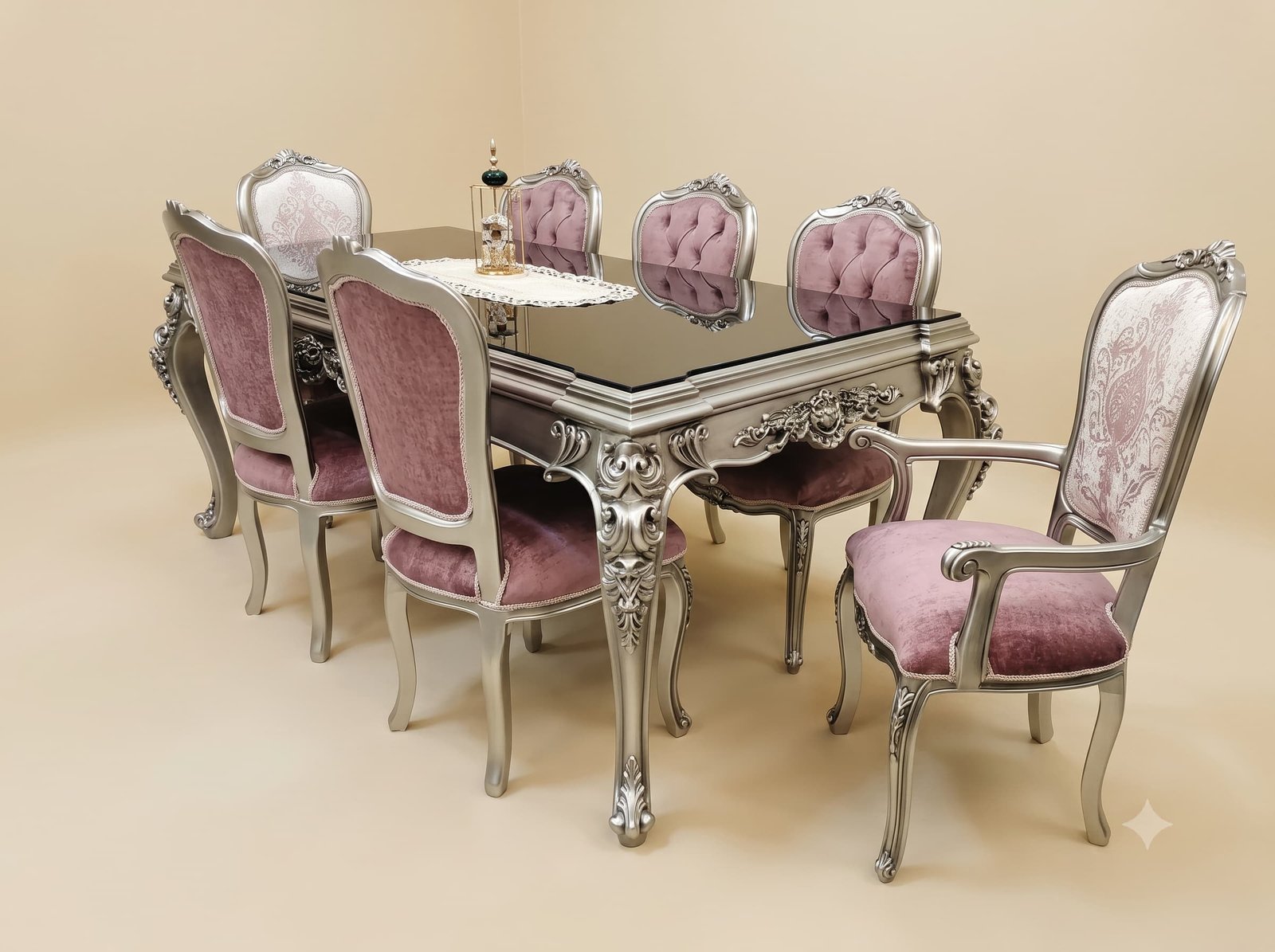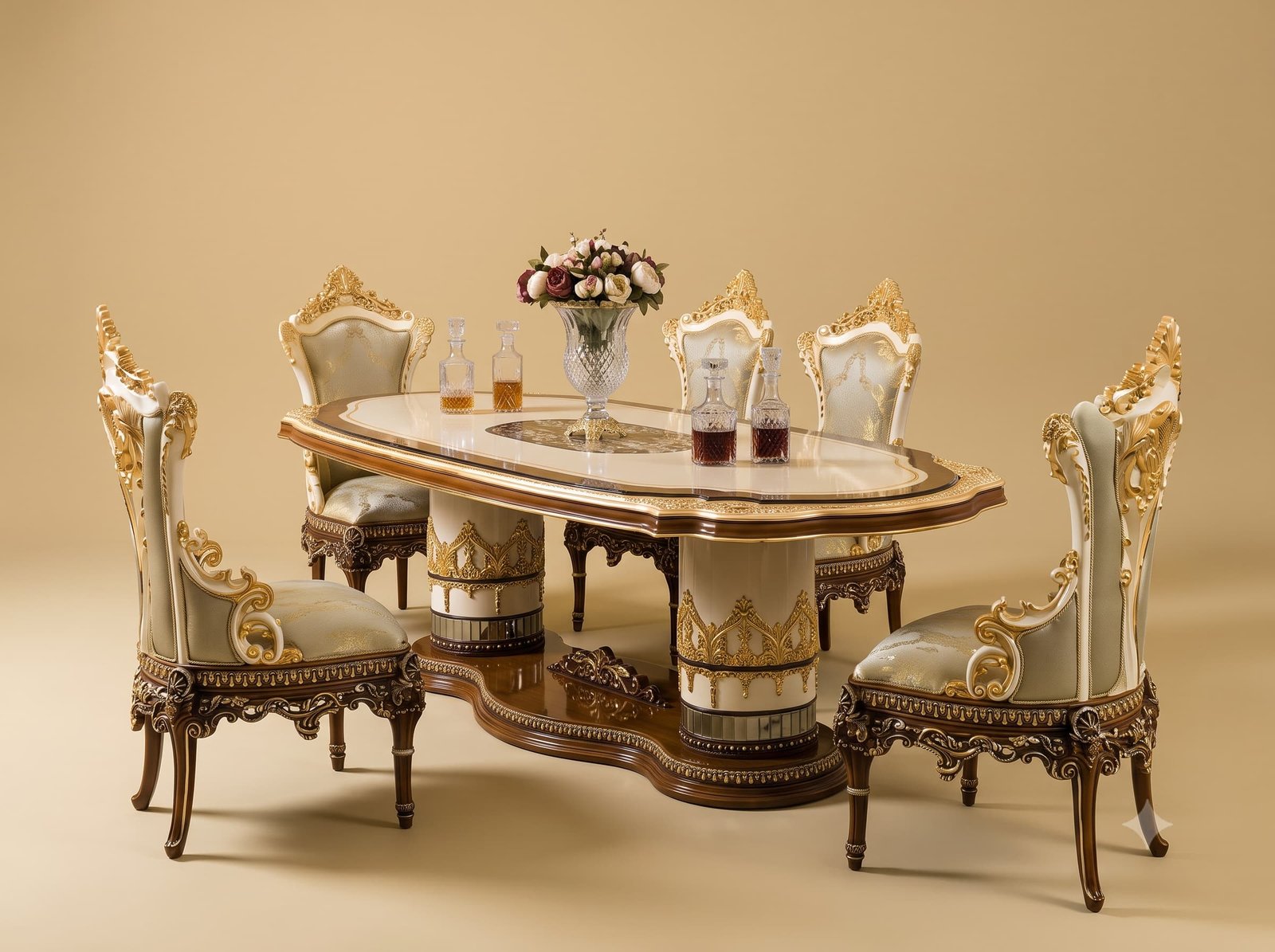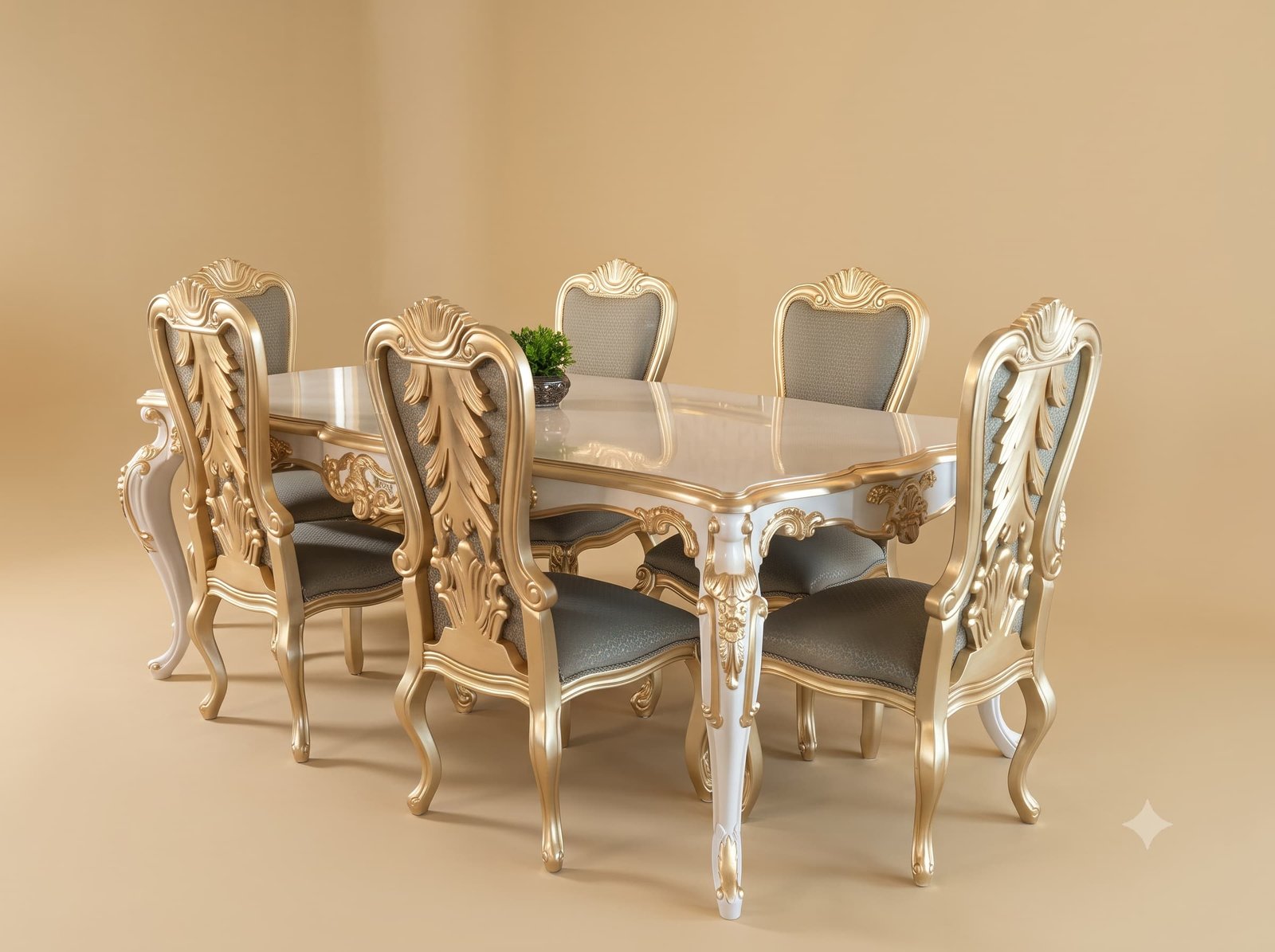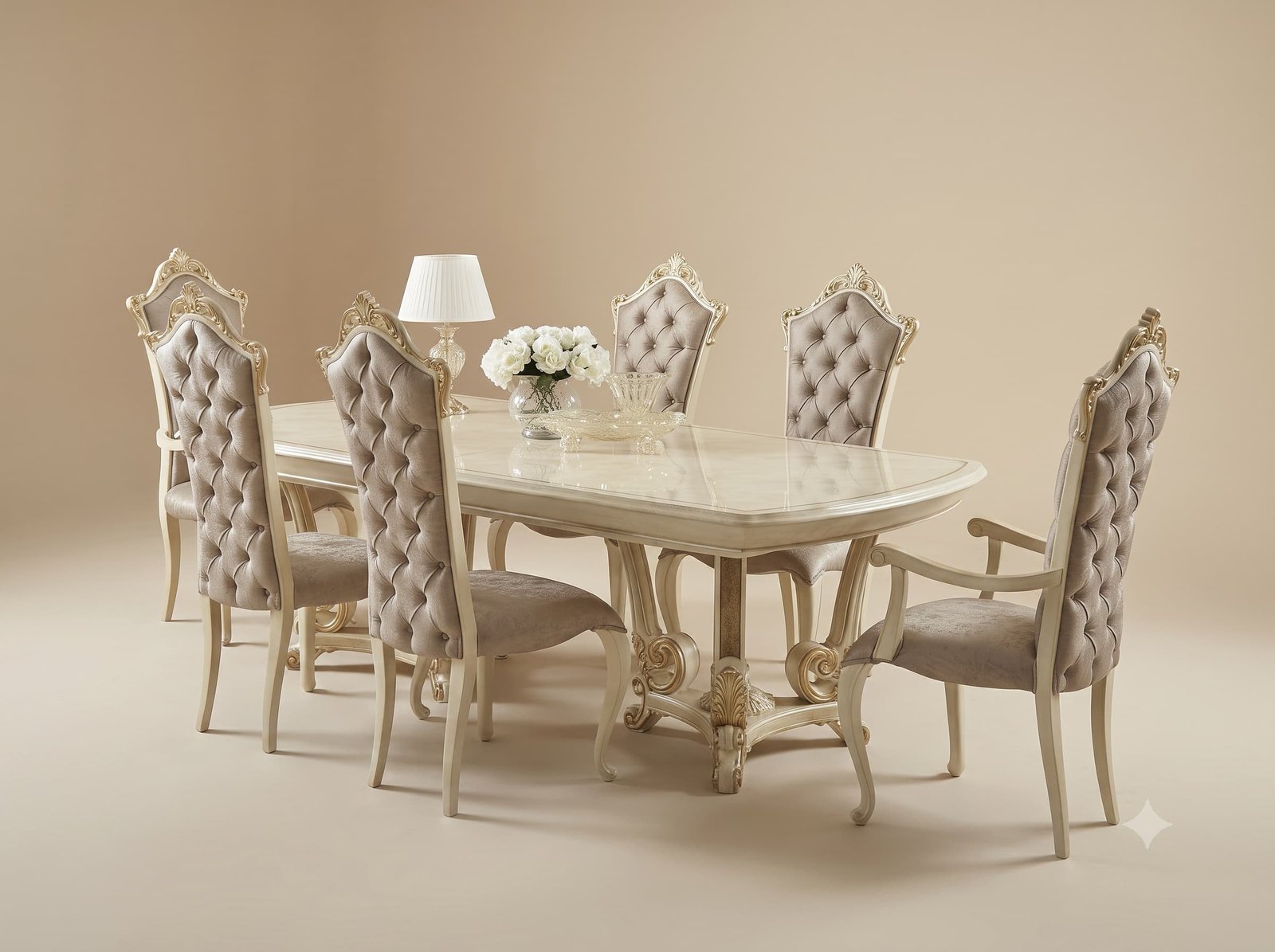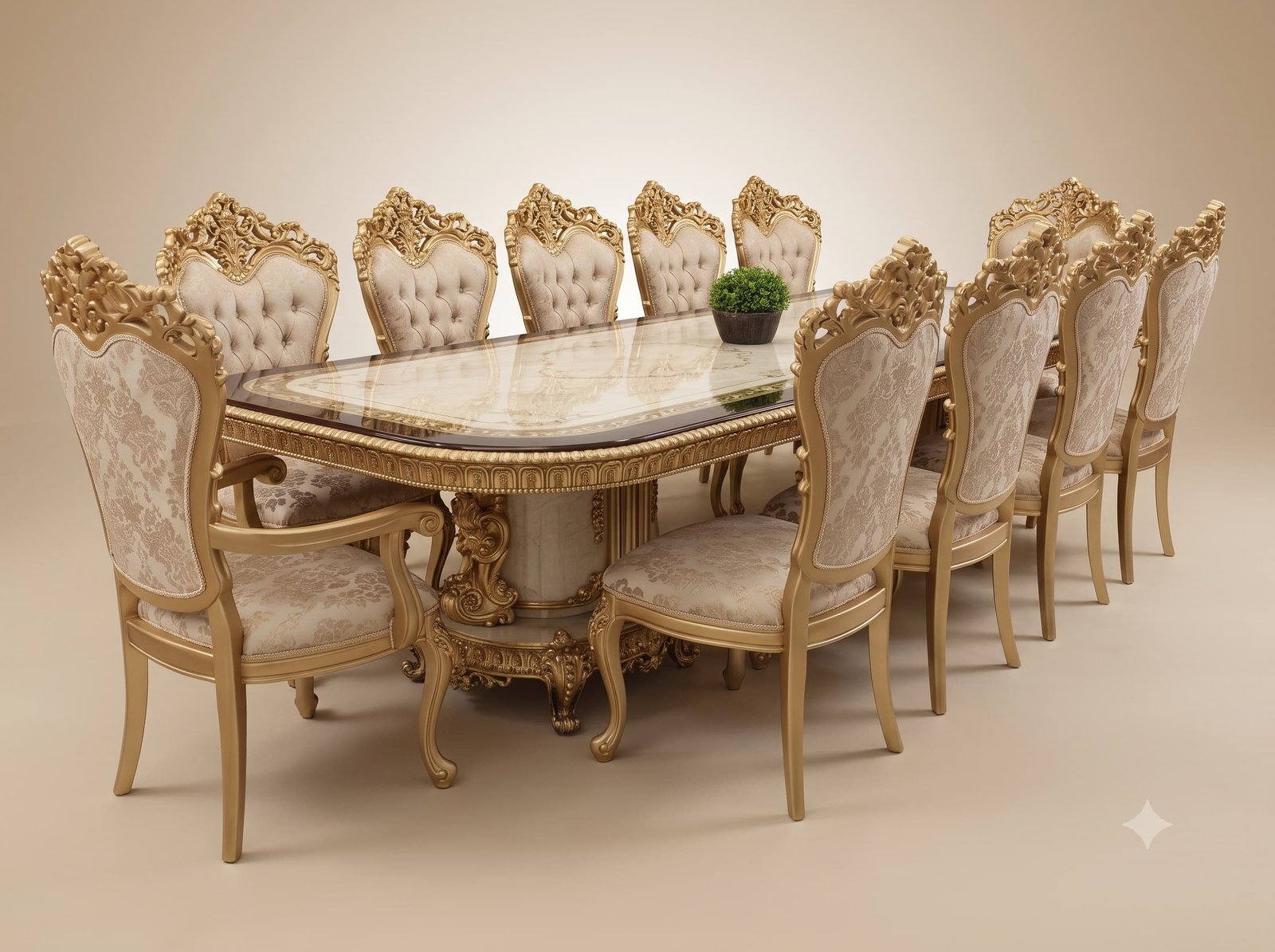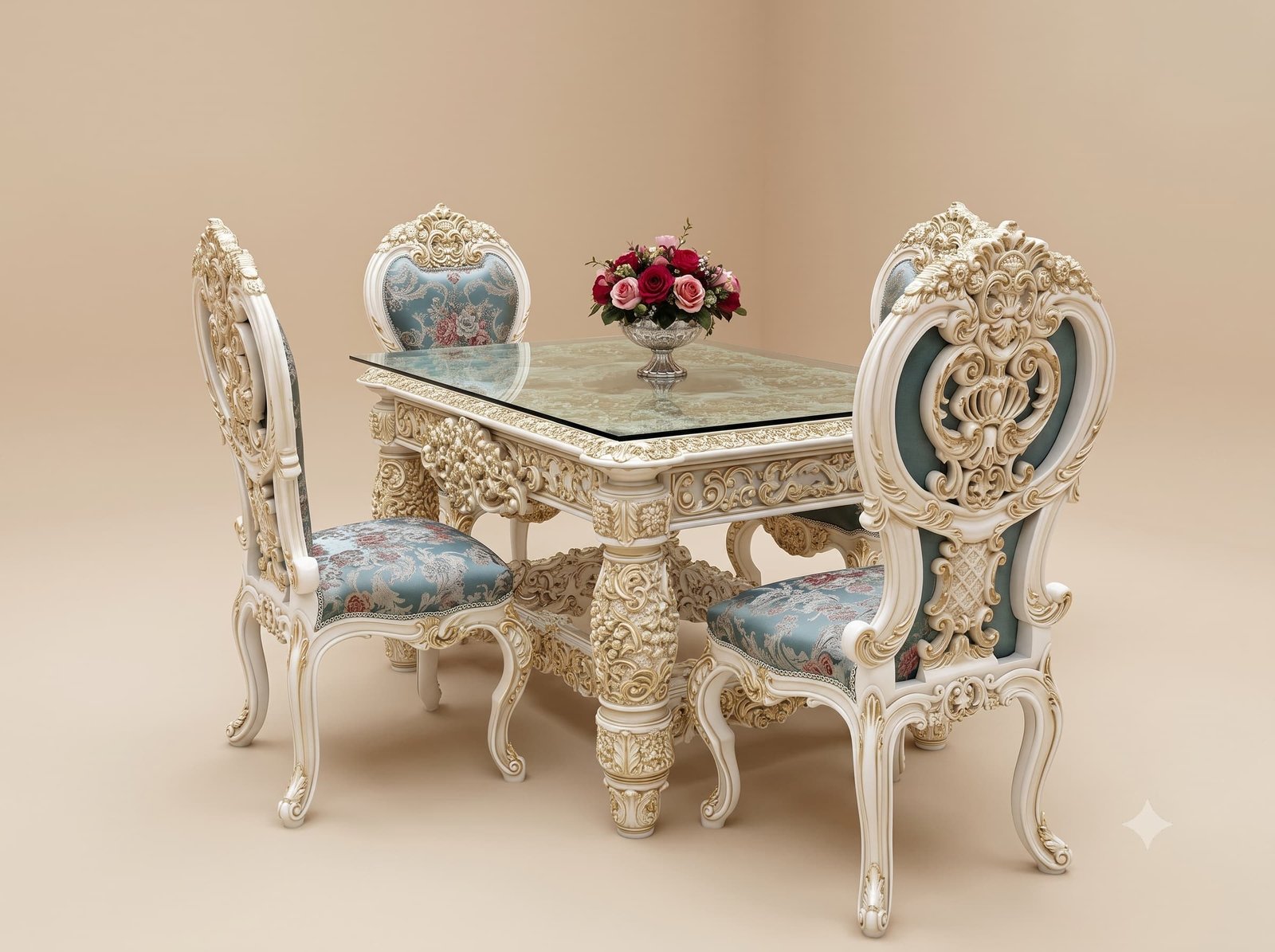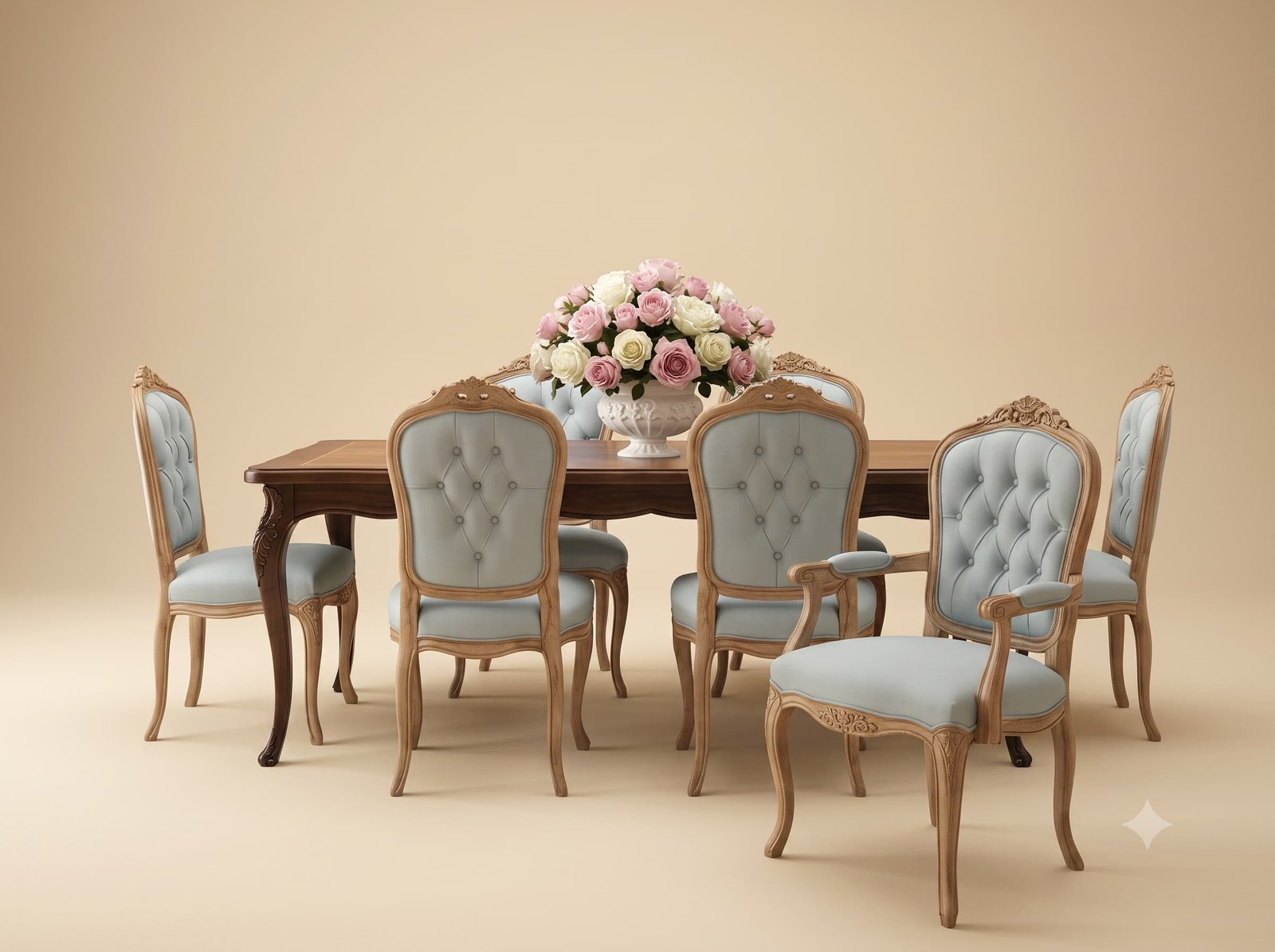
Every dining chair is a compromise between two things that pull in opposite directions. Rake the back and the chair becomes comfortable to sit in for a long meal. Rake it too far and the chair will not tuck under the table, because the top of the back arrives at the table edge before the seat does.
The limit is fixed by geometry, and it depends on your table, not on the chair. The taller the back and the lower the table apron, the less rake is available. So we set the rake last, after both dimensions are known: the seat is positioned where it needs to be for legroom, and the back is then leaned back as far as it can go while the crest still clears the table edge when the chair is pushed home.
On a table with a shallow apron - like this one, where the apron is shaped rather than deep - there is more room to work with, and the chairs get a noticeably more relaxed angle than a chair sold on its own could risk.
That is the practical case for buying a table and chairs as one commission rather than separately. A chair bought alone has to assume the worst about the table it will meet. A chair made for your table does not have to assume anything.
 Ask Price On WhatsApp