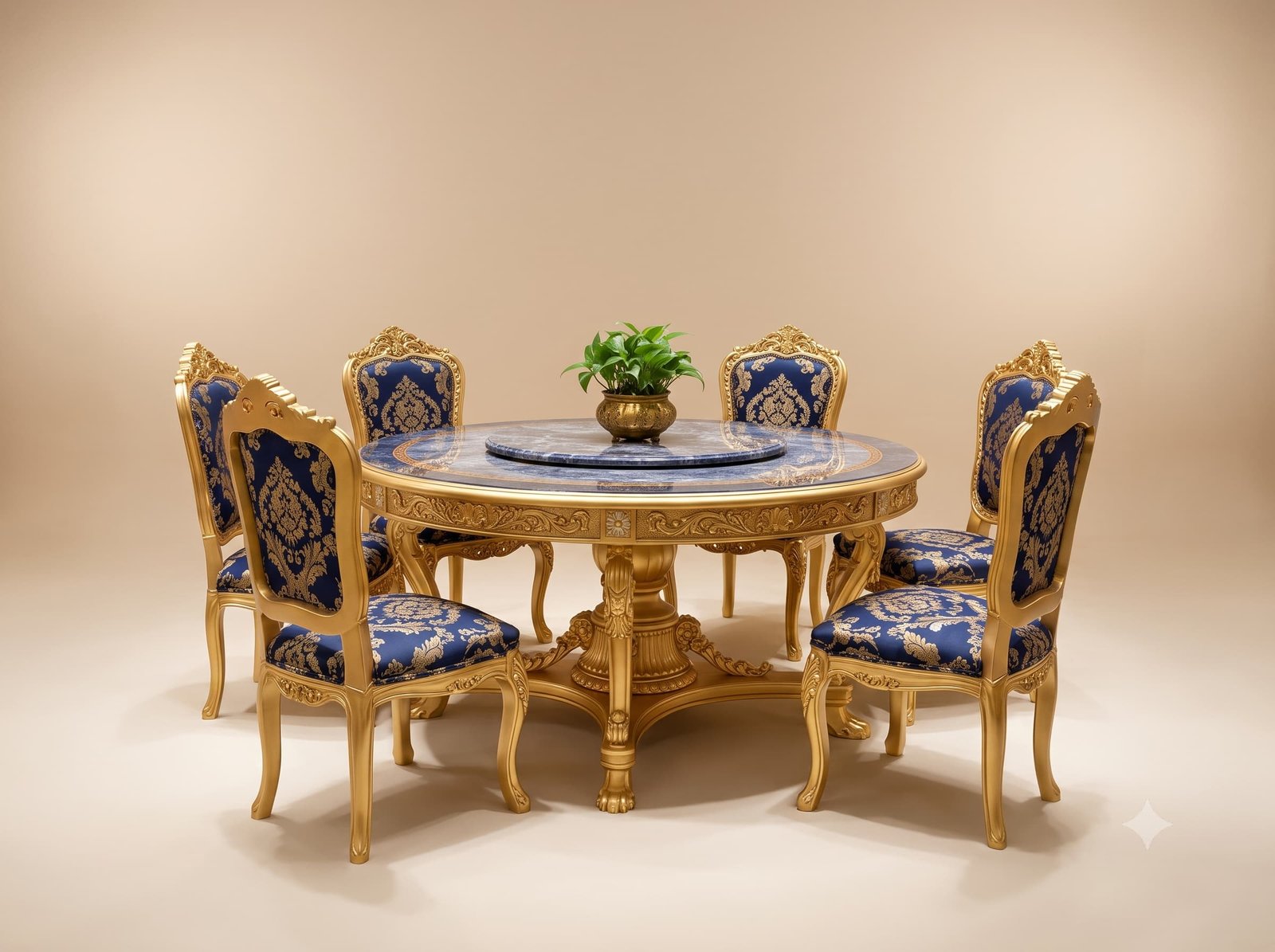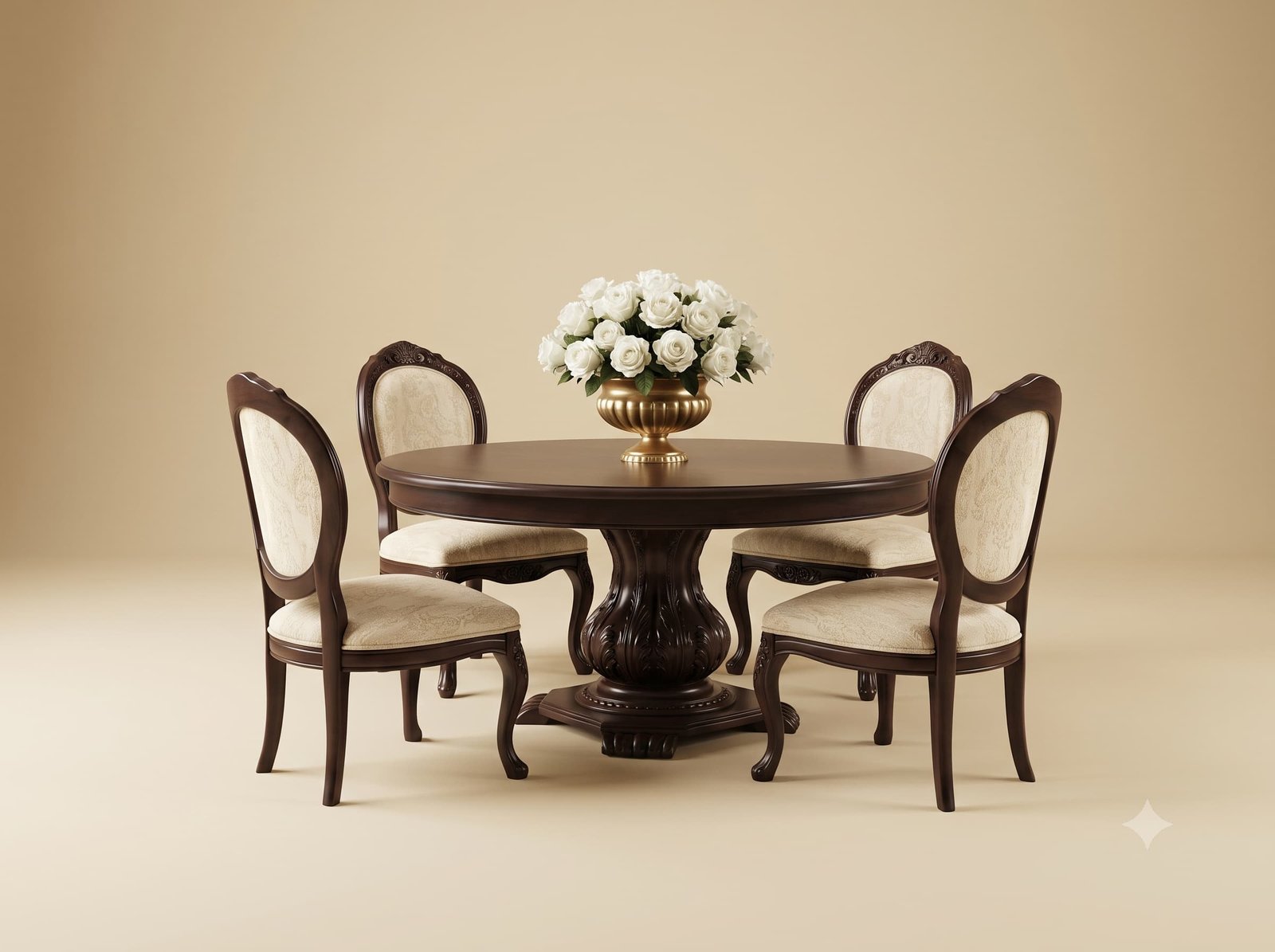
The diameter of a round dining table is not a matter of taste. It is arithmetic, and getting it wrong by a few inches is the difference between four people eating comfortably and four people apologising to each other with their elbows.
Each place setting needs a certain width of table edge - enough for a plate, a glass to its right and cutlery on both sides, without overlapping a neighbour's. On a circle, that width is an arc, and the number of arcs you can fit is set by the circumference. So we work backwards: the number of places you want, multiplied by the arc each one needs, gives the circumference, and the circumference gives the diameter. Not the other way round.
Then we check it against the room. If the arithmetic asks for a diameter the room cannot take with walking space around it, we say so at the drawing stage rather than building a table that seats four uncomfortably - and usually the answer is a slightly smaller table for four rather than a squeezed table for six.
The pedestal is then drawn inside that circle with the four seated positions marked, so the foot finishes clear of everyone's feet. It is why we ask how many people before we ask how big.
 Ask Price On WhatsApp