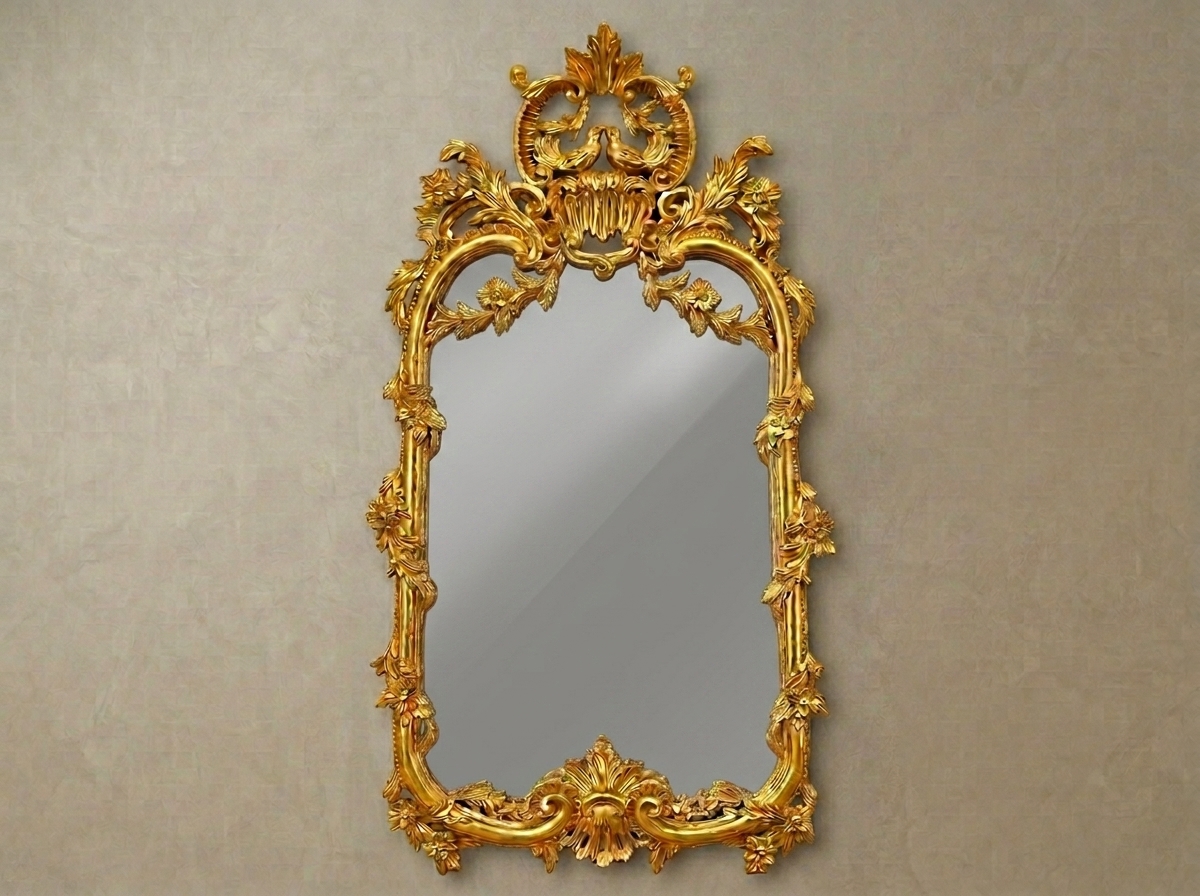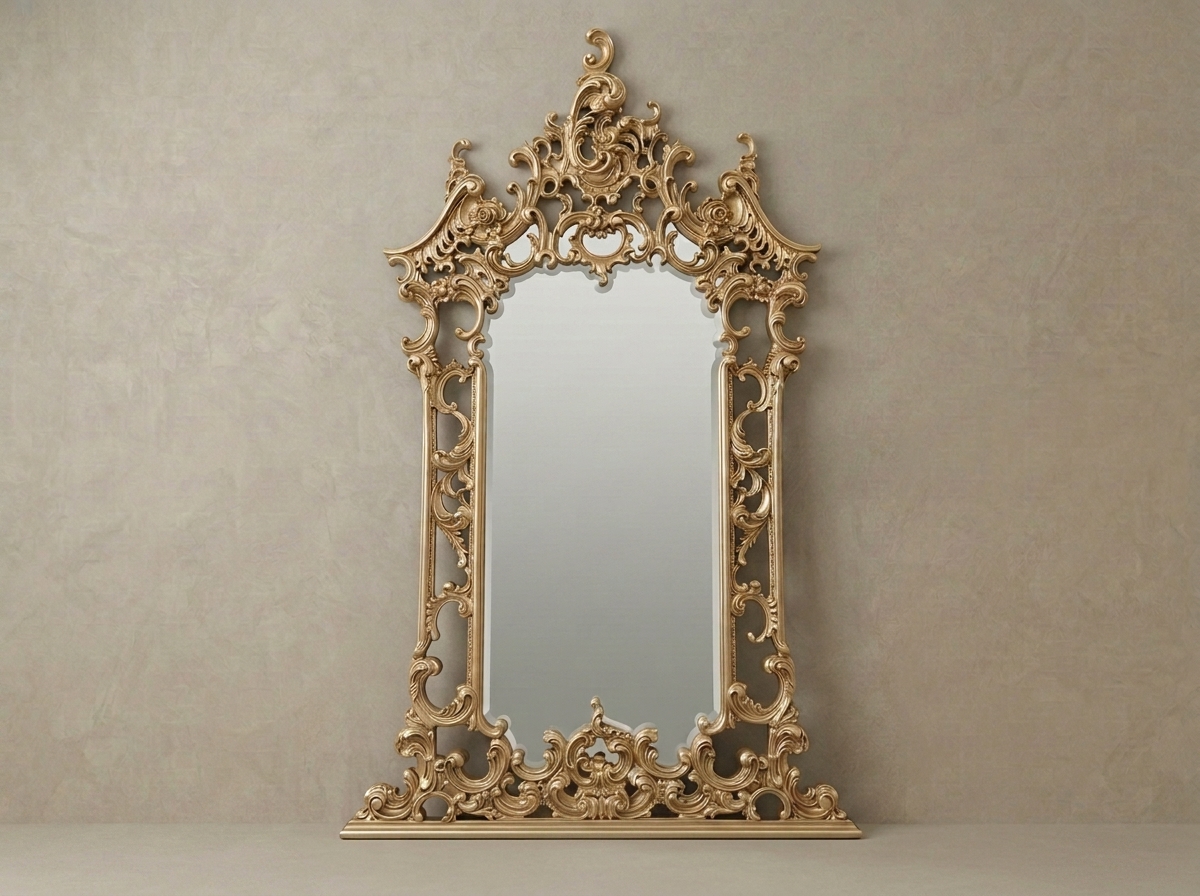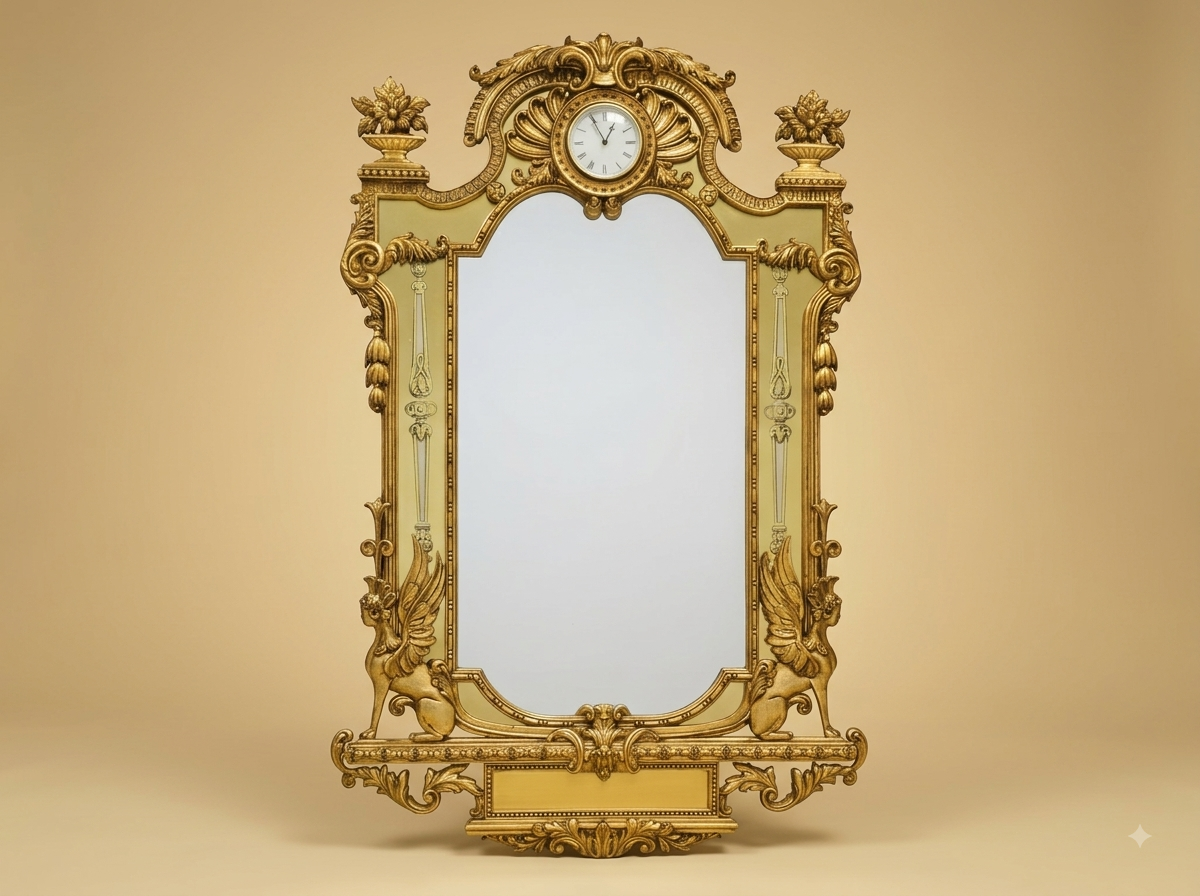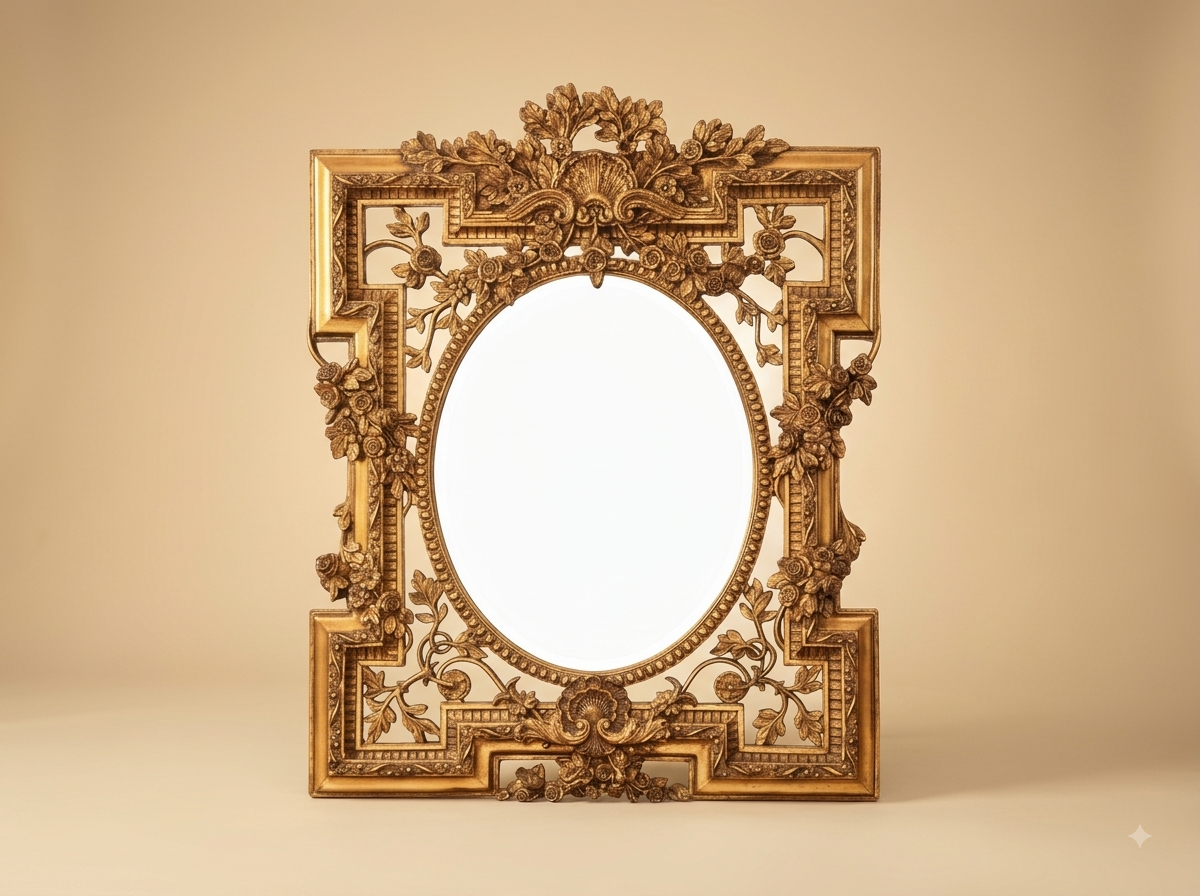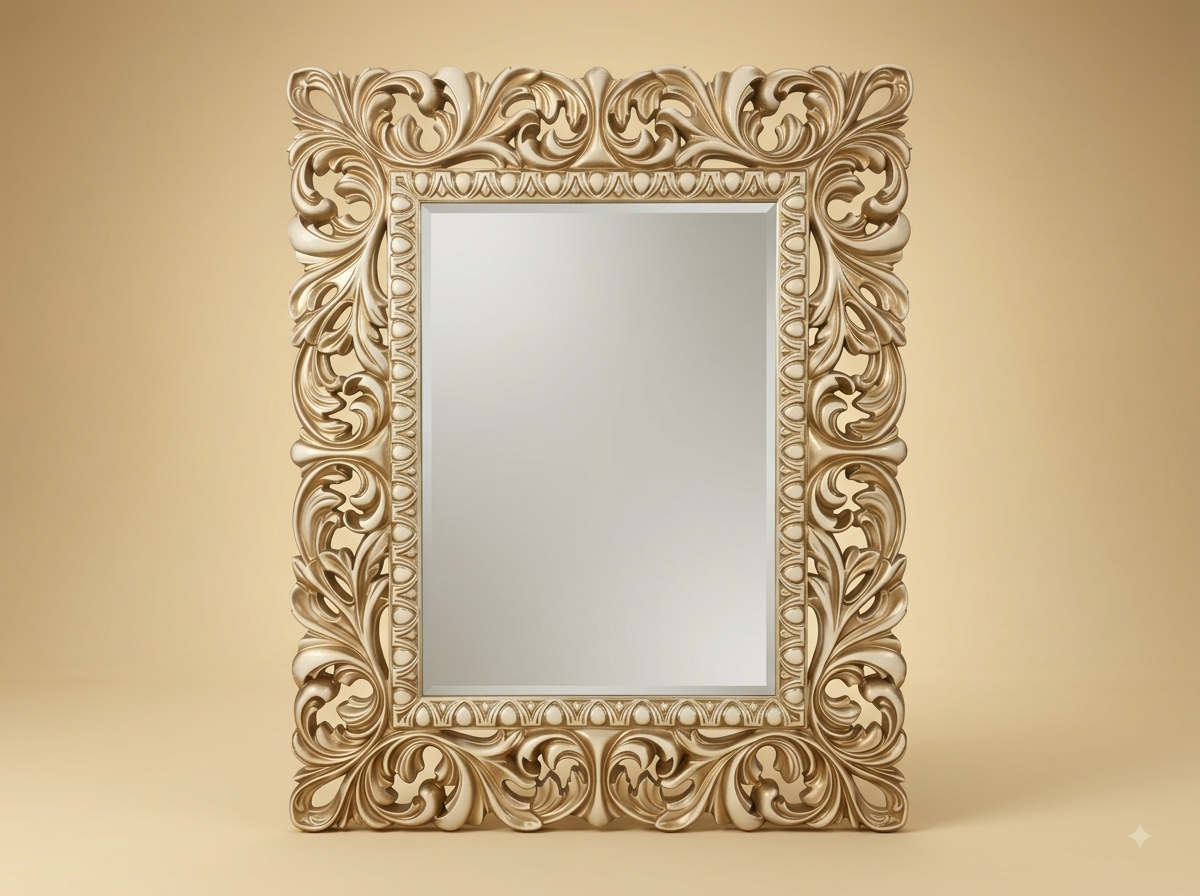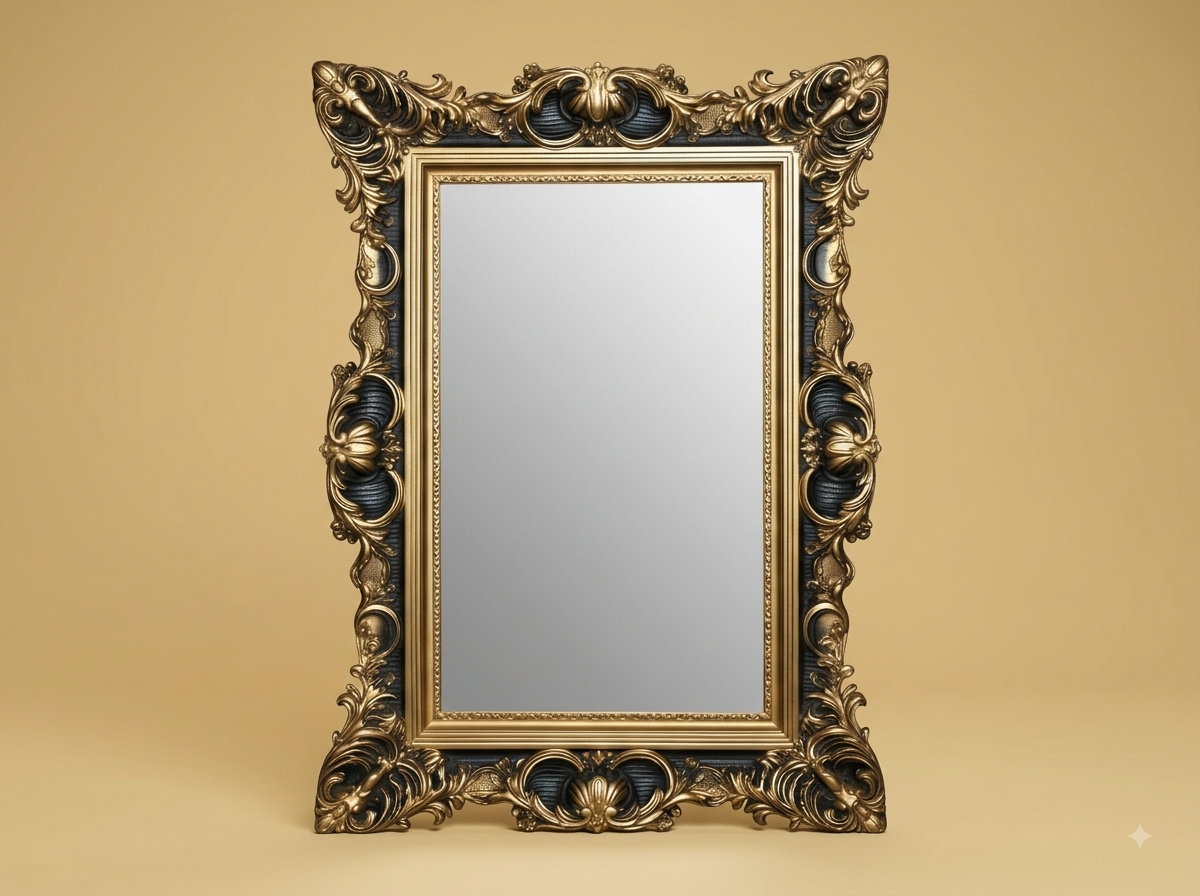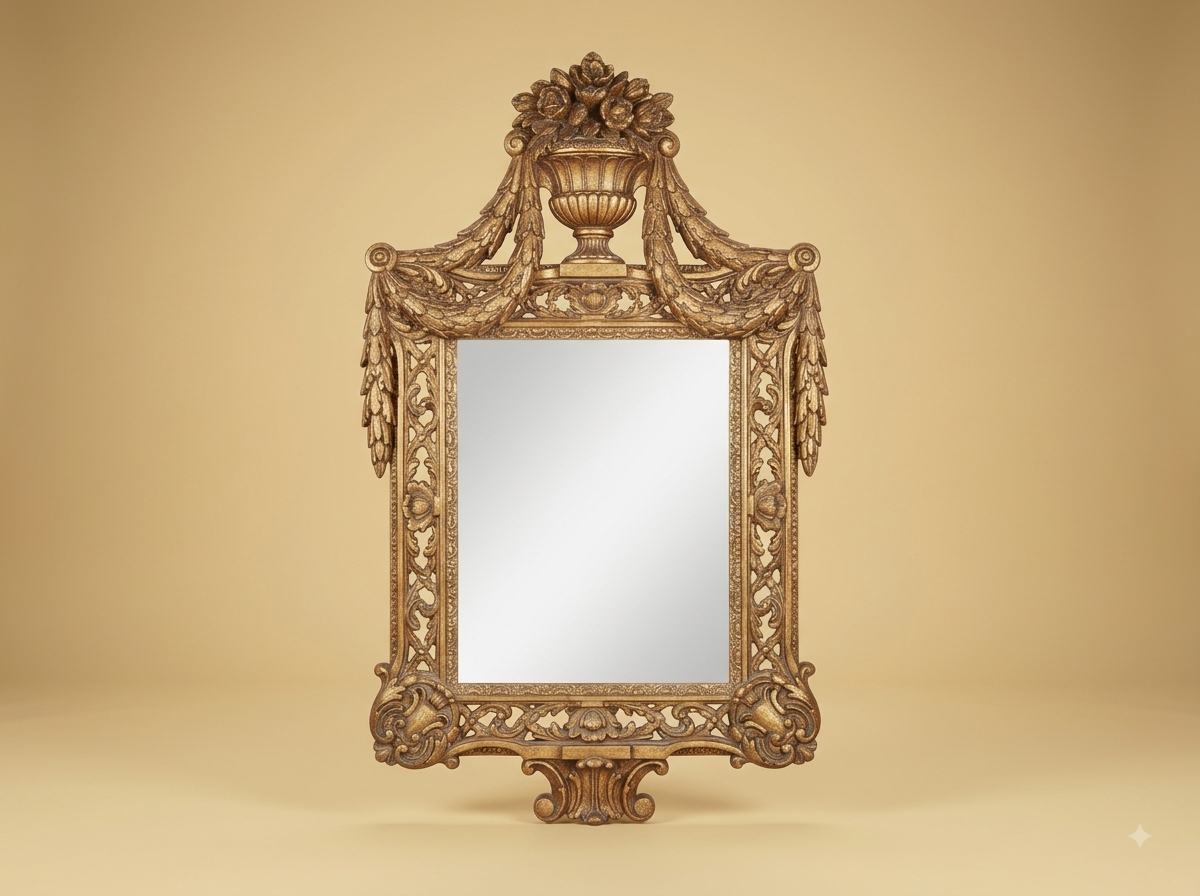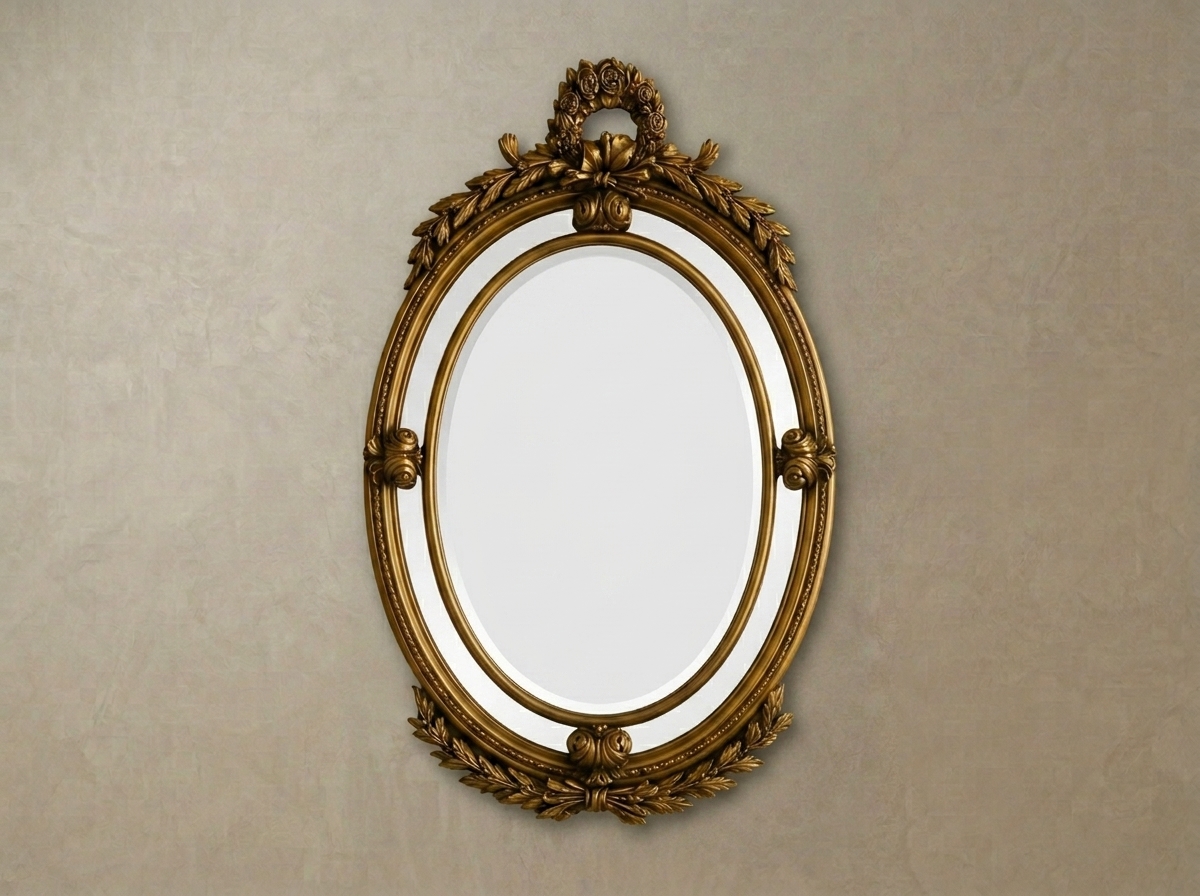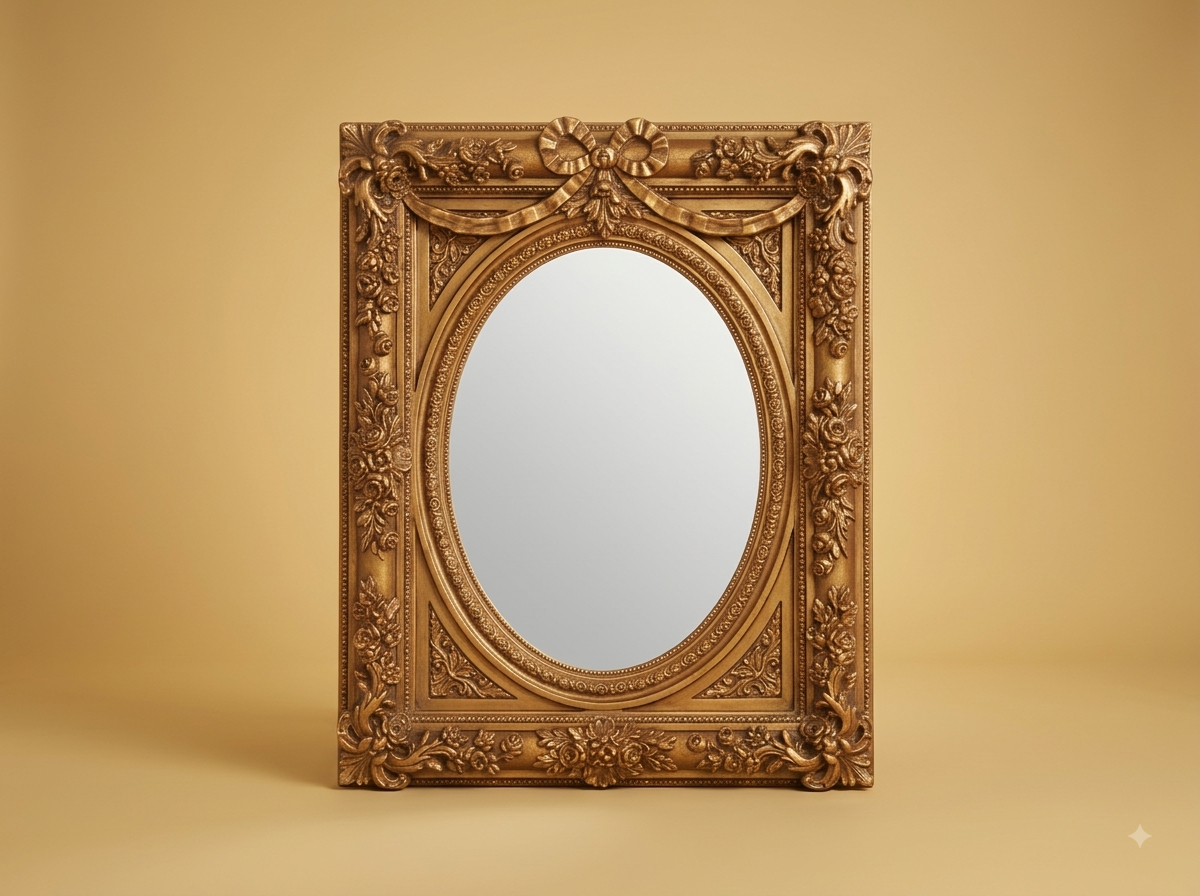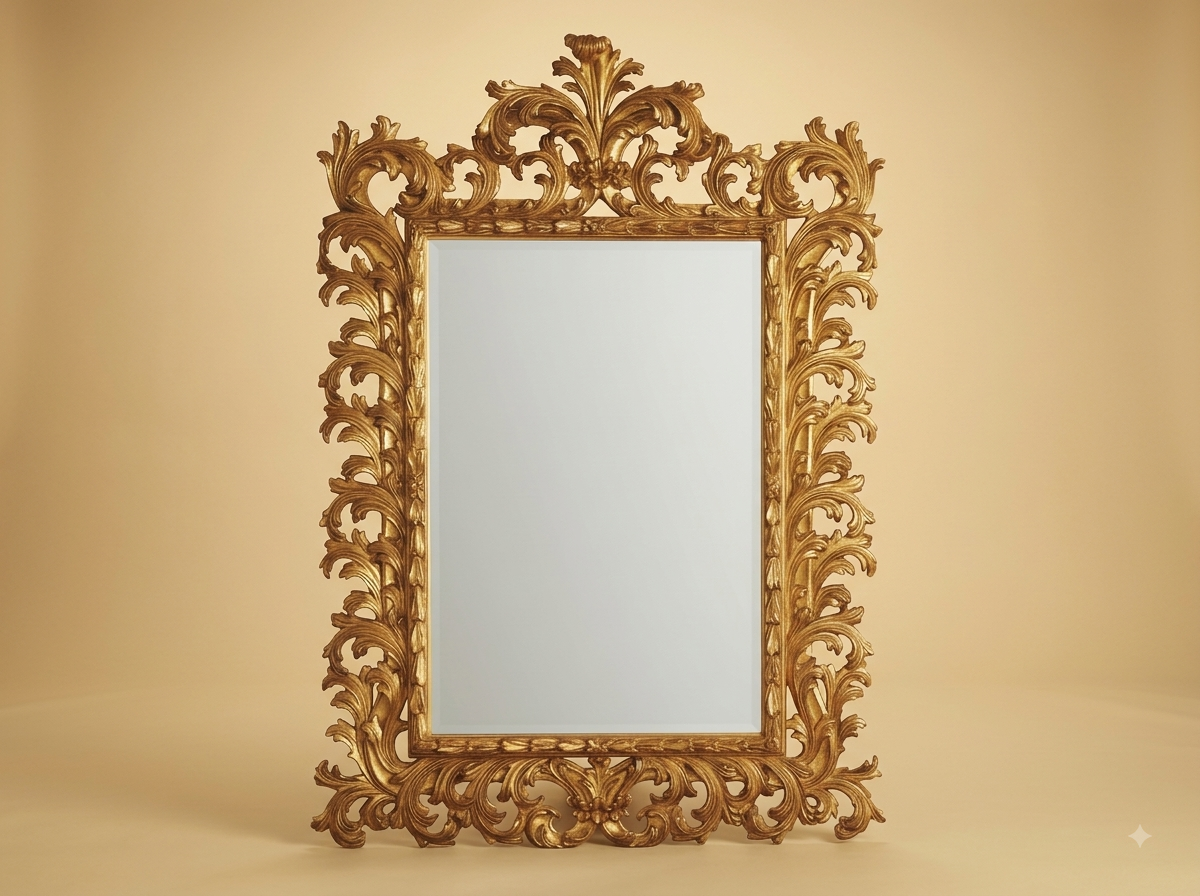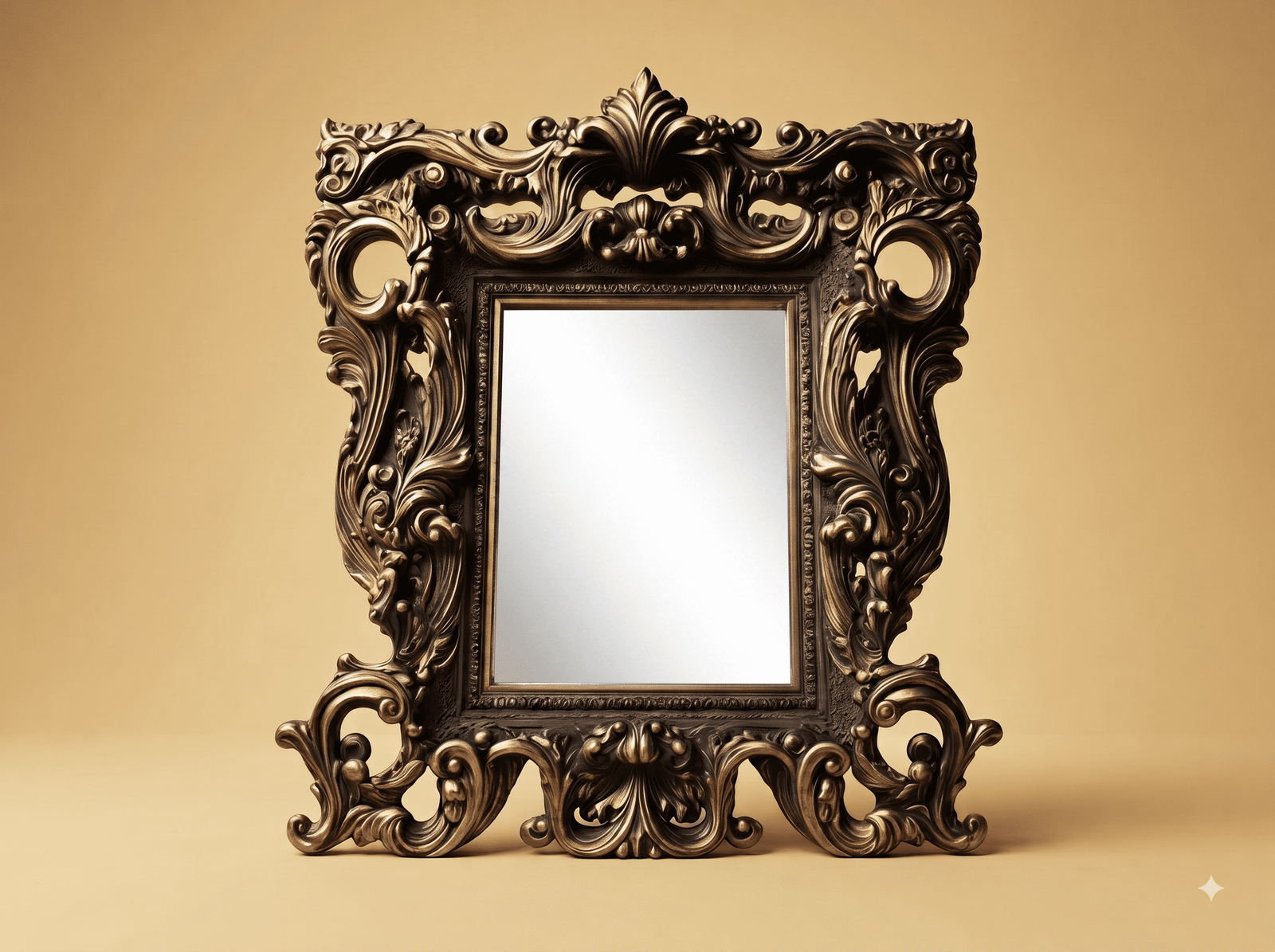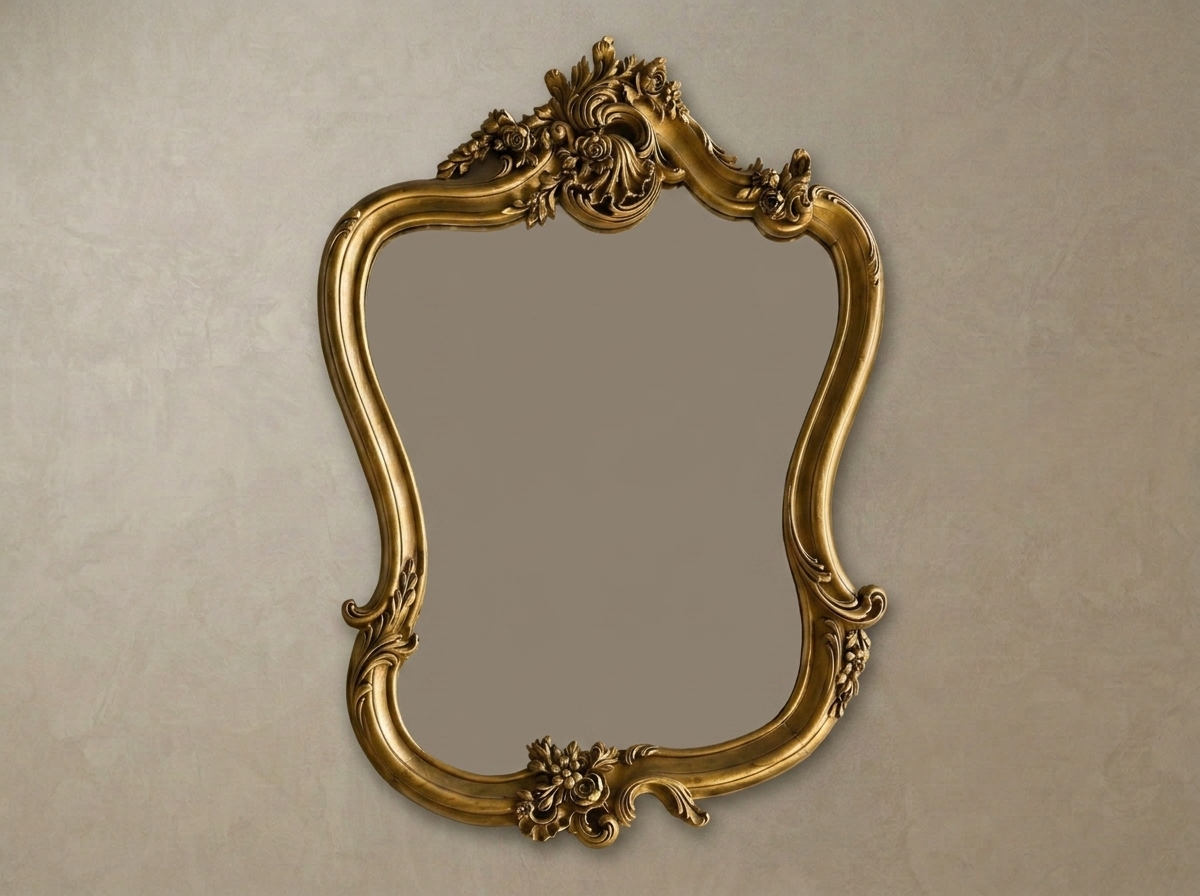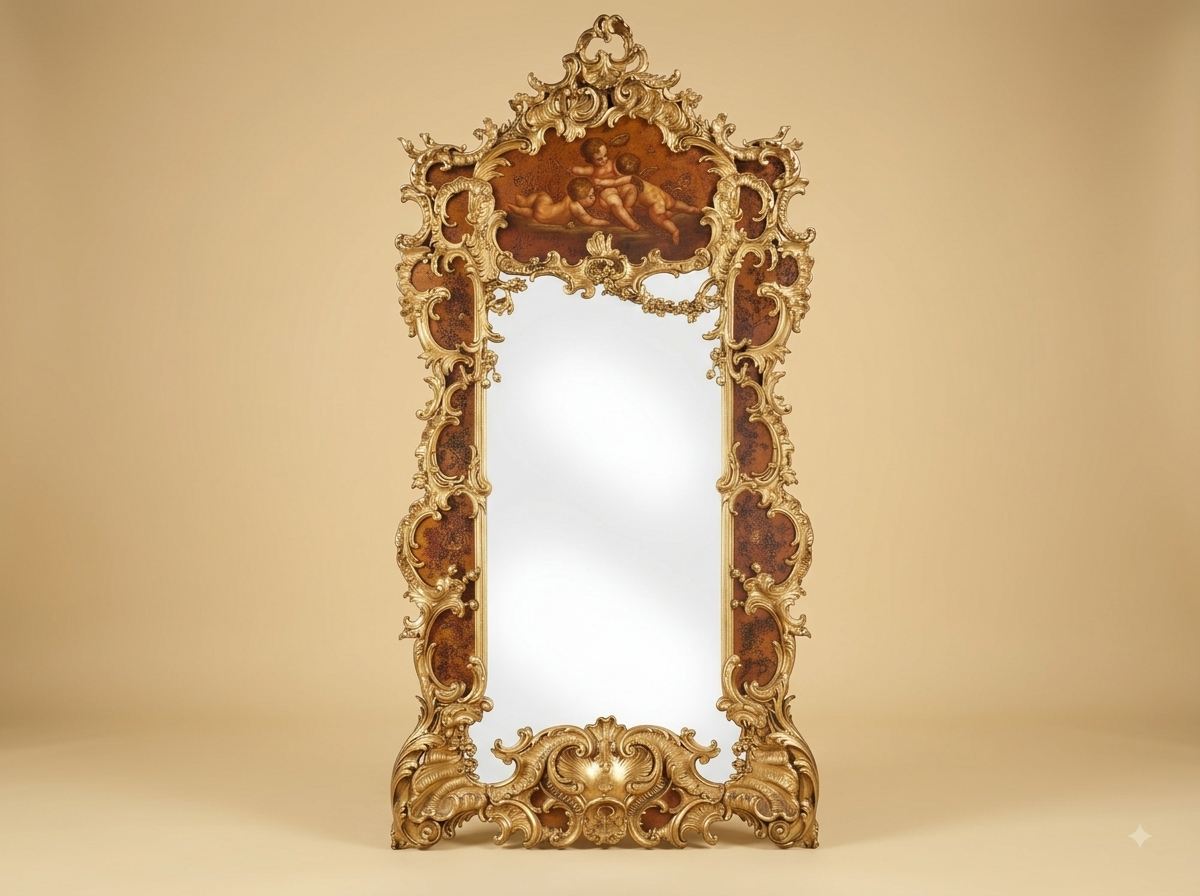
A pier mirror lives in the one position in a room that is never lit from the front.
It hangs between two windows, so daylight arrives from both sides and crosses in front of it. Nothing on the frame is ever illuminated straight on, and by the middle of the day both sides are lit while the centre is comparatively dark.
That changes how the piece has to be made.
The carving is set out so its deepest shadows run vertically rather than horizontally - vertical relief catches cross-light and reads clearly, while horizontal detail in that position simply disappears. The scrolls on both sides are therefore worked with more depth than the top and bottom.
The painted panel is composed for the same light. Its subject is placed with the strongest tones towards the middle, where the frame is darkest, and it is painted in a slightly higher key overall than a panel meant for a wall lit from the front - because cross-light flattens a painting rather than modelling it.
Hung anywhere else, none of that would matter. Hung on a pier, it is the difference between a mirror that reads and one that goes flat by noon.
 Ask Price On WhatsApp