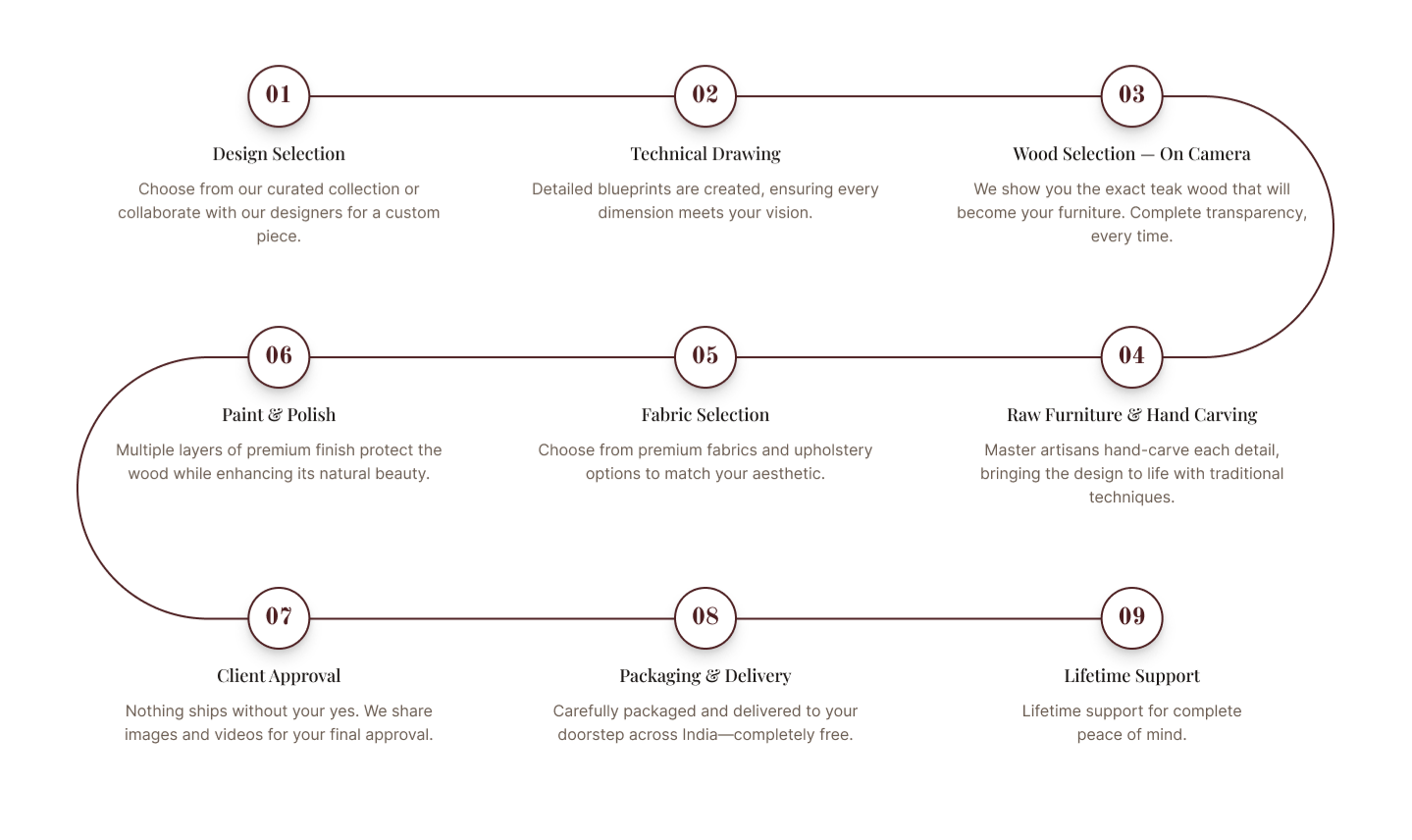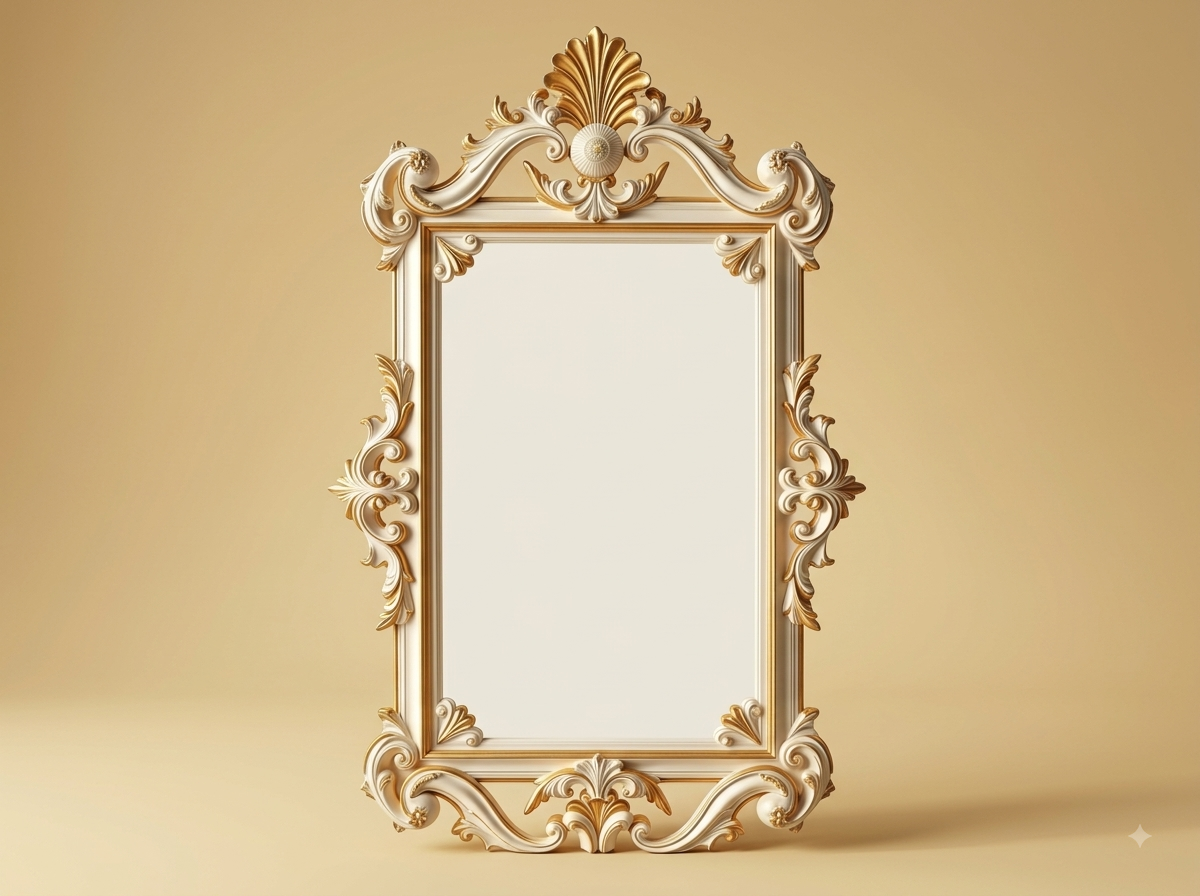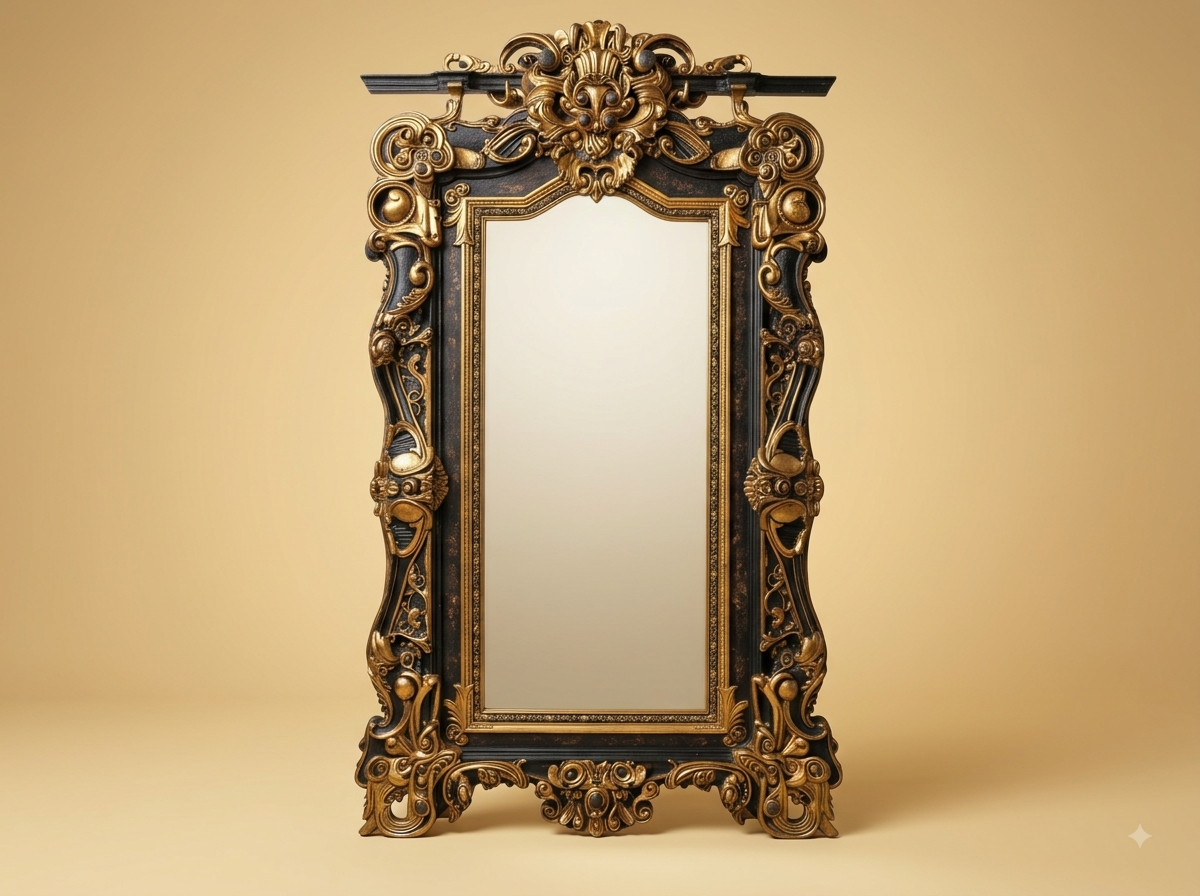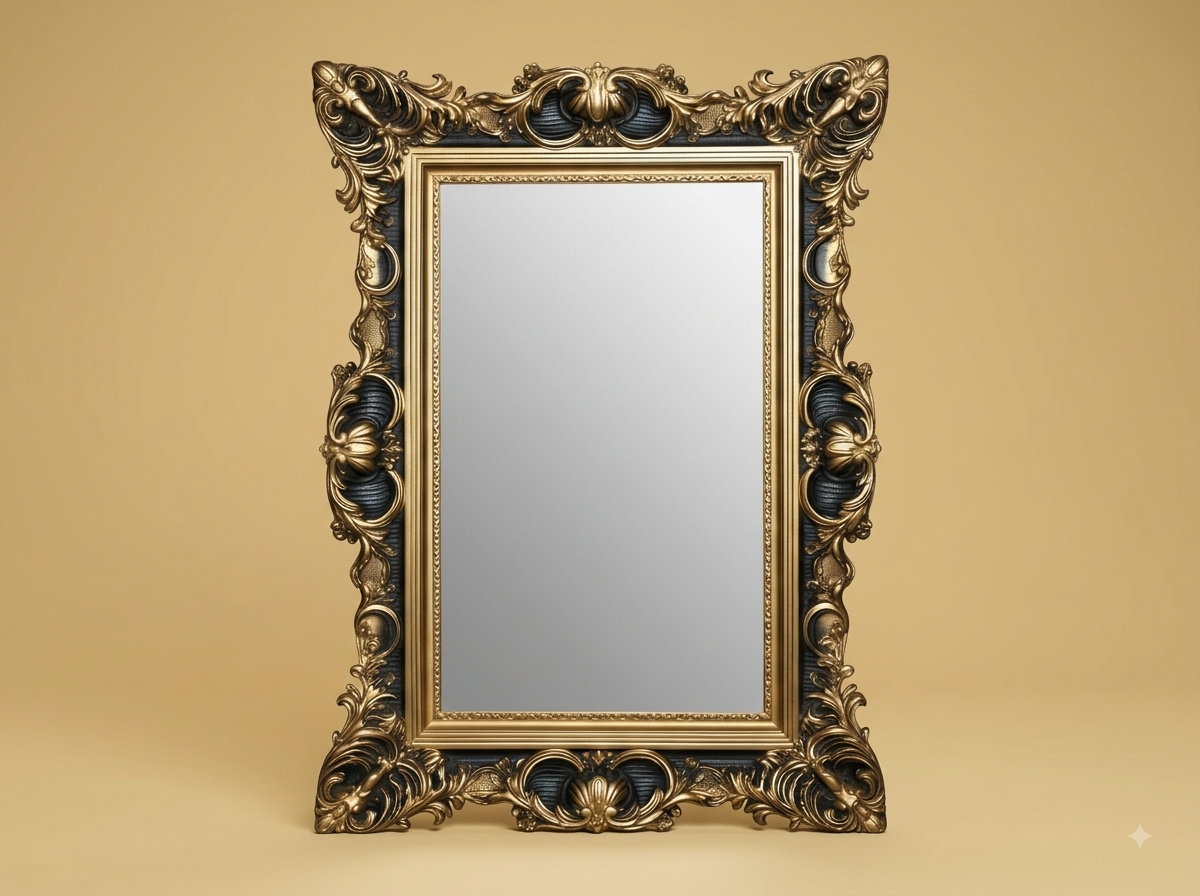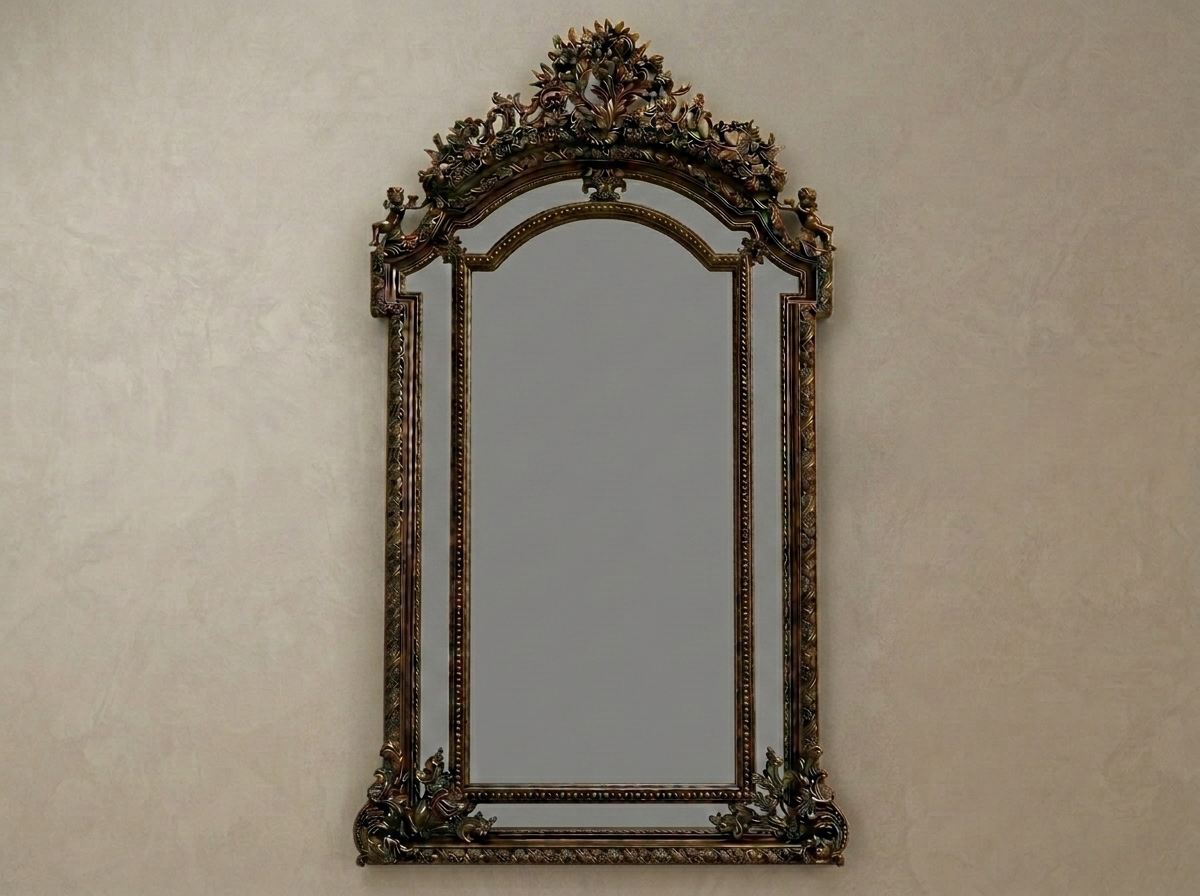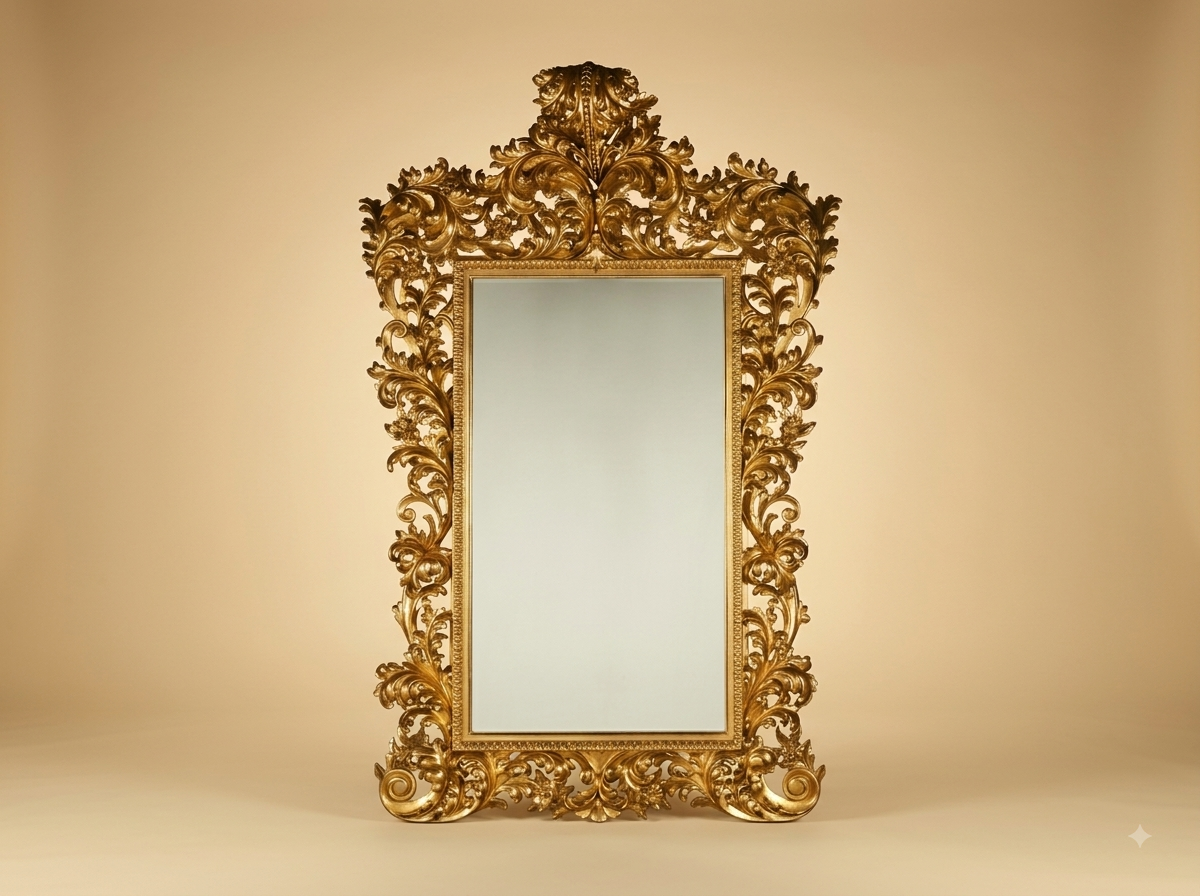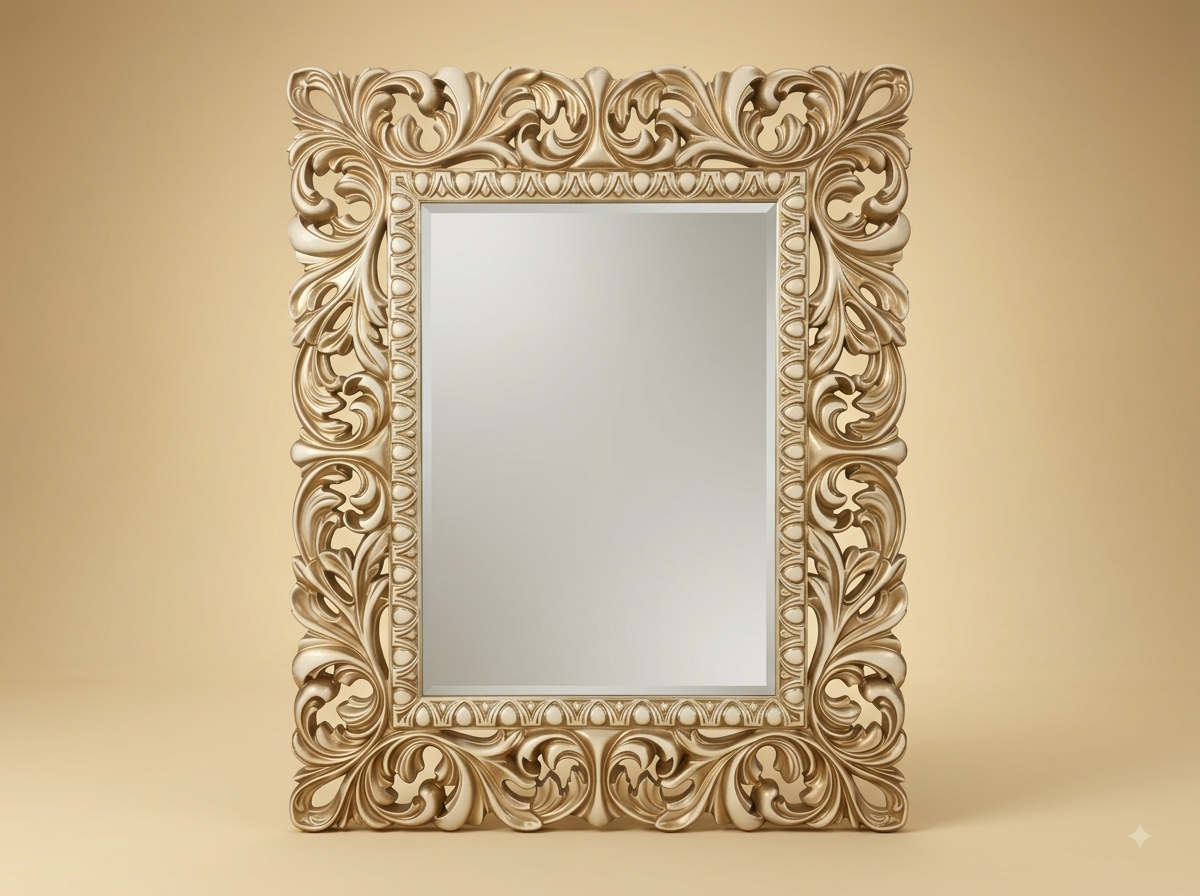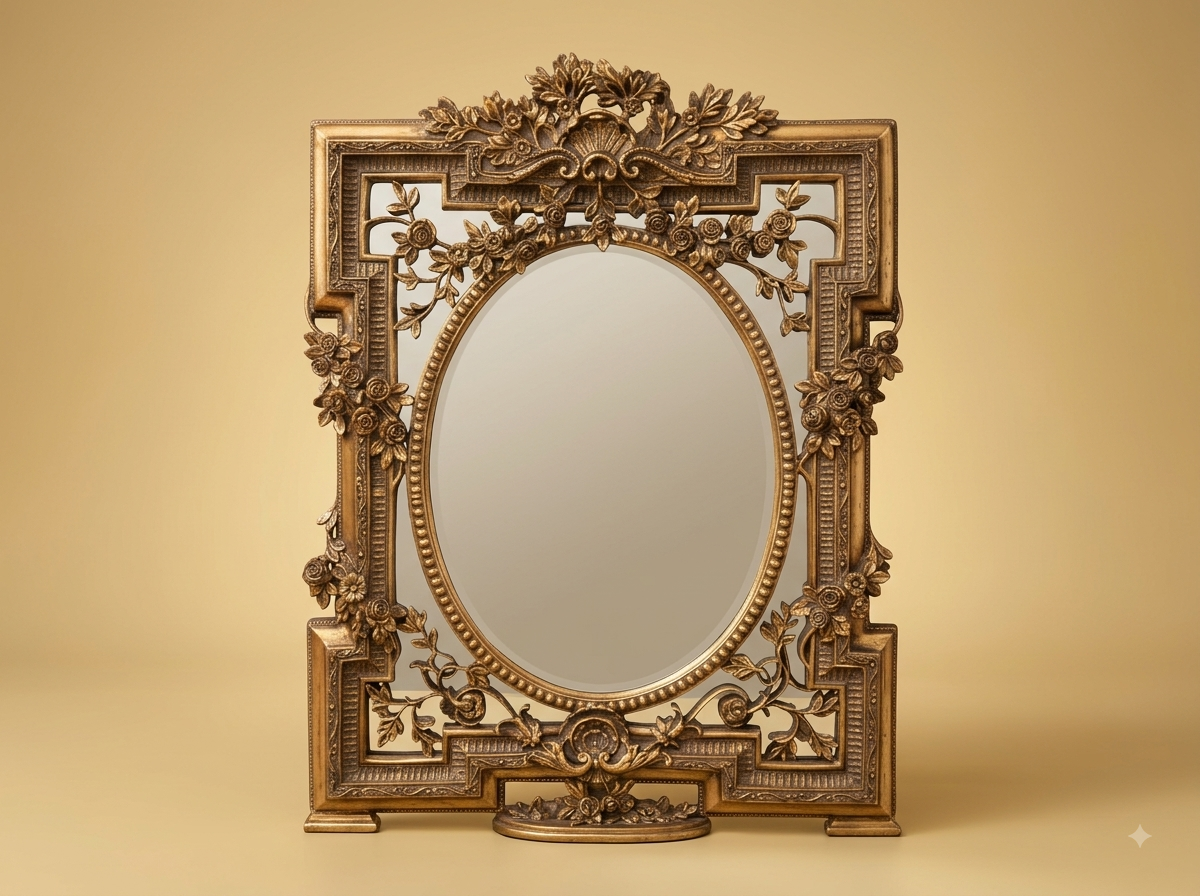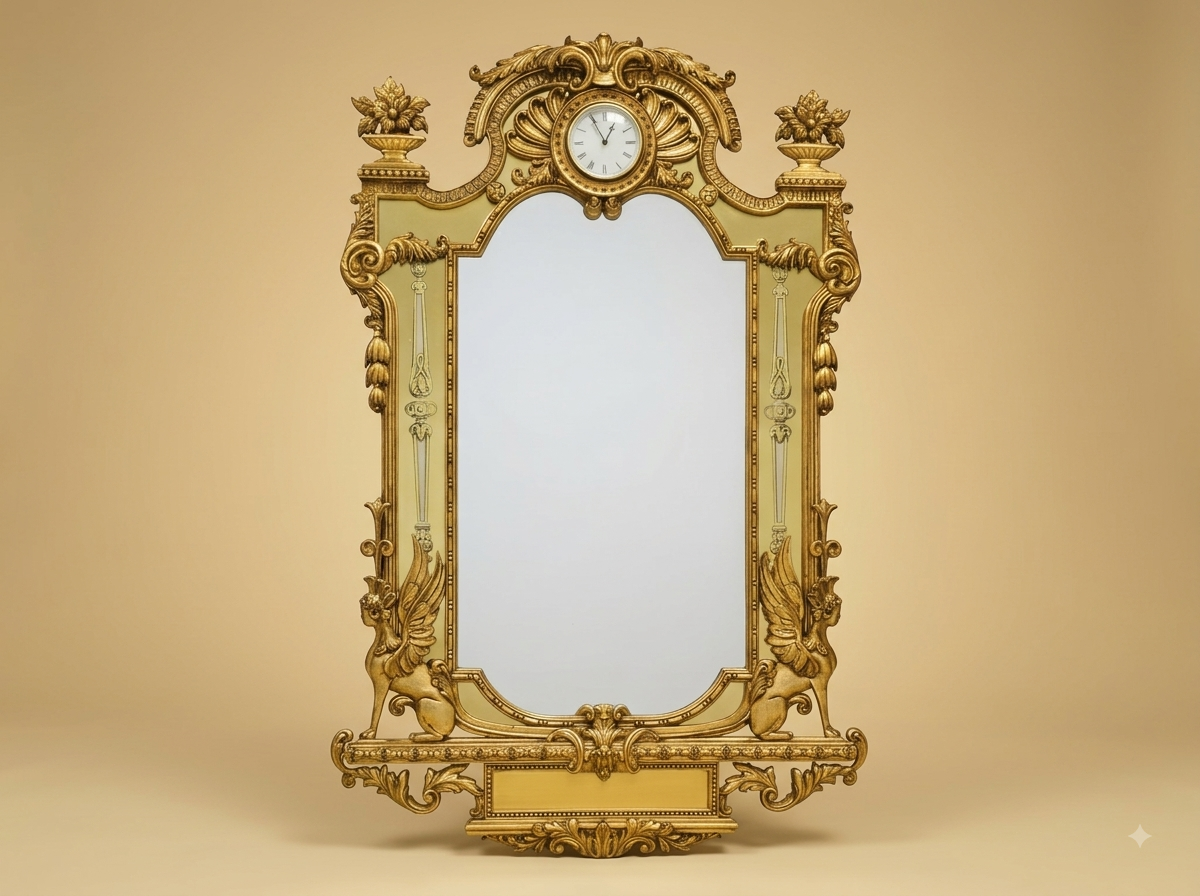
The dial on a mirror like this has one job that ordinary clocks do not: it has to be readable from wherever the room's furniture faces, without becoming so large that it swallows the crest.
So the dial size is worked backwards from the room. We ask how far the main seating sits from the wall, and the numerals are sized to be legible at that distance - a larger dial for a long drawing room, a smaller one for a hall where you read it from a few steps away. The carving of the crest is then drawn around the dial that results, rather than the dial being squeezed into a crest already designed.
The second decision is depth. The dial is set slightly forward of the face of the carving behind it, so the shell and palm fronds around it never throw a shadow across the hands. A dial recessed even a little into a deeply carved crest will lose its hands in shade at exactly the hour of the afternoon when you most want to read it.
Small choices. They are the difference between a clock that gets used and one that becomes a decoration.
 Ask Price On WhatsApp