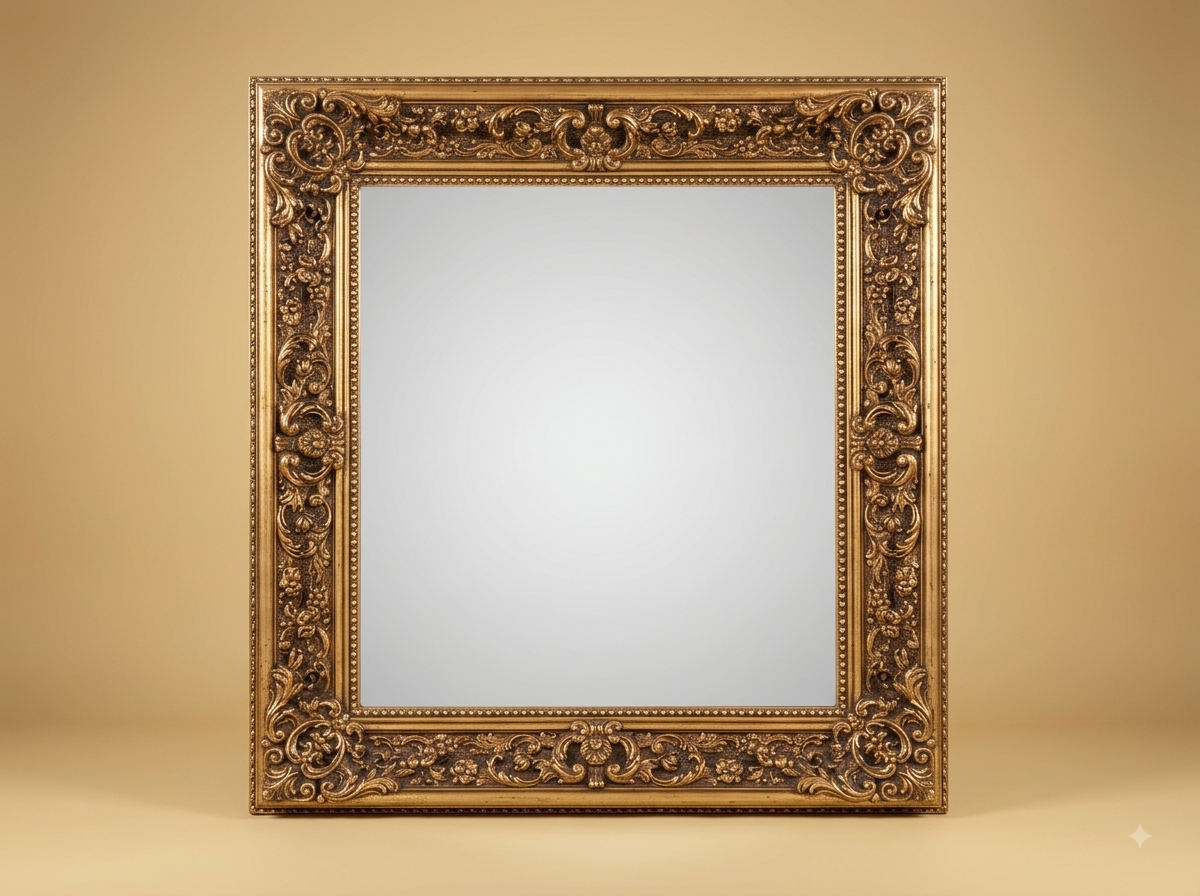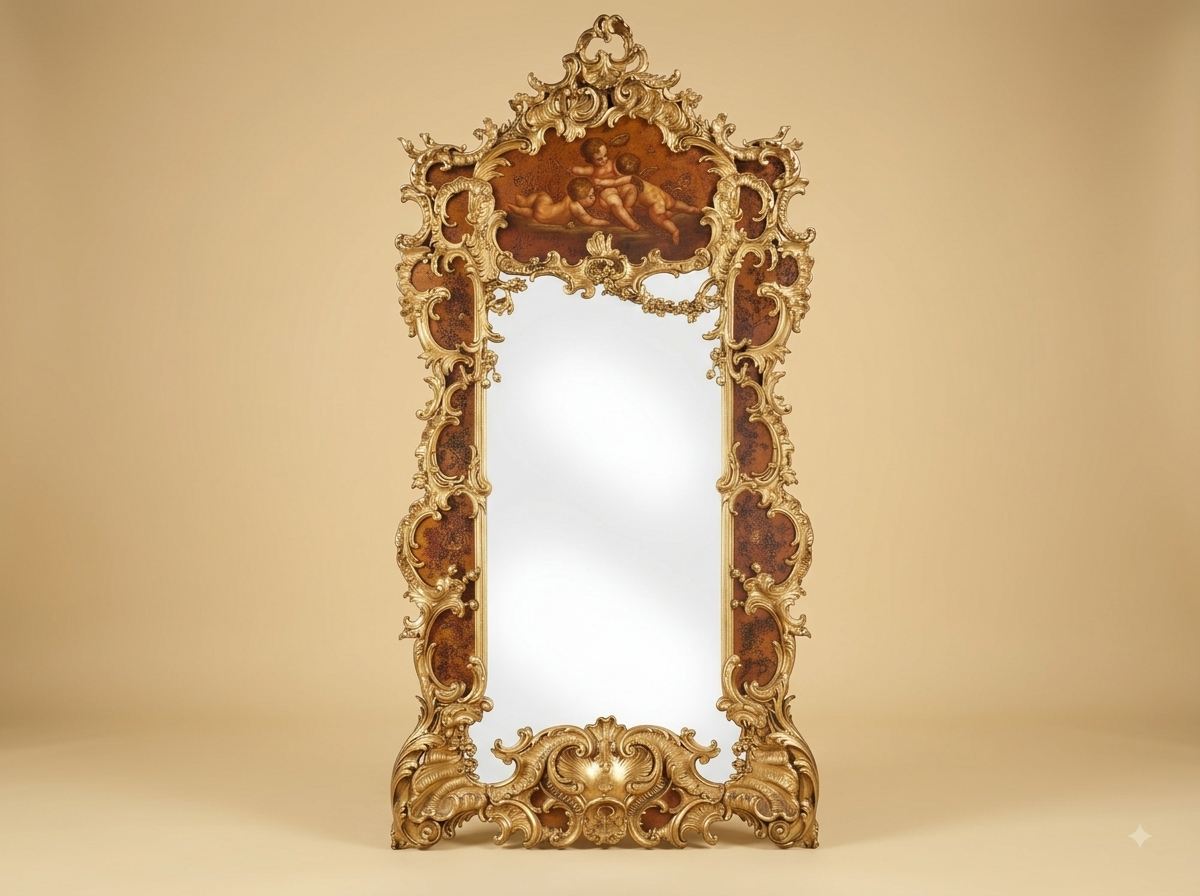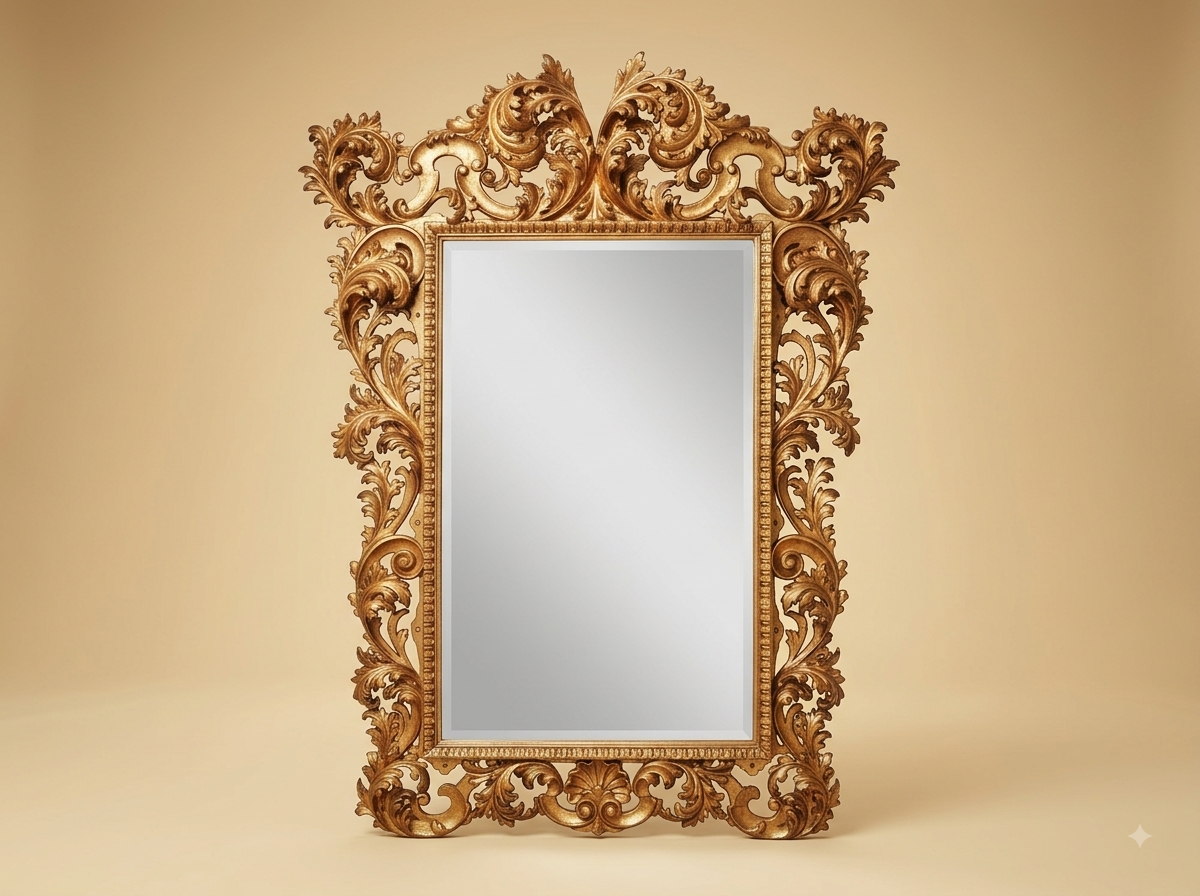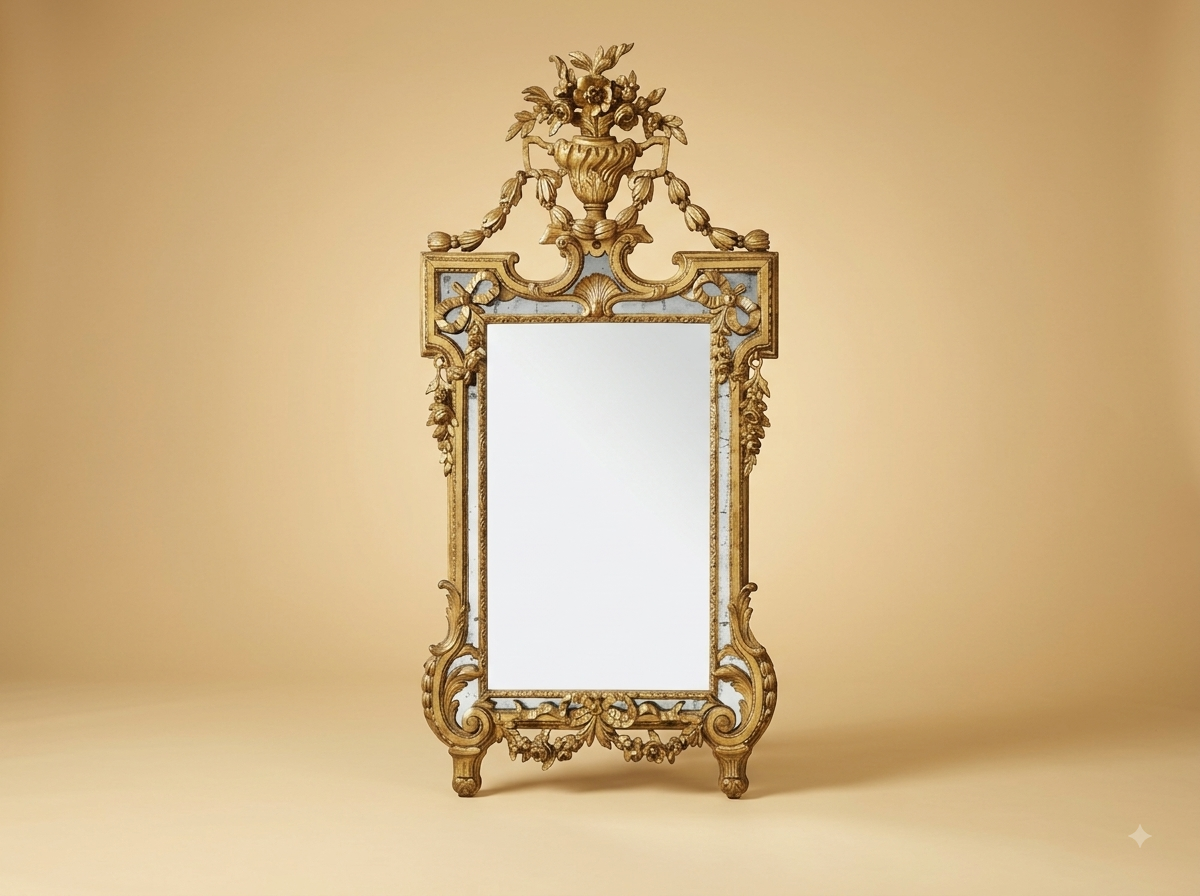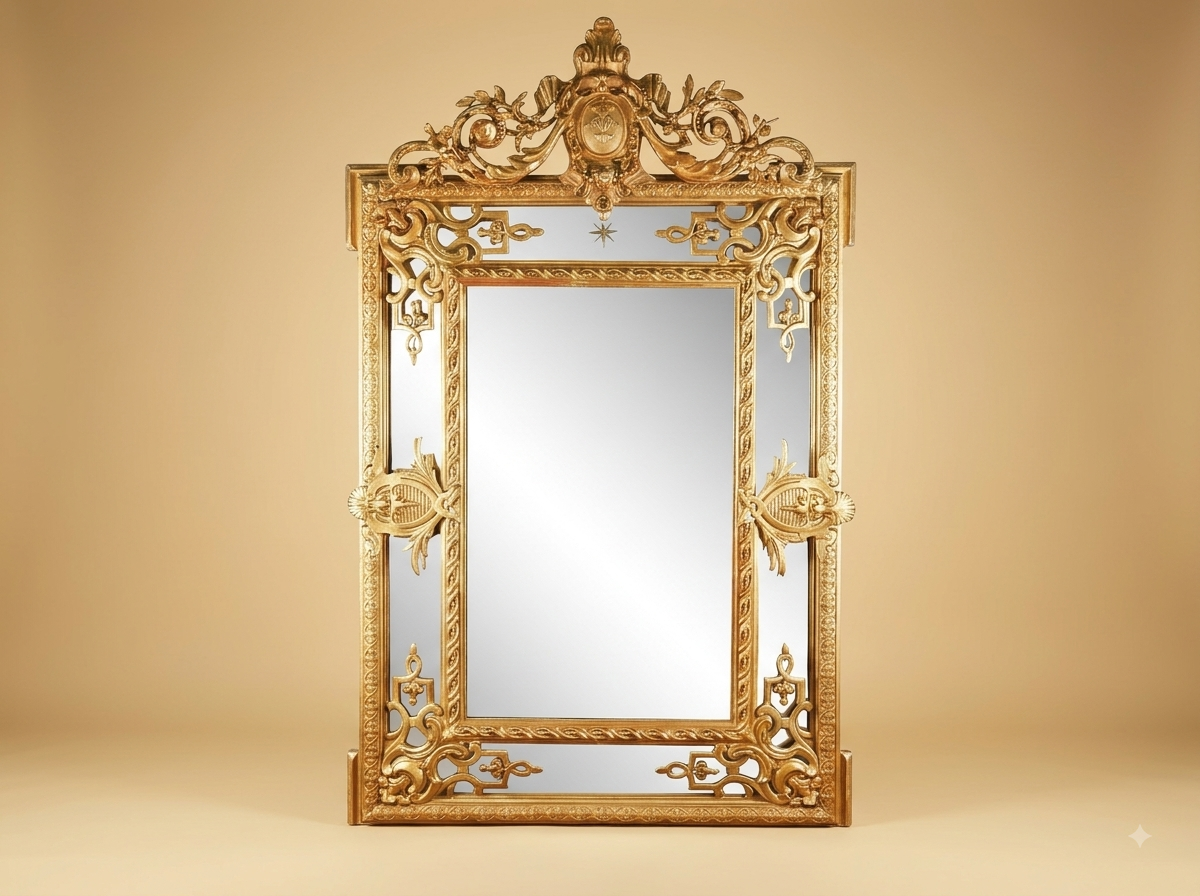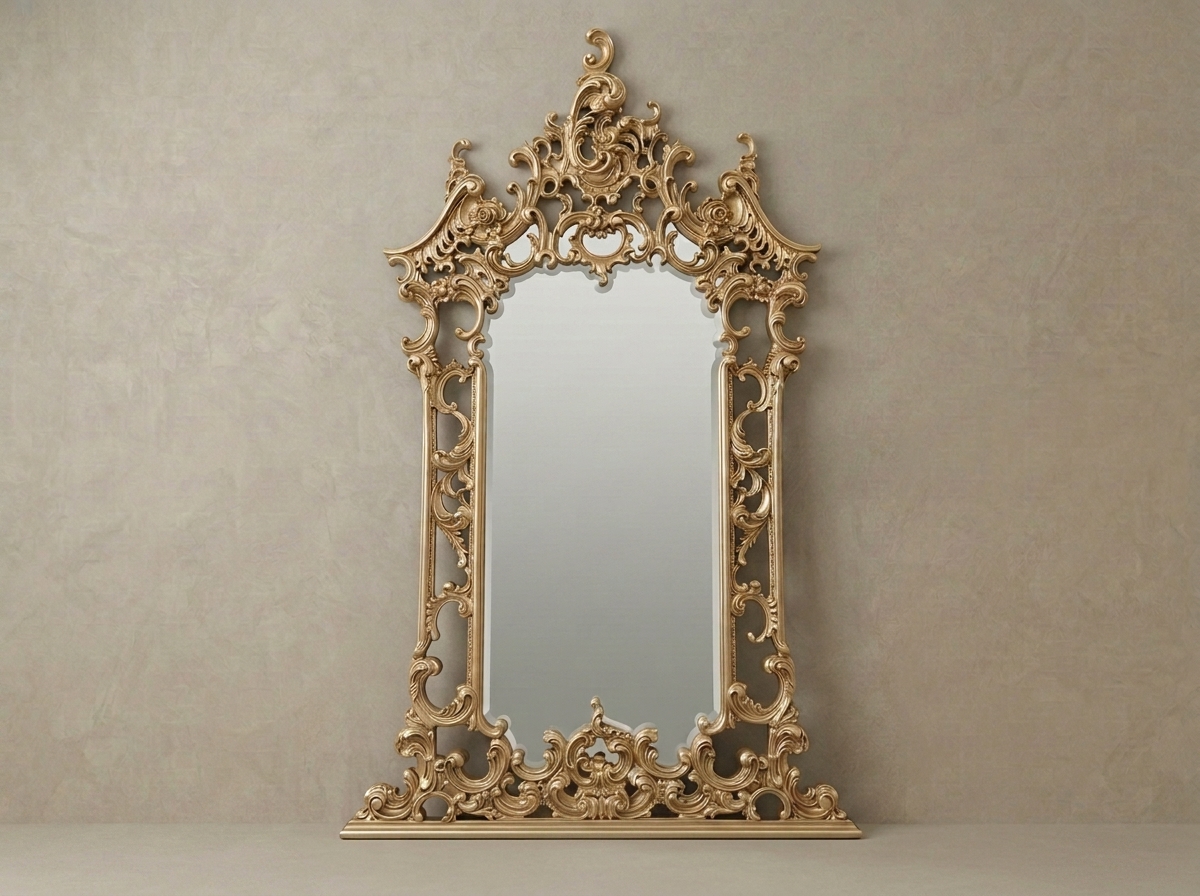
A mirror that stands on its own base has to solve a problem that a hung or leaning mirror never faces: it must stay upright by itself, in a room where people walk past it.
Two numbers settle it, and both are worked out from the finished height of the frame.
The first is how far the plinth reaches forward. A tall object standing on a narrow base tips at the smallest push, so the base is made deeper than the frame needs it to be - and the extra depth is disguised by moulding the plinth so it steps back as it rises, which makes the eye read a slimmer base than the mirror actually stands on.
The second is the angle. The frame is set very slightly back from vertical, not upright. That does two things: it moves the centre of gravity behind the front edge of the plinth, so any push from the front is resisted rather than assisted - and it gives a more flattering full-length reflection, because the glass looks slightly downward towards the person in front of it.
Neither is visible. Both are the reason the mirror stands as though it takes no effort.
 Ask Price On WhatsApp