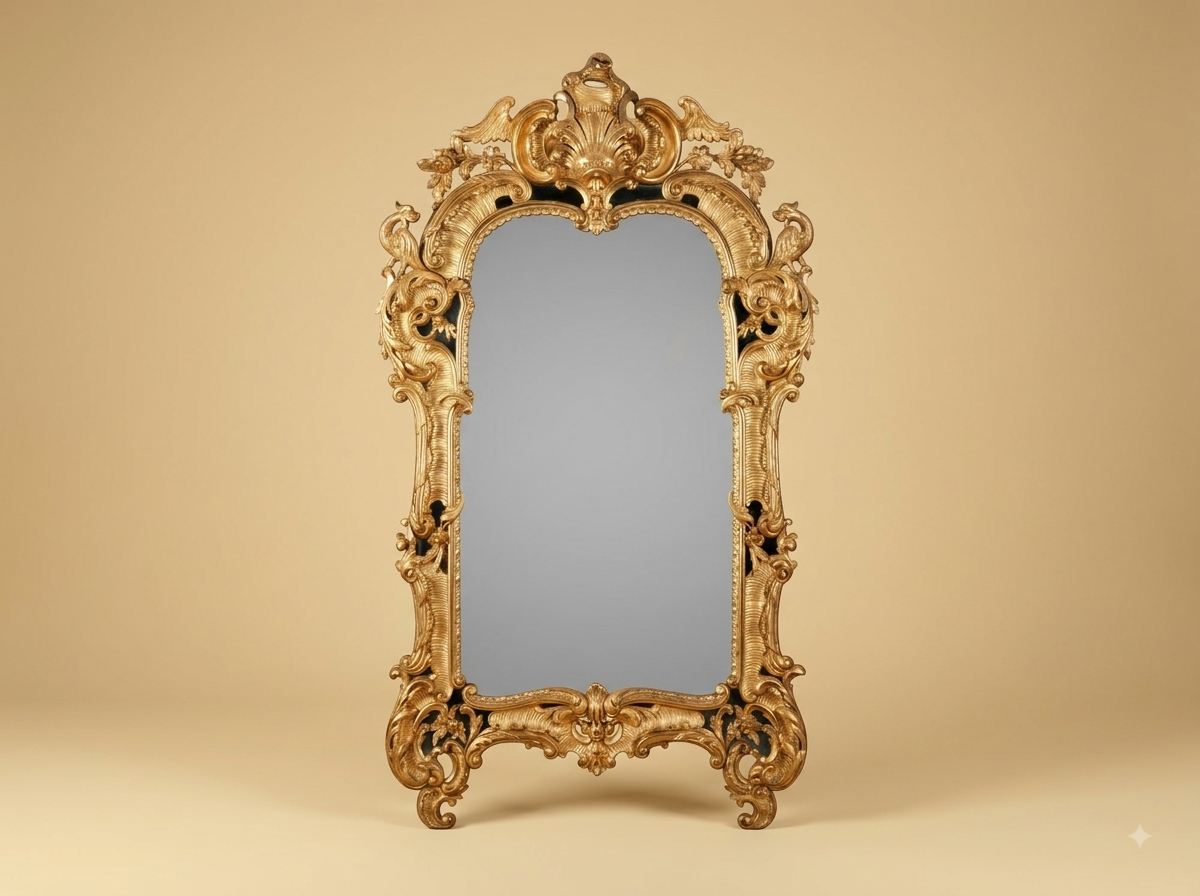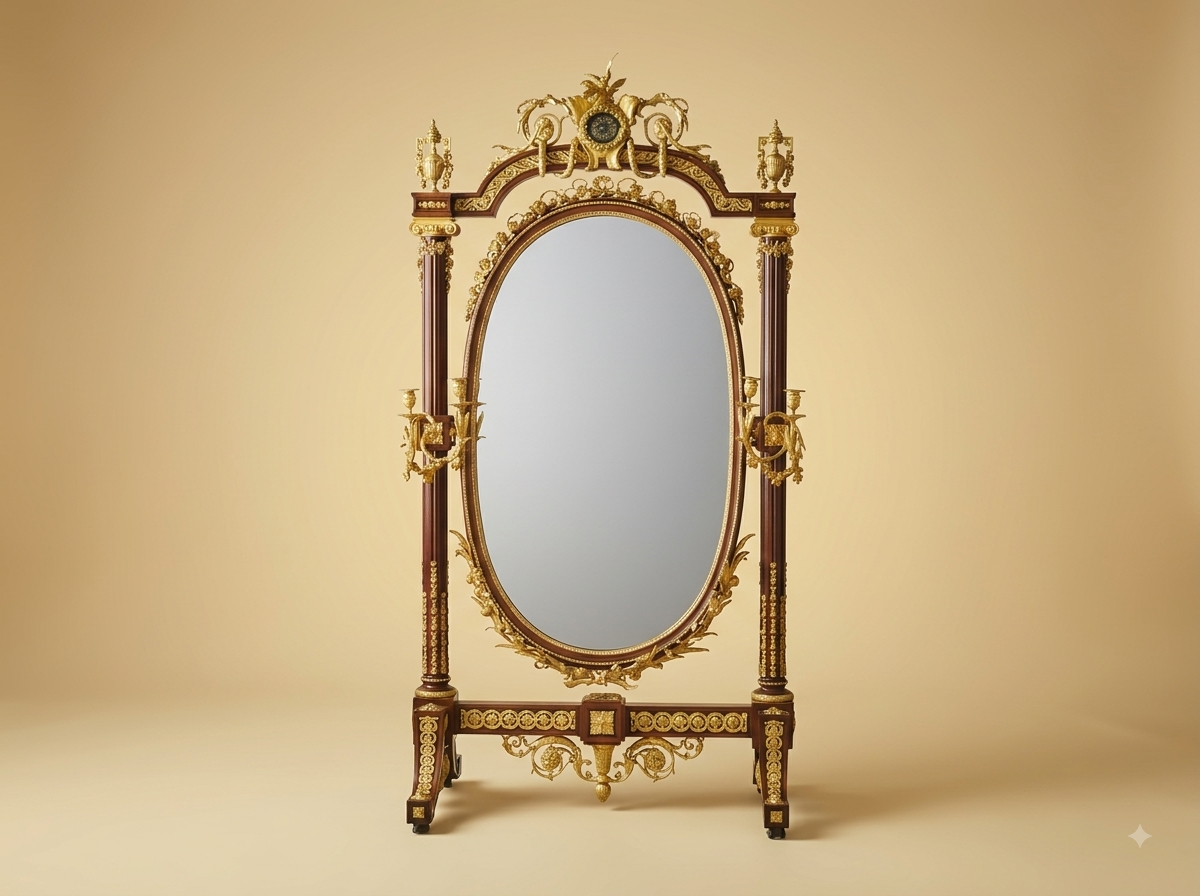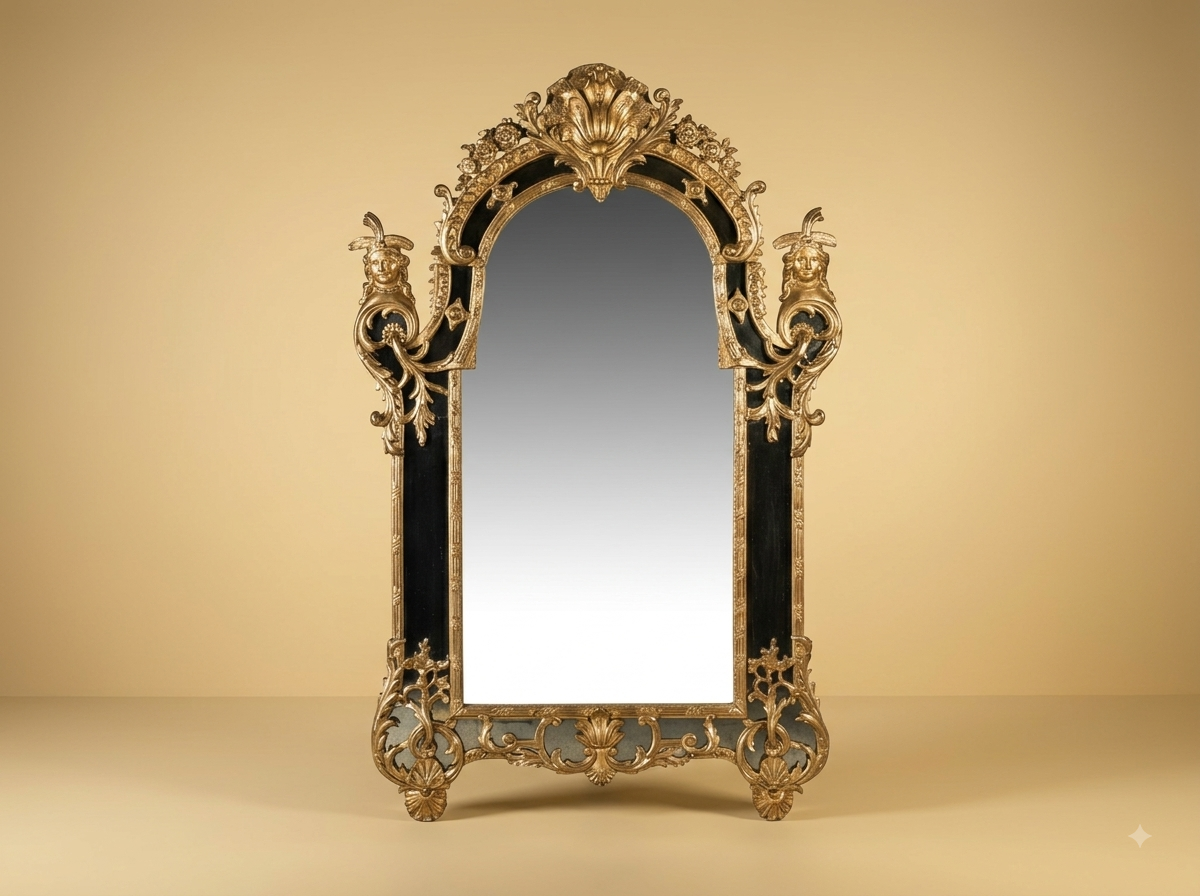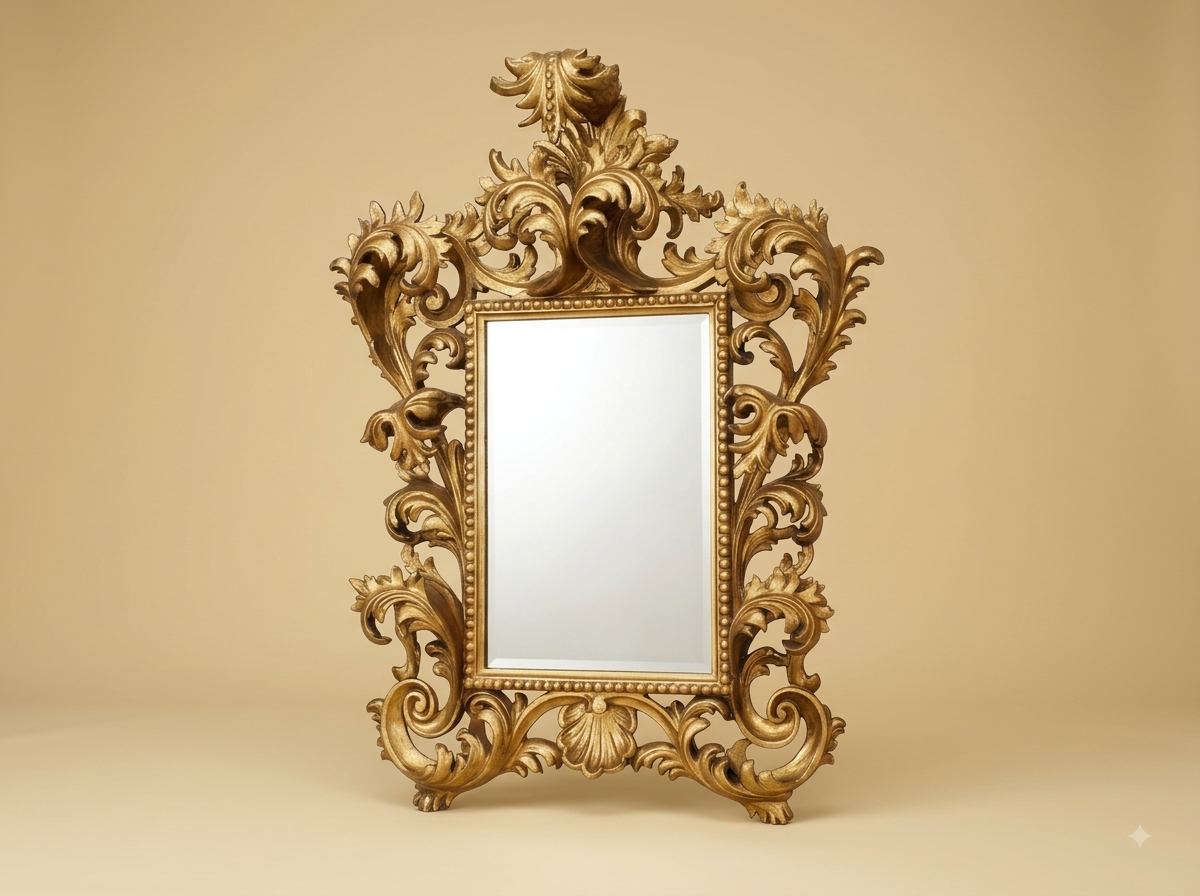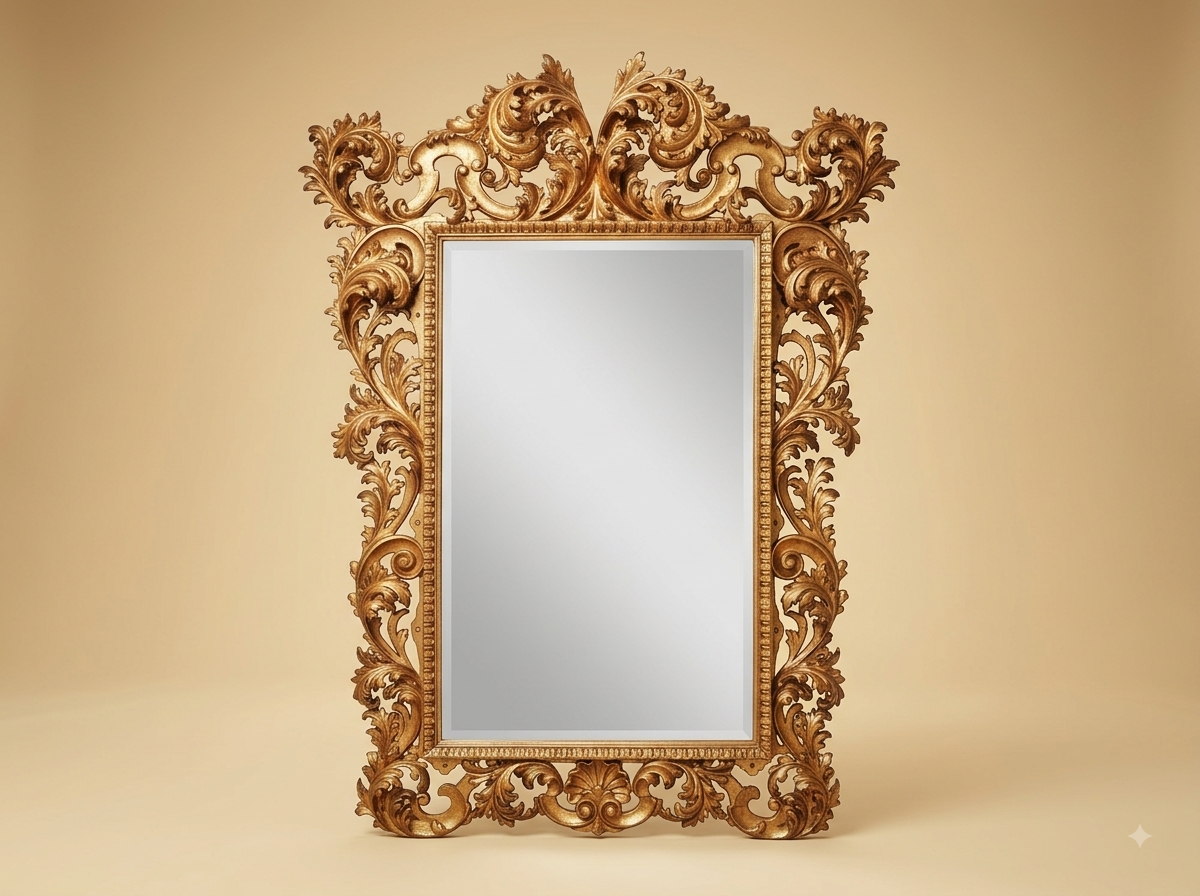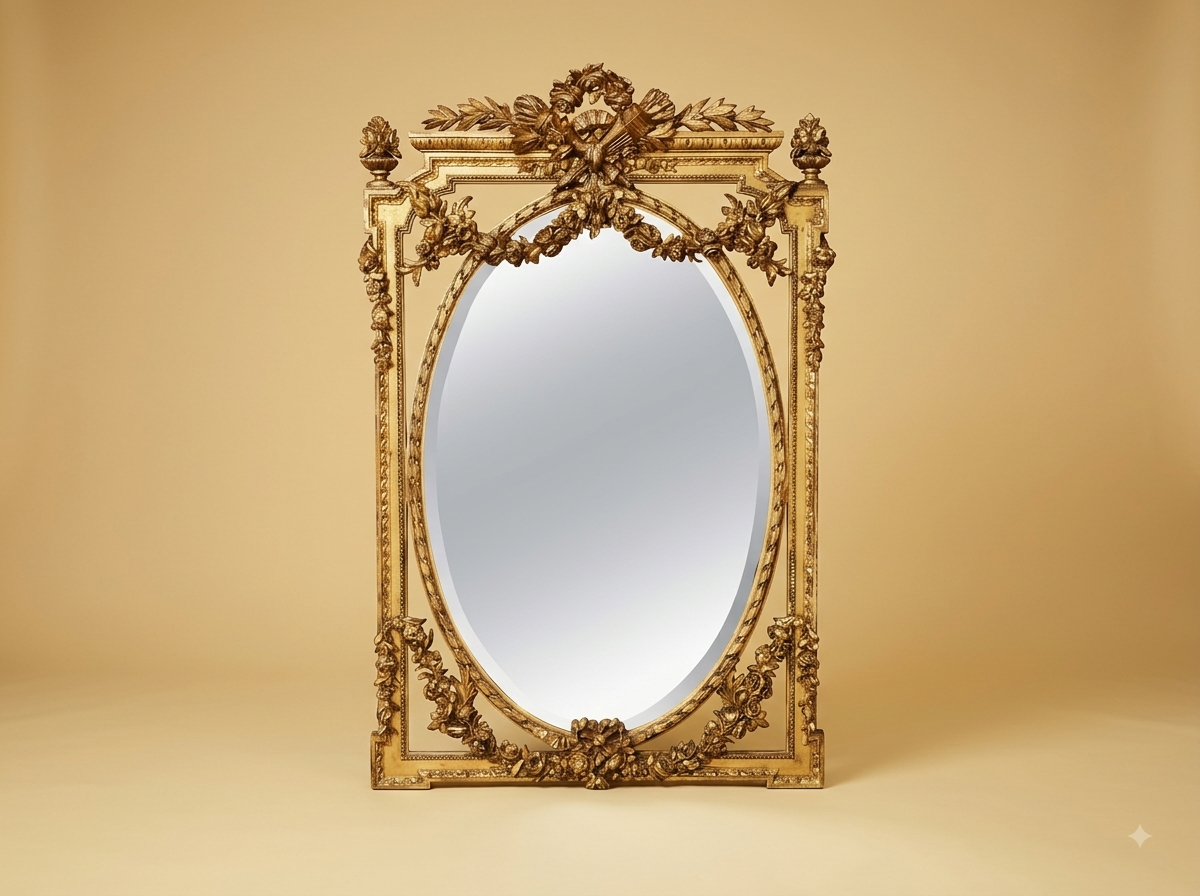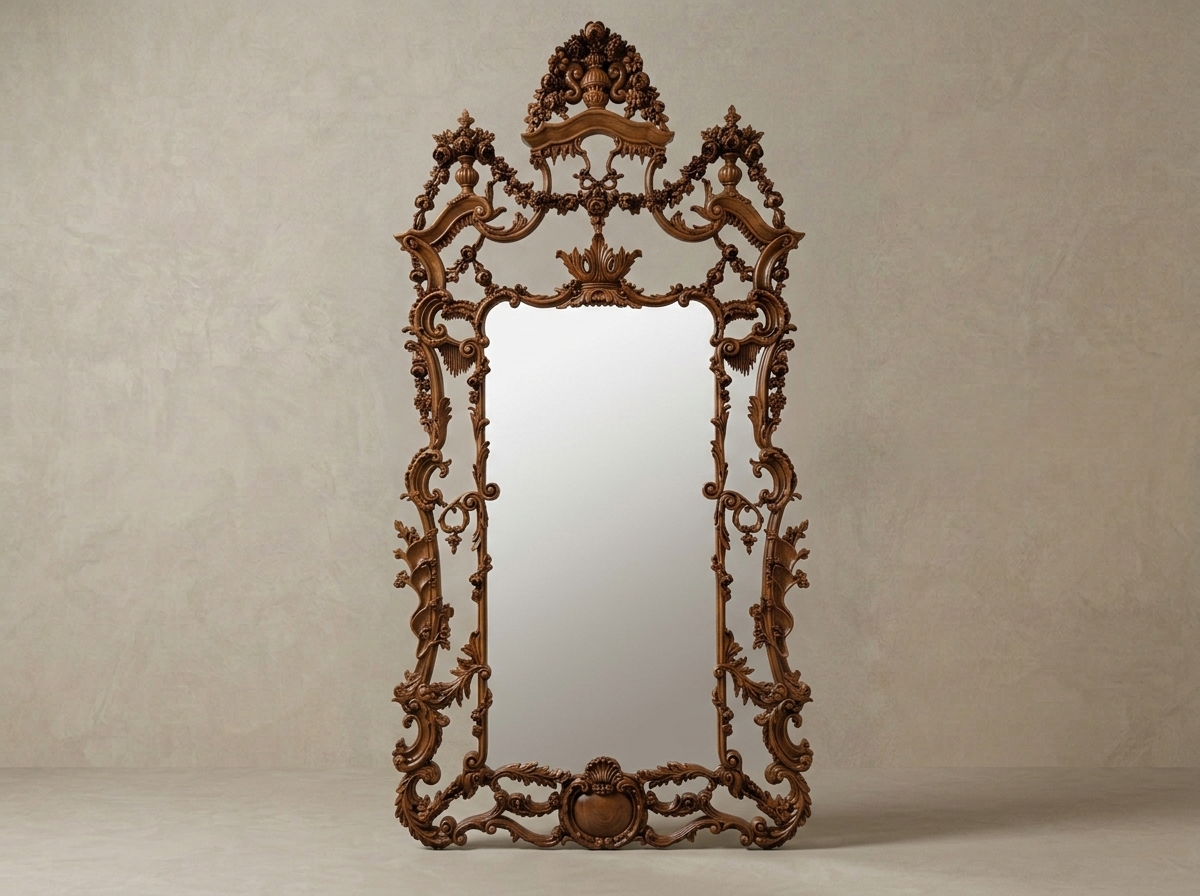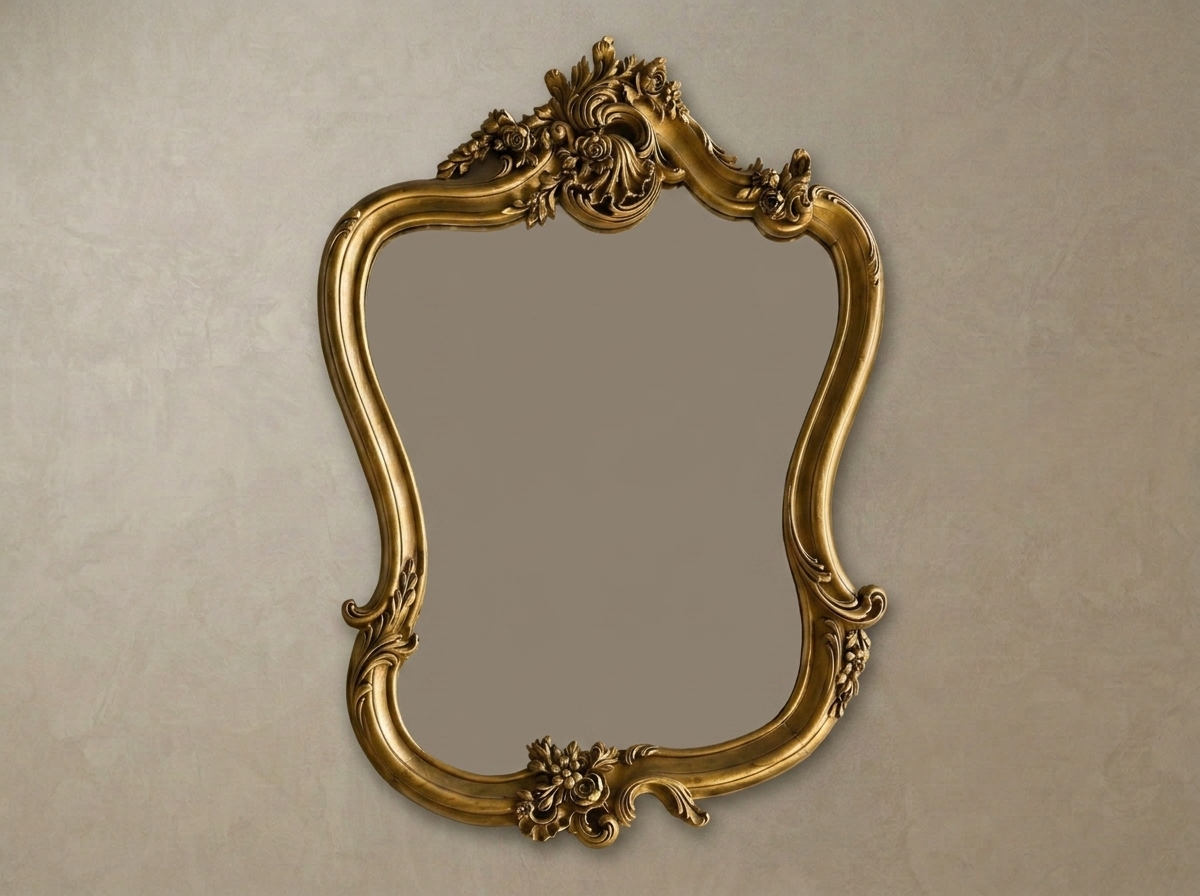
Because the glass on this mirror is shaped rather than rectangular, it cannot be ordered until the frame exists.
On an ordinary mirror the glass is cut first to a stated size and the frame is made around it. Here the outline is a free curve - a series of hollows and swells that meet at points where the eye is unforgiving - and no two frames come off the bench identical to the drawing, because a carved and moulded curve is finished by eye.
So the sequence is reversed. The frame is built, moulded, carved and cleaned up complete. Then a template is taken from the finished rebate itself: a thin sheet pressed into the recess and scribed all the way round, following the frame as it actually is rather than as it was drawn.
The glass is cut to that template, so it sits into its rebate with an even margin the whole way round - no wide gap on one hollow and a tight point on another.
It means the glass is the last thing to arrive rather than the first. It is also the only way a shaped plate looks intentional.
 Ask Price On WhatsApp