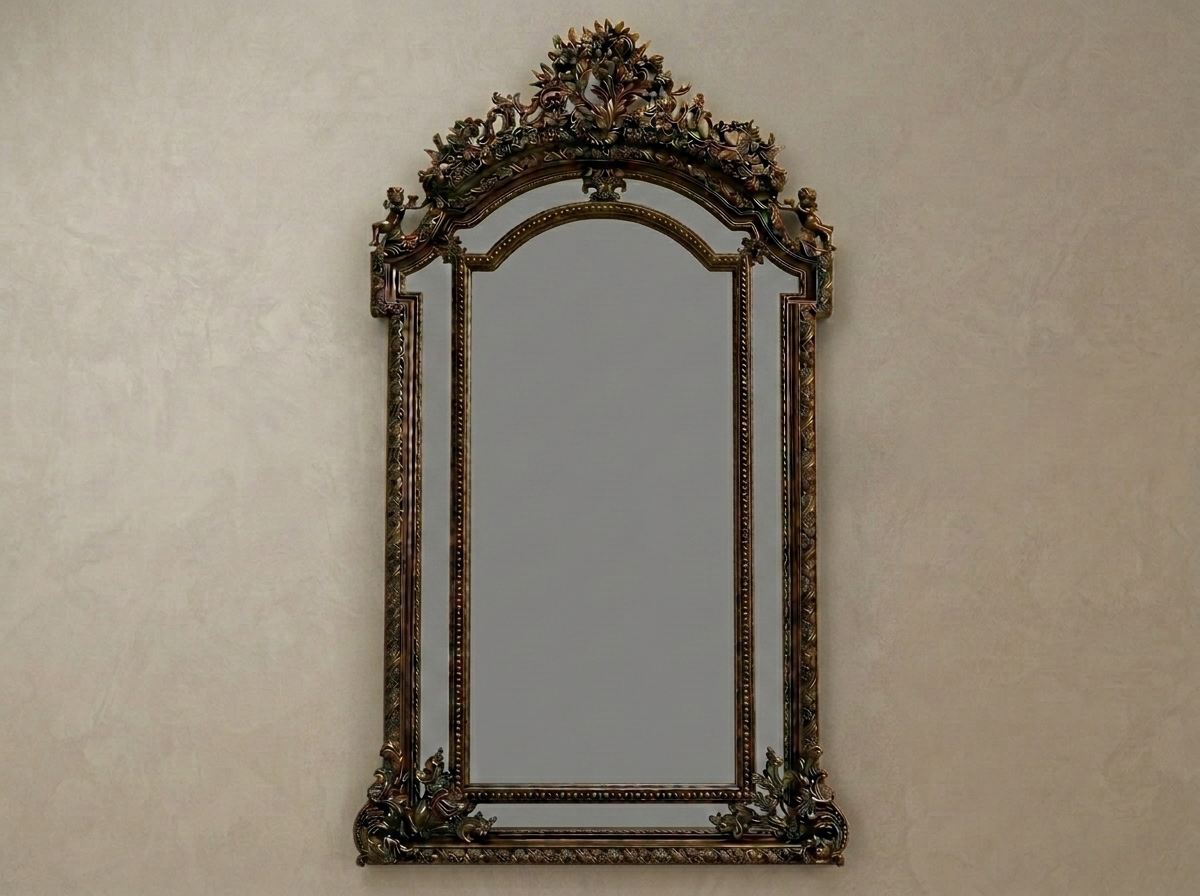
Symmetrical ornament is far less forgiving than asymmetrical ornament, and this frame is symmetrical everywhere.
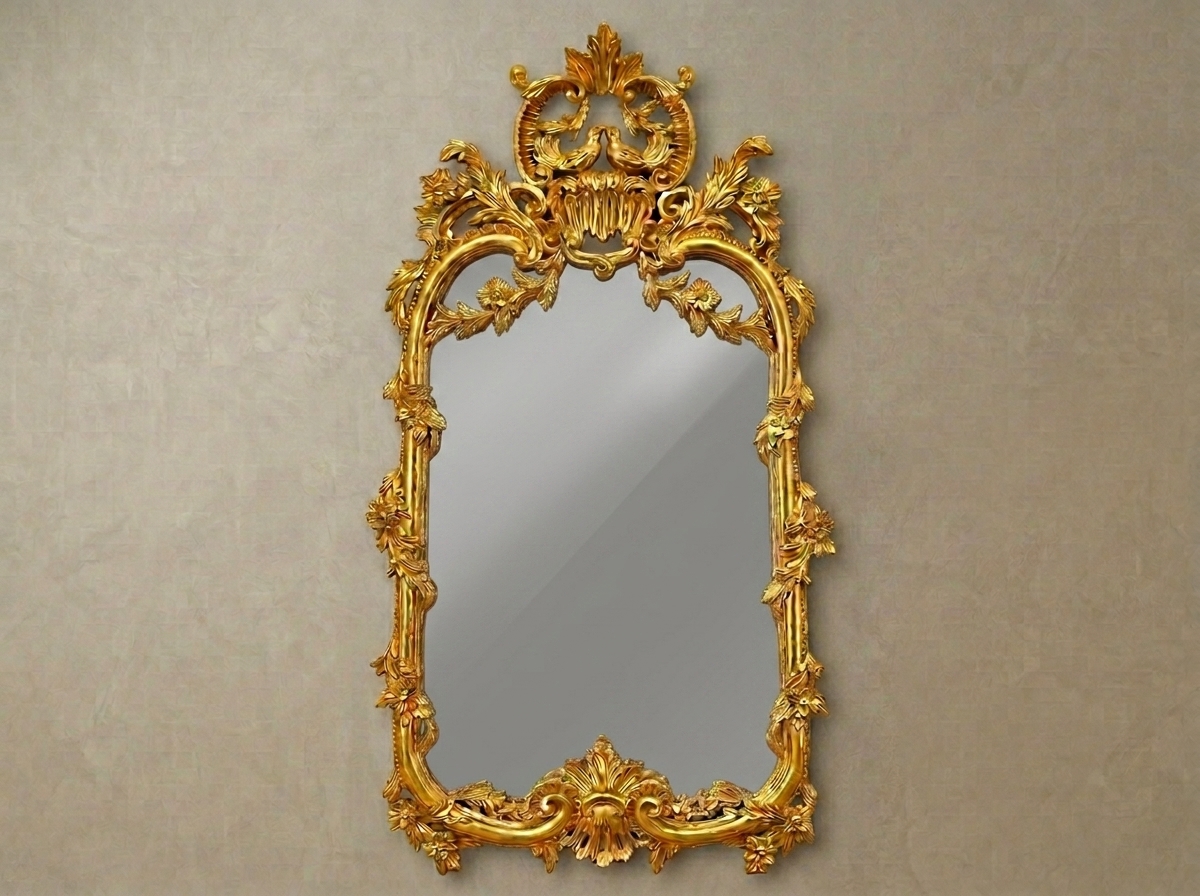
On a rococo design, a scroll that ends a fraction short of where it was drawn is simply a scroll. There is nothing on the other side identical to it, so there is nothing to compare it against. Errors disappear into the freedom of the style.
Here, every element has a twin directly opposite. A husk drop, a rosette, a trellis crossing, a corner roundel - if one sits a little low, the eye finds it immediately by comparison with its pair.
The danger is cumulative error. Set out the trellis by marking each crossing from the last one, and every small inaccuracy adds to the one before it, so by the far end the pattern has drifted - even though no single measurement was wrong.
So nothing on this frame is measured from its neighbour. A centre line is struck first, and every element is measured from that datum - each husk, each crossing, each rosette - so an error anywhere stays local instead of accumulating.
It is slower to set out. It is the only way symmetry survives to the end of a run.
 Ask Price On WhatsApp