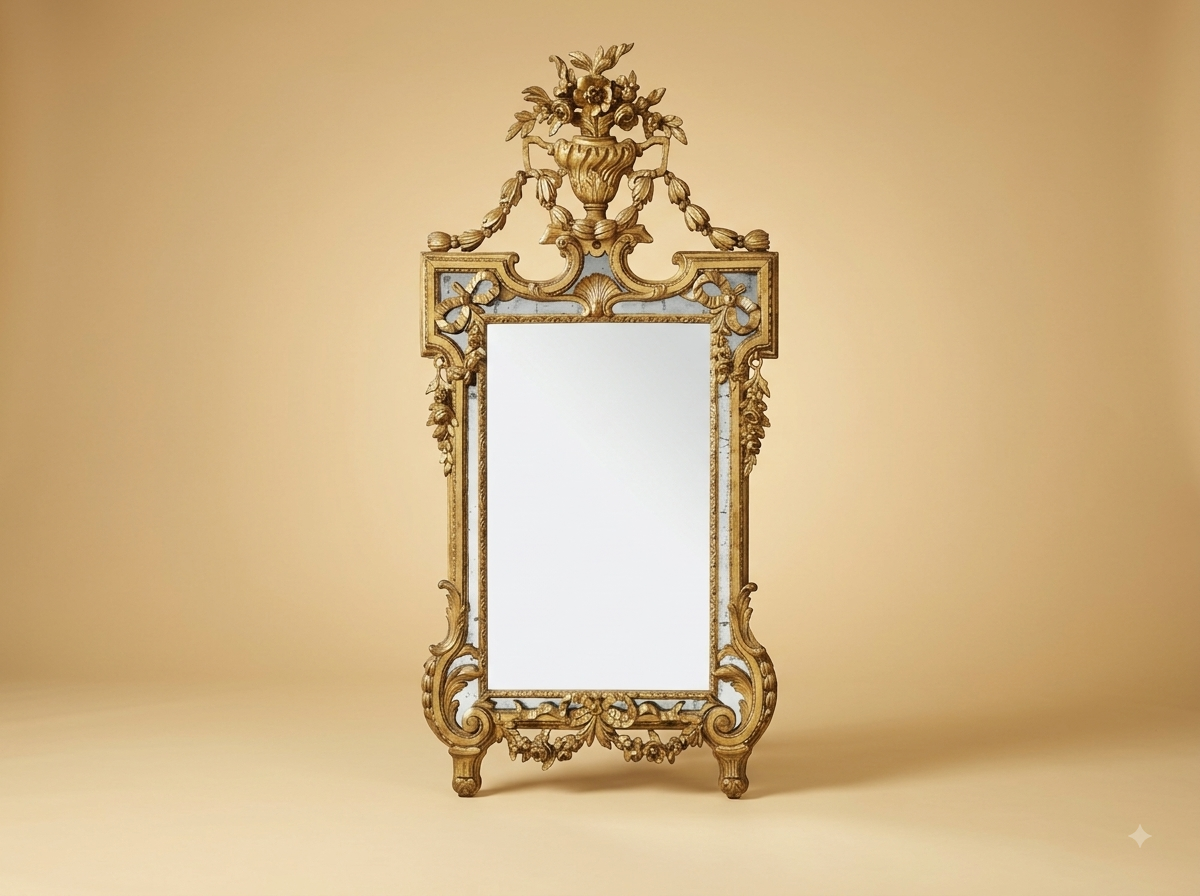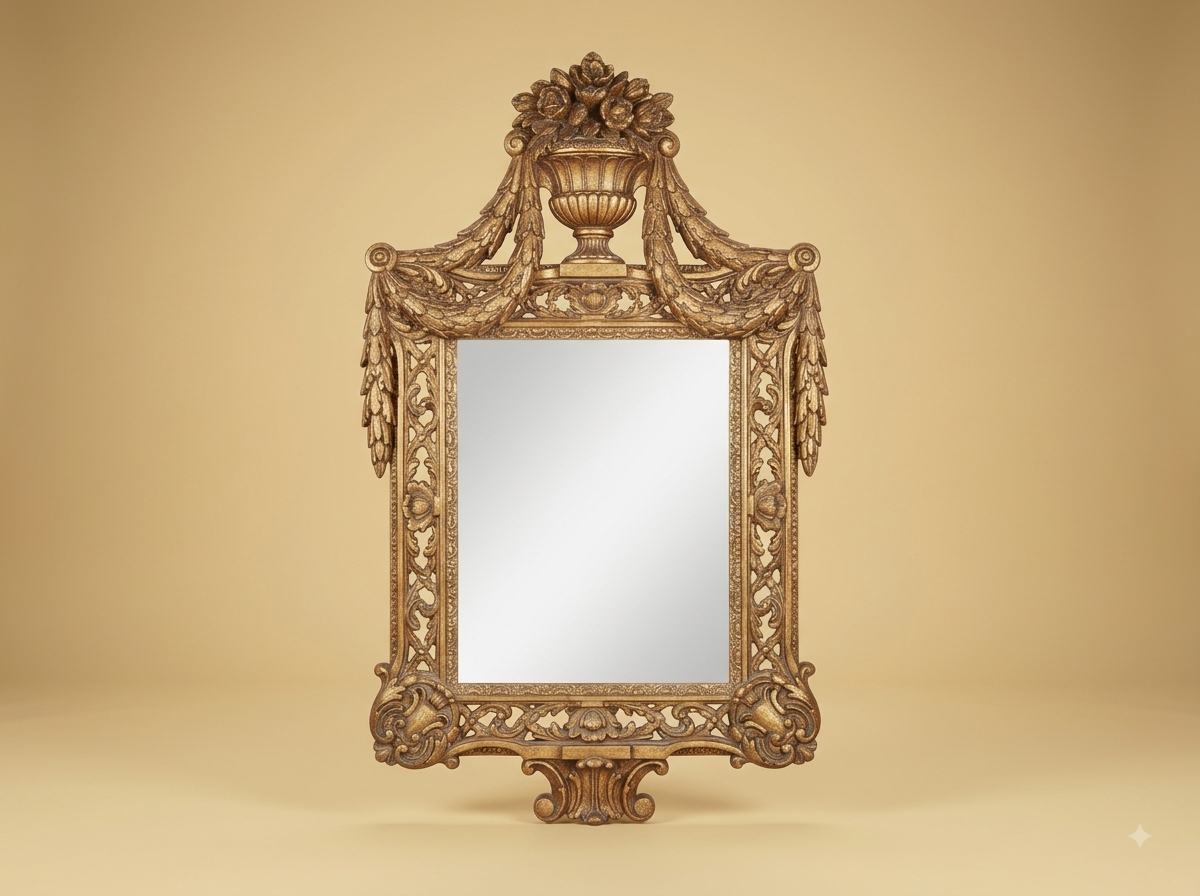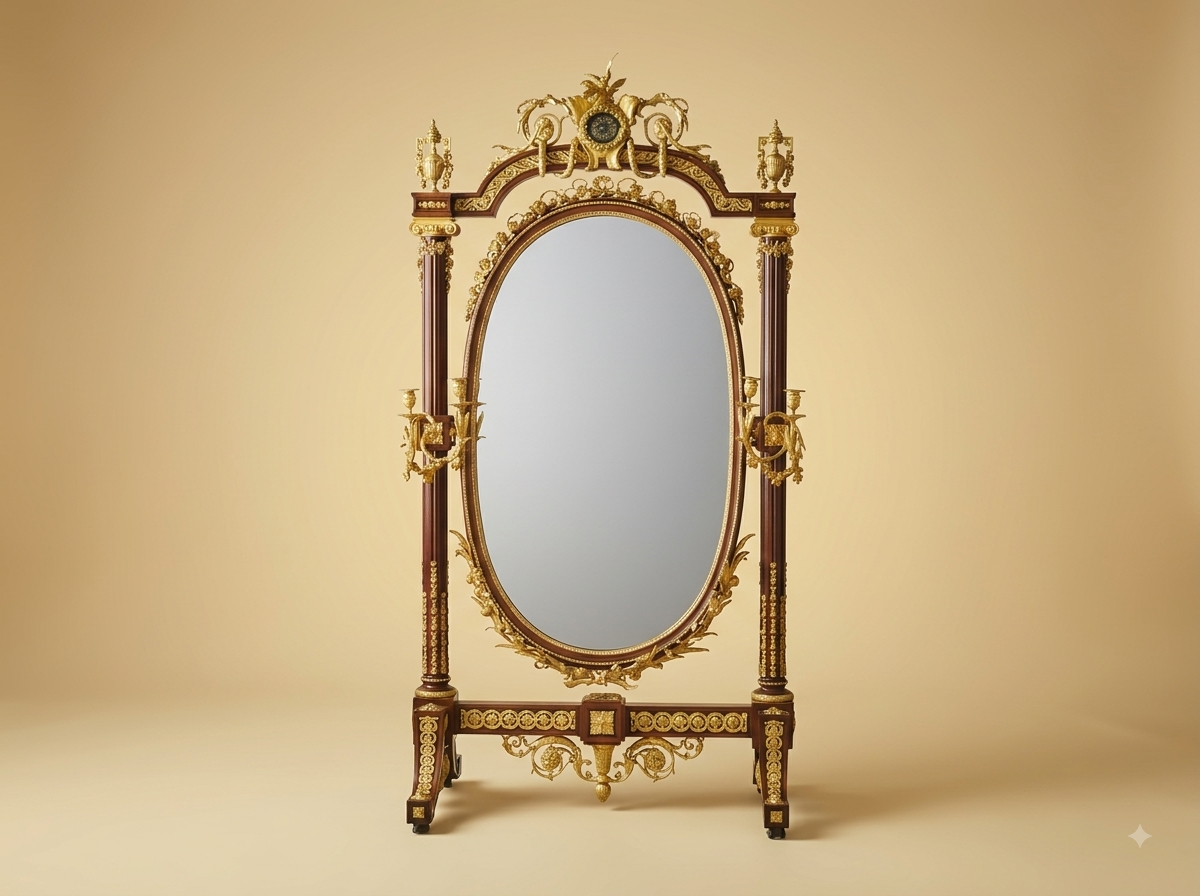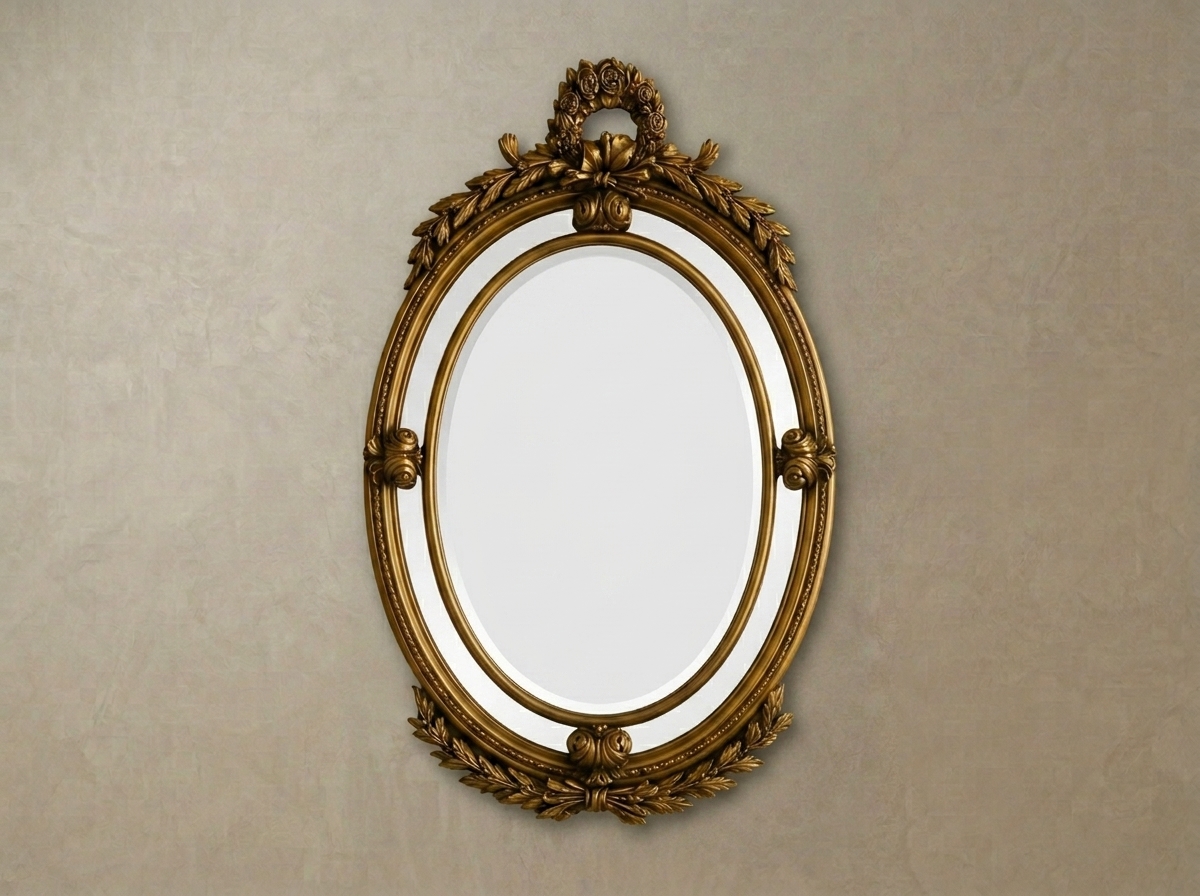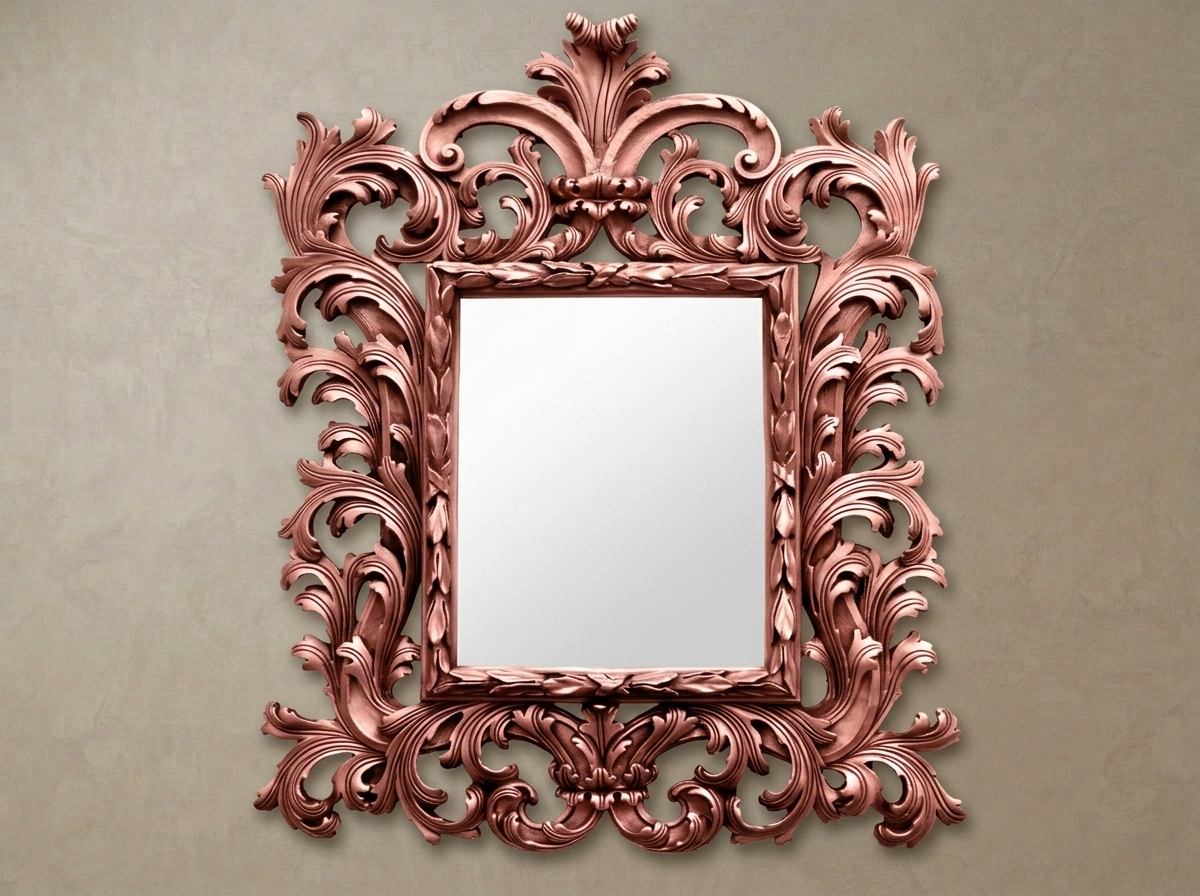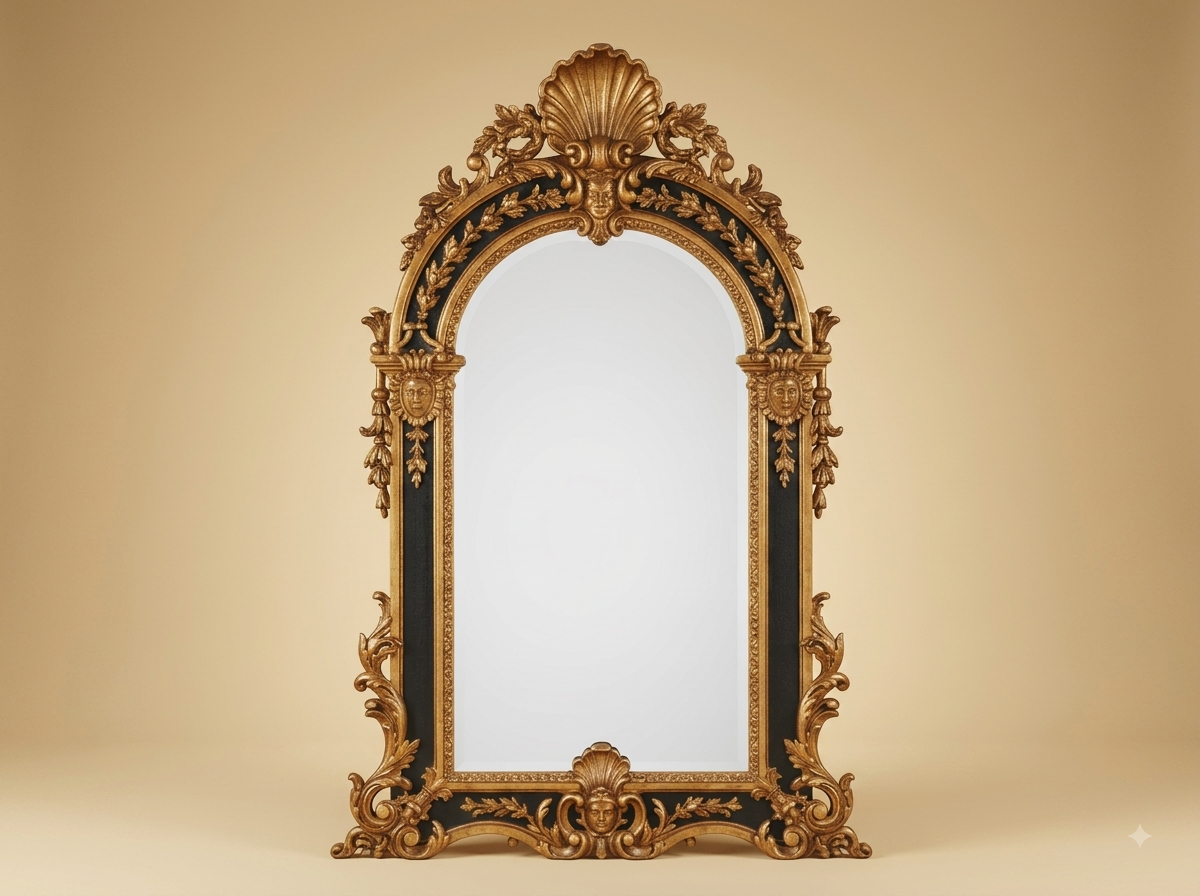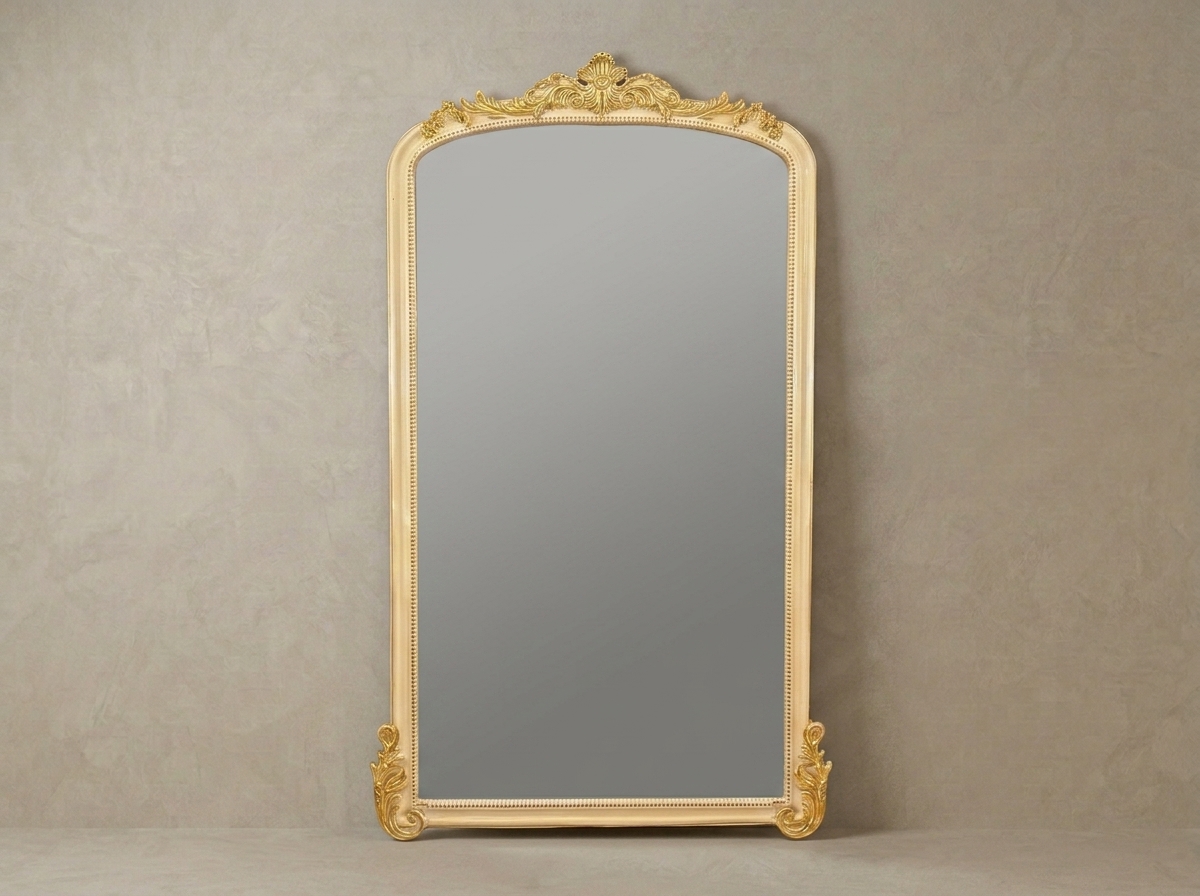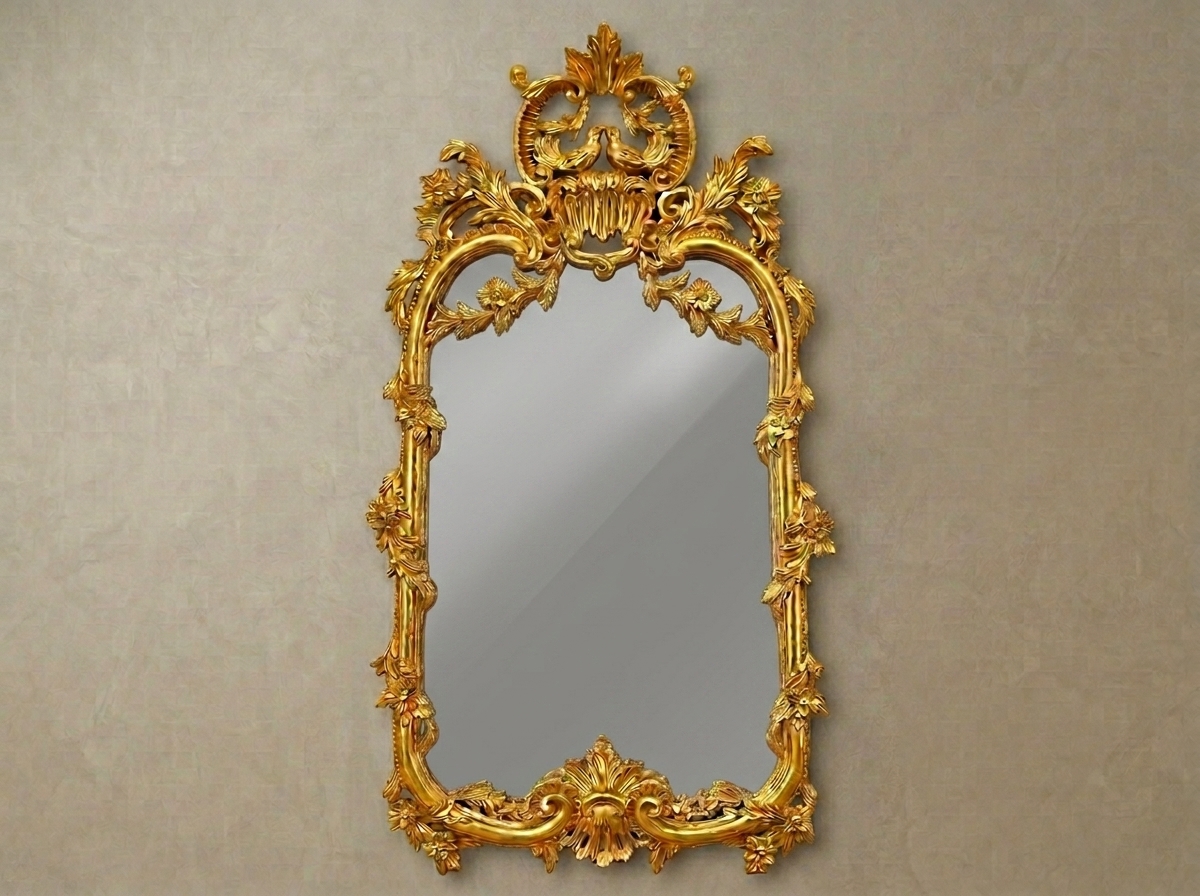
The carved vines that lie over the glass are the last things fitted to this mirror, and they are fixed to the frame alone - never to the plate.
Ornament overlapping a mirror is what gives this style its depth: the eye reads the frame as being in front of the reflection rather than beside it. But it creates a practical question that has to be answered at the design stage. If those overlapping pieces were bedded down onto the glass, the plate could never come out again without breaking them off - and mirror plates do occasionally need to come out, whether after damage or simply after many years.
So each overlapping element is carved with a return that reaches back to the frame, and it is fixed there. Behind the part that lies over the glass there is a deliberate clearance - the carving hovers over the plate rather than resting on it.
The plate can then be lifted out from behind, past the vines, and a new one fitted, without a single carved element being disturbed.
Held that way, the vines also cast a shadow onto the glass, which is what makes them read as growing over it.
 Ask Price On WhatsApp