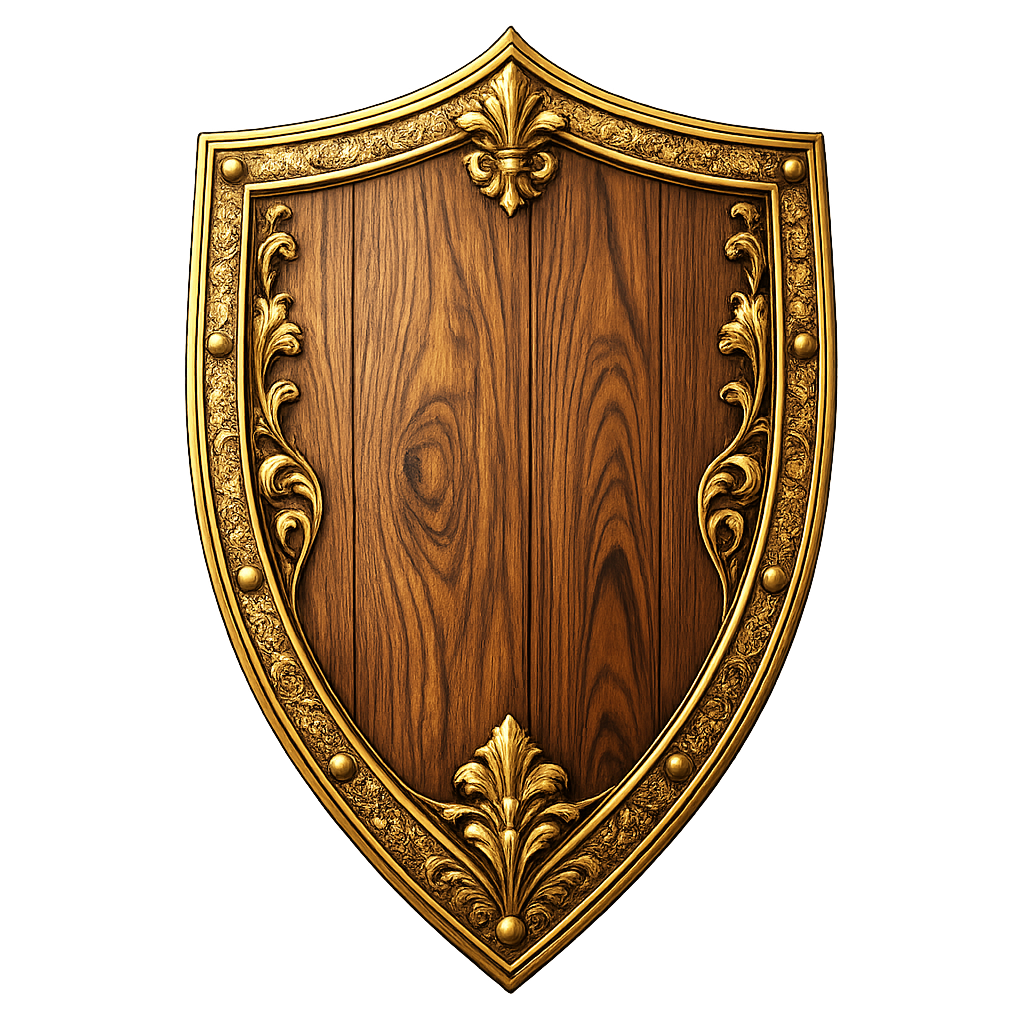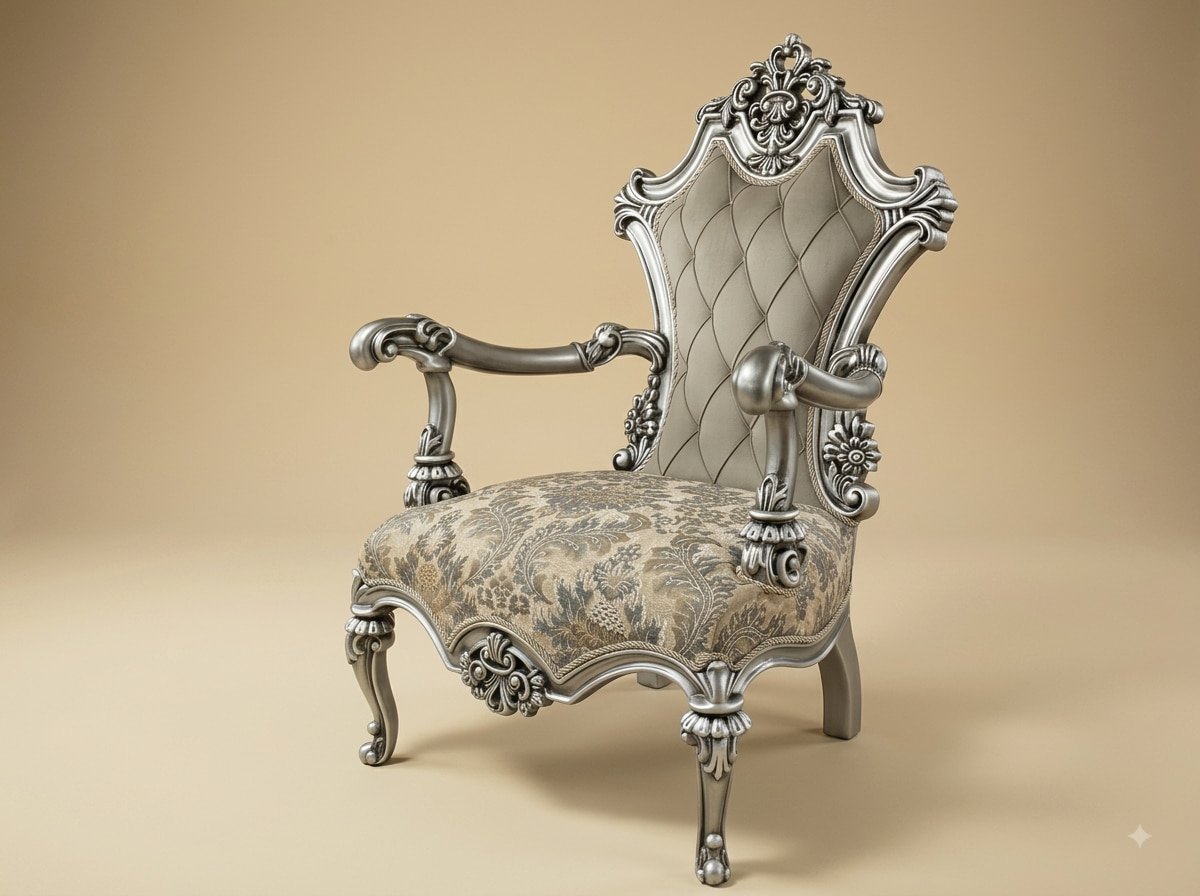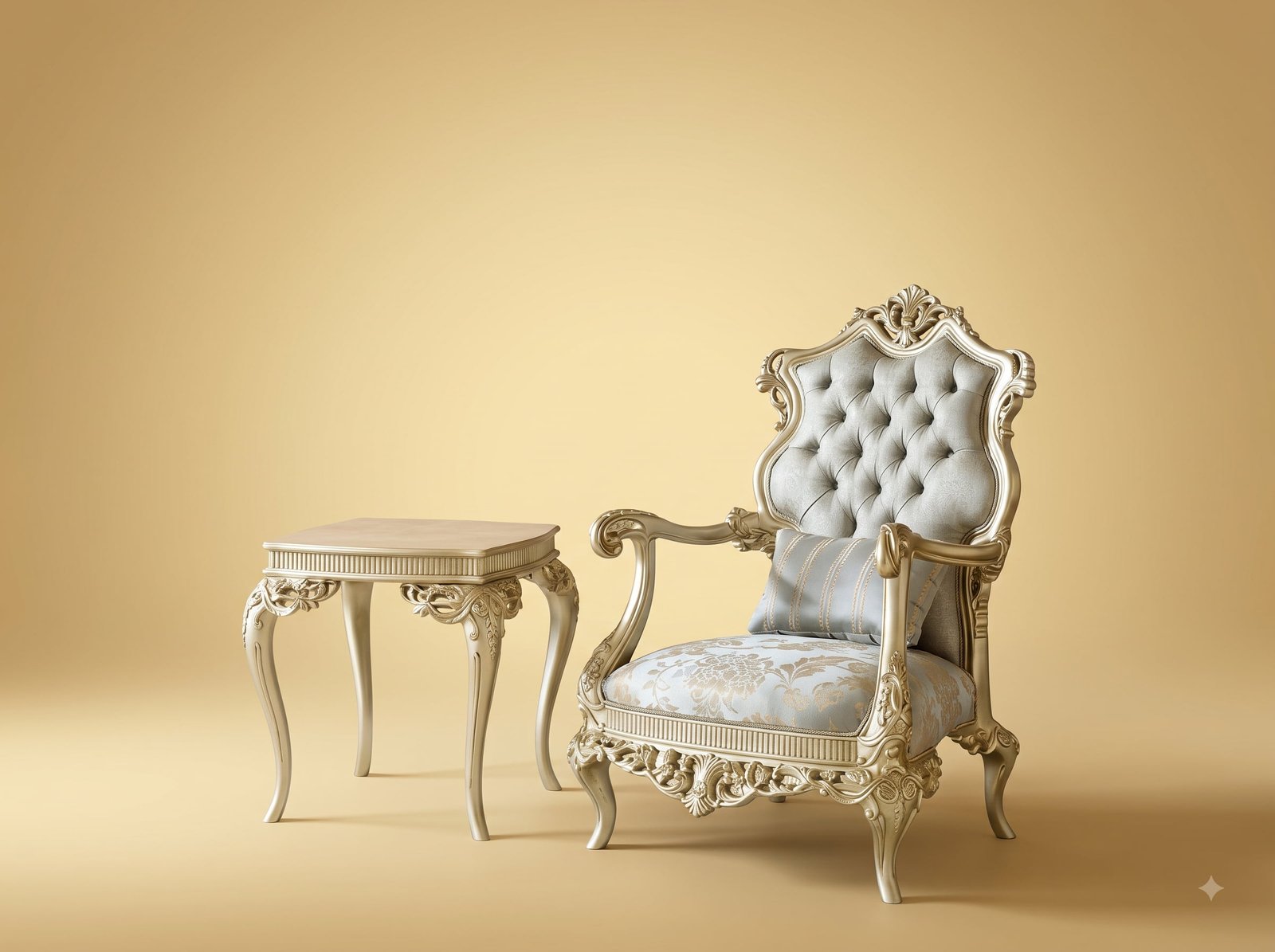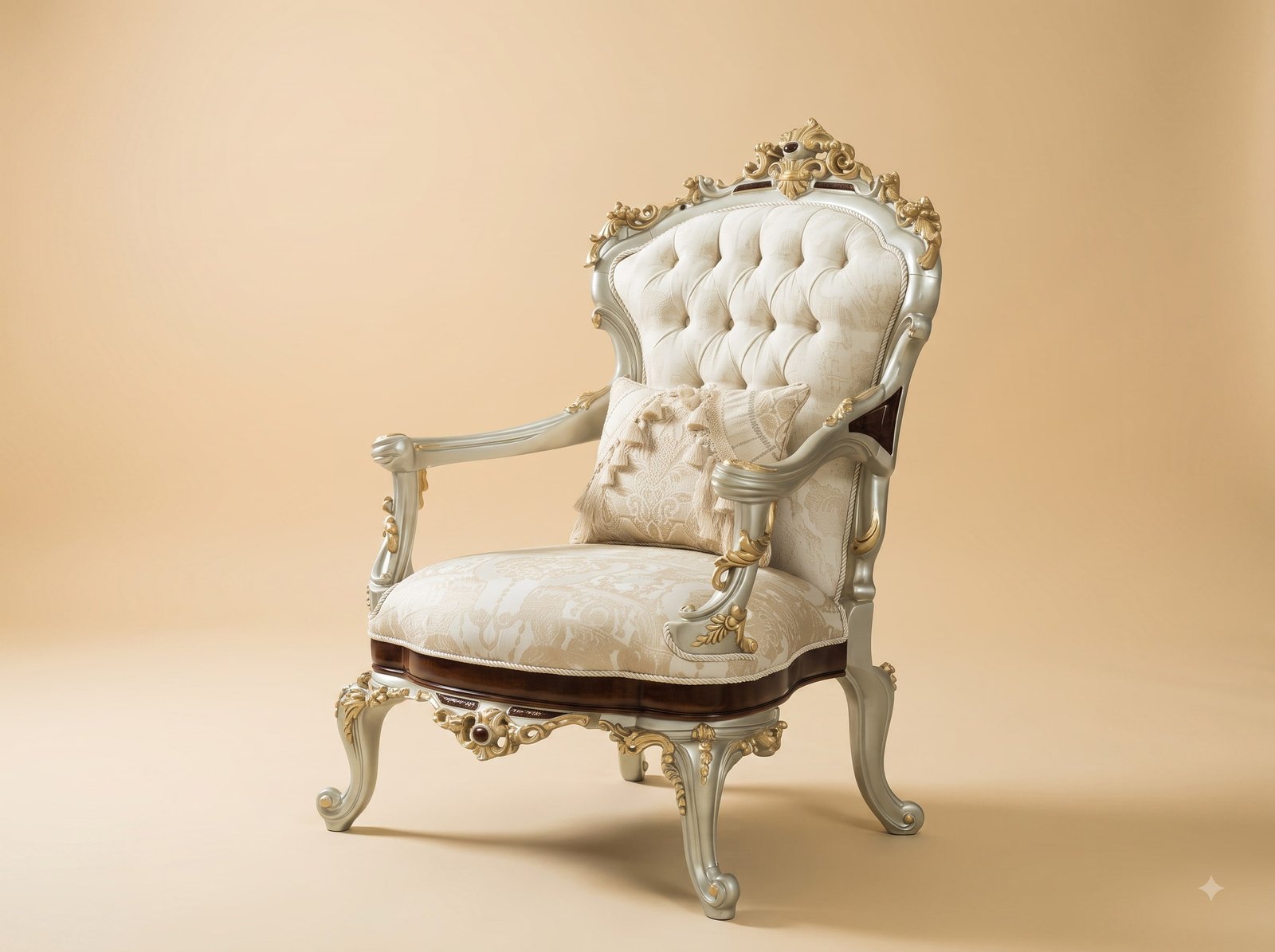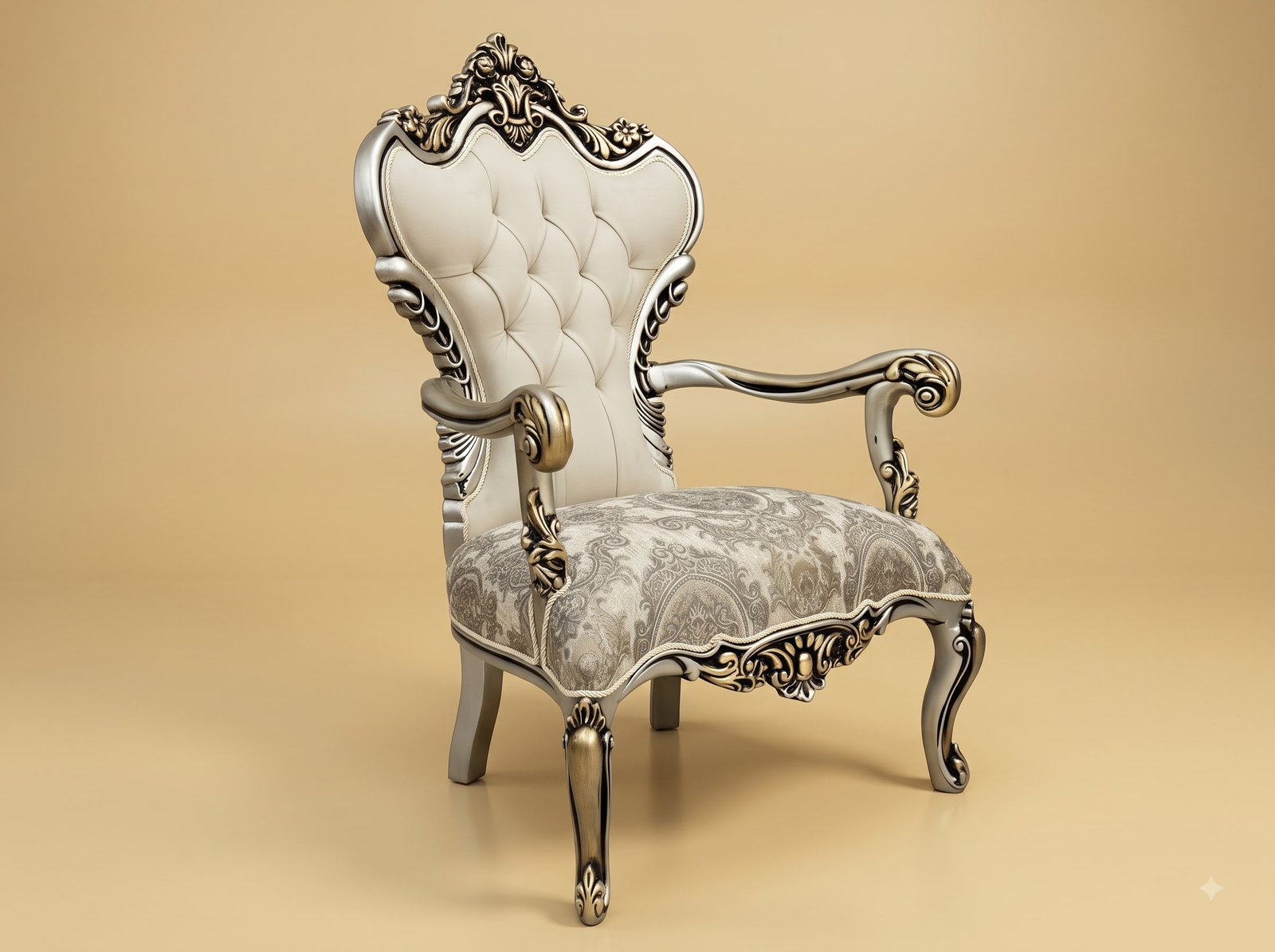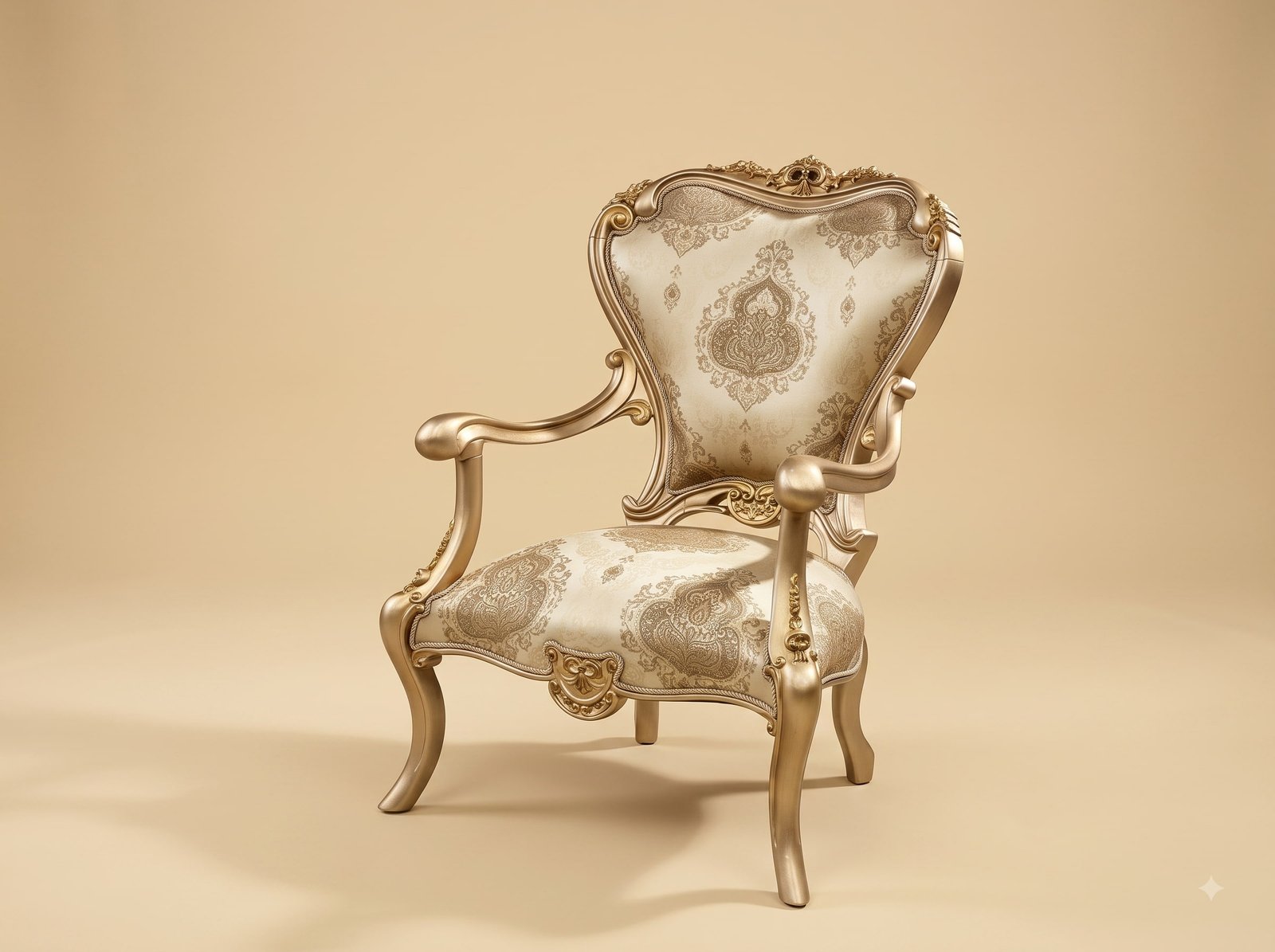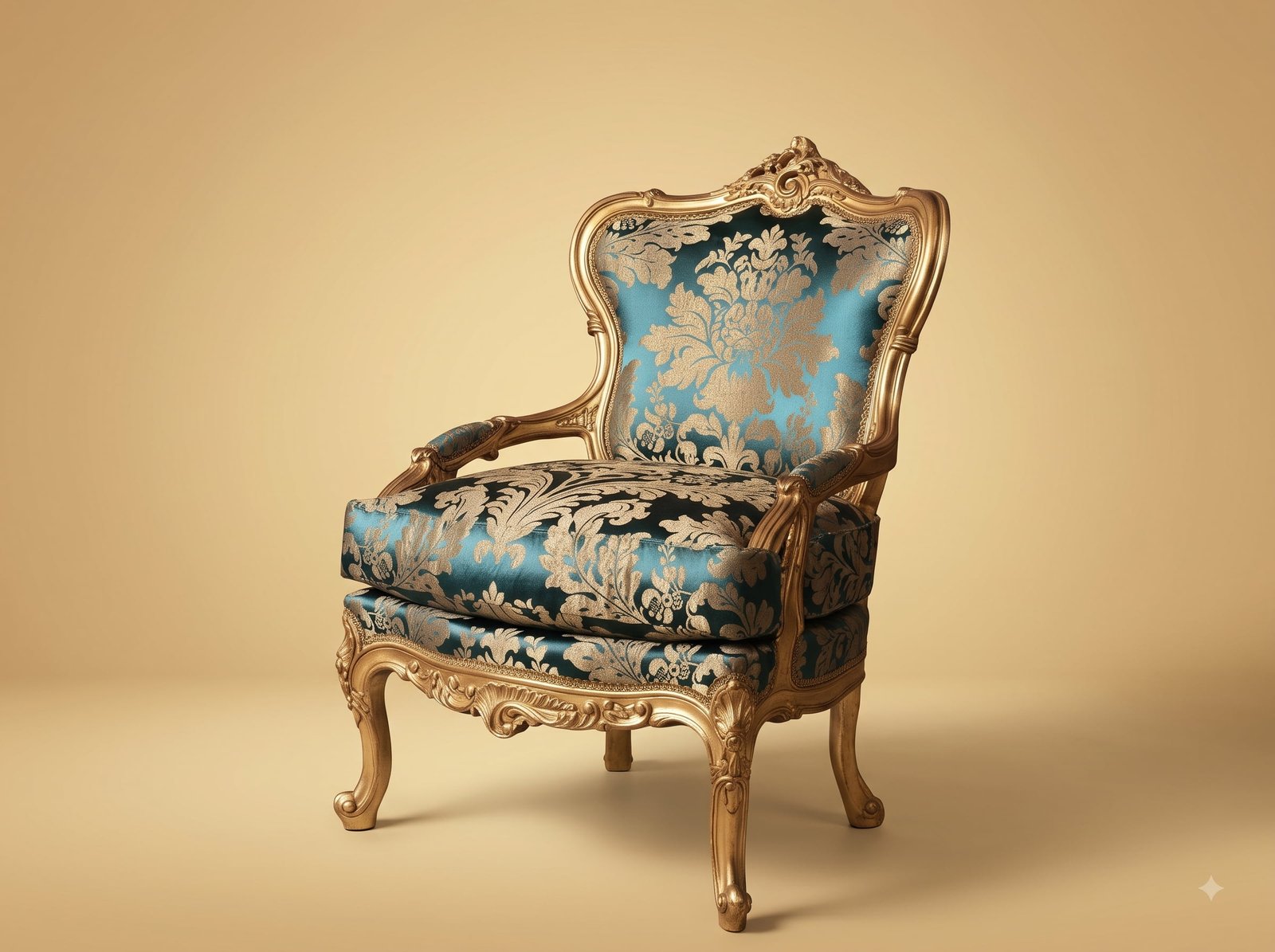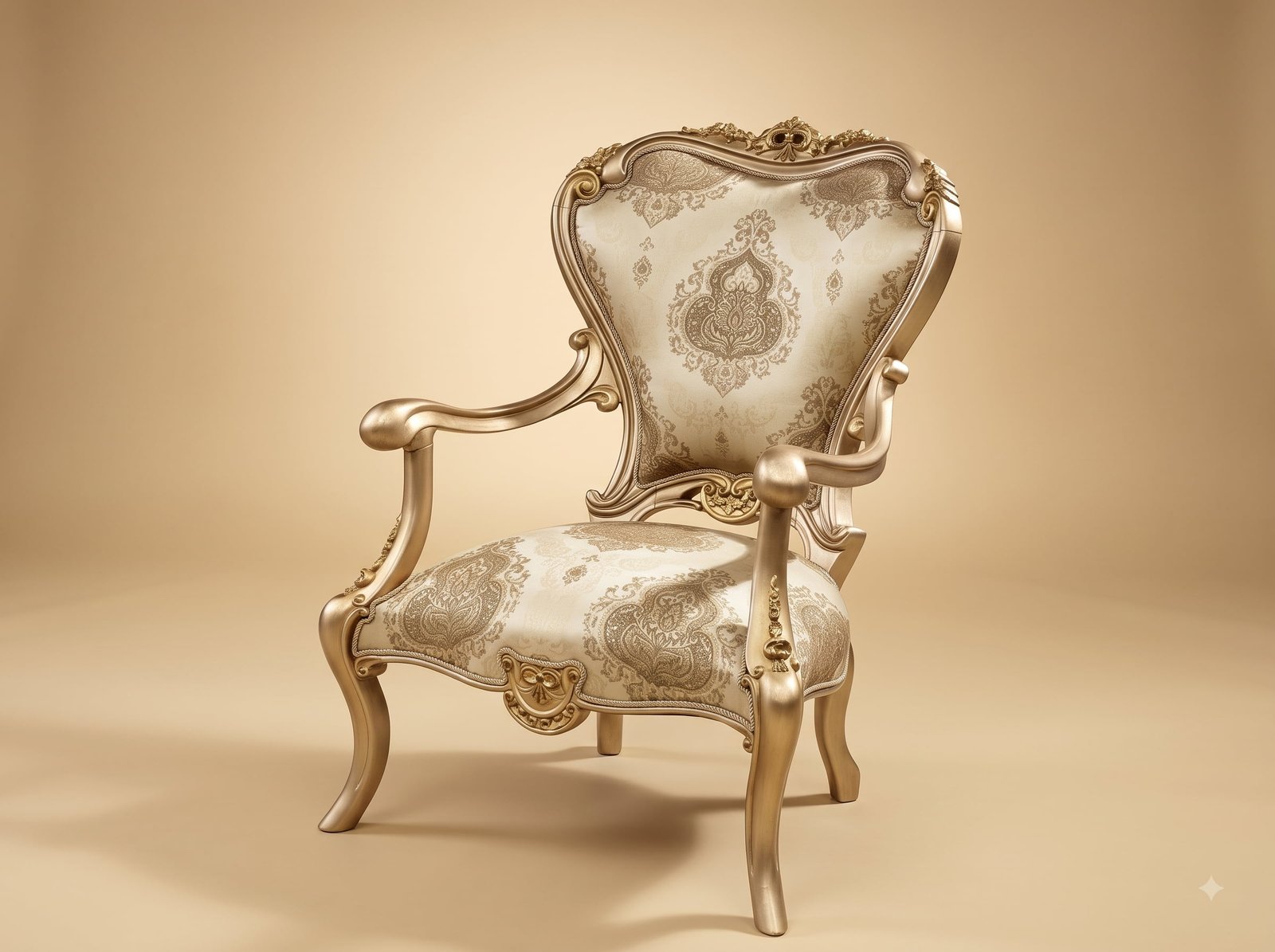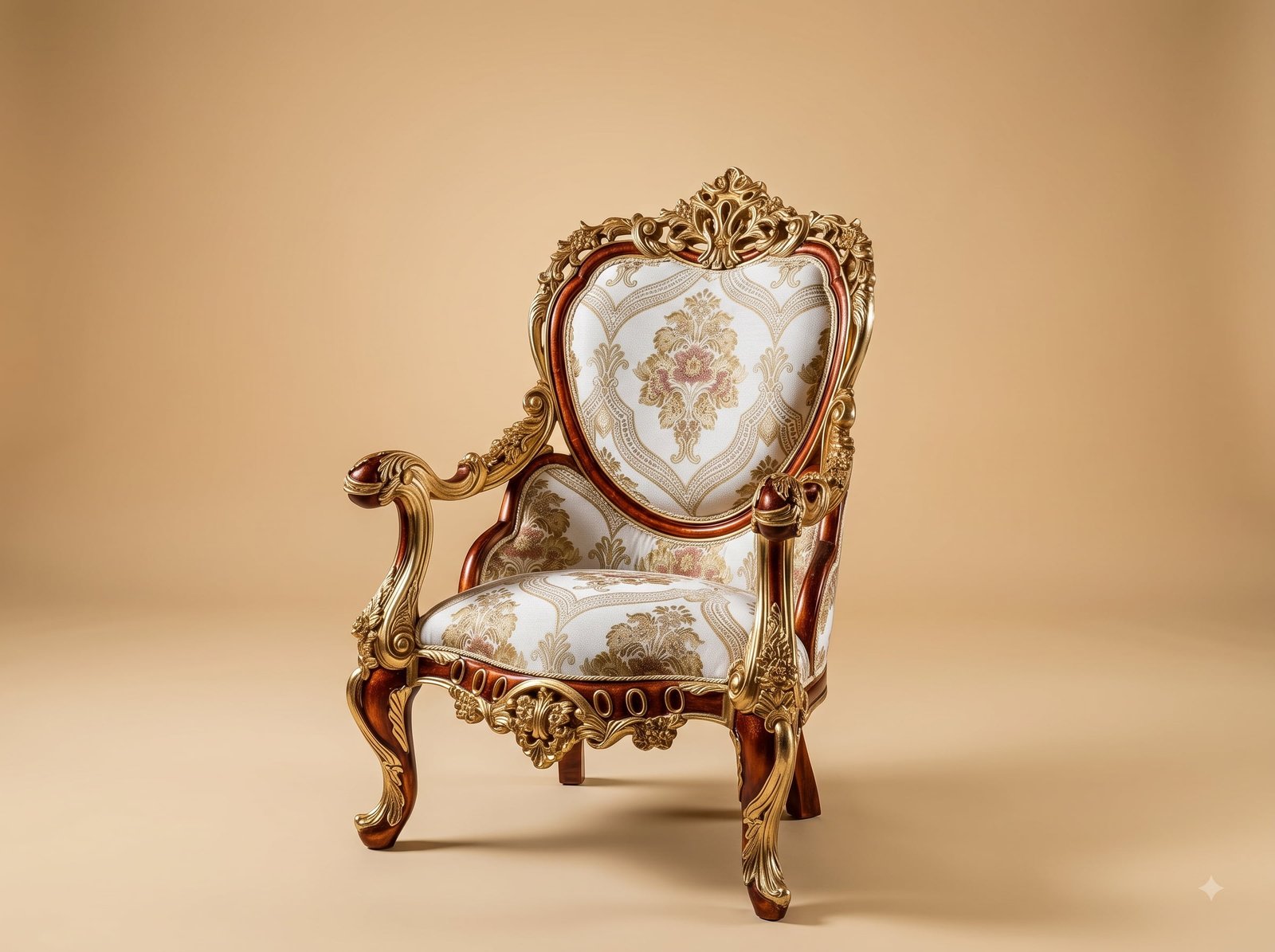
The shield-shaped back on this chair looks freehand. It is not. A carver drawing both halves by eye will always get one shoulder fuller than the other, and on a symmetrical form the eye finds that error instantly.
So the outline is drawn once, on one side only, and cut as a half template in thin ply. The template is laid against the centre line, traced, then flipped and traced again. Both halves come from the same edge, so they cannot disagree. The same half template governs the crest above it, which is why the pierced foliage at the top mirrors cleanly across the little cabochon at its centre.
Once the shape is cut, the template is kept and used again during carving. Every few hours the carver lays it back on the work to check that neither side has crept as the depth increased. Carving removes material unevenly, and a form that started symmetrical can drift by the time the undercuts are in.
It is a slow way to build a chair back, and it is invisible in the finished piece. That is the point. You are not meant to notice the symmetry. You are only meant to notice that nothing looks wrong.
 Ask Price On WhatsApp