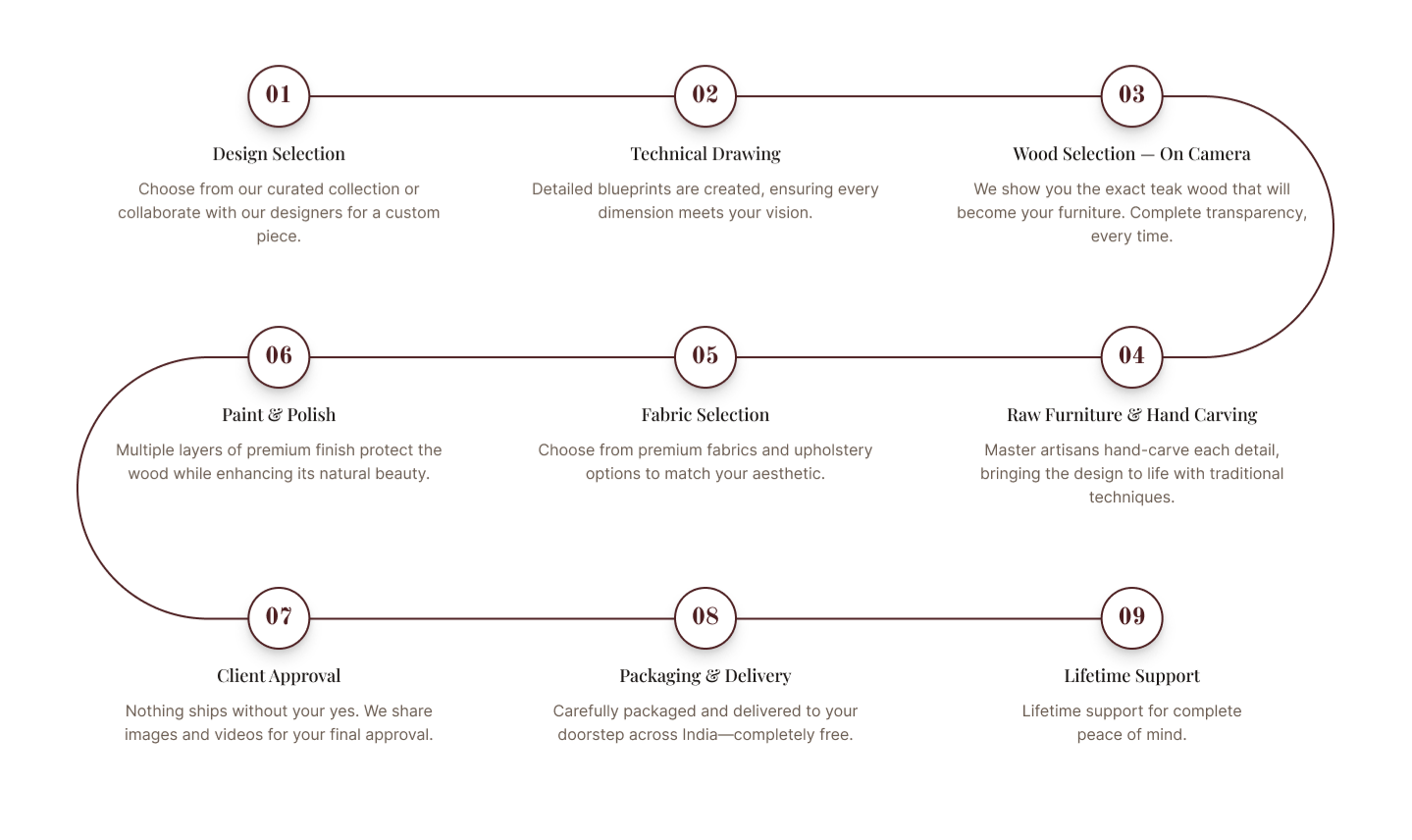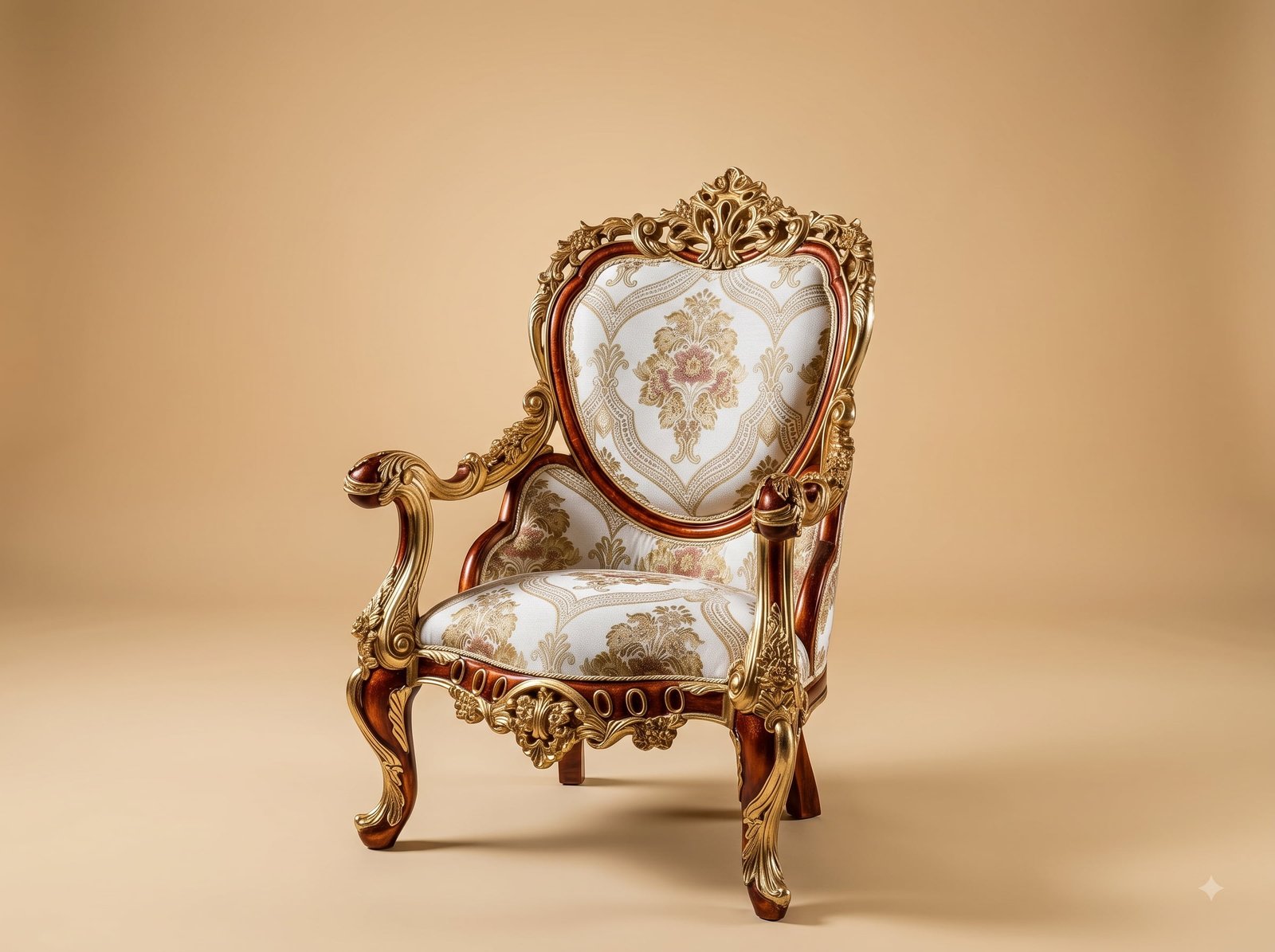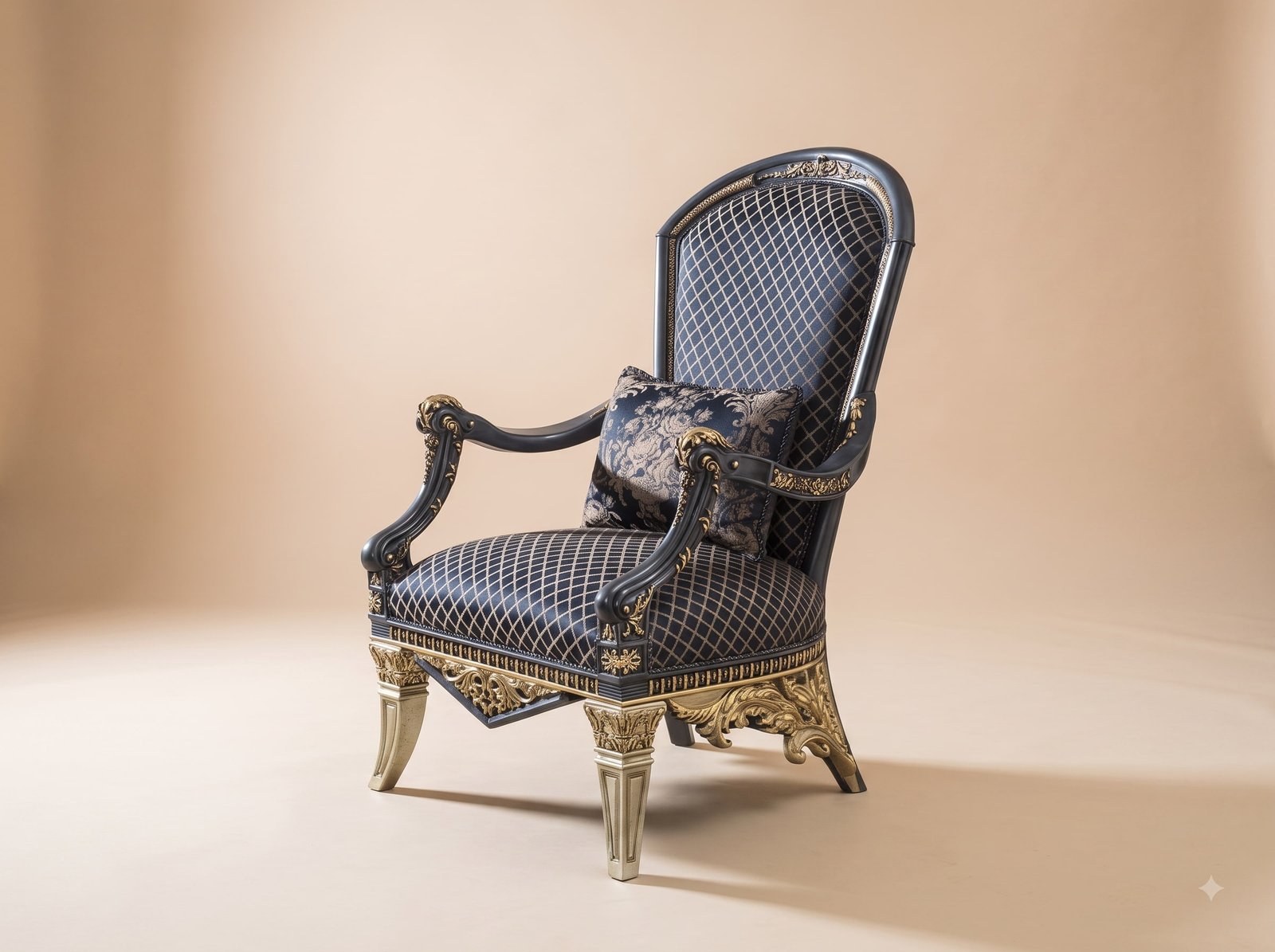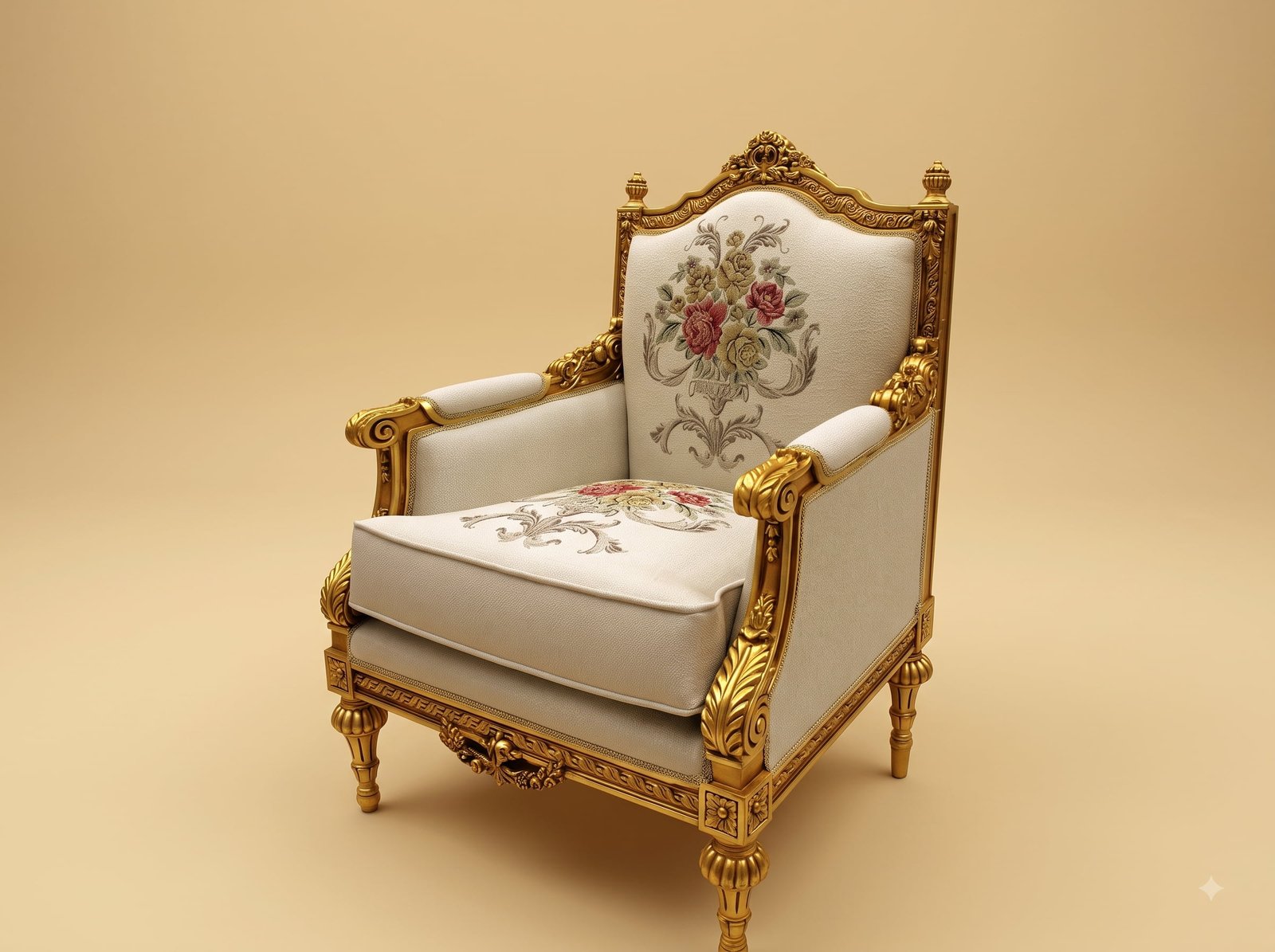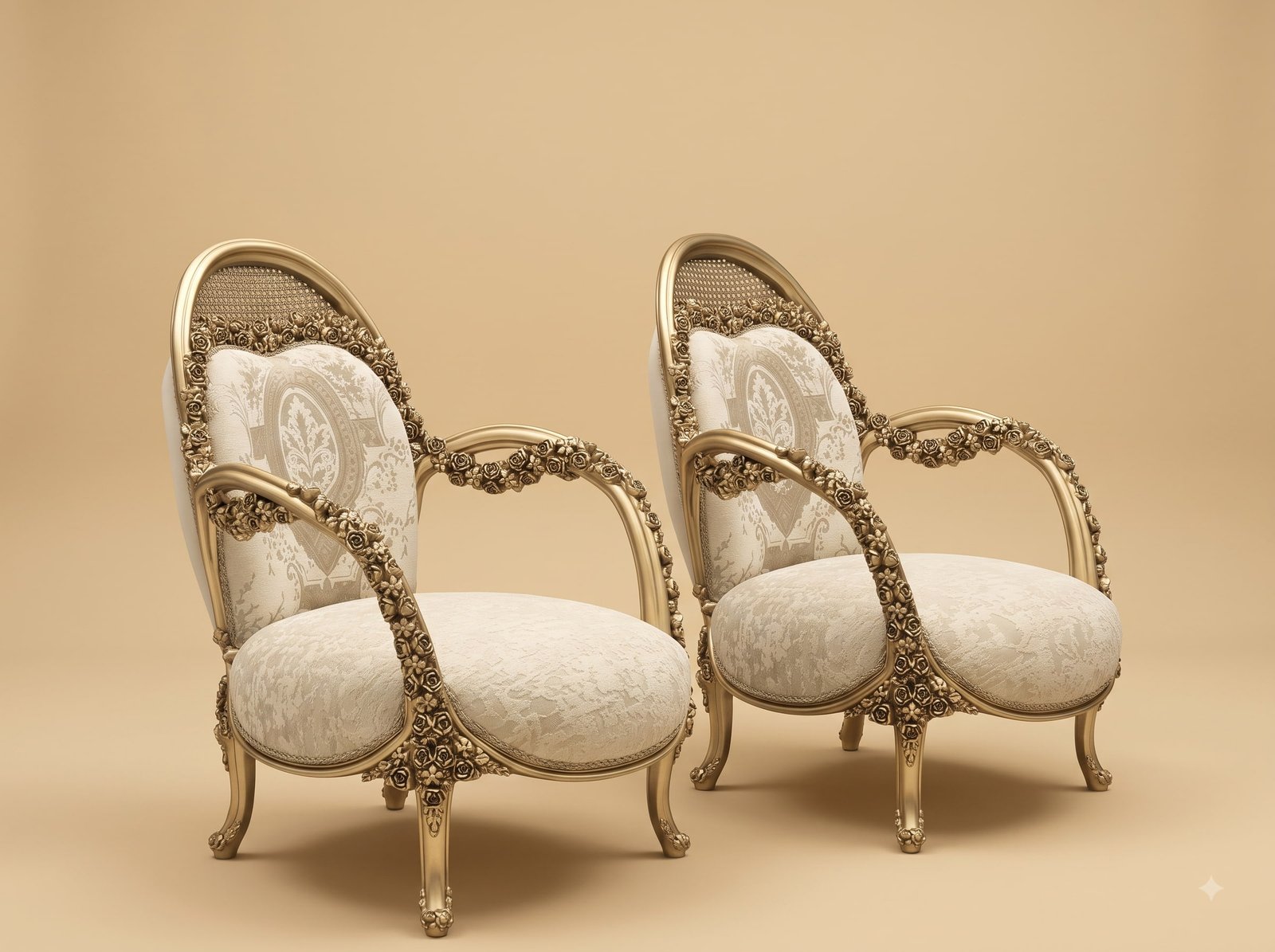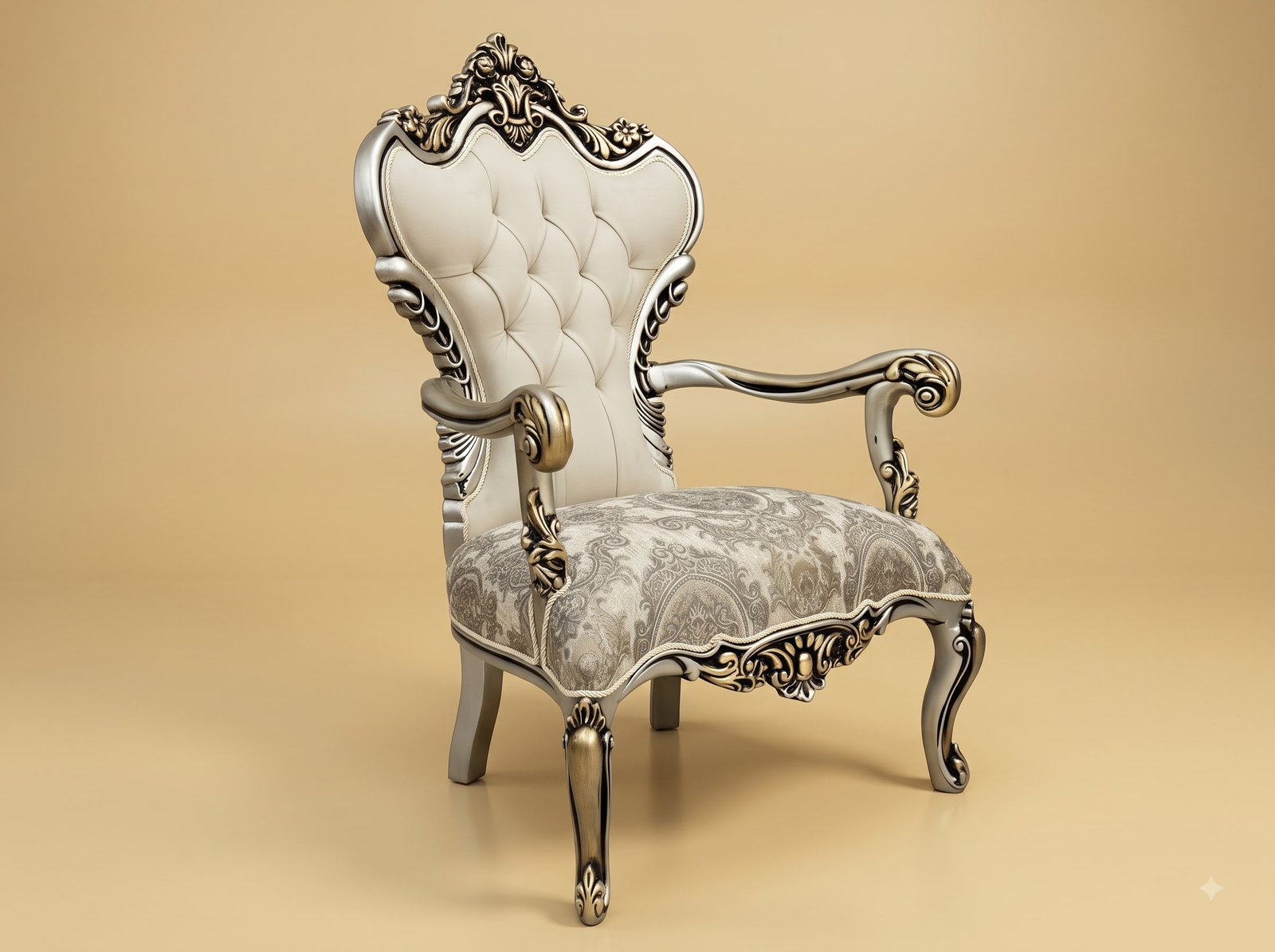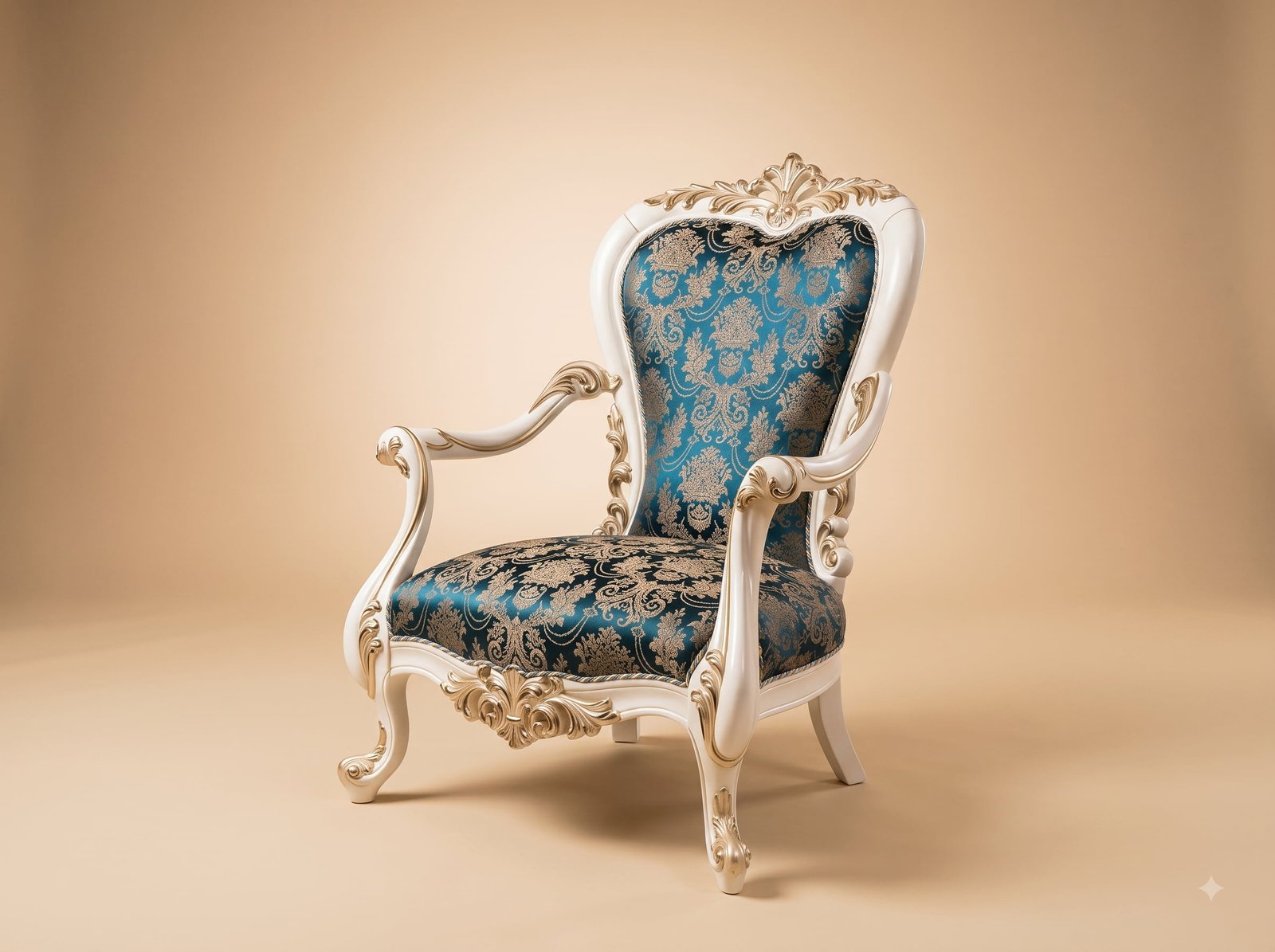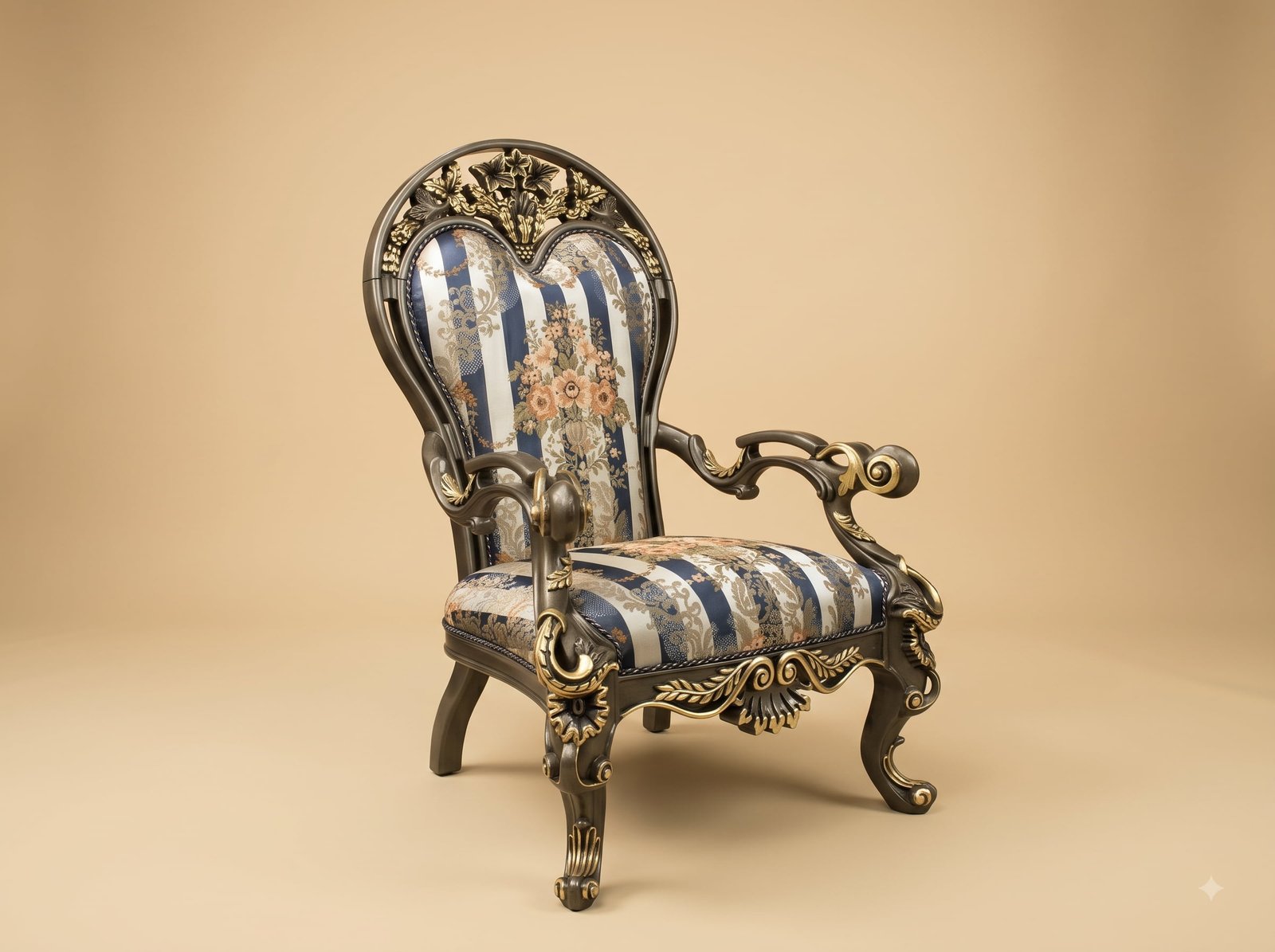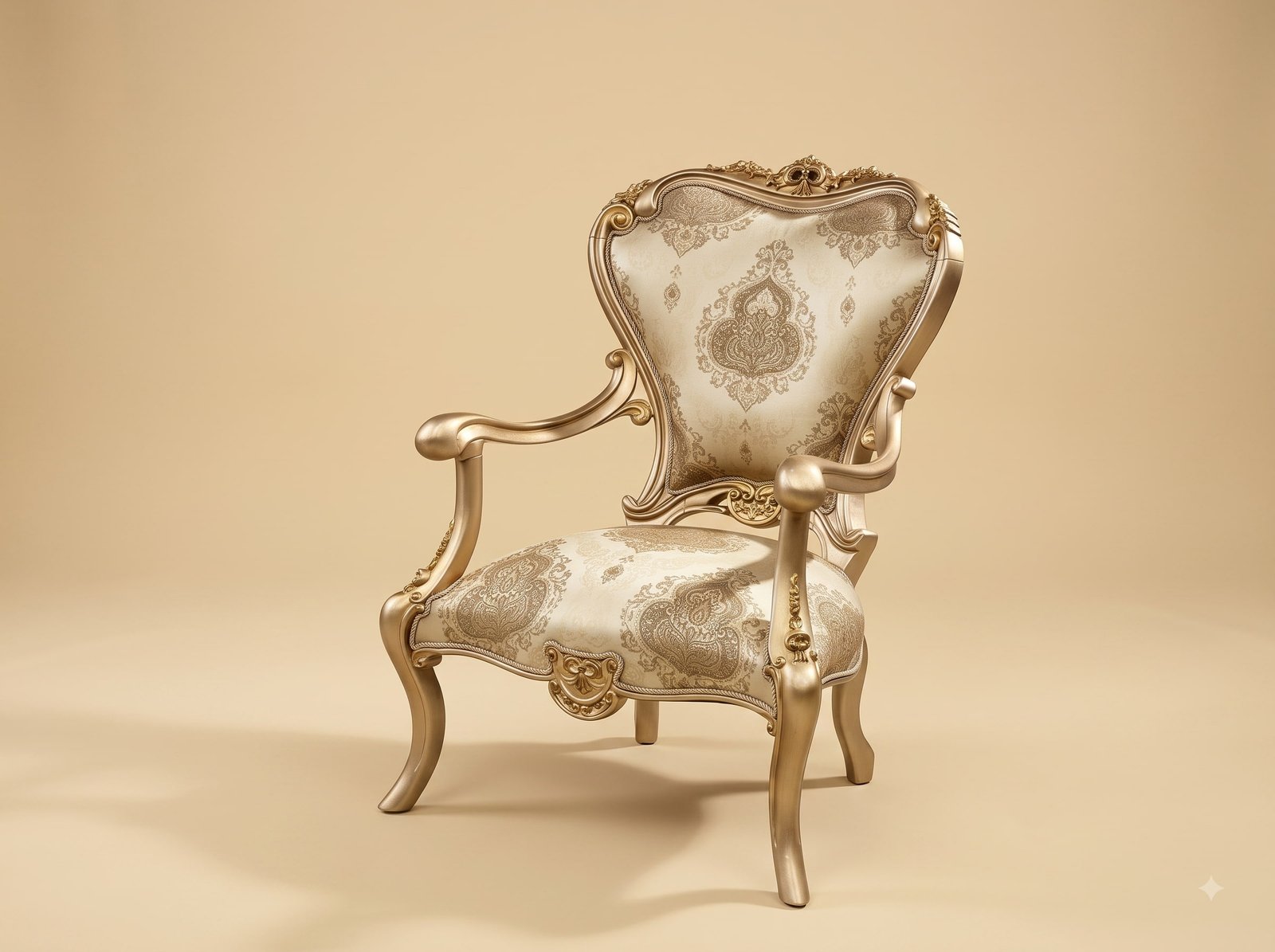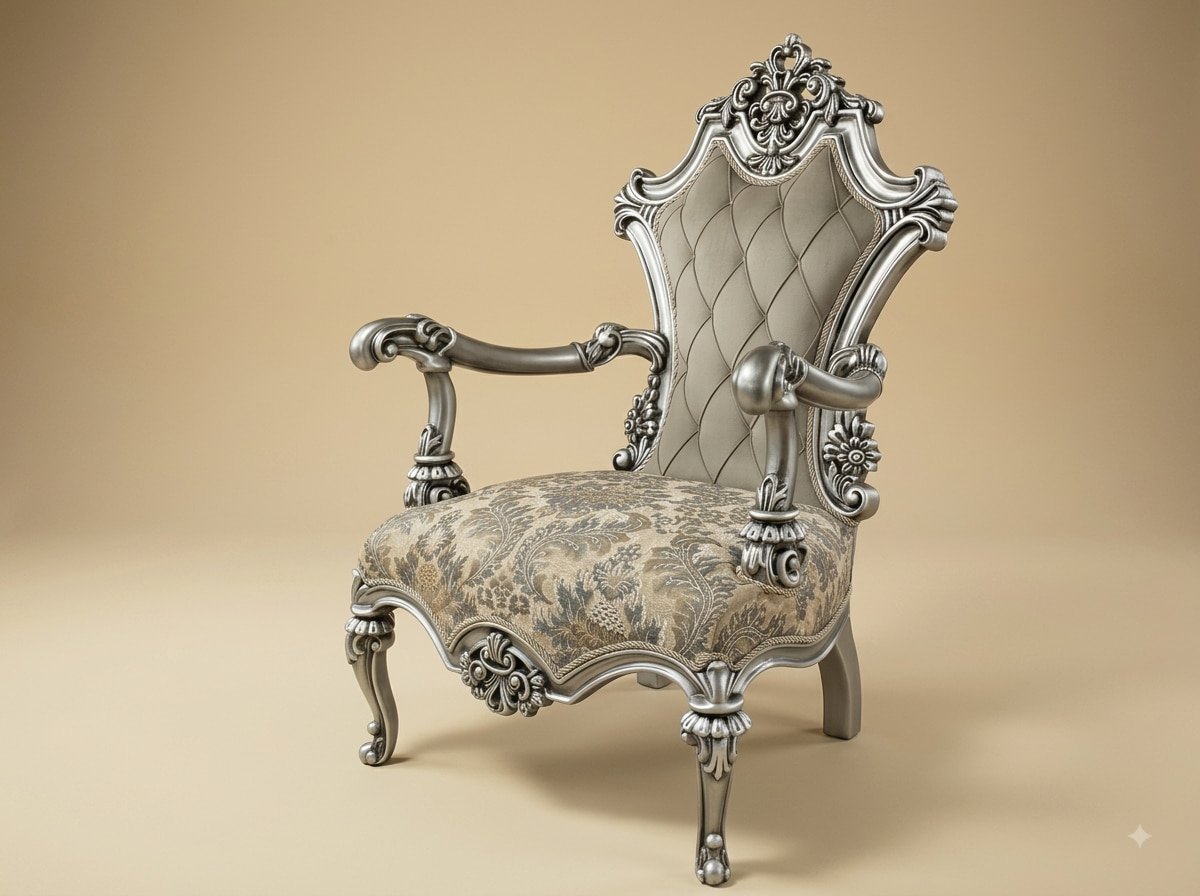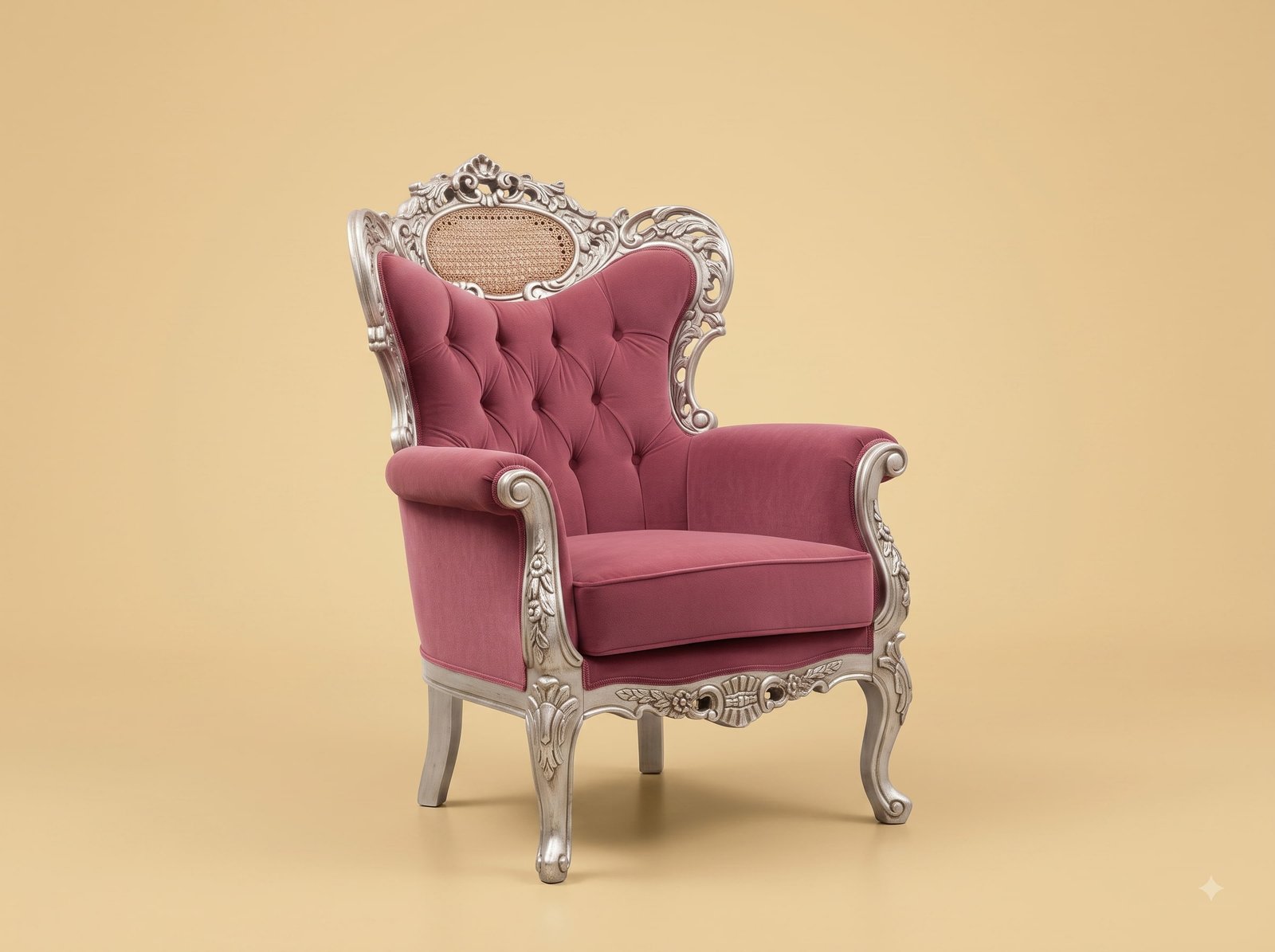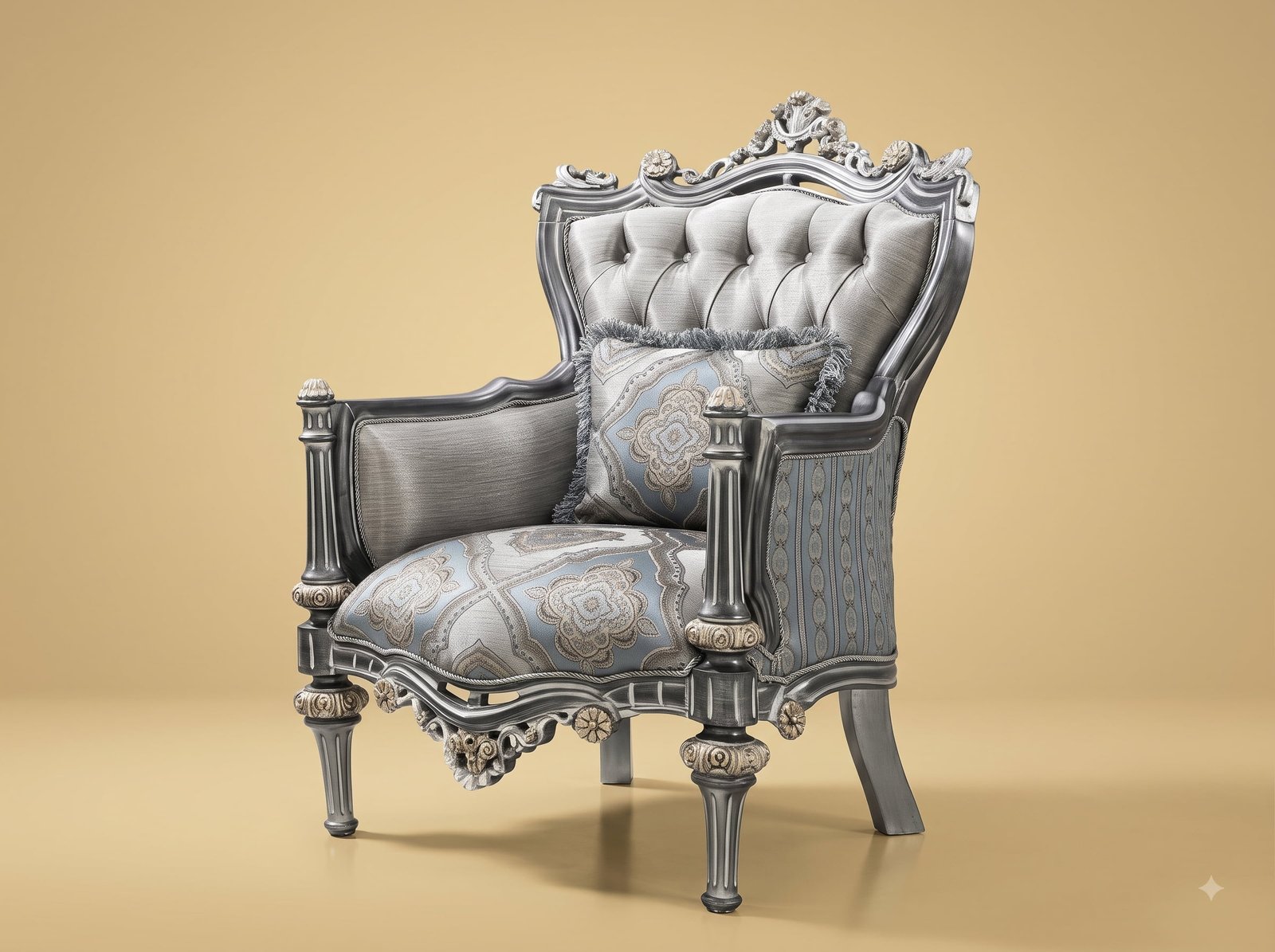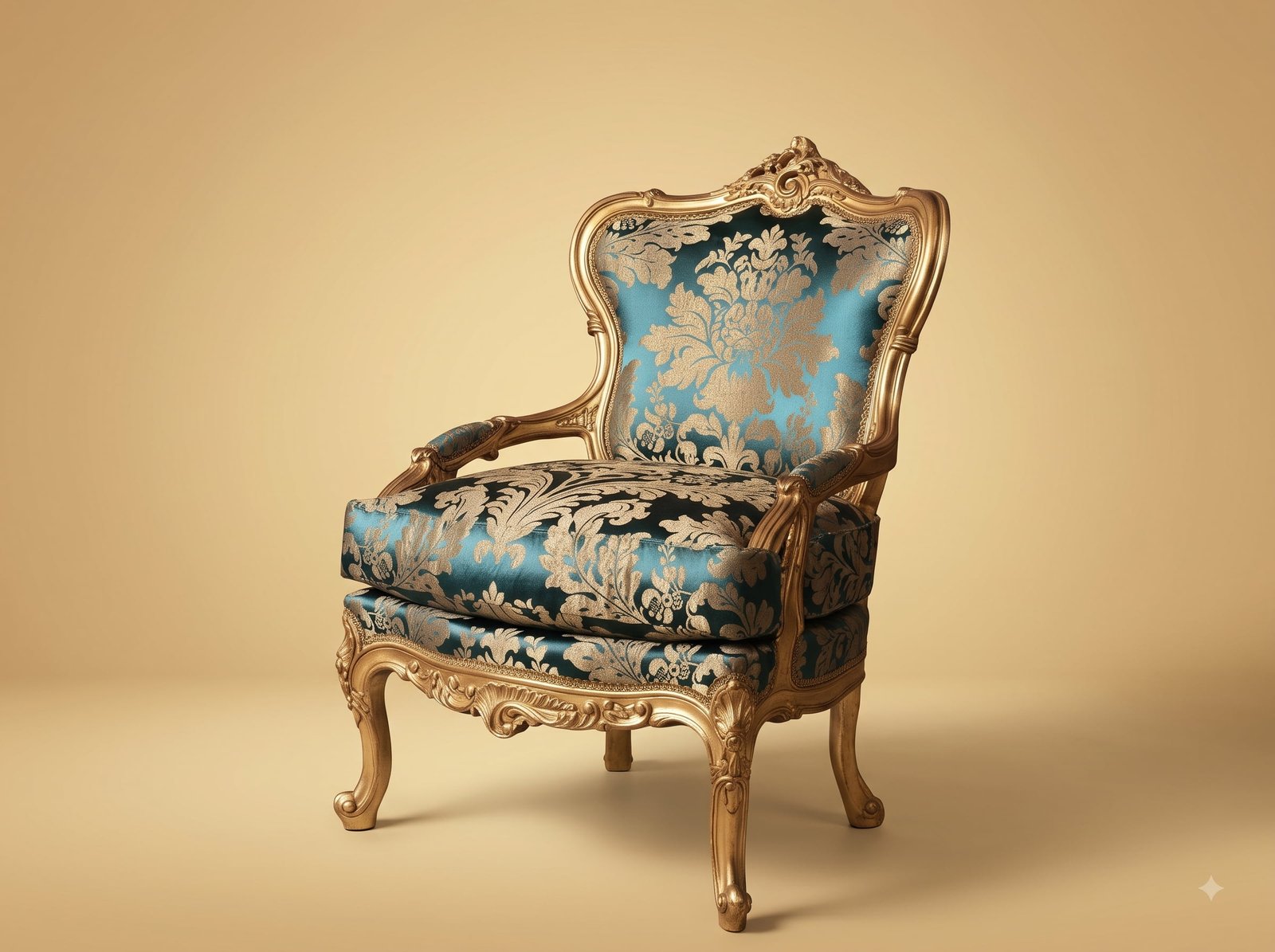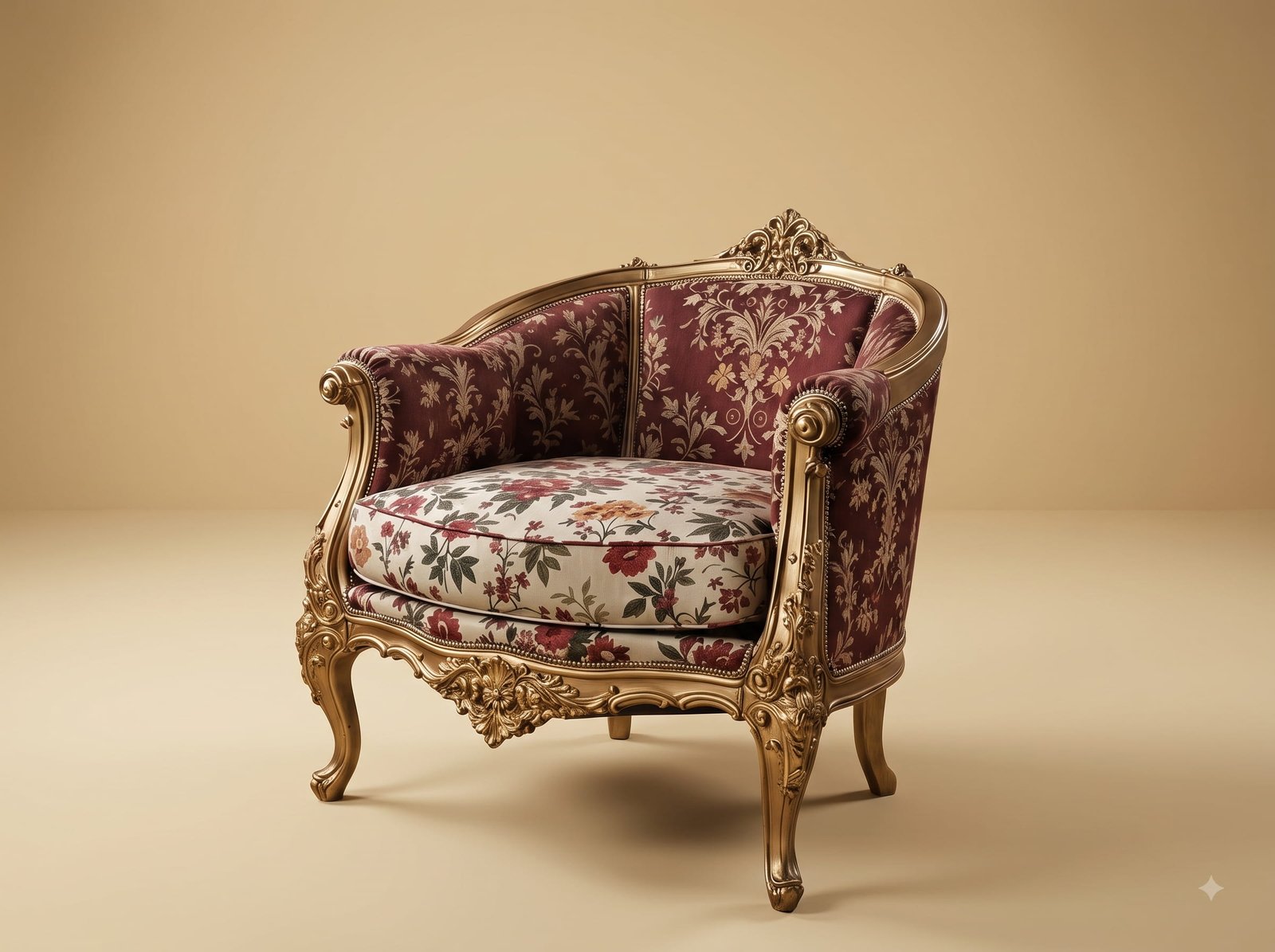
Run your eye around the front edge of the seat on this chair. There is a thin raised line of fabric following the curve - a welt, or piping - and getting it to go round that curve without a single pucker is the quietest skill on the whole piece.
Fabric has almost no give along the grain. Cut a strip straight from the roll, wrap it around a cord and try to bend it around a curved seat front, and it fights back: the outer edge is too short, so it gathers into little pleats every few inches. On a straight sofa rail nobody would notice. On a barrel chair, where nothing is straight, it is all you would see.
So the strip is cut on the bias - at forty-five degrees across the weave, where the cloth has stretch in both directions at once. Now the outer edge can lengthen and the inner edge can shorten as the strip turns, and the welt lies flat all the way round. It costs more fabric, because bias strips come off the roll diagonally and the leftovers are unusable triangles.
The finished chair simply looks smooth. That is the entire reward, and it is worth the waste.
 Ask Price On WhatsApp