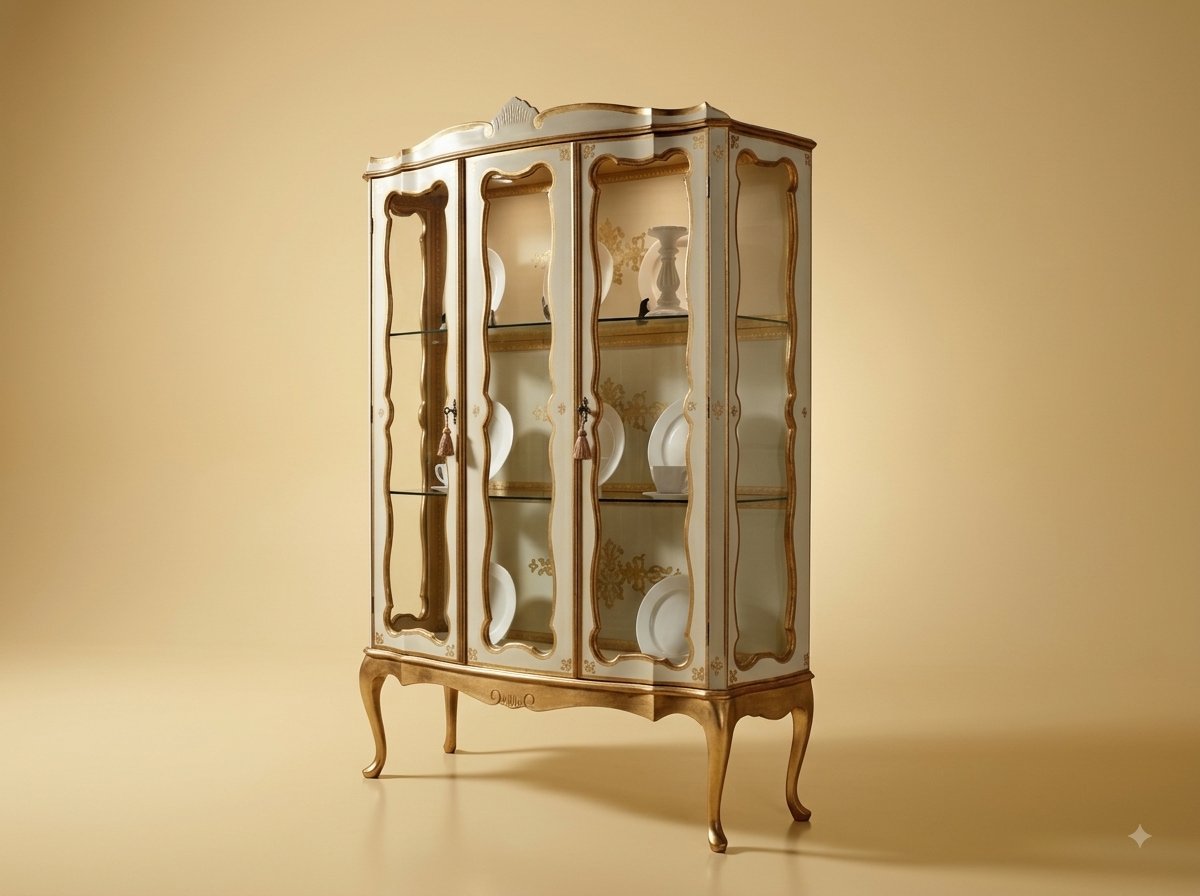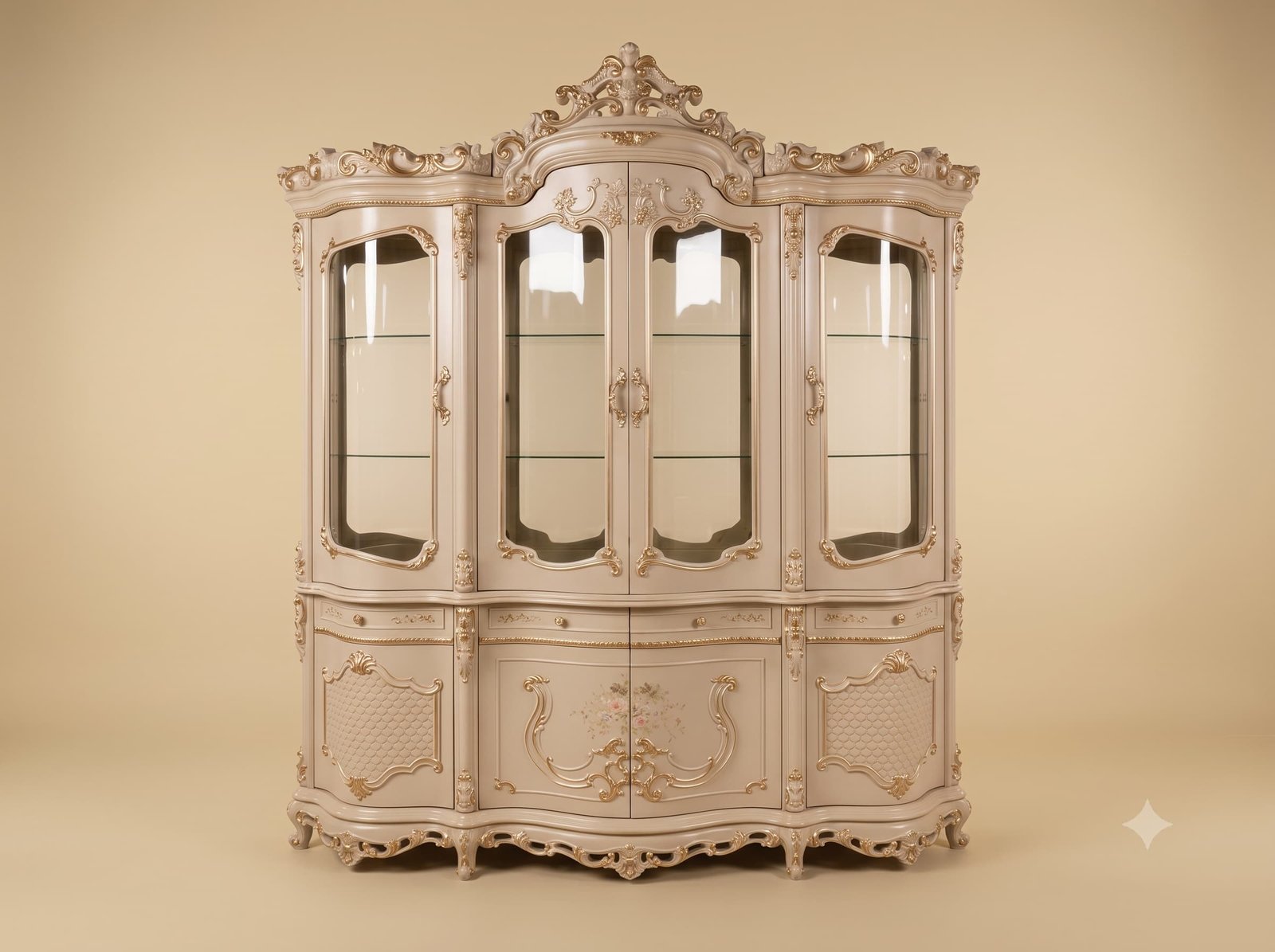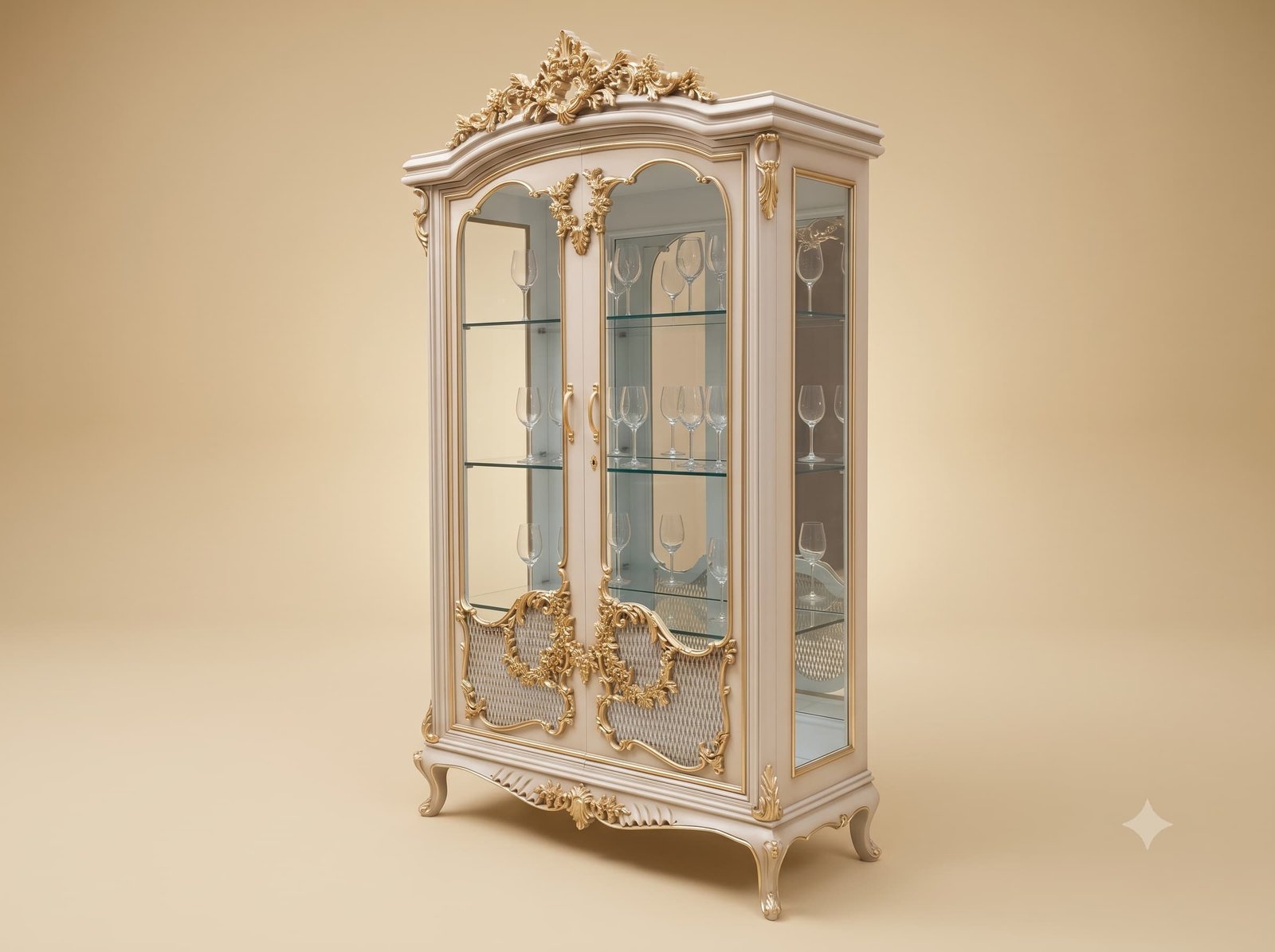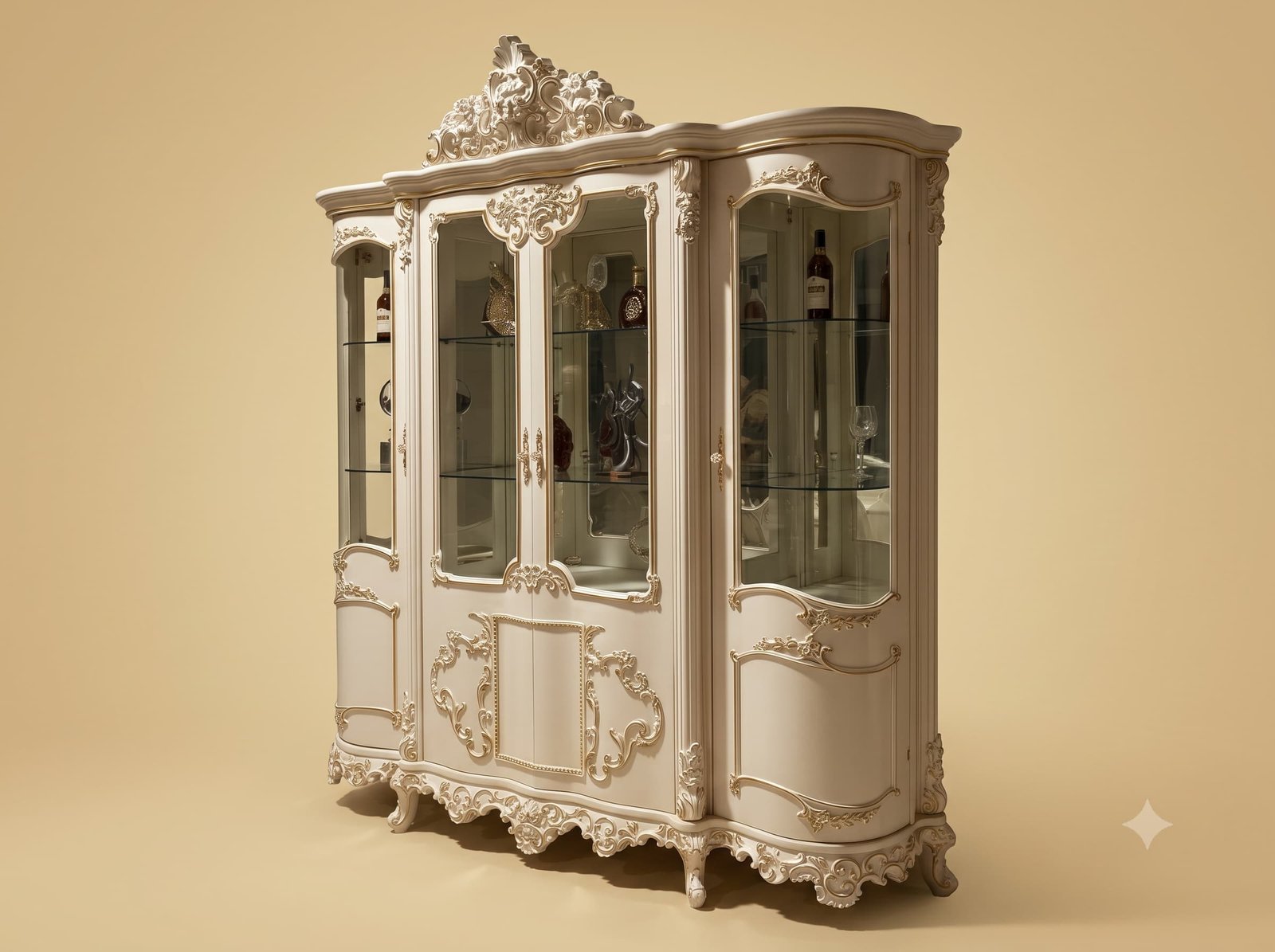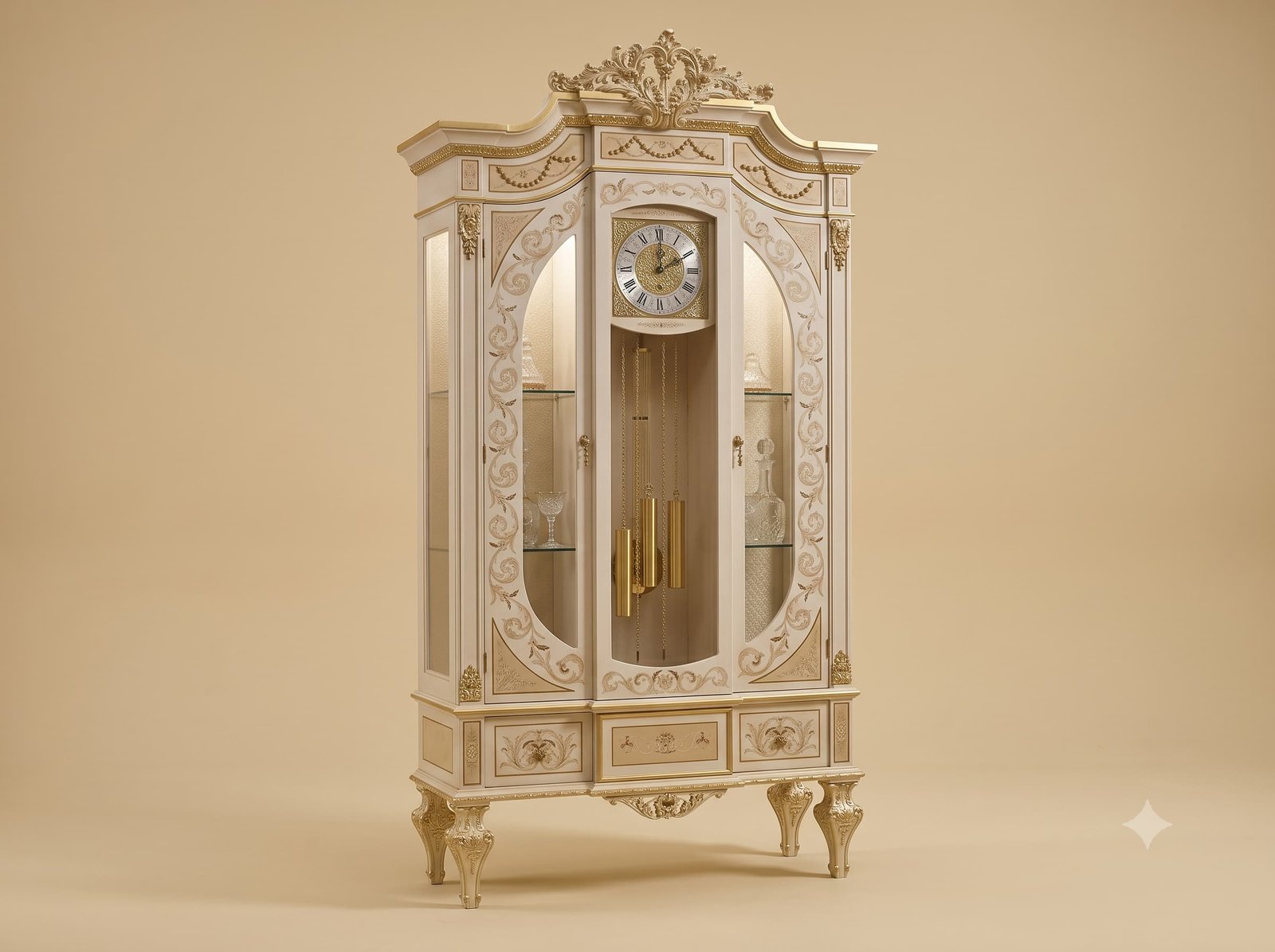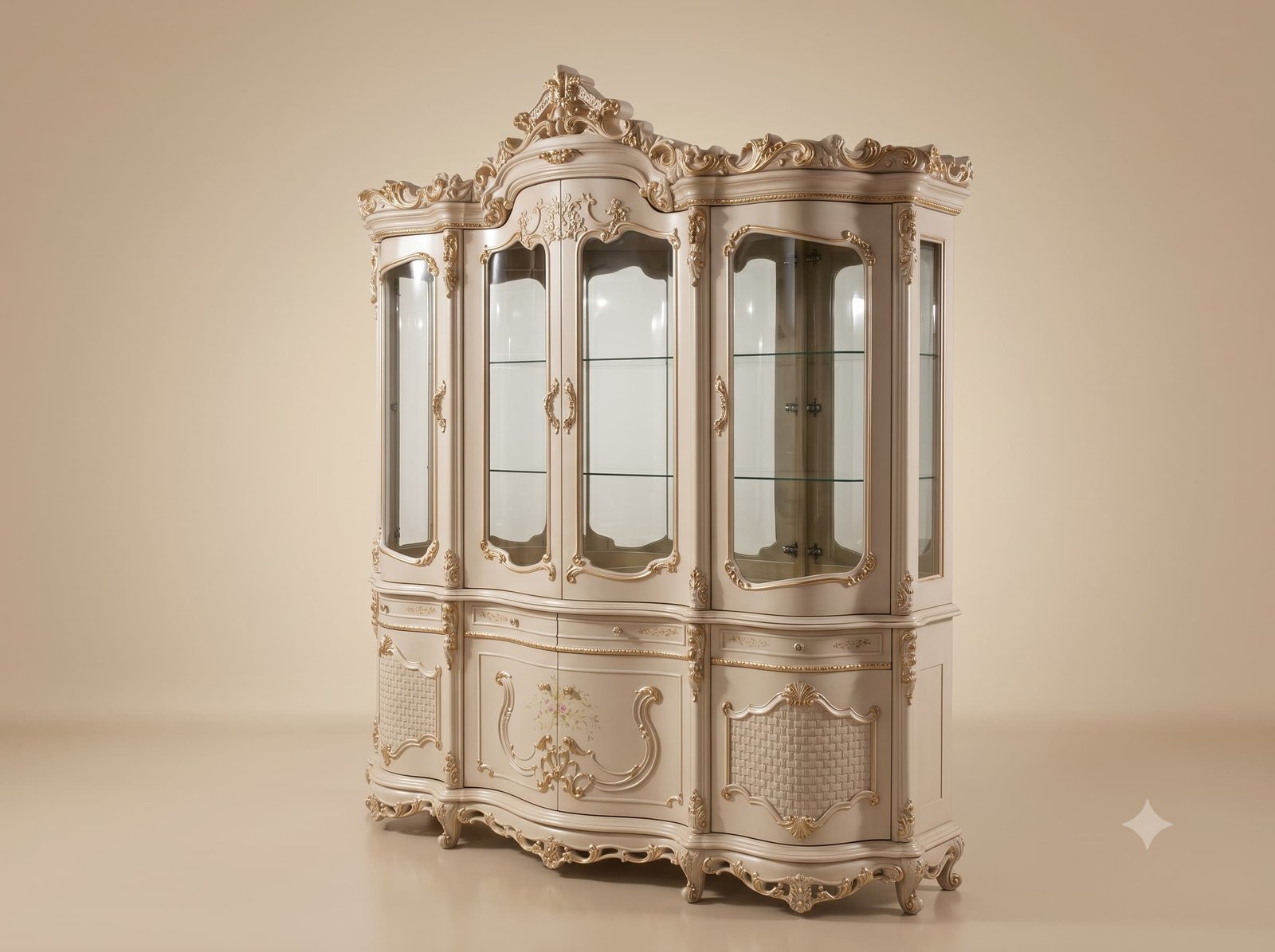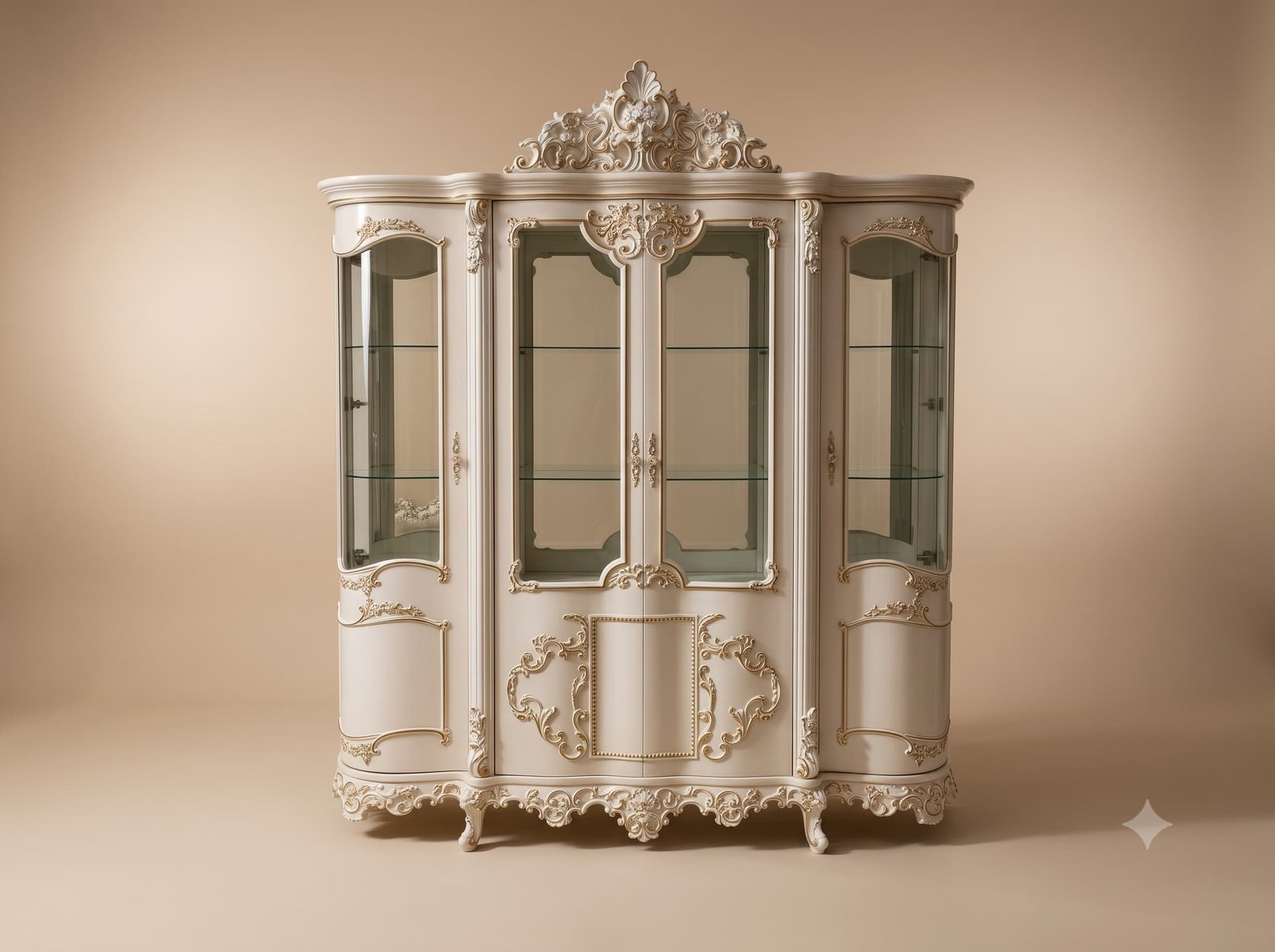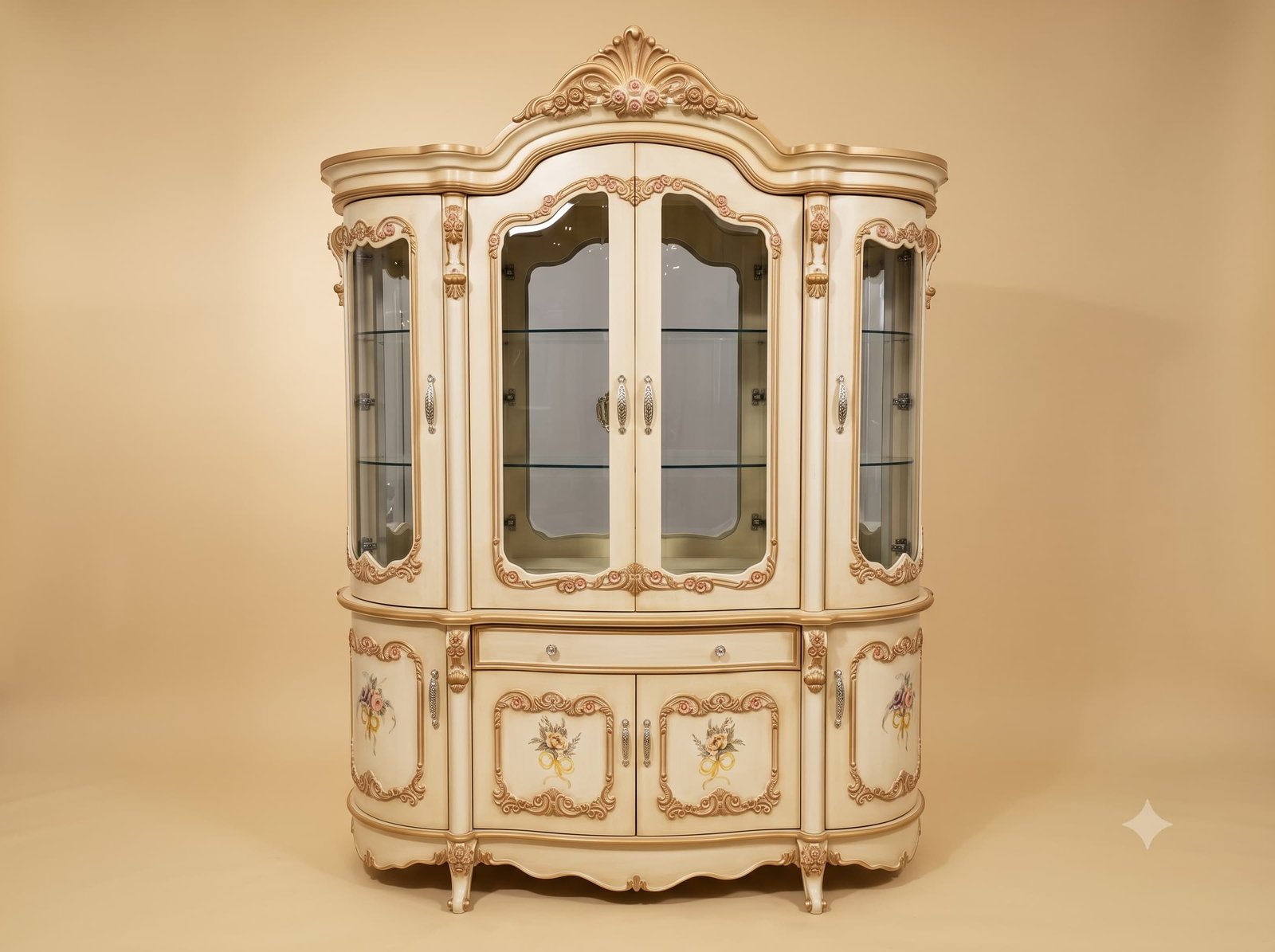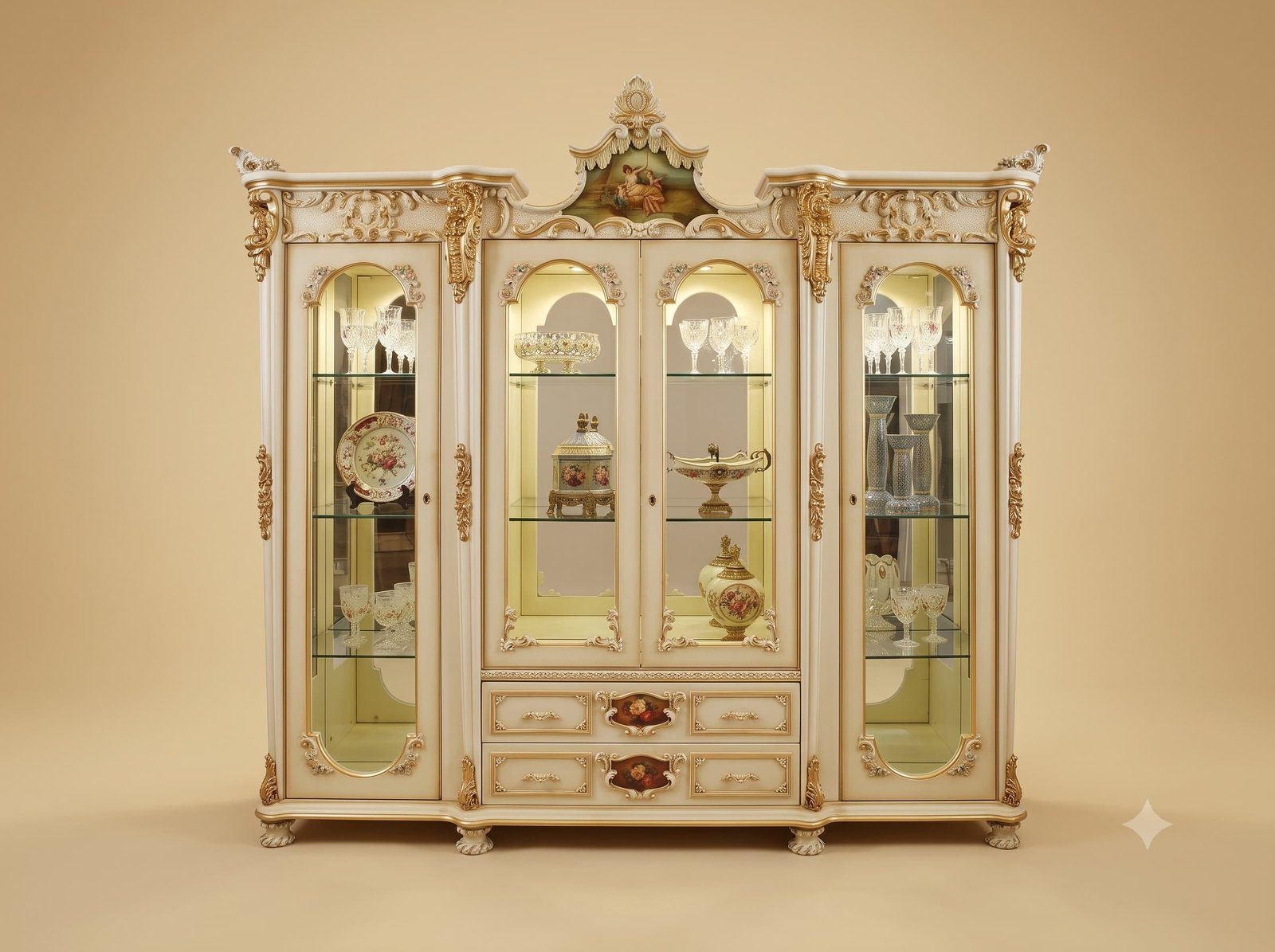
A painting set into the top of a cabinet is not composed the way a picture on a wall is composed, because it will never be seen from in front of it.
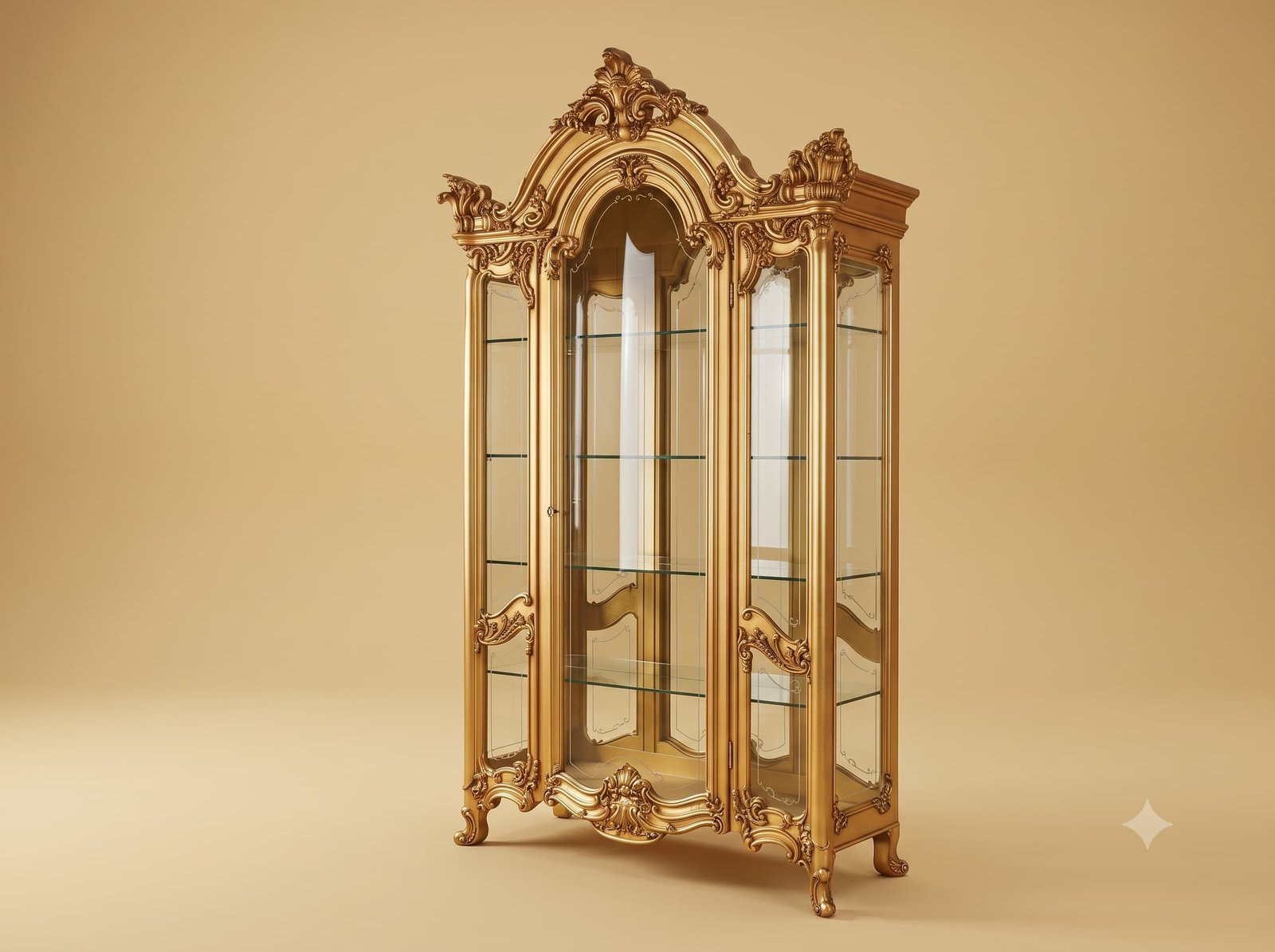
The pediment on this showcase sits well above eye level. Anyone looking at it is looking up, and looking up does something specific to a painted panel: the whole image appears to slide upward and away. A scene composed centrally, the way it would be on an easel, ends up reading as though its subject is escaping over the top edge, with an odd expanse of empty ground beneath.
So the artist composes low. The figures and the weight of the scene are placed towards the bottom of the panel, with more space left above them than below. Held in the hand the painting looks unbalanced - bottom-heavy, awkwardly cropped at its feet.
Fitted into the pediment and seen from a few paces back, it settles exactly into the middle of its frame.
Our master Indian artisans paint the panel after the cabinet is standing, so it can be offered up, viewed from the floor, and adjusted. A picture for furniture is made for one viewpoint, and it is the only one that matters.
 Ask Price On WhatsApp