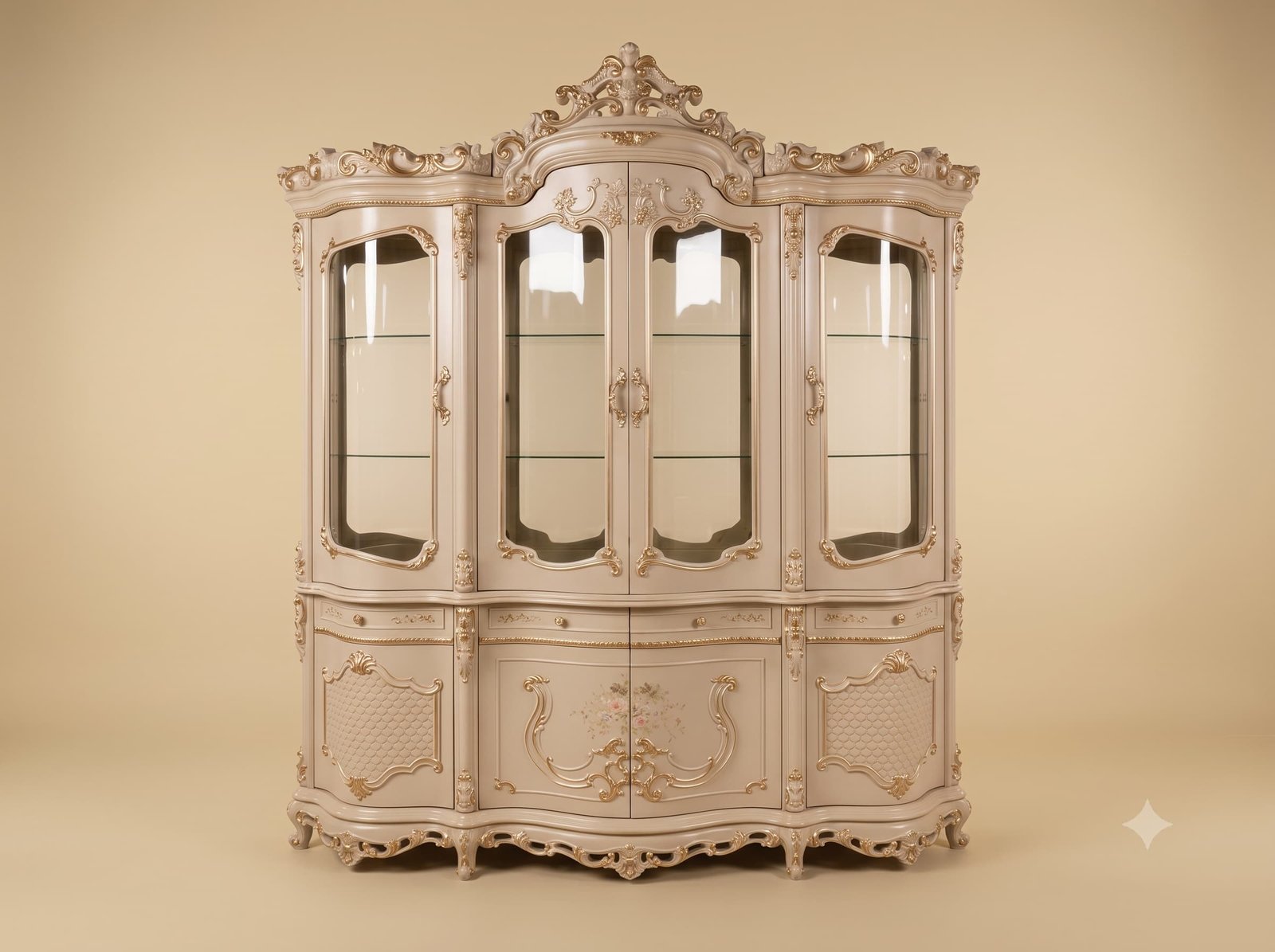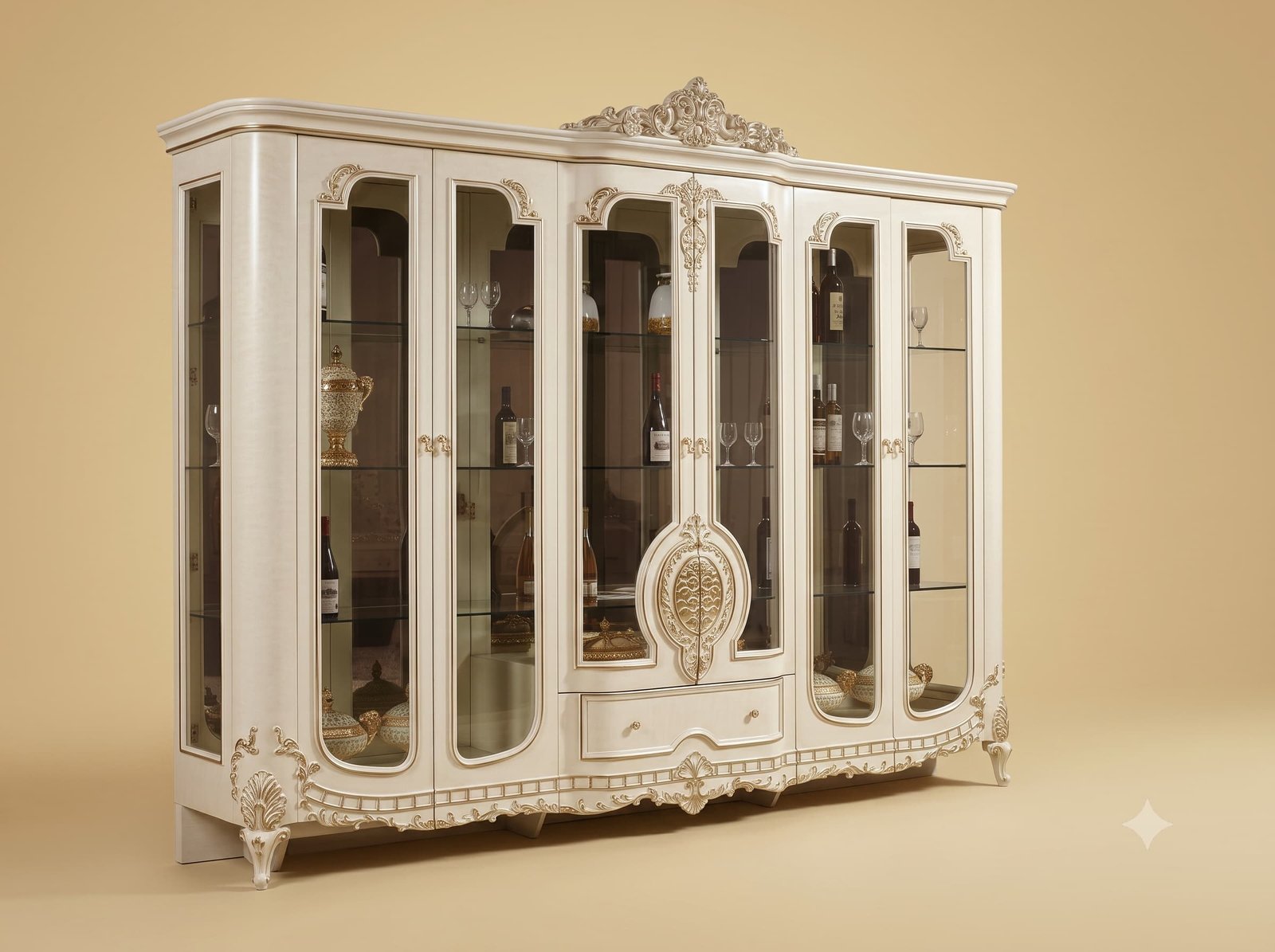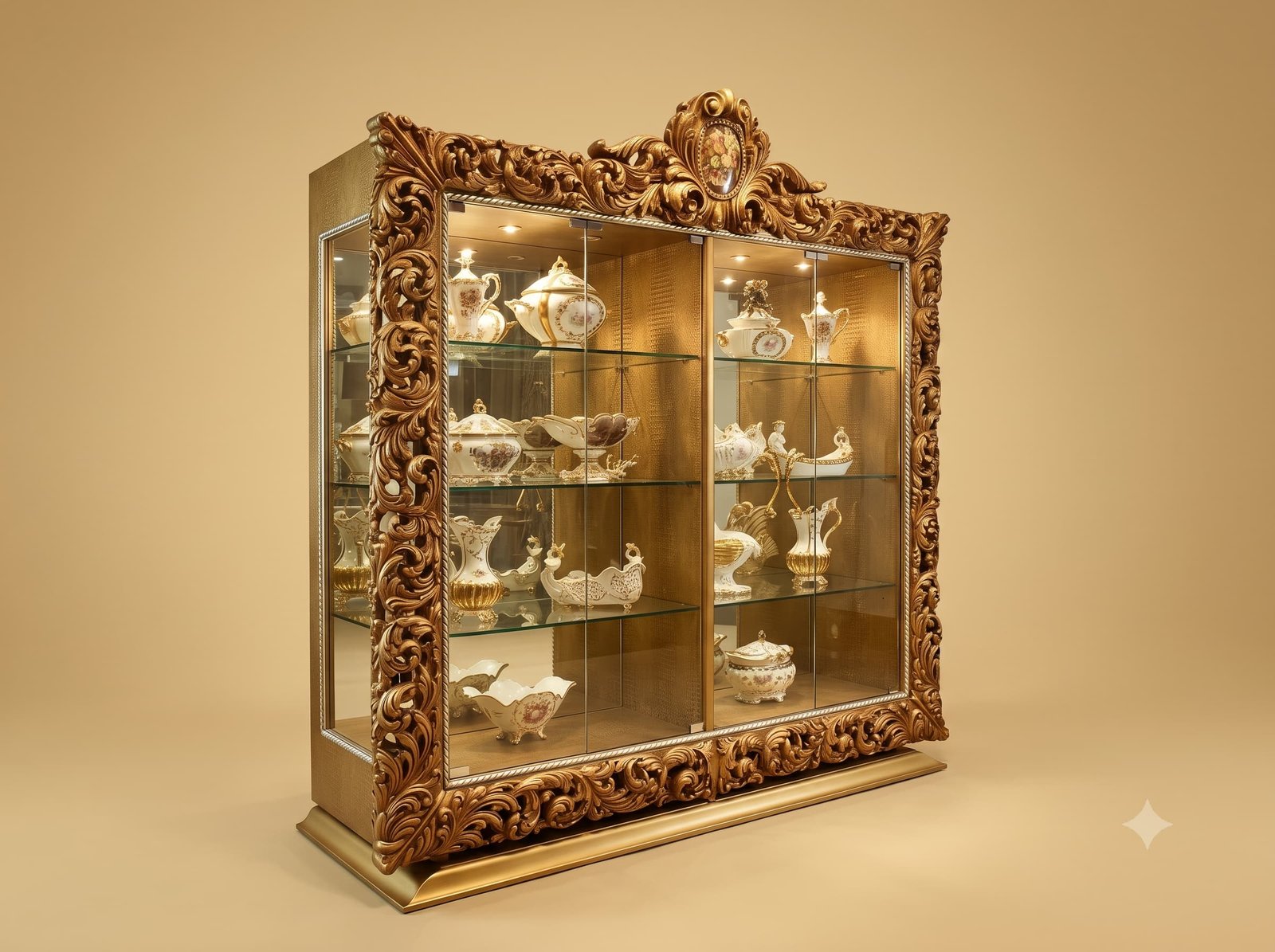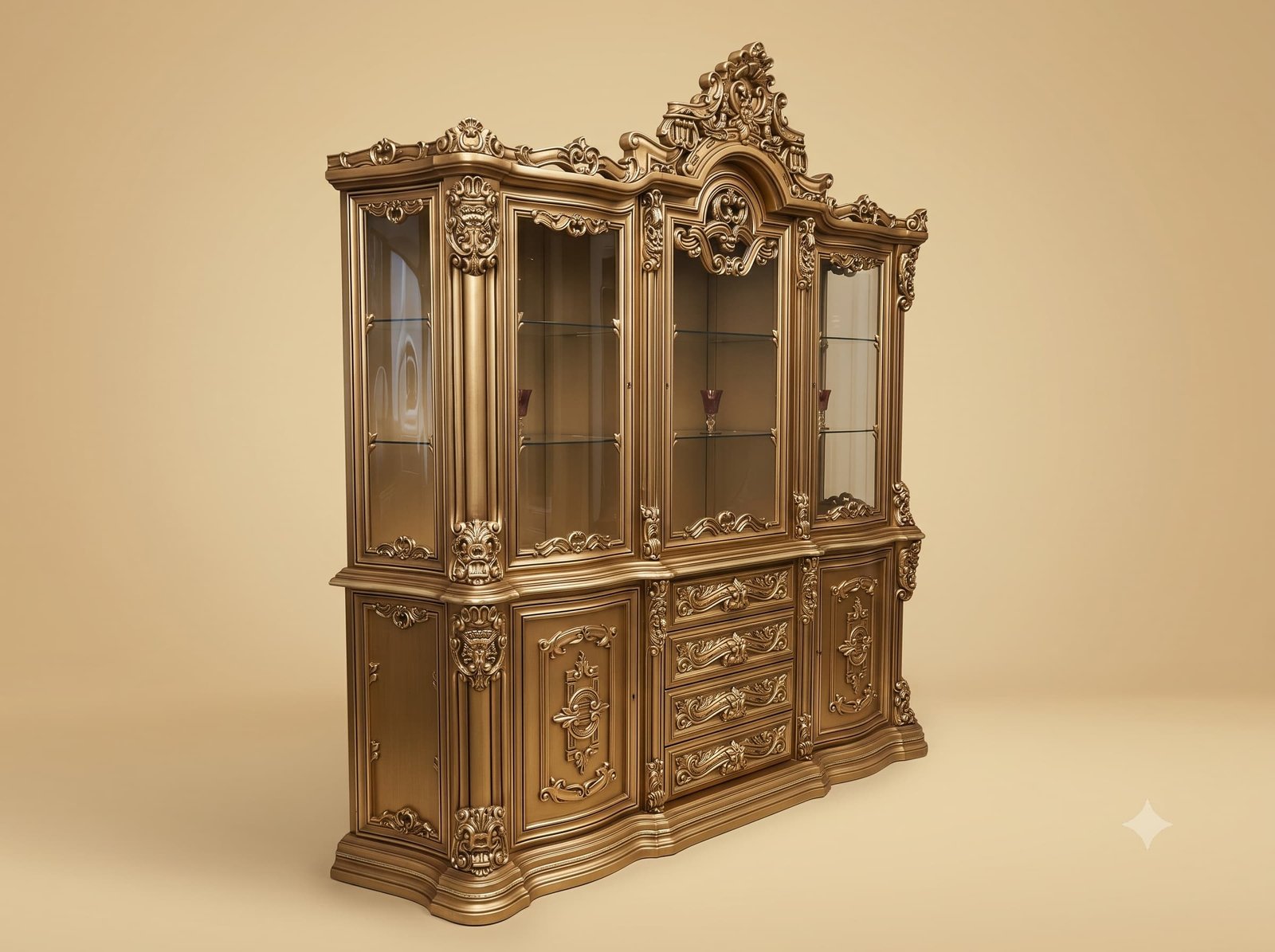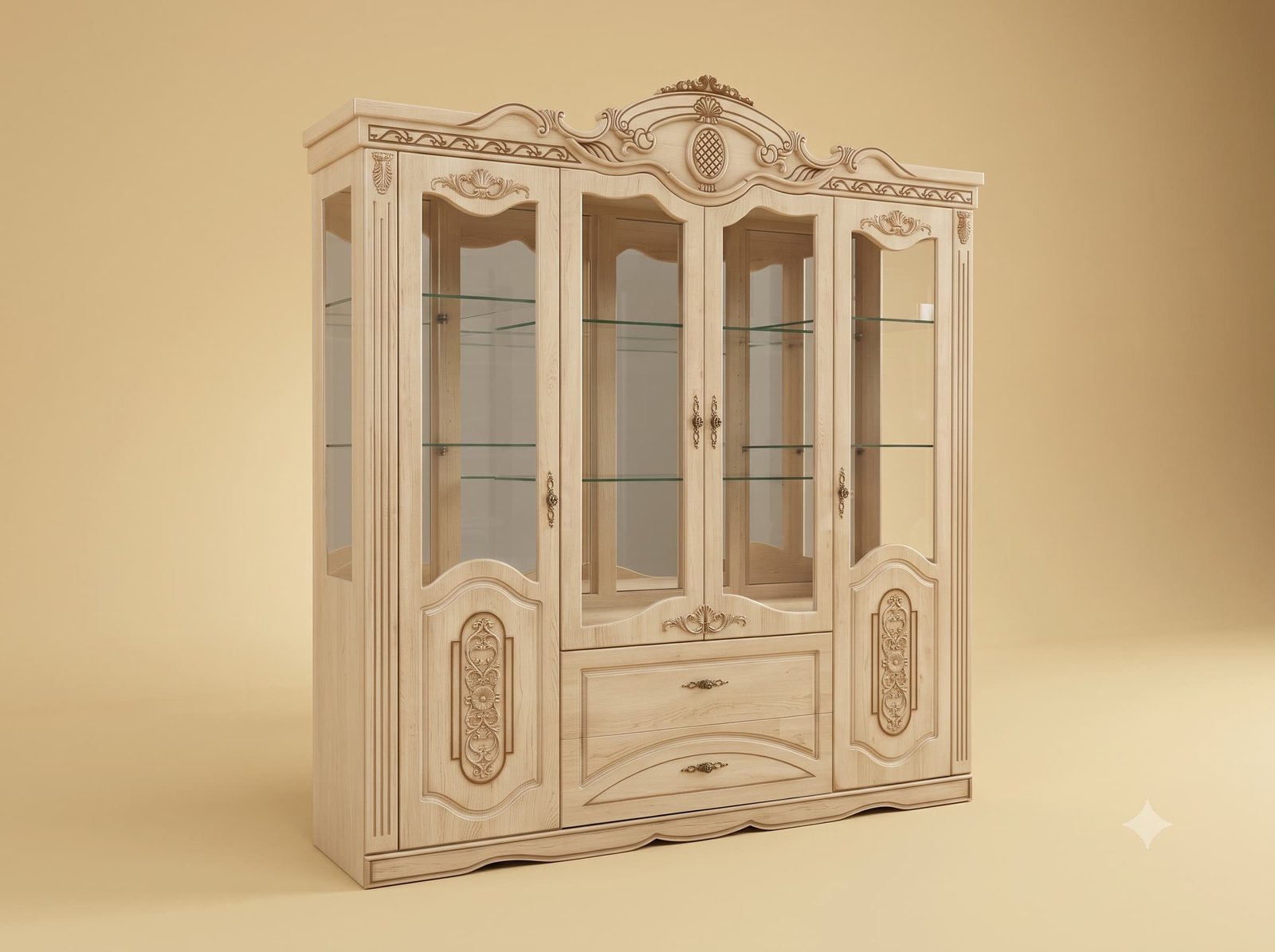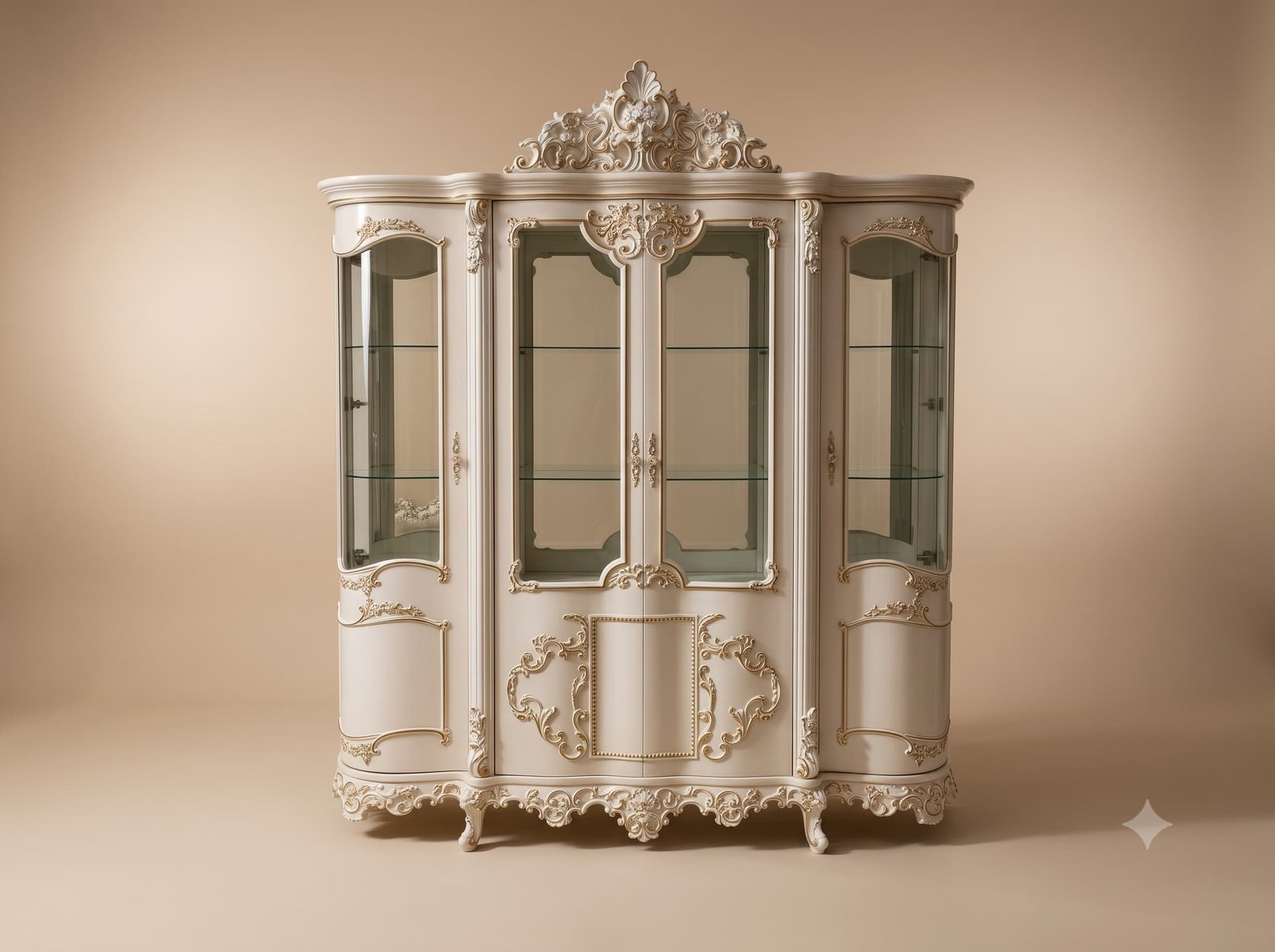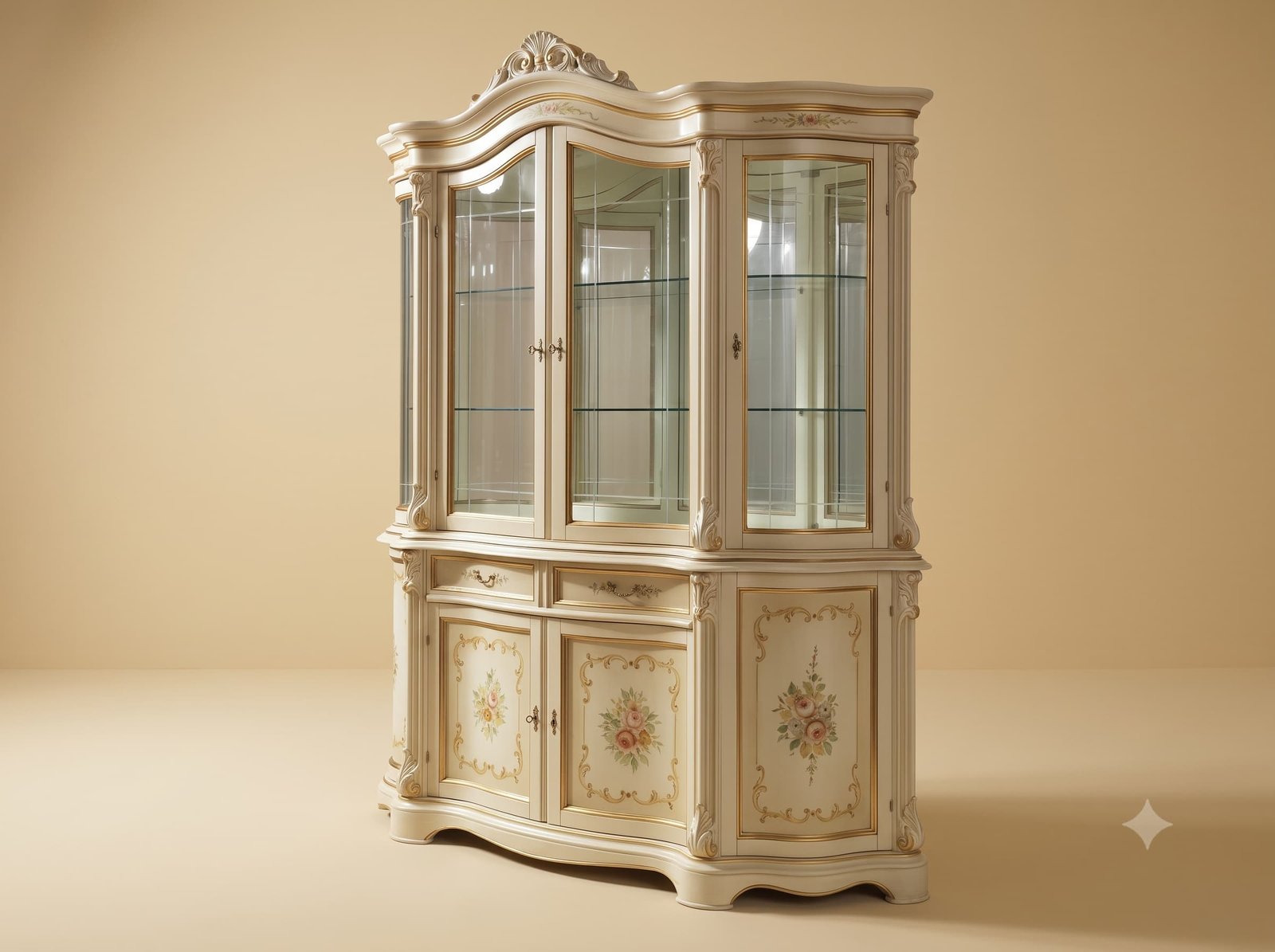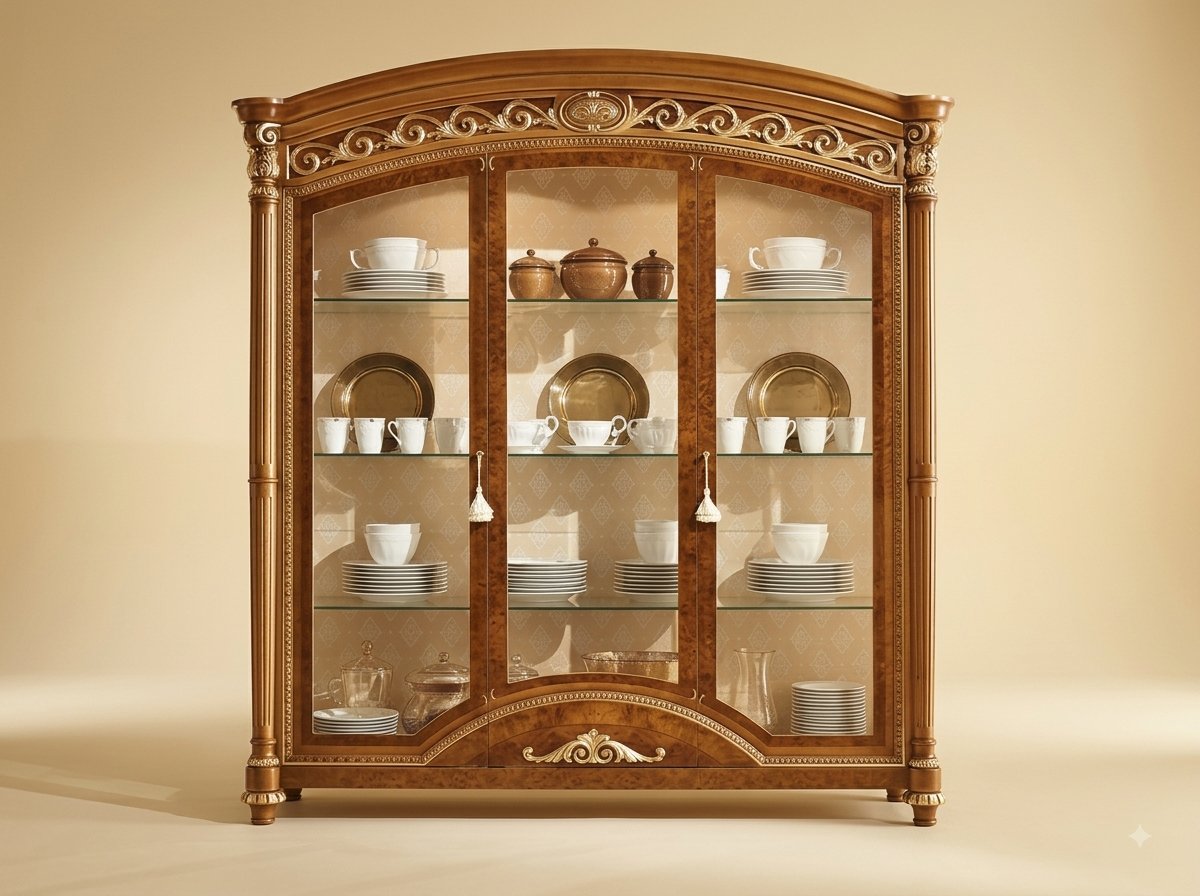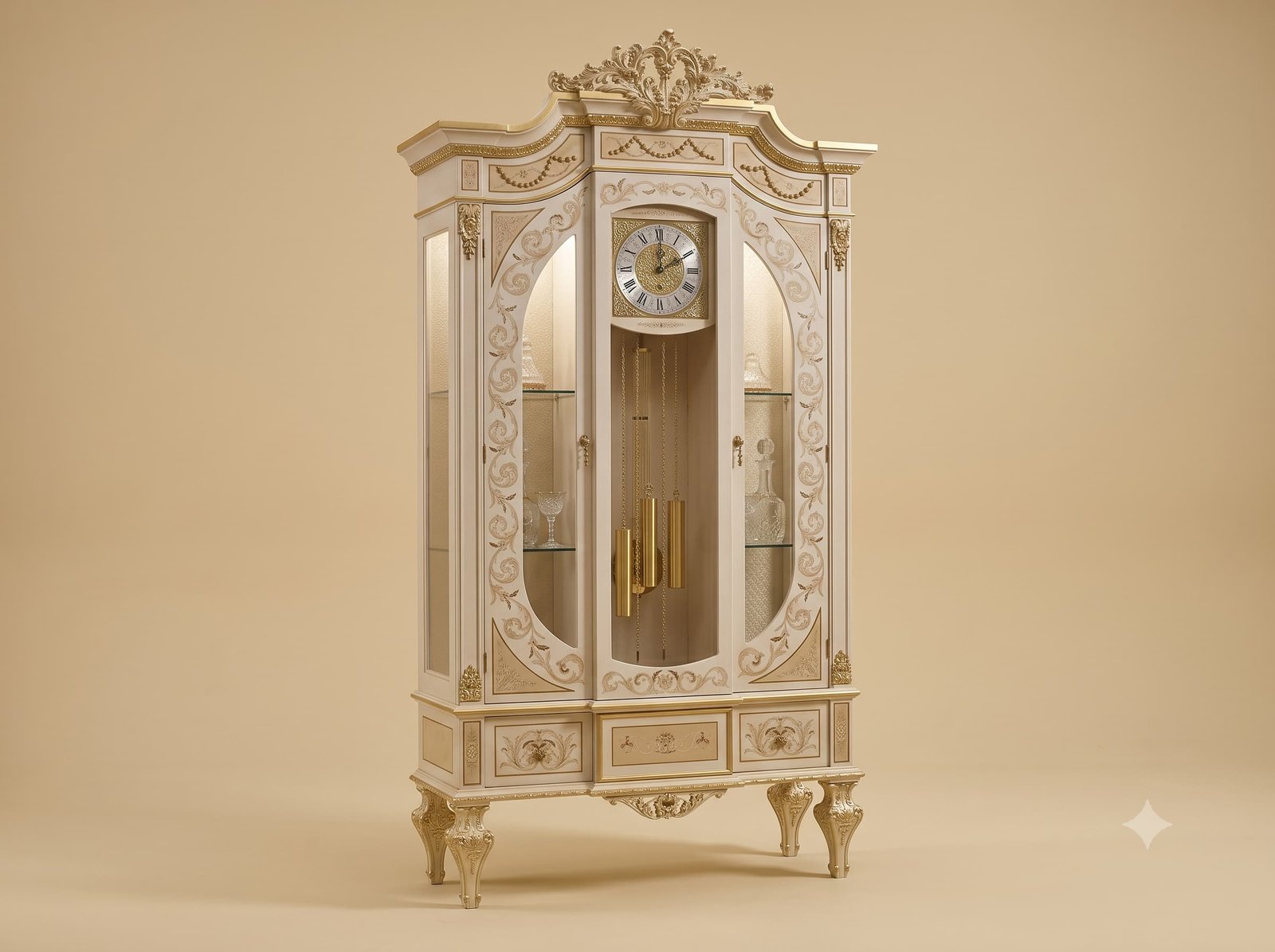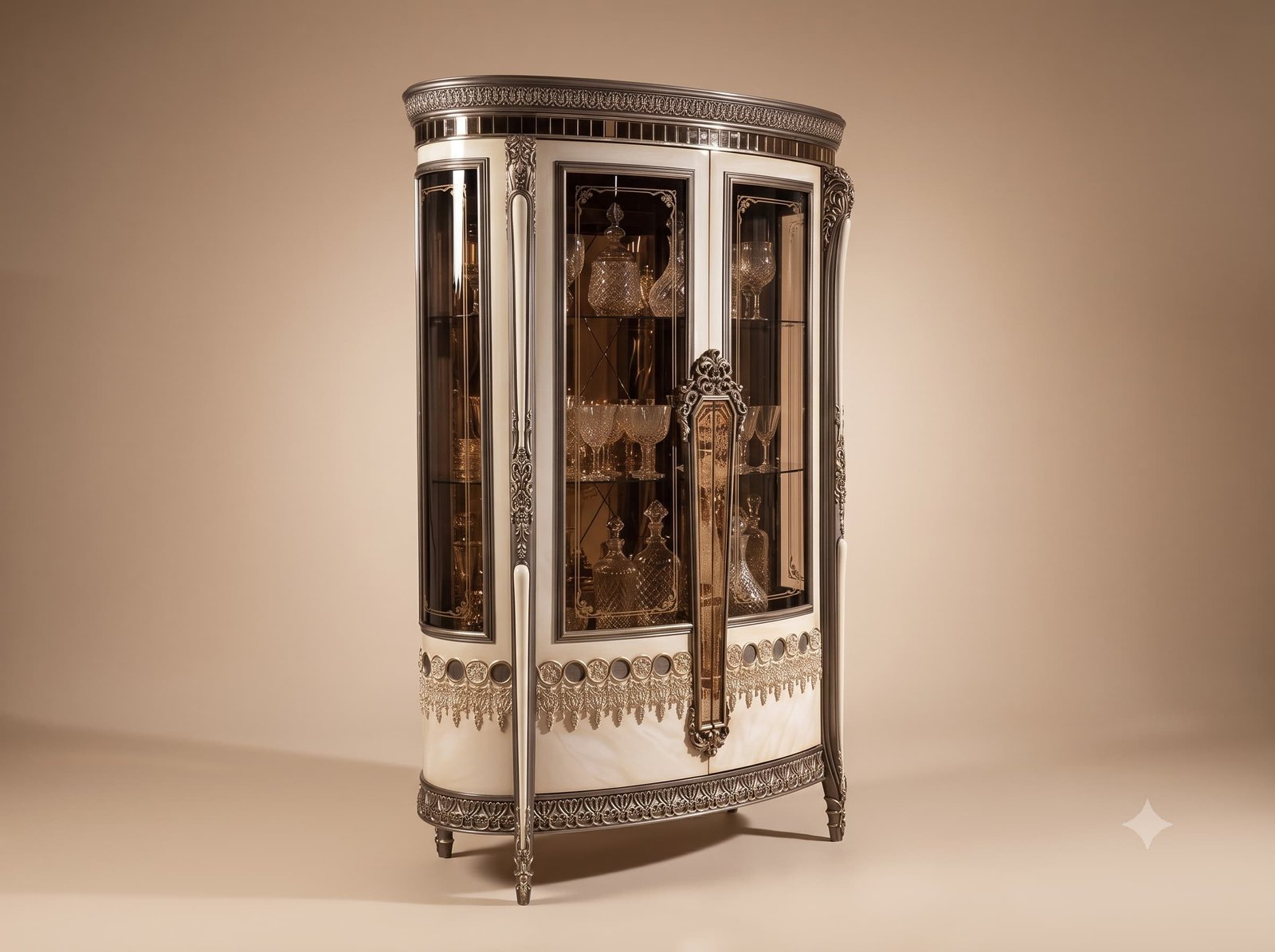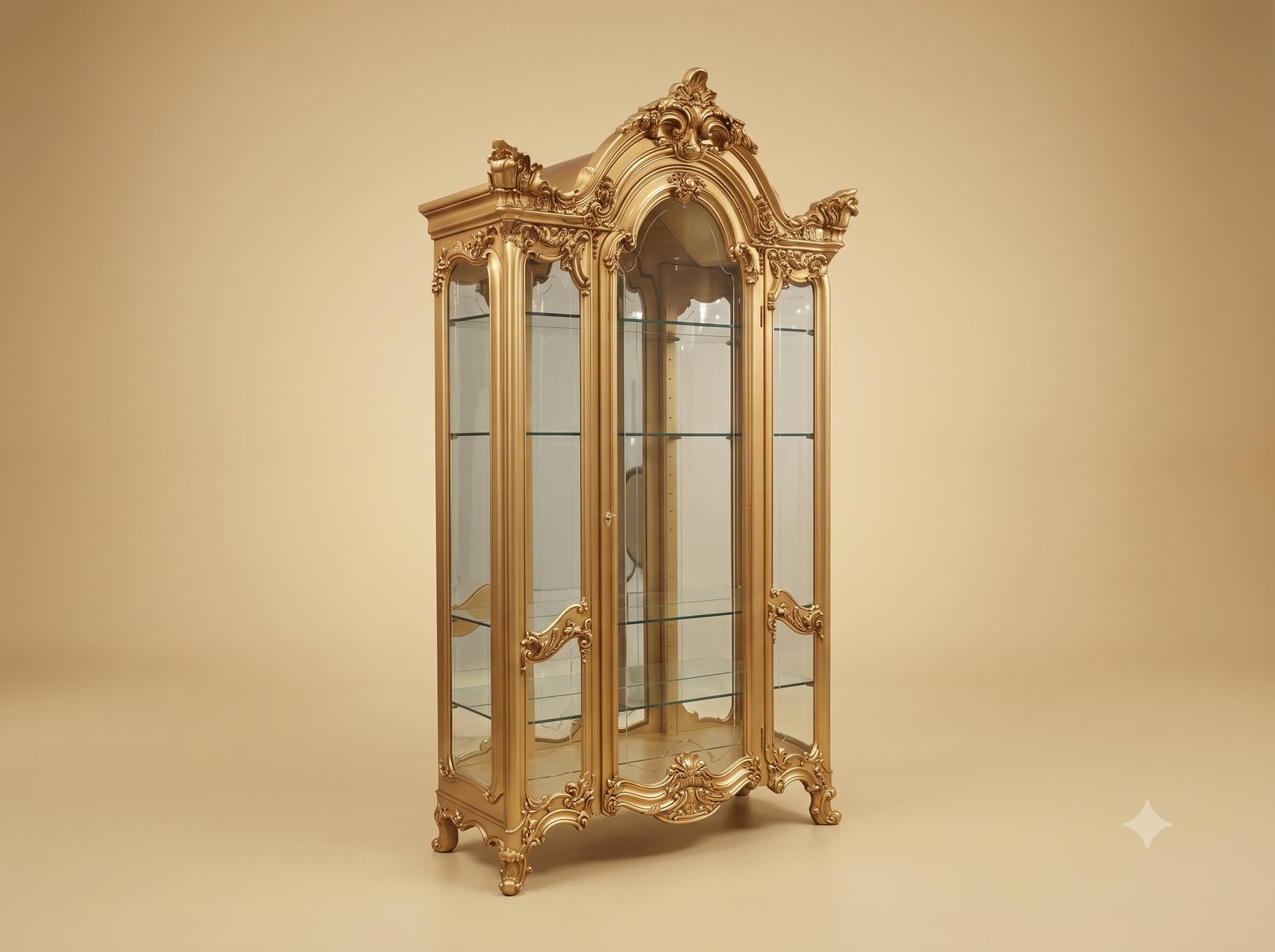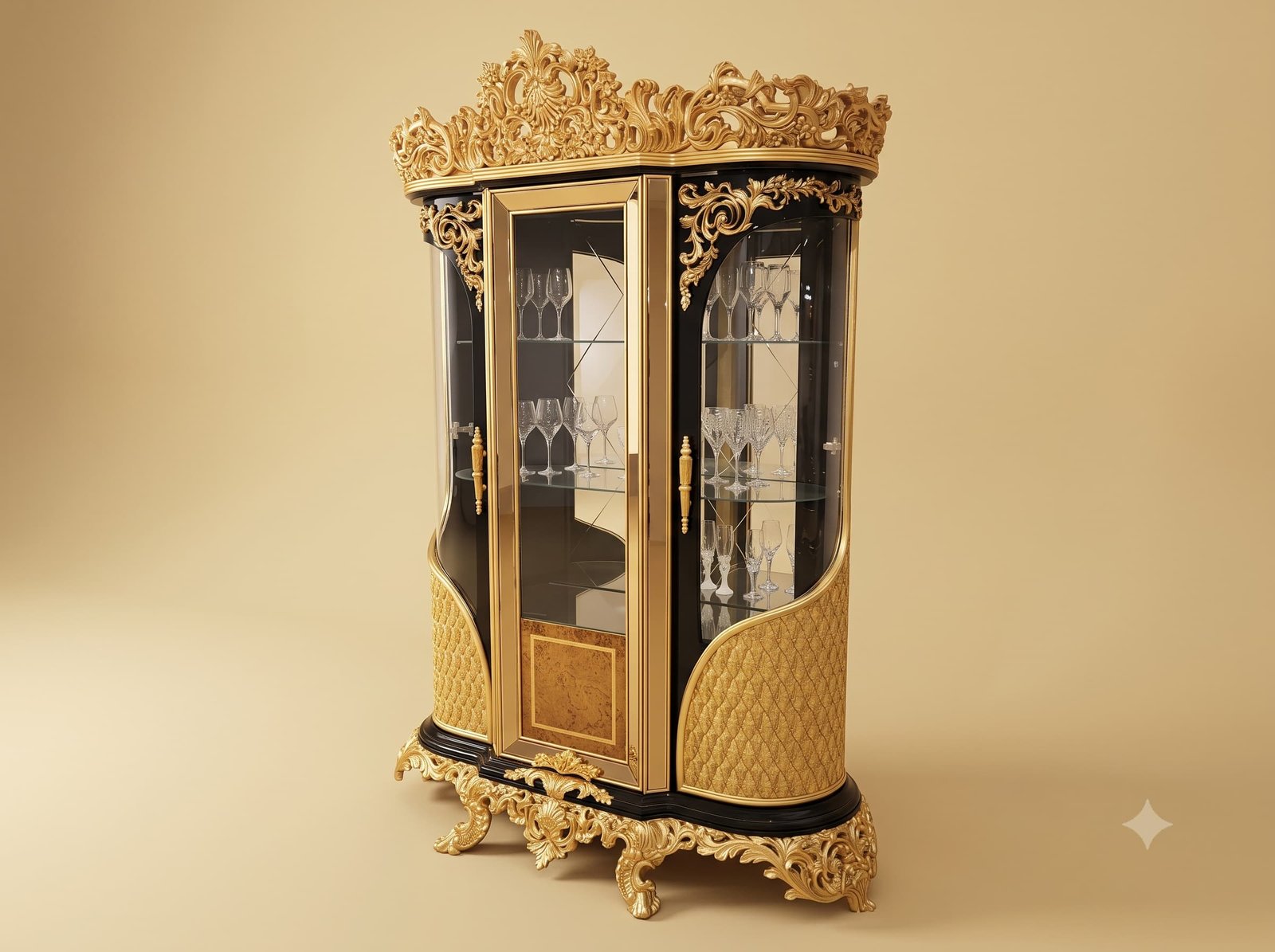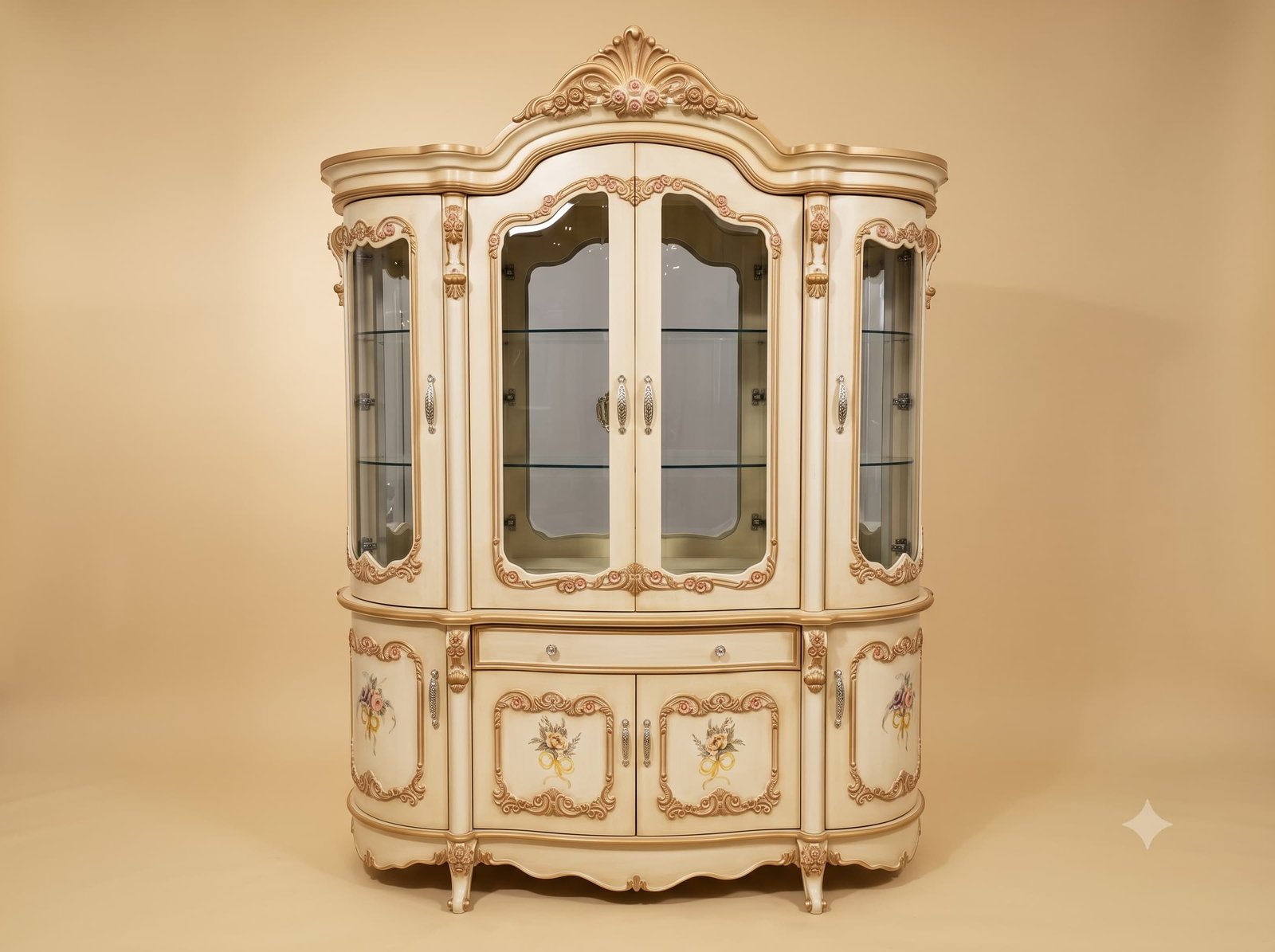
Look along the top of this showcase and the moulding never breaks. That is deliberate, and it is the hardest thing on the piece.
The simple way to build a top edge like this would be to make it in sections - a length for the crest, a length for each flat run, a short piece around each curve - and mitre them together. It works, but every mitre puts a joint line across the moulding, and a shadow line that stops and restarts reads as an assembly of parts.
Instead the cornice here is worked as a continuous run. Where it has to turn the curved ends, the back of the moulding is kerfed - sawn part way through at close intervals - so the timber will bend to the radius while its face stays whole. The kerfs are on the hidden side and vanish once the moulding is fixed and filled behind.
The result is one unbroken shadow line travelling from the crest, down the steps, along the flats and around both bows. Nothing interrupts it, which is what makes the outline read as a single drawn shape.
 Ask Price On WhatsApp