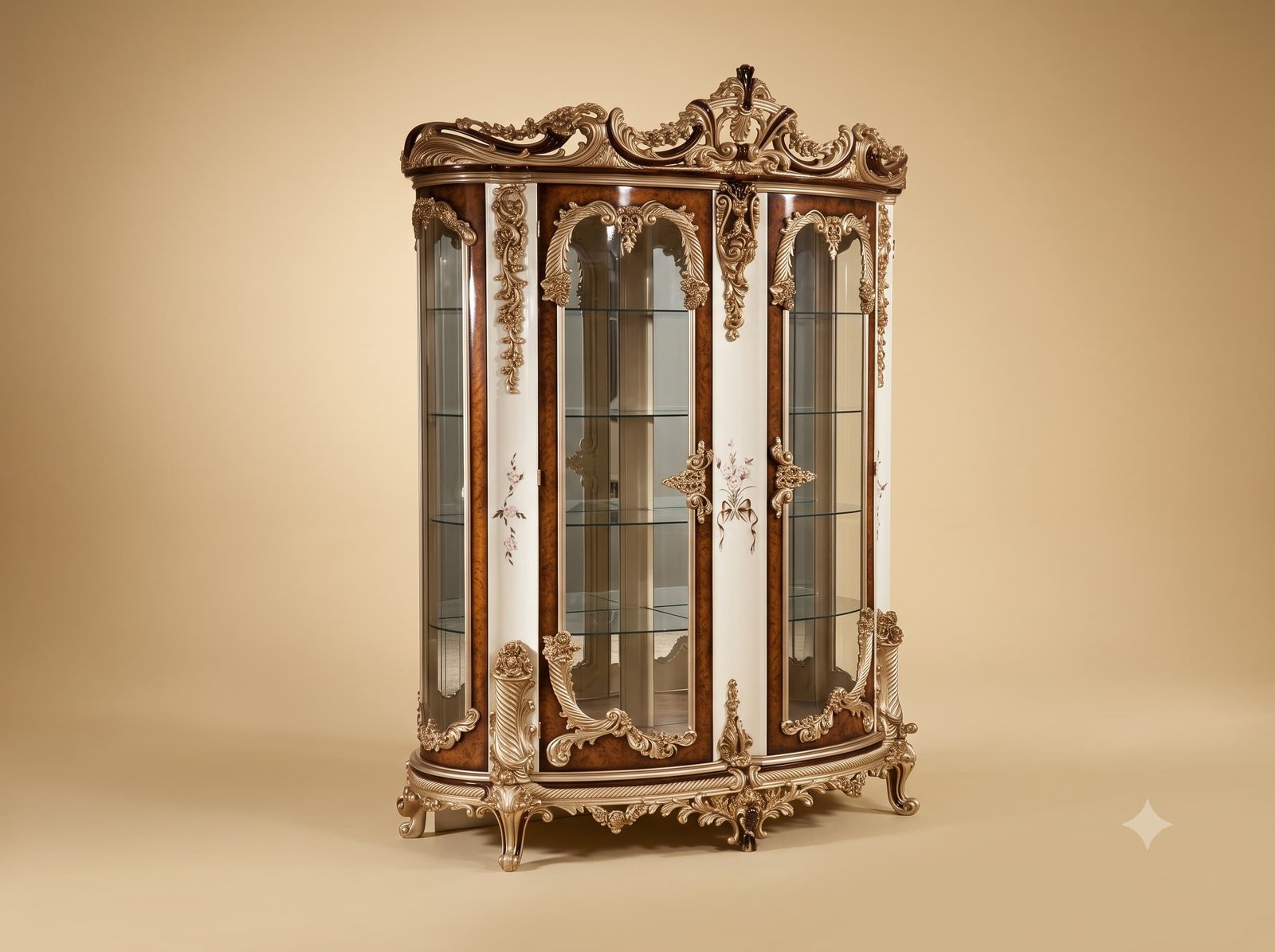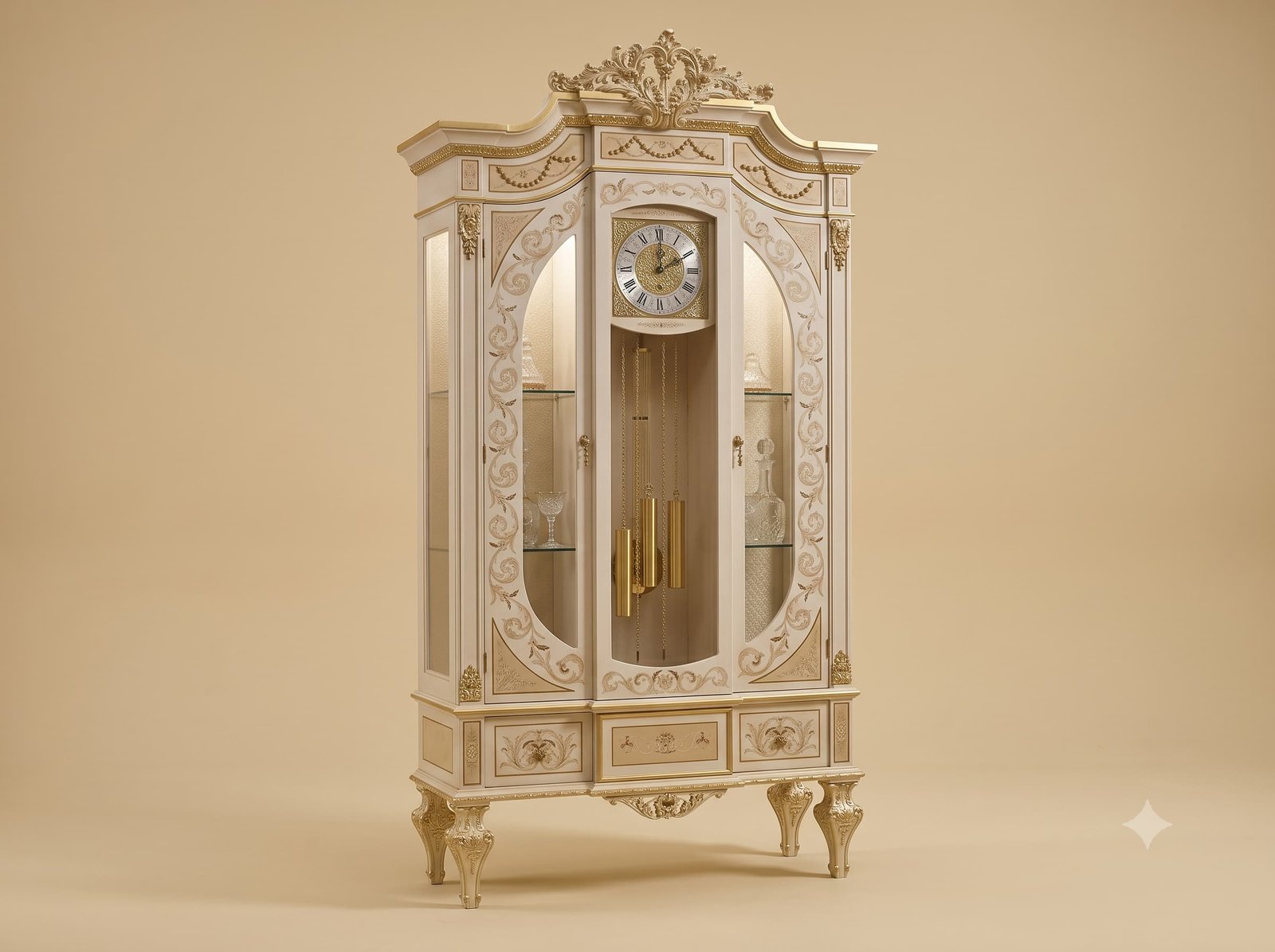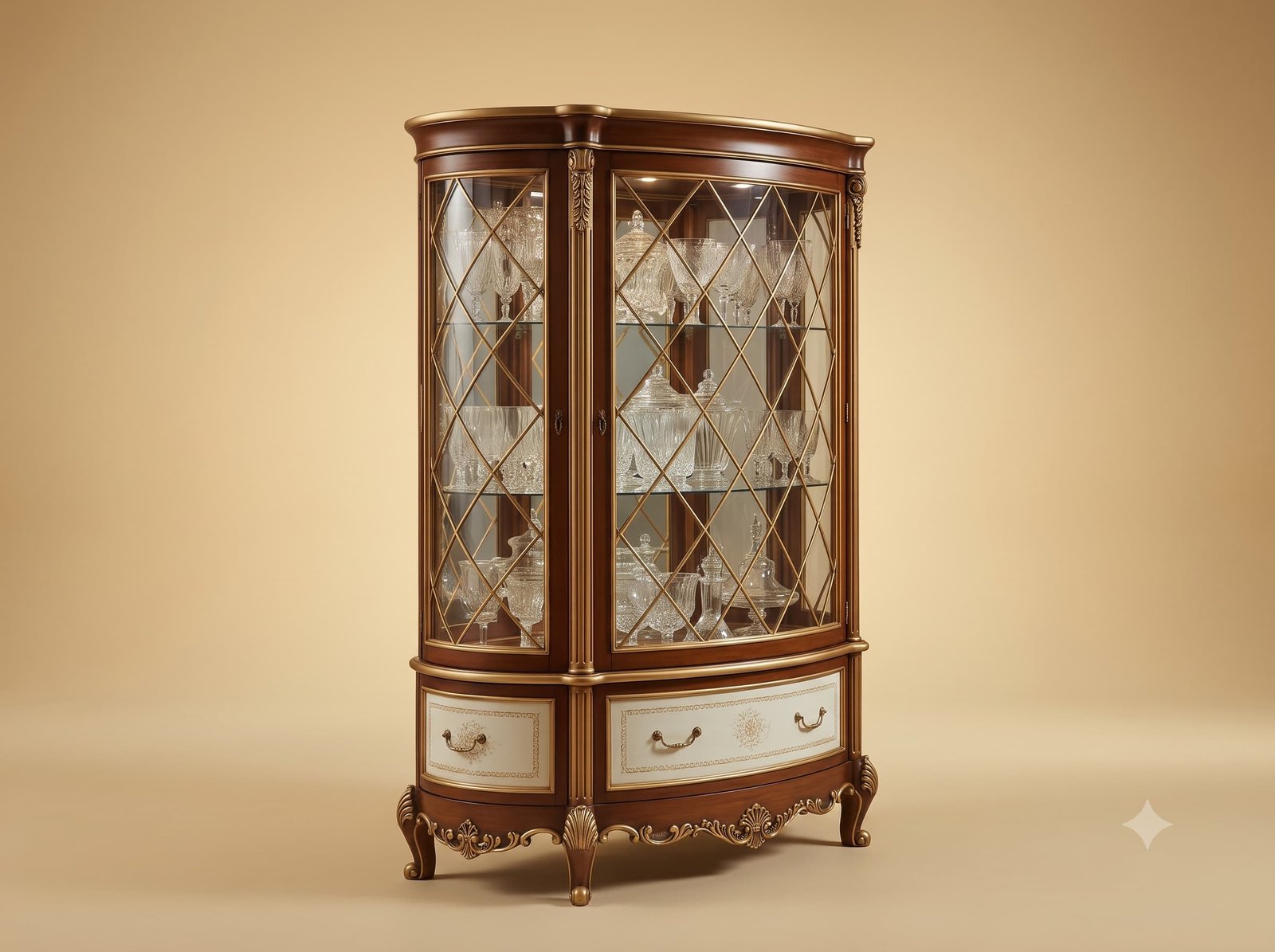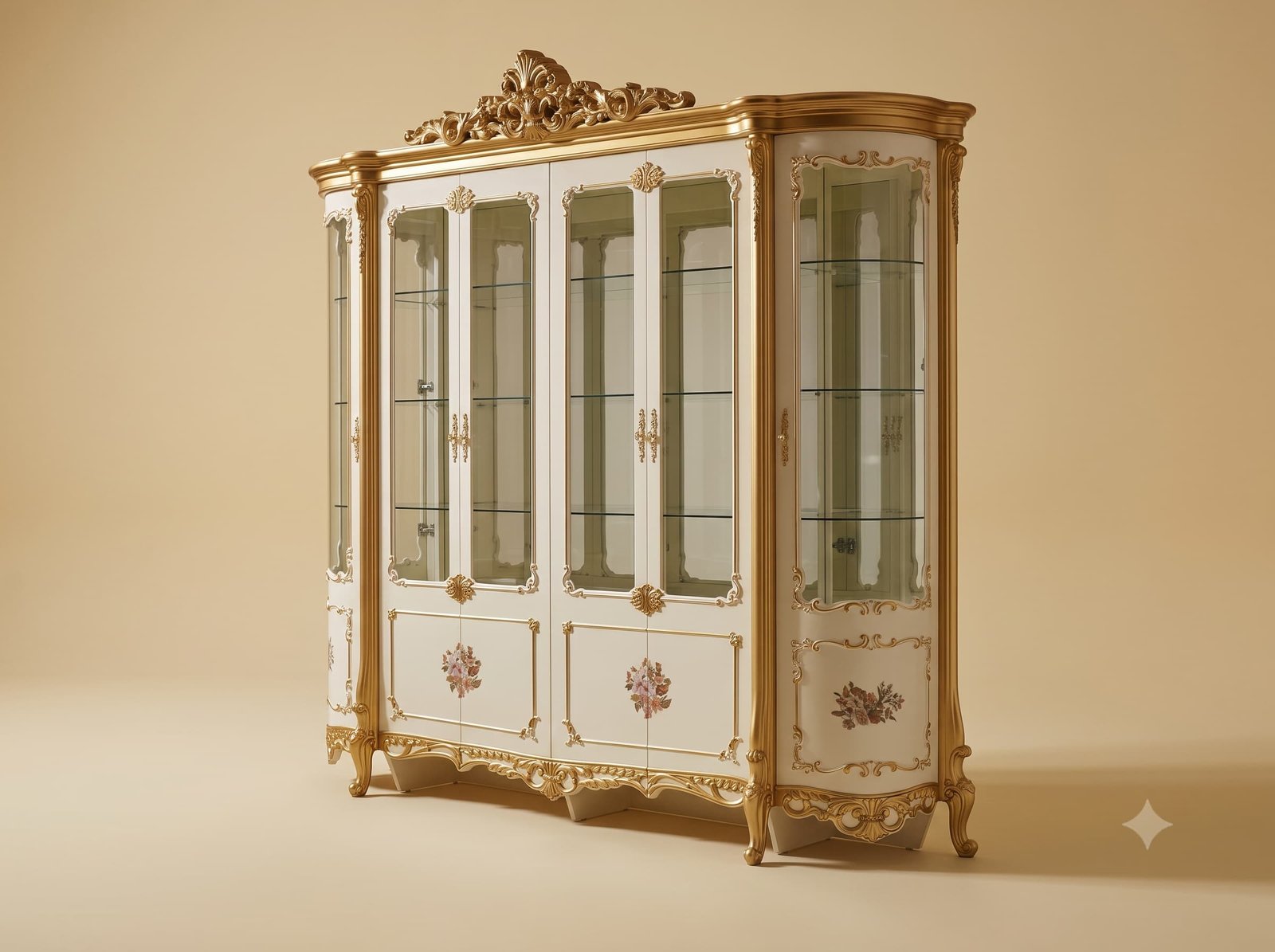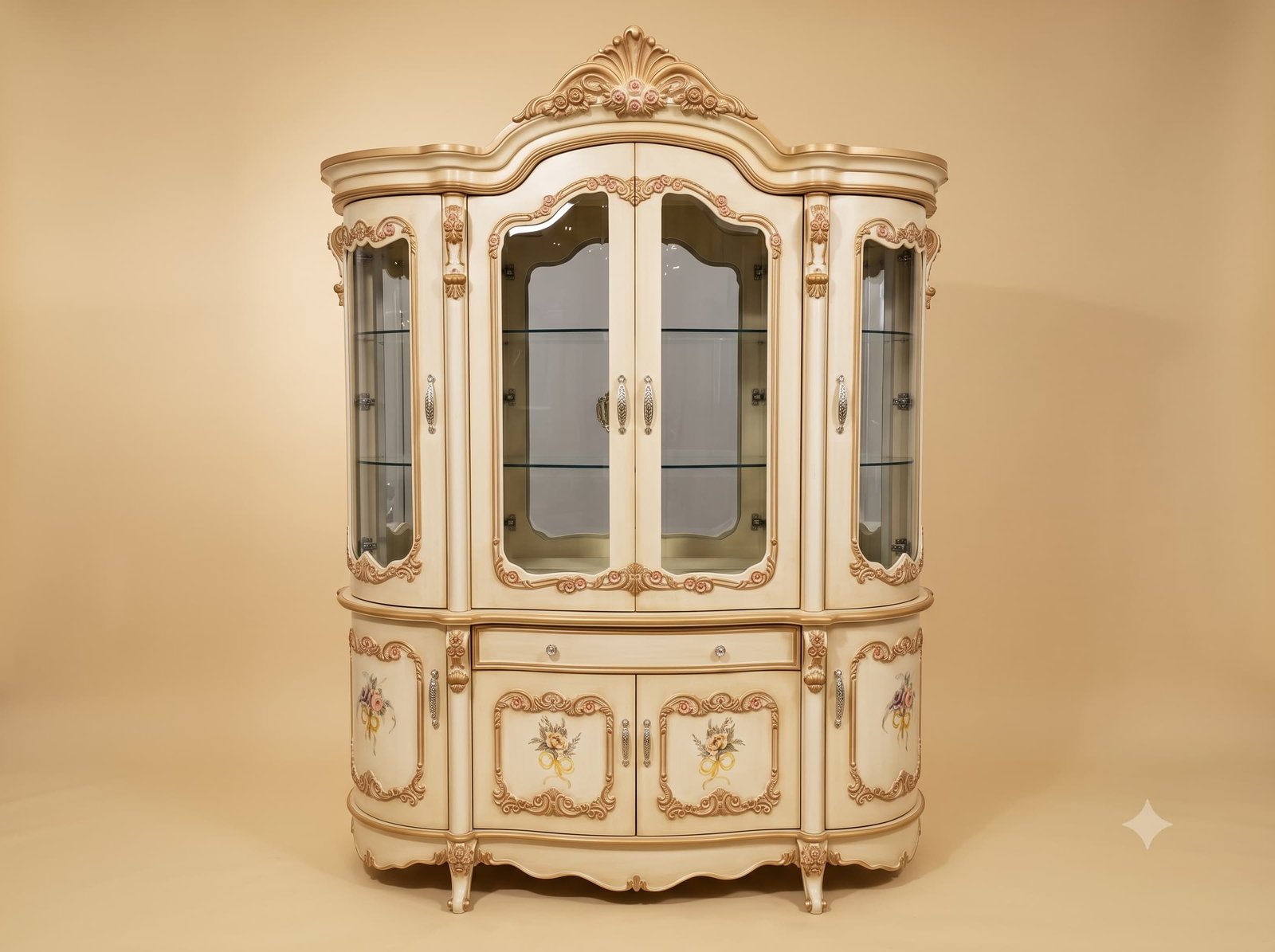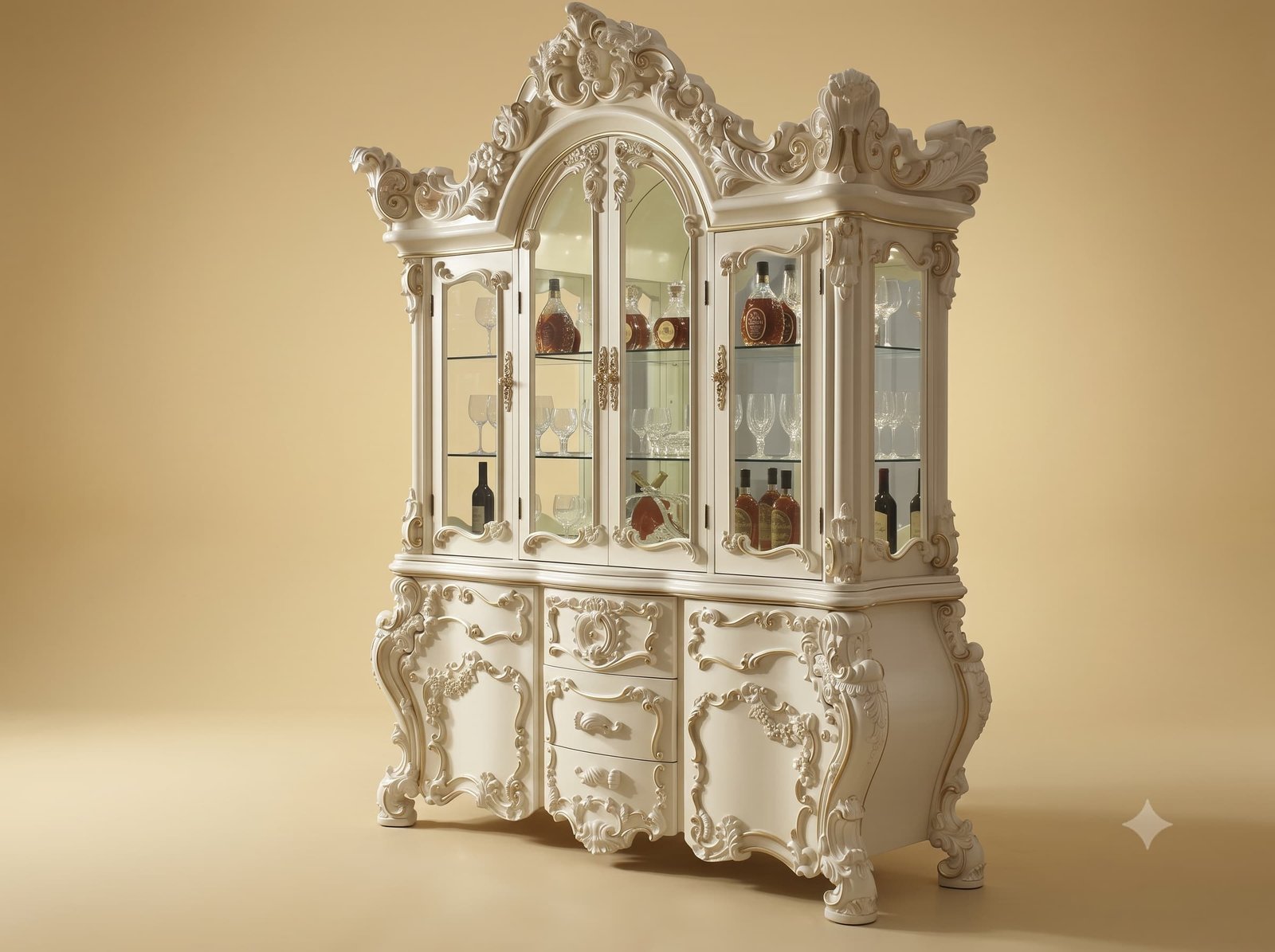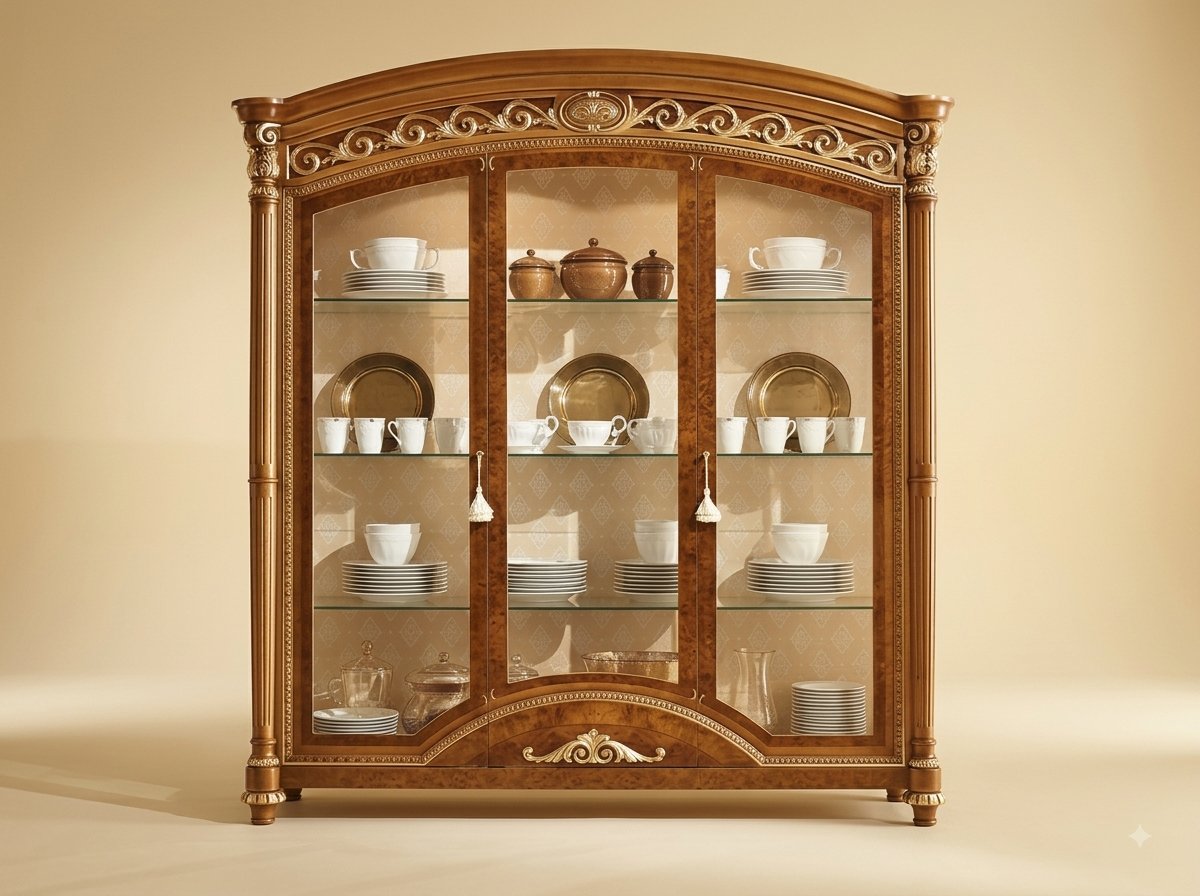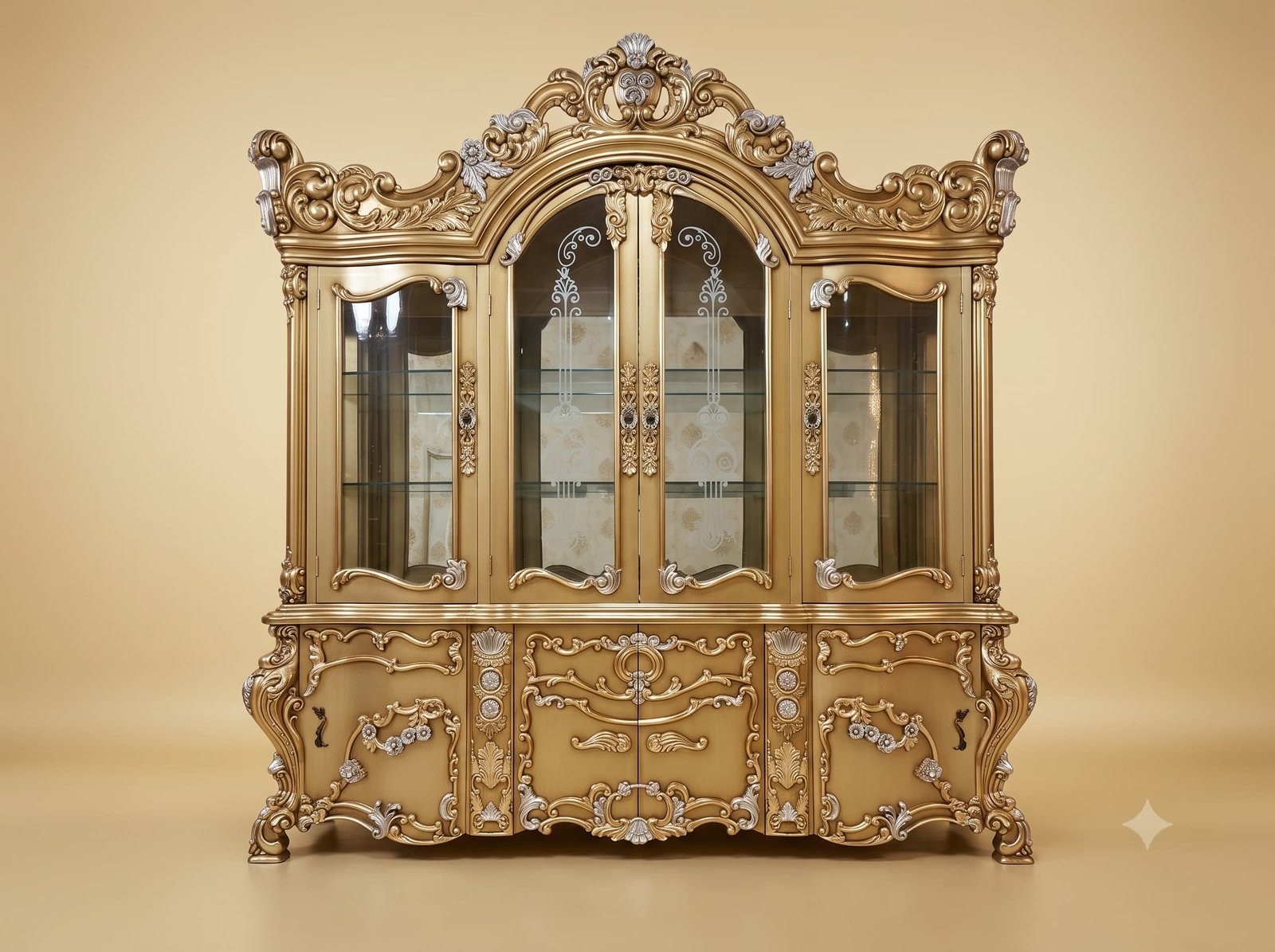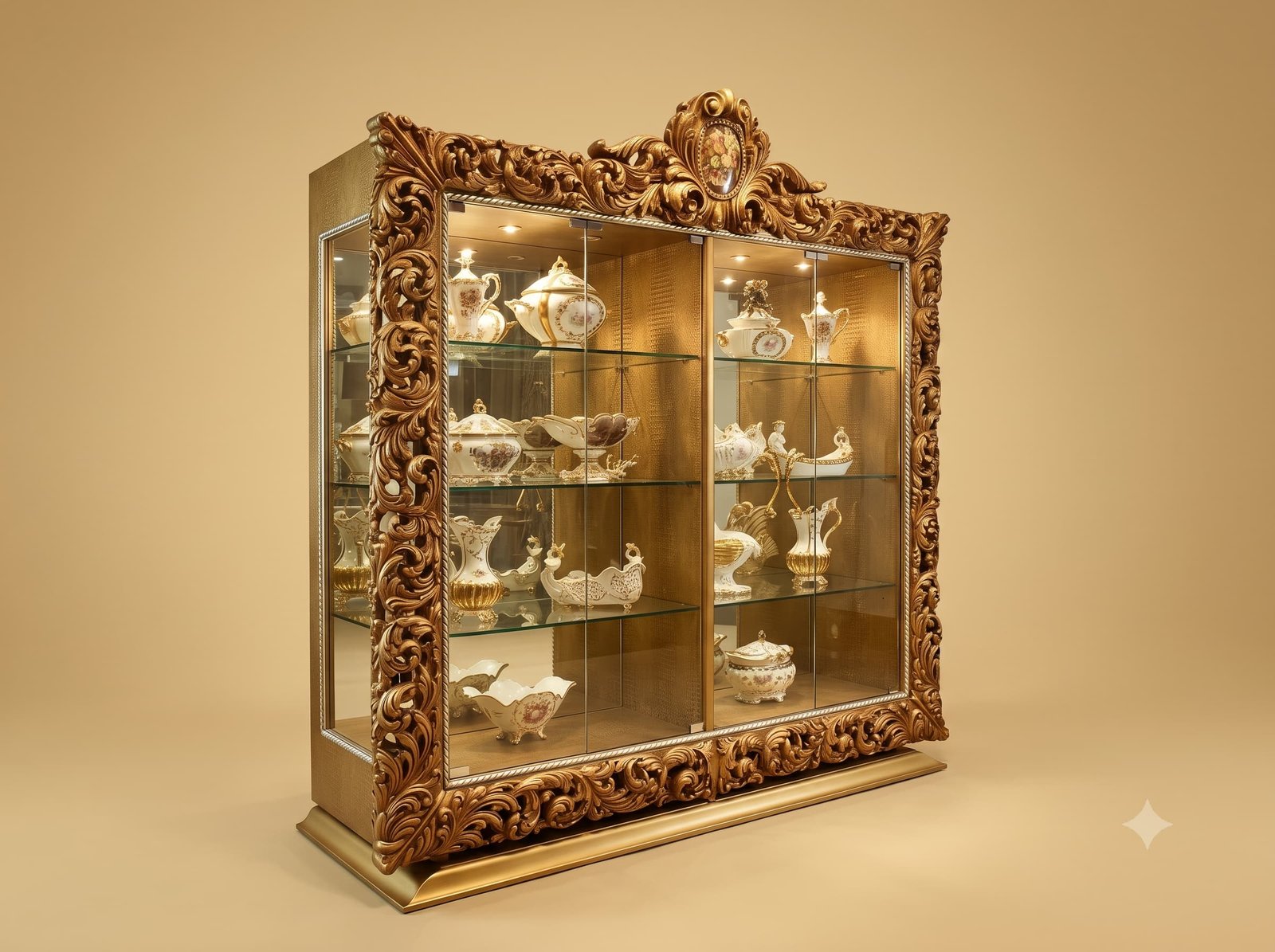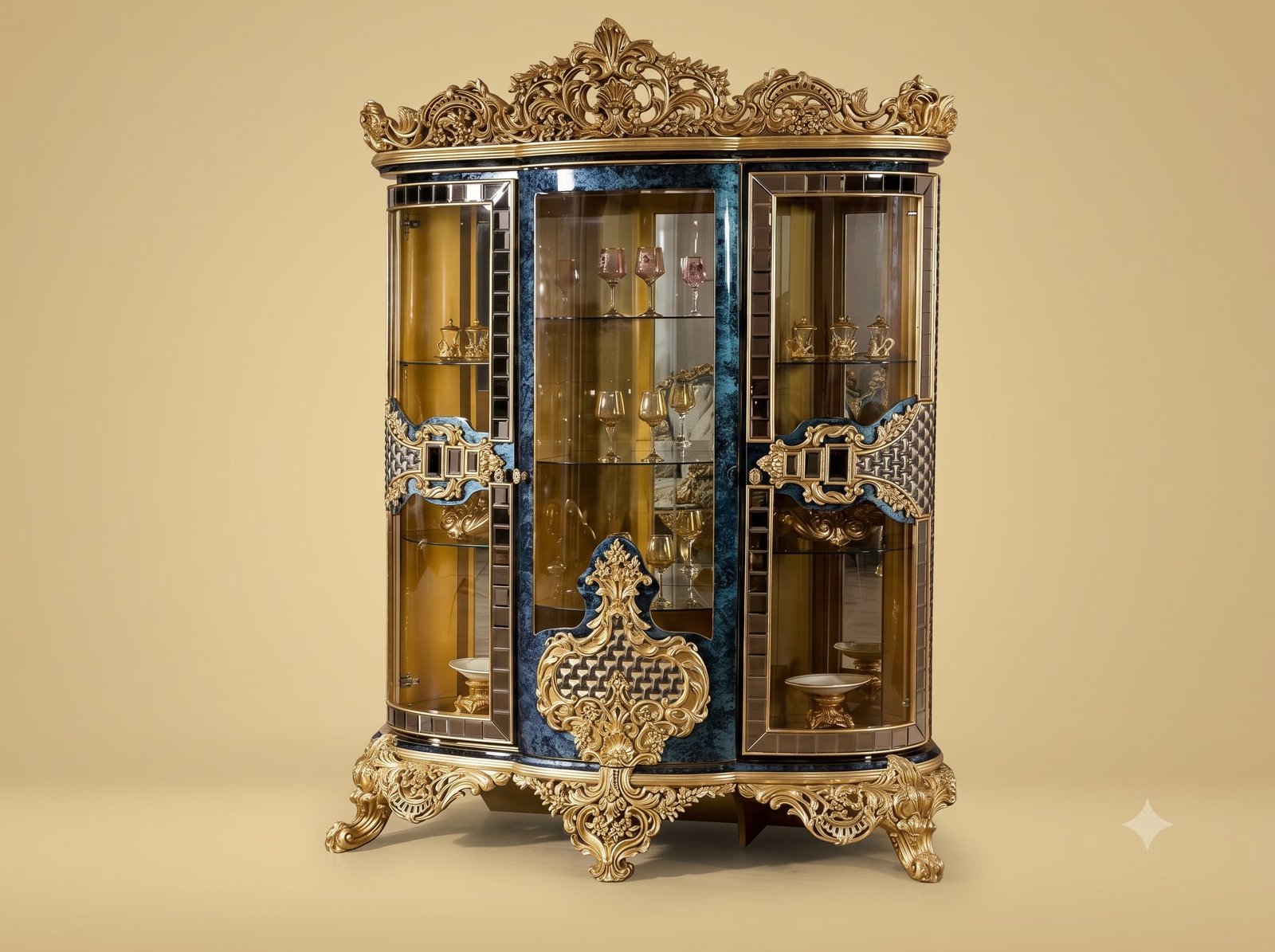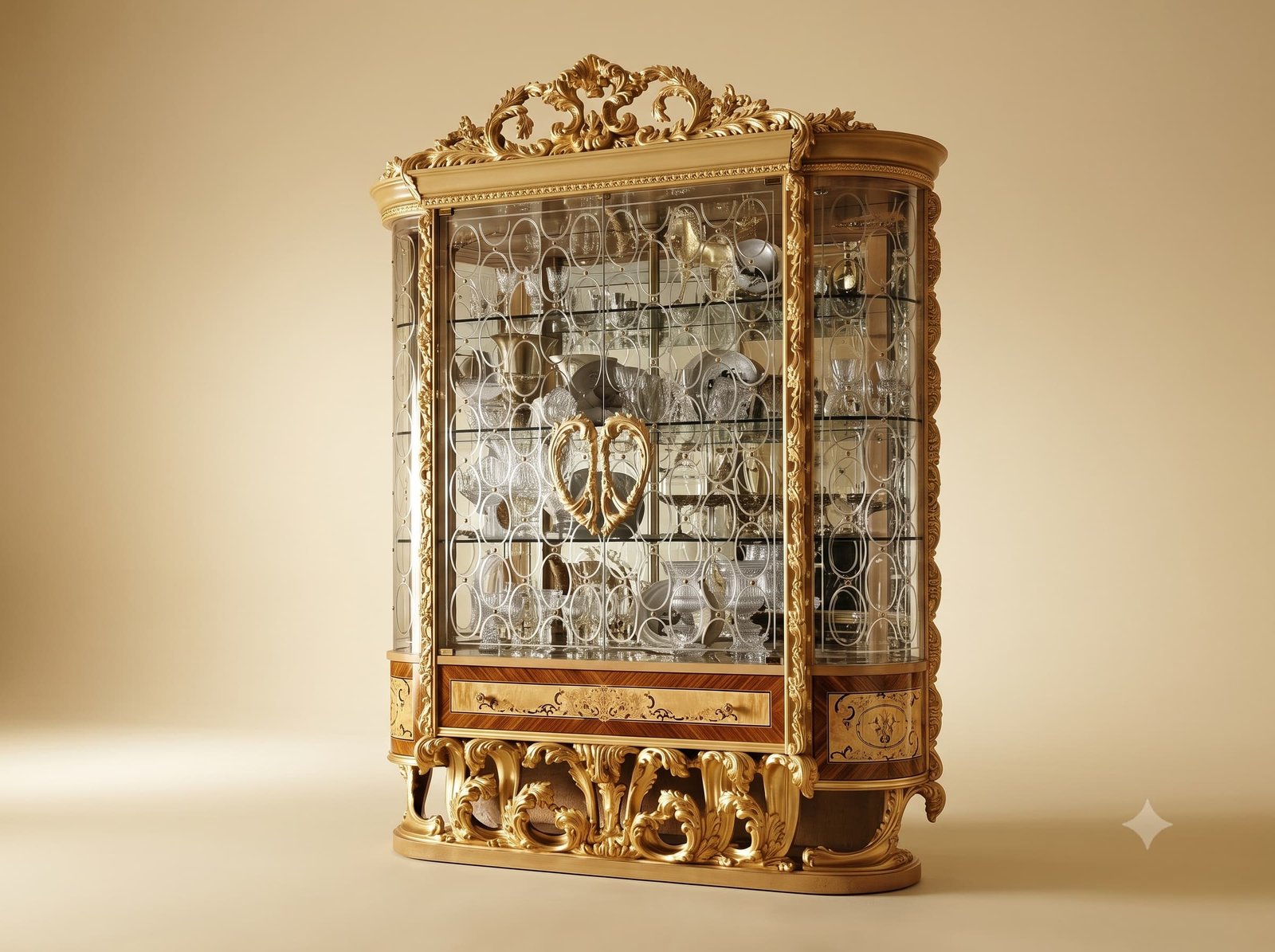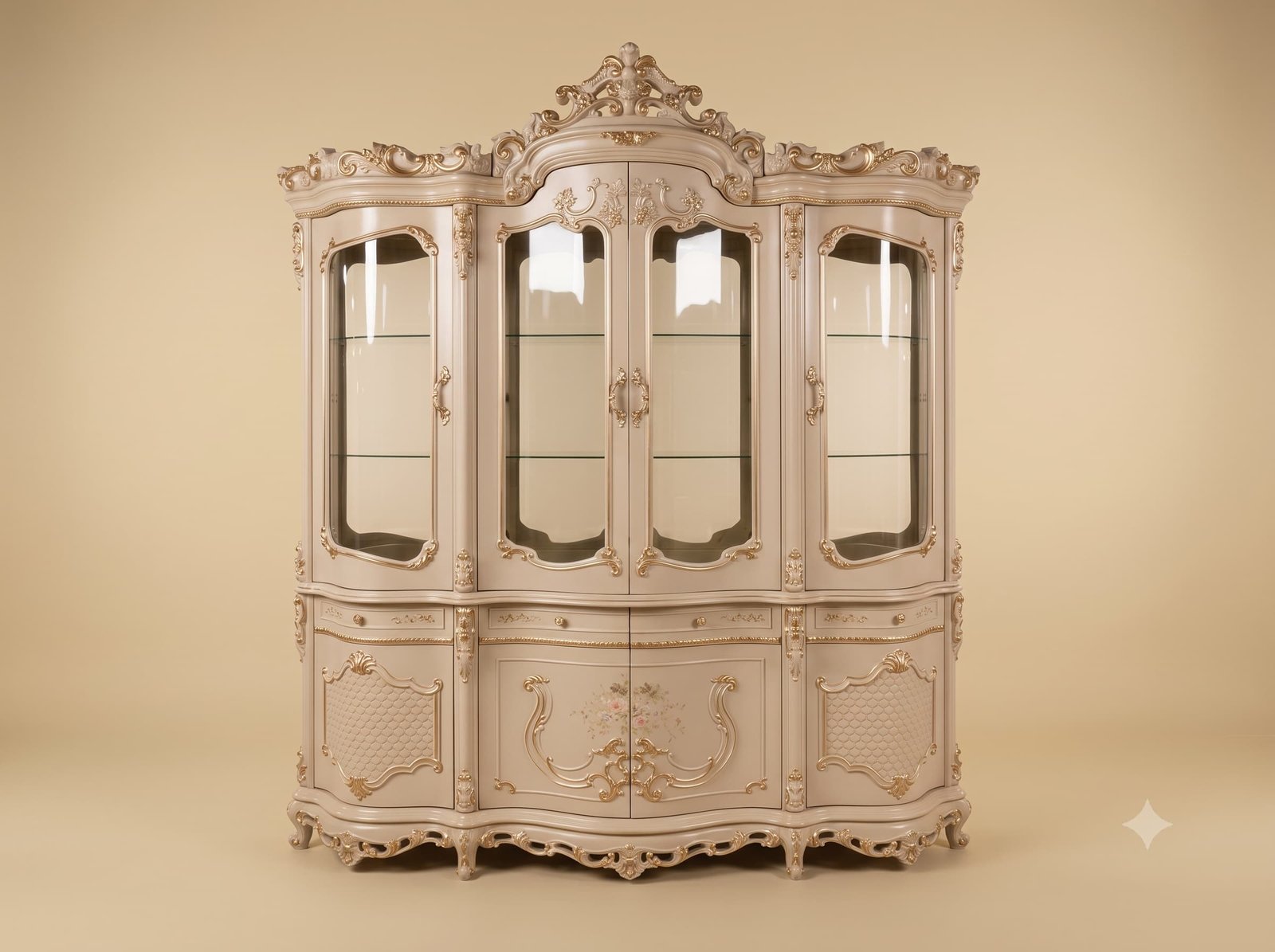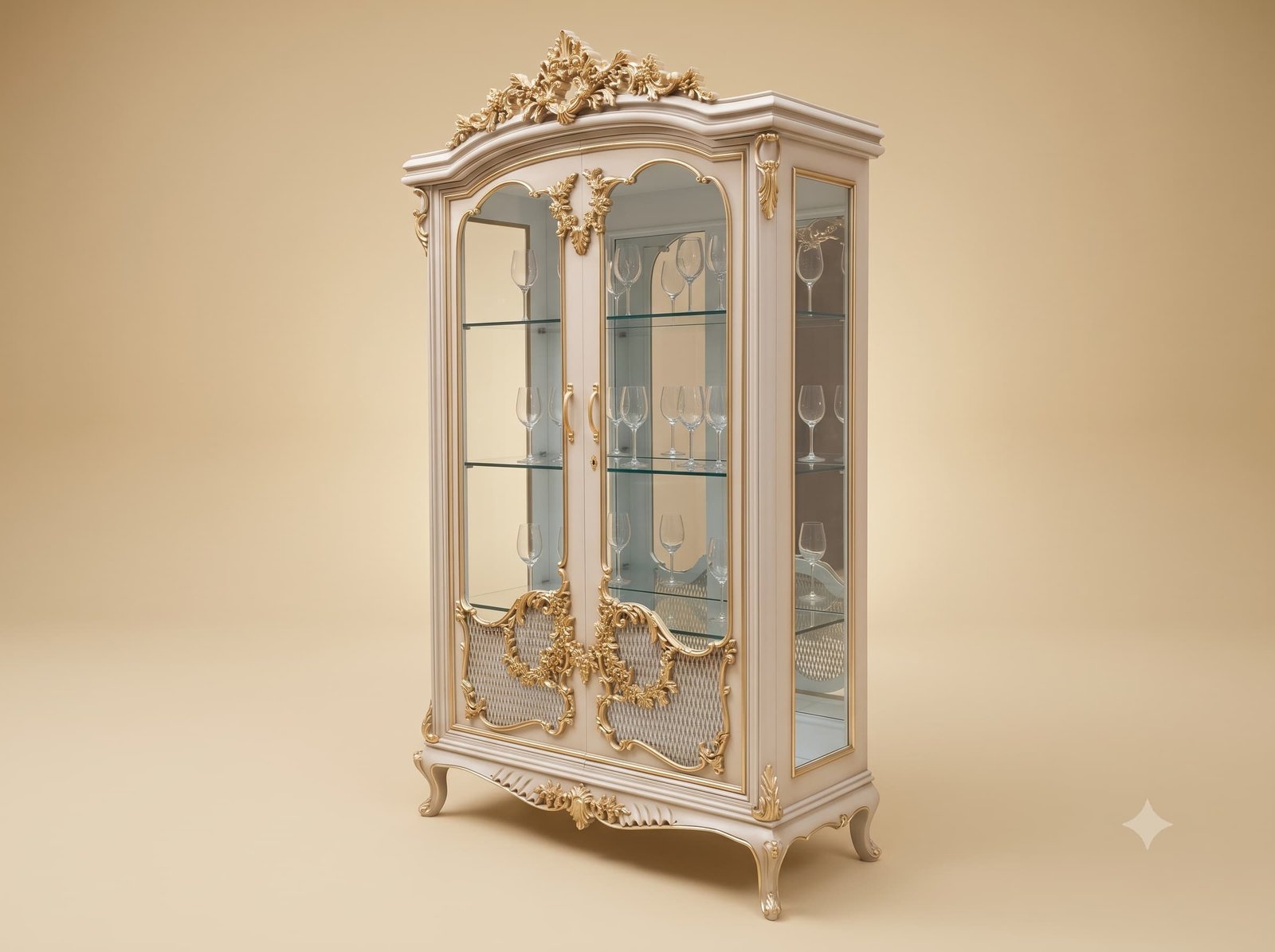
A tall narrow cabinet standing on legs is the most demanding stability problem in a house, and the design has to answer it rather than the owner.
Height above a small footprint raises the centre of gravity. Fill it with glass shelves and glassware and most of the added weight goes into the upper half. Then someone opens a door - which swings mass outward beyond the front legs - and reaches to the top shelf.
Our master Indian artisans build the answer in rather than relying on care. The carcass is drawn with generous depth relative to its width, because depth front-to-back is what resists tipping forward. The heaviest structure - the base frame, the apron, the leg blocks - is concentrated low, and the cornice above is kept as light as its appearance allows. The legs are splayed very slightly outward at the front rather than standing vertical, which widens the effective footprint without looking like it.
And every cabinet of this proportion is supplied with a discreet wall restraint, fitted at the back where nothing shows. We would rather build the security in and never have it needed than leave it as something for the owner to think about.
 Ask Price On WhatsApp