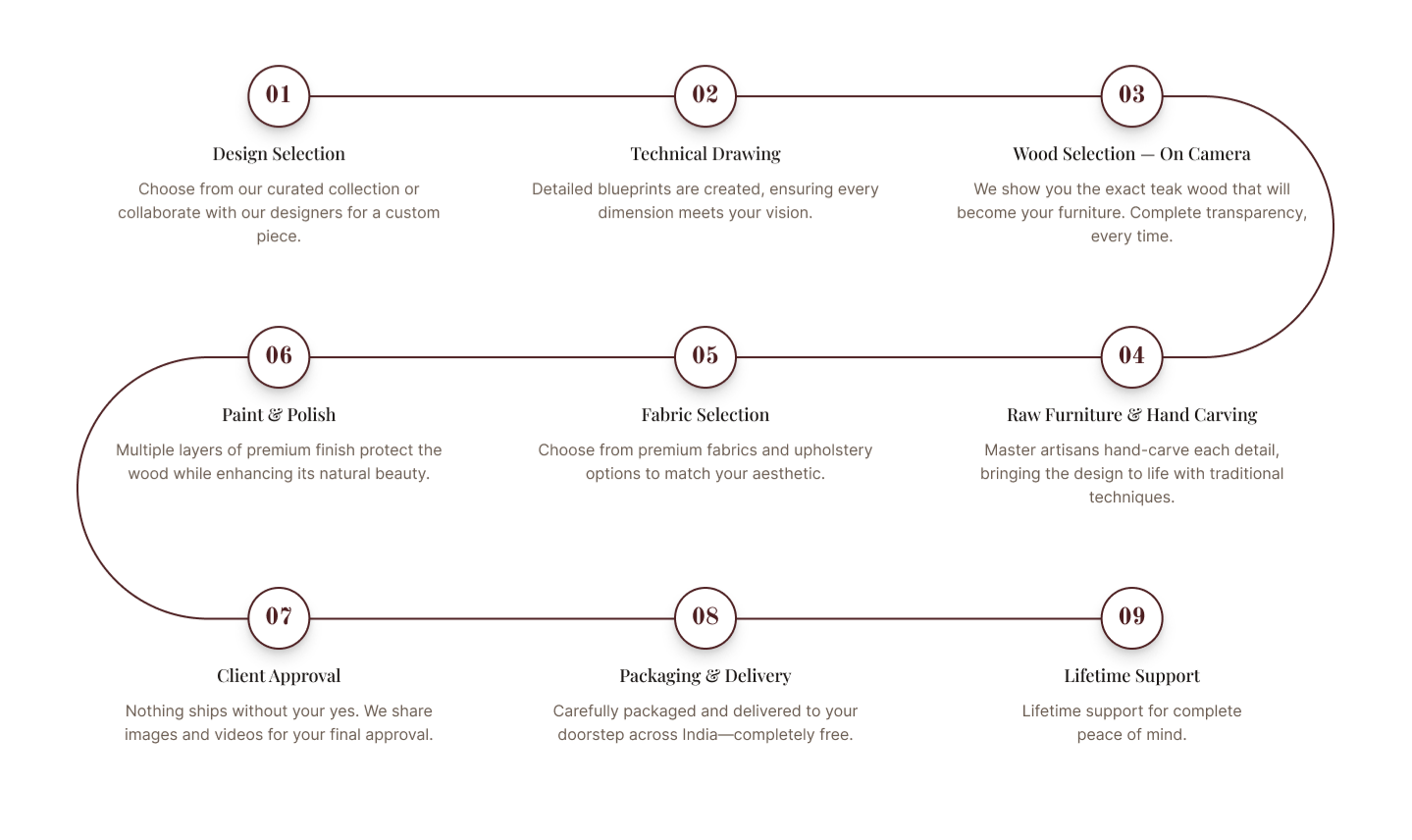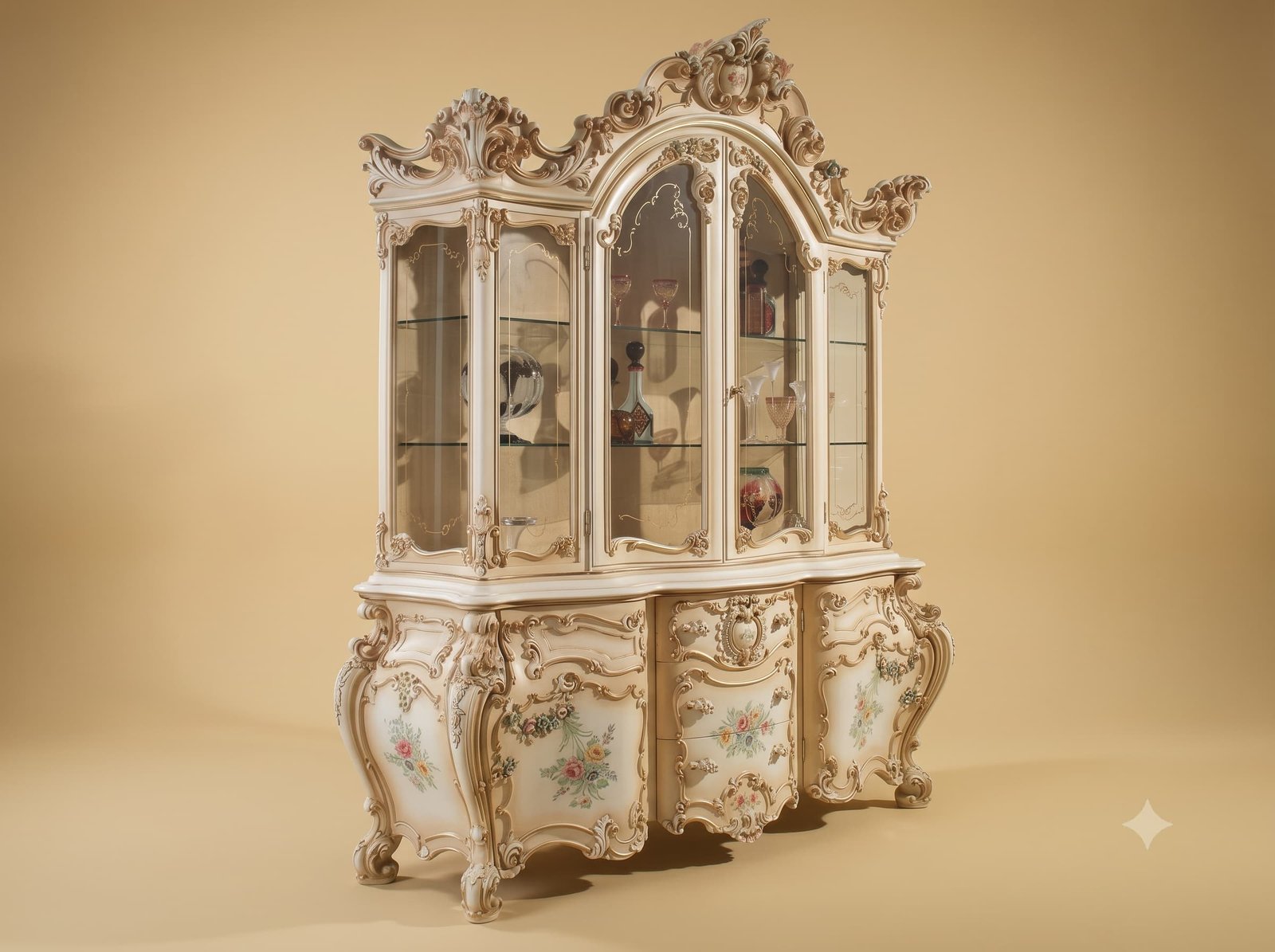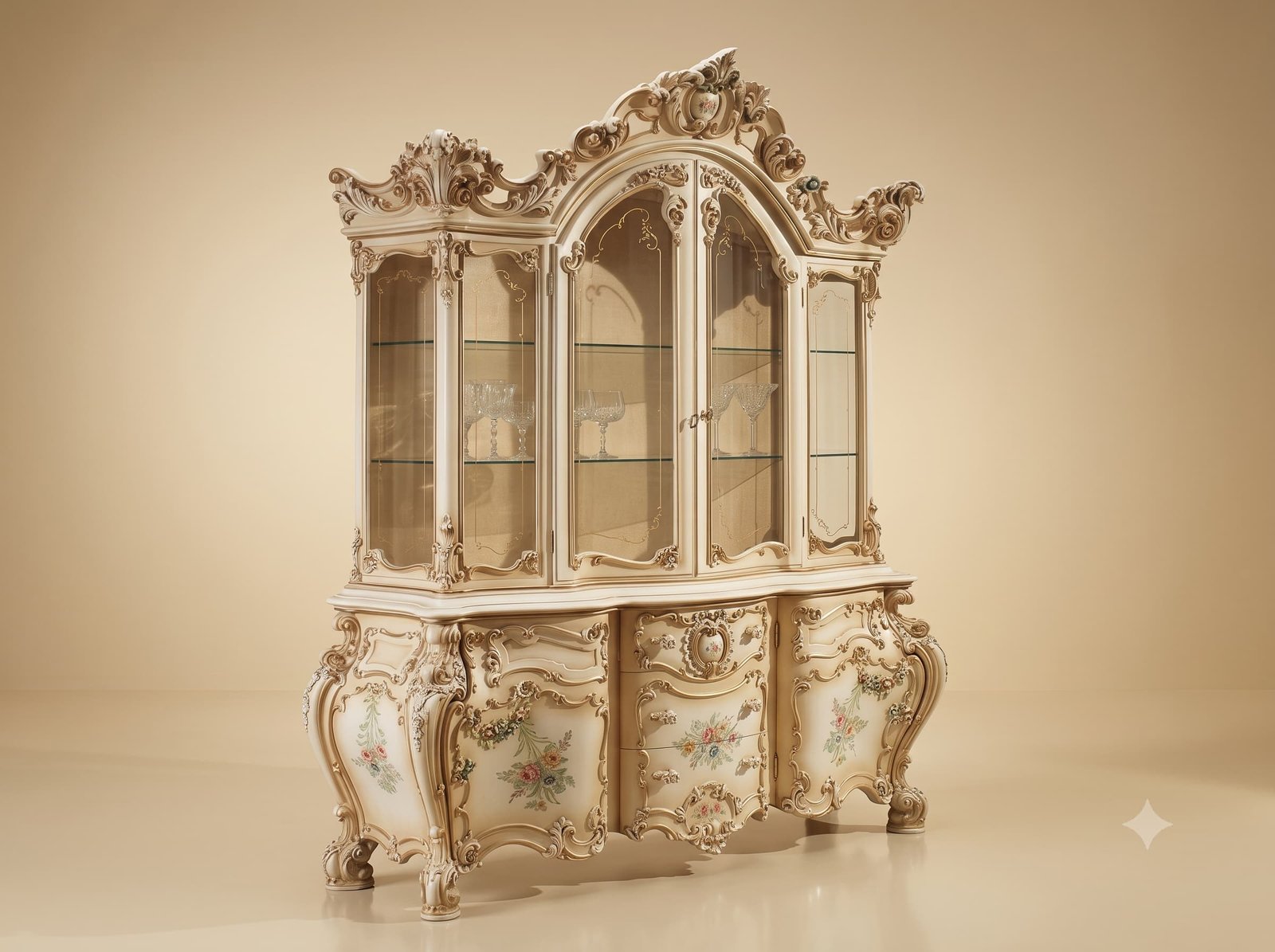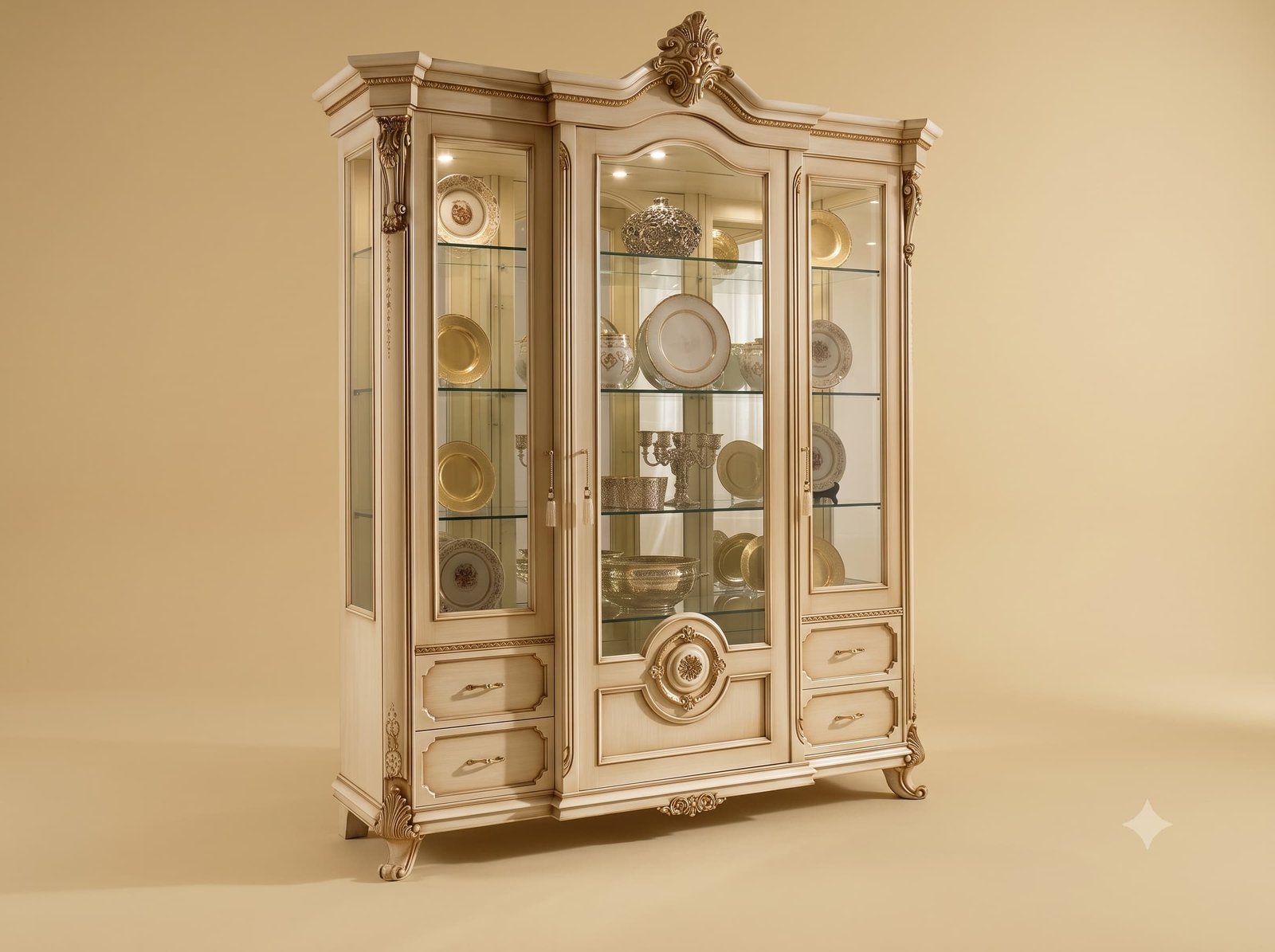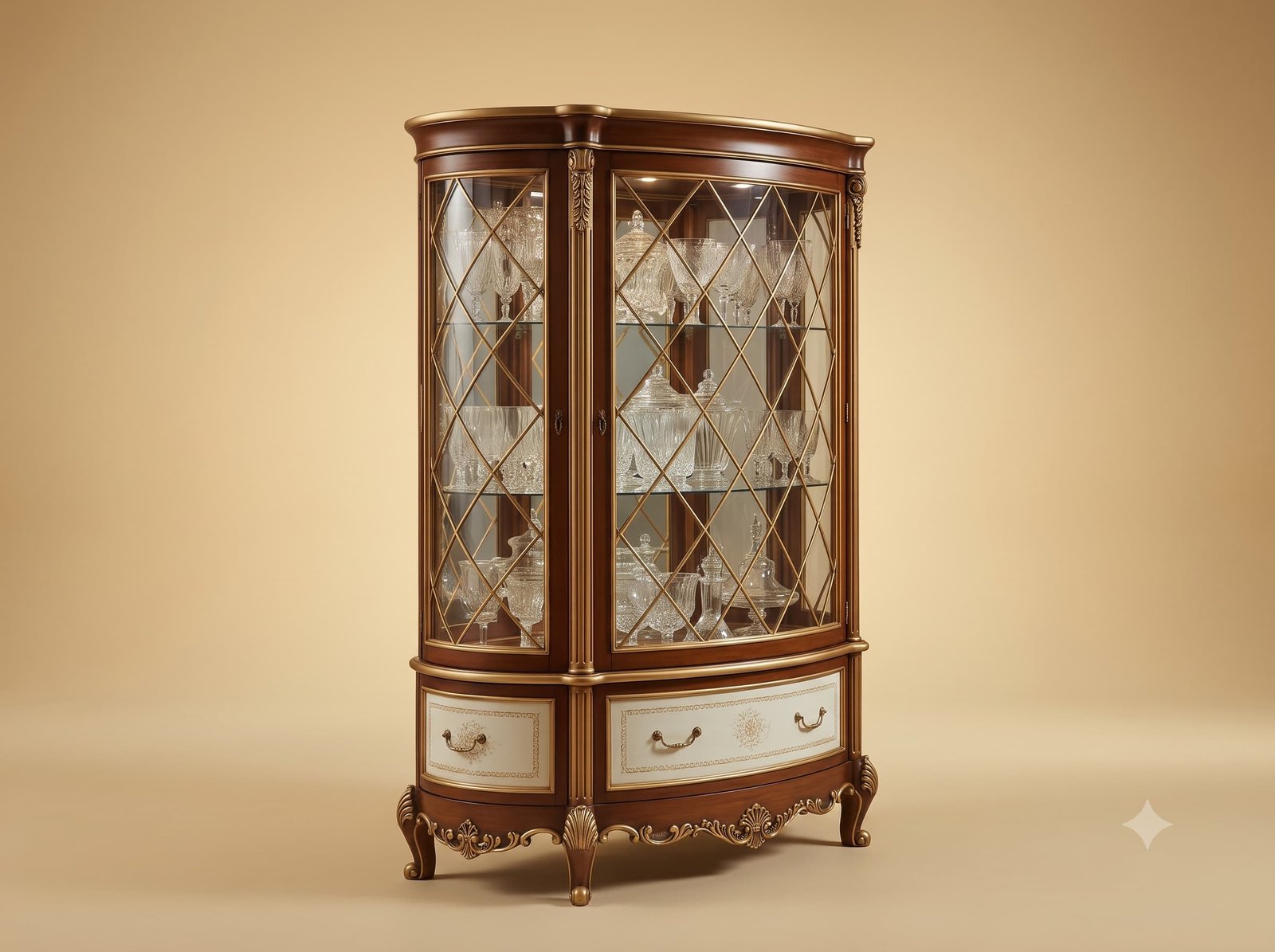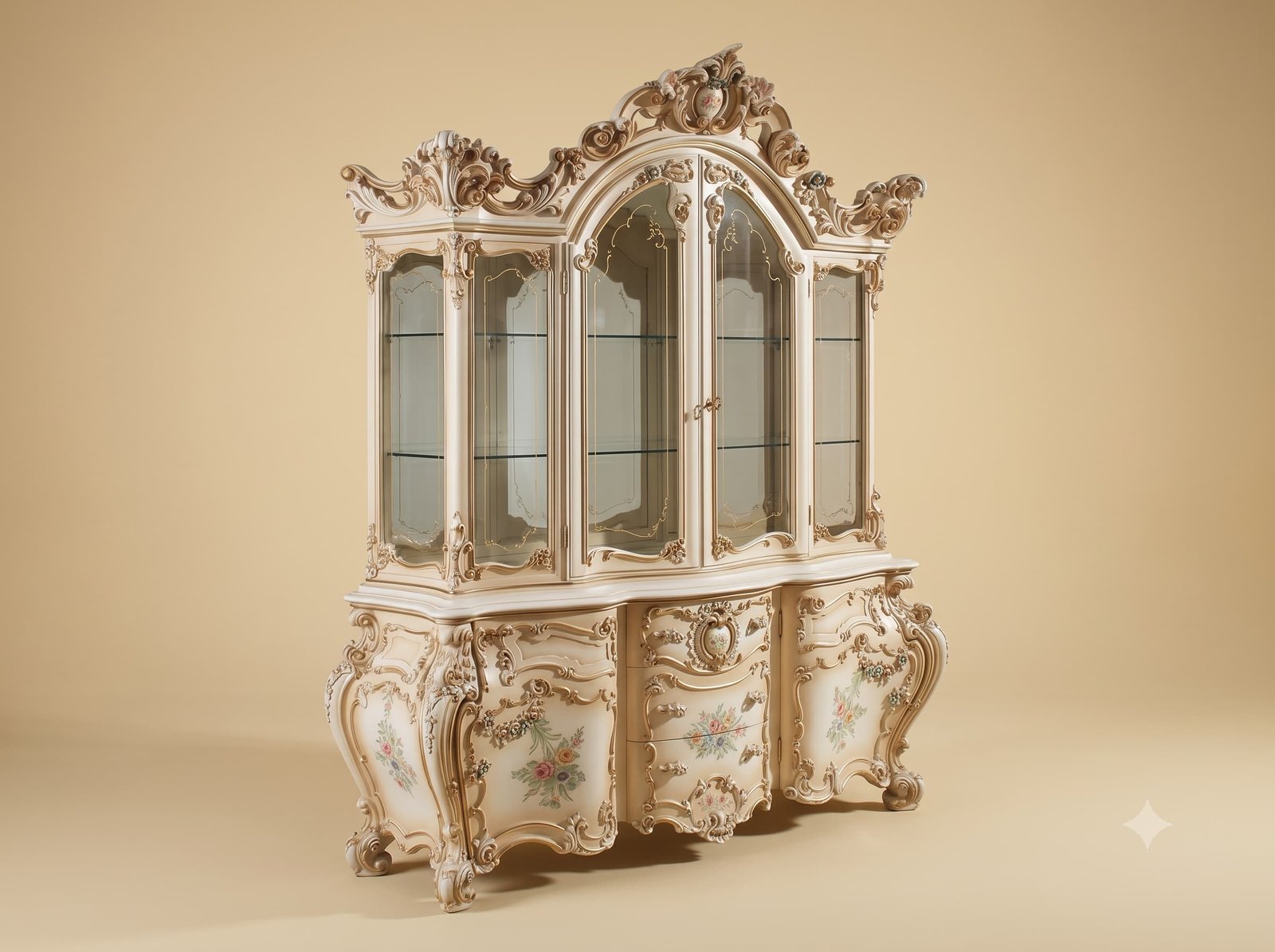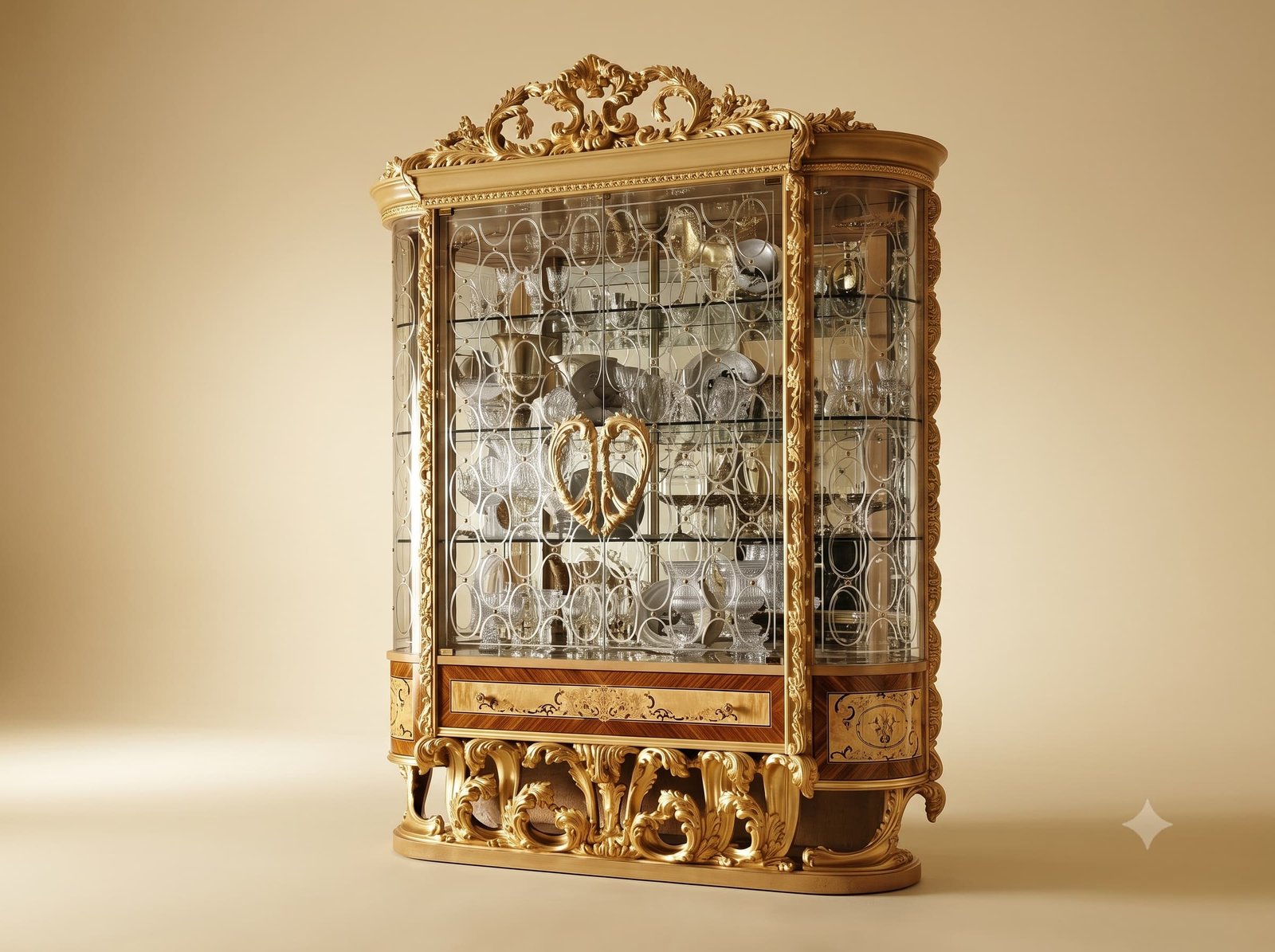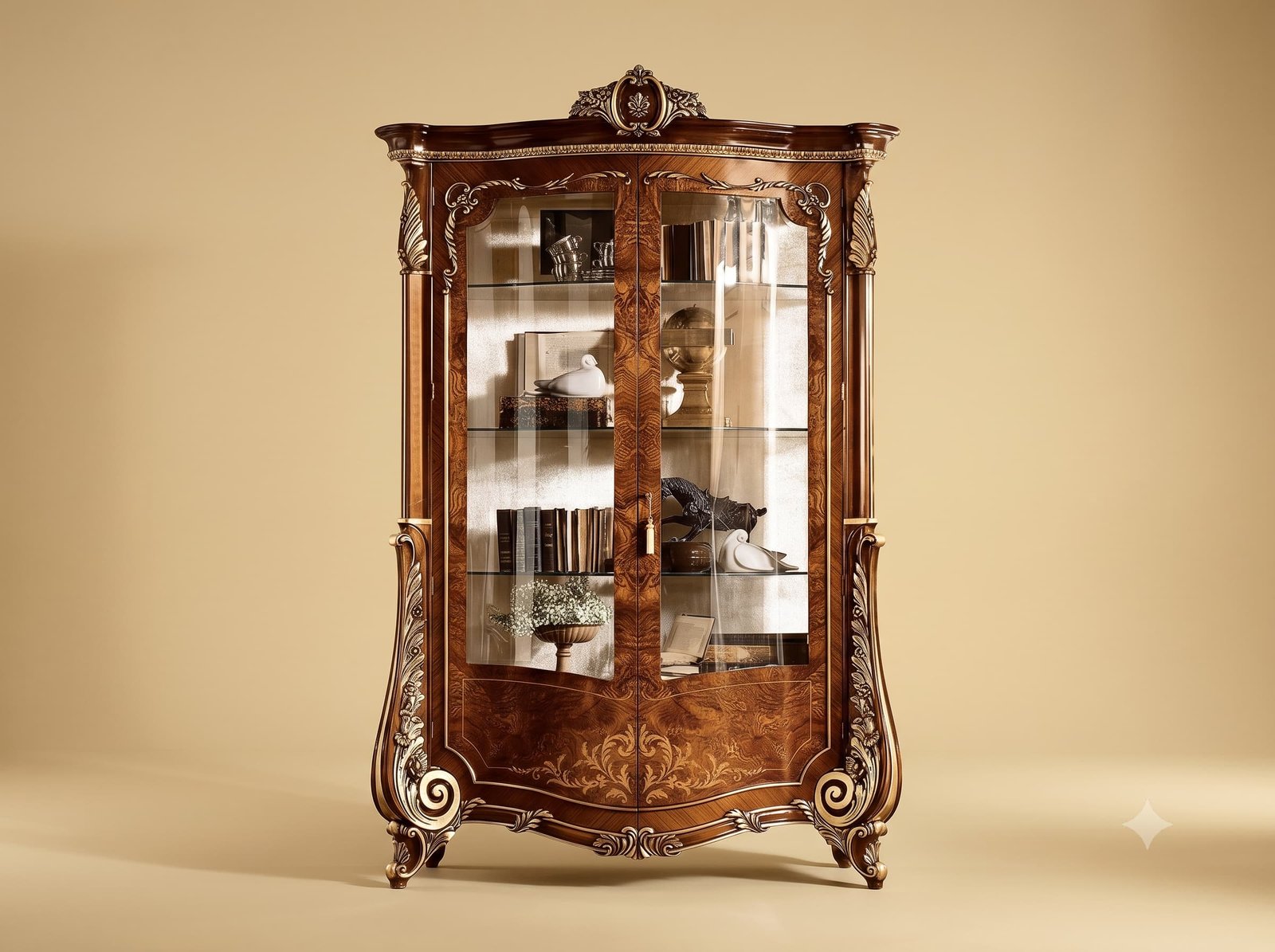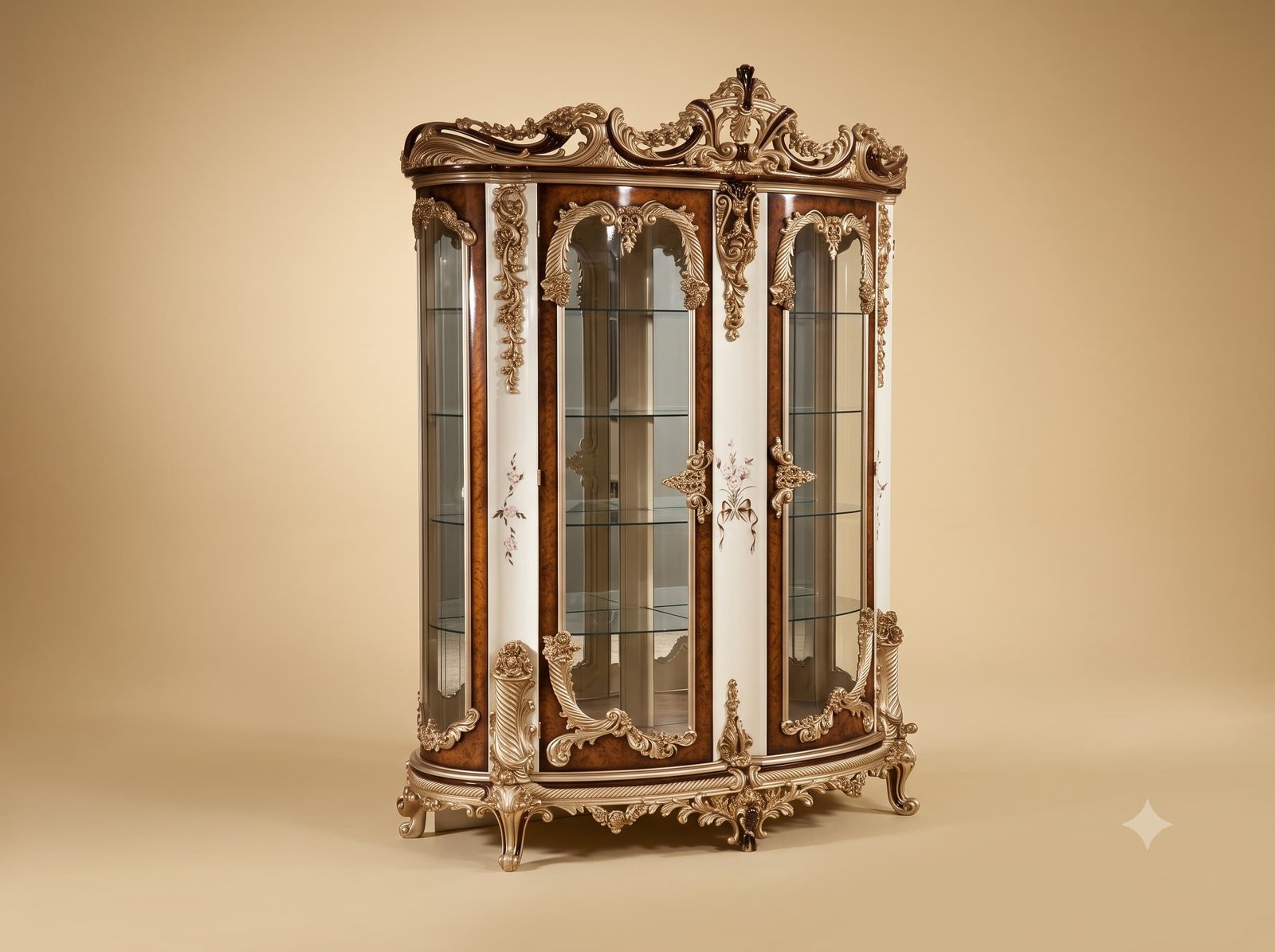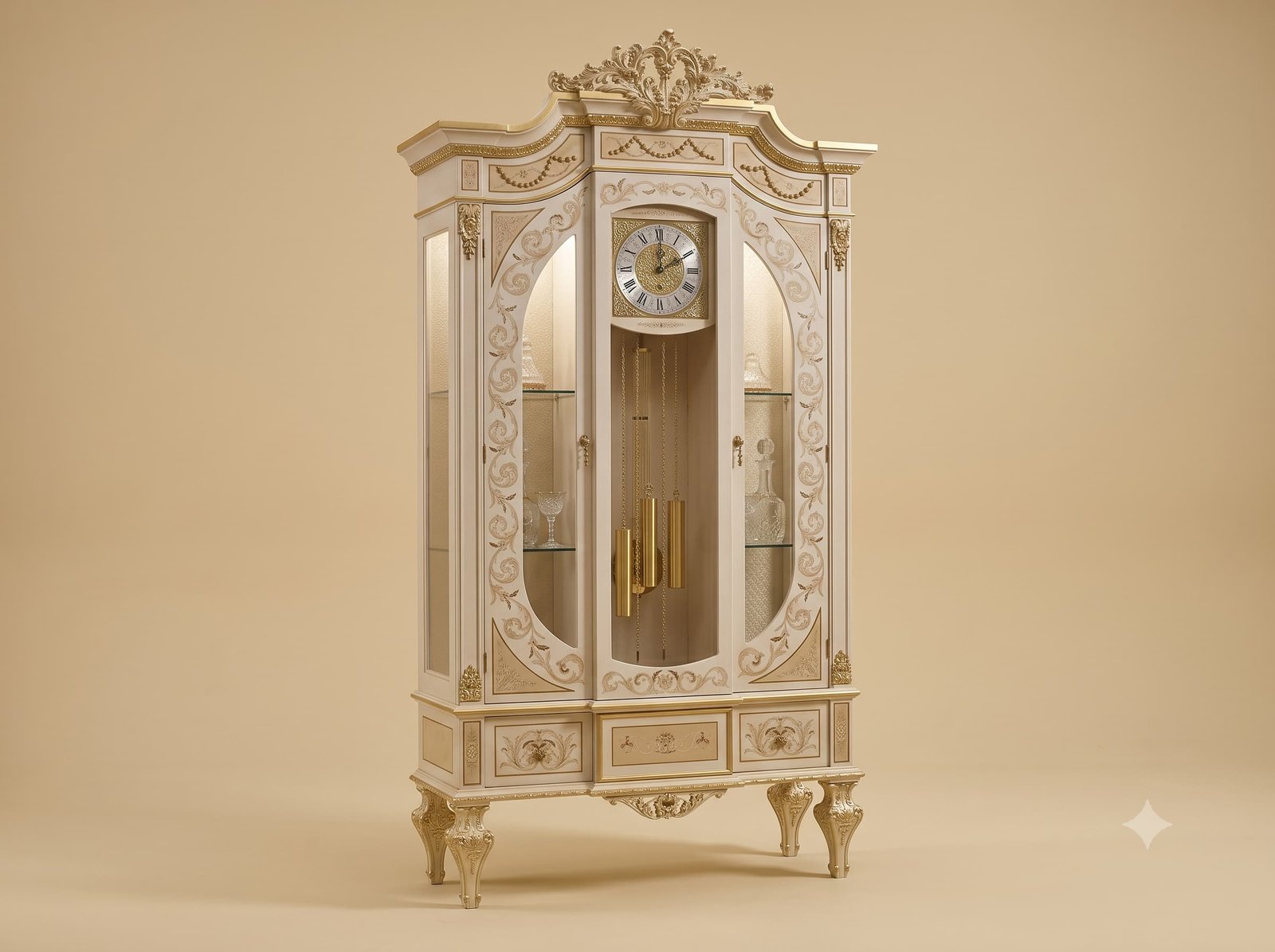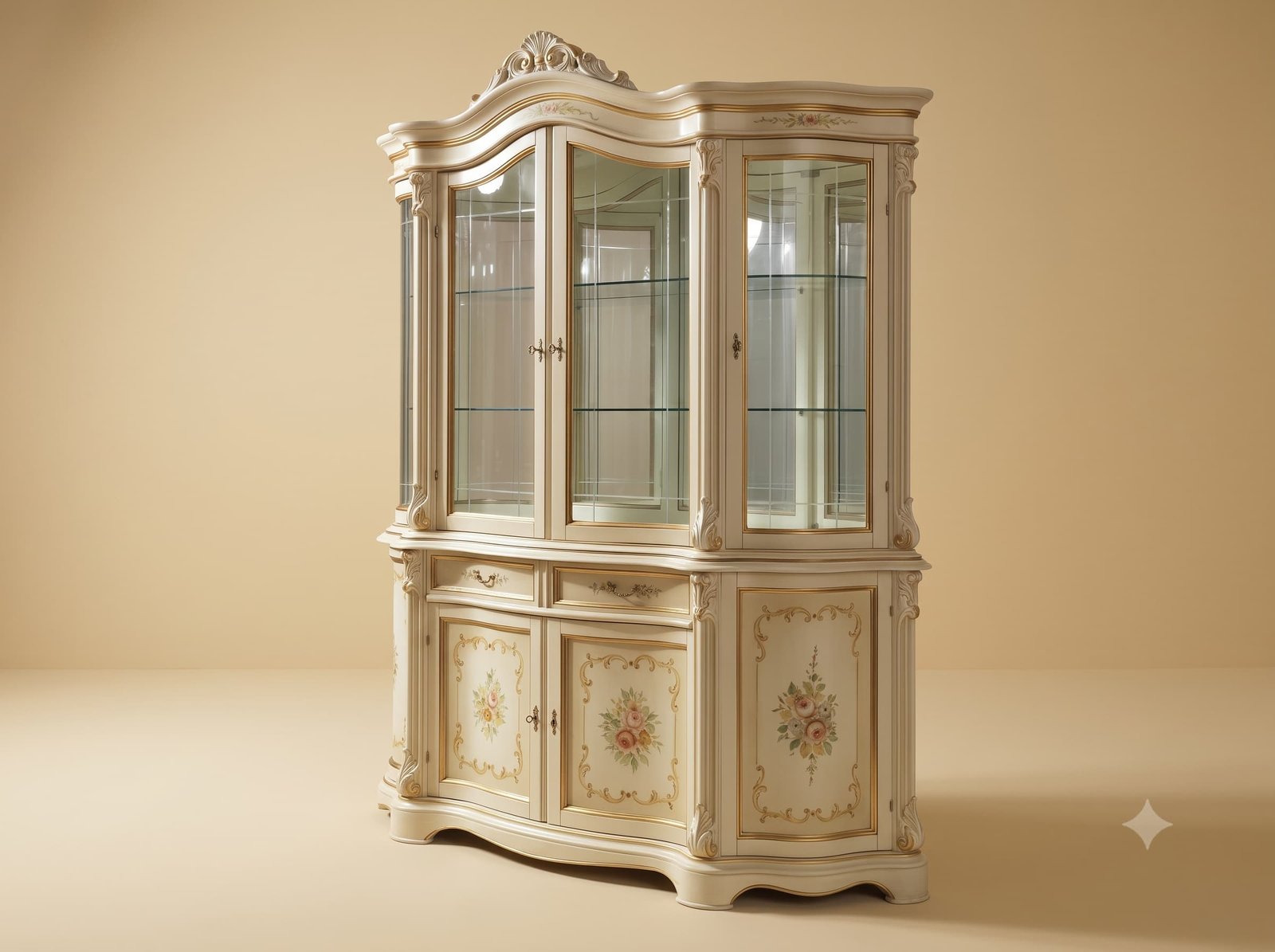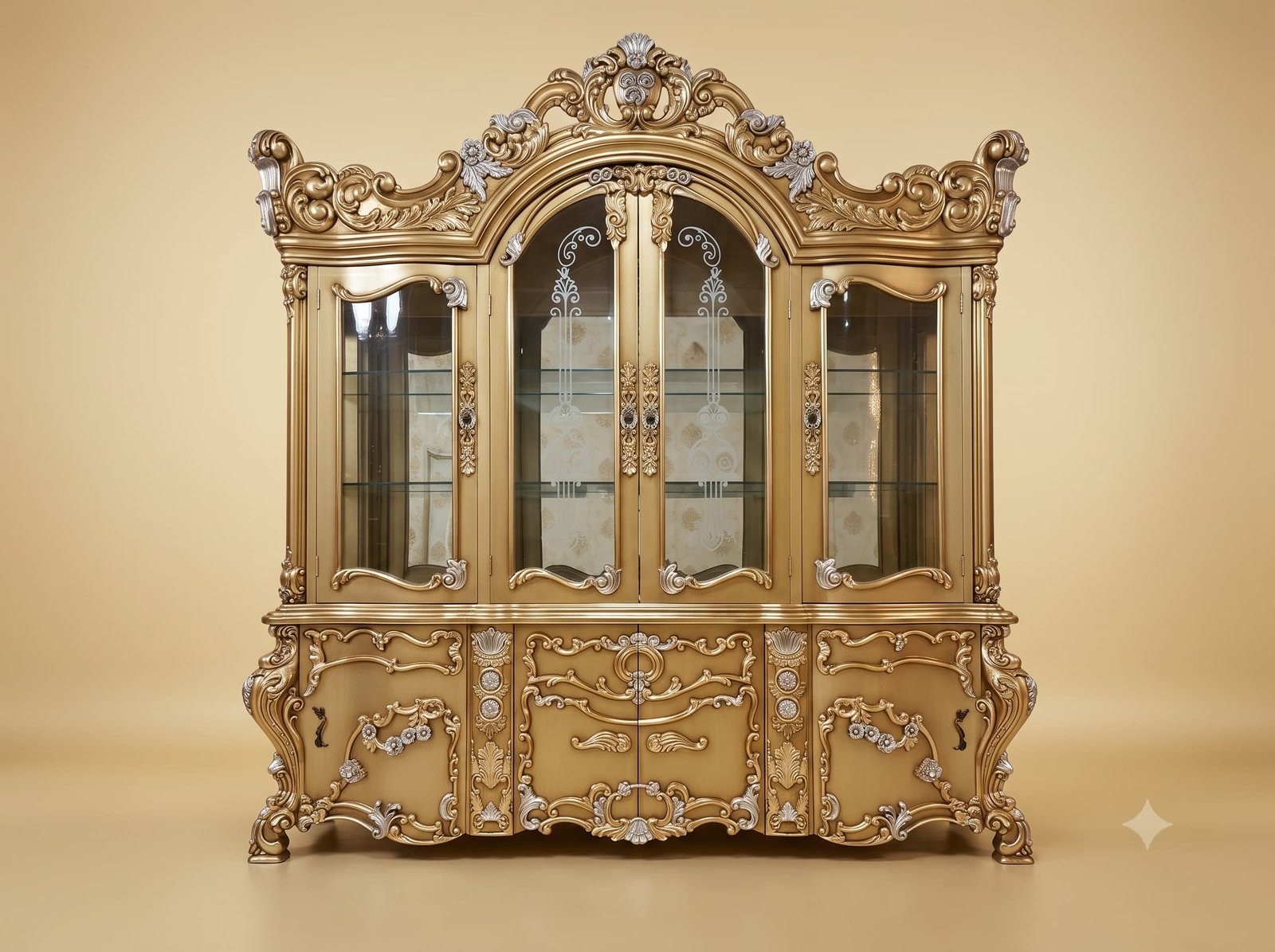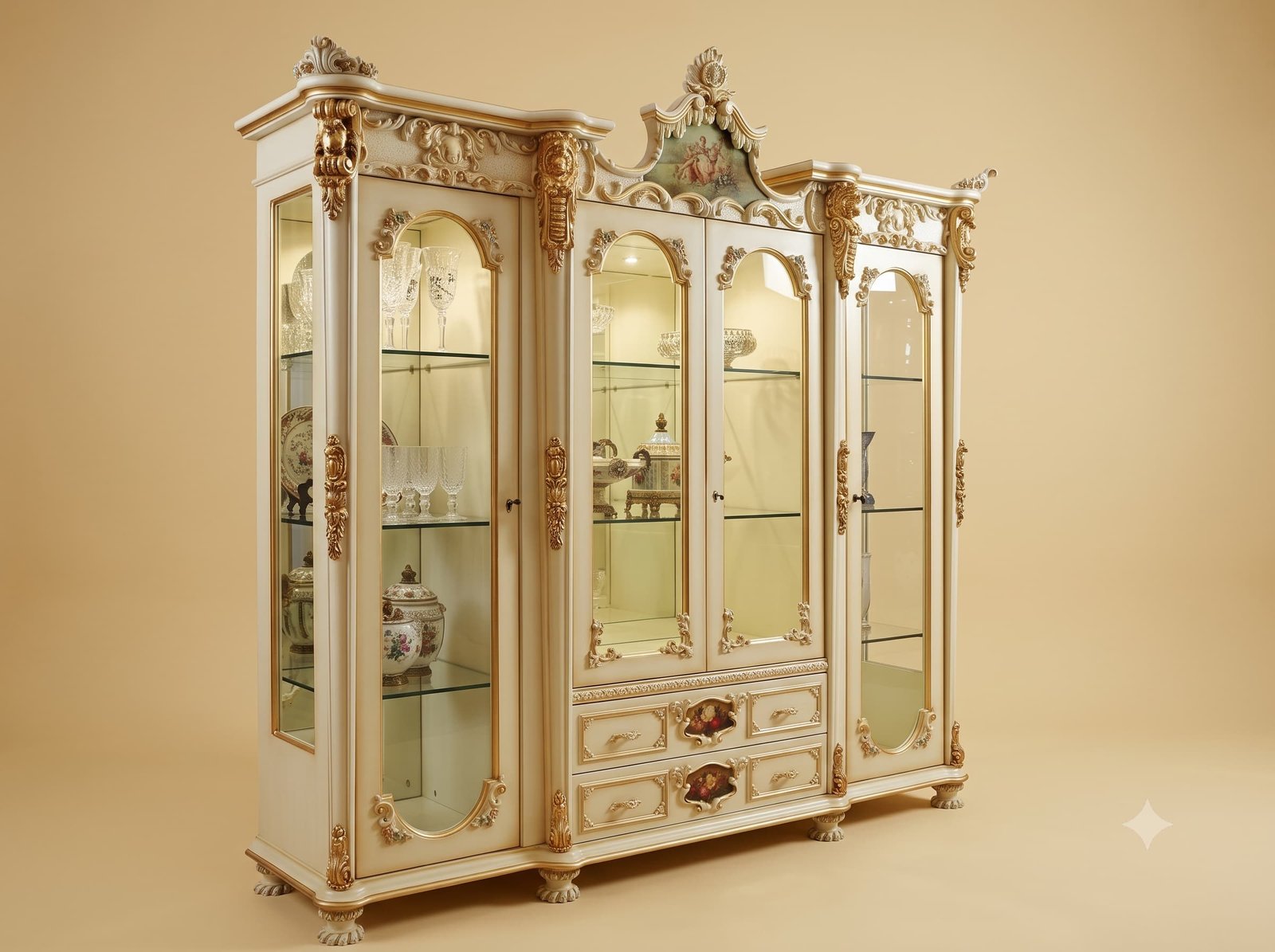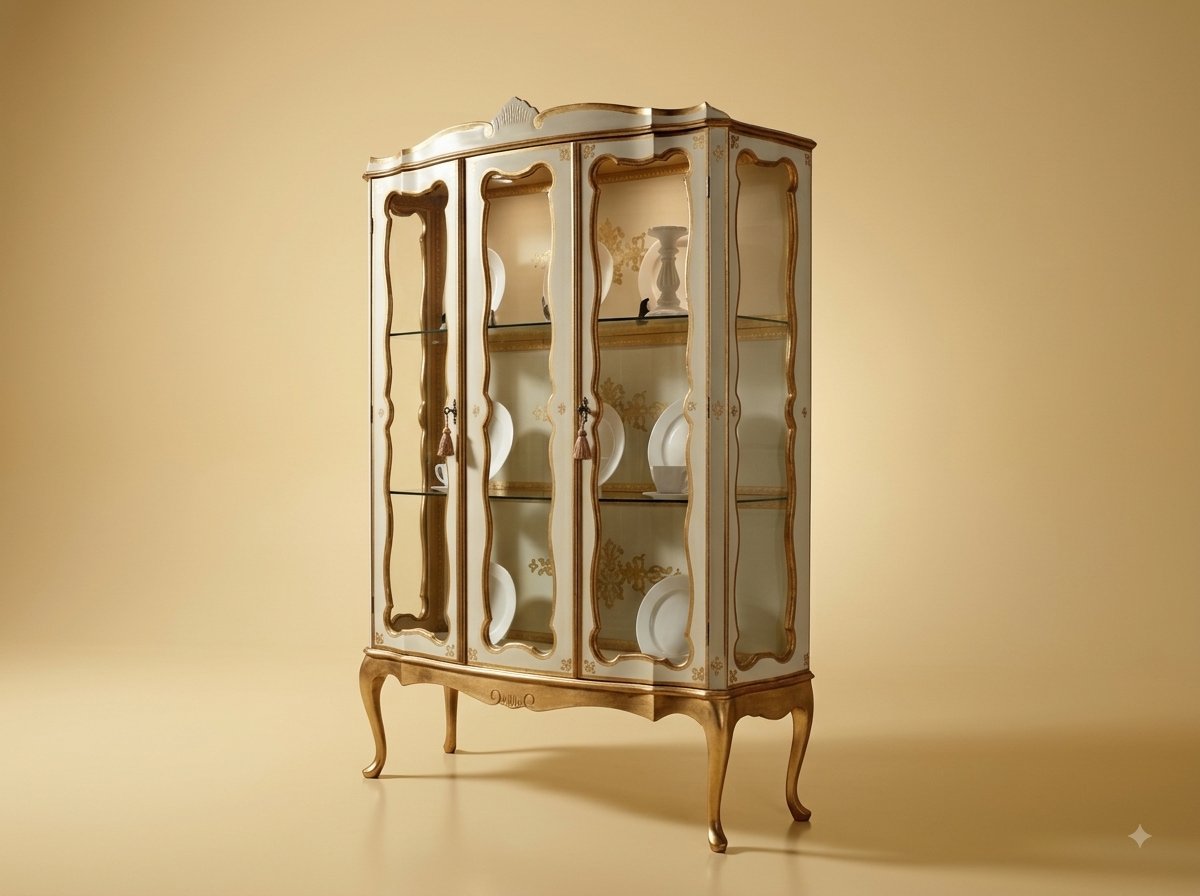
The floral pattern painted inside this cabinet is the only decoration on the piece our painter is asked to hold back on, and holding back is harder than going further.
Everything a painter is trained to do says make the pattern read: give it definition, strengthen the tone, let the colours carry. Do that on the inside back of a display cabinet and the result is a beautiful panel with your porcelain lost against it. The pattern and the objects fight, and the objects lose, because the pattern covers the whole surface and they do not.
So this back is painted deliberately quiet - the design kept close in tone to the cream ground, the colours held back, the edges softened rather than defined. It is meant to be noticed second, not first.
The way it is judged is simple and physical. Real plates and cups are stood on the shelves while the panel is being painted, and the painter steps back and looks at the cabinet as a whole. If the eye goes to the pattern before the porcelain, the tone comes down again.
What you should see, standing in the room, is a cabinet with something soft behind the shelves - and only later realise it is painted at all.
 Ask Price On WhatsApp