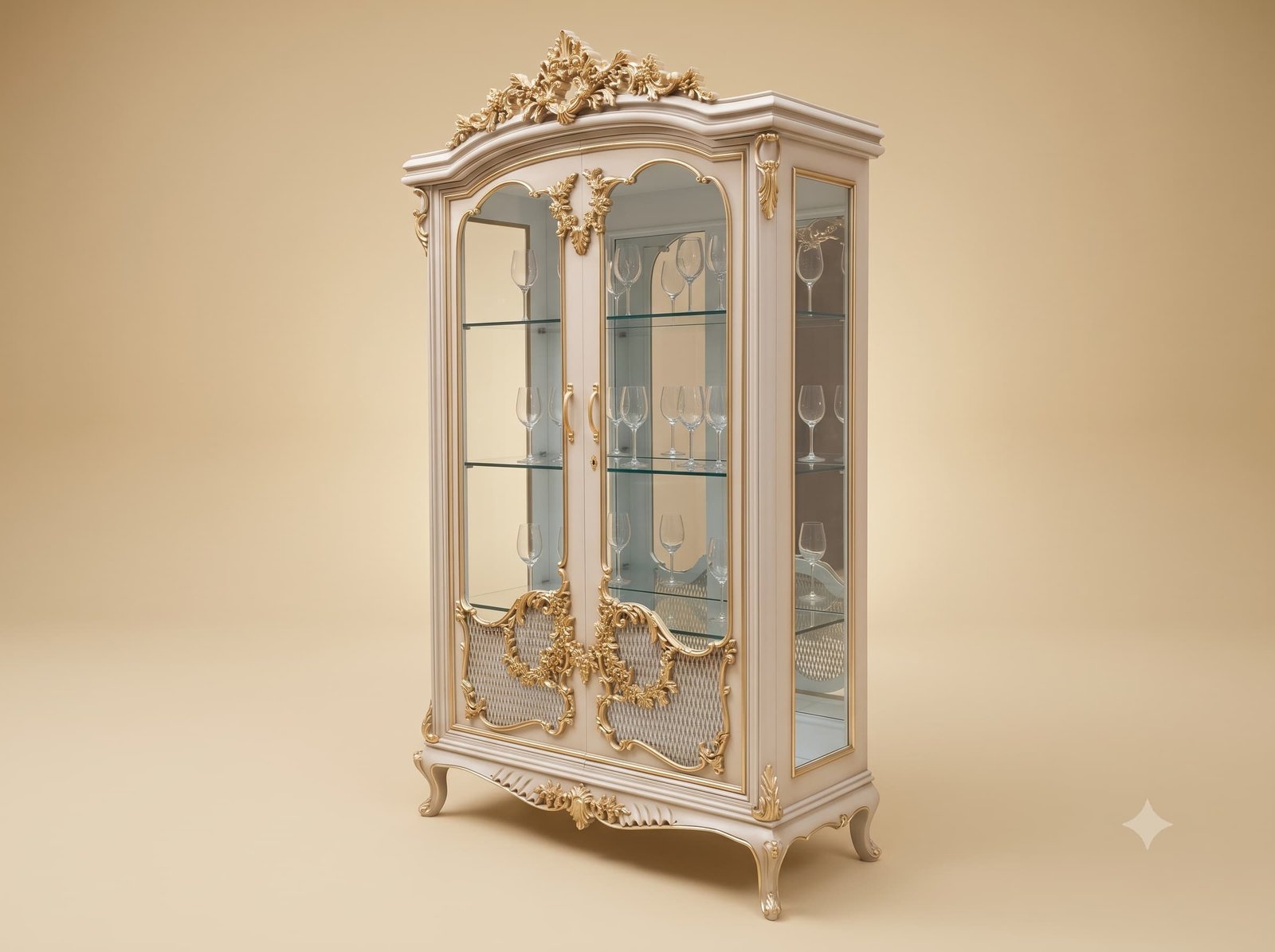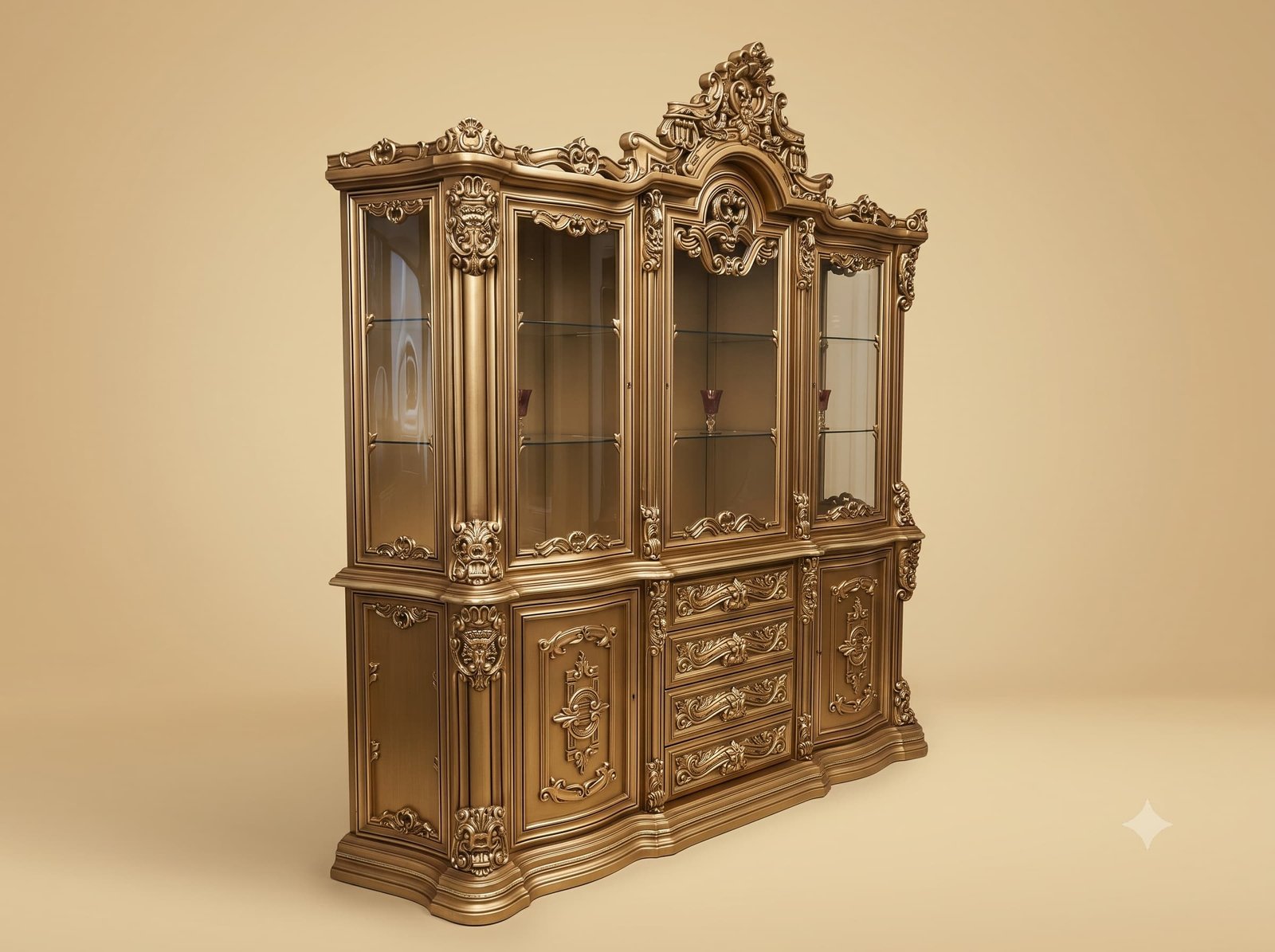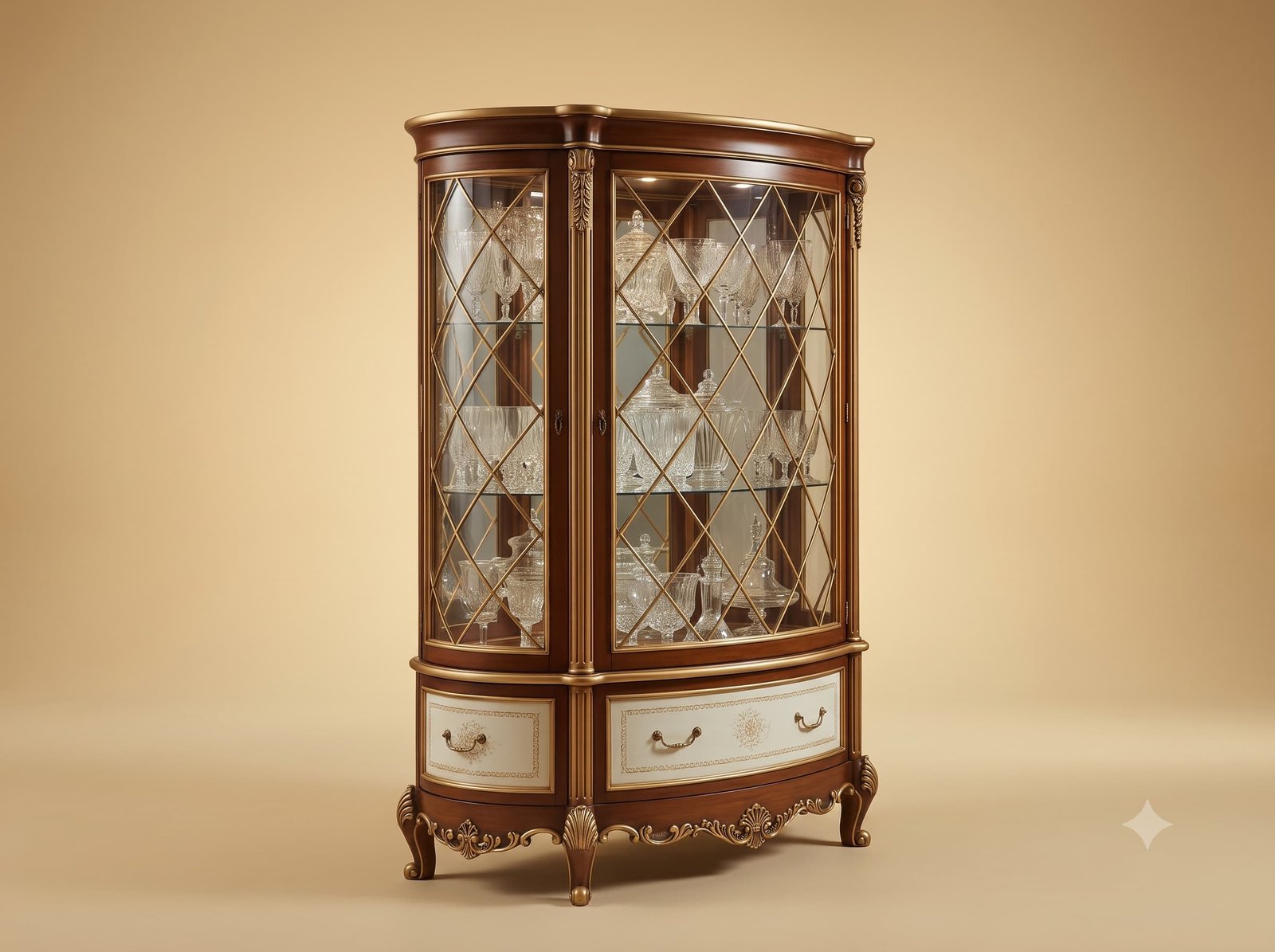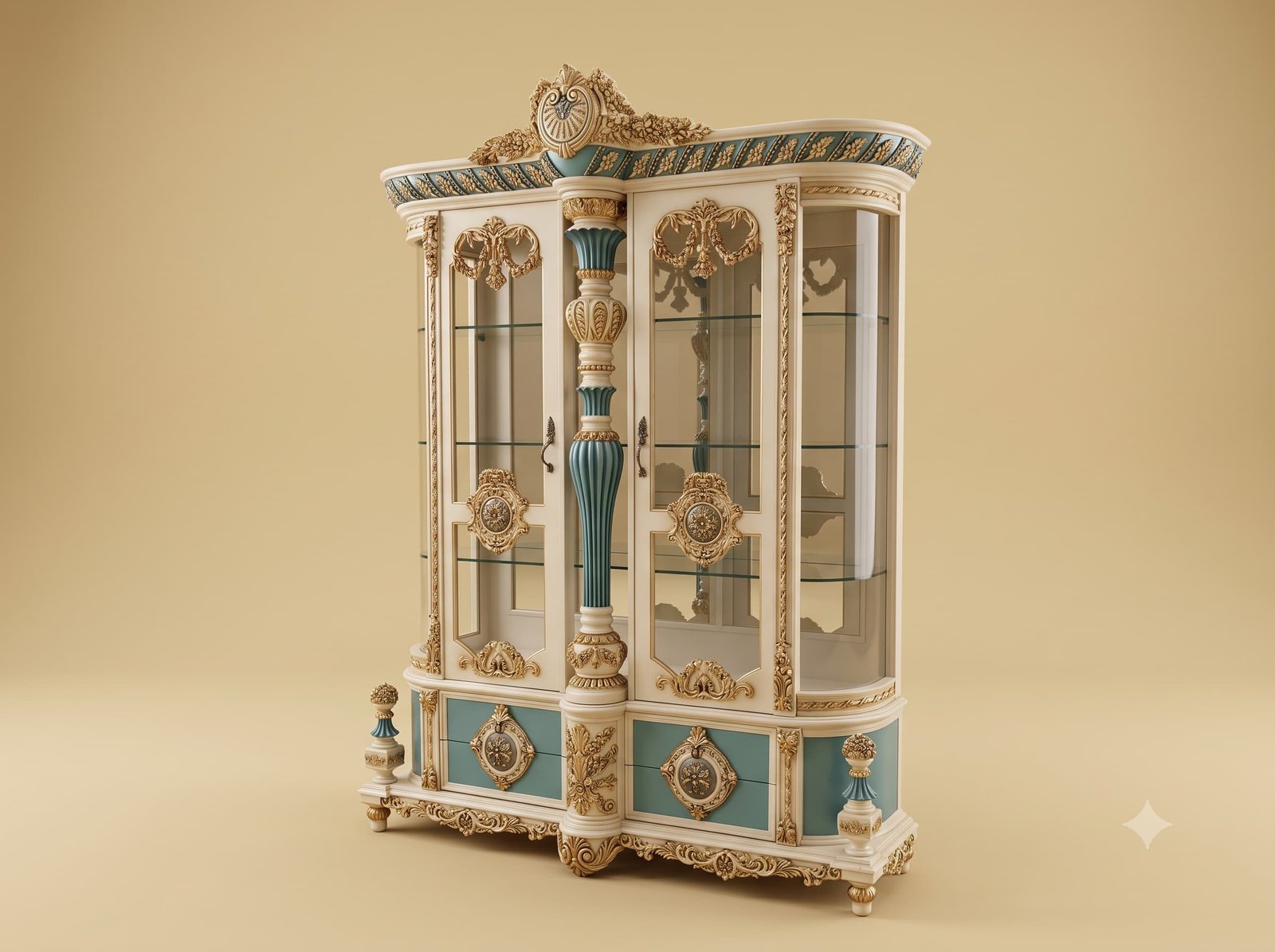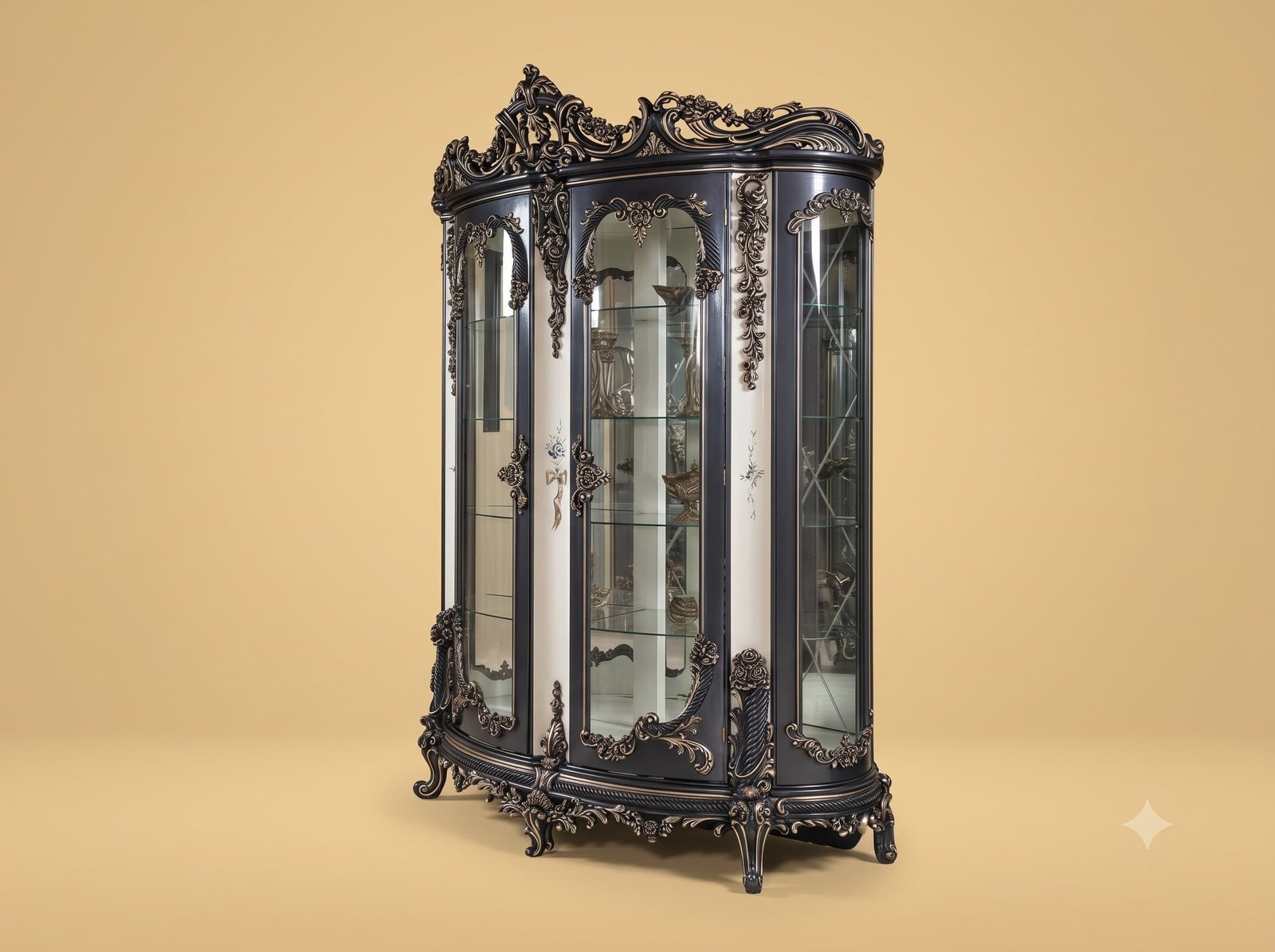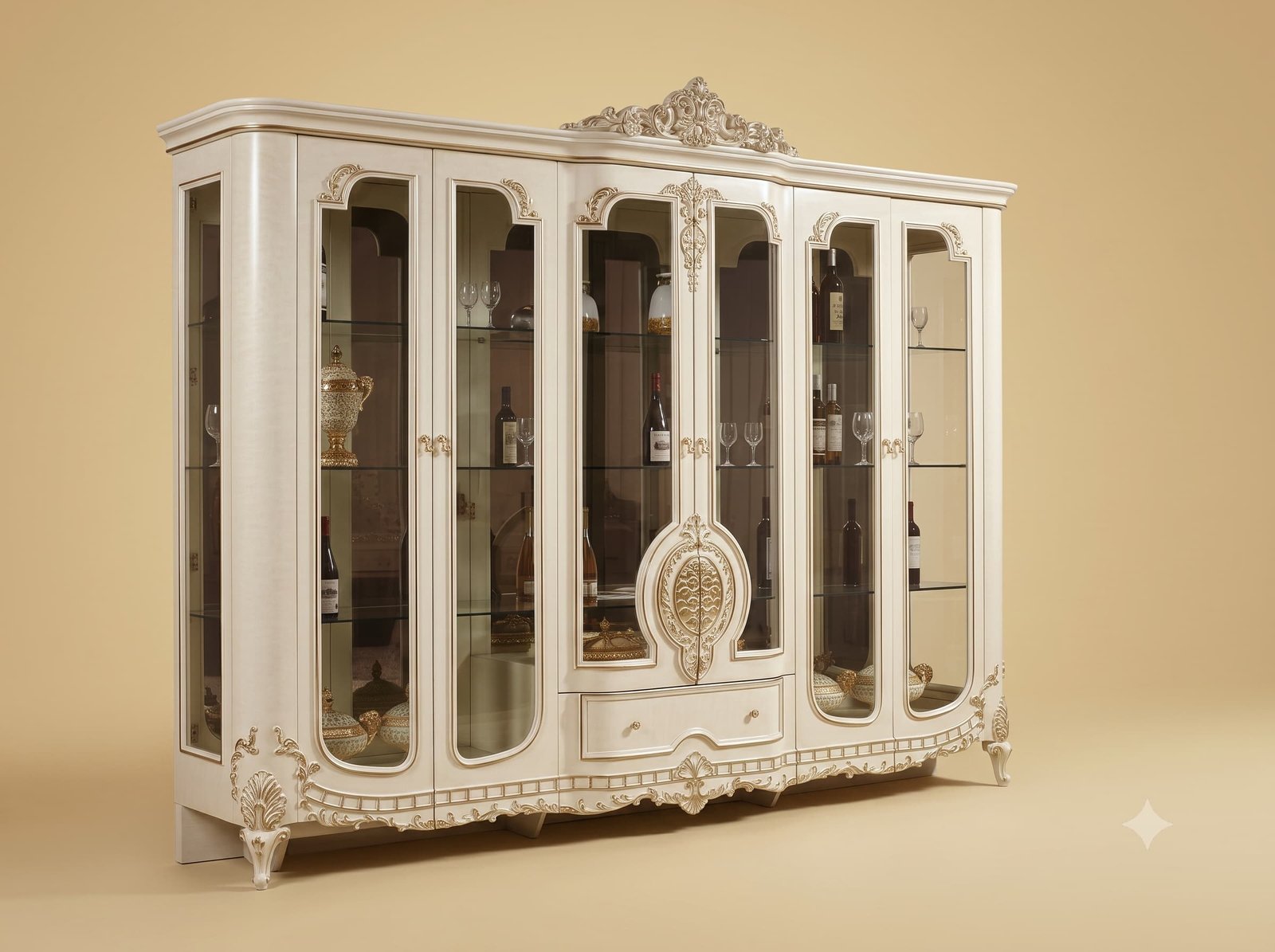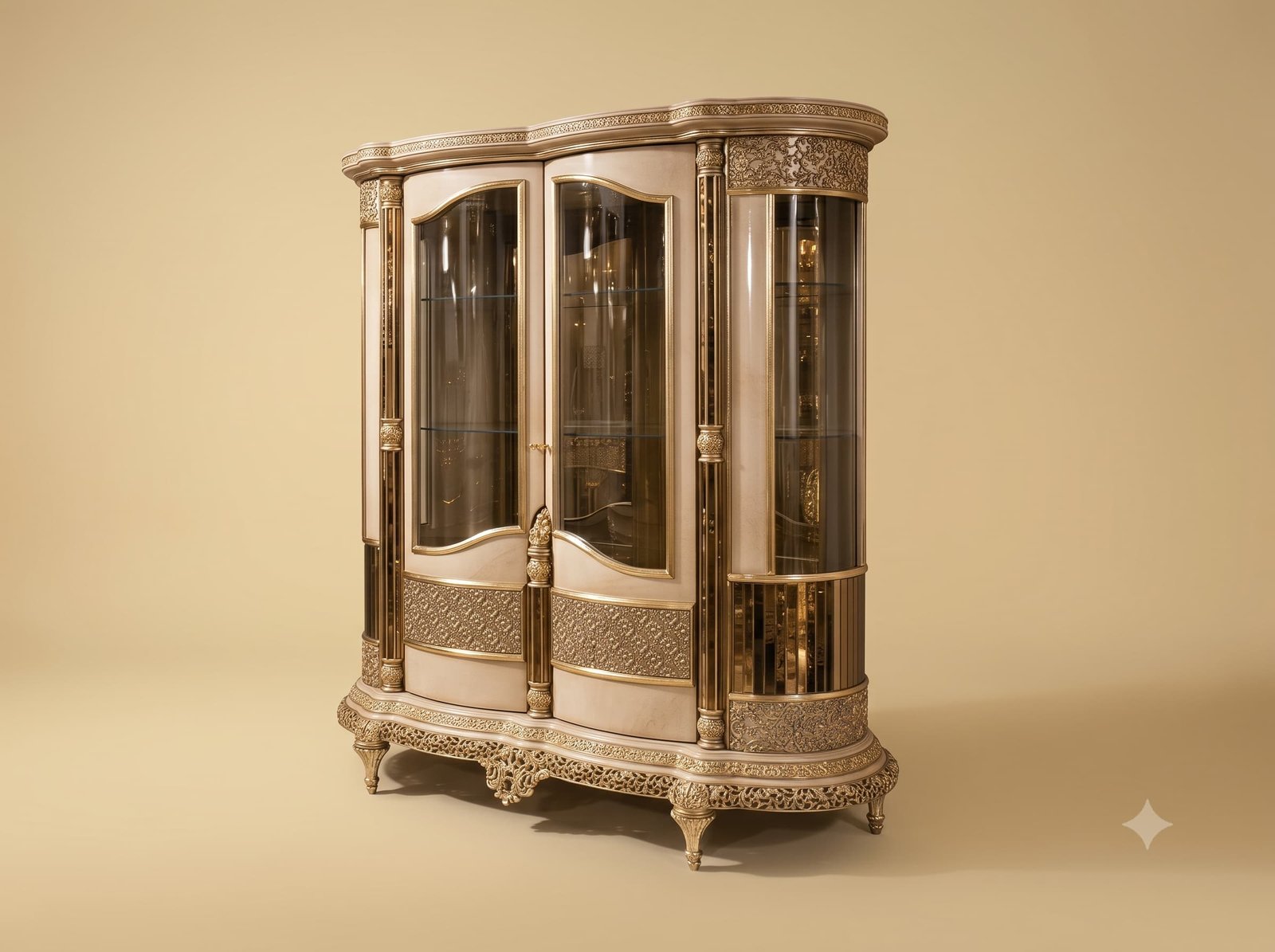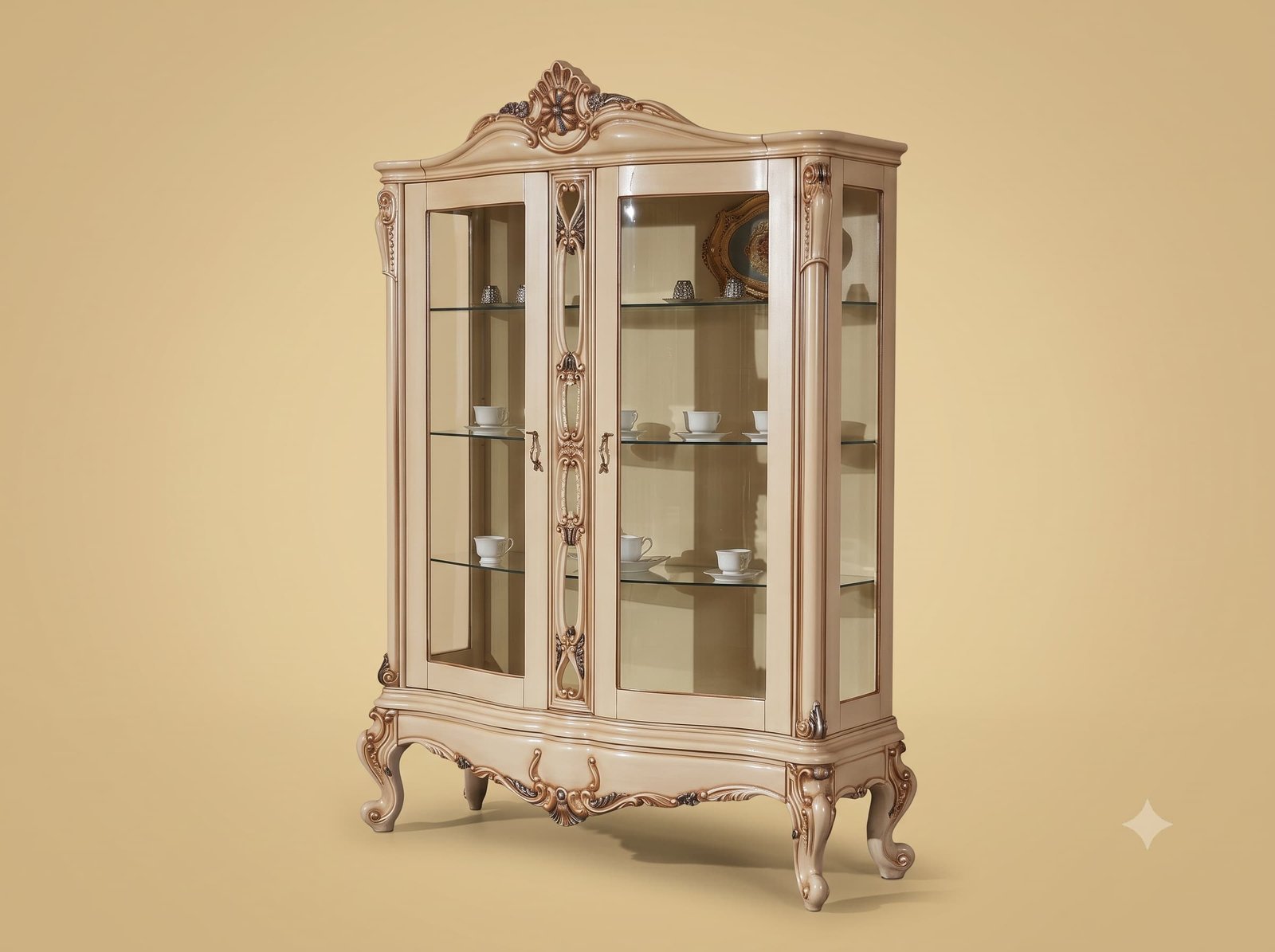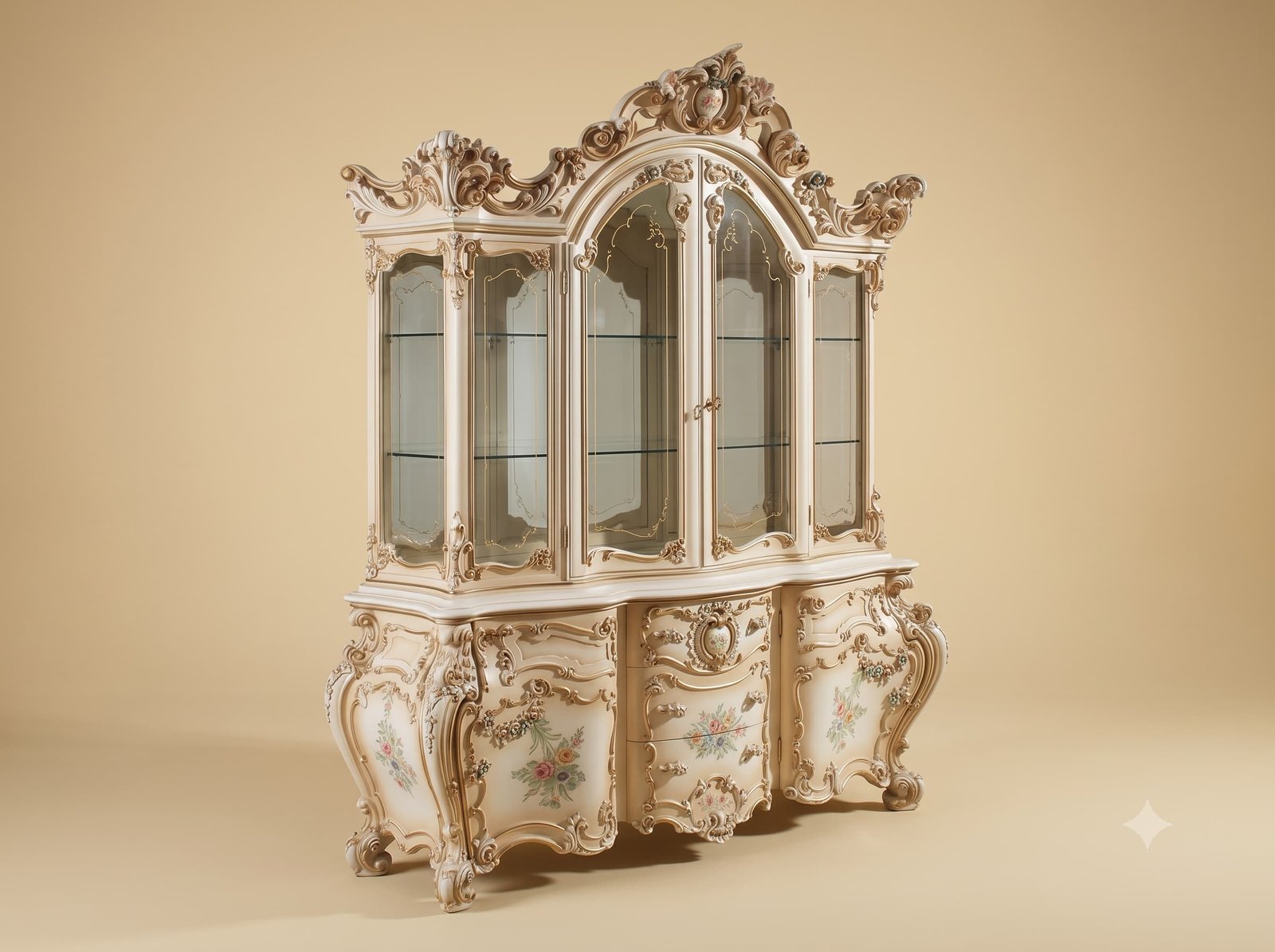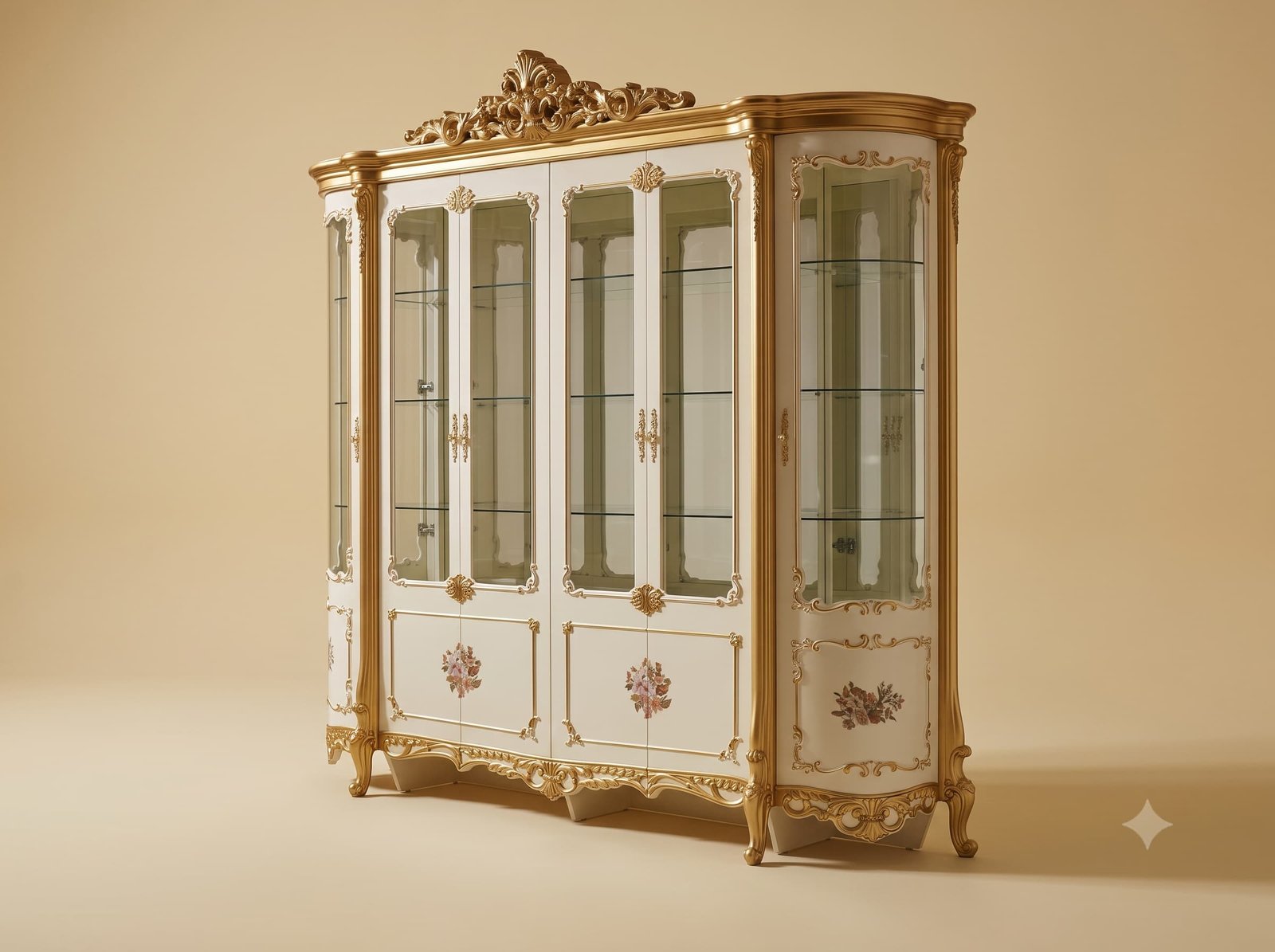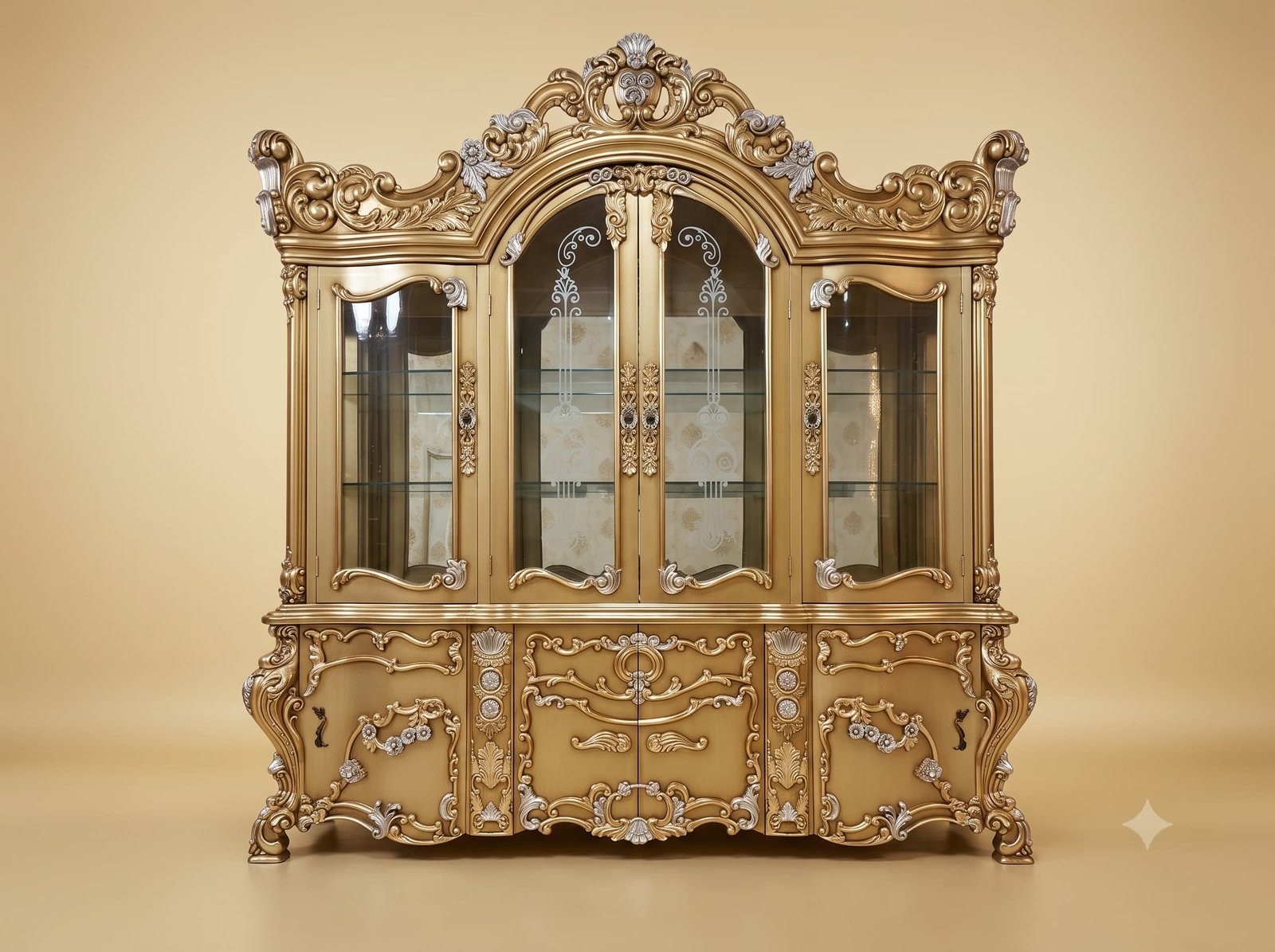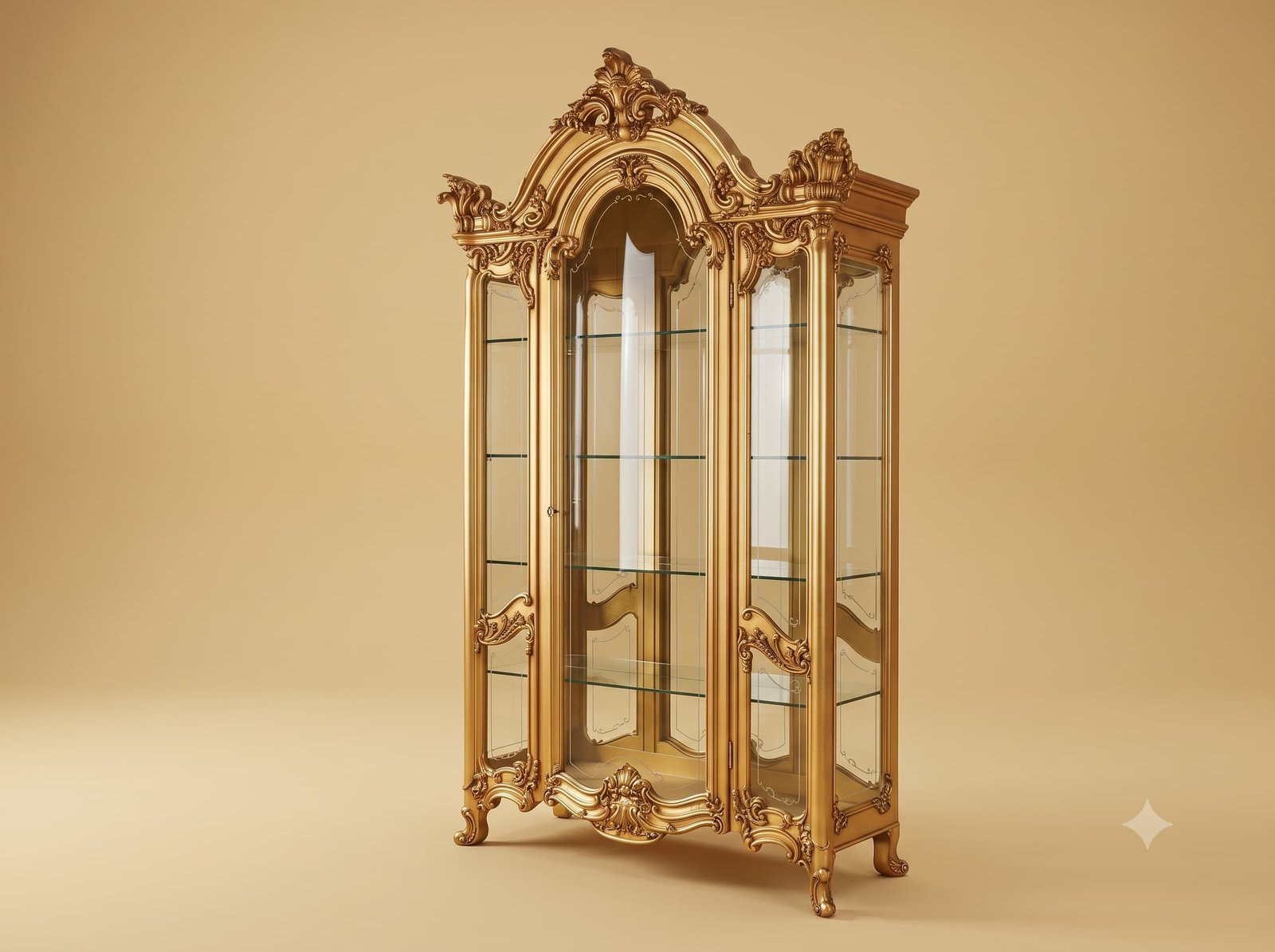
On a cabinet gilded all over, the gilder does something a painter never has to: he varies how the gold is finished from one part to the next, so the form can still be read.
Gold laid uniformly across an entire piece flattens it. Every surface returns light in the same way, and the eye loses the edges - a carved scroll and the flat panel beside it become one shining mass. There is no colour available to separate them, because everything is the same colour.
So the finishing is varied instead. Raised faces - the crest of a scroll, the top of a moulding, the arch head where the eye first lands - are burnished down to a hard, near-mirror brightness. The grounds behind them, the hollows of the carving and the recessed panels are left matt, so they hold light softly rather than throwing it back.
The result is a single colour that still has depth, because two different surfaces are doing two different jobs. Bring a lamp near it and the burnished lines pick out the shape of the cabinet while the matt areas recede.
All of that is decided at the bench, piece by piece, before anything is assembled.
 Ask Price On WhatsApp