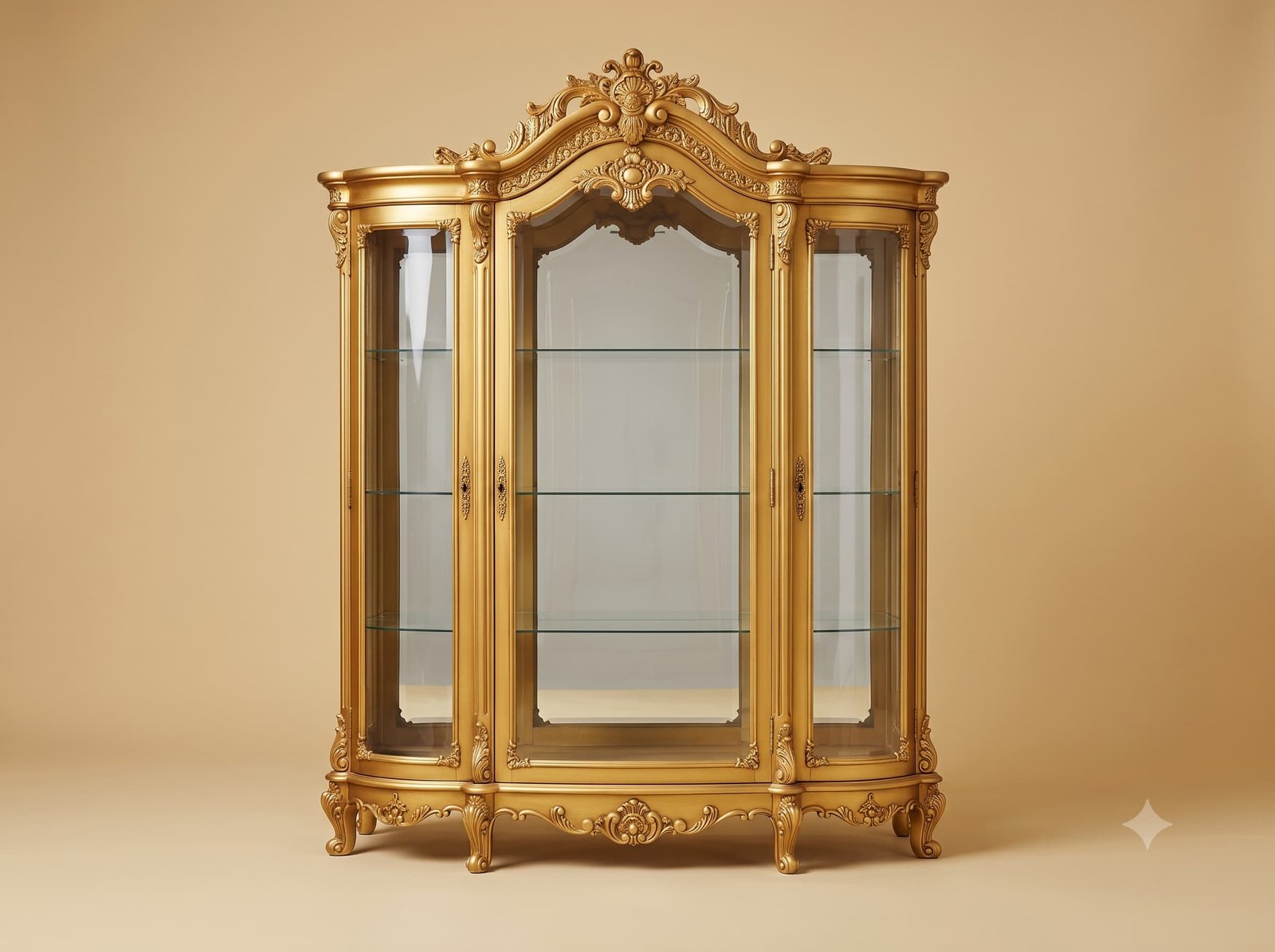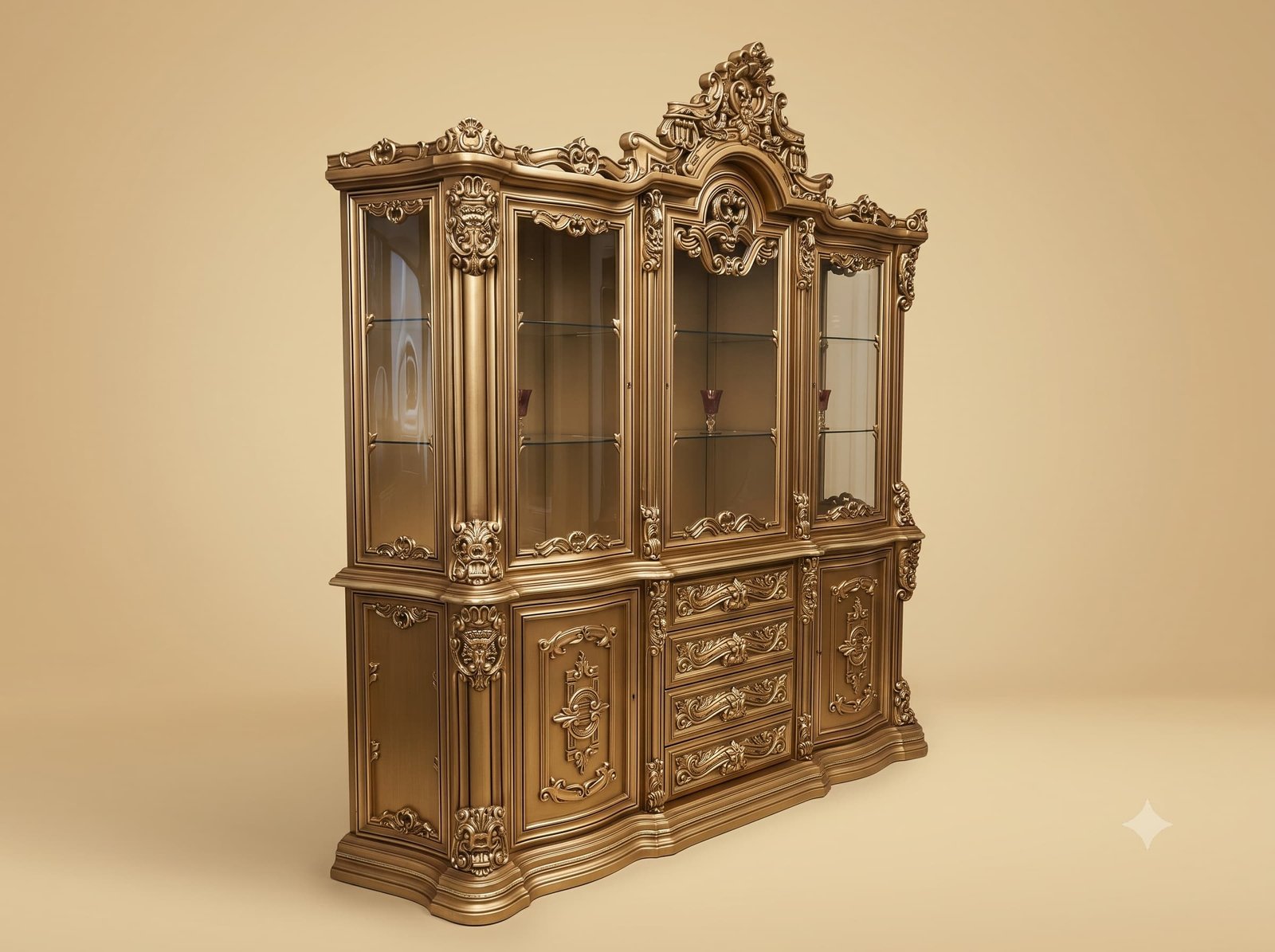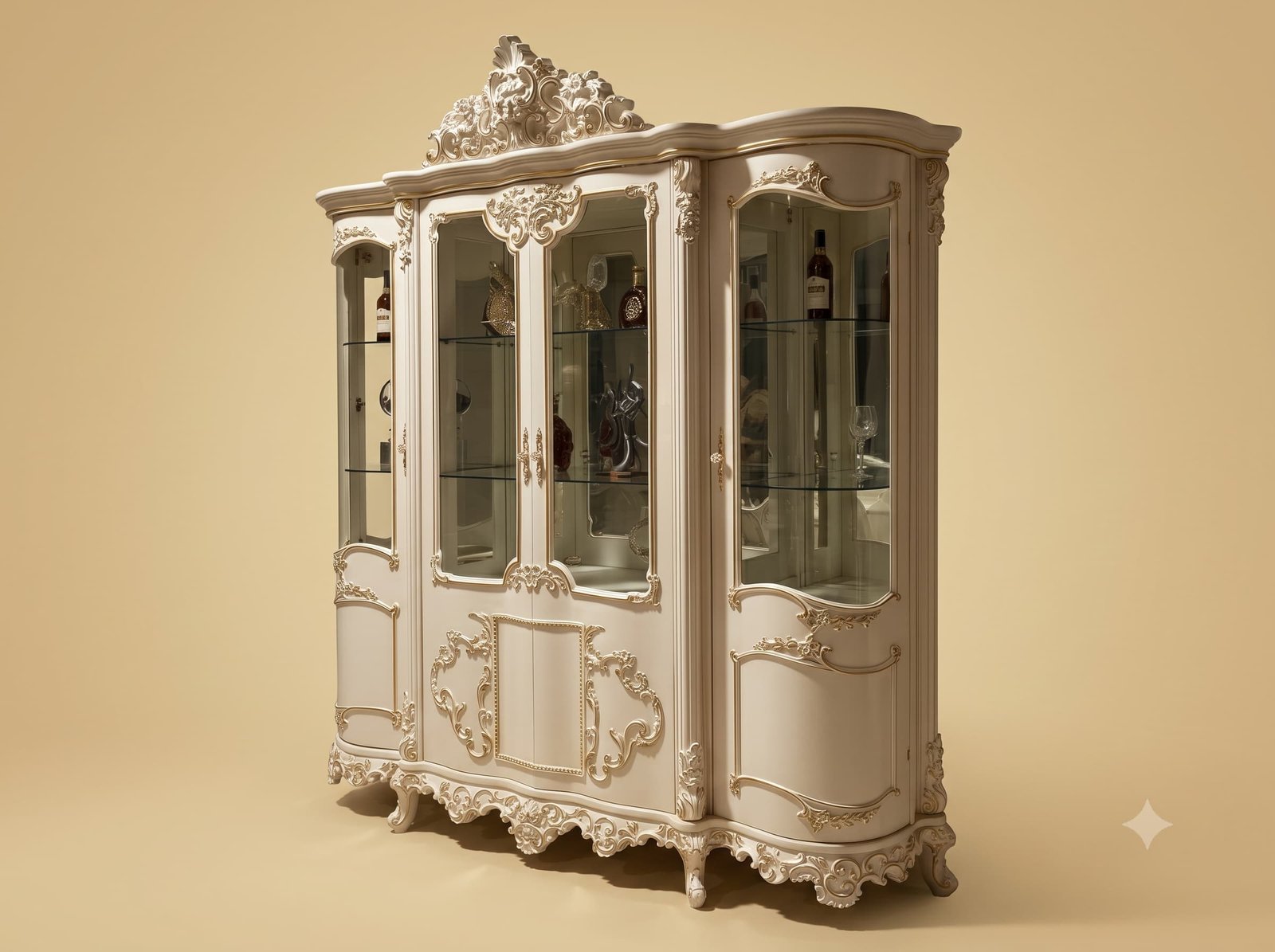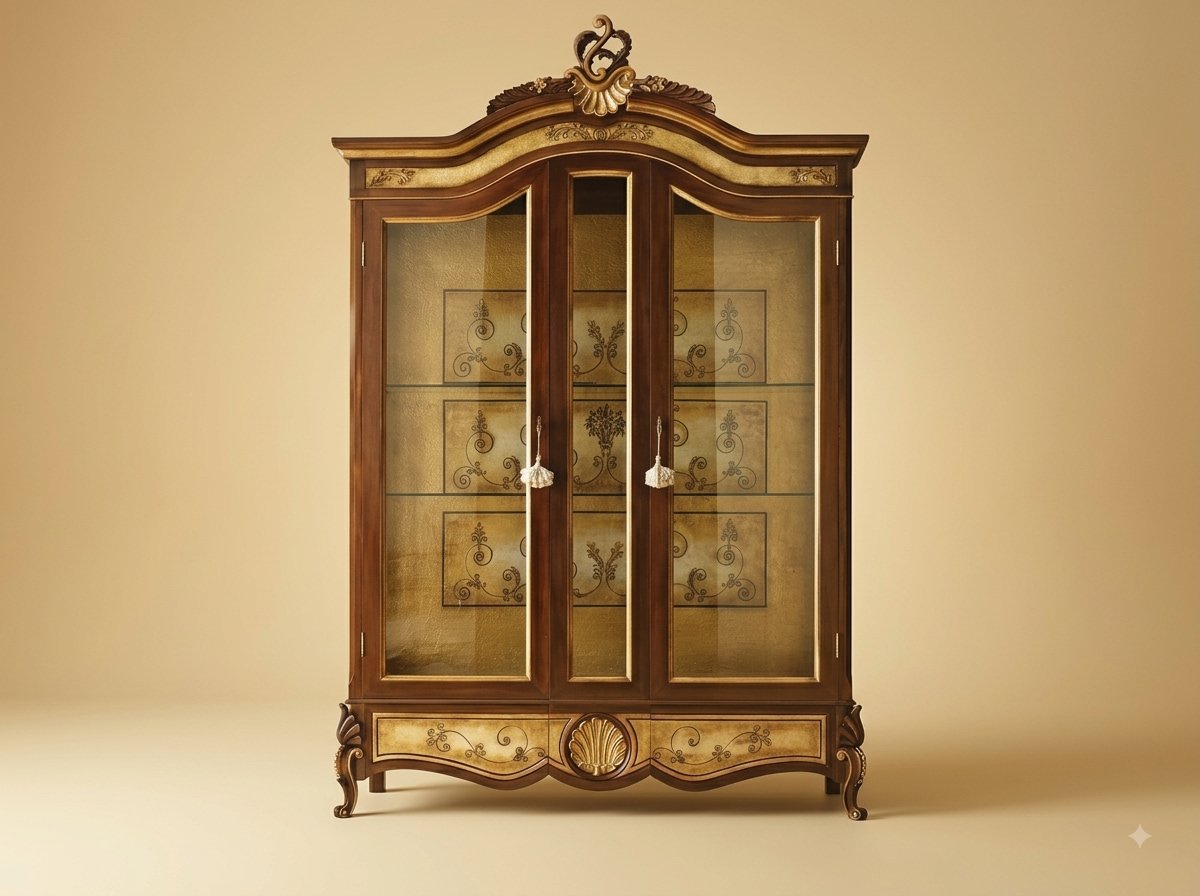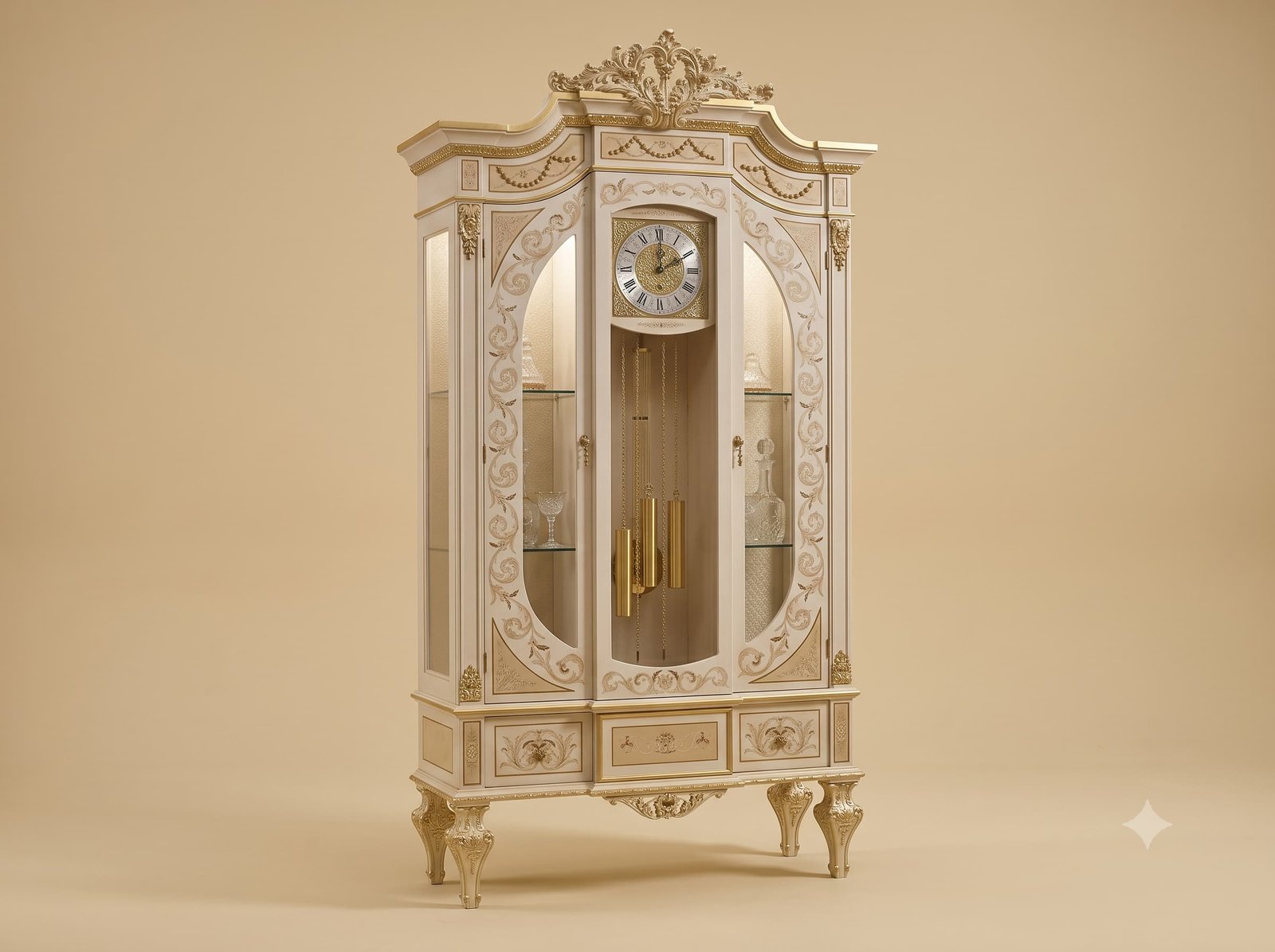
Putting a clock inside furniture creates a problem that pure display cabinets never have: the clock has to be independent of the cabinet.
A pendulum keeps time only while it swings in a true vertical plane, and it keeps beat only while its mount stays still. If the movement were fixed to a shelf or to the back of a door, then every time someone opened a side bay to move a glass, the pendulum would feel it.
So on this cabinet the clock is not part of the display structure at all. The movement hangs on its own vertical backboard, fixed directly to the carcass at two points top and bottom, and the display shelves either side are carried on the bay sides with no connection to that board. The centre bay is effectively a separate box that happens to share an outer case.
The last step happens in your room, not in the workshop. The cabinet is levelled on its legs first, then the pendulum is hung and set into beat against that level. A clock trued in the workshop and stood on an uneven floor would not hold.
 Ask Price On WhatsApp