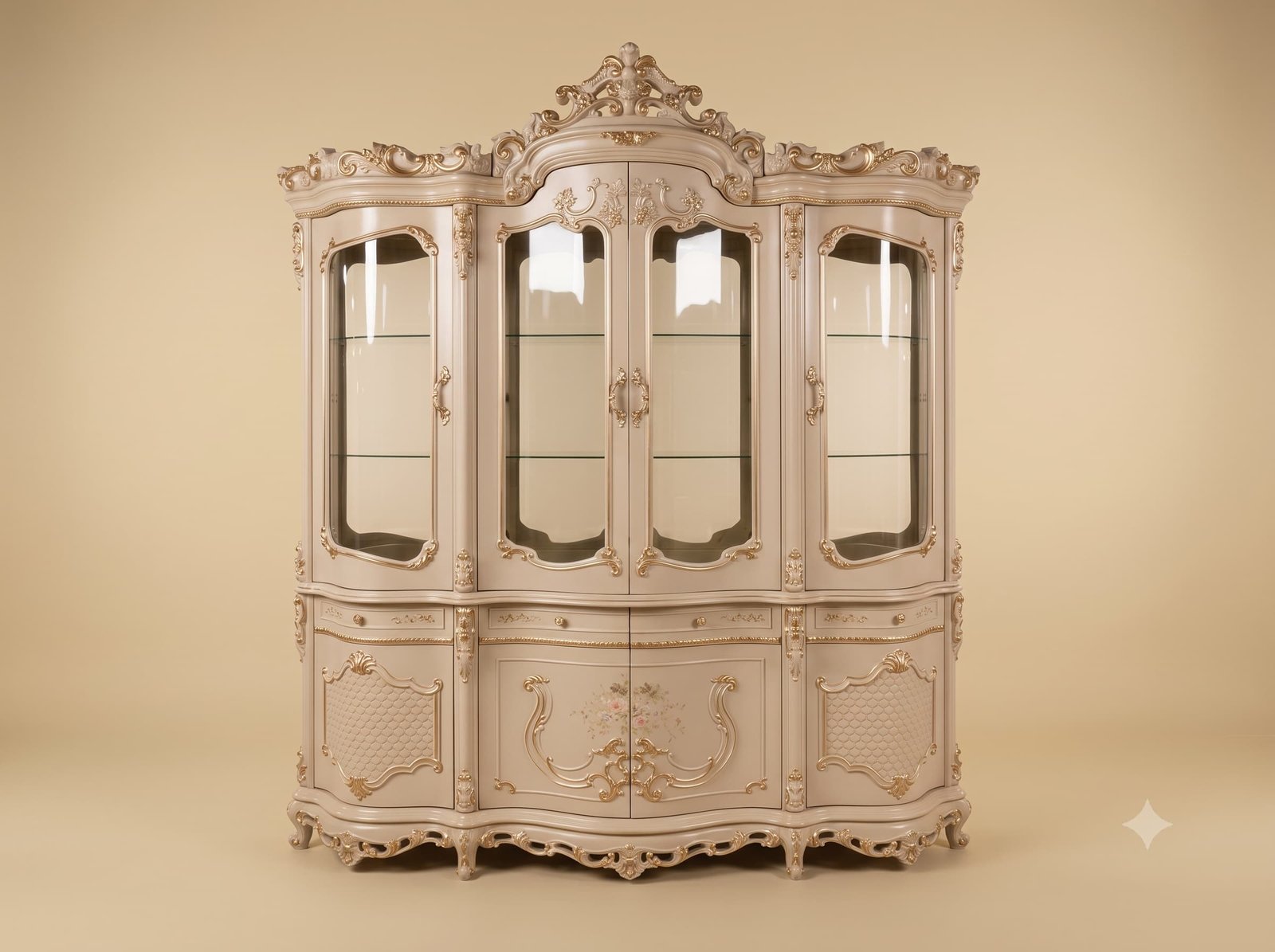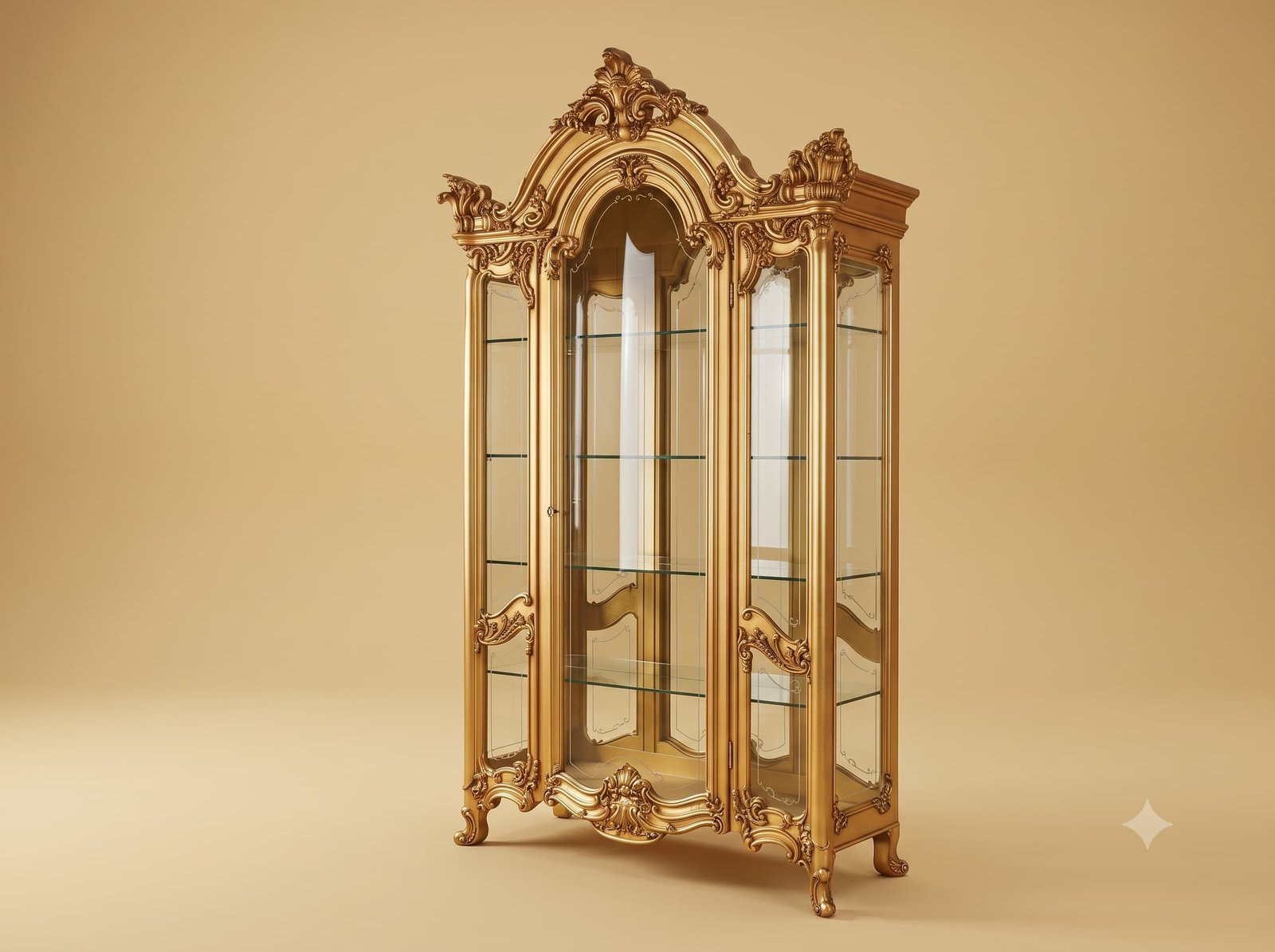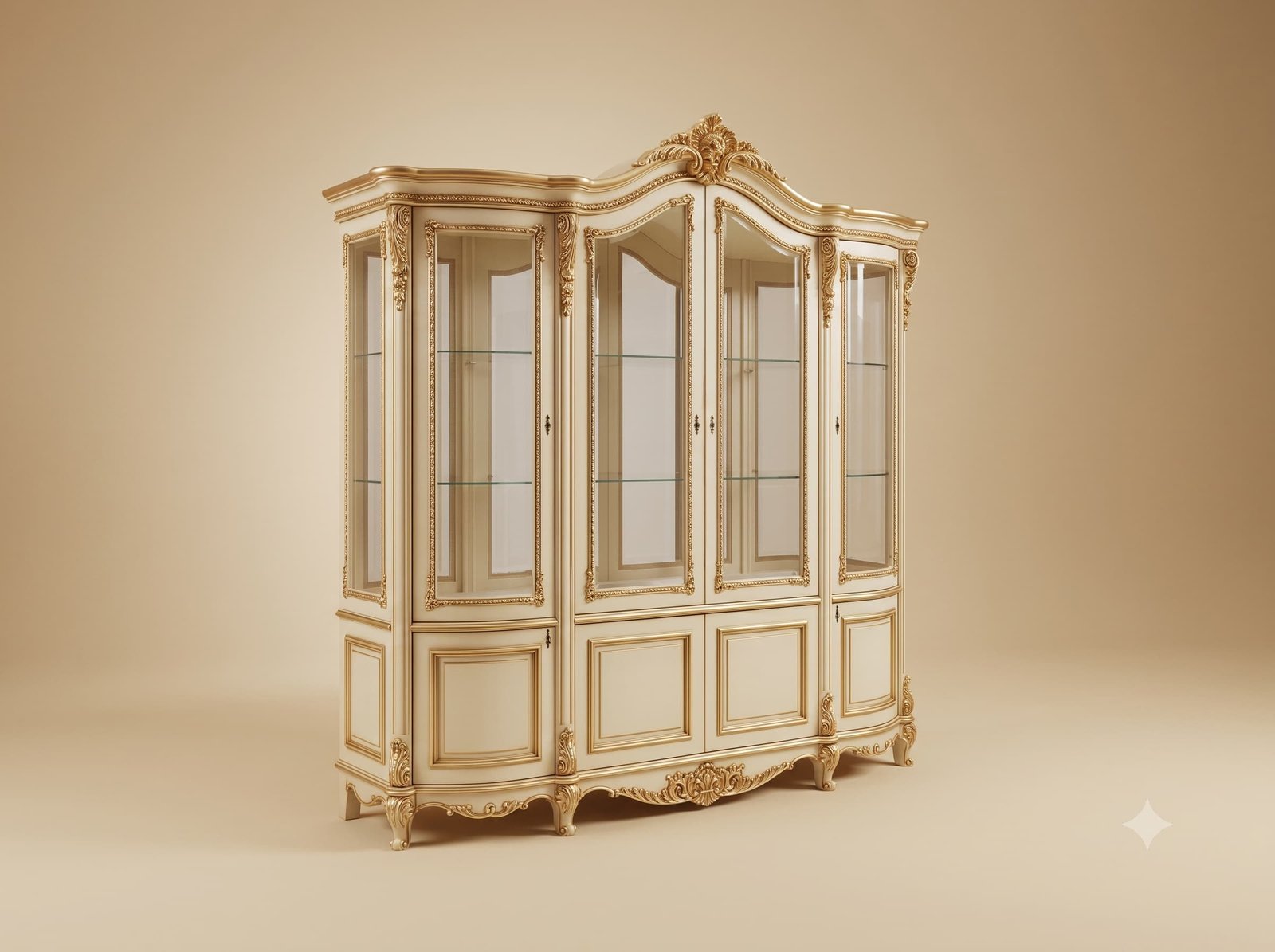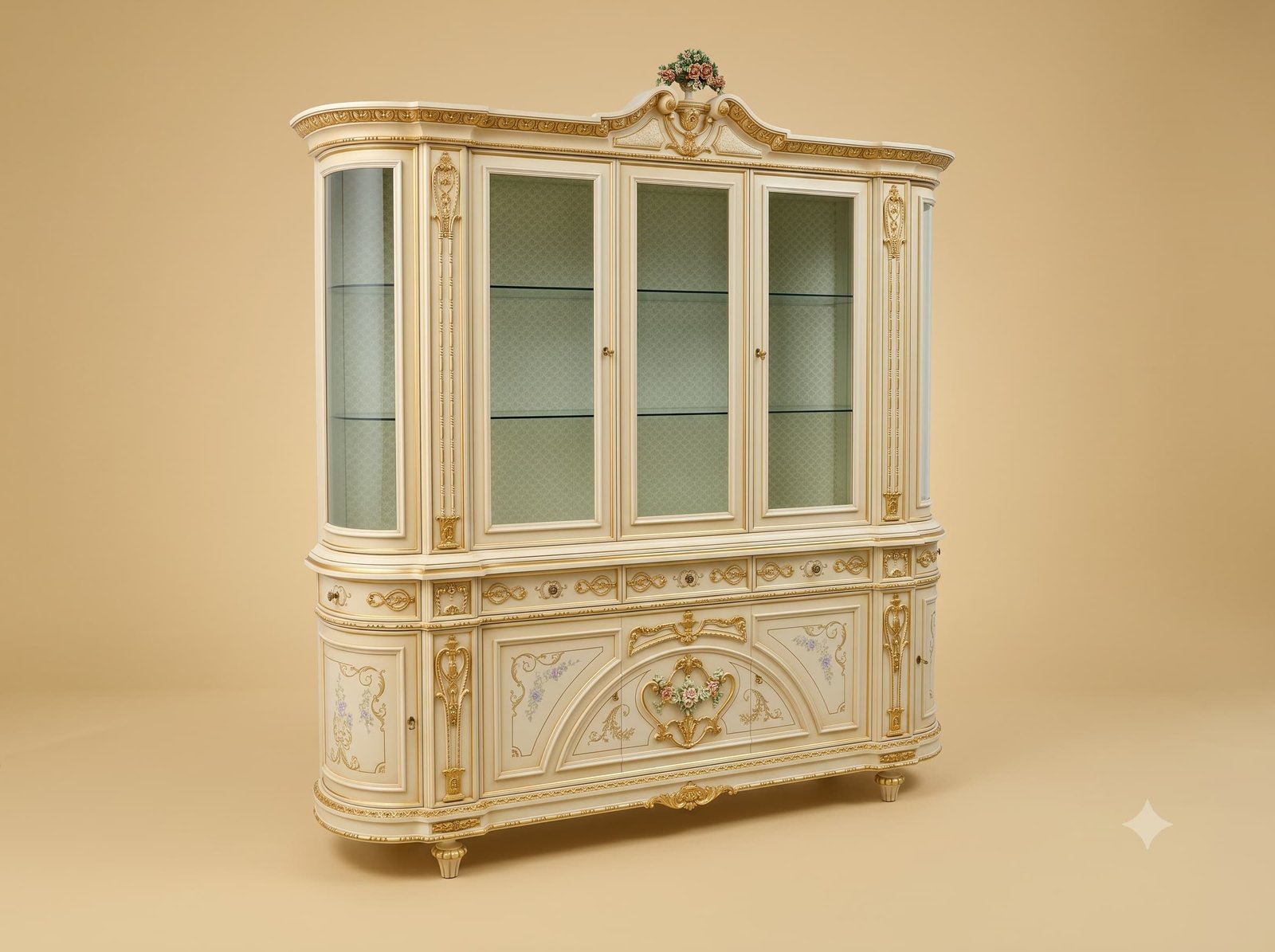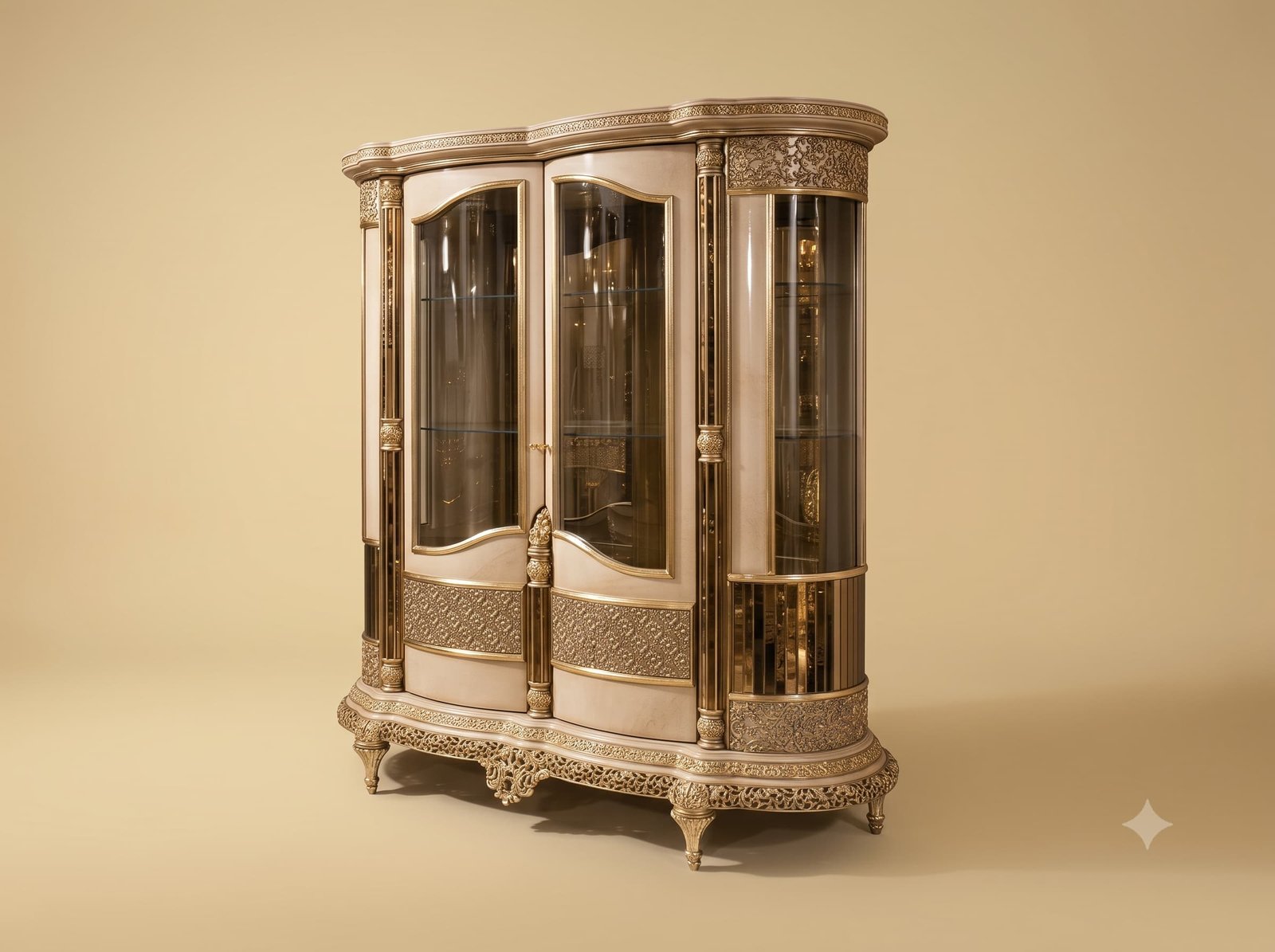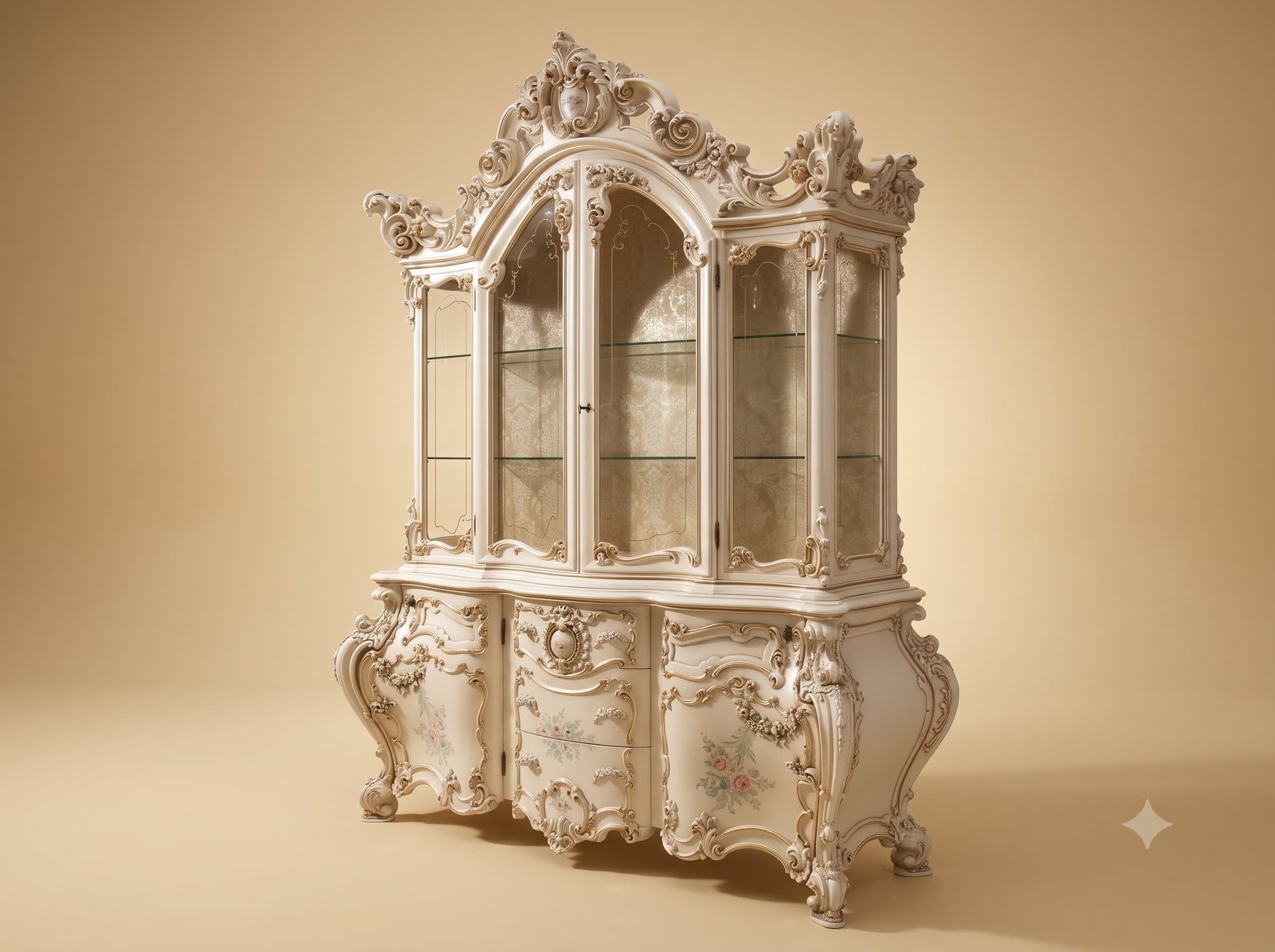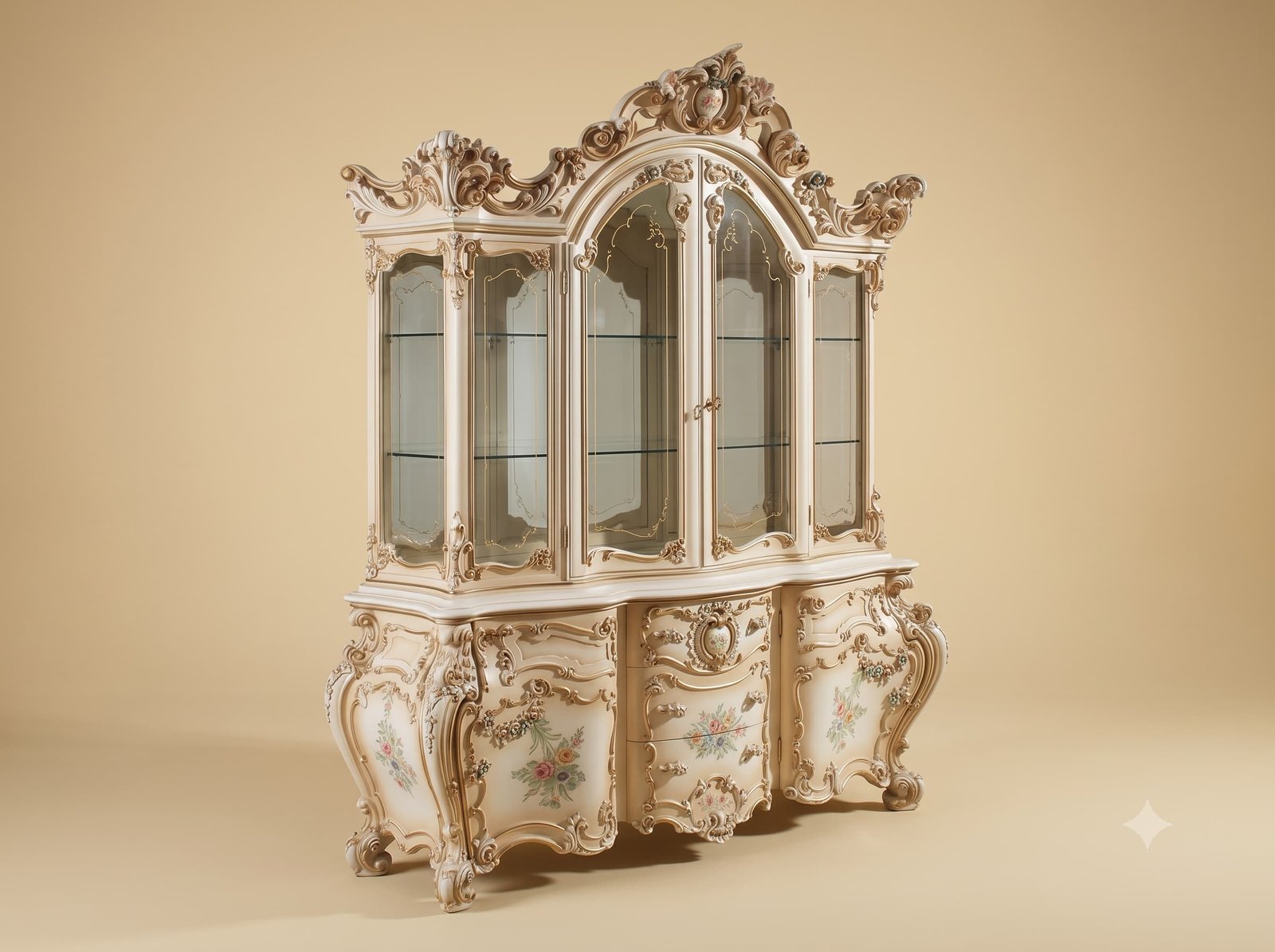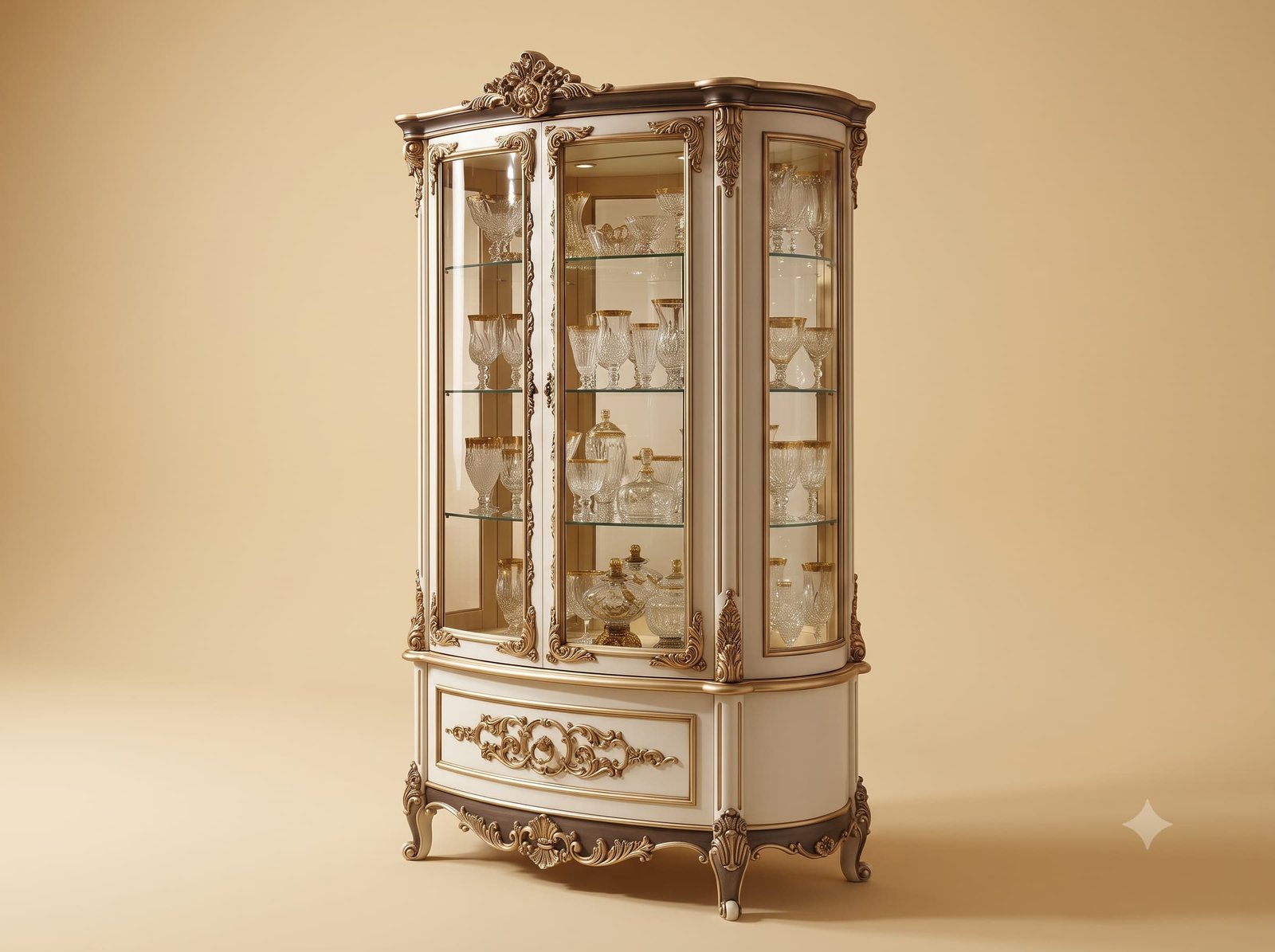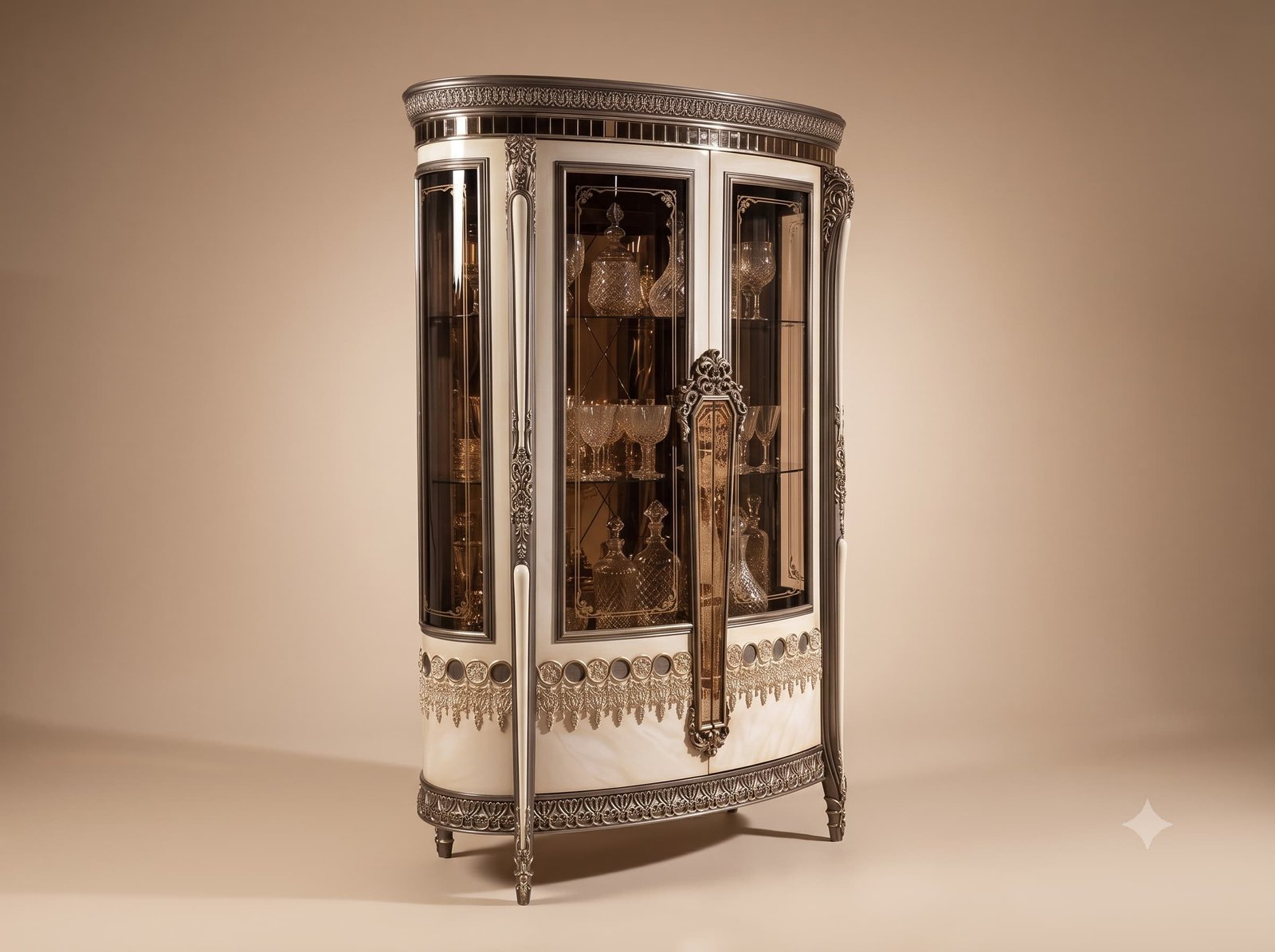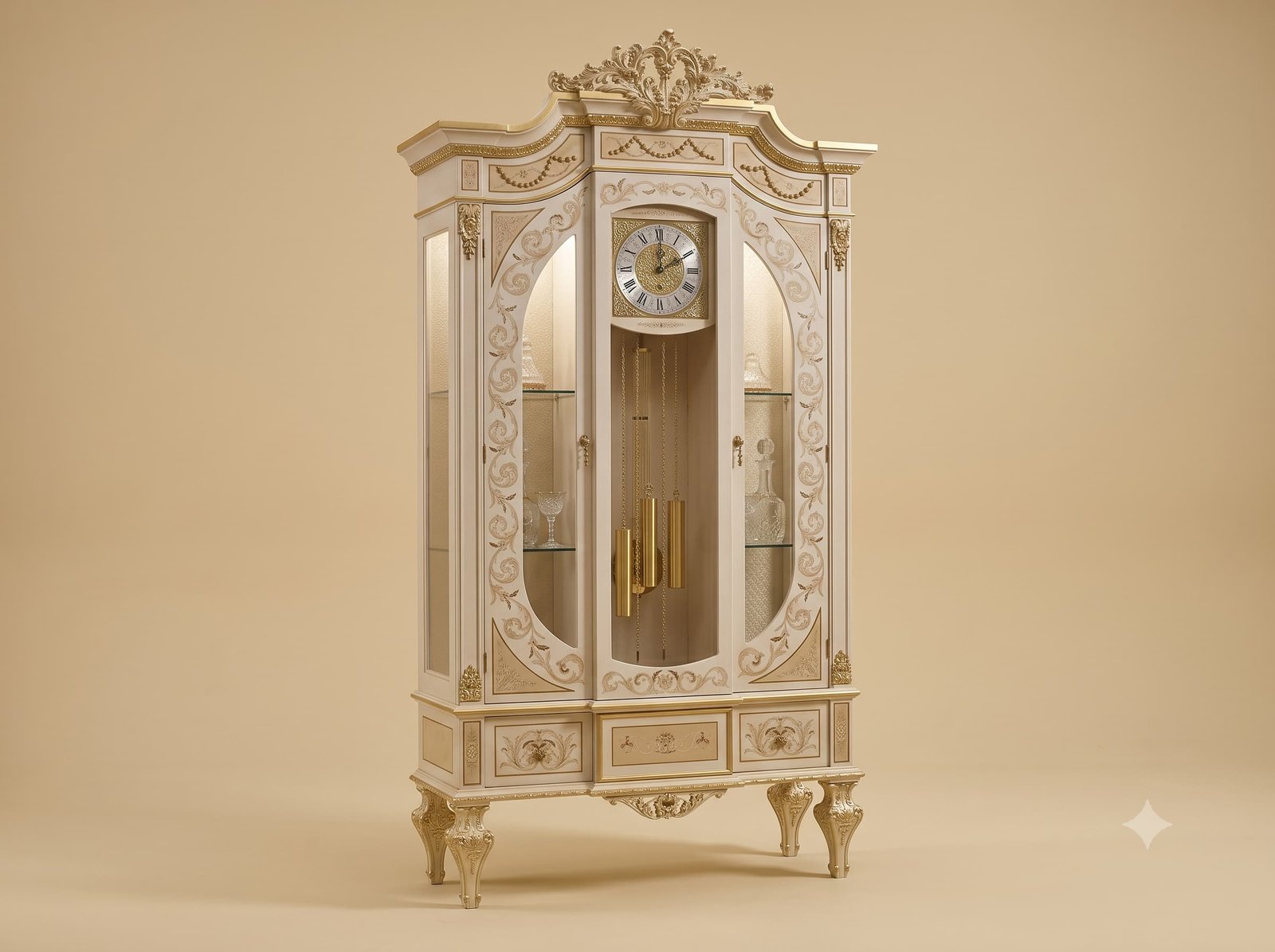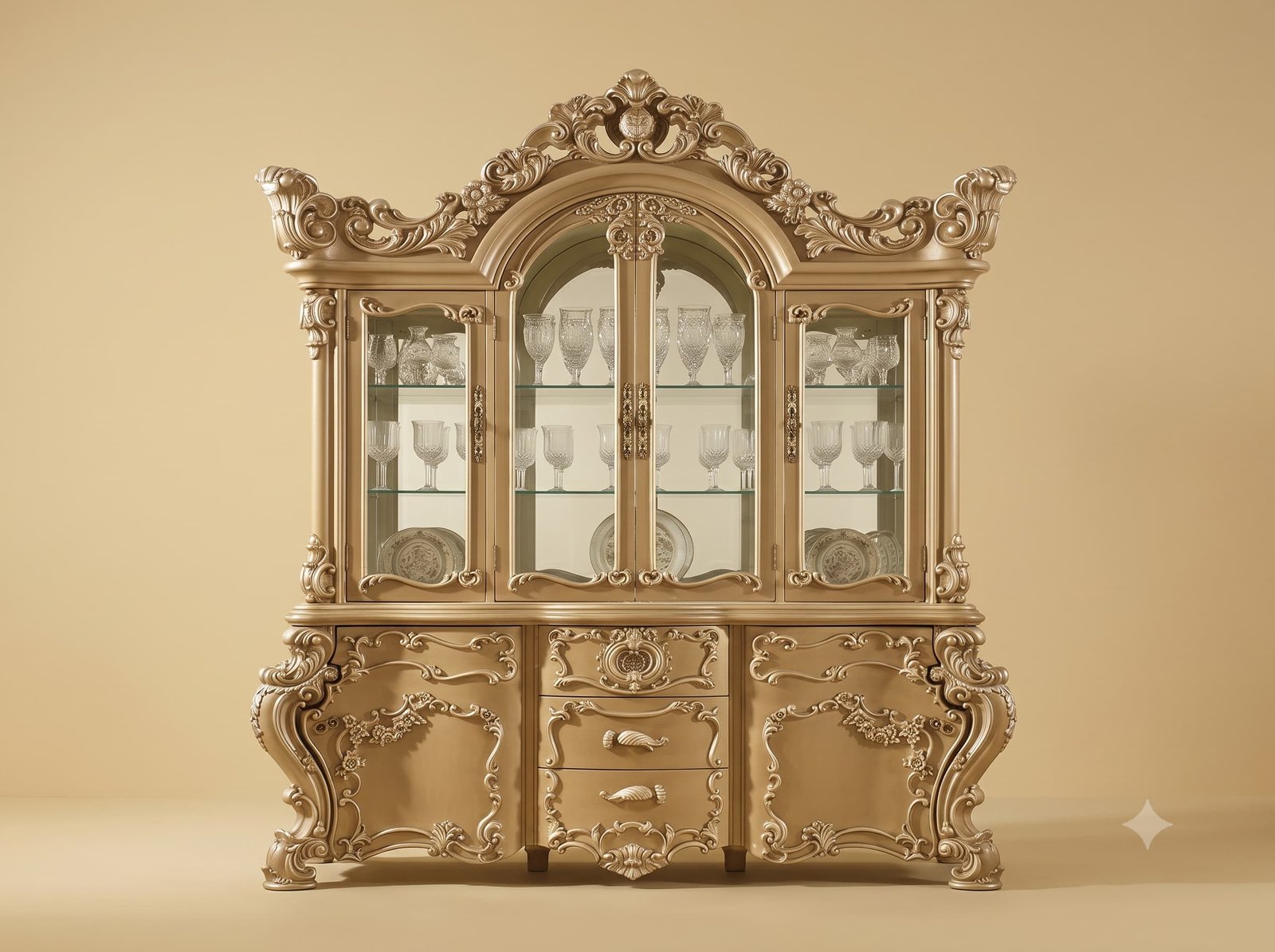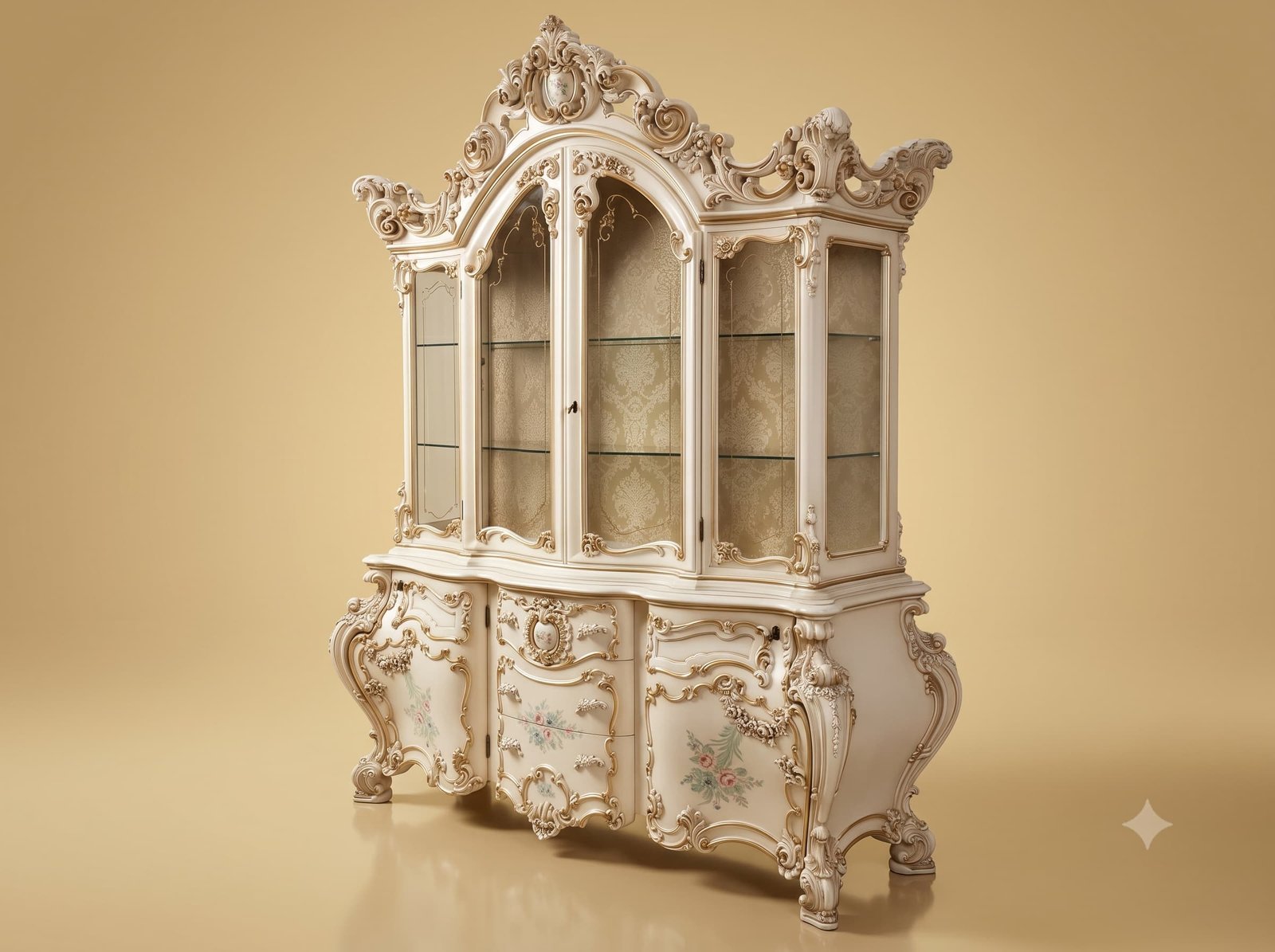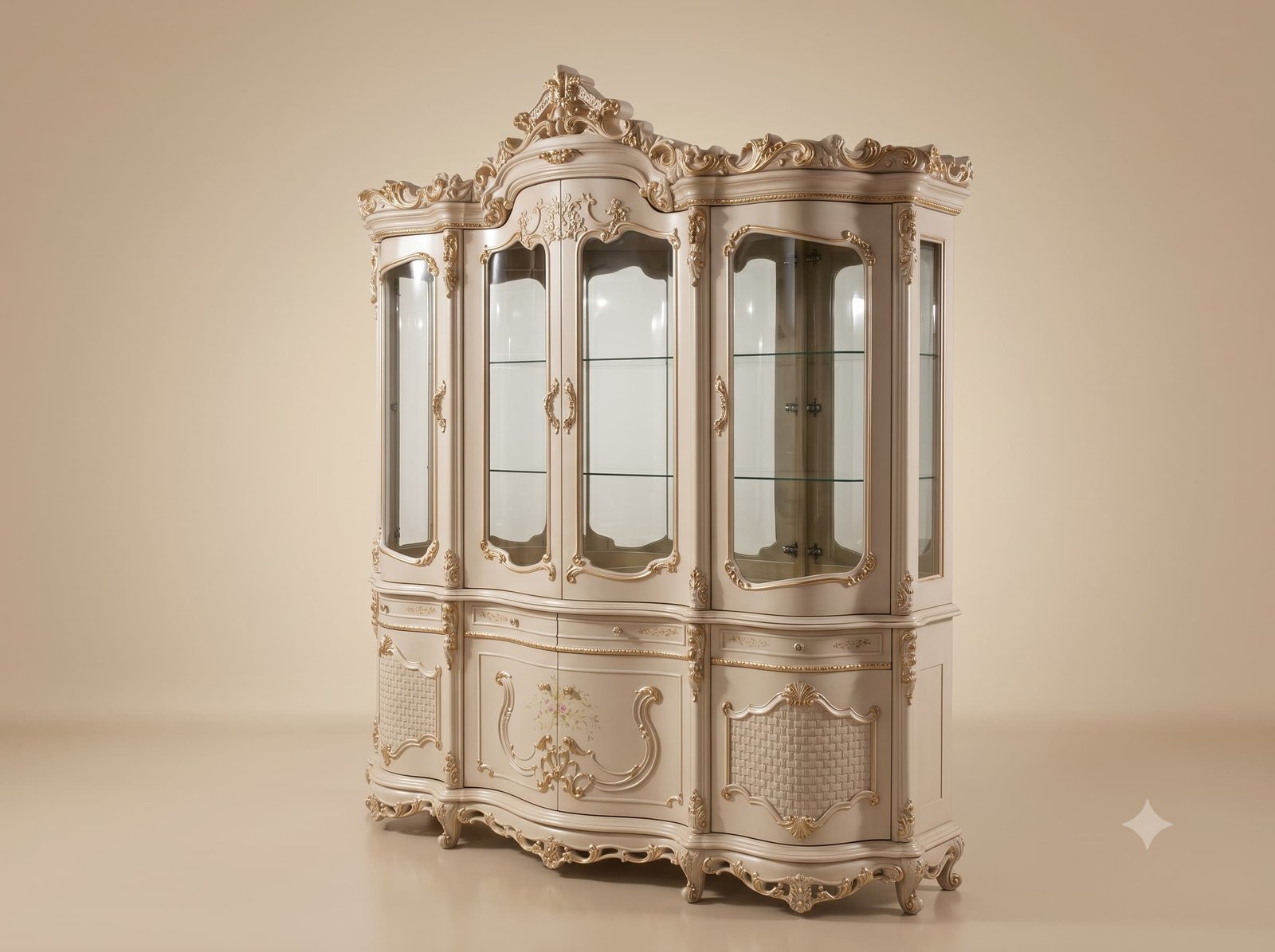
The top of this showcase is straight. The base beneath it waves in and out. Where the two meet is the hardest joint on the piece to get right, and it is a moulding rather than a joint that solves it.
A glazed section has to be straight-fronted, because glass is flat and doors must close on a straight line. A serpentine base is not straight anywhere. So the amount by which the upper section overhangs the base changes continuously across the width - a lot where the base returns backwards, almost nothing where it swells forward.
Left alone, that would show as an uneven shadow along the waist, thick at the ends and thin in the middle, and the eye reads an uneven shadow as a mistake even when it cannot say why.
The waist moulding is therefore worked to absorb it. Its projection is varied along its length - reduced where the base comes forward, increased where the base falls back - so that the shadow line under the glazed section stays the same depth from one end of the cabinet to the other.
It is drawn full size on the bench, cut in one continuous run, and checked by eye in raking light before it is fixed.
 Ask Price On WhatsApp