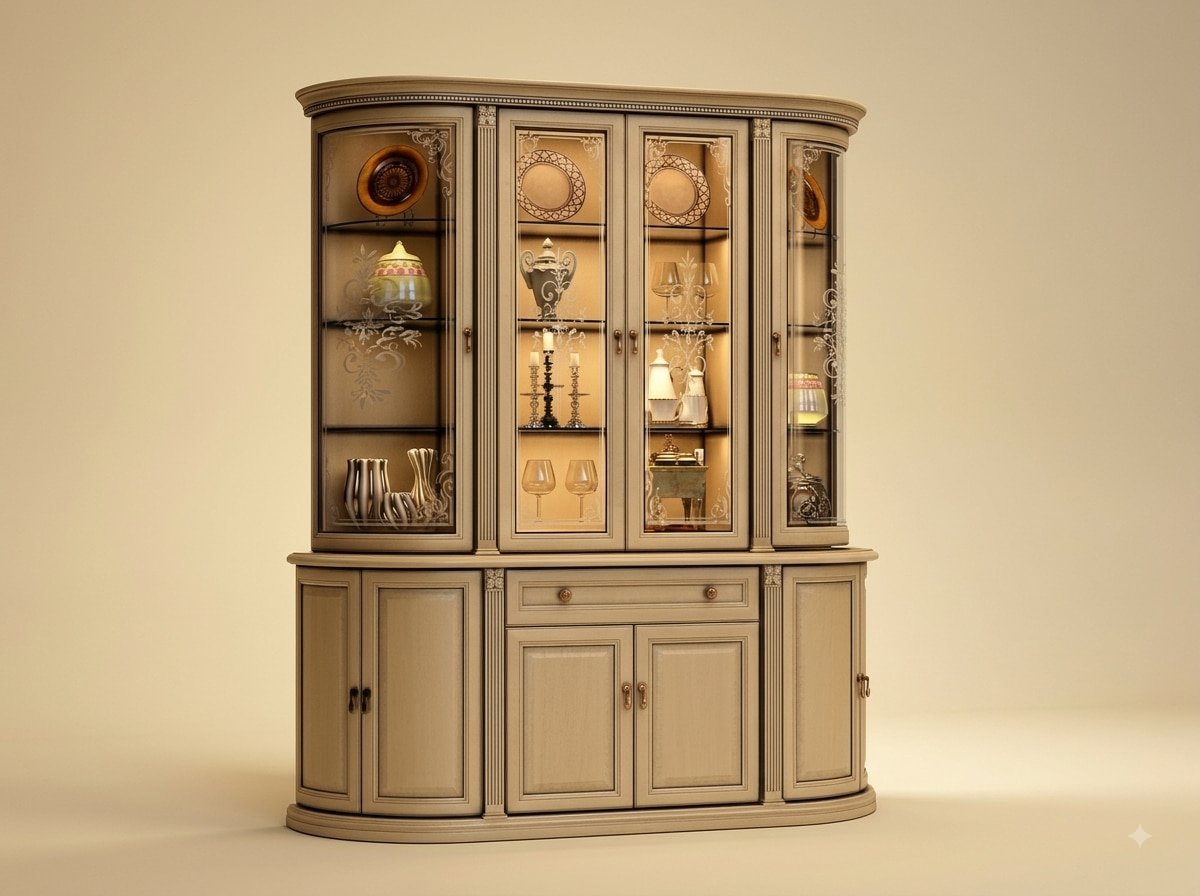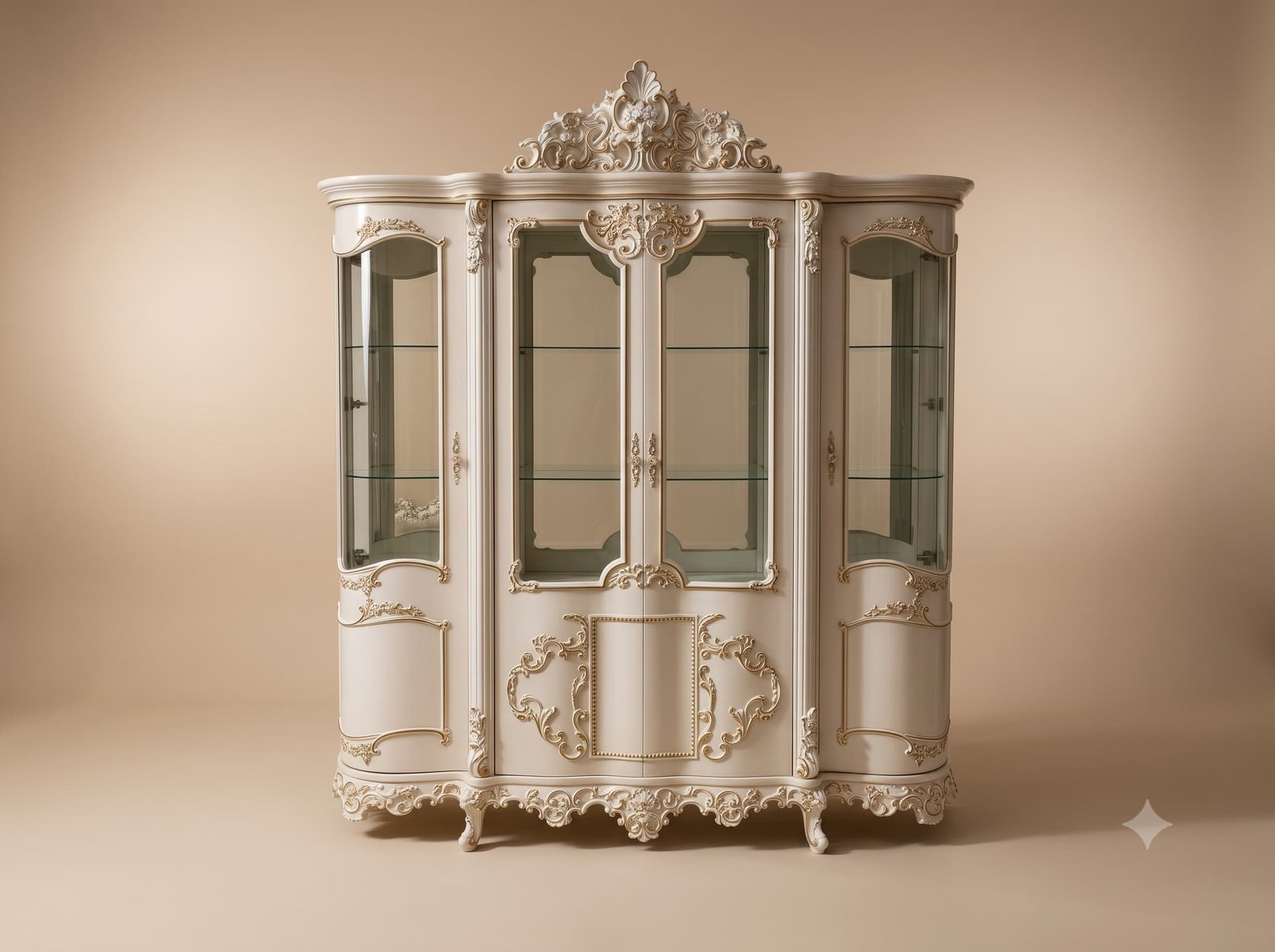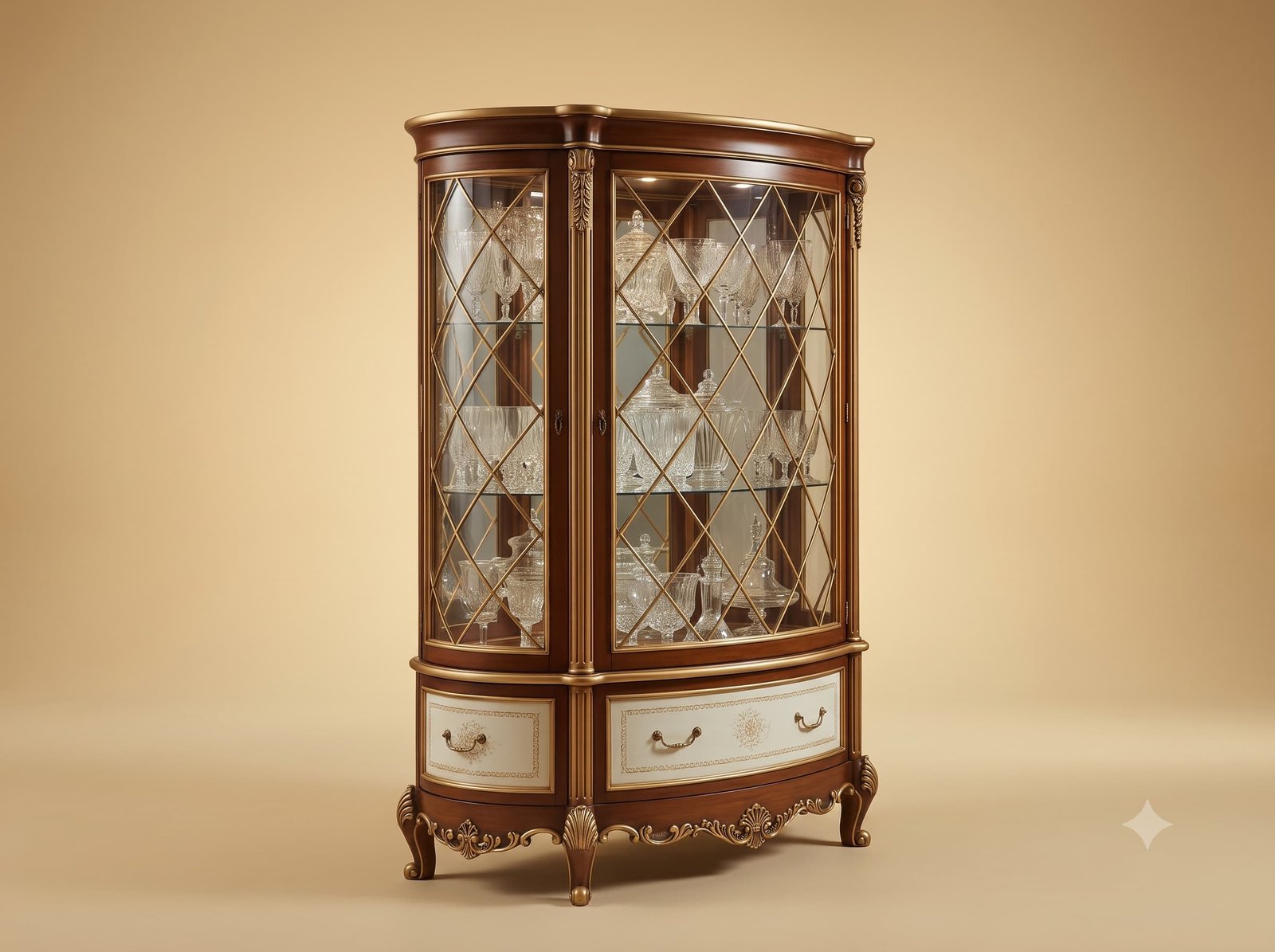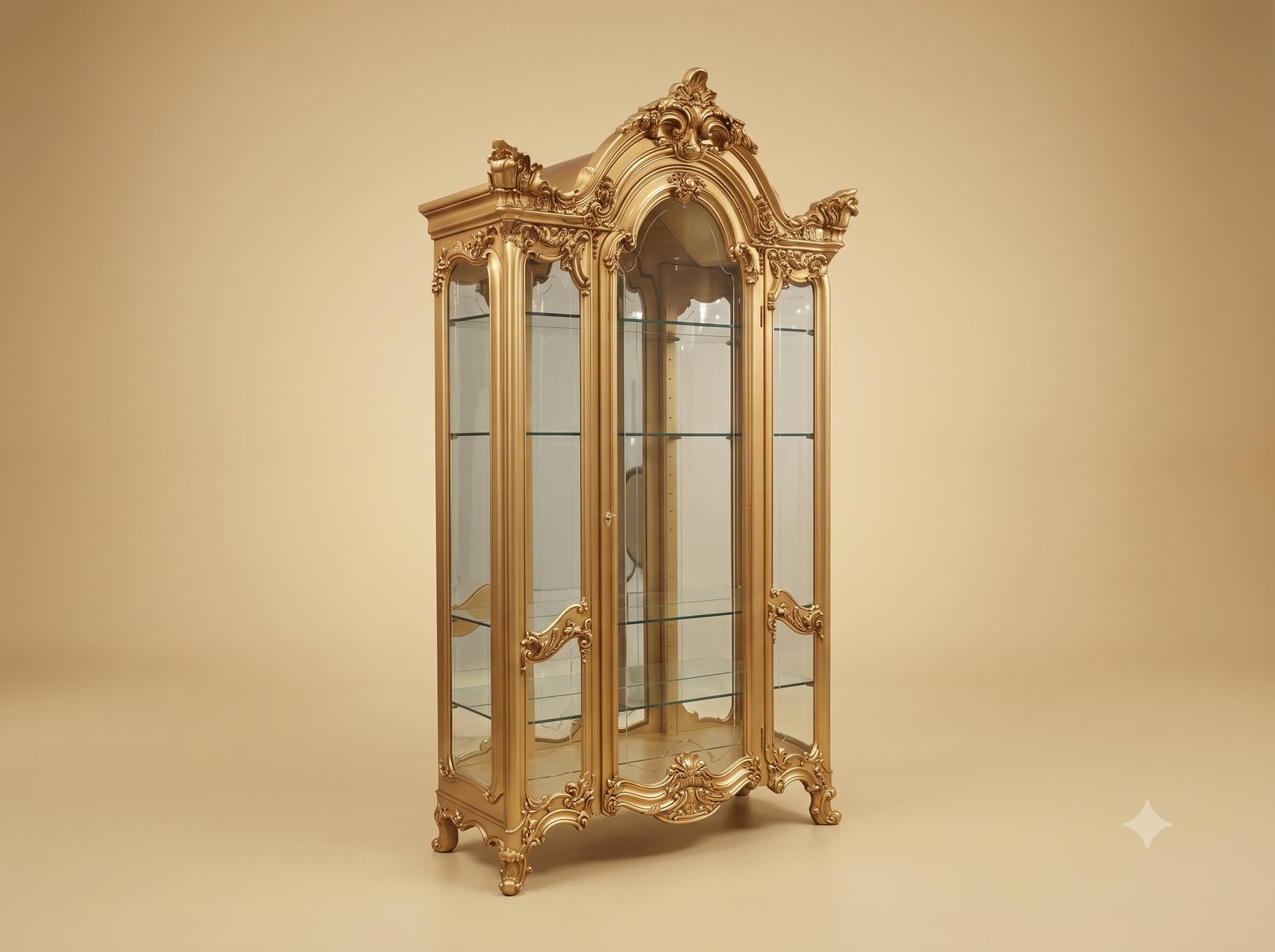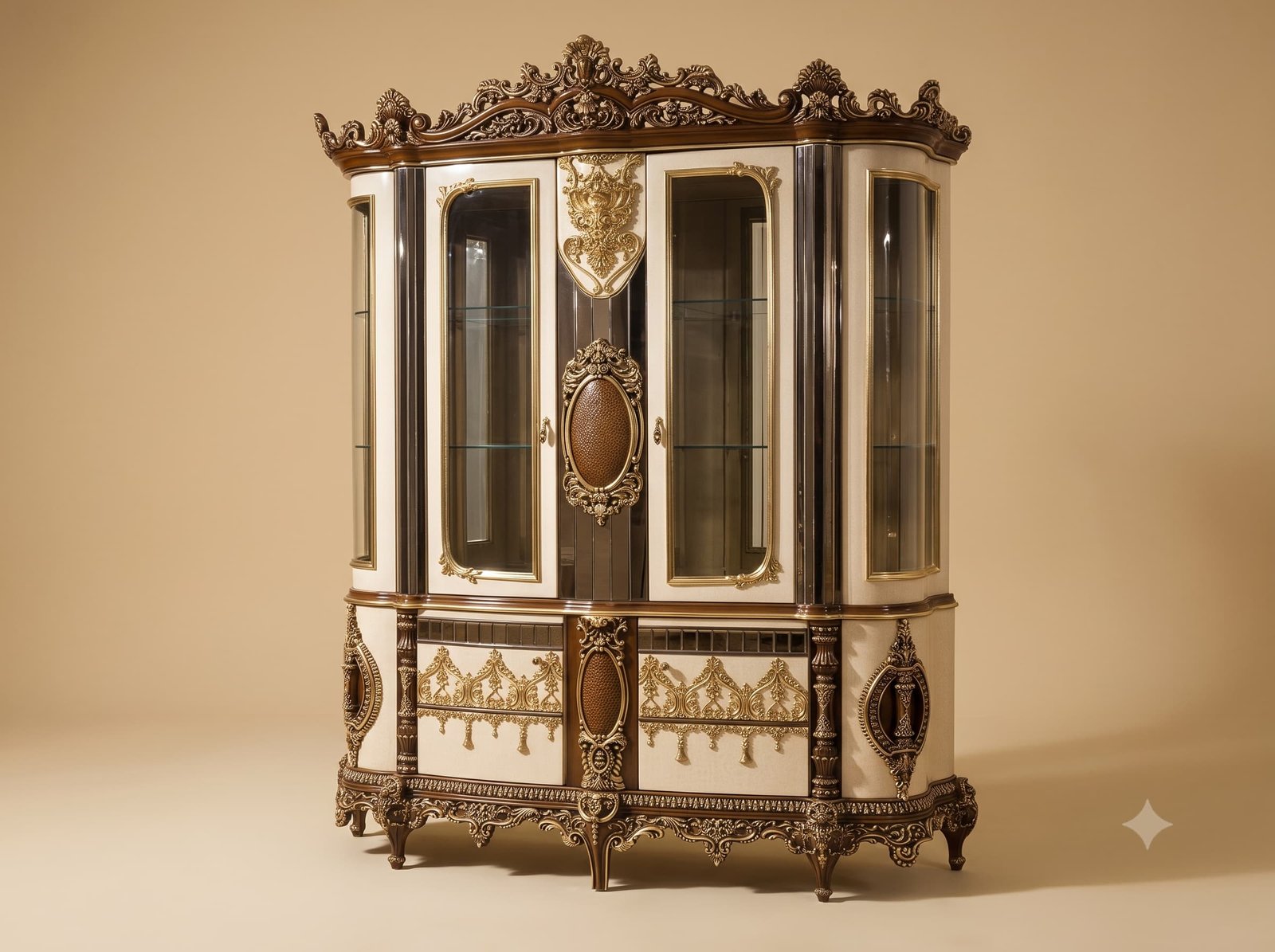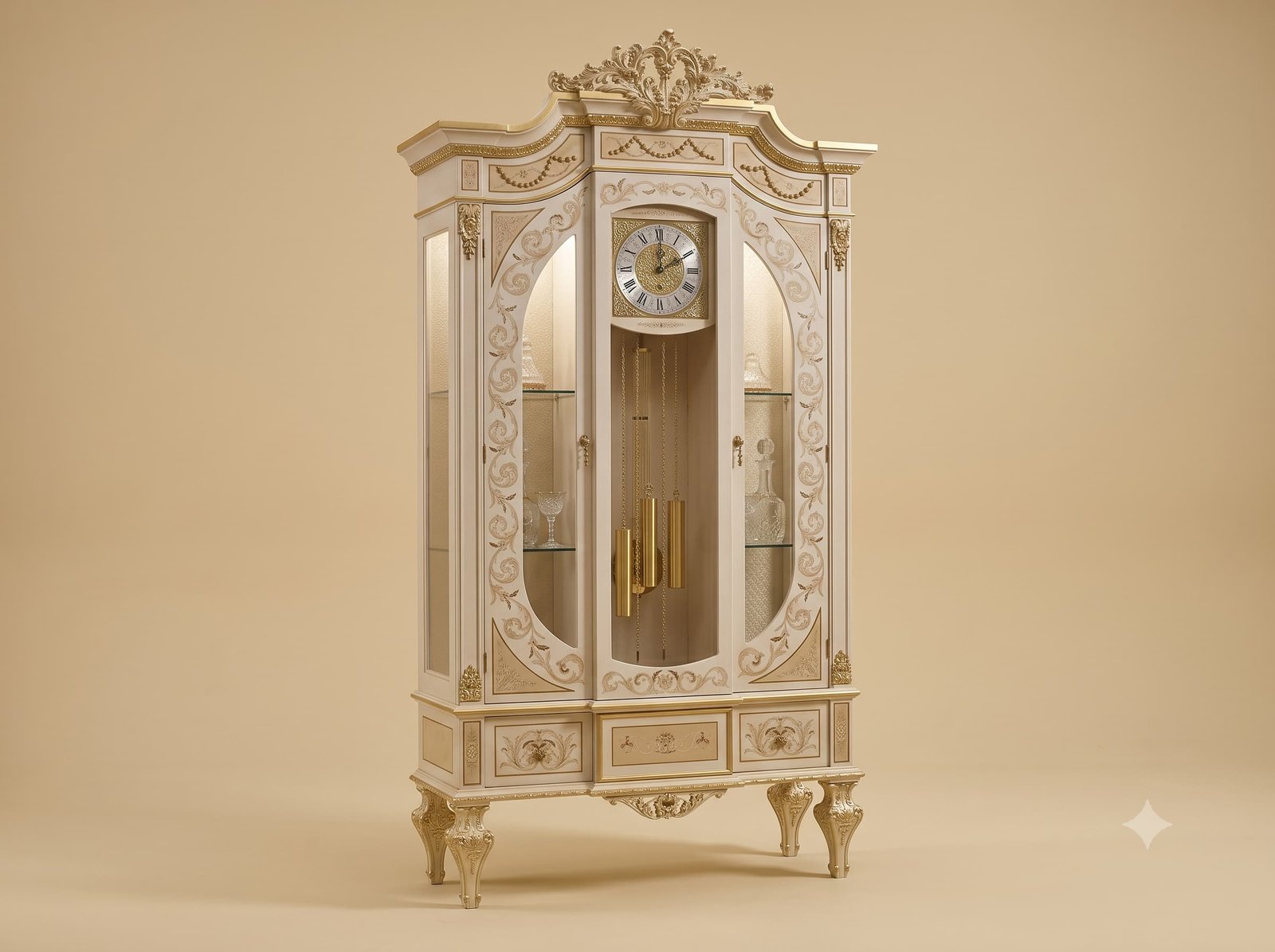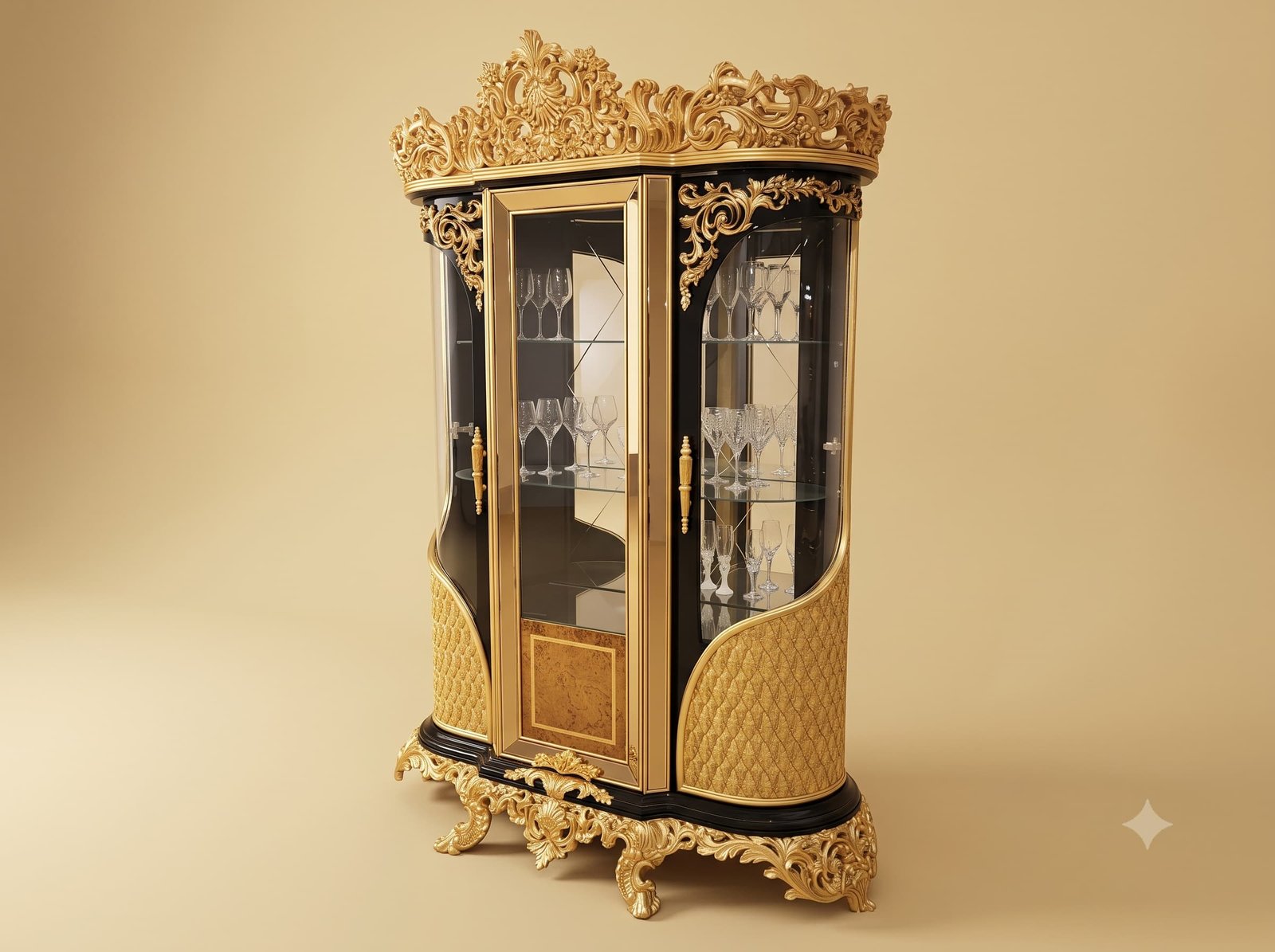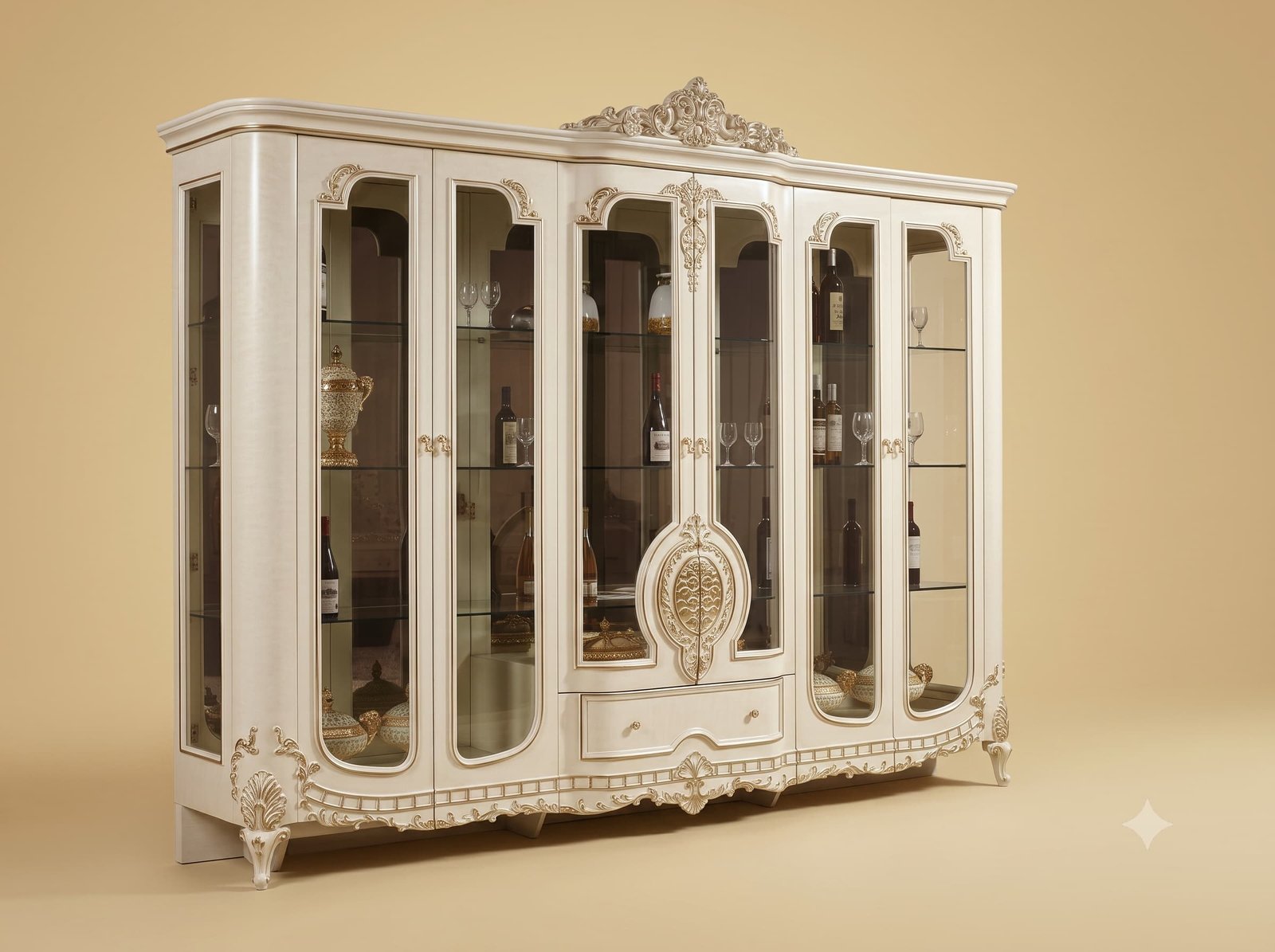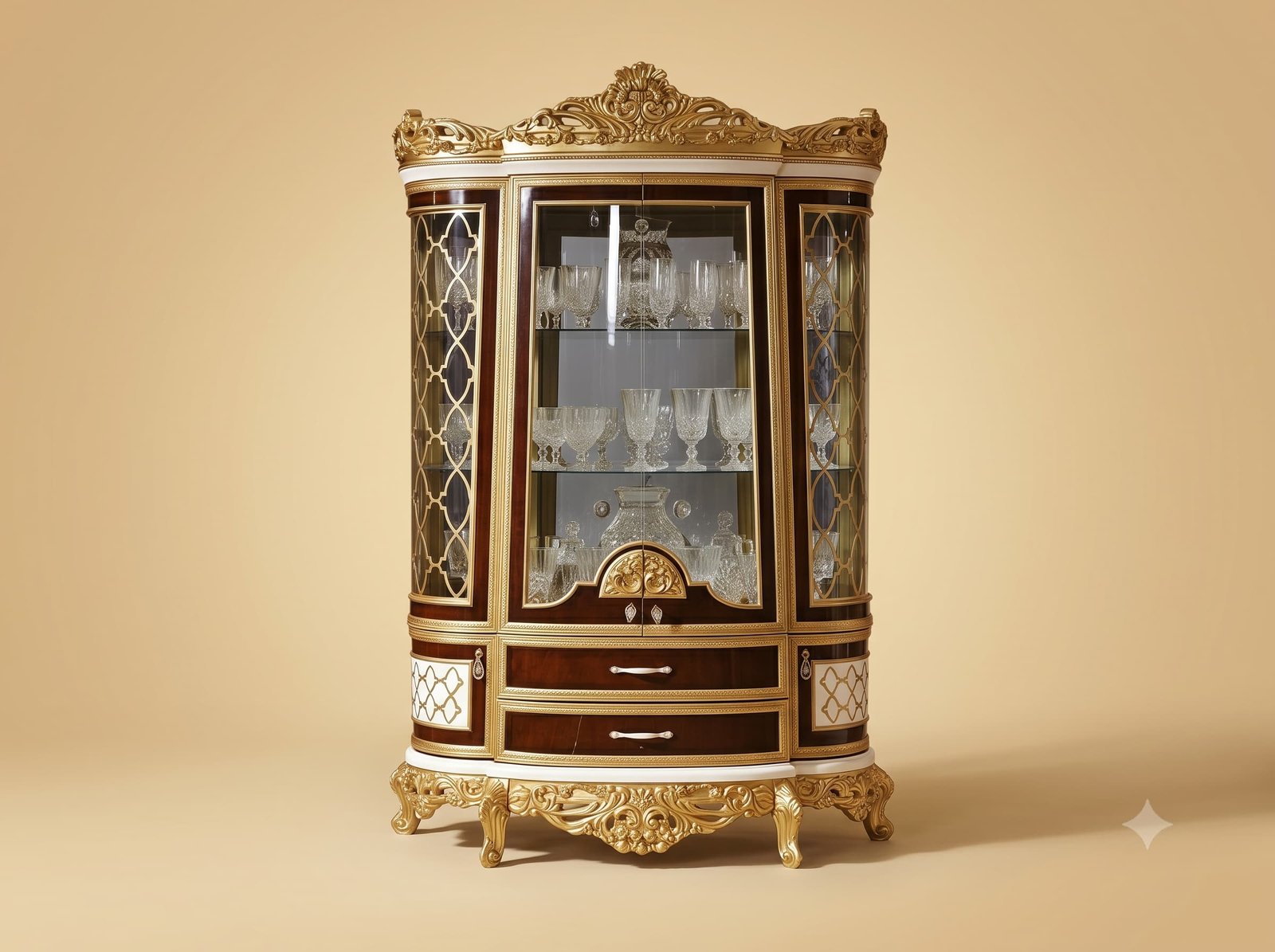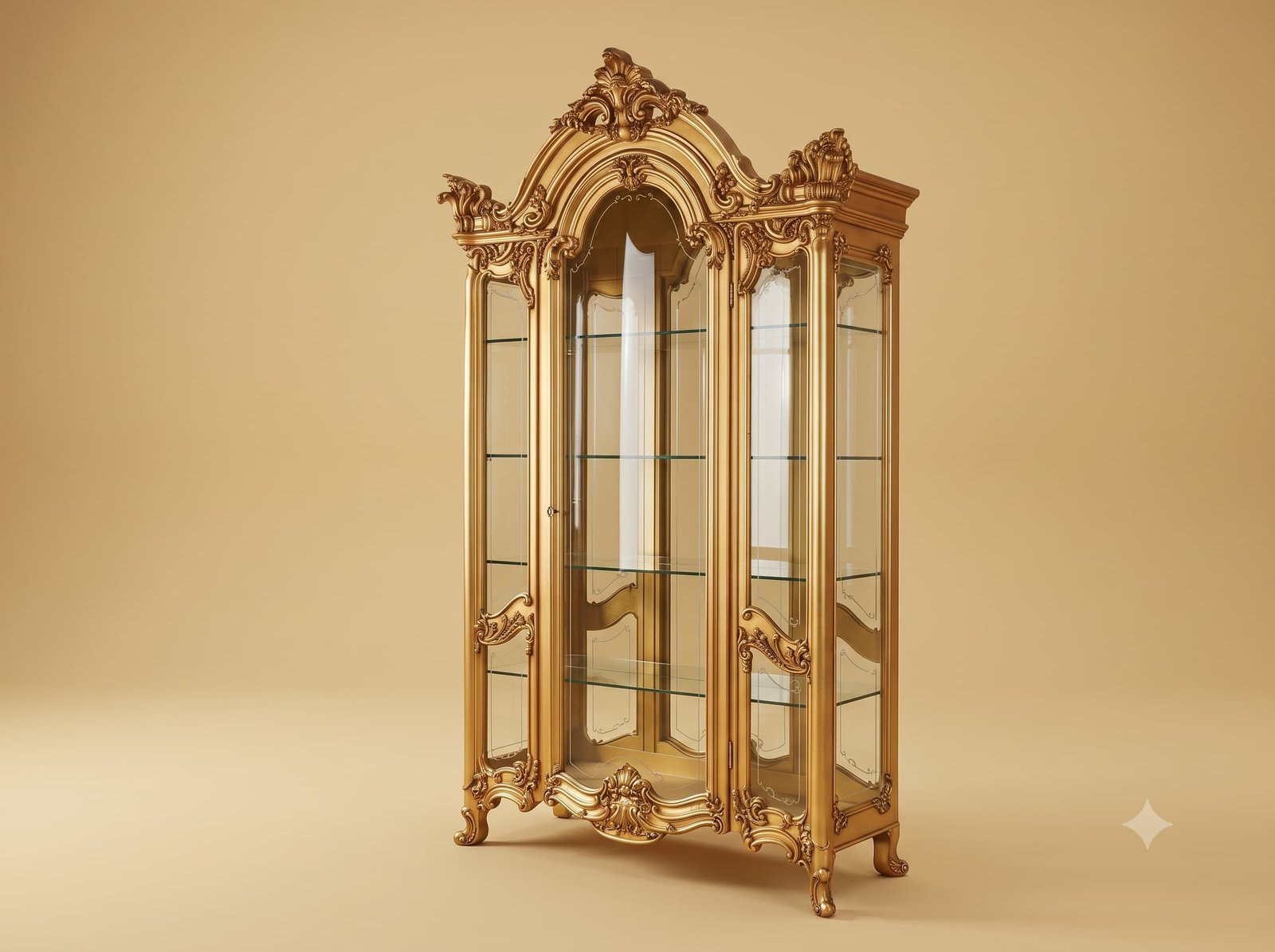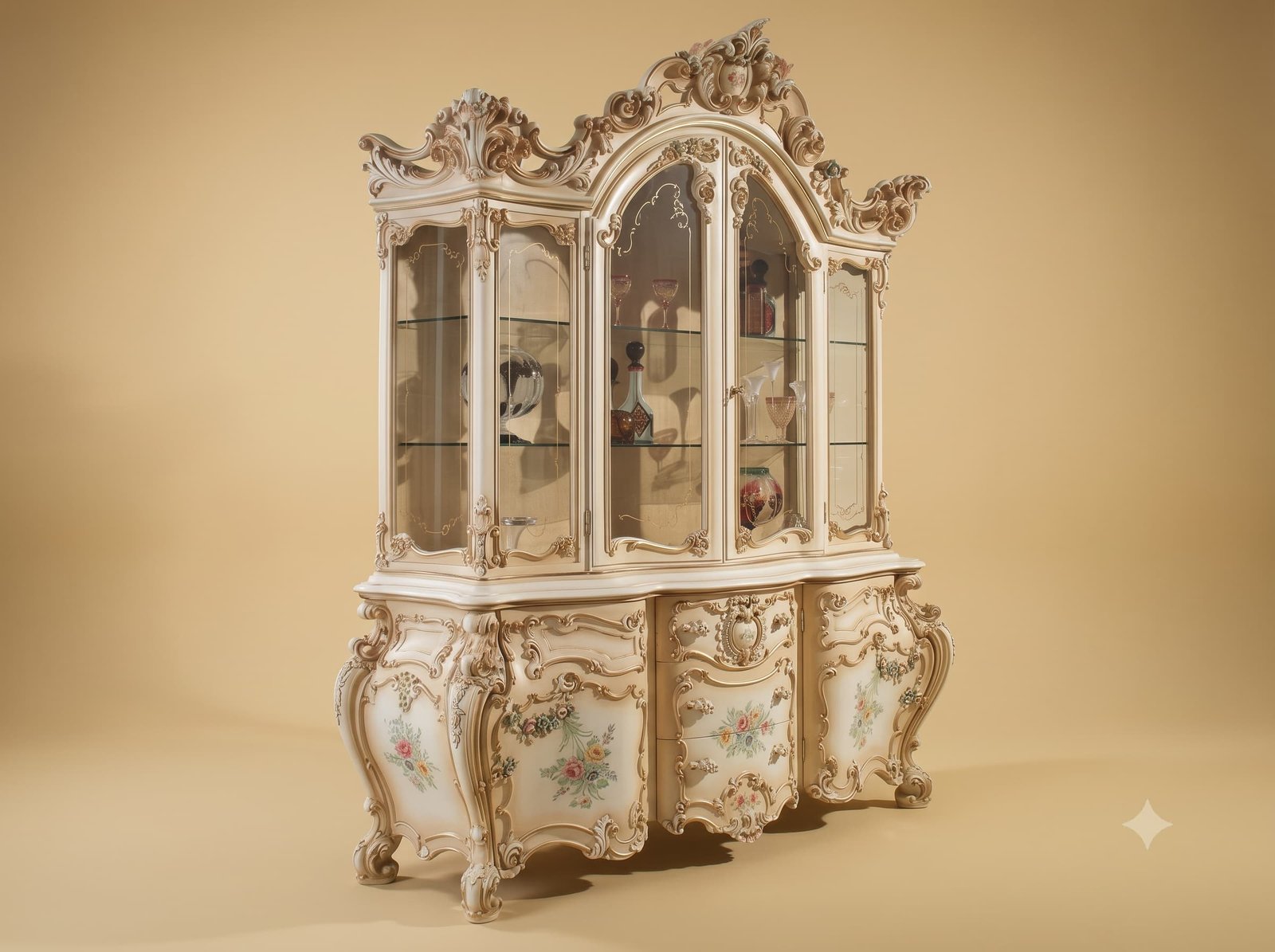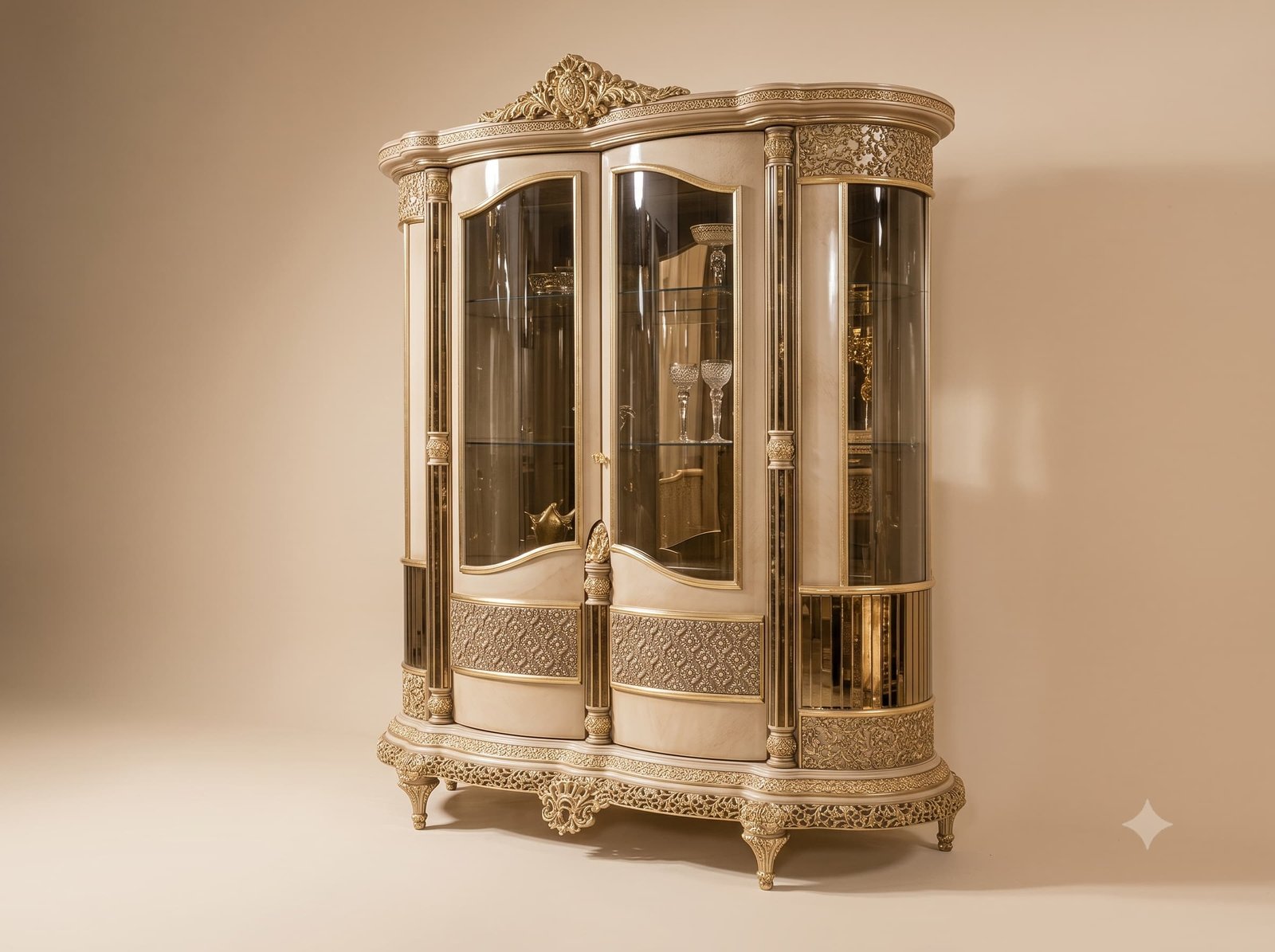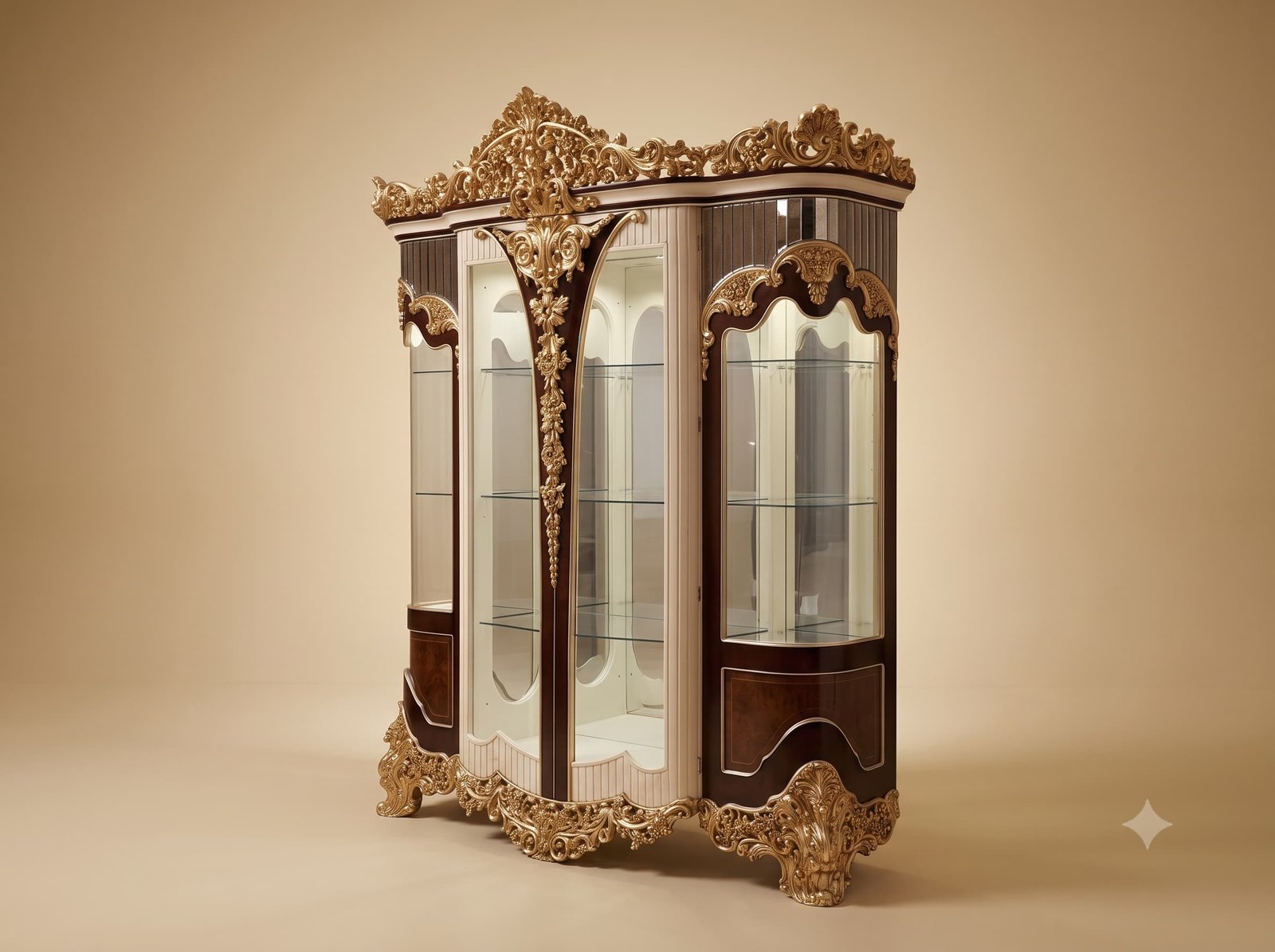
The carved pilaster down the middle of this vitrine is one piece of timber. It could easily have been three, and it would have been far simpler to make that way.
The reason it is not comes down to how pierced carving works. In pierced work, sections of the design are cut right through, so there is no solid ground behind to hide anything. On plain carving a joint can be tucked under a moulding or lost in a shadow, but on a pierced scroll every joint sits in open air with light coming through from behind it. Wherever the timber joined, the join would be visible from both sides for the life of the cabinet.
So the pilaster is worked from a single length running cornice to base. That decision reaches back to the timber yard: the board has to be long enough, straight enough and clean enough over its whole length before any carving starts, and boards are set aside for this job specifically.
Everything that follows - the crest above and the scrollwork below - is set out to meet that single member, not the other way around.
 Ask Price On WhatsApp