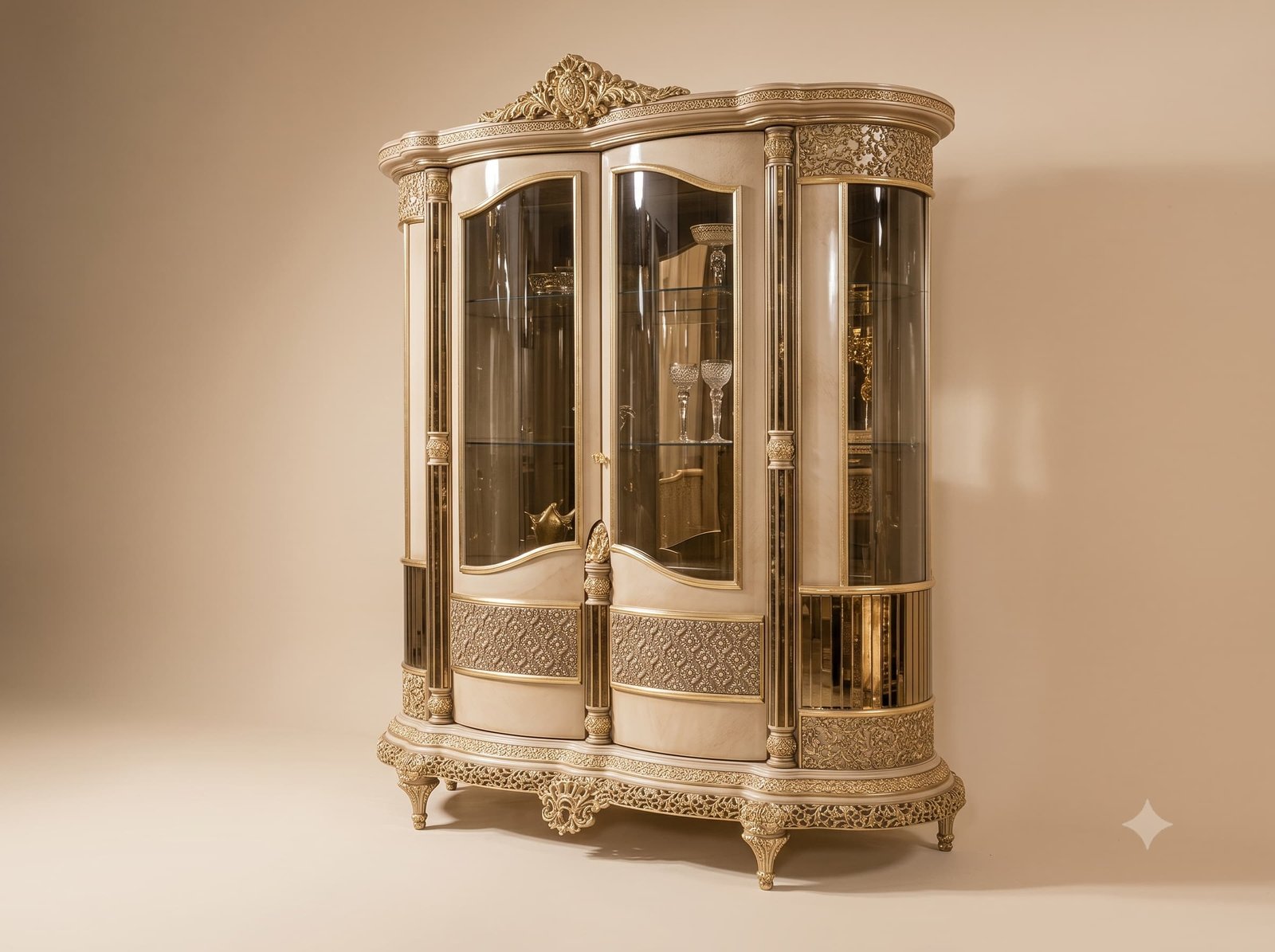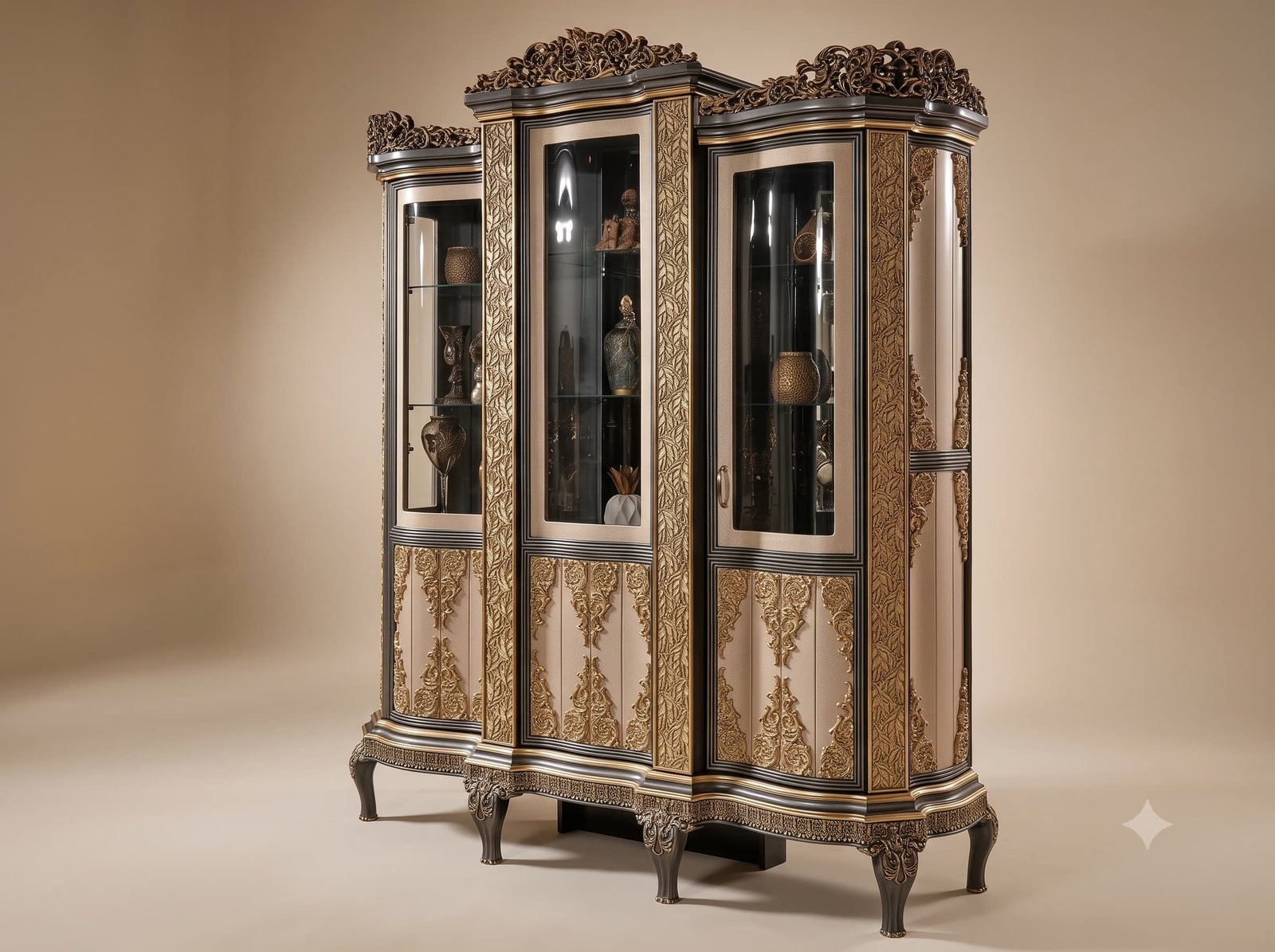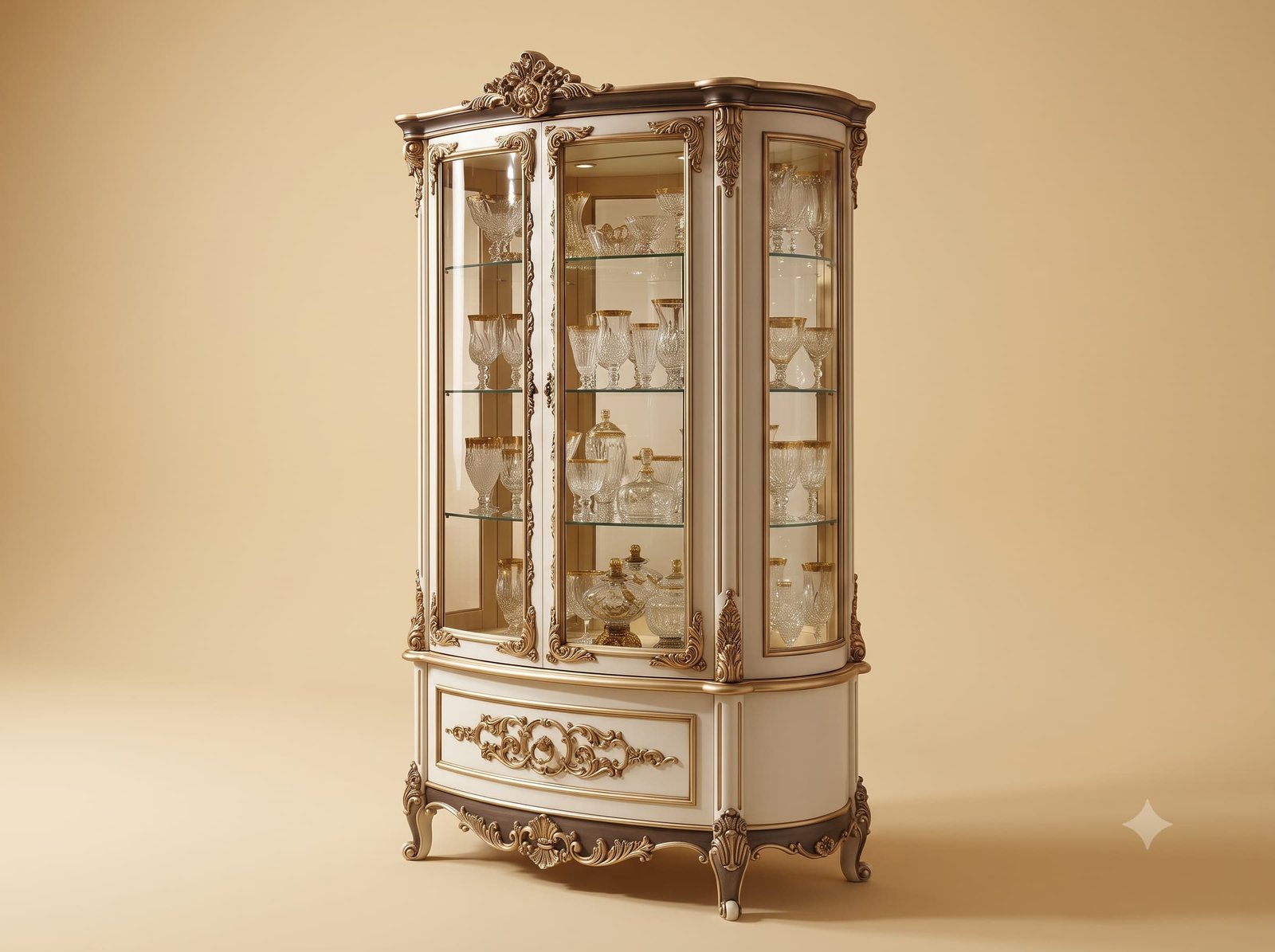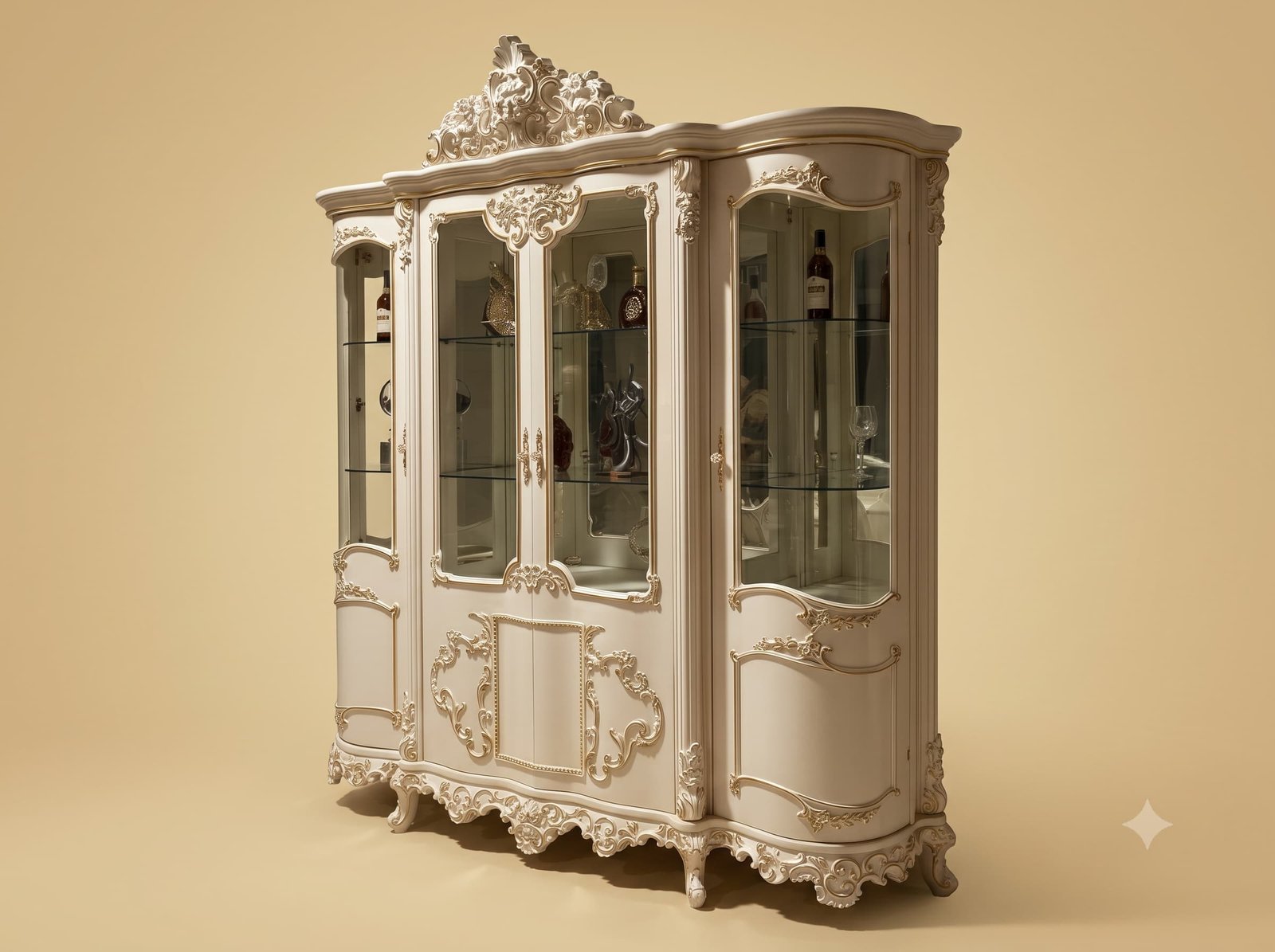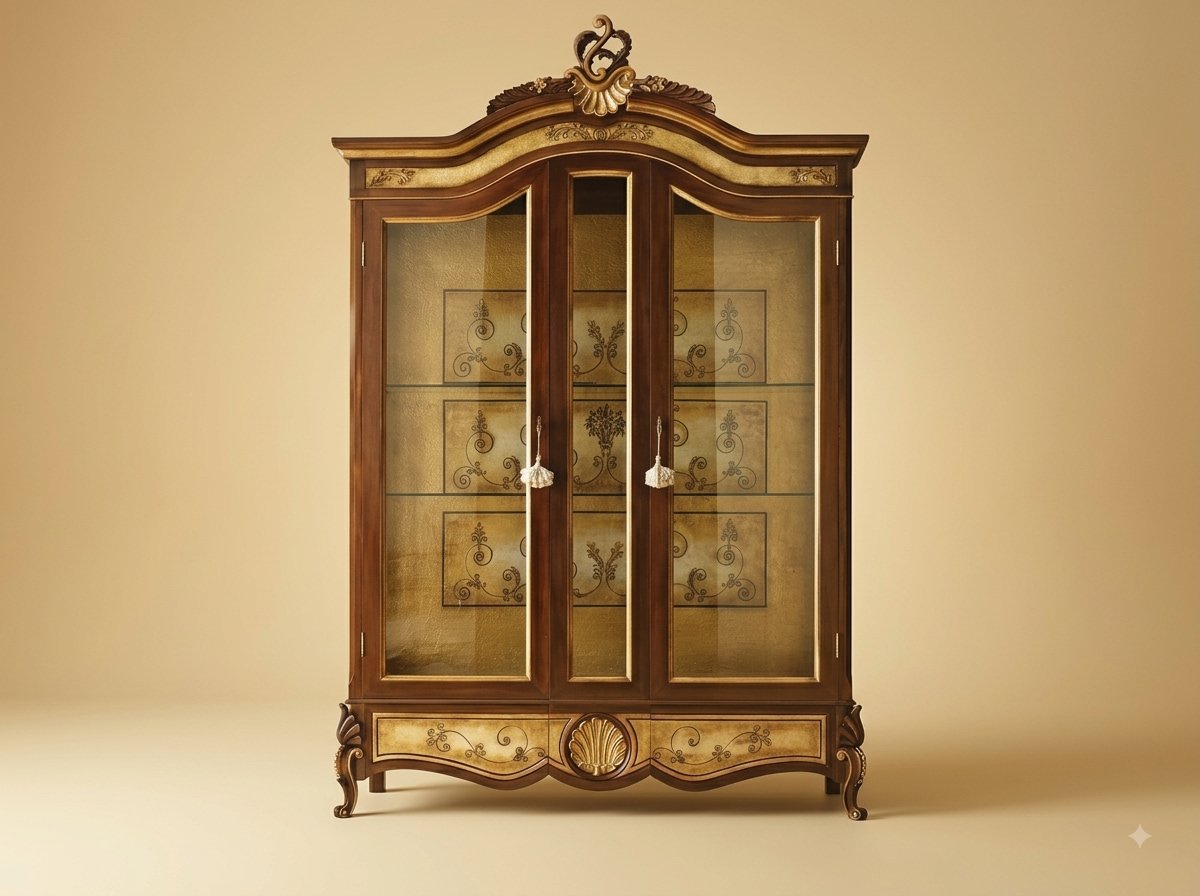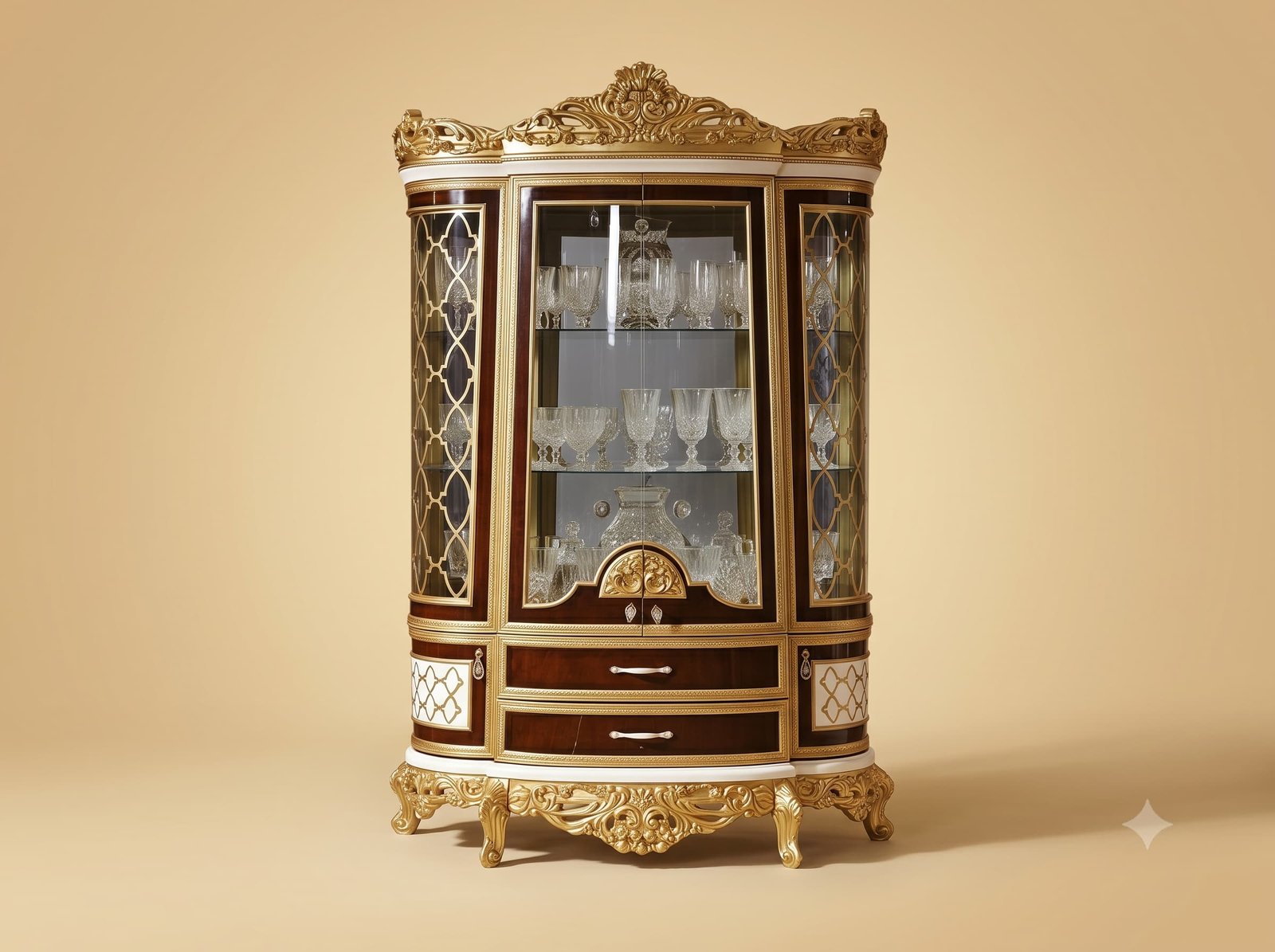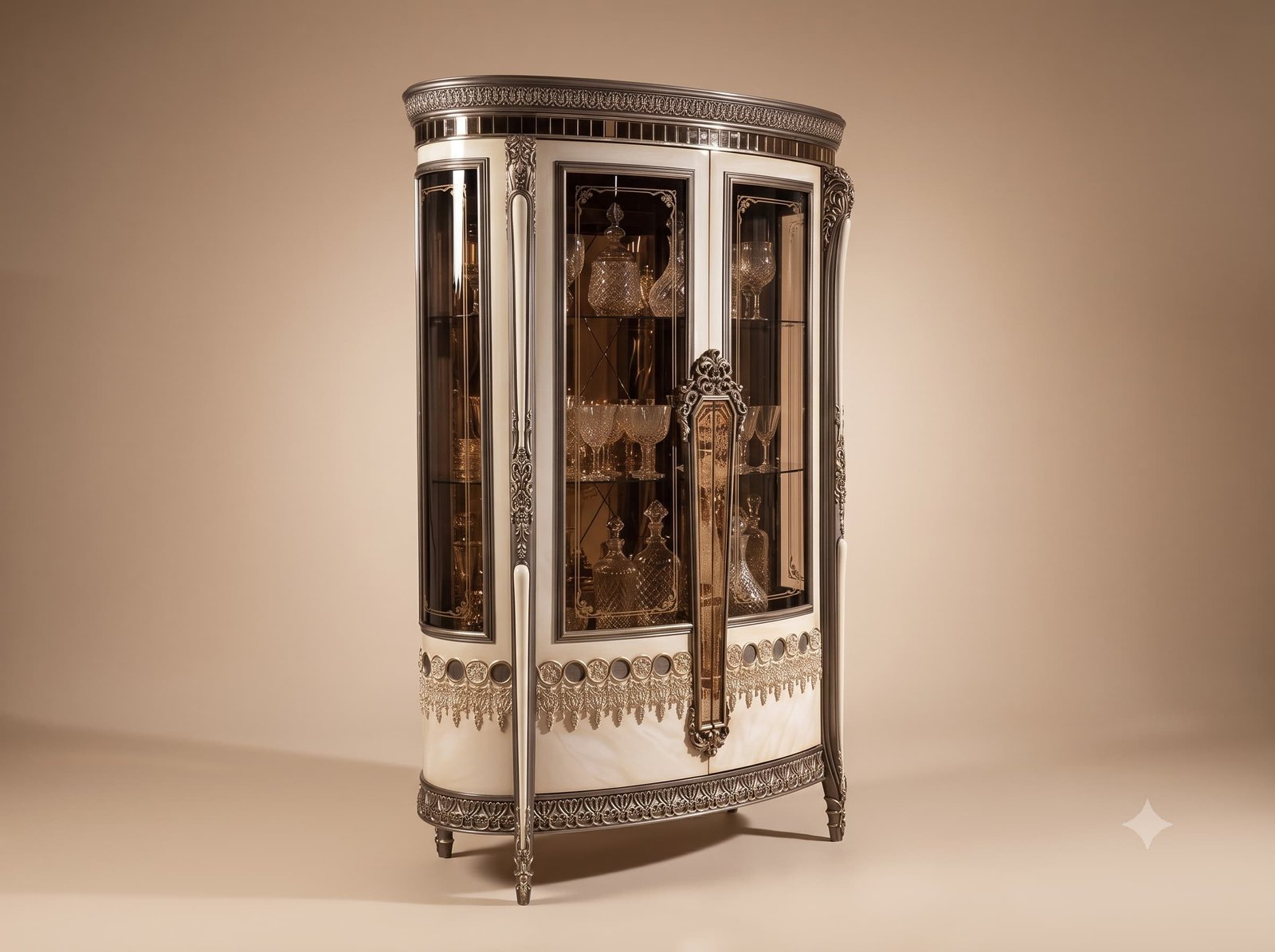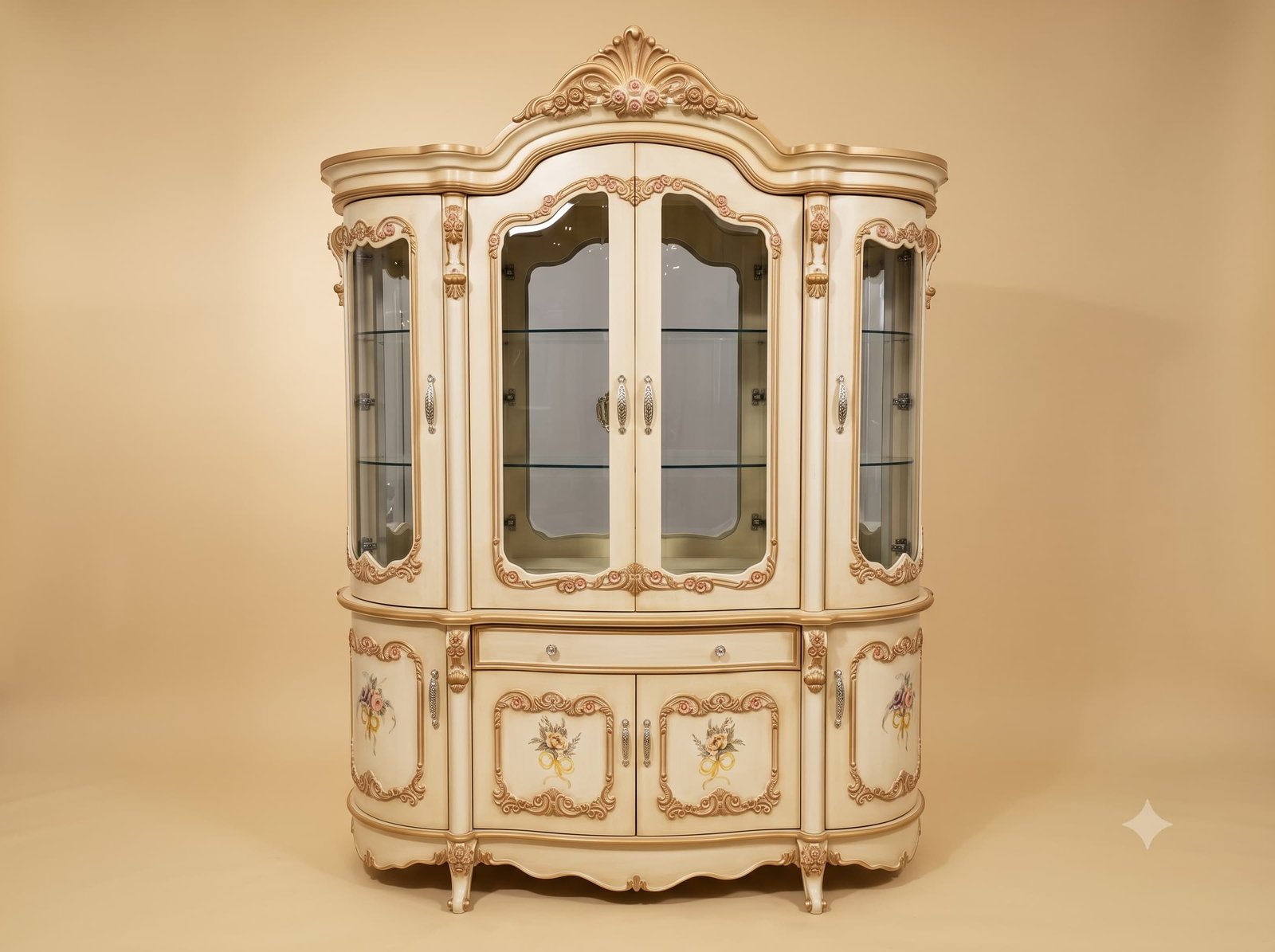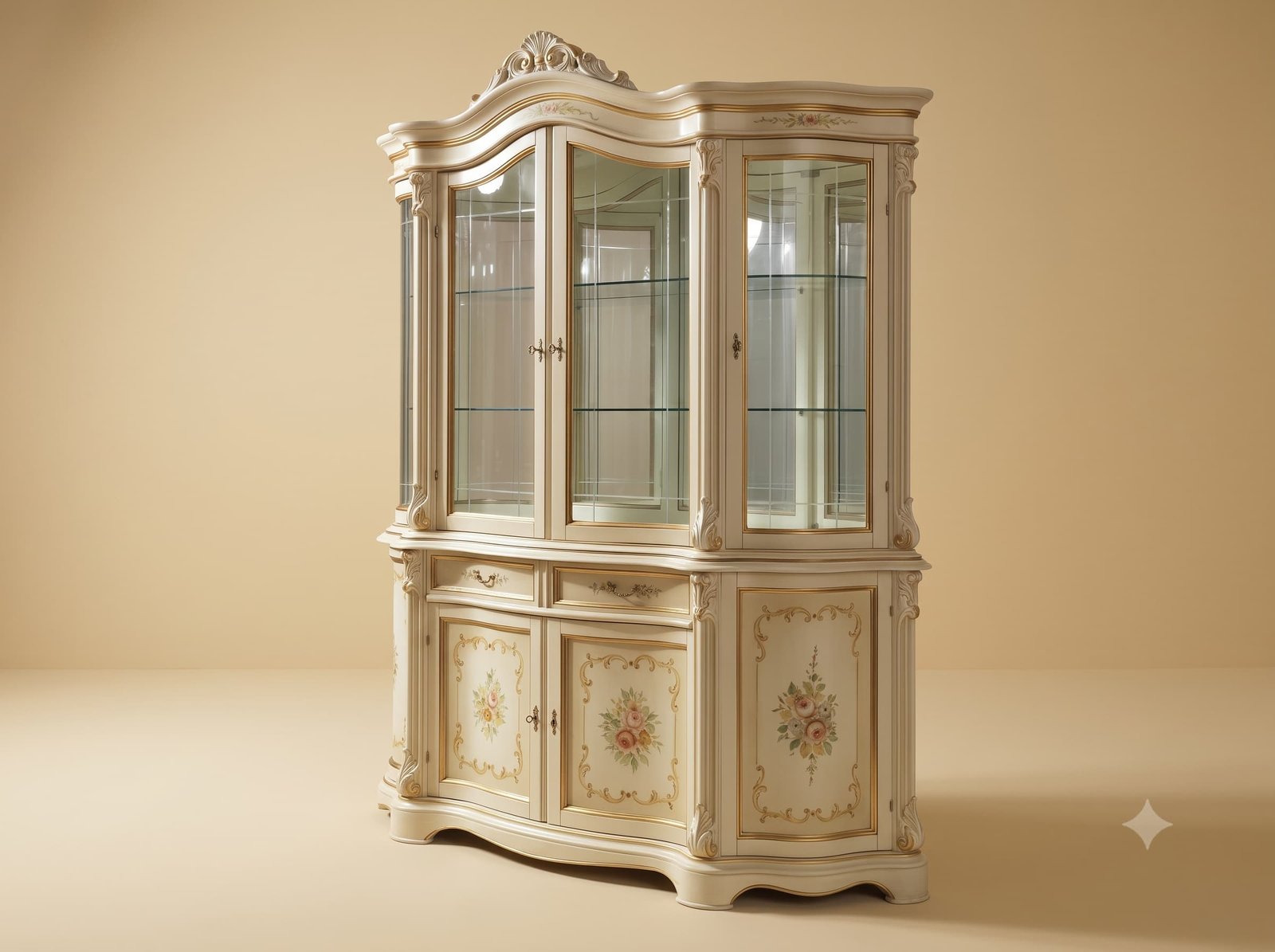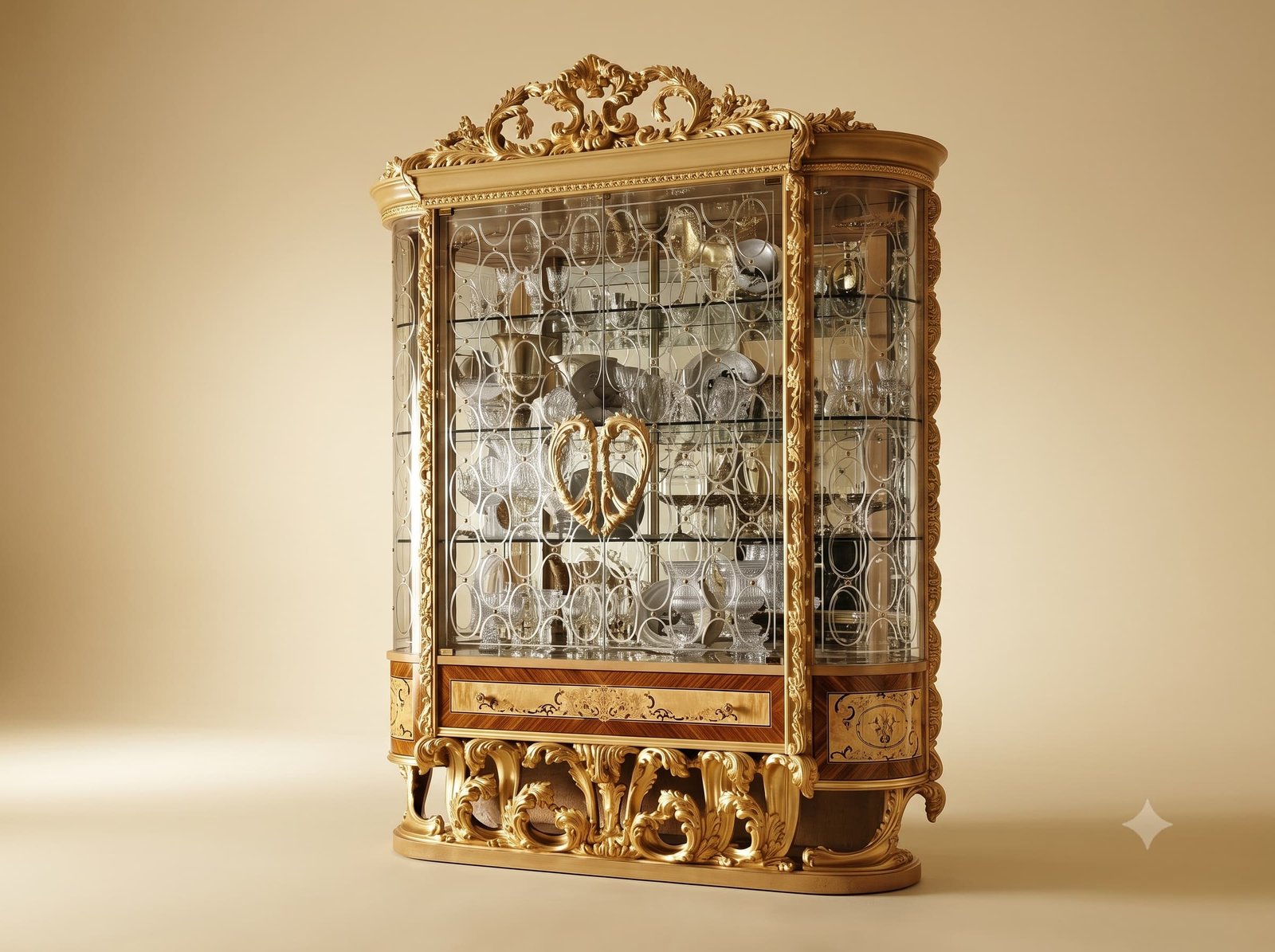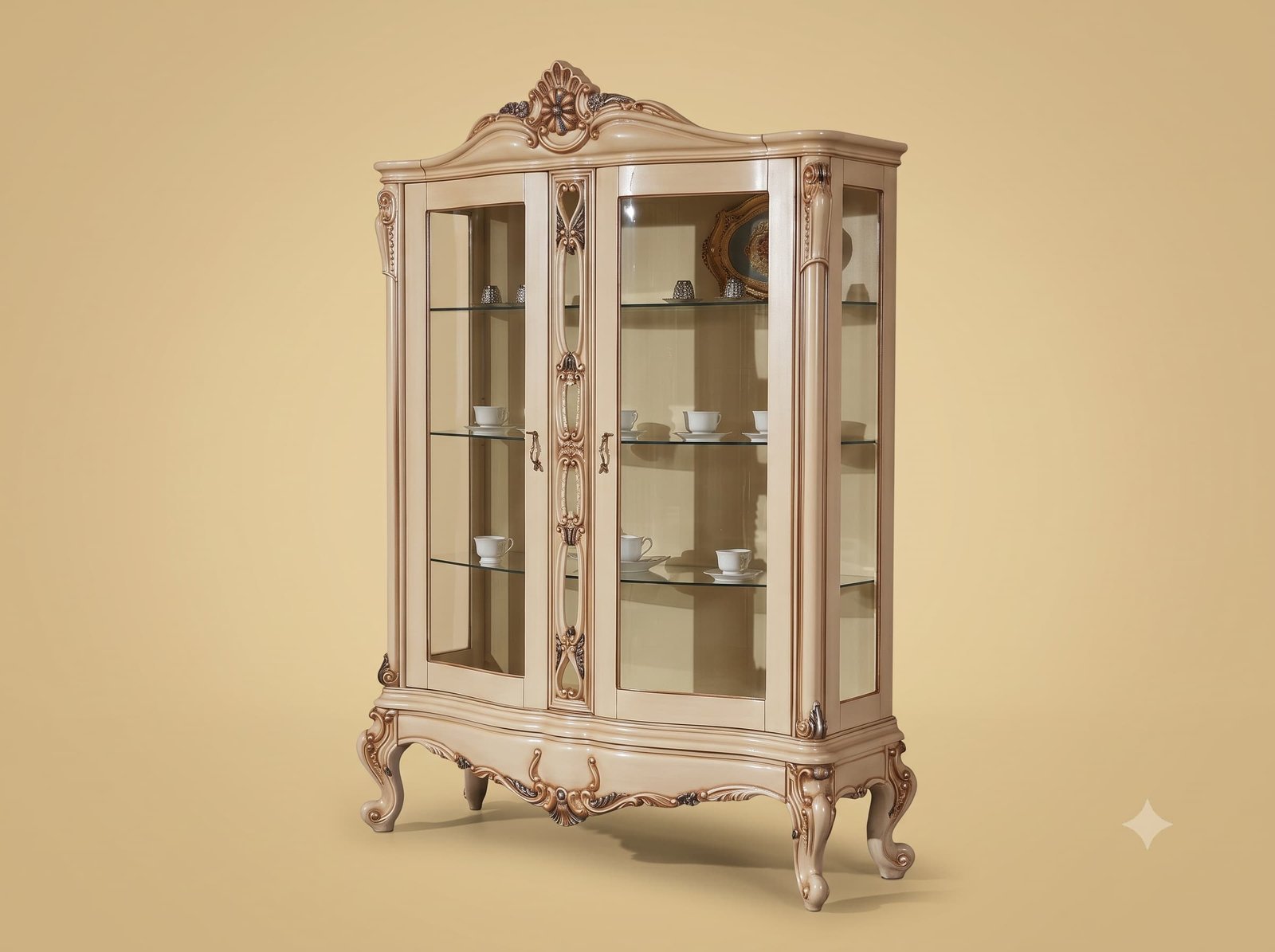
Glaze a cabinet on three sides and you take away the thing that normally keeps it square.
Most cabinets rely on a back board. A sheet fixed across the back stops the case from leaning sideways - it works the way a diagonal brace works, holding the rectangle from collapsing into a parallelogram. Add solid sides and the case becomes rigid without anyone thinking about it.
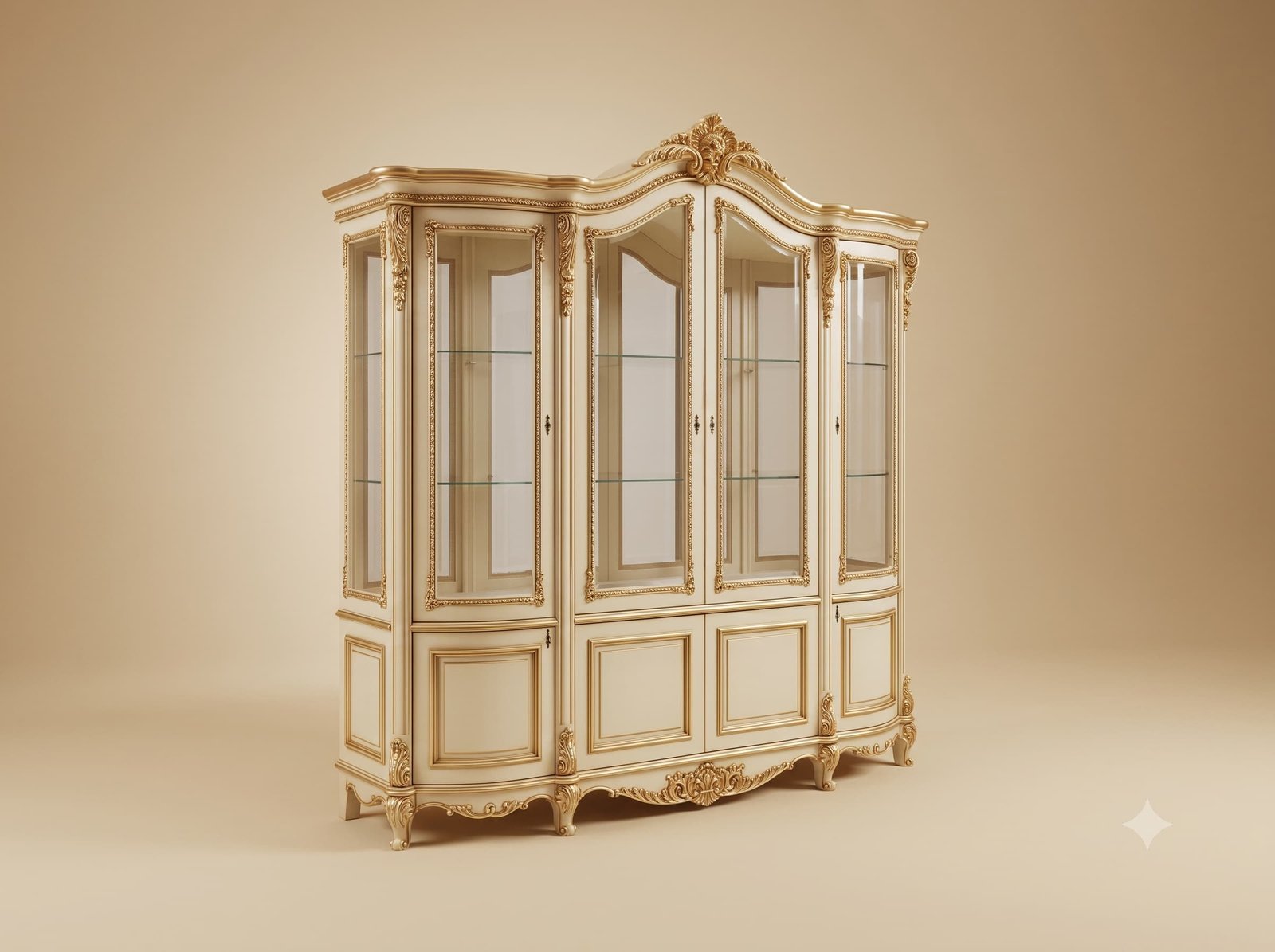
This cabinet has none of that. The sides are glass, the front is glass, and the back is kept pale and thin so it does not darken the interior. Glass is stiff but it cannot be relied on as structure, and it must never be asked to carry the case.
So the rigidity is built into two frames instead. The base frame and the cornice are each made as a closed, jointed ring, stiff in their own plane, and the four corner posts run in single lengths from one to the other. The case behaves like a table with two rigid frames tied by four legs, which is a structure that holds itself square without a panel anywhere.
It is why the doors on a glazed-side cabinet like this still close evenly years later.
 Ask Price On WhatsApp