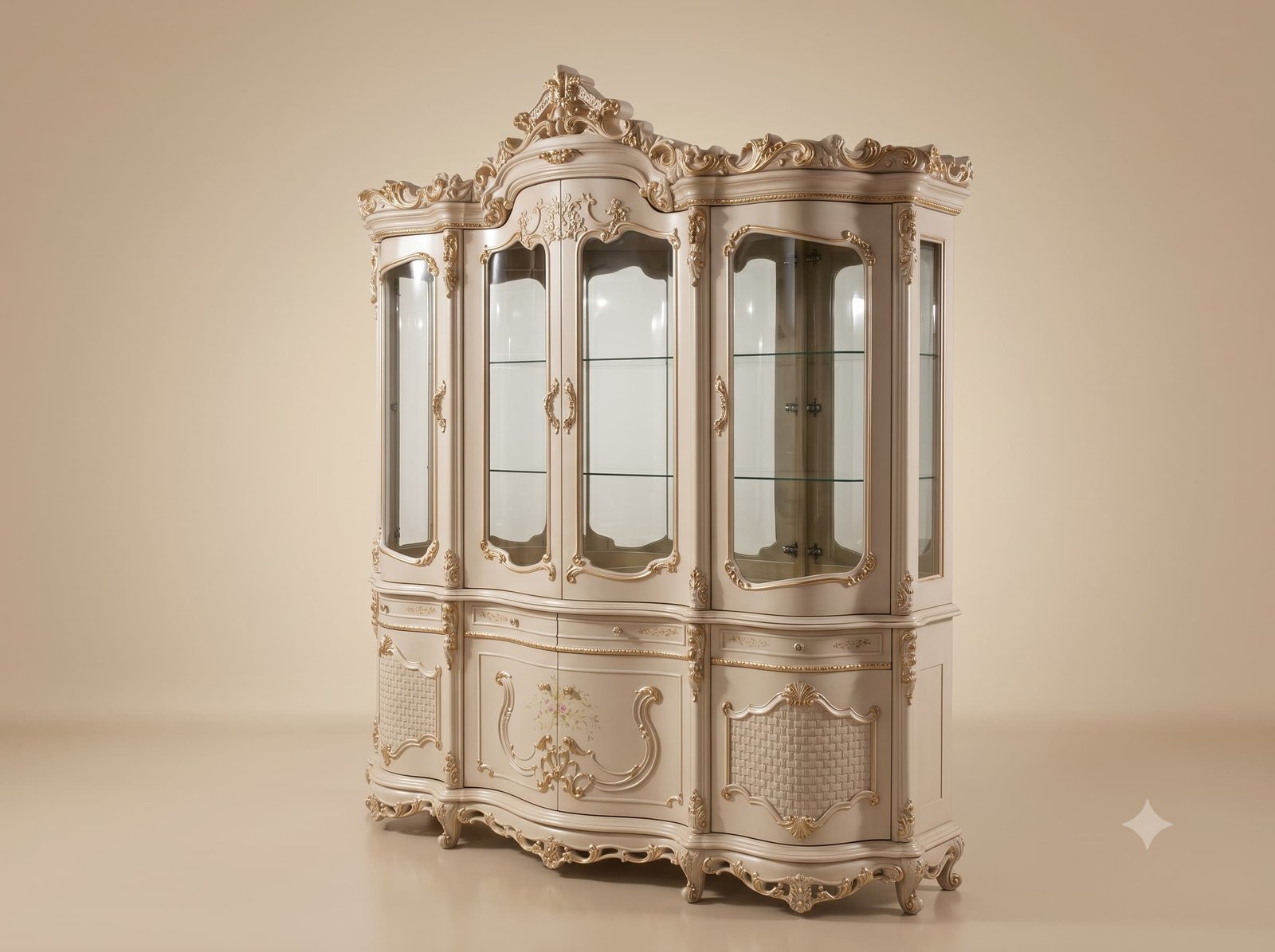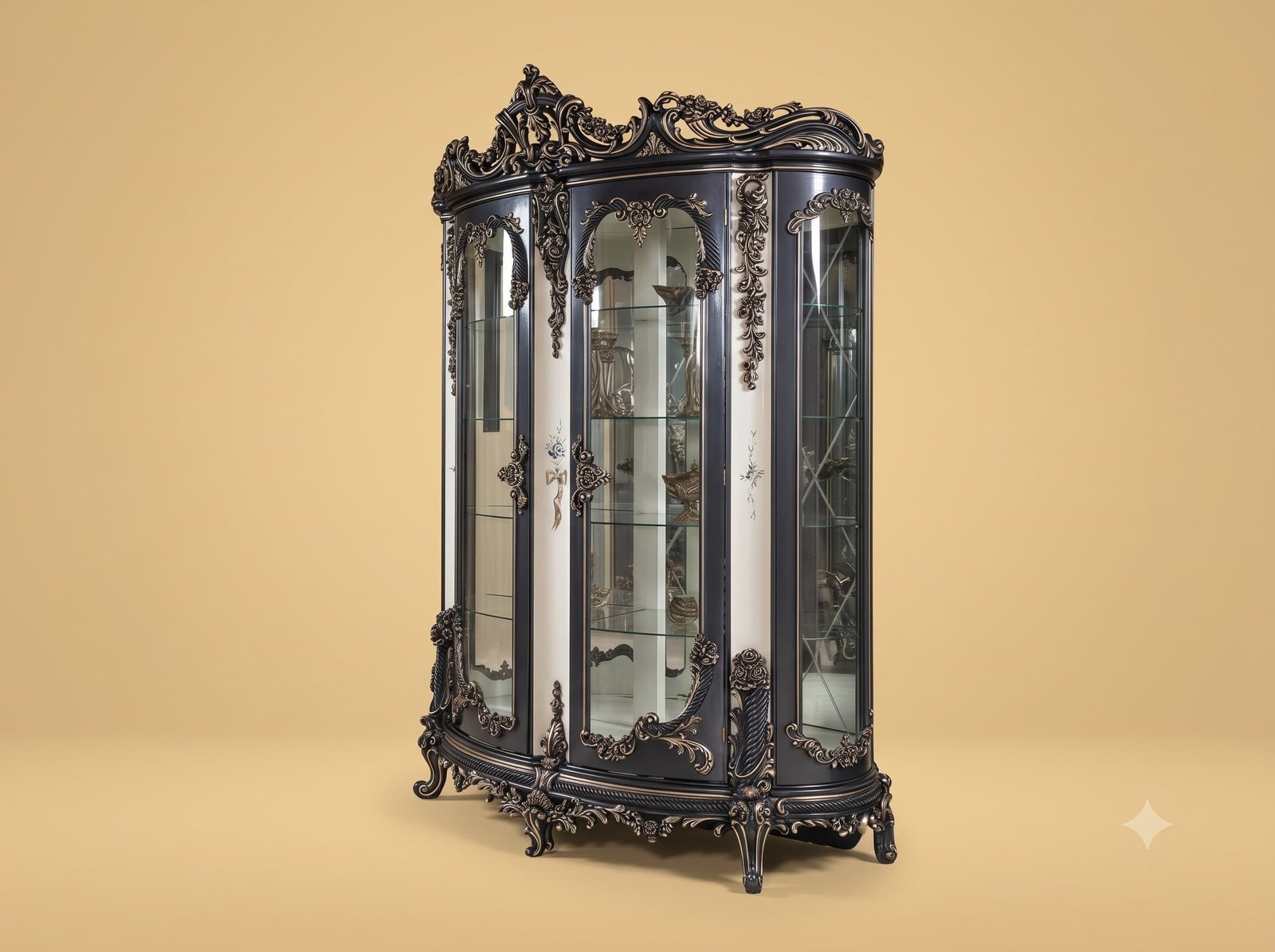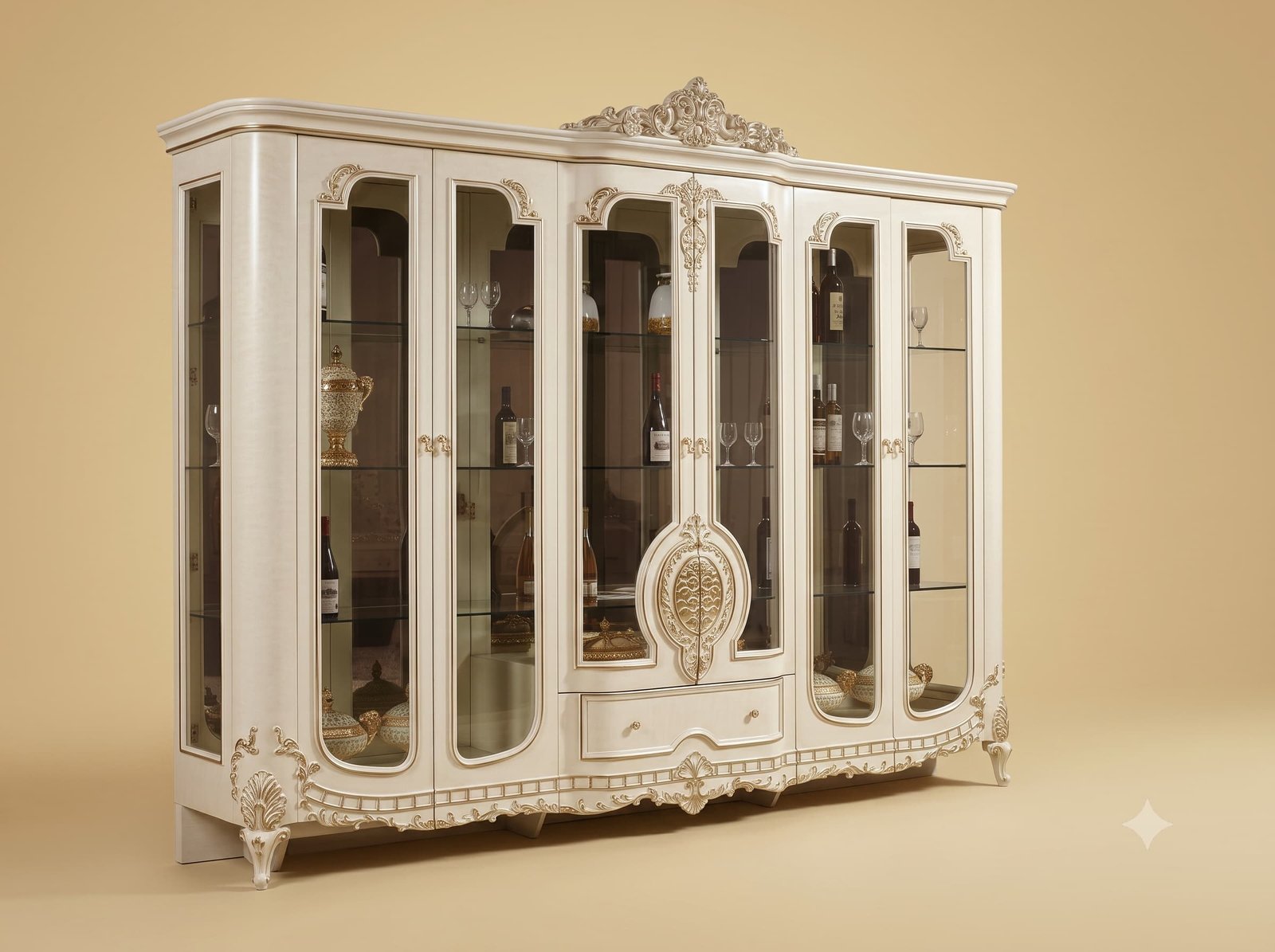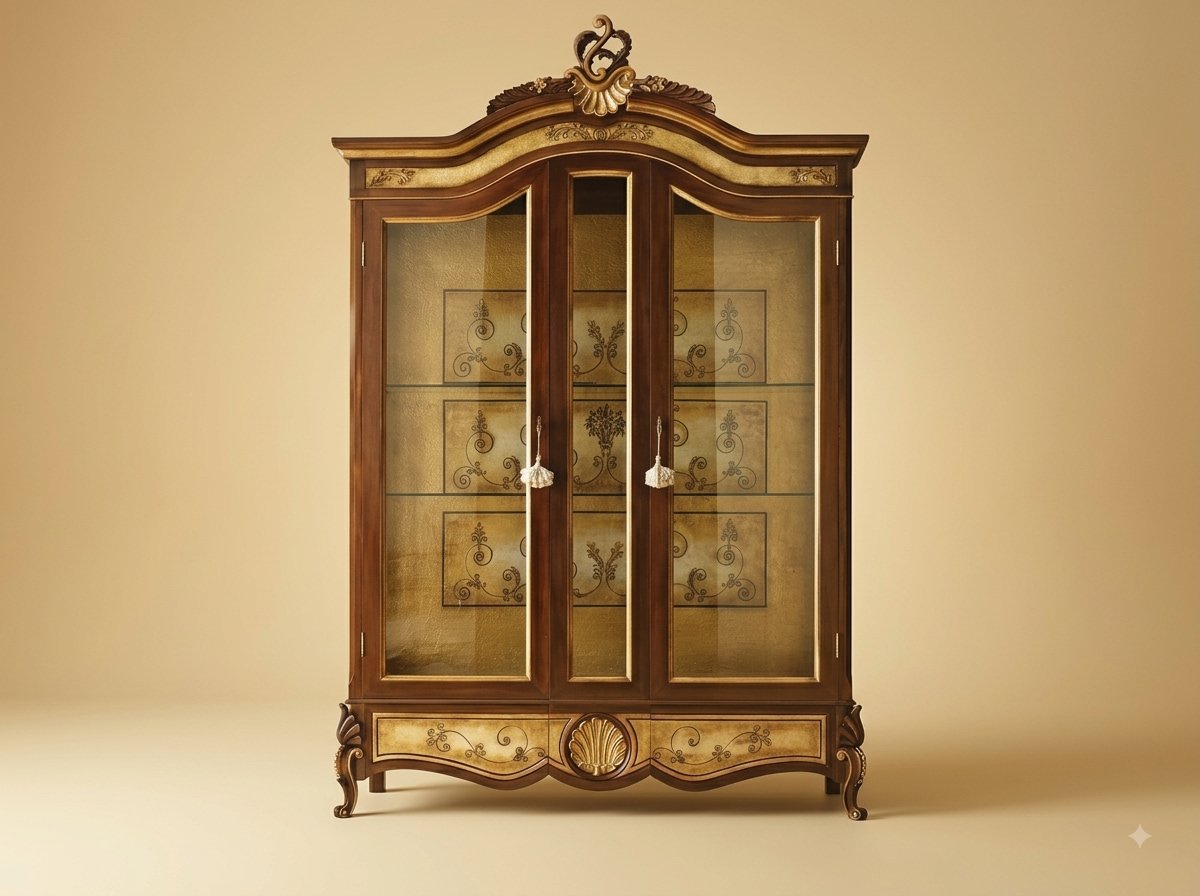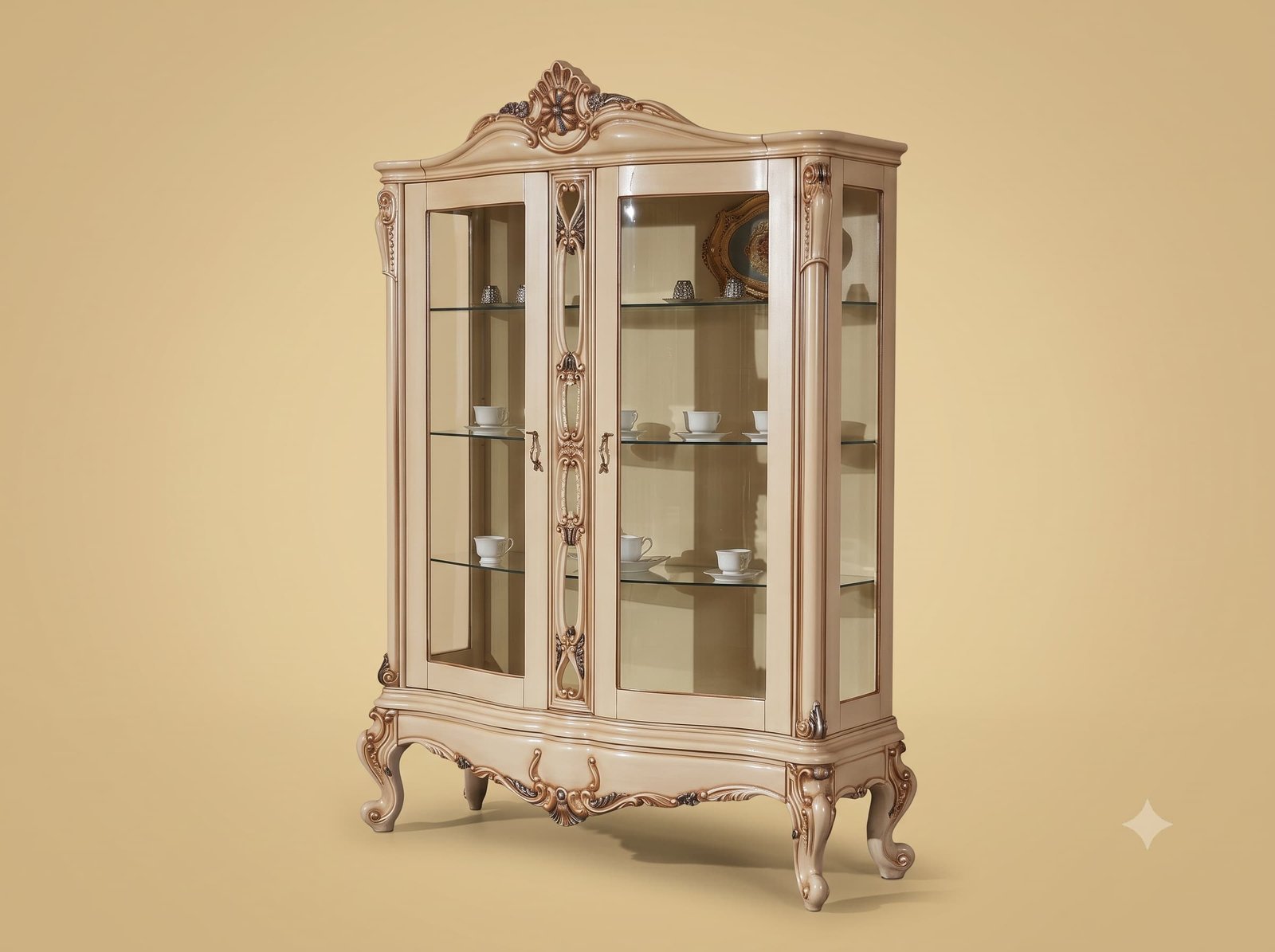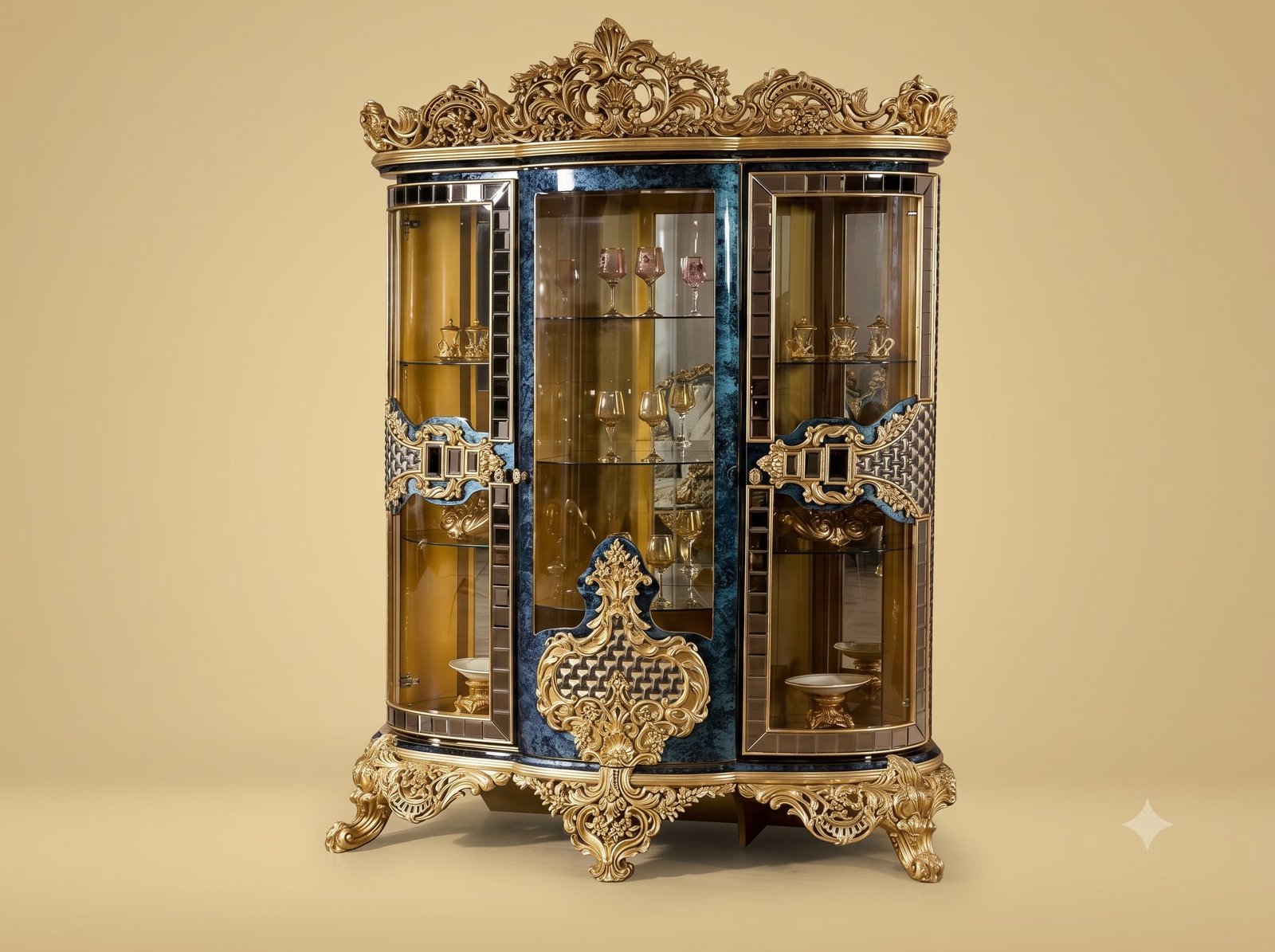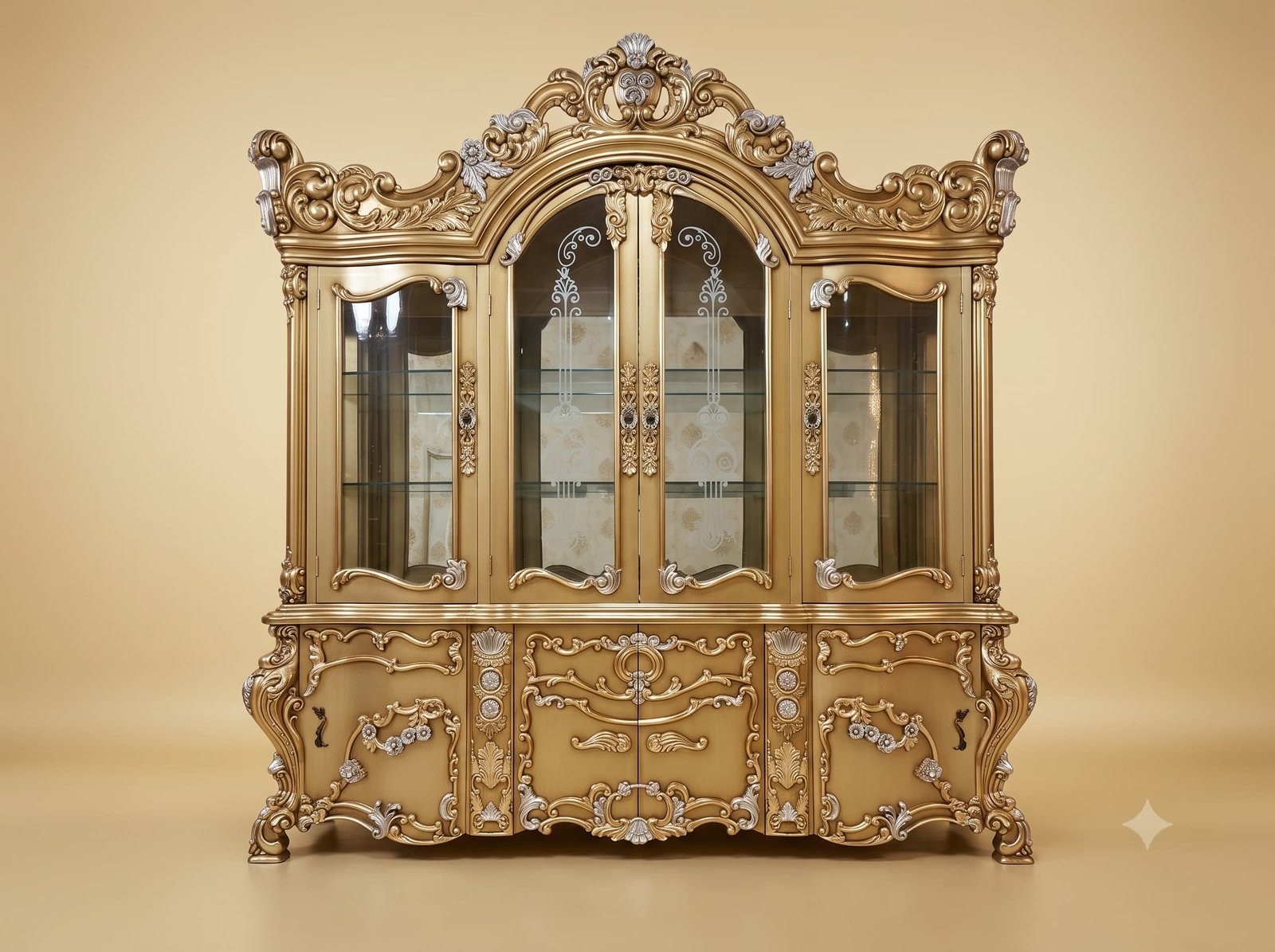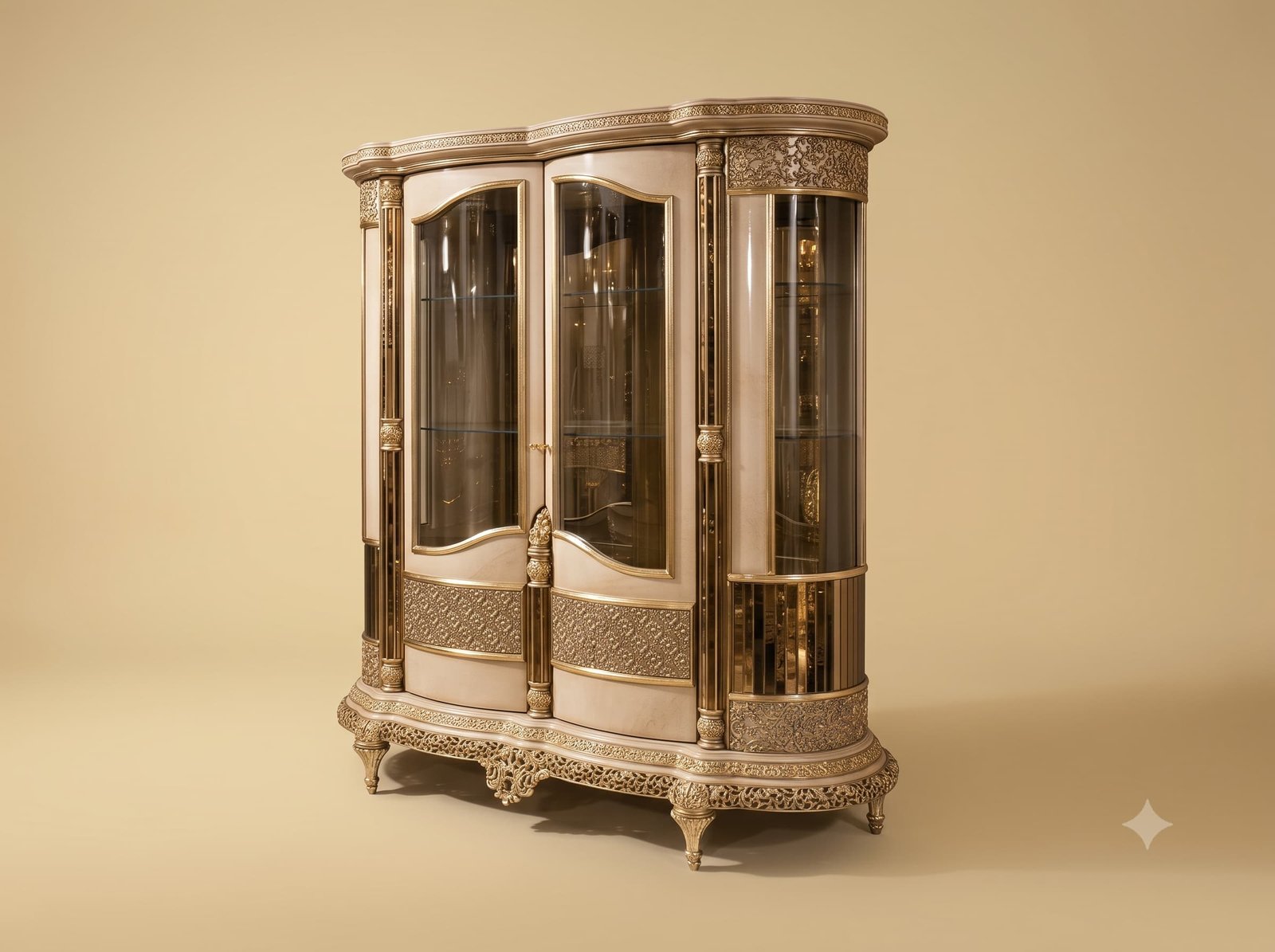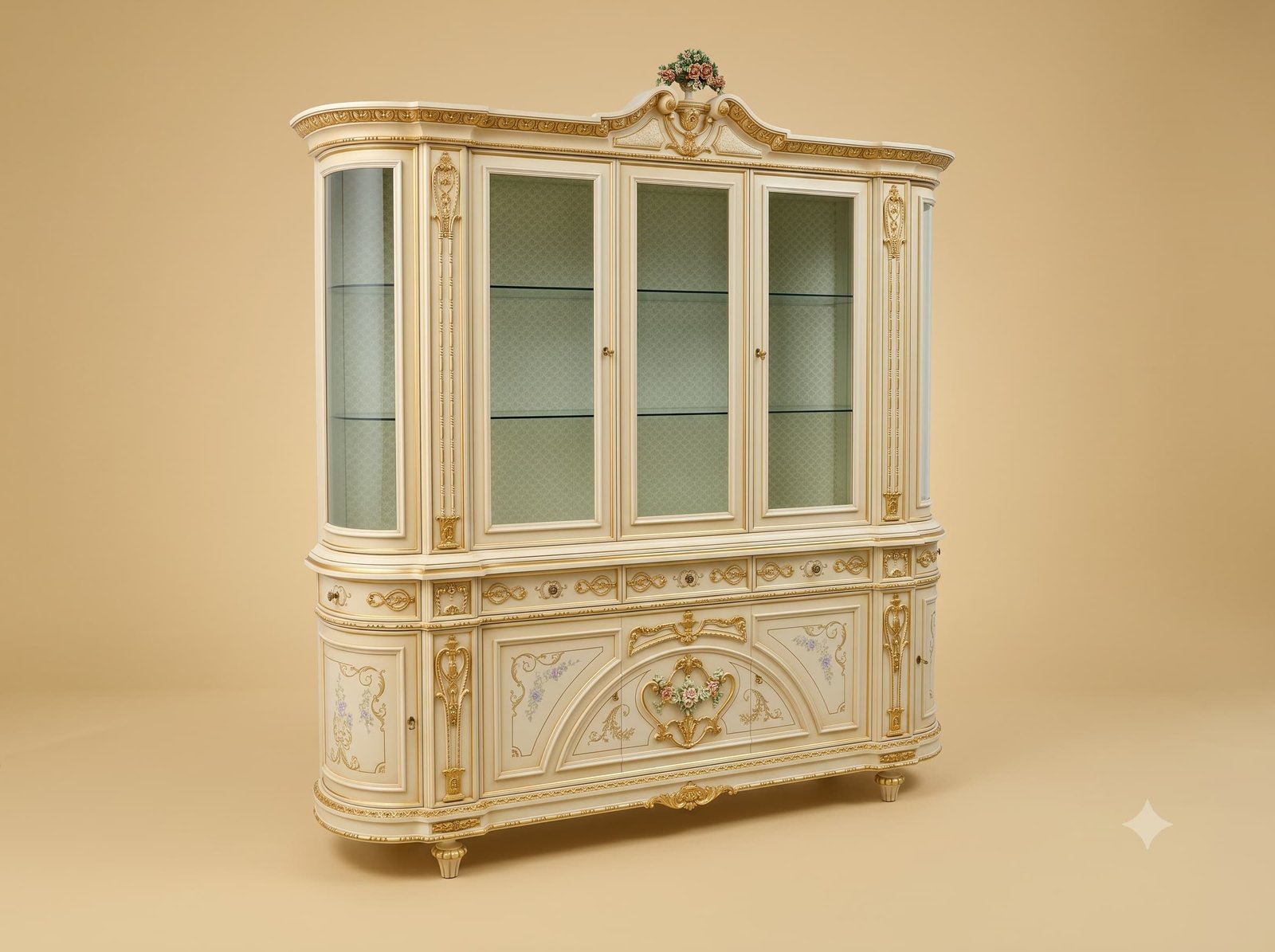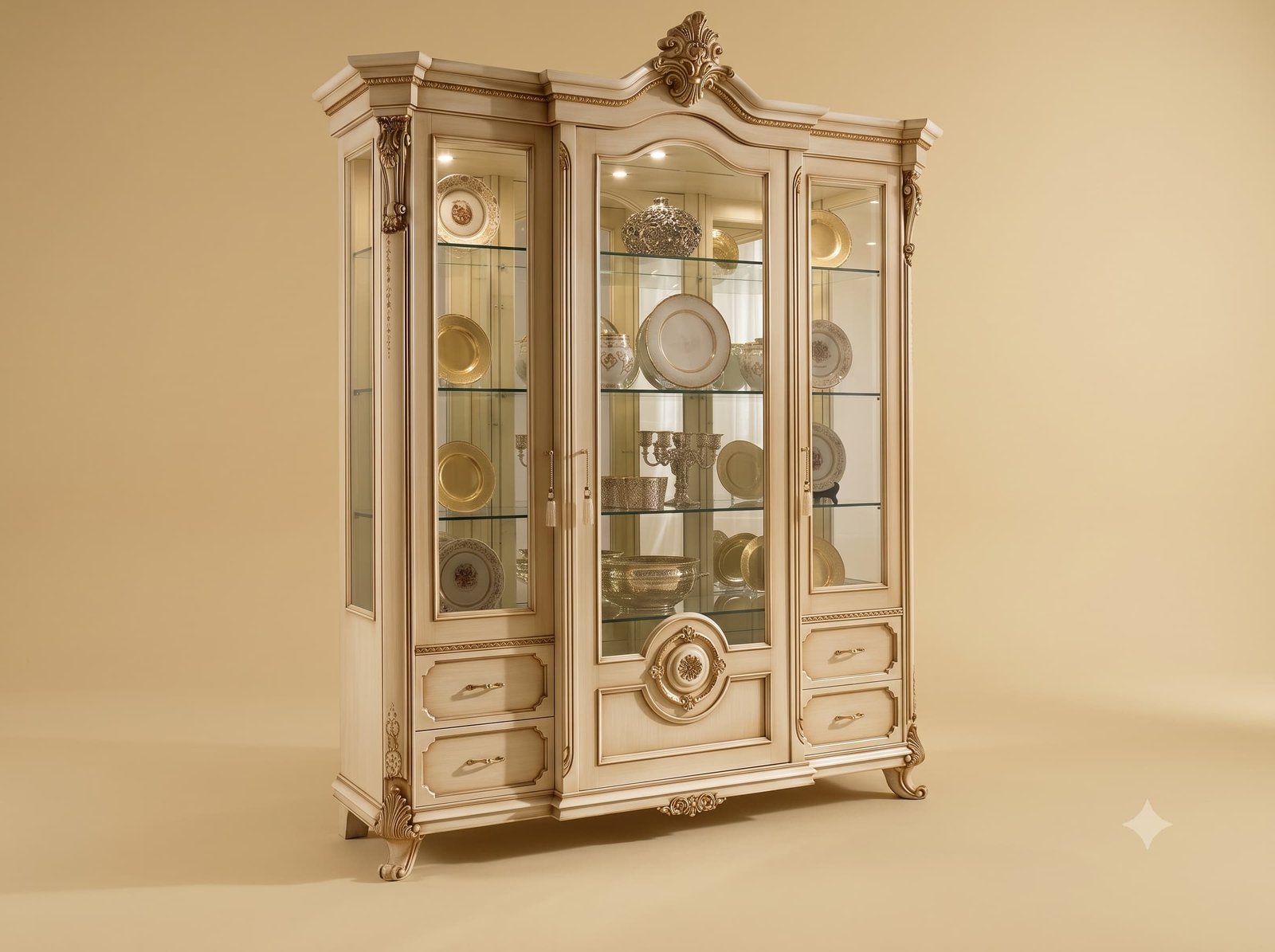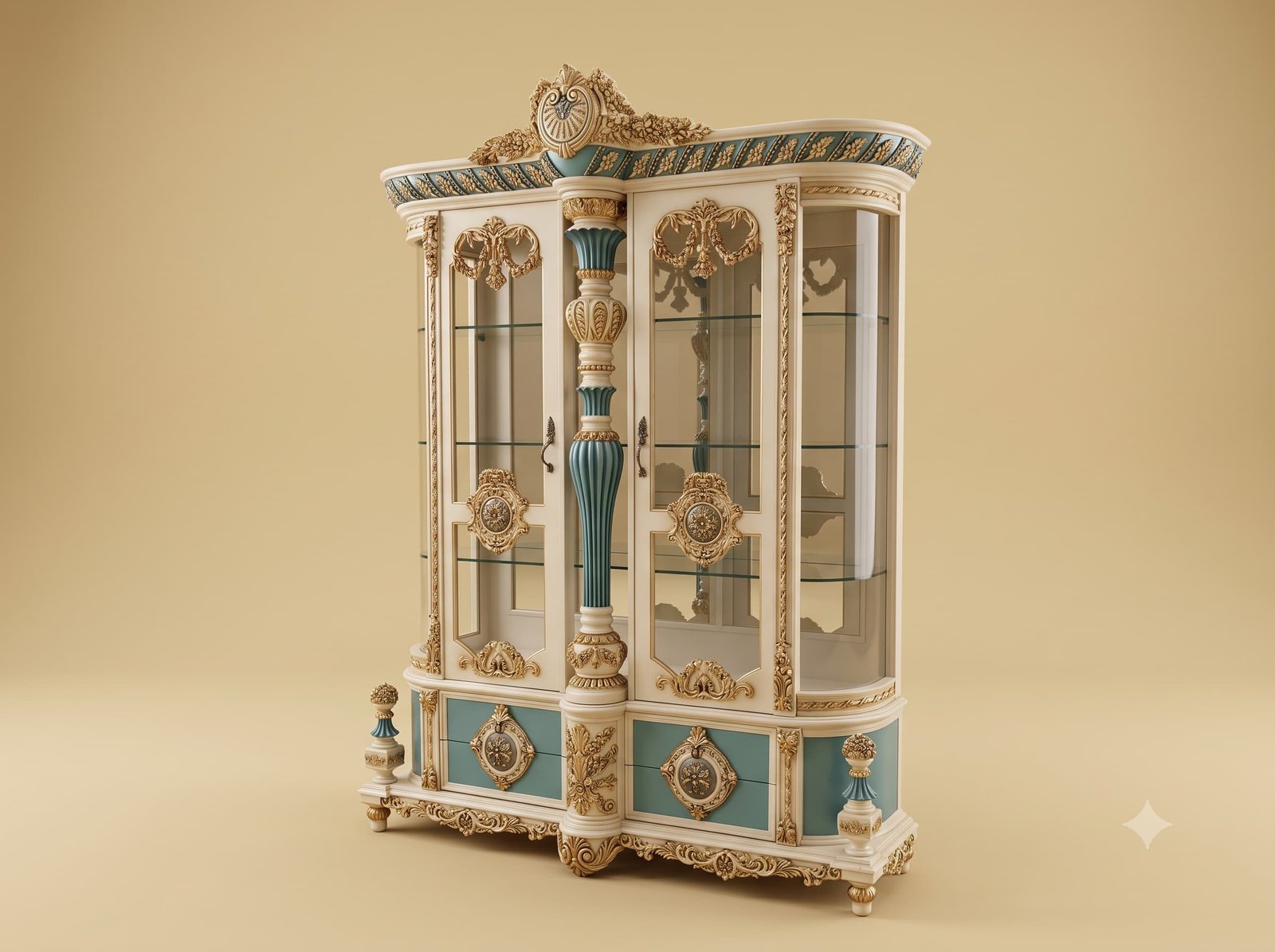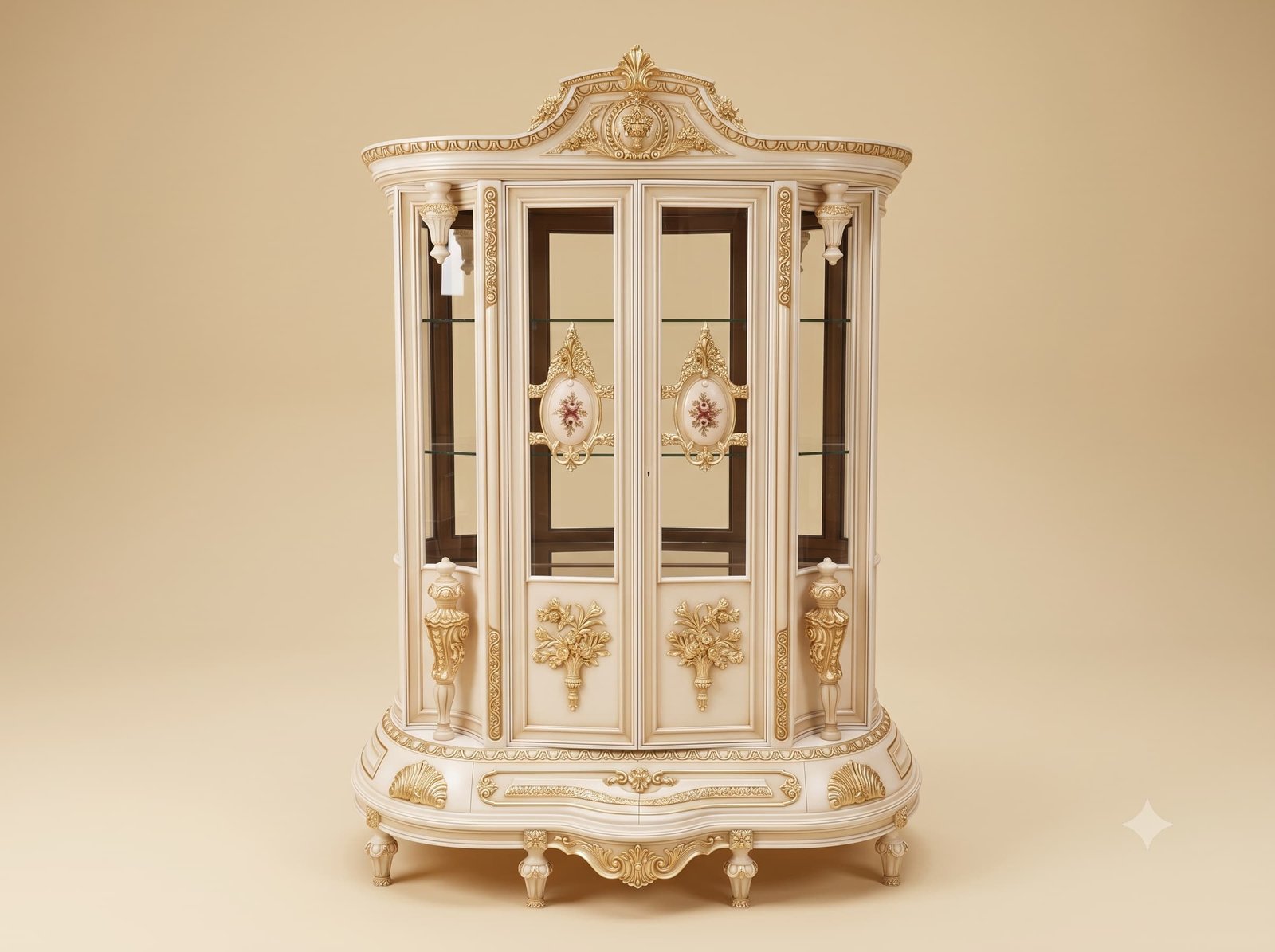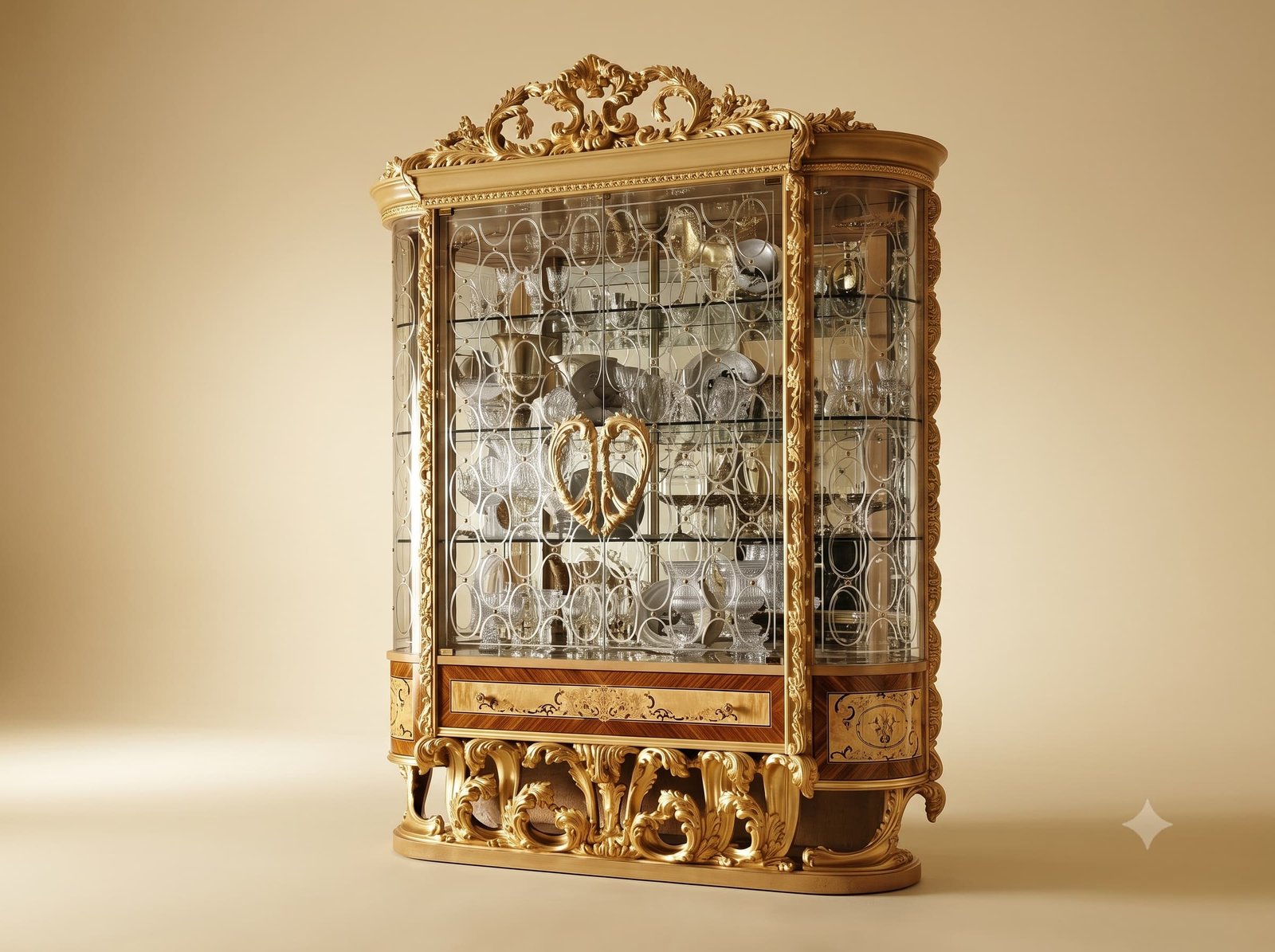
The carving across the base of this showcase is holding nothing up, and it is important that it is not.
Look at it and the assumption is natural: a great mass of scrollwork beneath a heavy loaded cabinet must be what carries it. It is not, and it could not be. Openwork carving is a lattice of short-grained curves; loaded, it would eventually split at the first place the grain runs across a scroll.
So our master Indian artisans build the load path separately and completely. A solid shaped plinth runs beneath, a solid rail runs above, and the two are tied at the ends by solid uprights. That closed rectangle carries the entire weight of the glazed cabinet down to the floor. It is what you would build if there were no carving at all.
The pierced scrollwork is then hung within that frame, fixed at its top and ends, touching the floor nowhere. It fills the space and it carries nothing but itself.
The honest version of a decorated base is one where the decoration has been relieved of responsibility. That is why a cabinet like this can be filled and stay standing straight for a lifetime, and why the carving stays intact instead of slowly failing under a load it was never shaped to take.
 Ask Price On WhatsApp