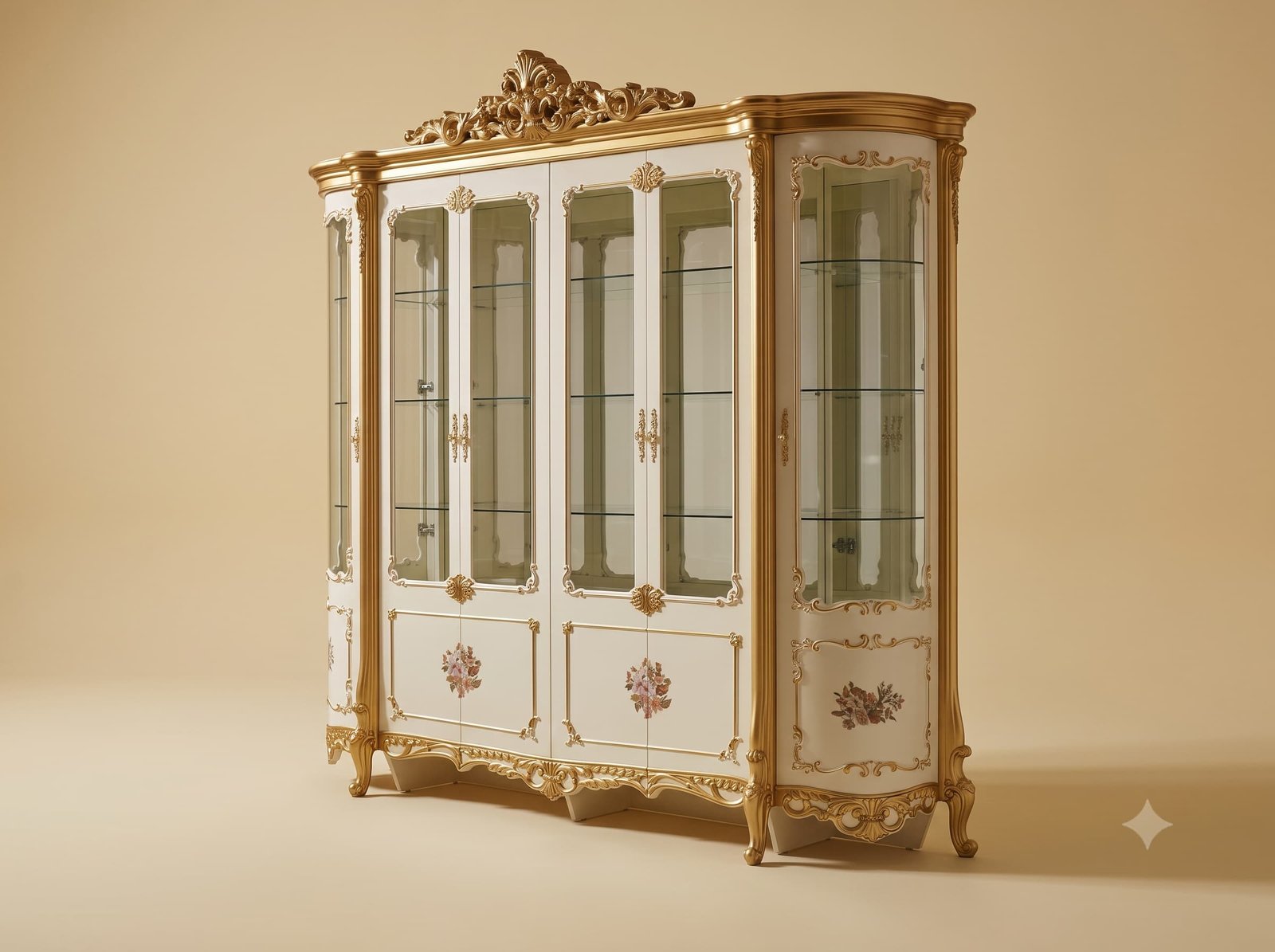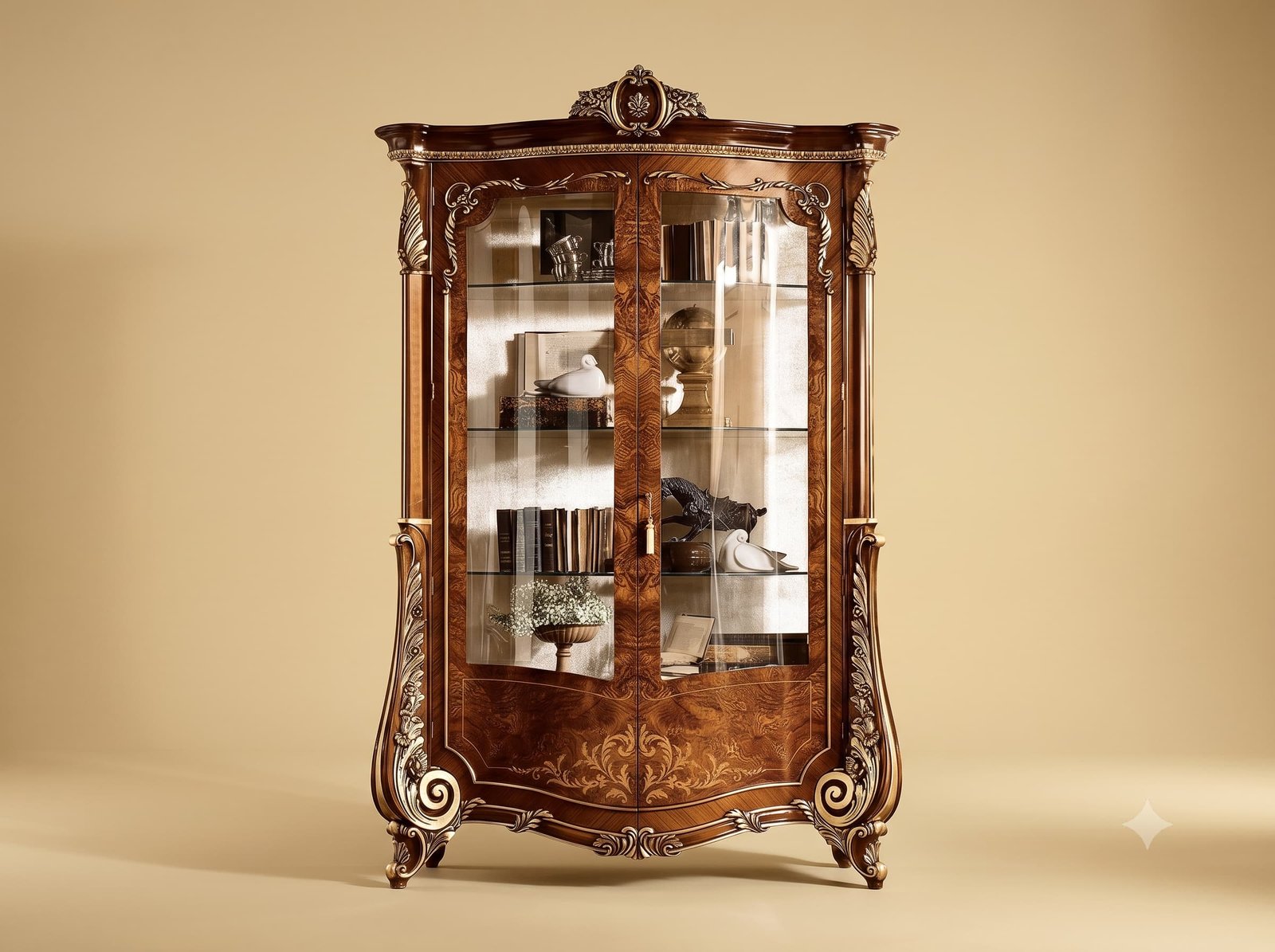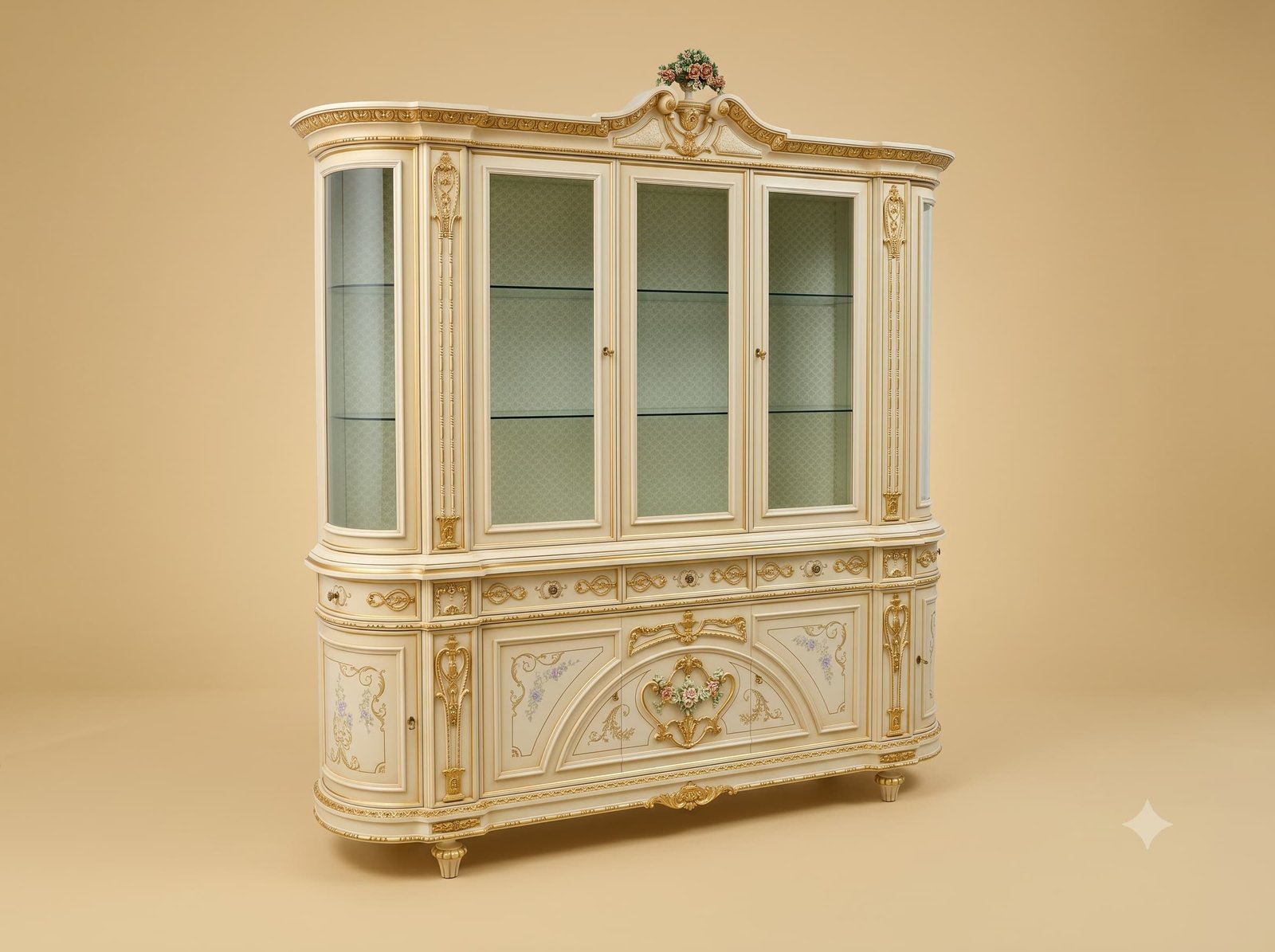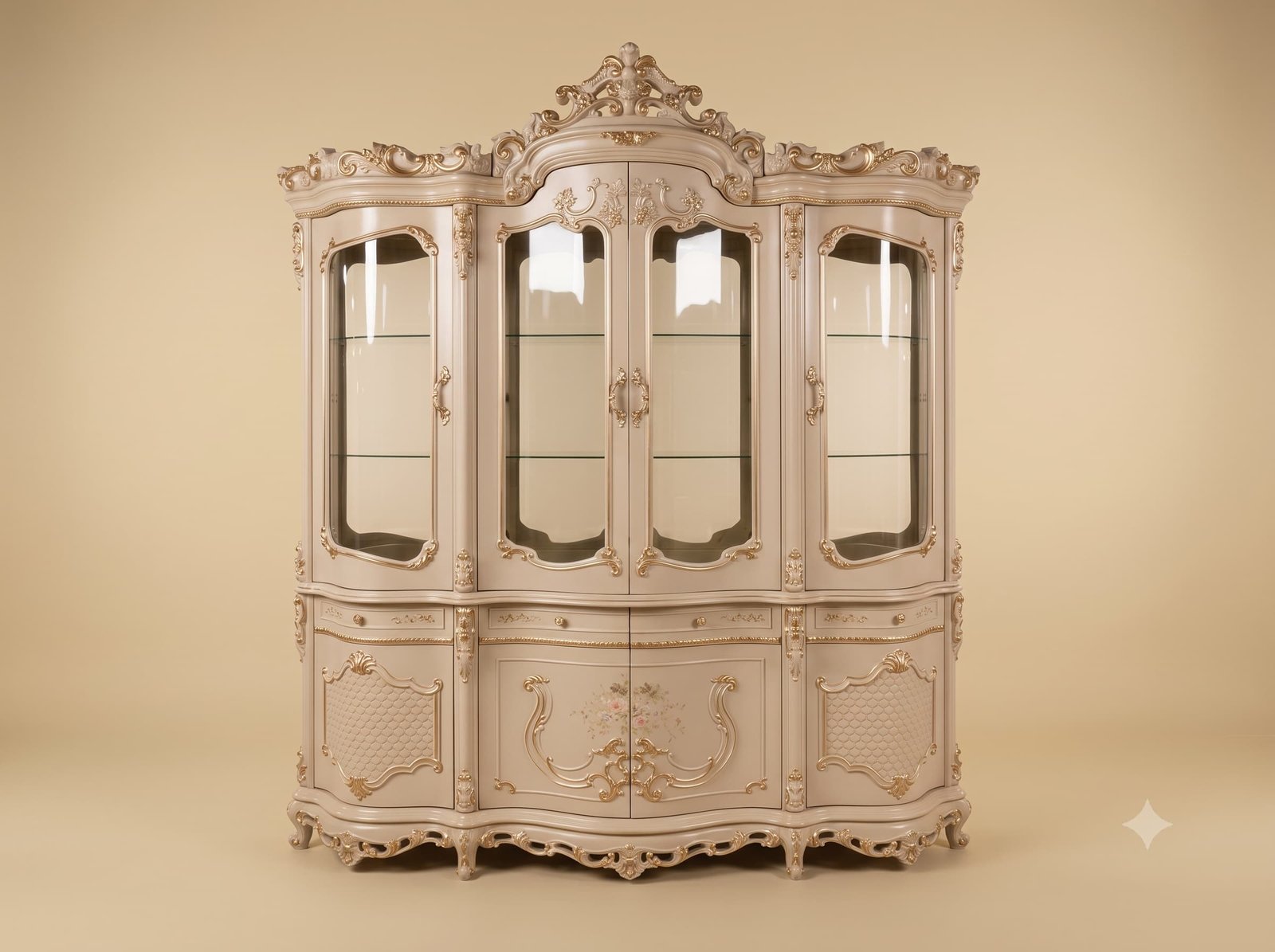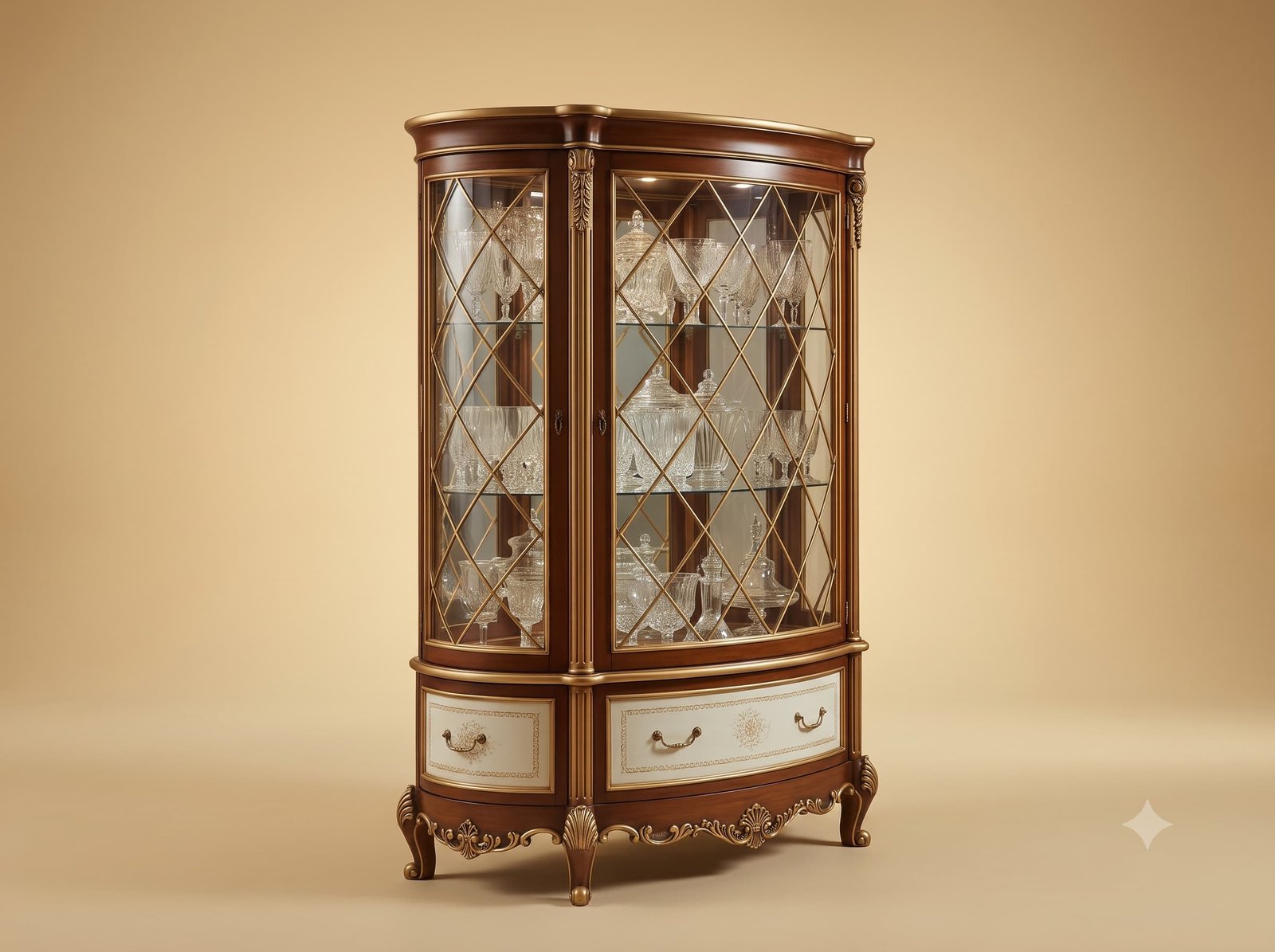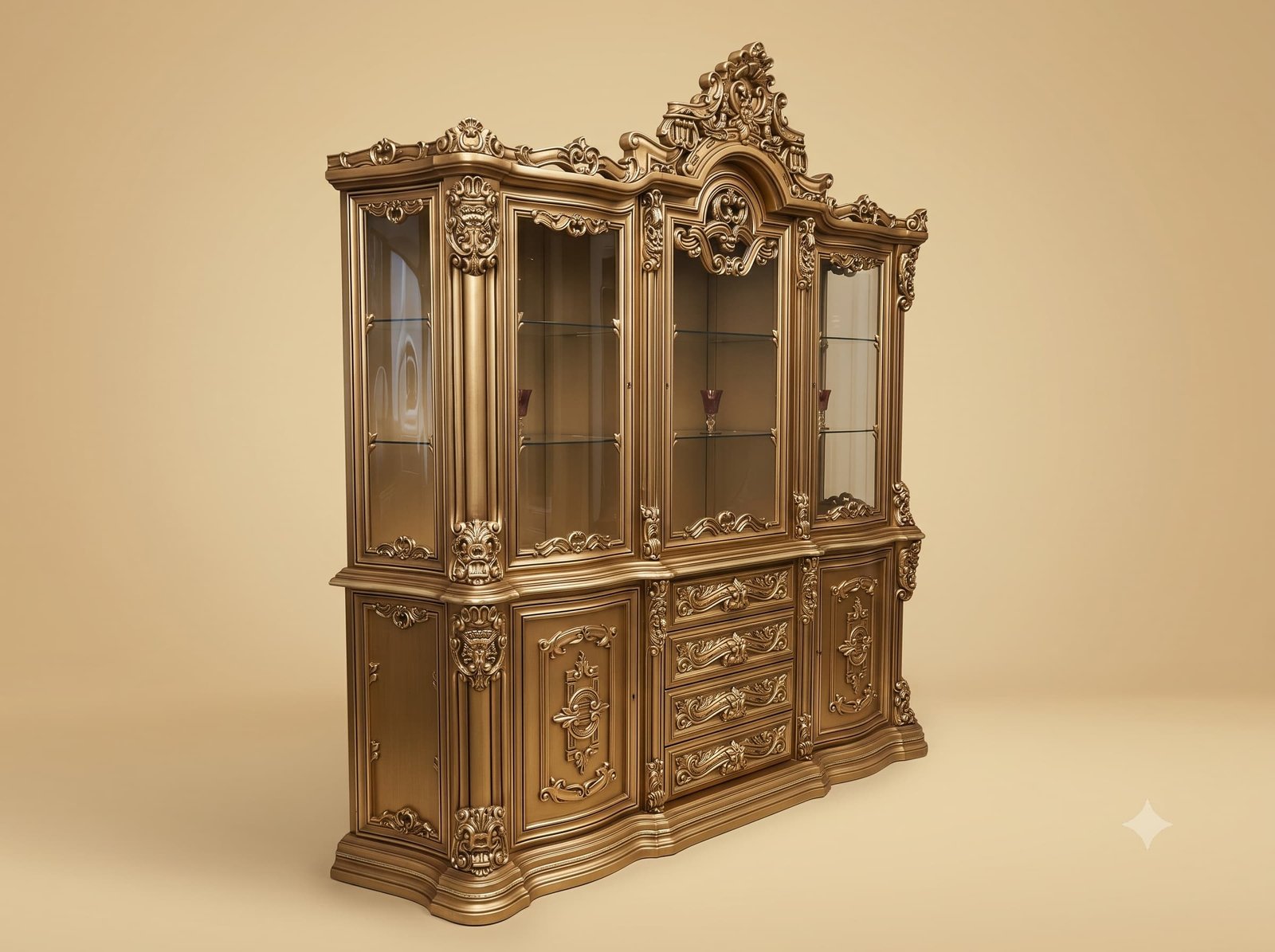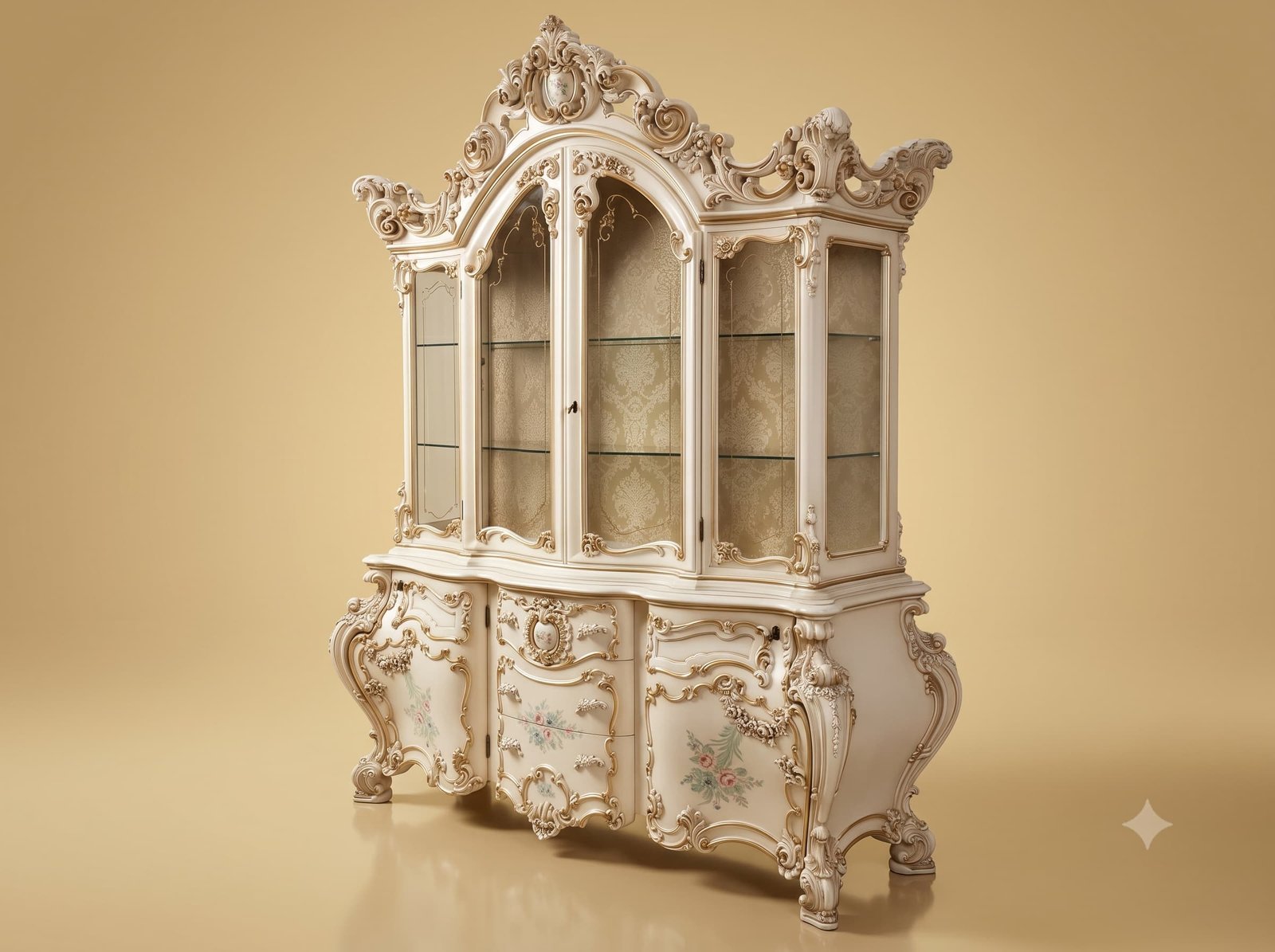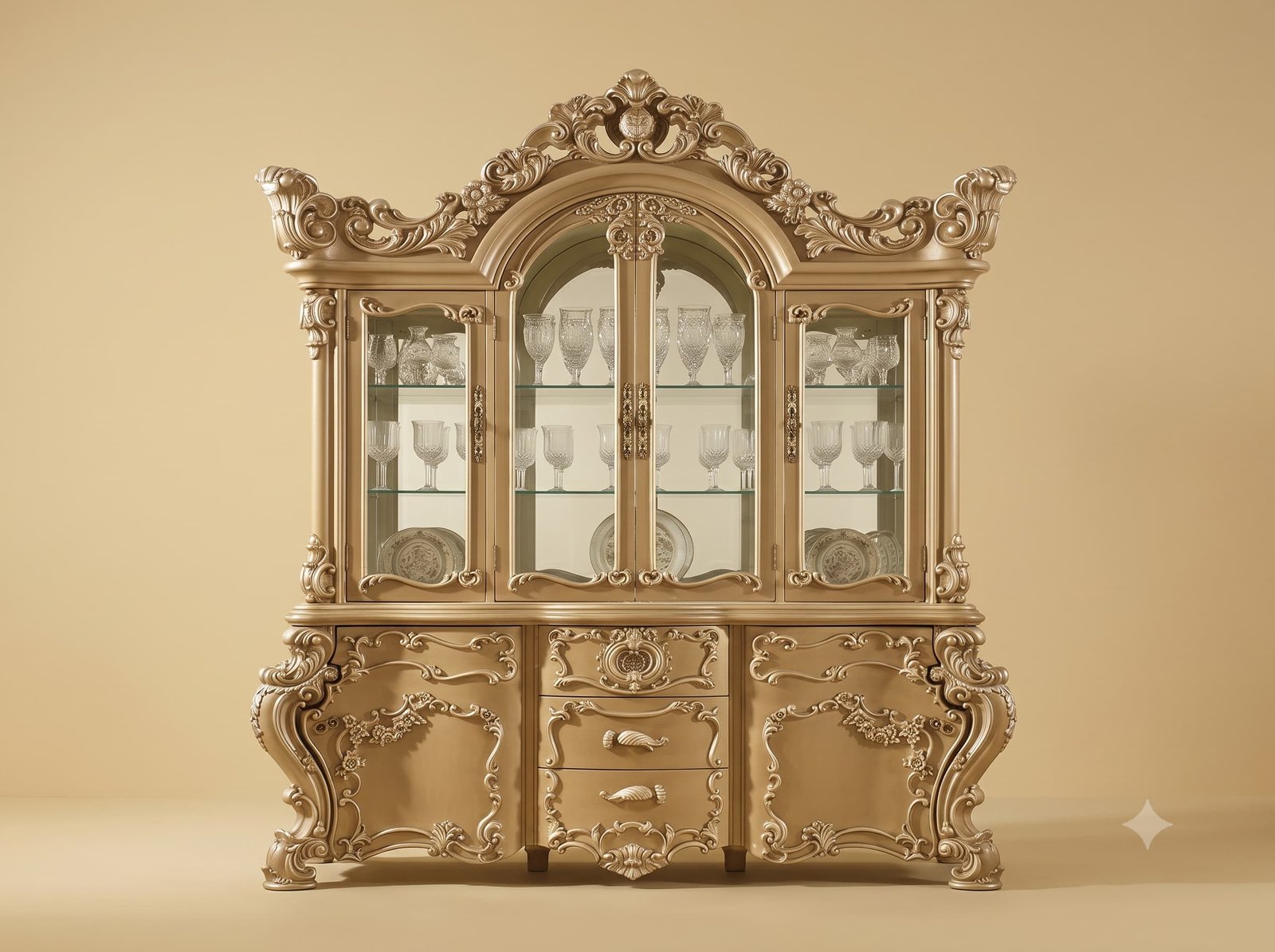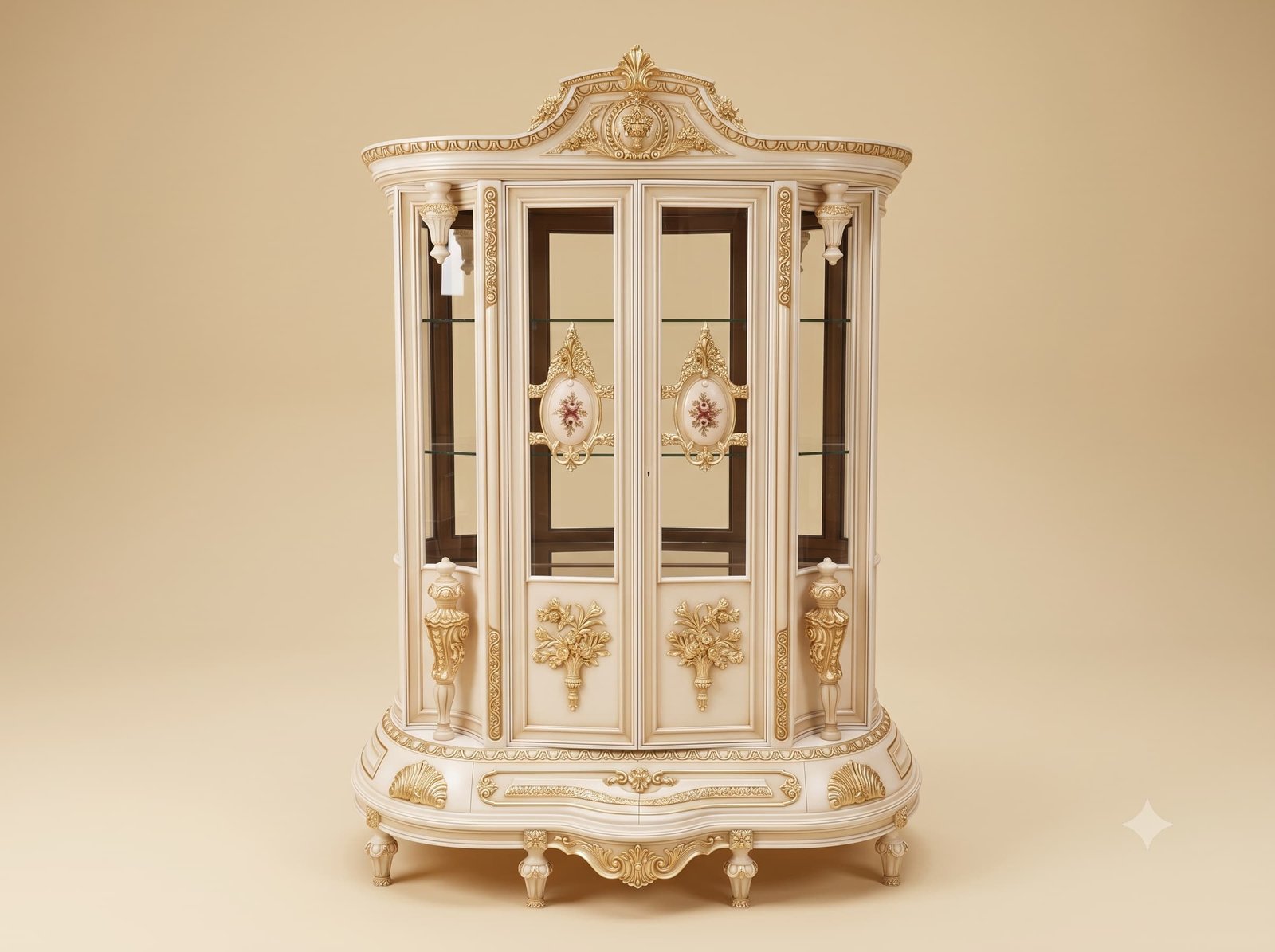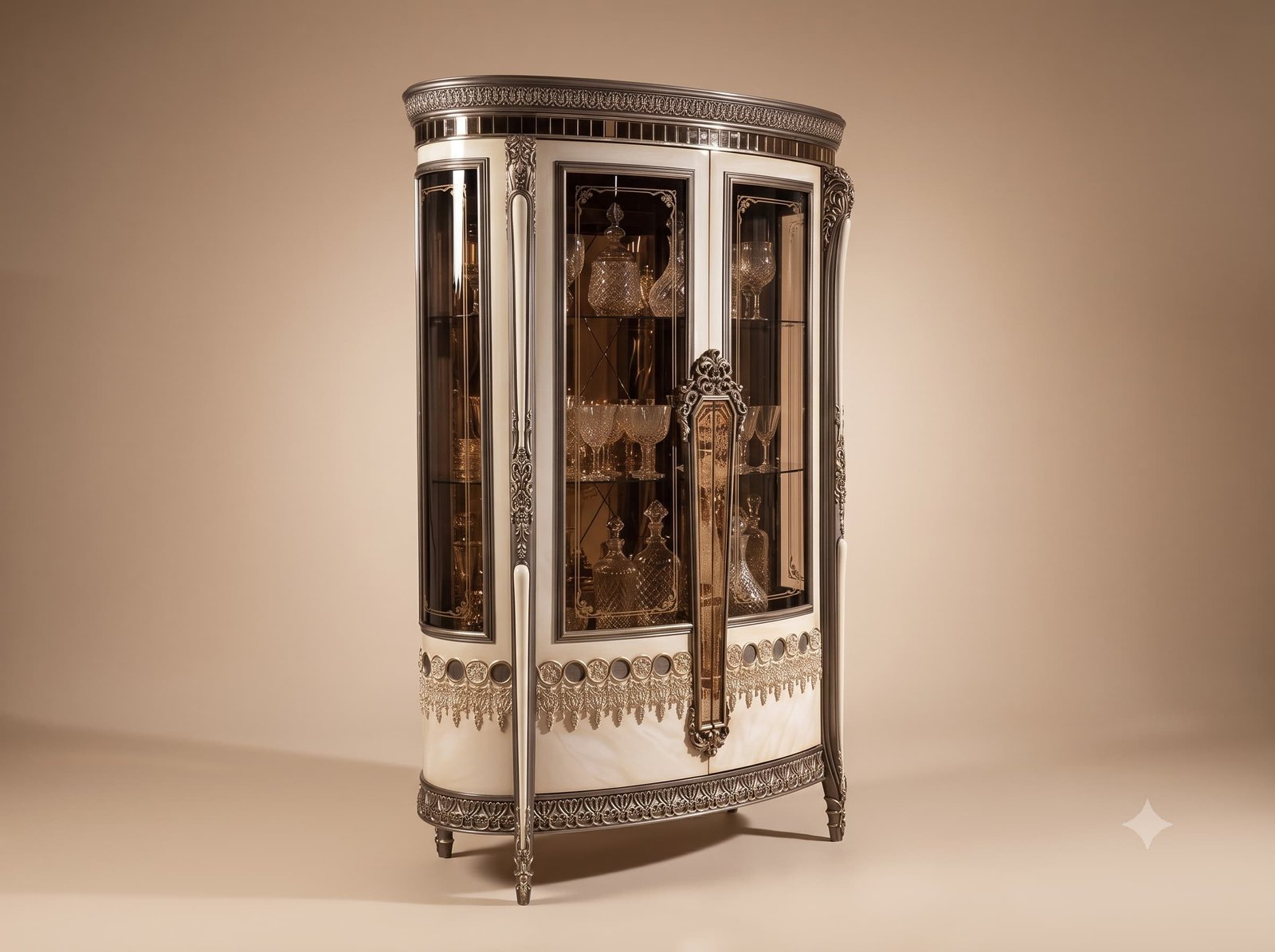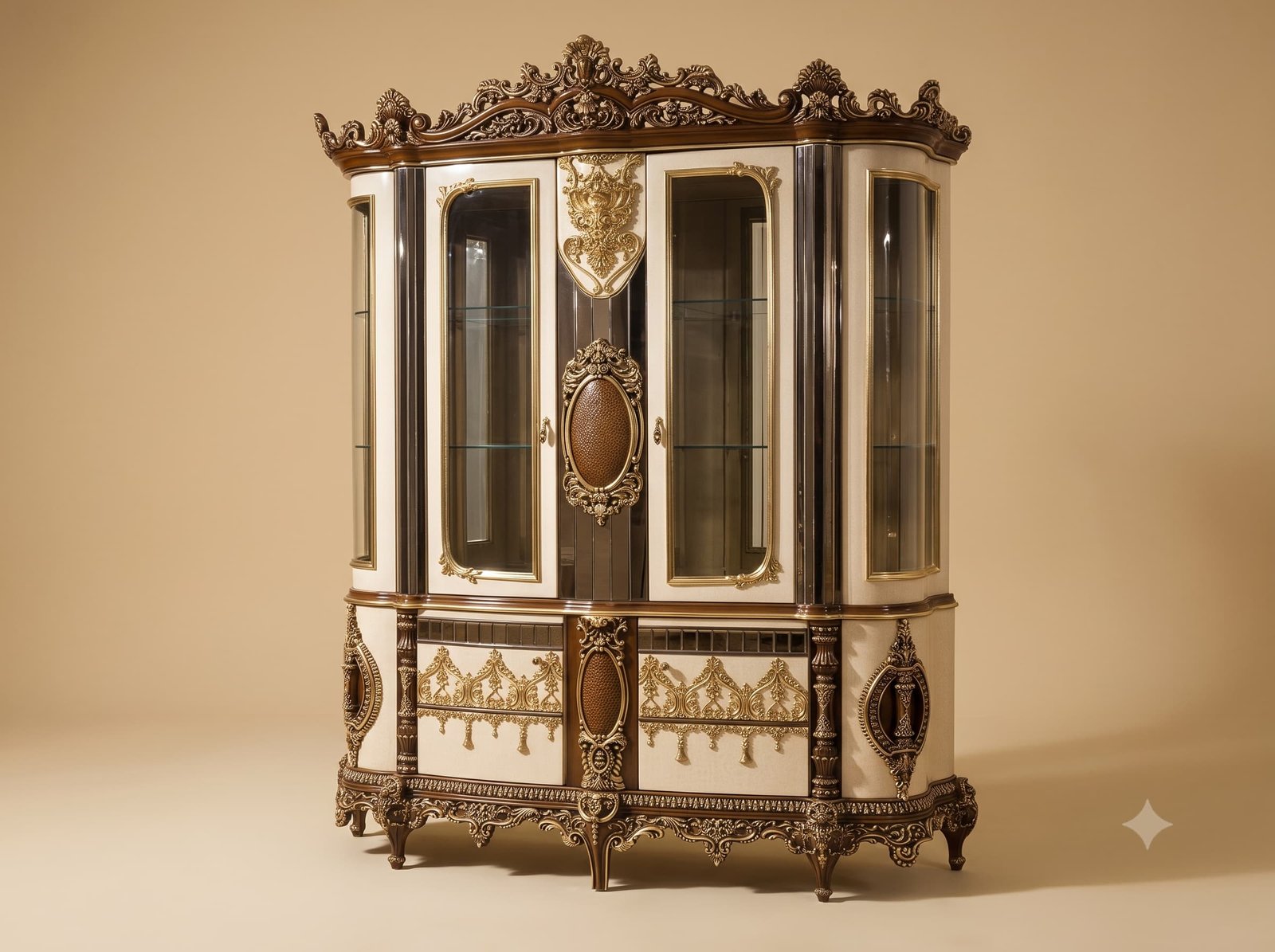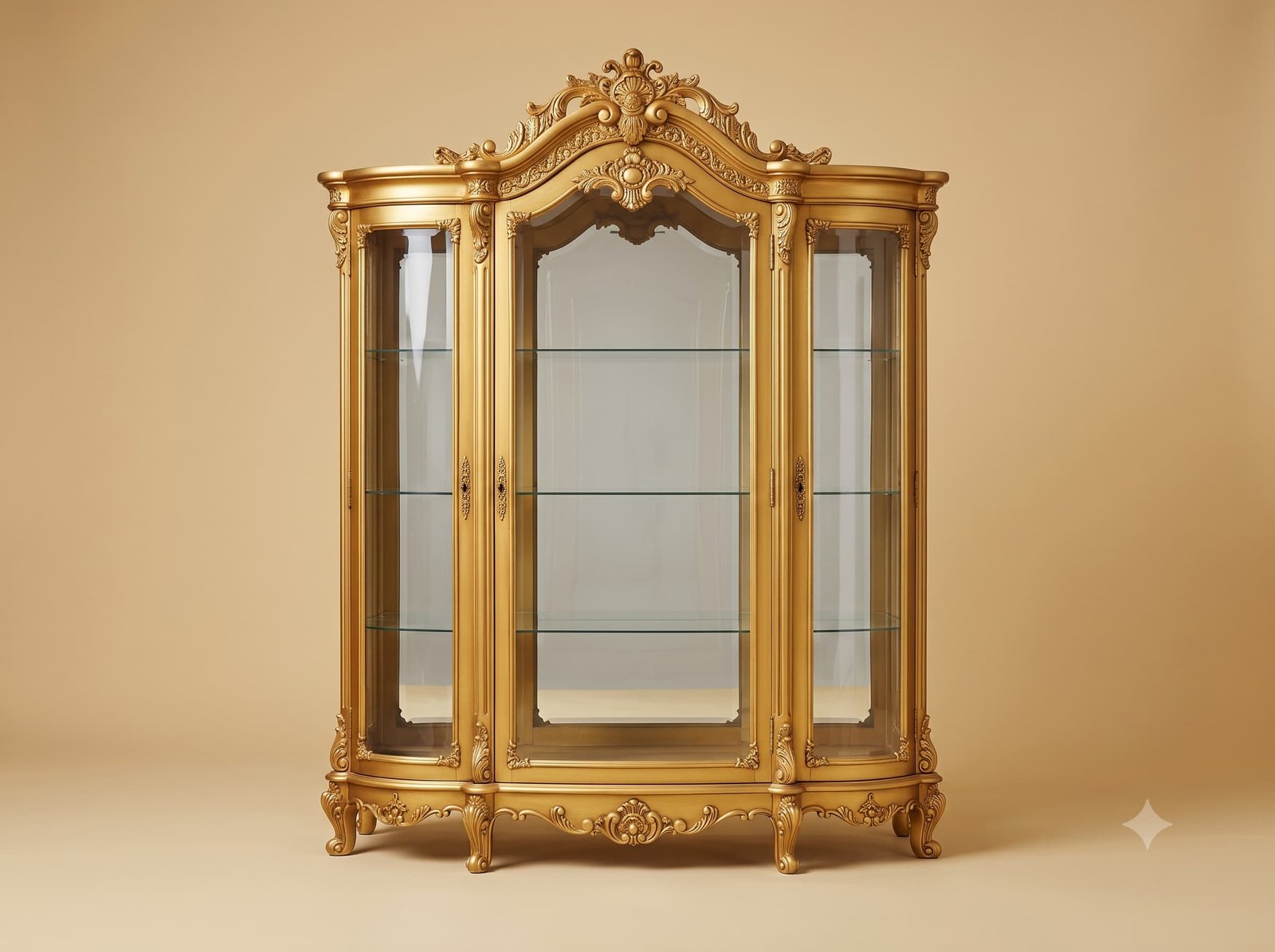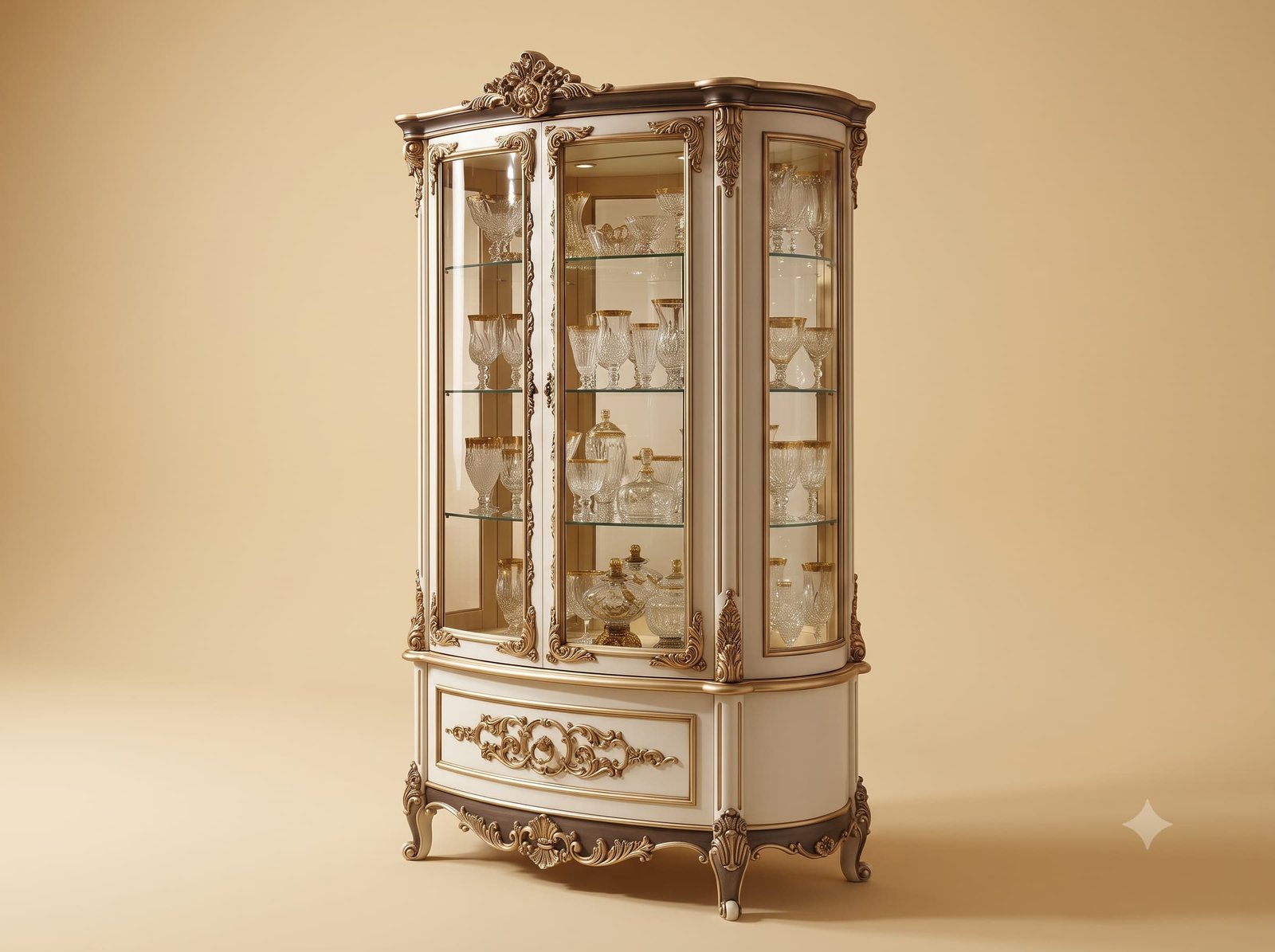
Flat glass can be cut to fit. Curved glass cannot - and that single fact governs how a cabinet like this has to be built.
A bent pane is formed to a shape before it ever reaches the workshop. It cannot be trimmed, eased, or persuaded afterwards. If the opening it has to sit in is not exactly the shape it was made to, it does not go in - and there is no adjusting it.
The trap is that the pane must sit in two curved grooves, one in the rail above and one in the rail below, and those two curves have to be identical. Cut them separately, even to the same drawing, and they will differ by a fraction - which is enough for a rigid pane to bind at one end and stand off at the other.
So our master Indian artisans cut both rails together. The two blanks are stacked, pinned to hold their alignment, and the curve is cut through both in one operation, so the upper and lower grooves are physically the same shape. The template used to cut them is the same one the glass is made to.
Three curves, one template. That is why the pane drops in.
 Ask Price On WhatsApp