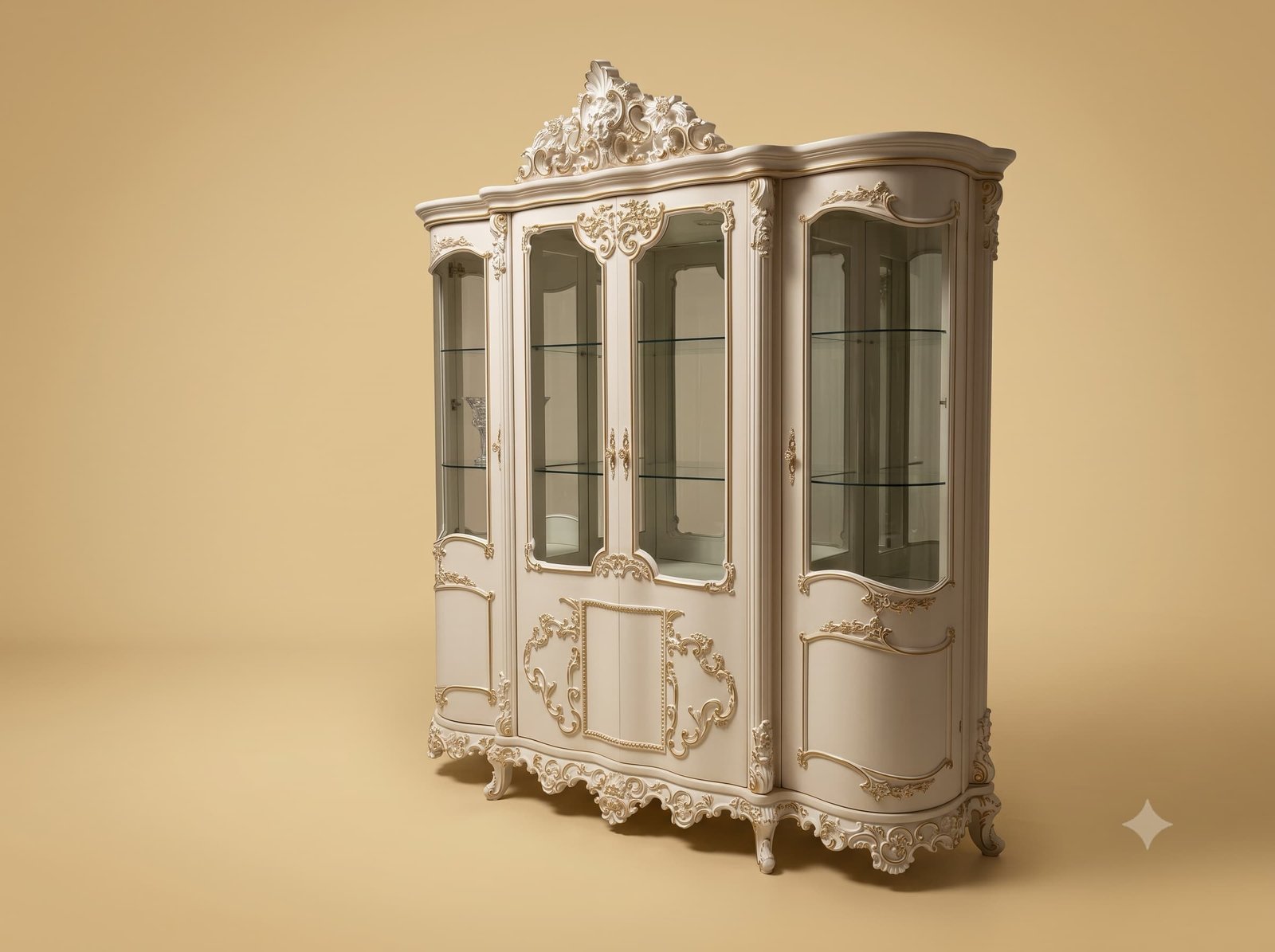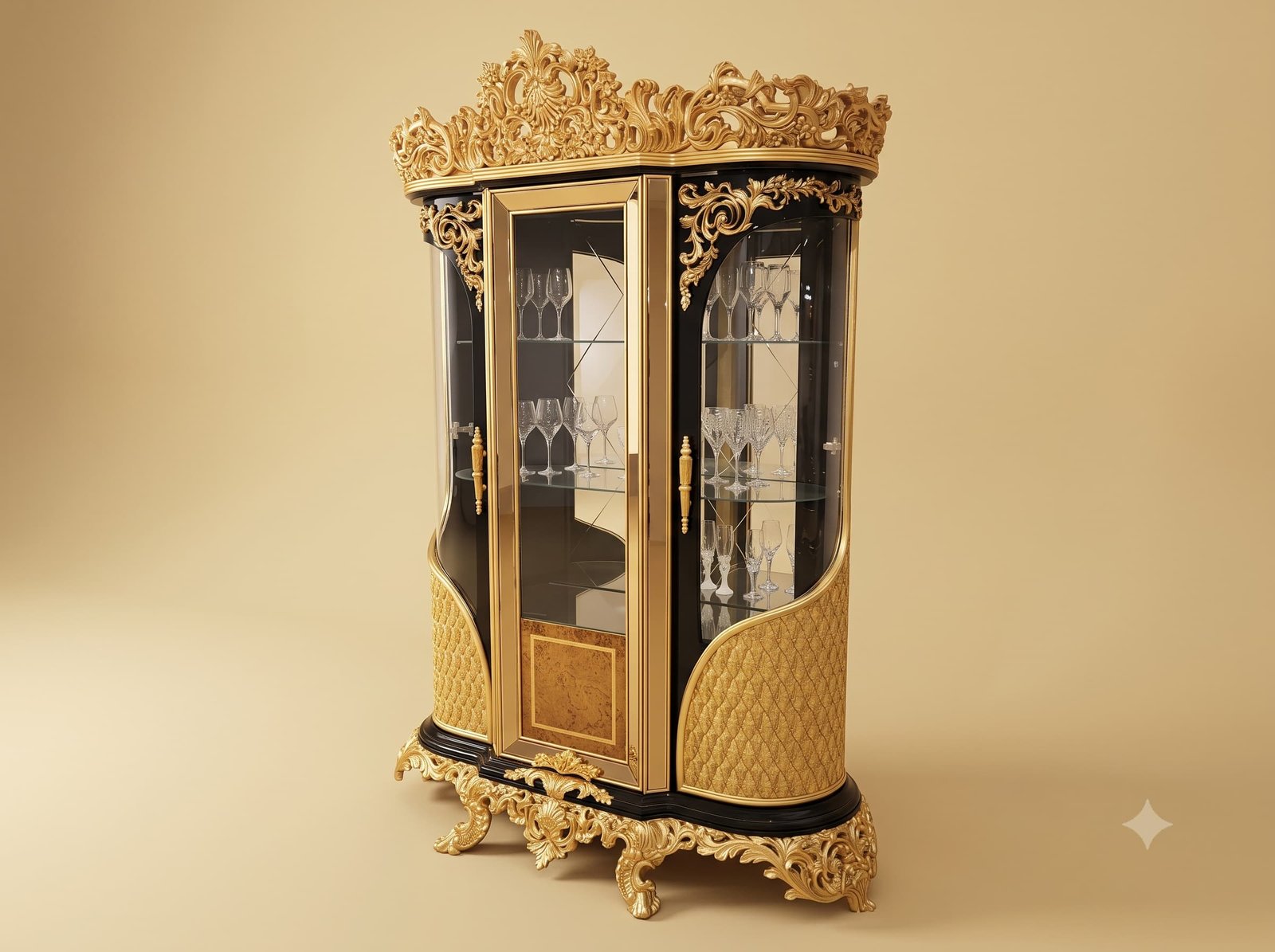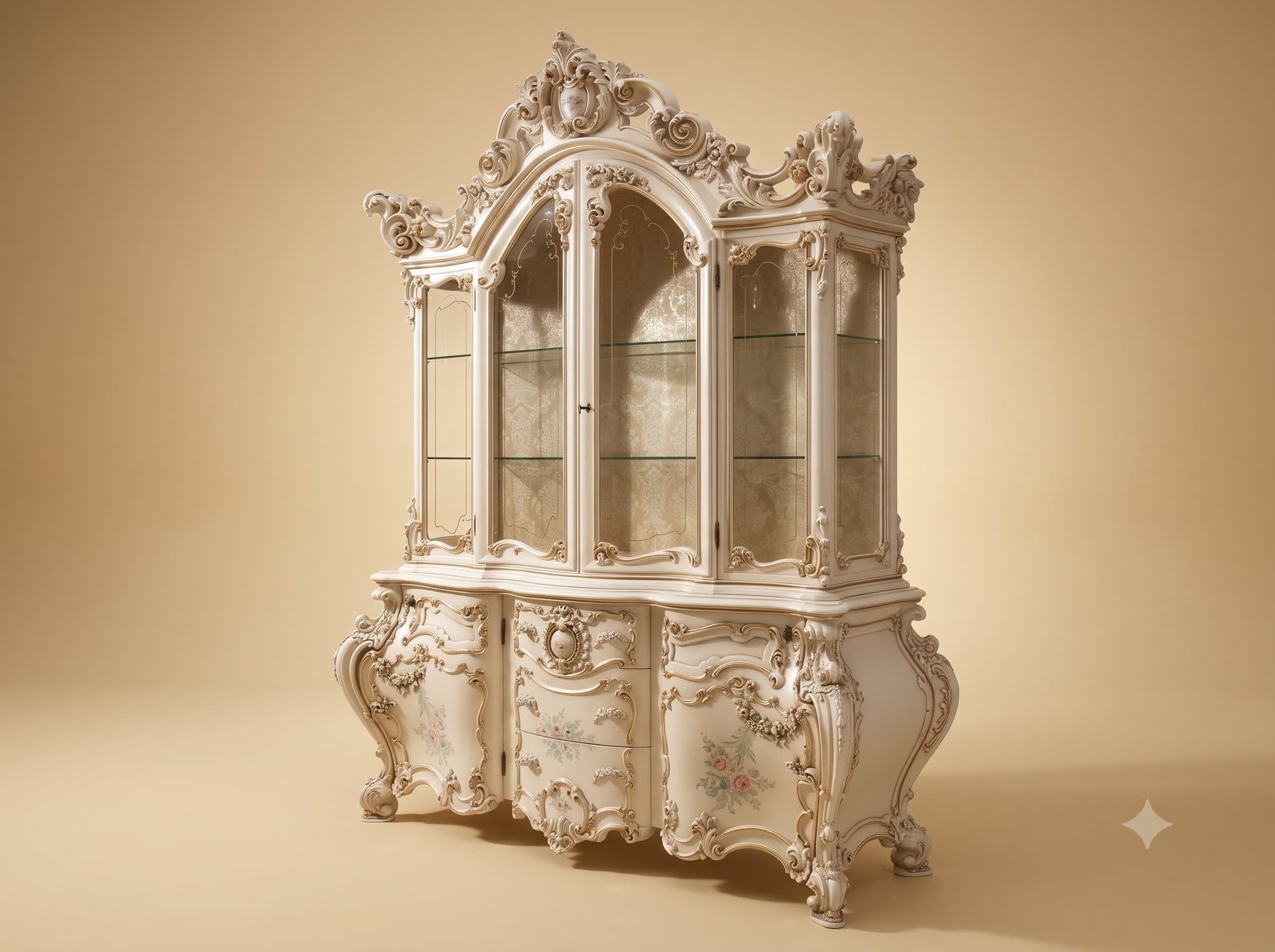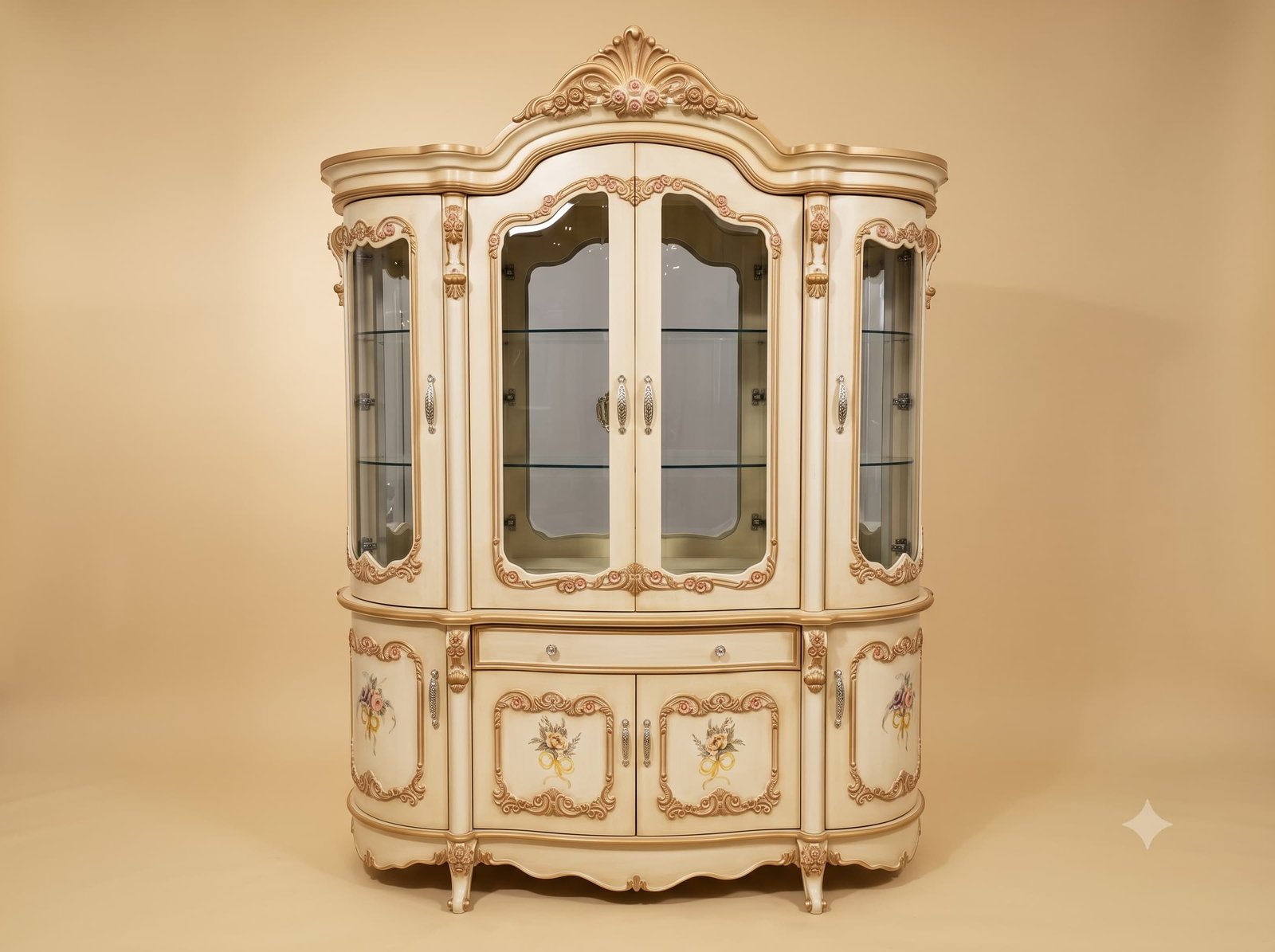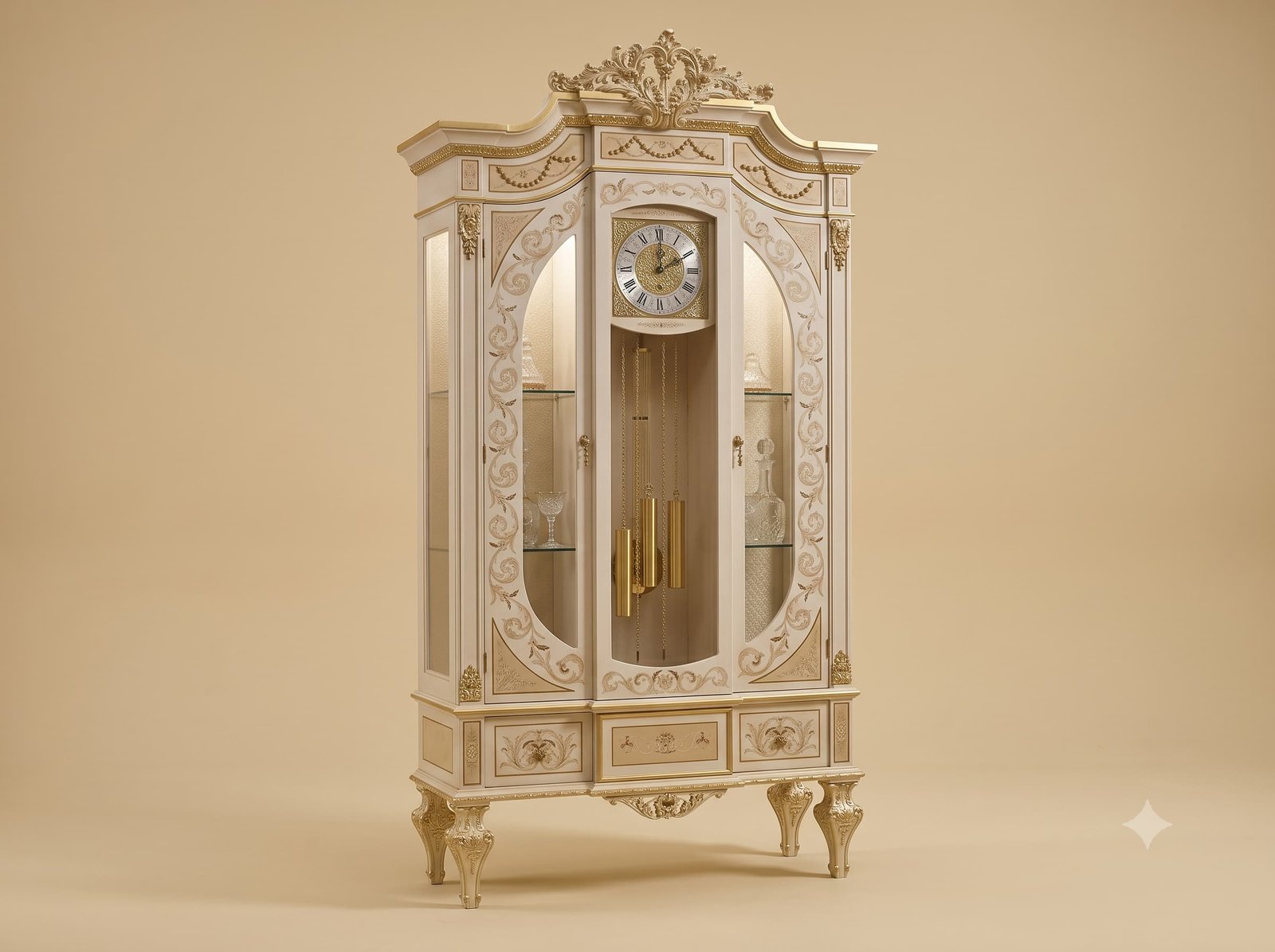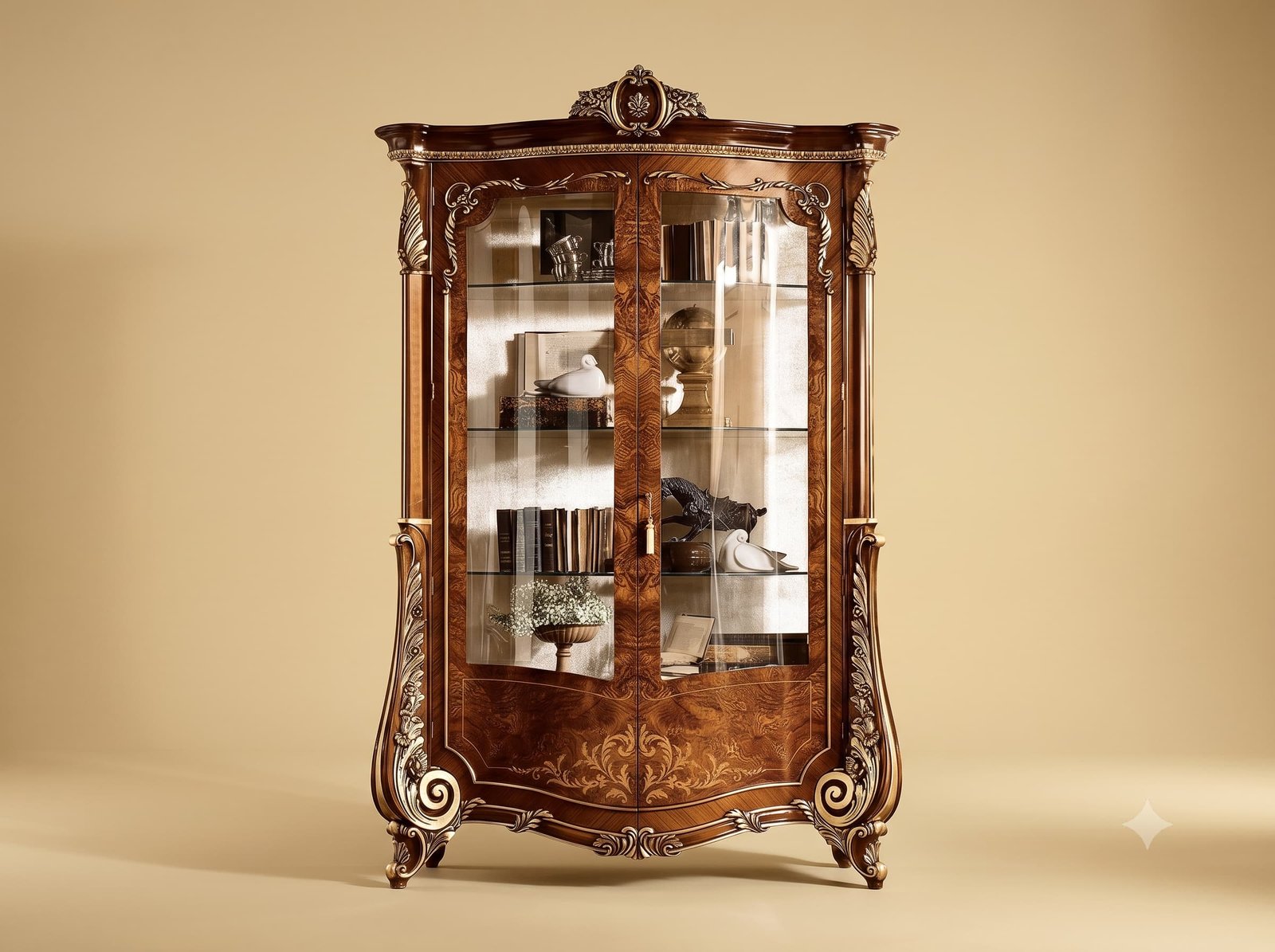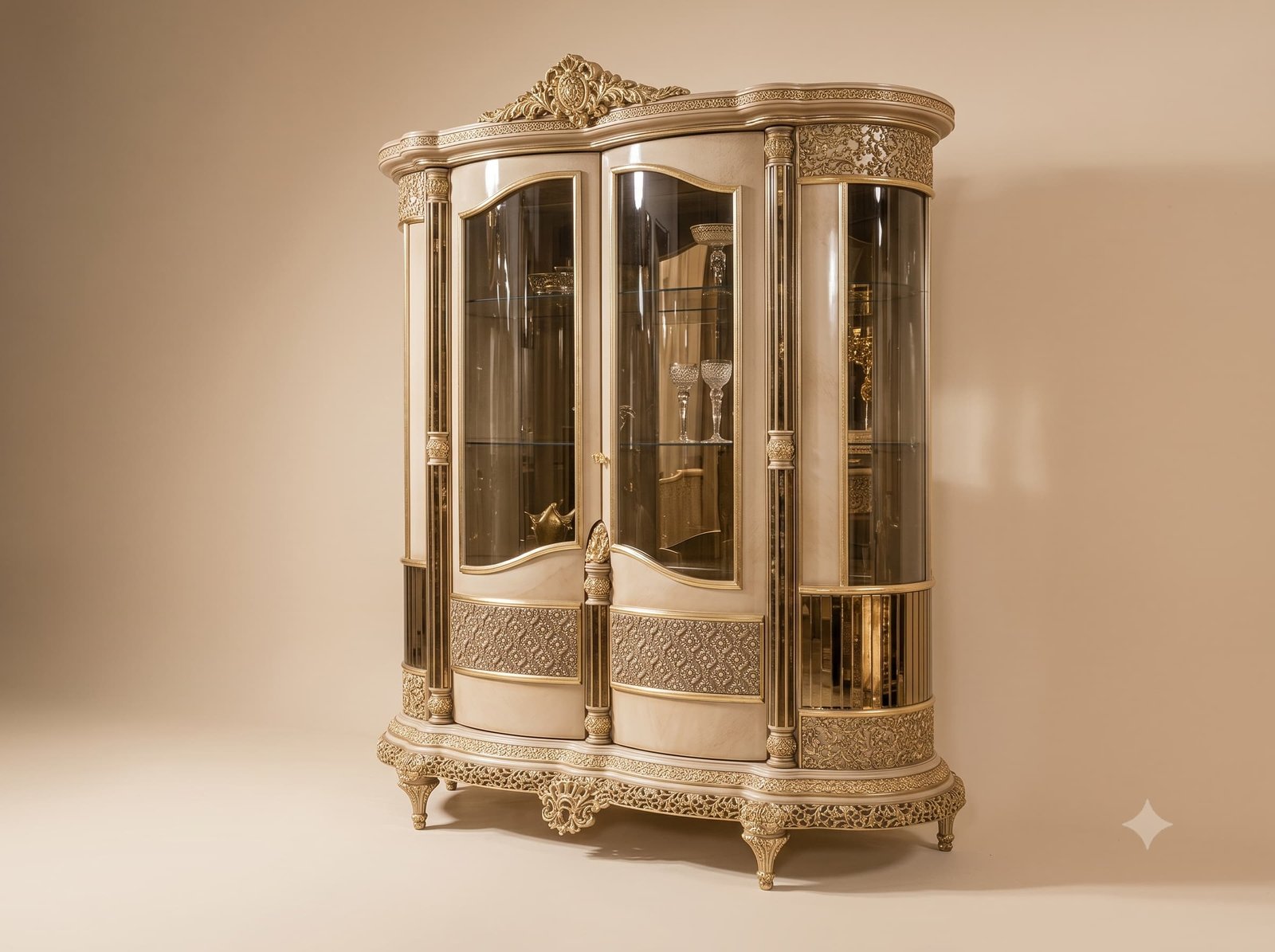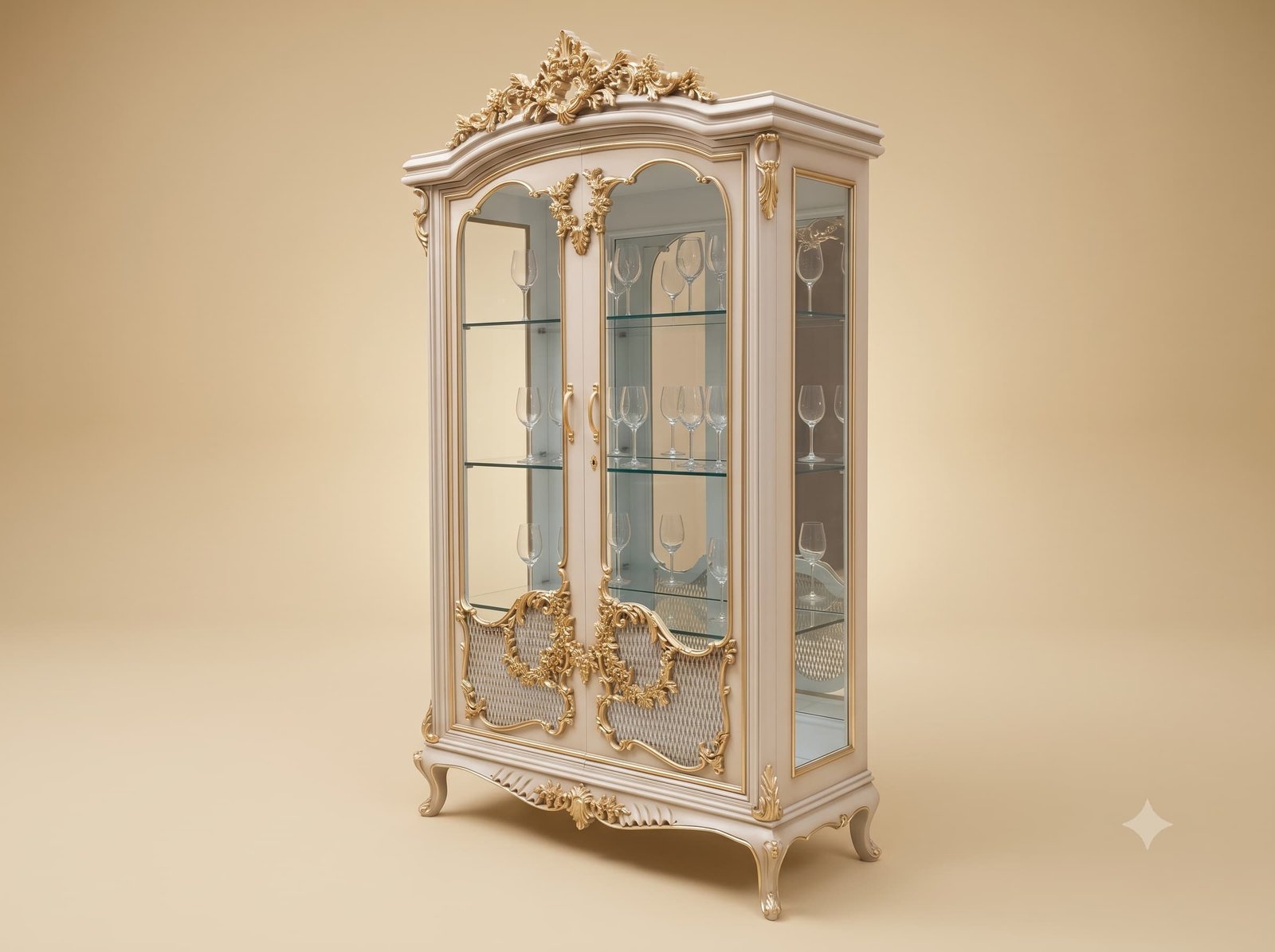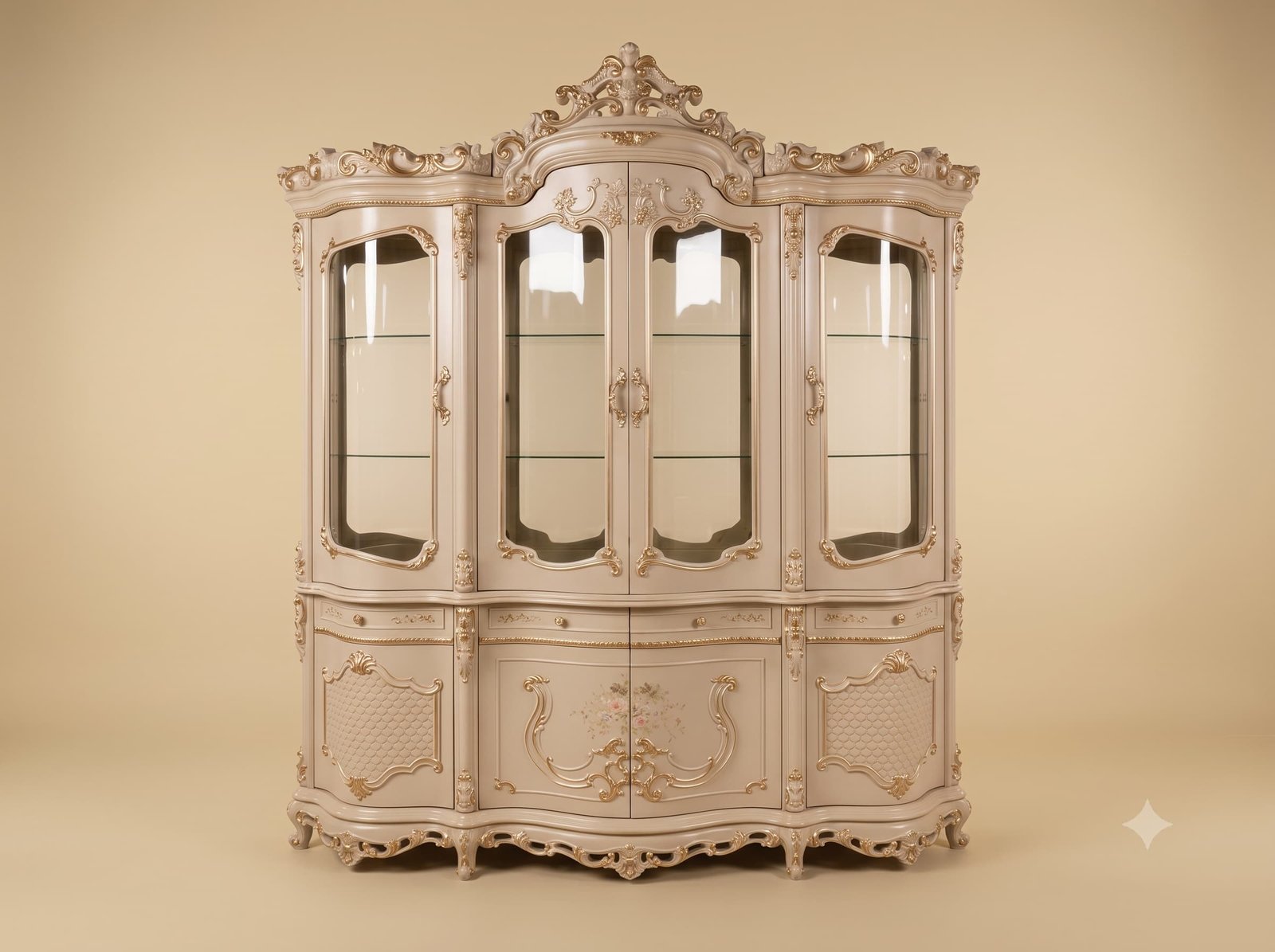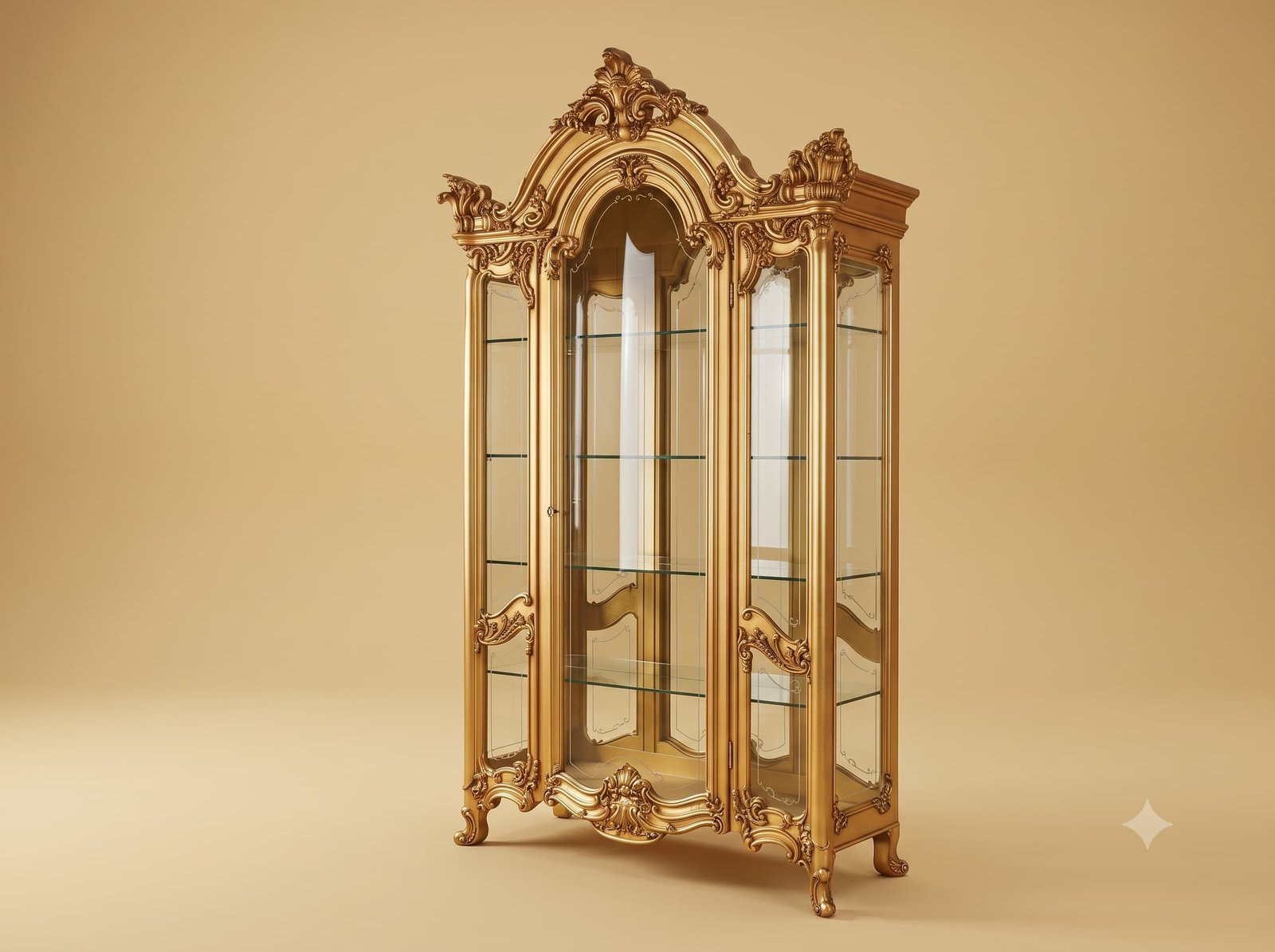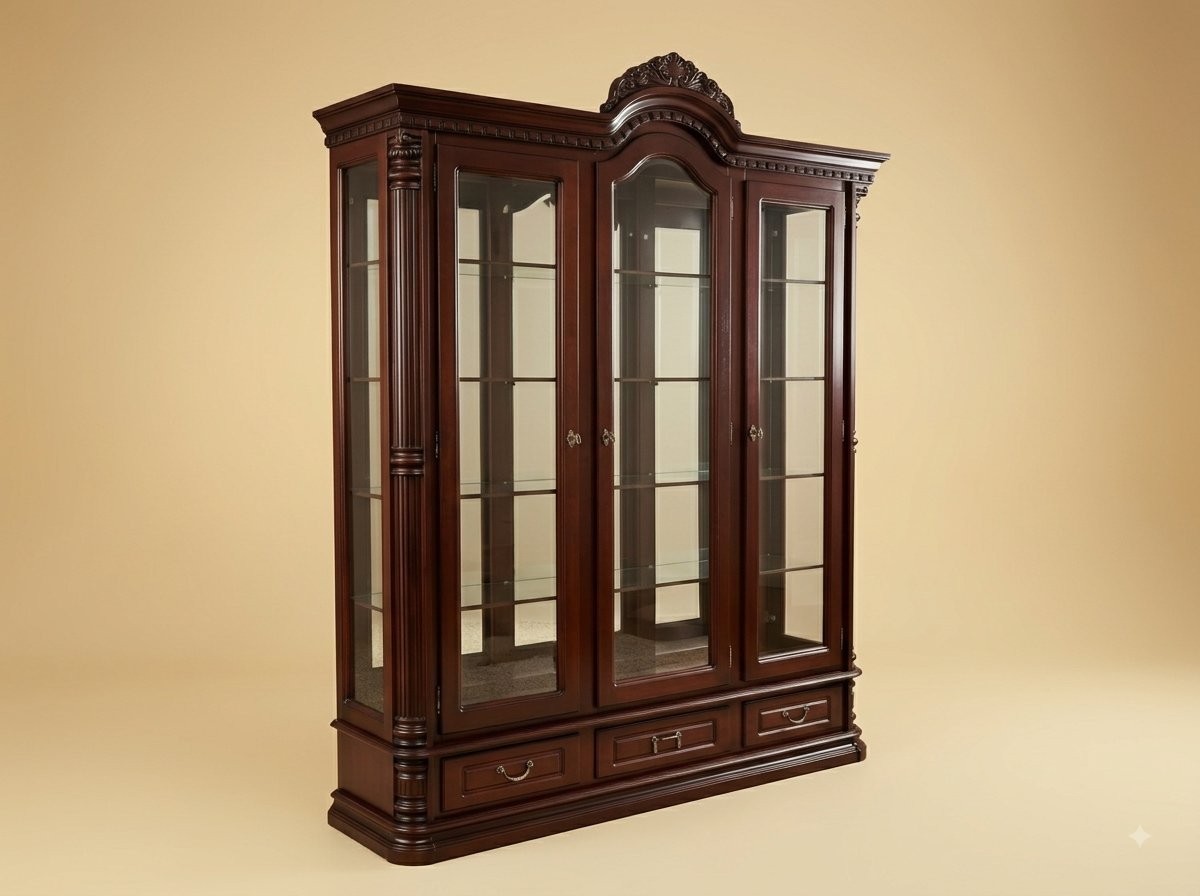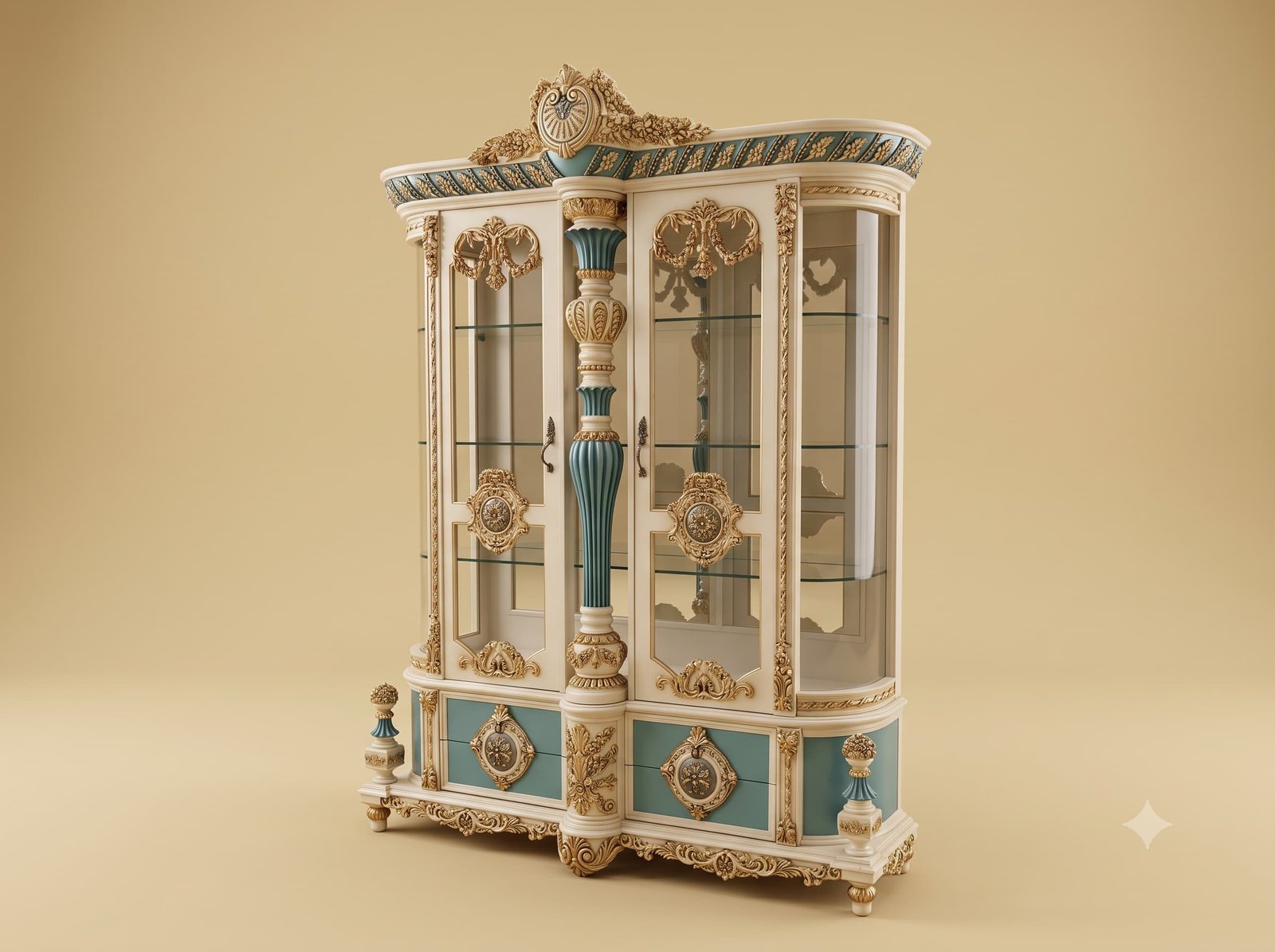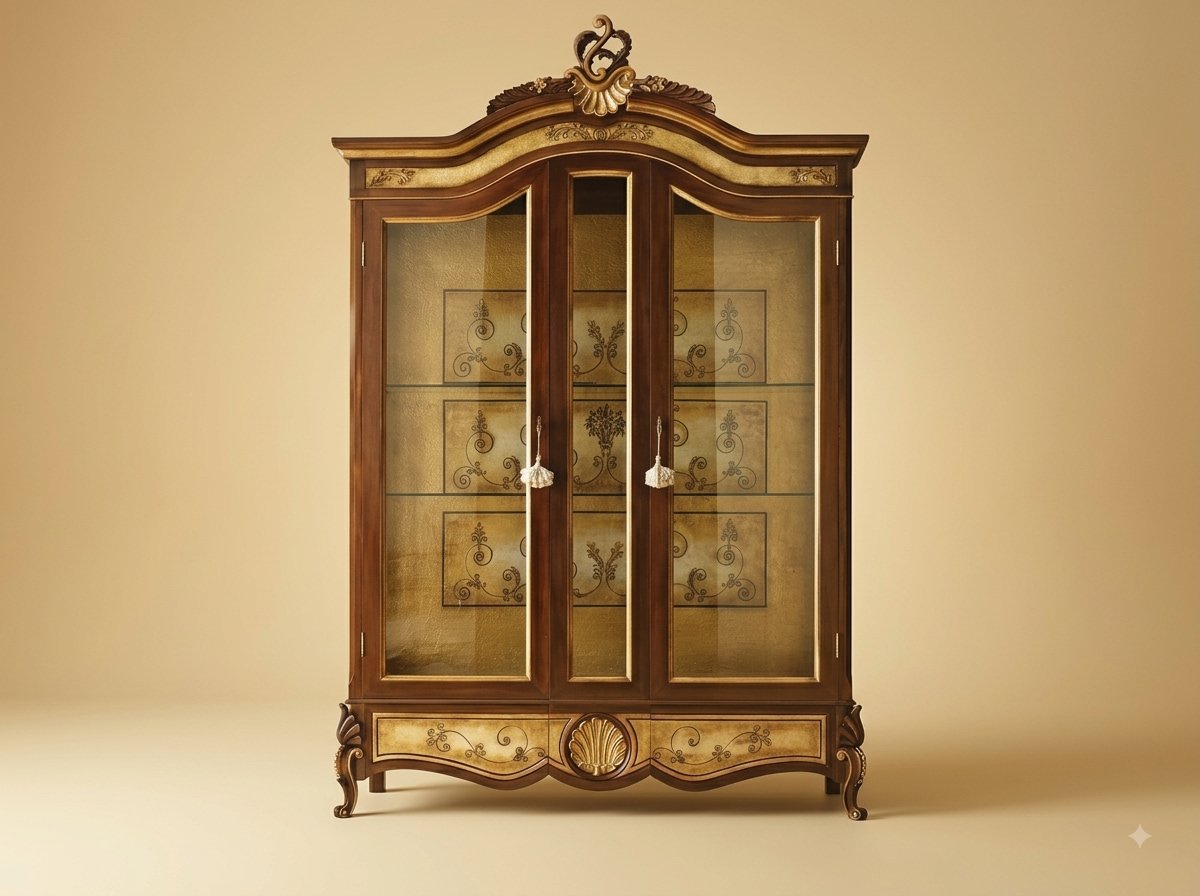
The carved shell crest at the top of this almirah sits on a curved cornice, and that is a harder thing to fit than it appears.
A crest standing on a flat cornice is simple: cut its underside flat and it beds down all along its length. But this cornice arches. The underside of the crest has to be hollowed to exactly the same curve, and not the curve on the drawing - the curve of the actual cabinet, after the cornice has been made, fitted, cleaned up and finished, by which point it is never quite the drawn line.
So the crest is carved with surplus material deliberately left across its whole underside. It is then taken to the finished cabinet and scribed: held against the cornice, its underside marked to follow the real curve, taken back to the bench, cut to that mark, and offered up again. Usually more than once.
Done properly, the crest sits down on the cornice with no shadow gap anywhere along its base and no packing behind it. That continuous contact is what makes a crest look grown out of the cabinet rather than placed on top of it.
 Ask Price On WhatsApp