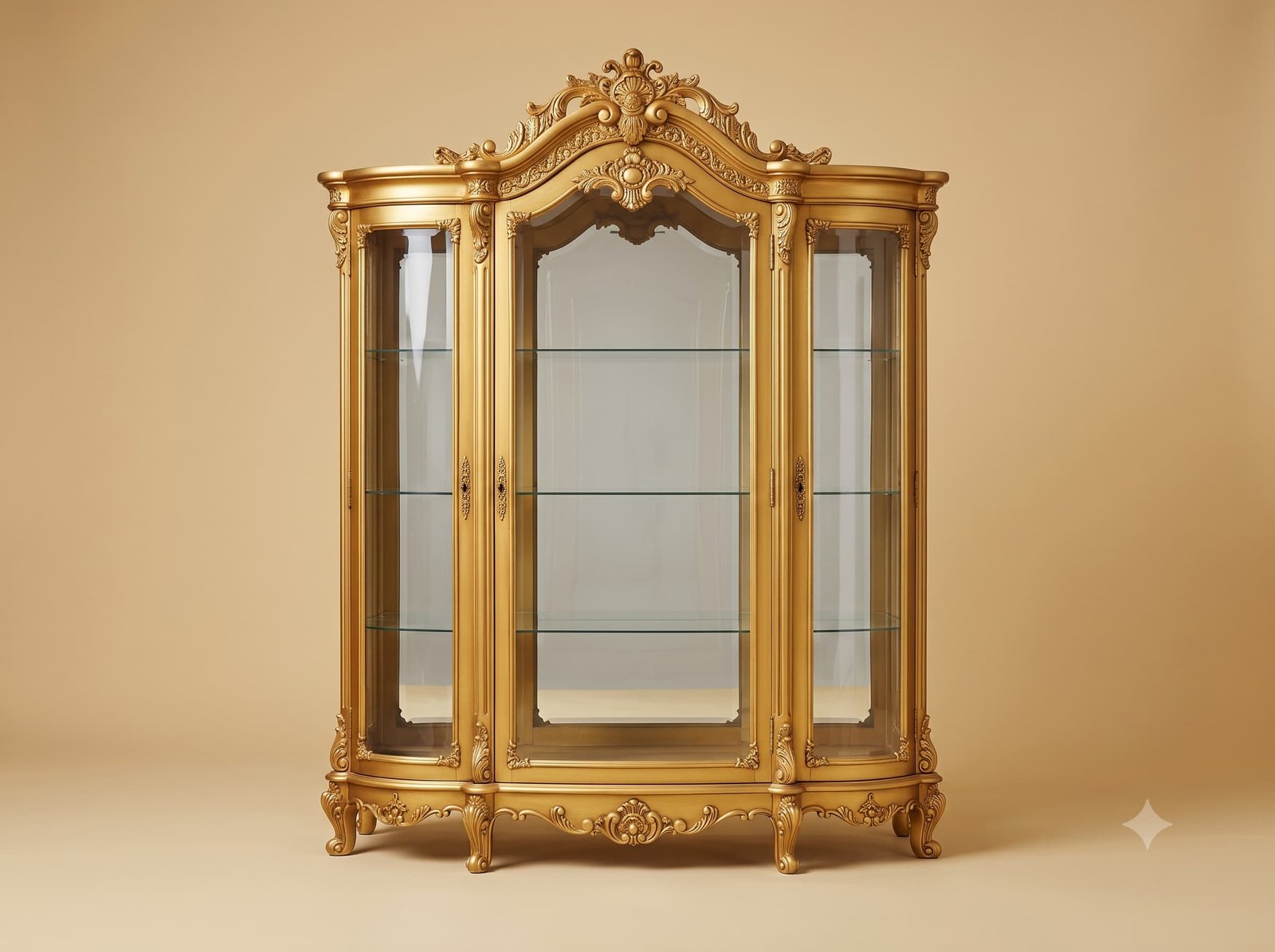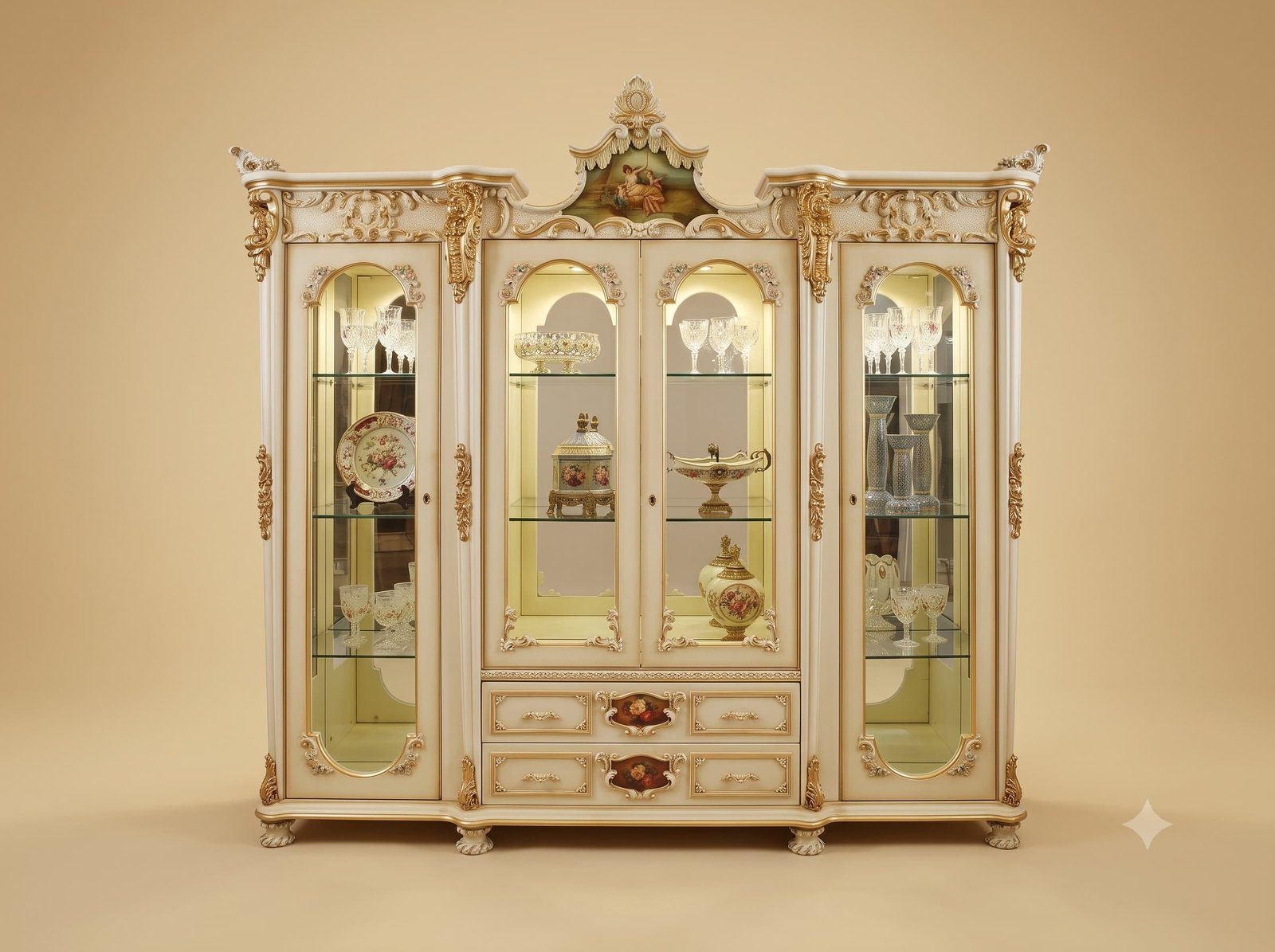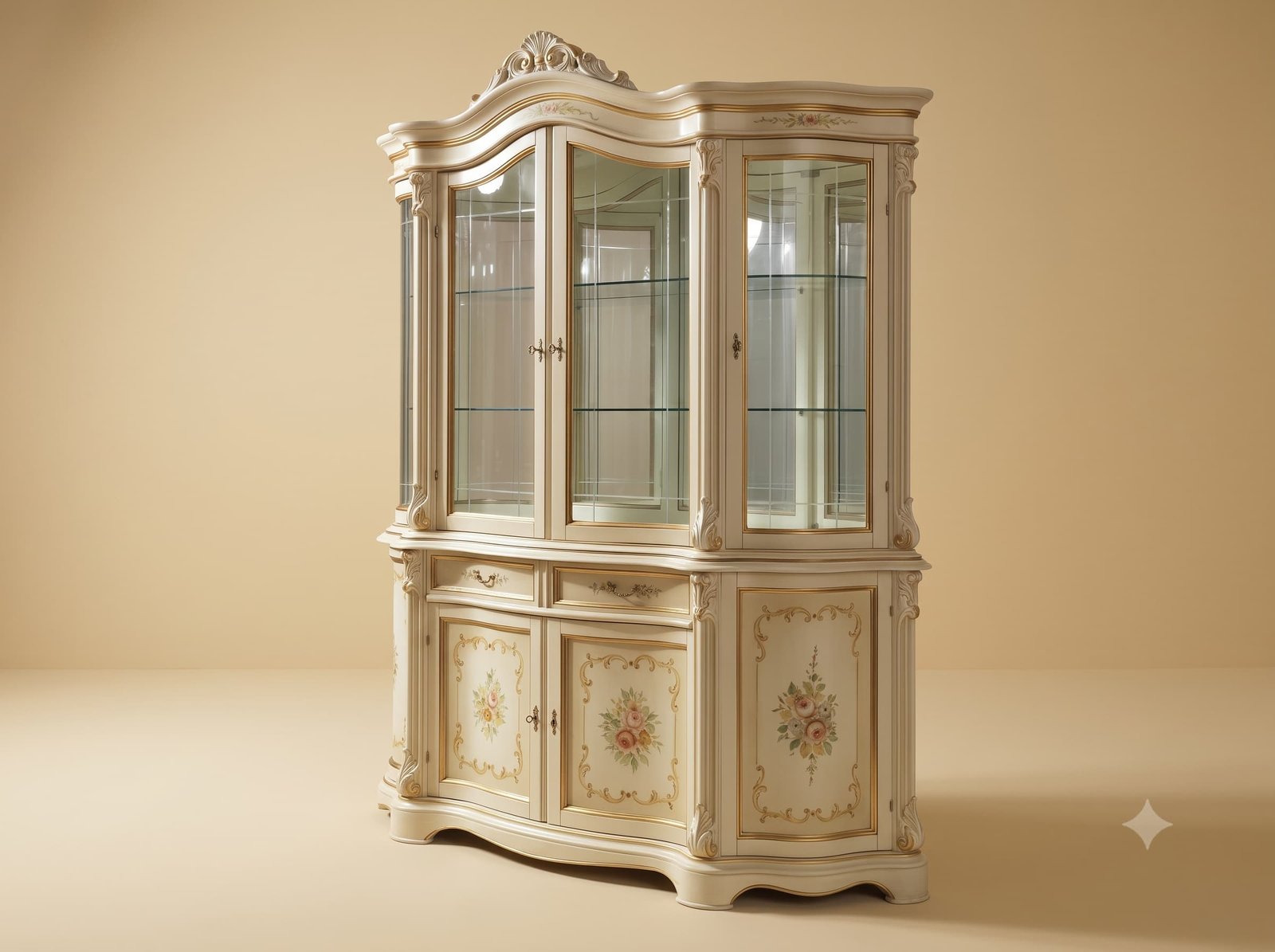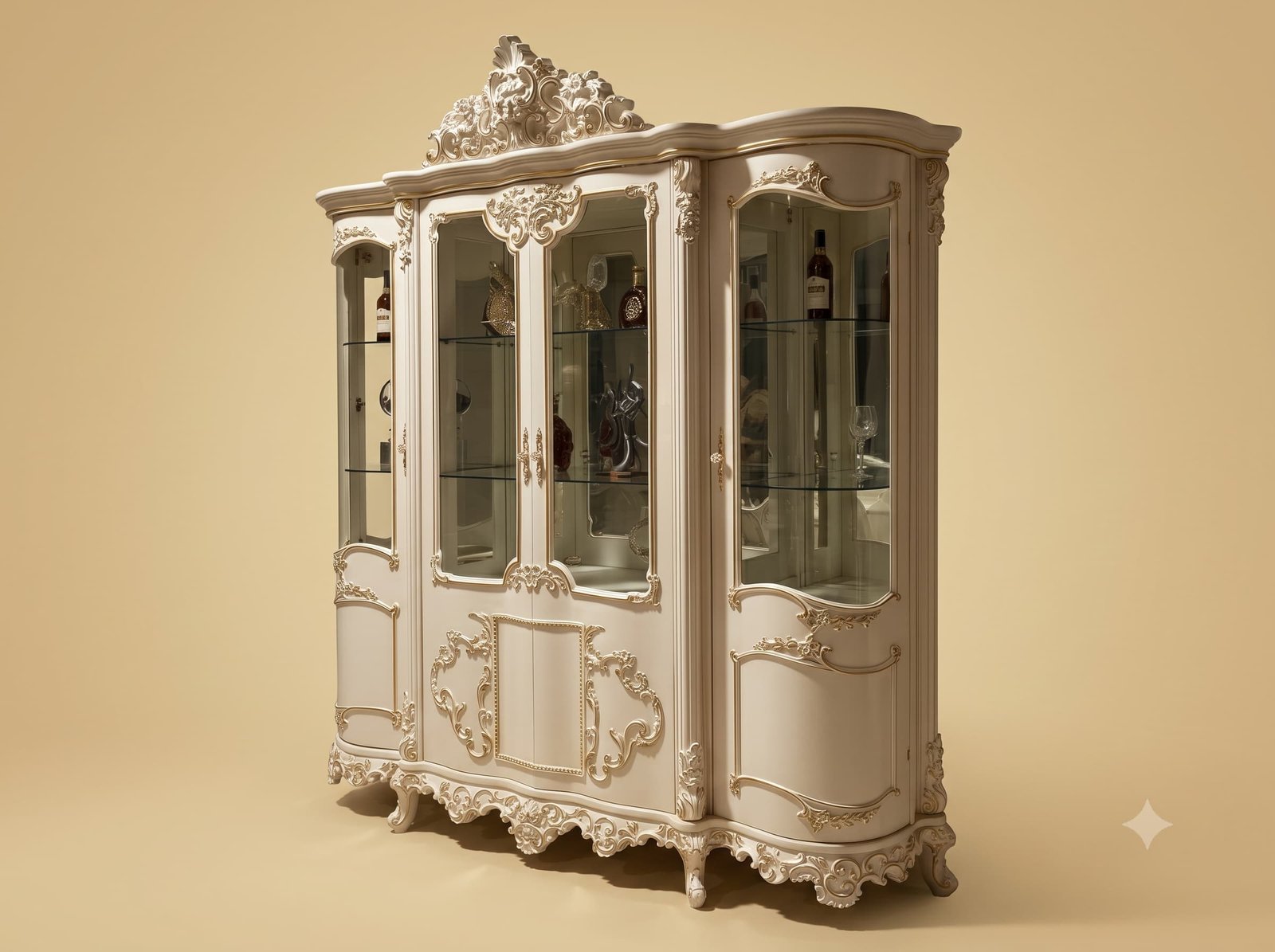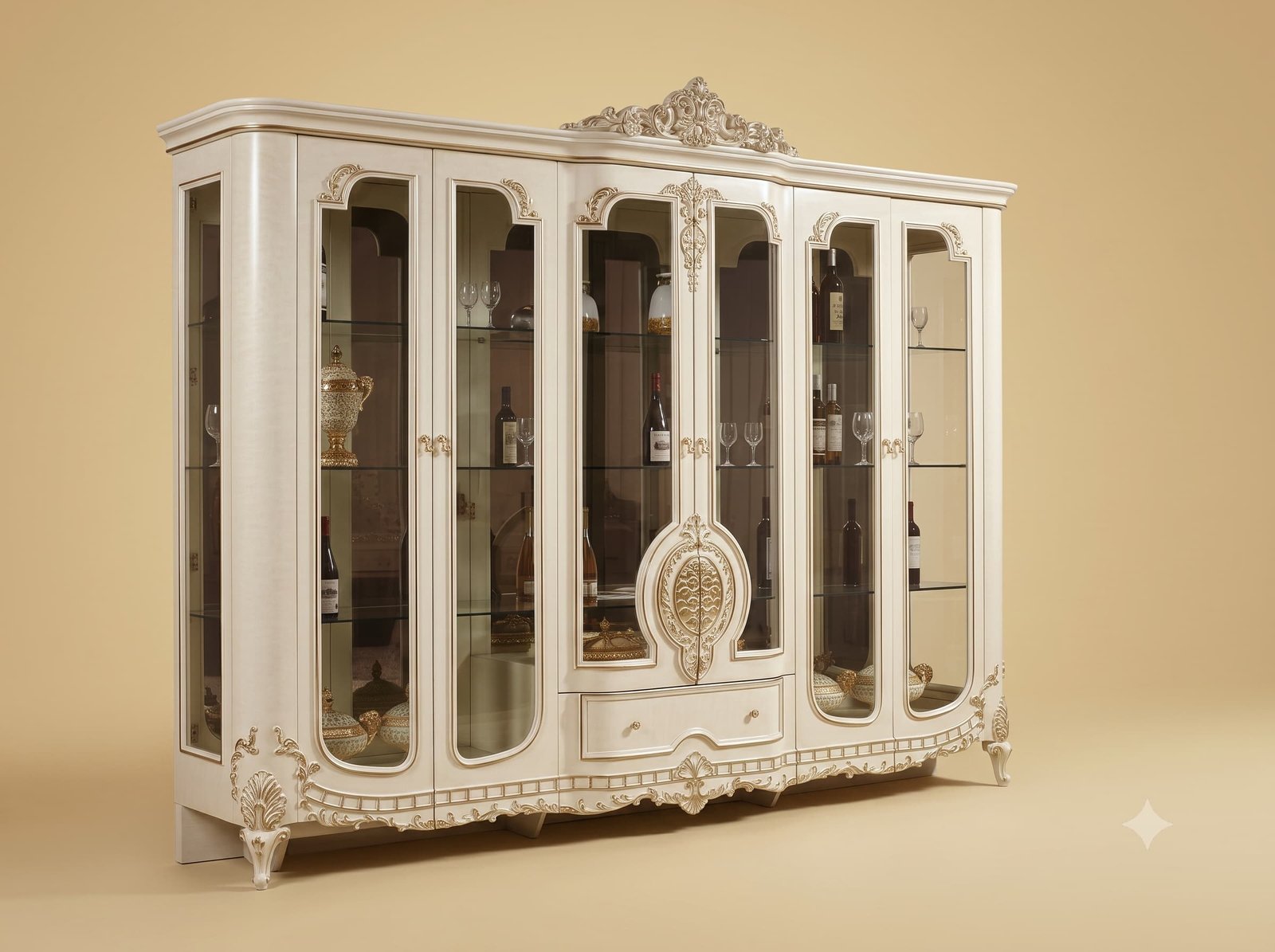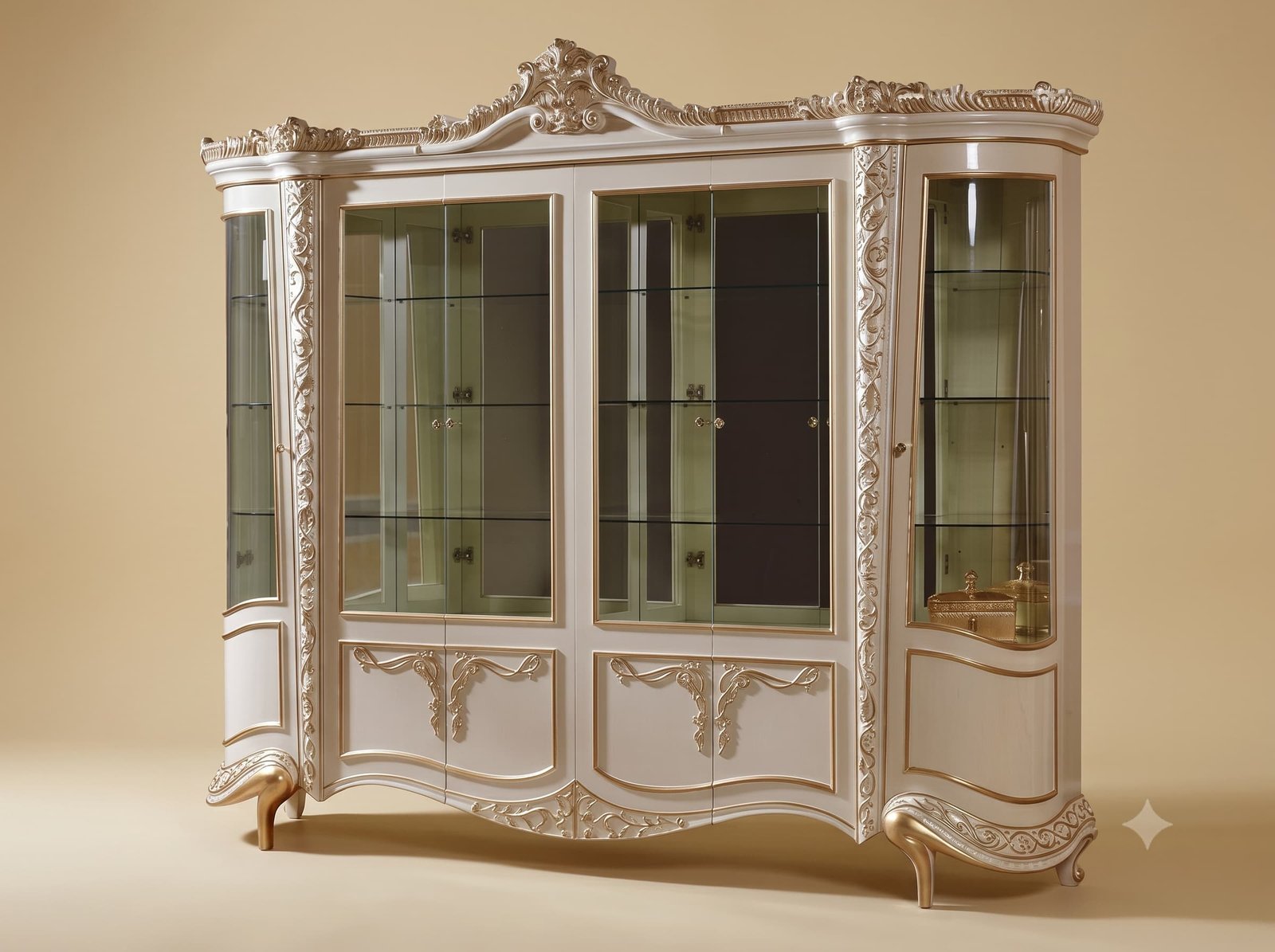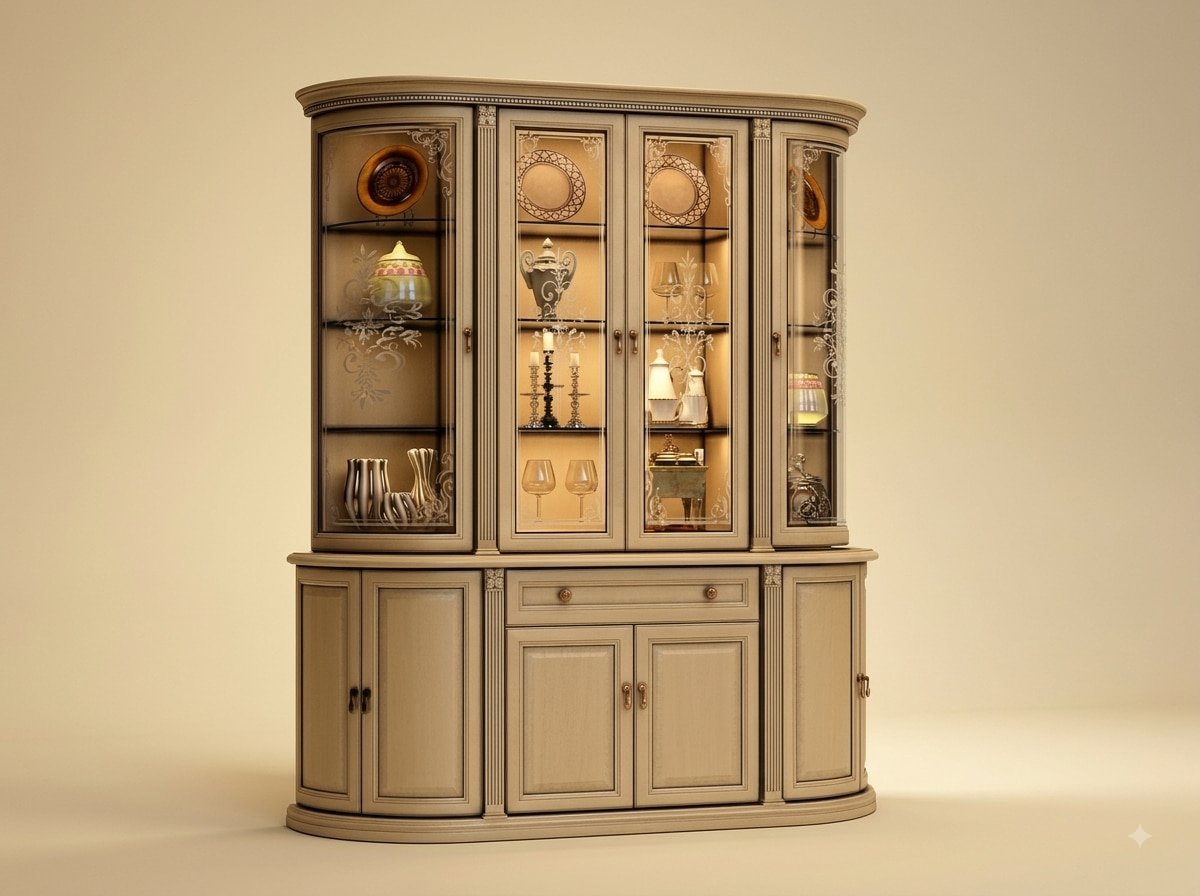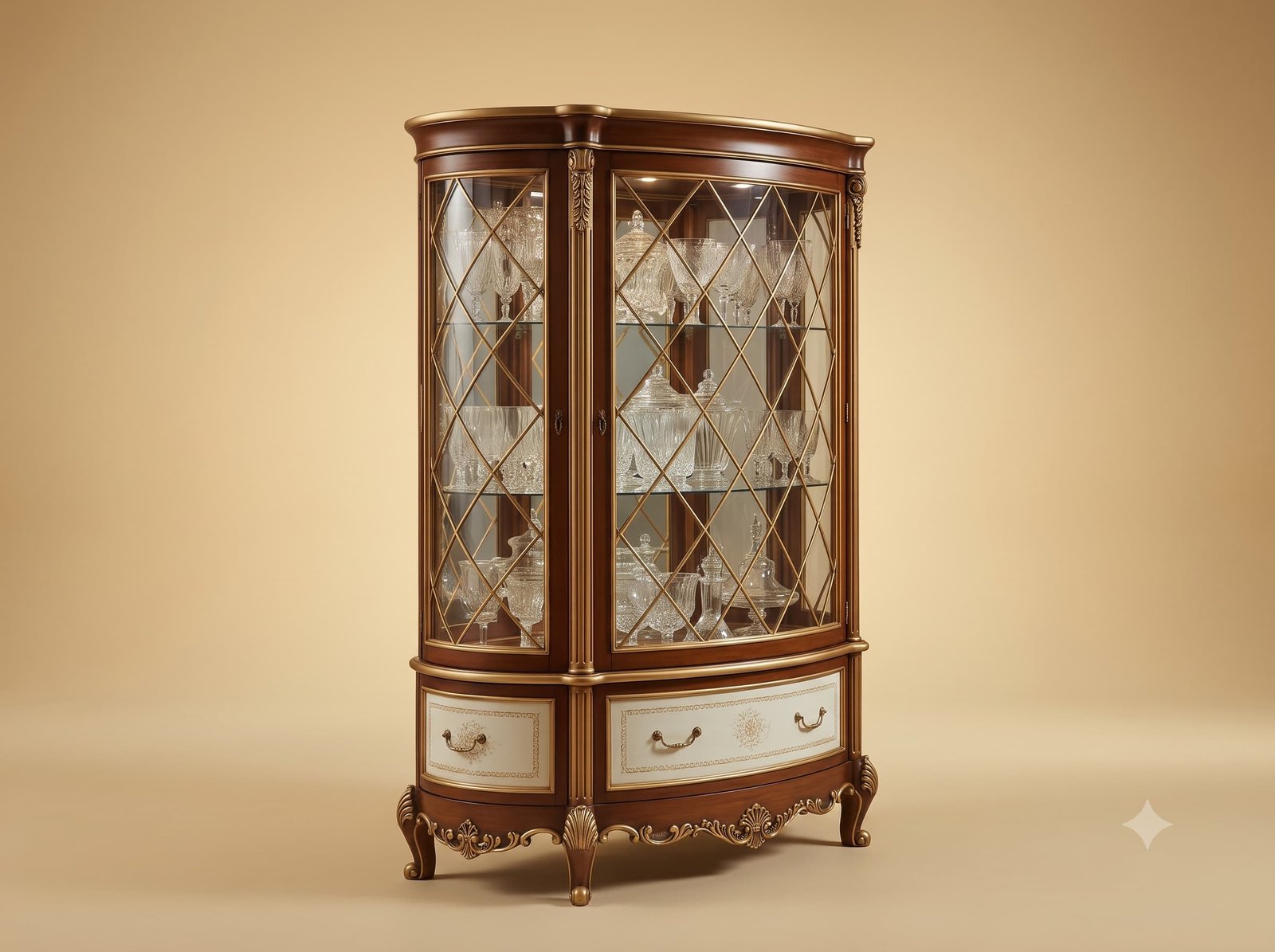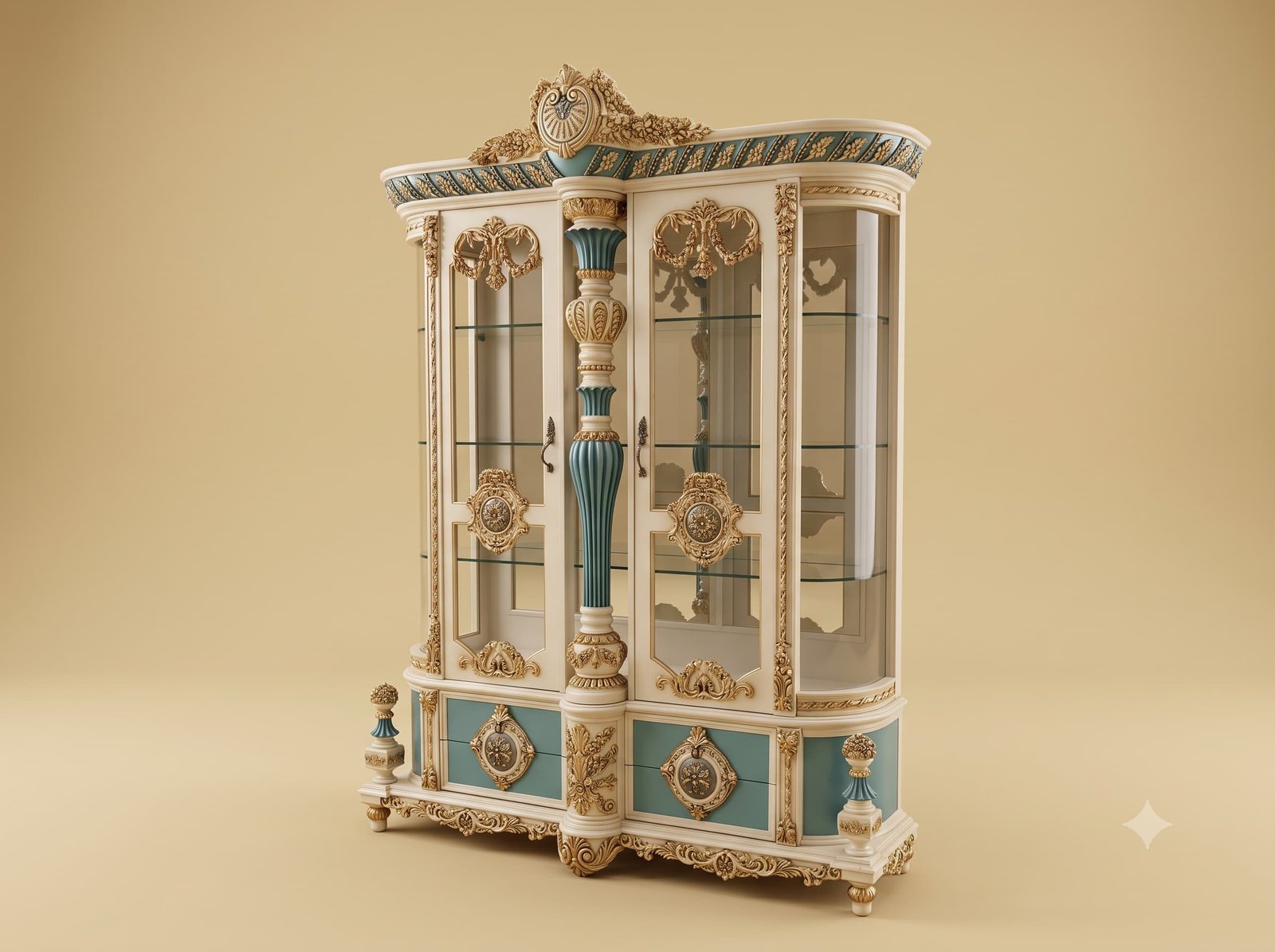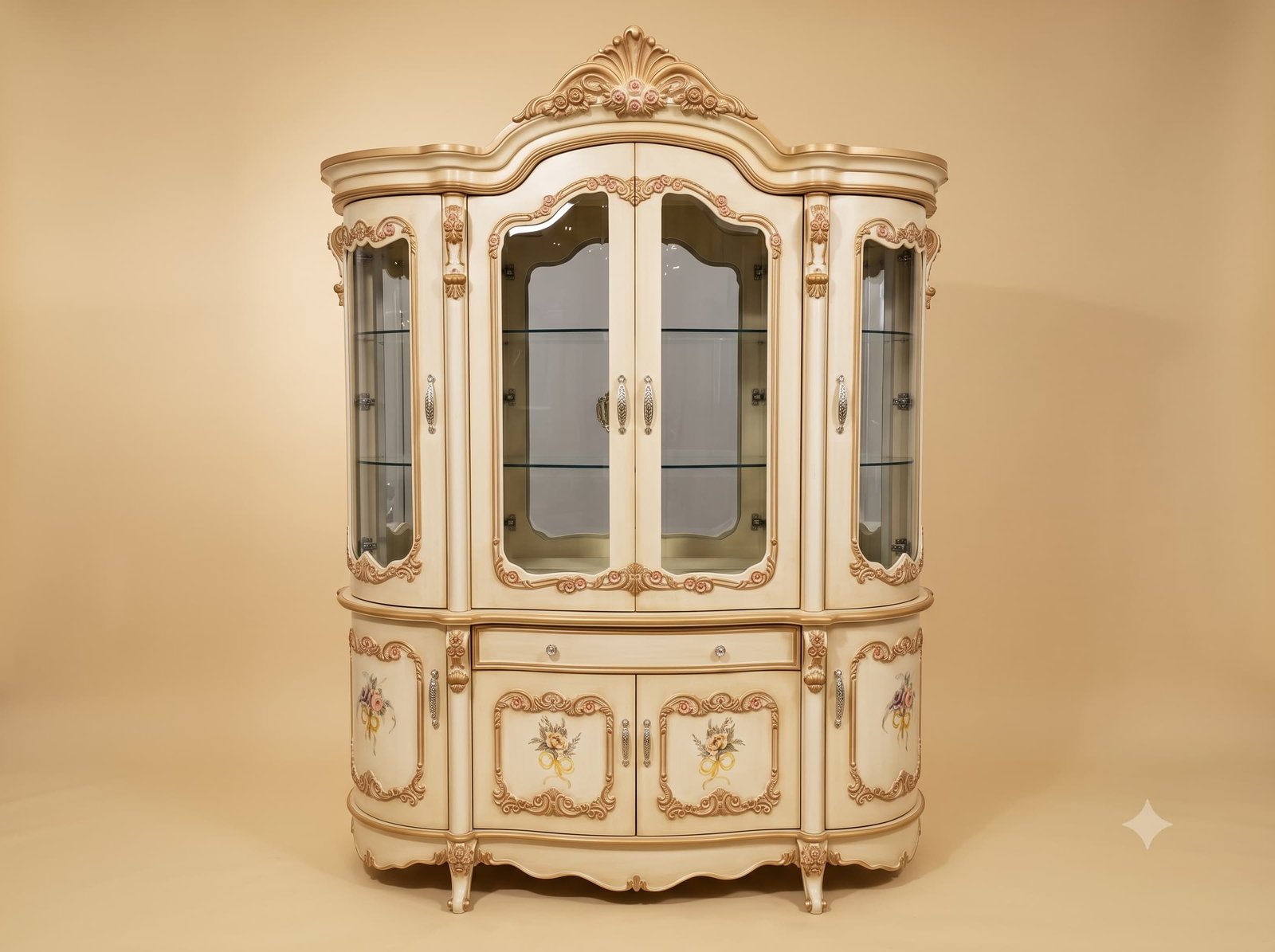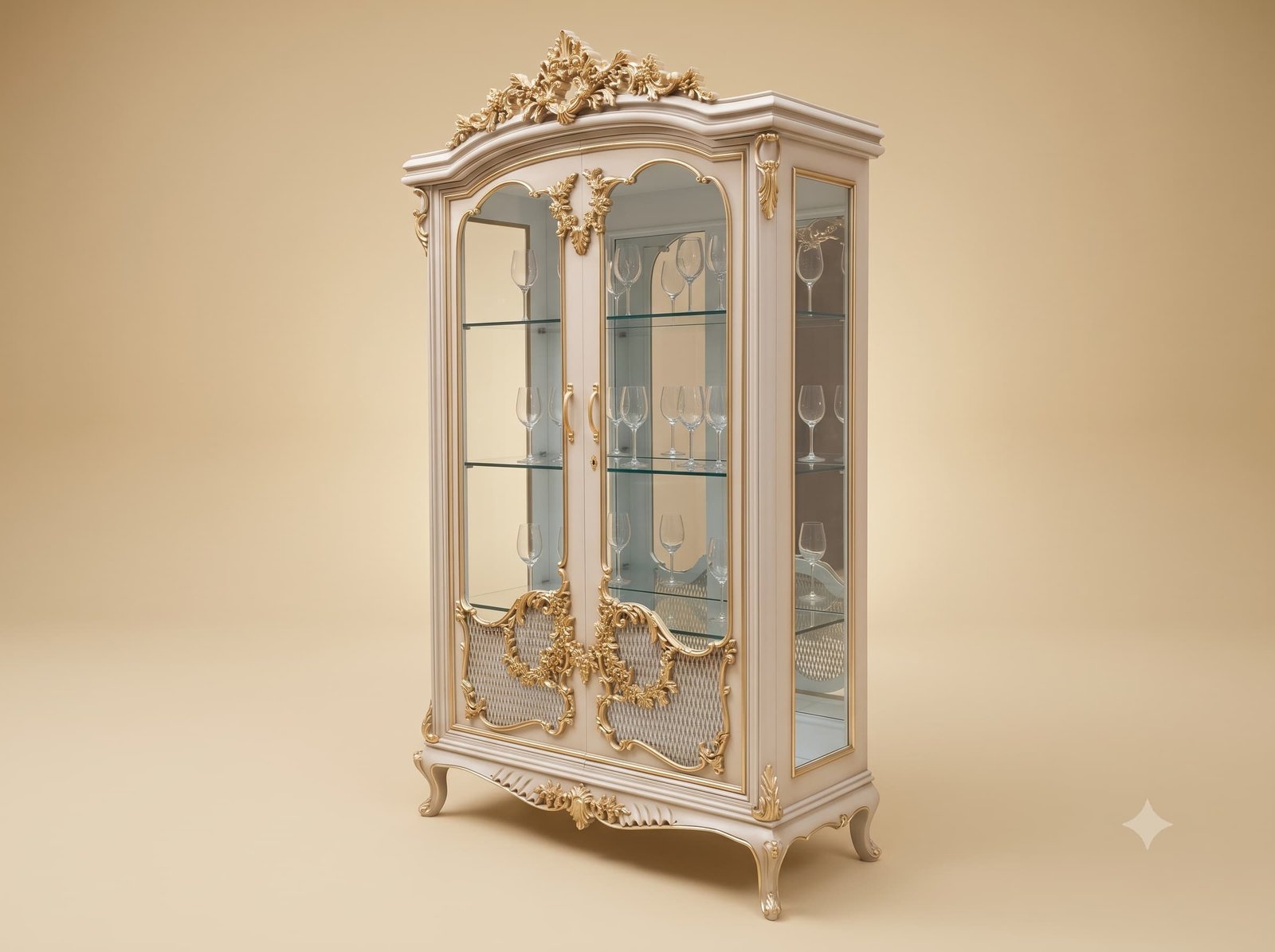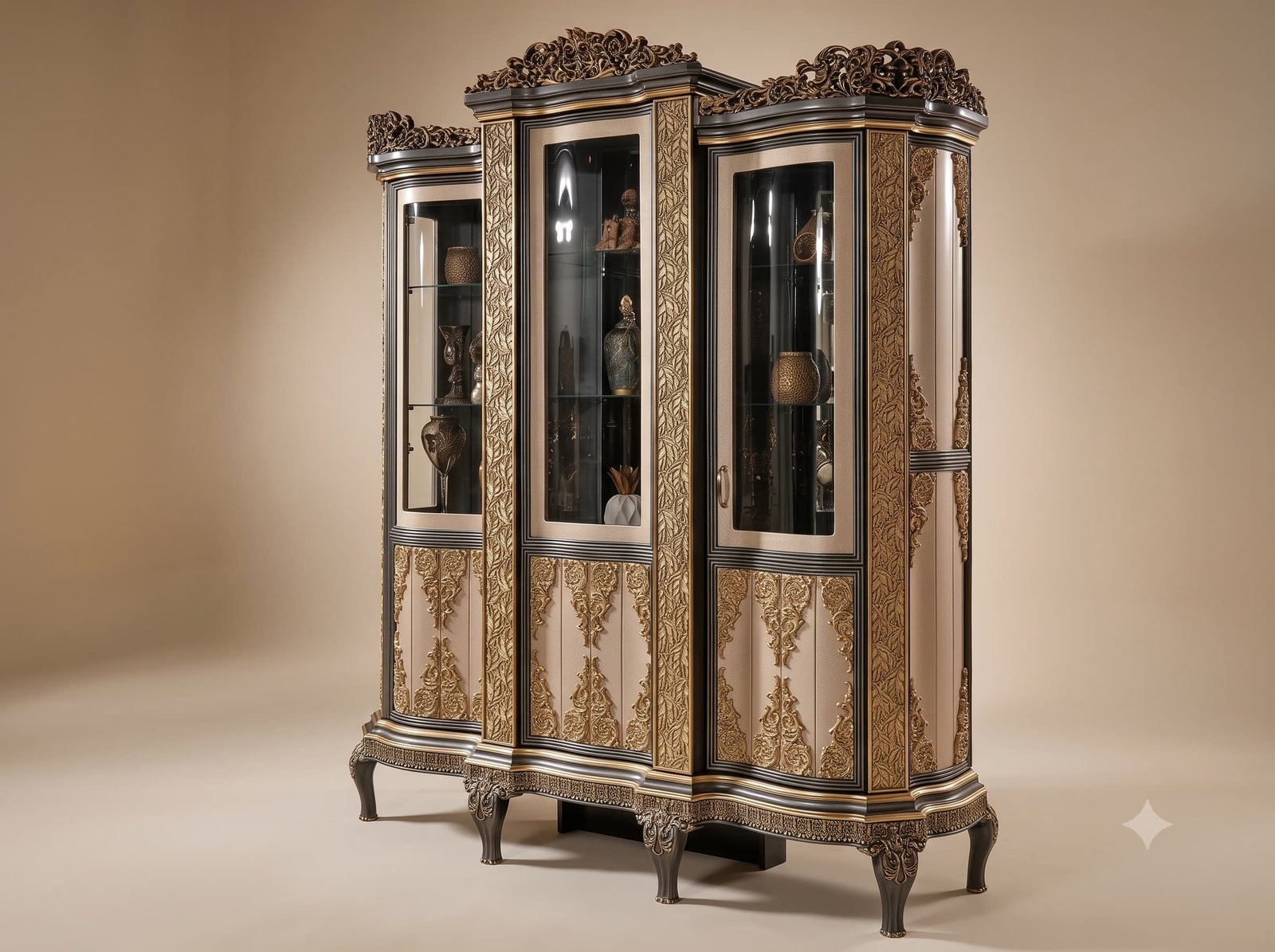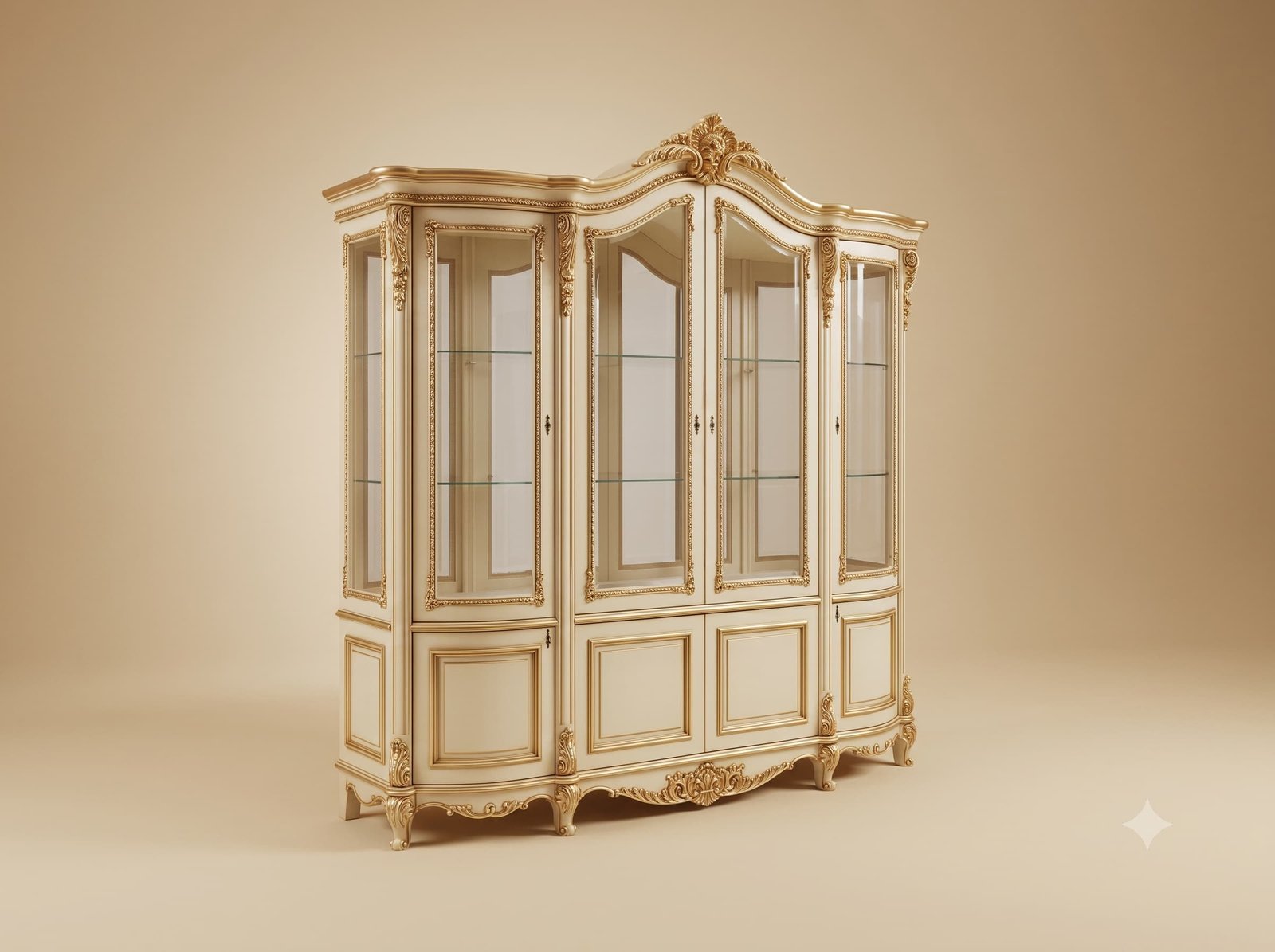
On a plain cabinet the mouldings are the design, and a moulding is not a shape - it is a shadow.
Every moulded profile works by catching light on its convex parts and holding darkness in its hollows. Two profiles that look almost identical drawn in section can read completely differently on a finished cabinet, because one throws a crisp dark line and the other throws a soft grey smudge. Which happens depends on the depth of the hollow, the sharpness of the arris between the members, and above all on where the light in the room is coming from.
None of that can be judged from a drawing. So our master Indian artisans run short sample lengths of each candidate profile, finish them in the actual colour of the cabinet, and stand them up in the light they will live in. A profile that reads well in workshop daylight can go flat under a ceiling fitting; one that looks fussy on the bench can be exactly right on a cornice at ceiling height.
The profile is chosen from the samples, not the section drawing. On a cabinet with this little ornament, it is the whole difference between crisp and characterless.
 Ask Price On WhatsApp