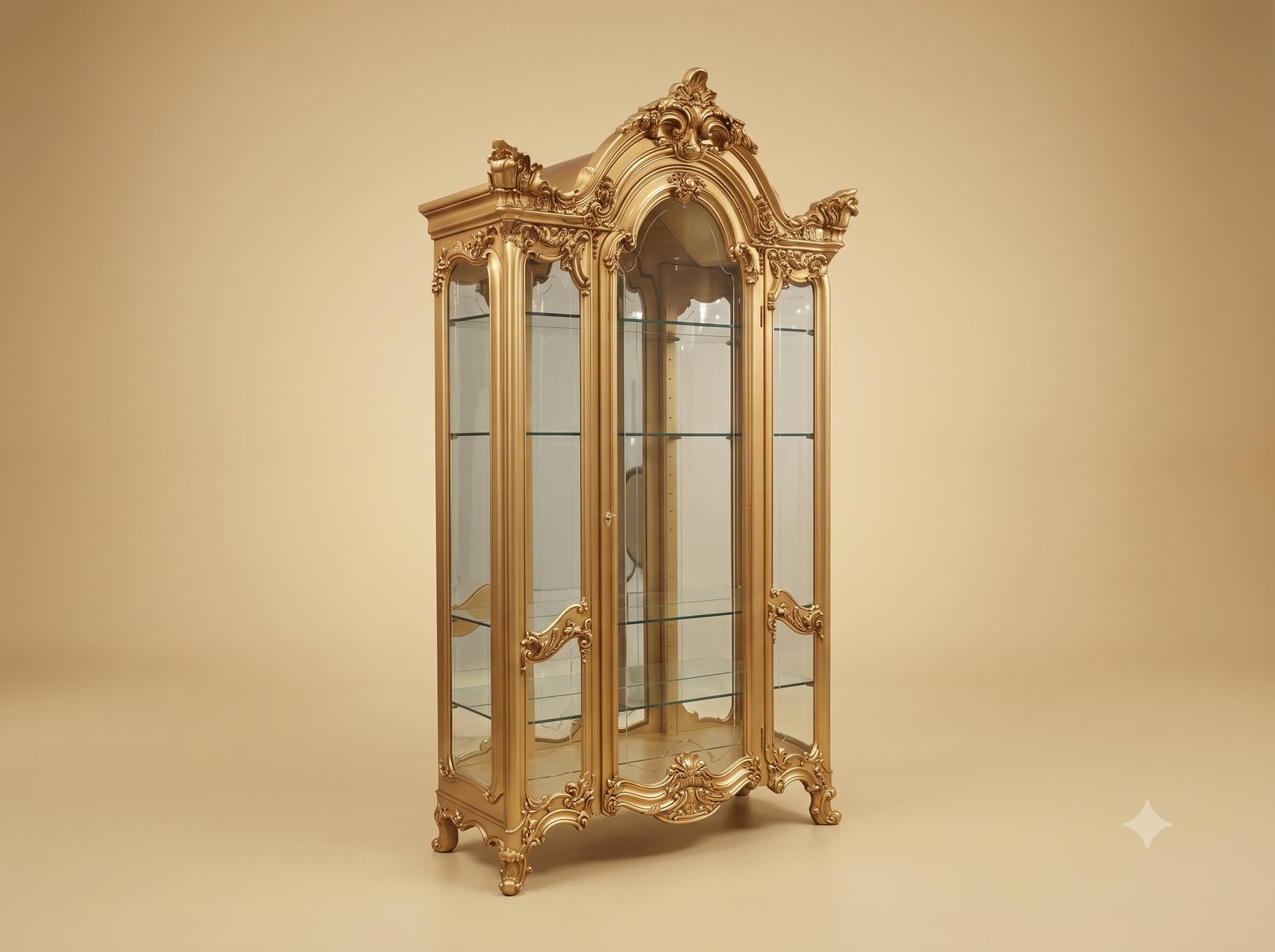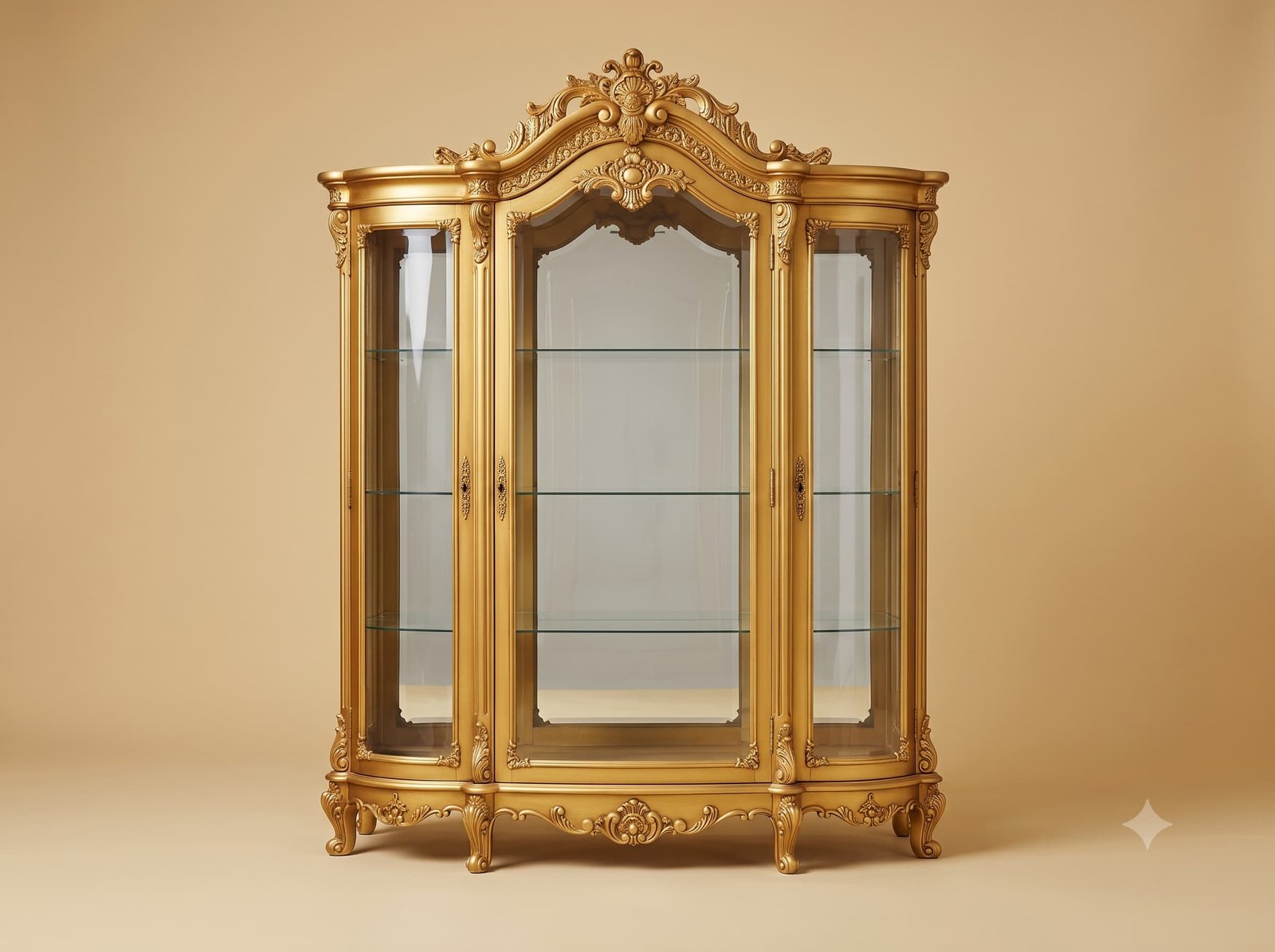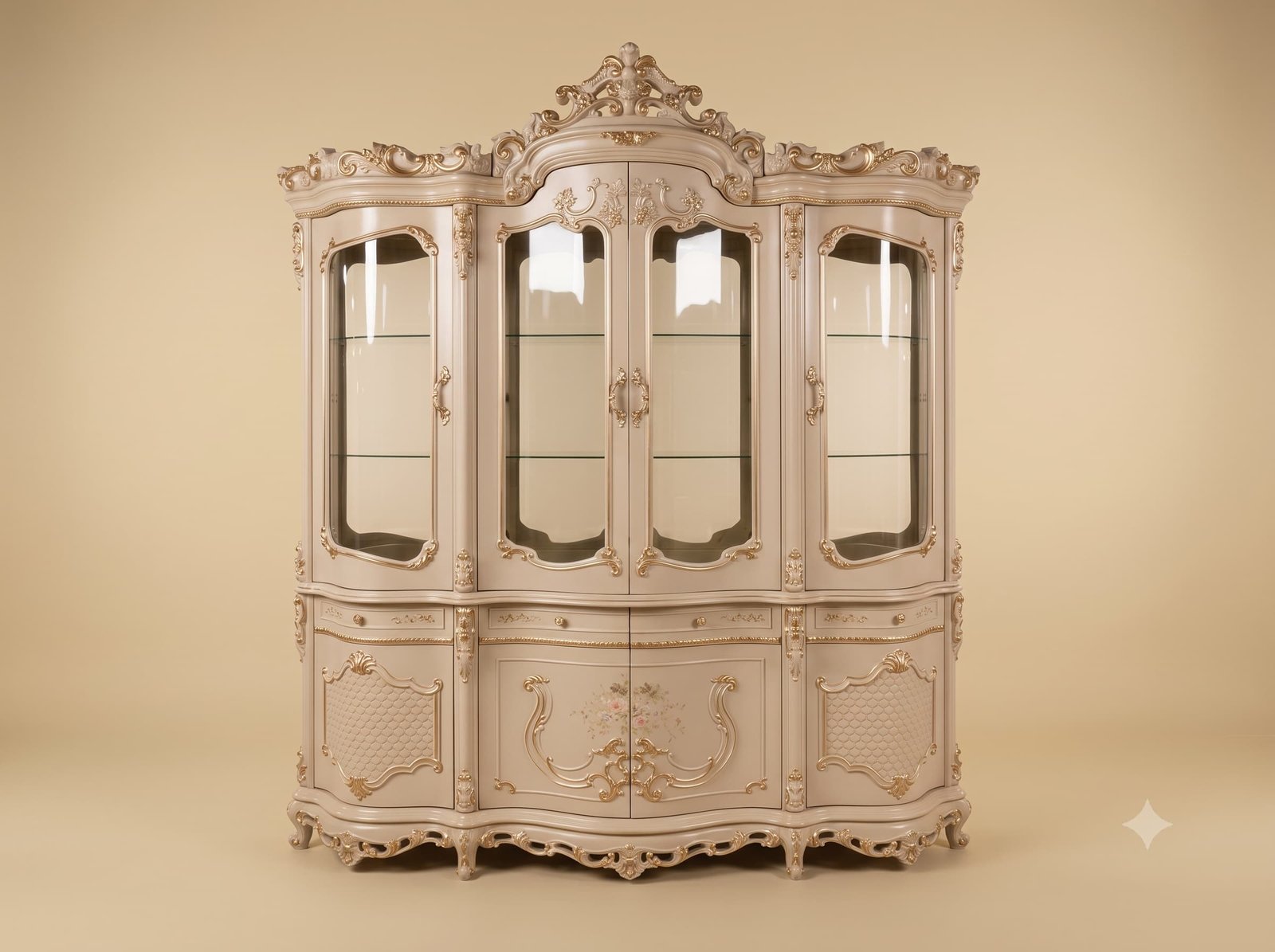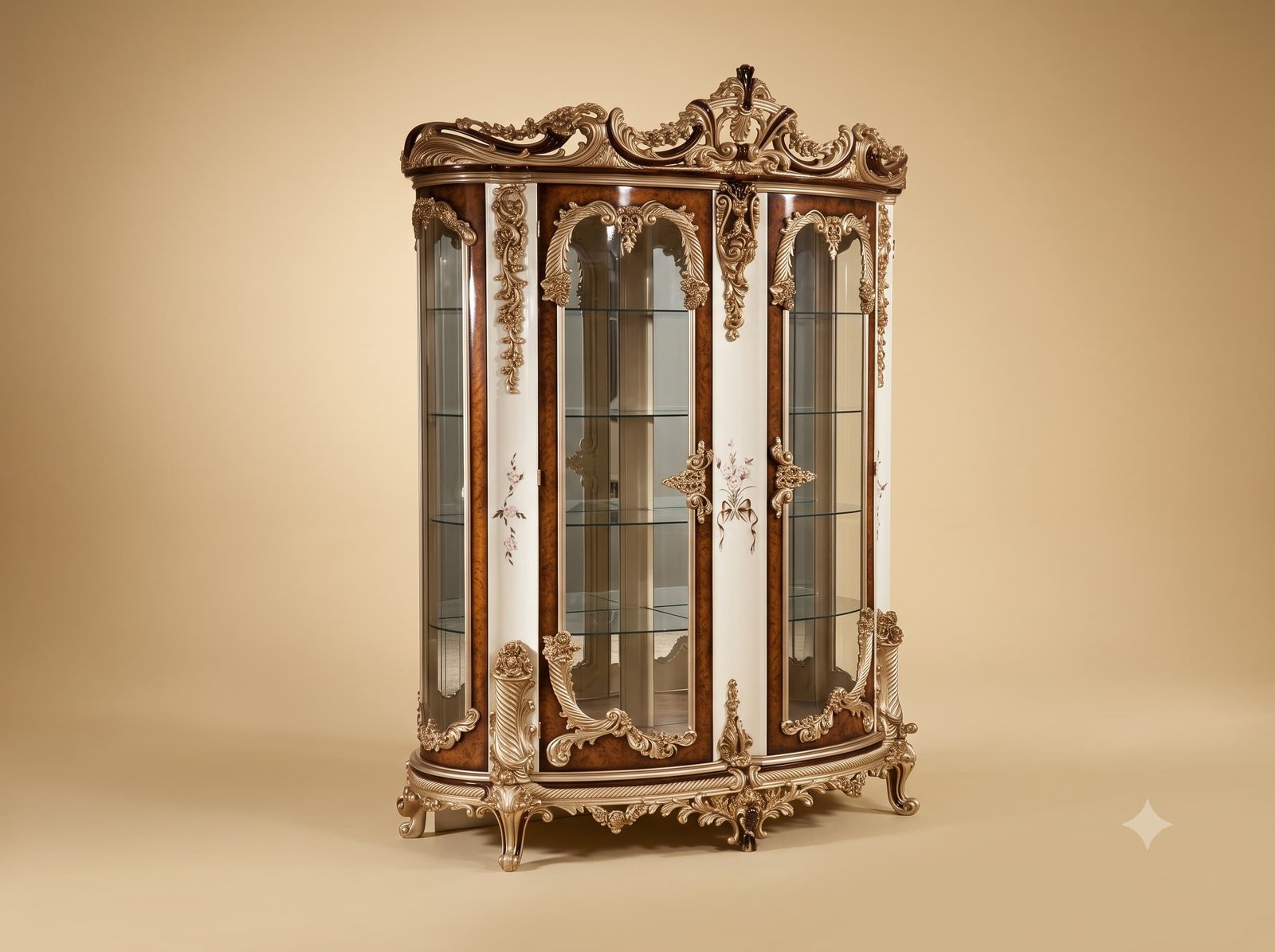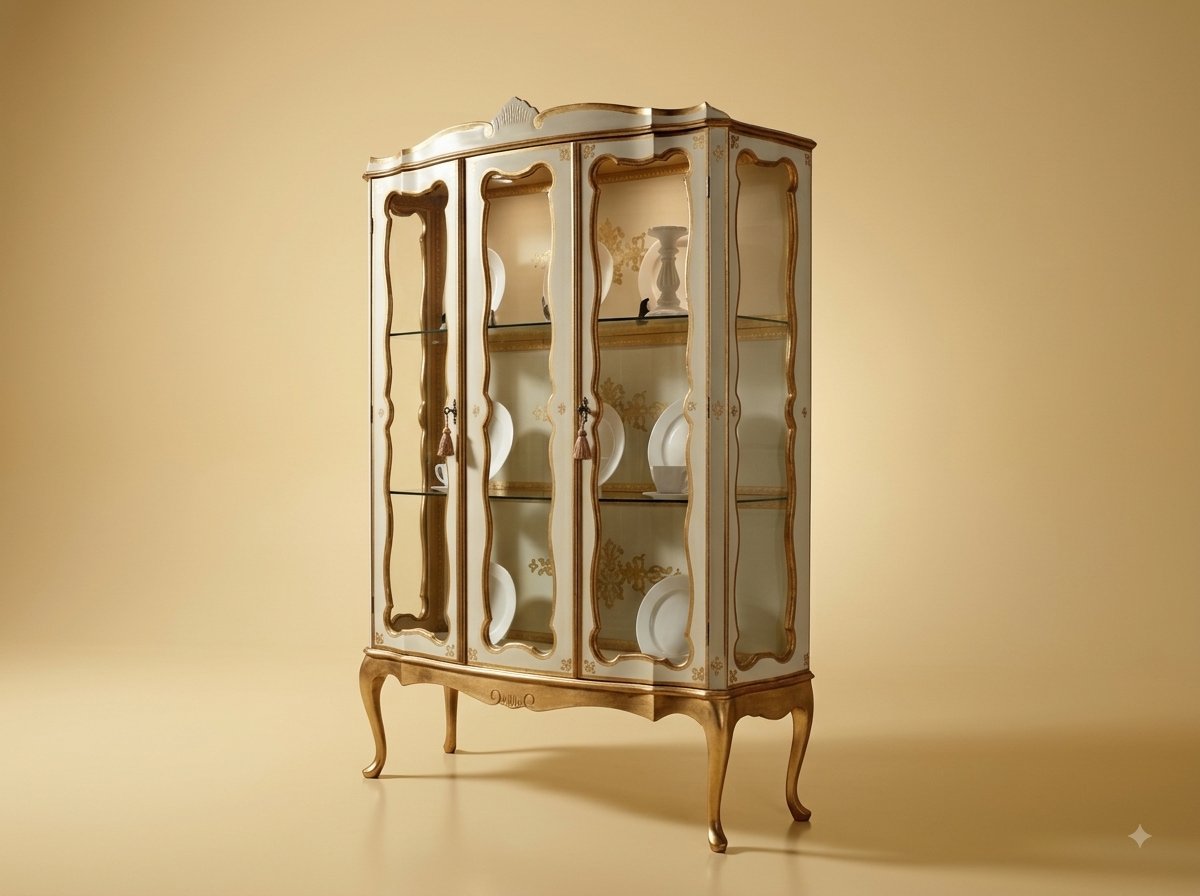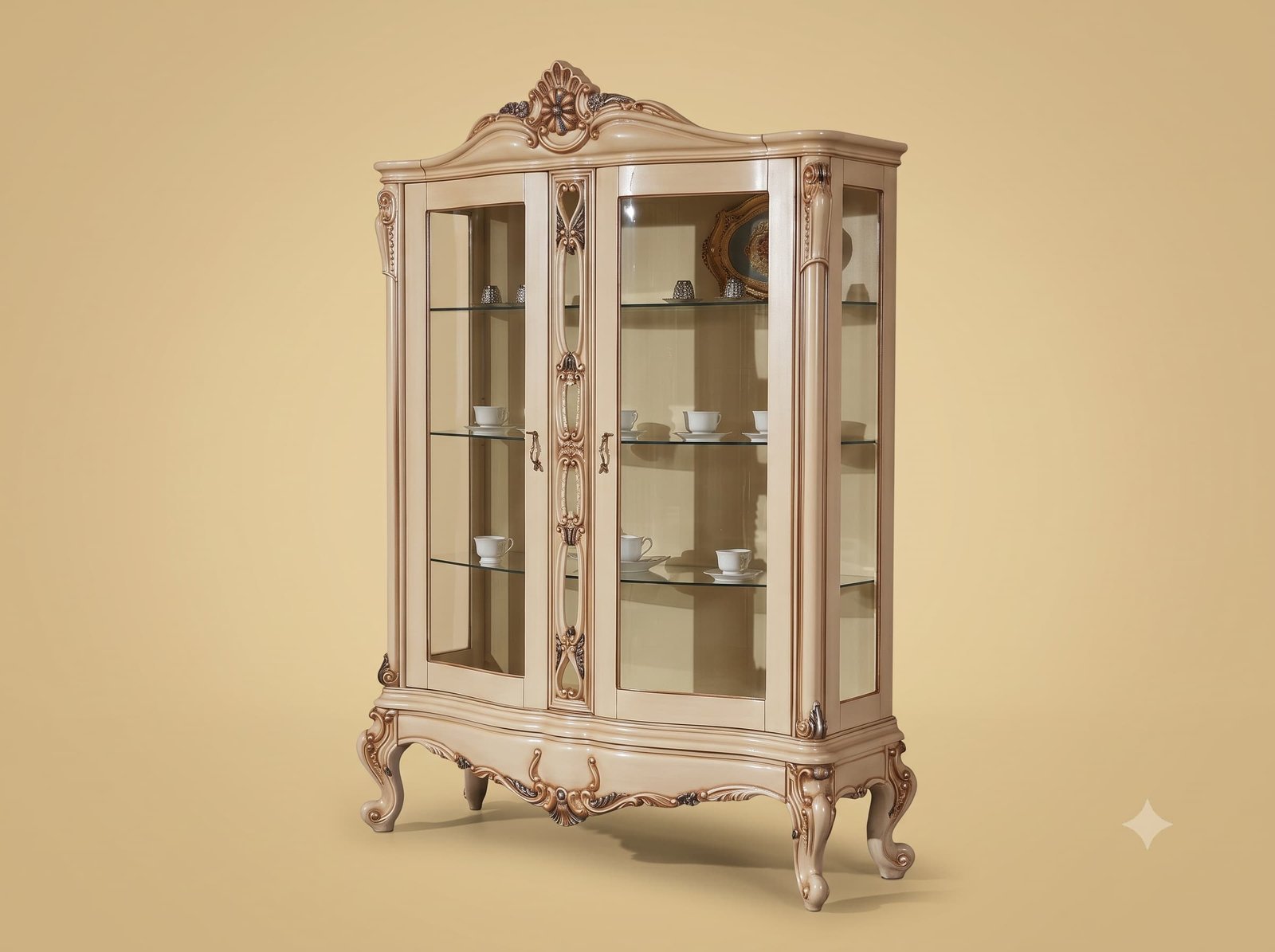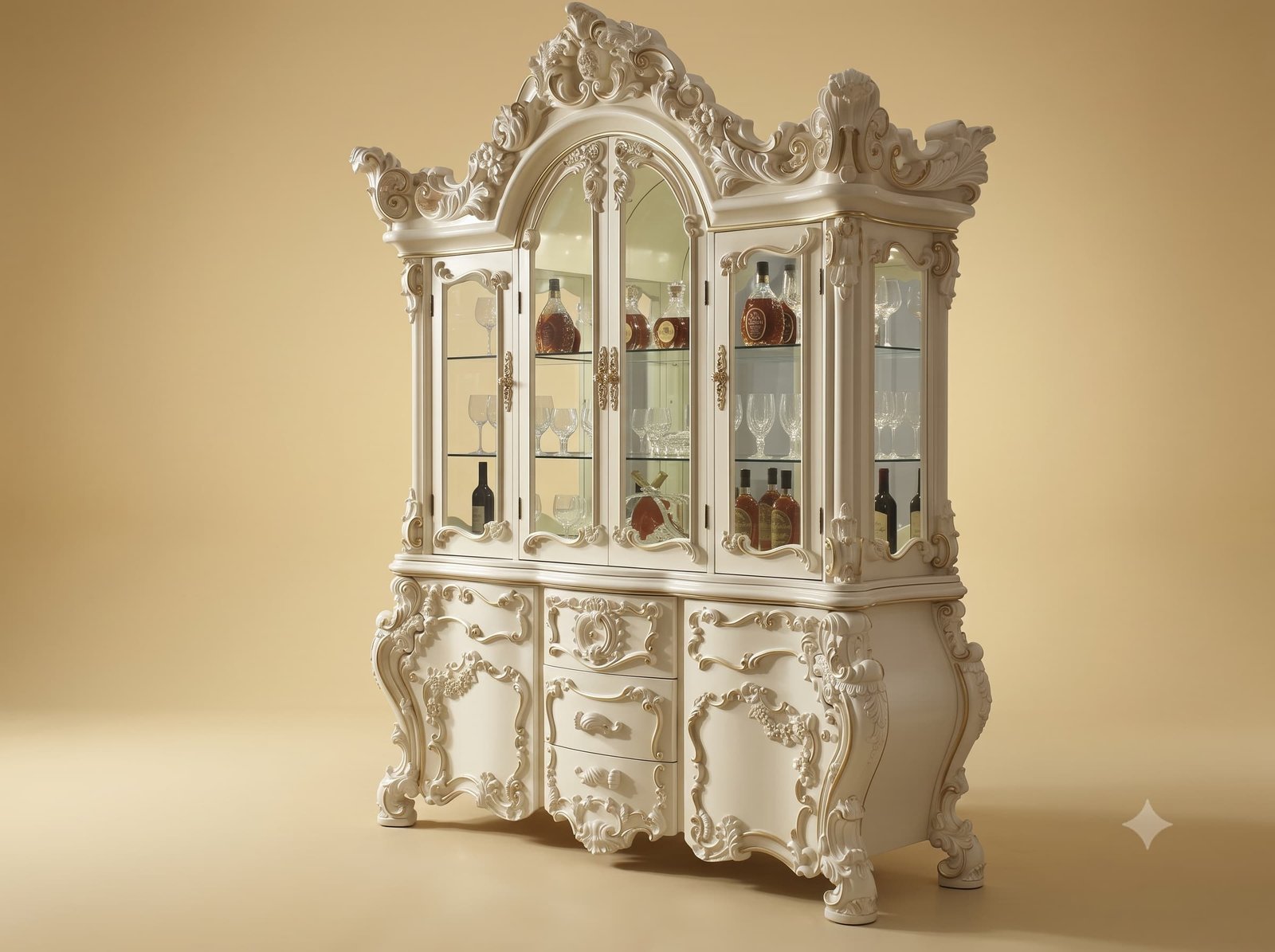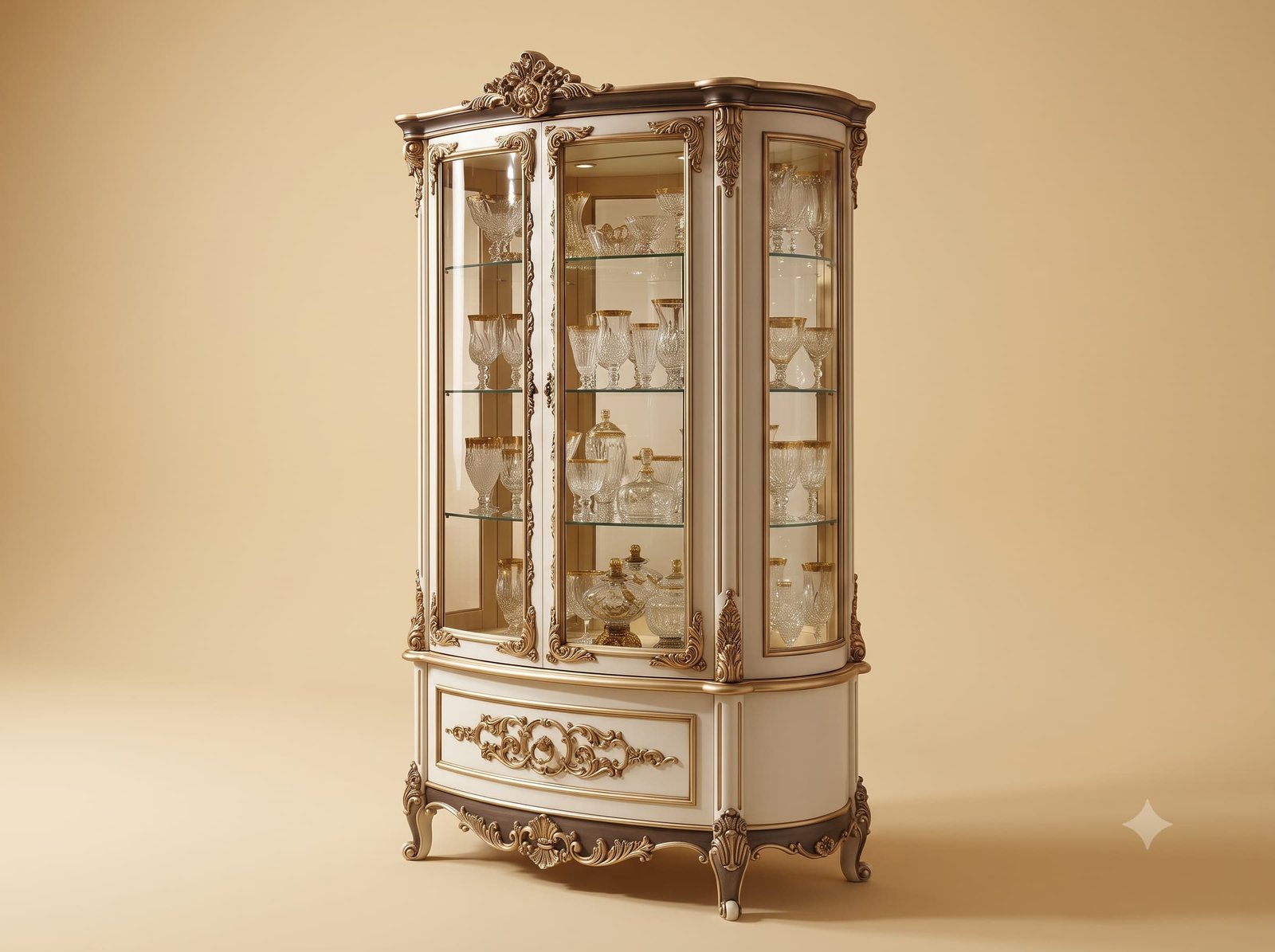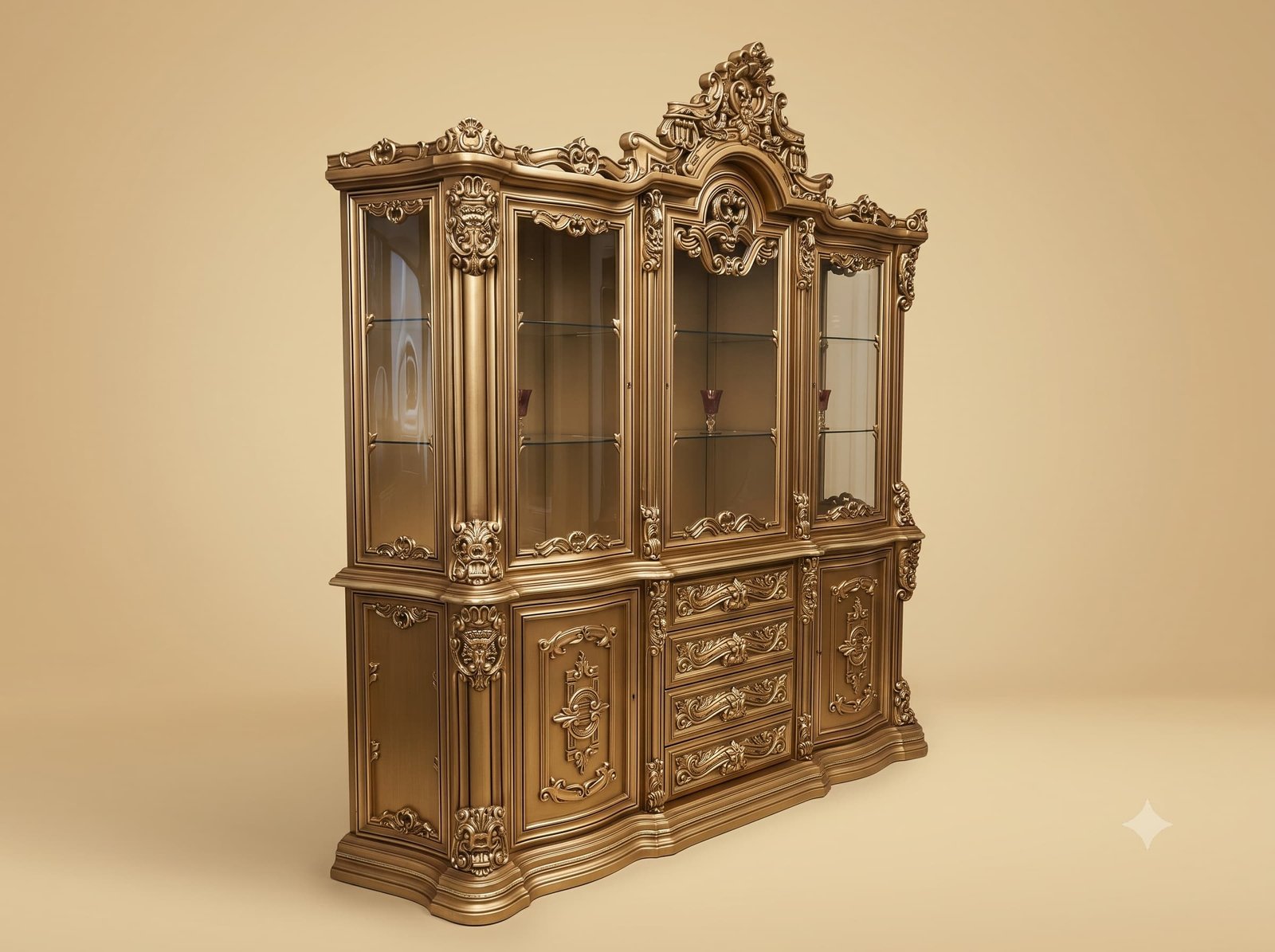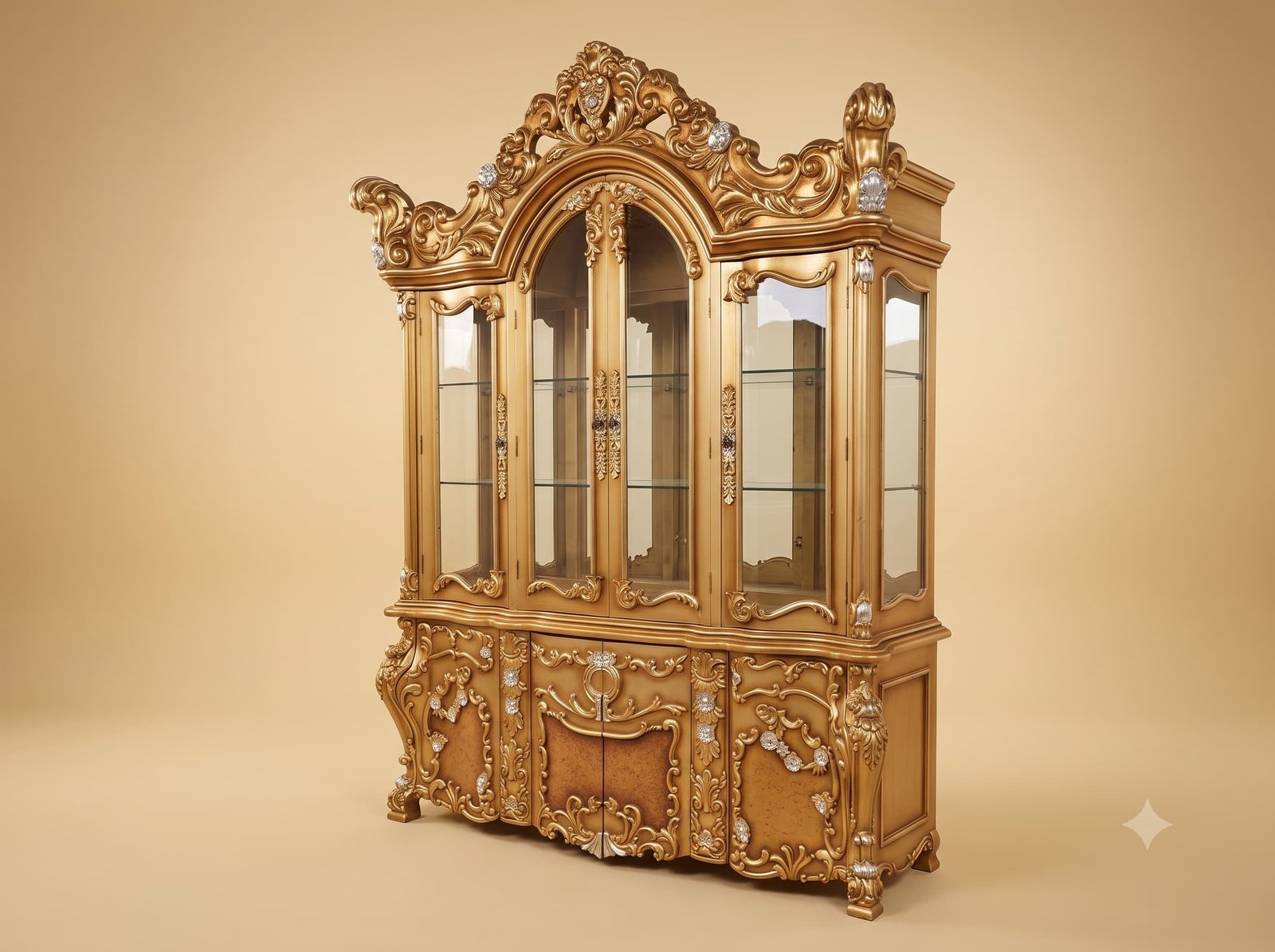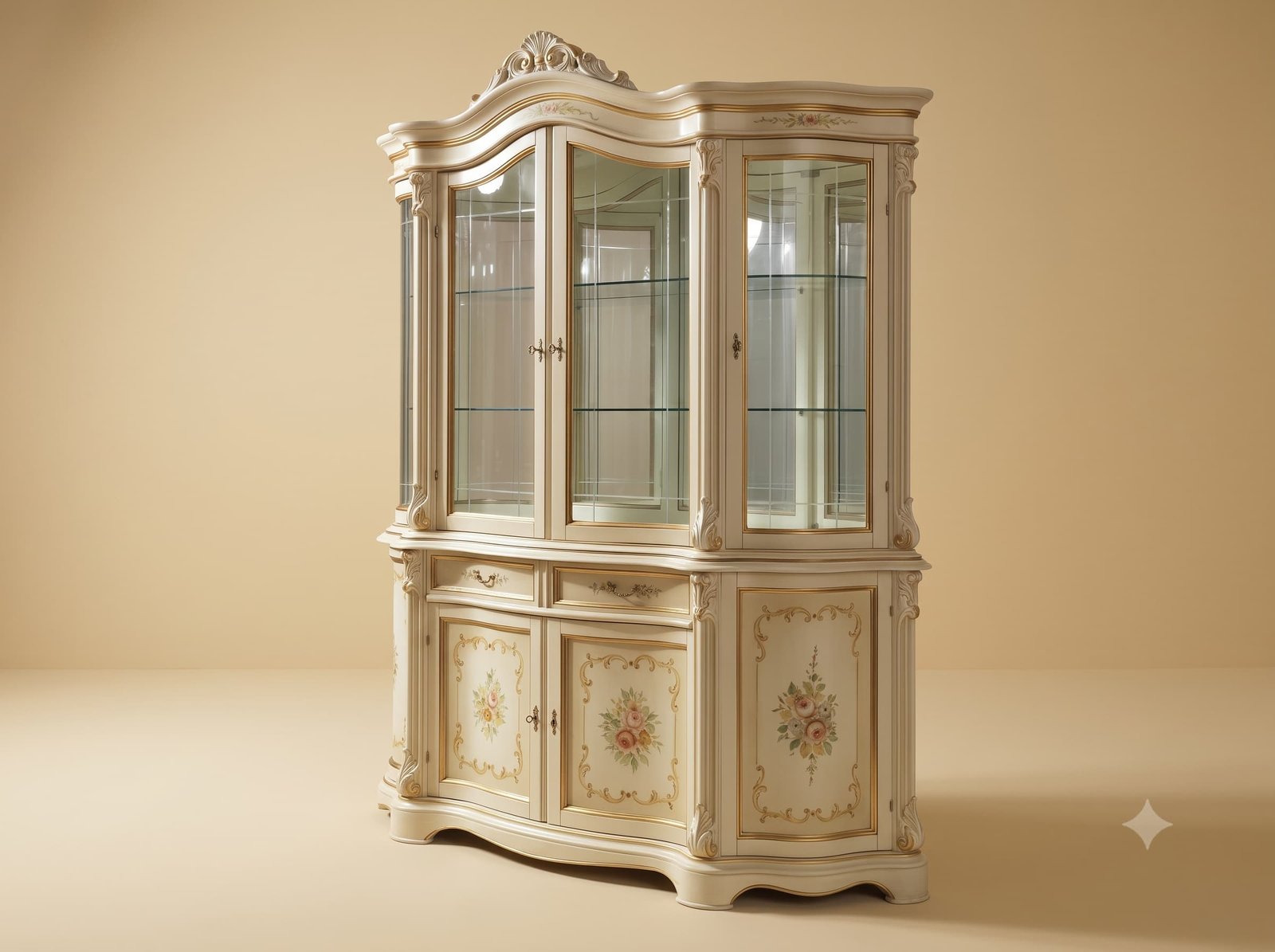
A two-part cabinet is really two pieces of furniture that have to look like one, and the joint between them is where that either works or does not.
They cannot be built as a single unit - a glazed top on a closed base would be too tall and too heavy to get through a doorway, up a stair, or round a landing. So the upper section has to lift off.
The wrong way is to screw the two together and hide the fixings. That makes them one piece again, with all the delivery problems and none of the advantage.
So our master Indian artisans locate the upper section on the lower with blocks rather than fixings: shaped stops on the base that the top drops onto, positioning it exactly and stopping it sliding, held by nothing but its own weight. Lifting it off is a two-person job and no tools.
The moulding that runs across the junction is then fitted to the lower section, not to the upper - so it stands slightly proud, and the actual joint sits behind it in shadow. From the front you see a moulding, which looks intentional. You do not see a line between two boxes, which never does.
 Ask Price On WhatsApp