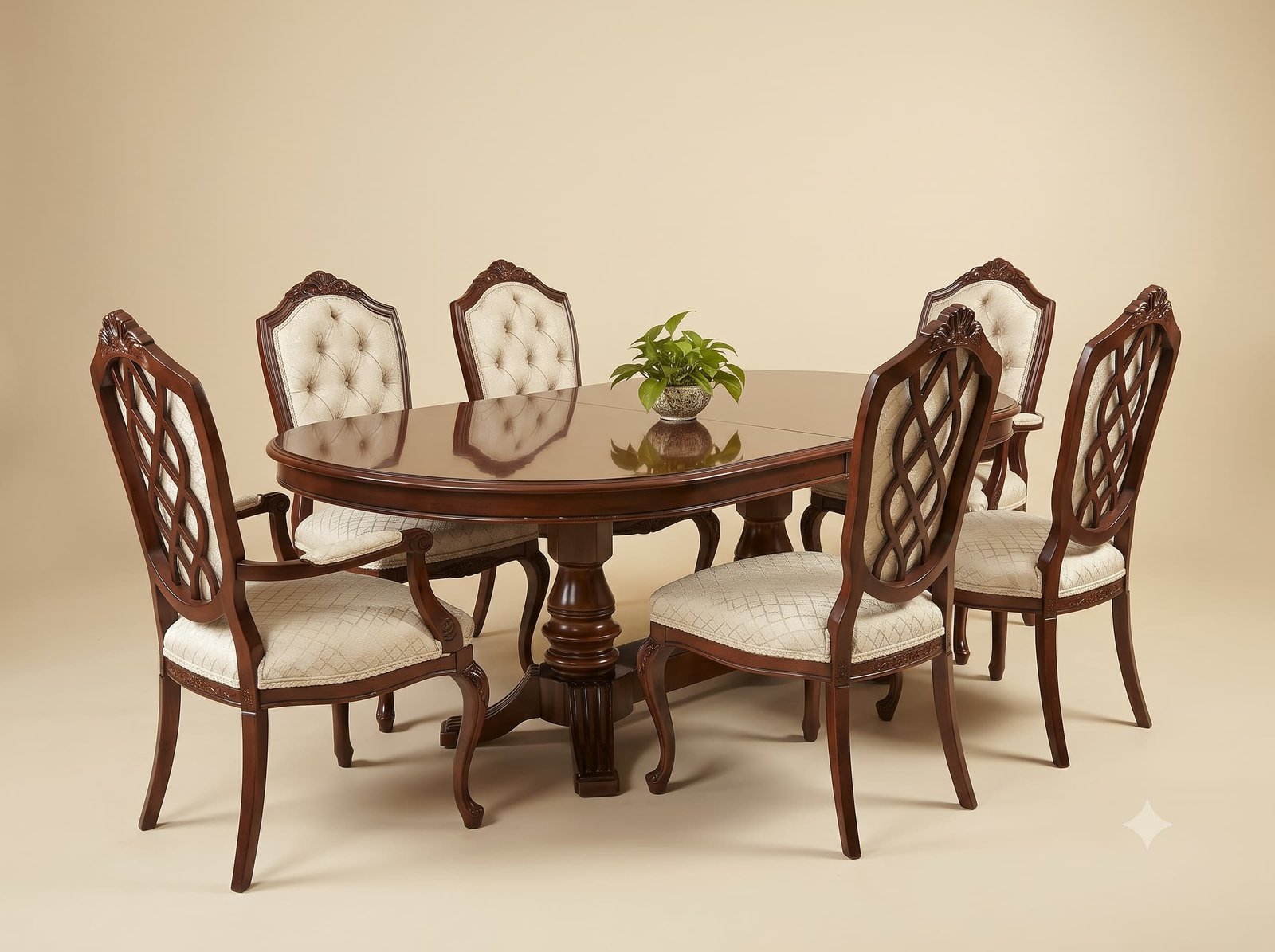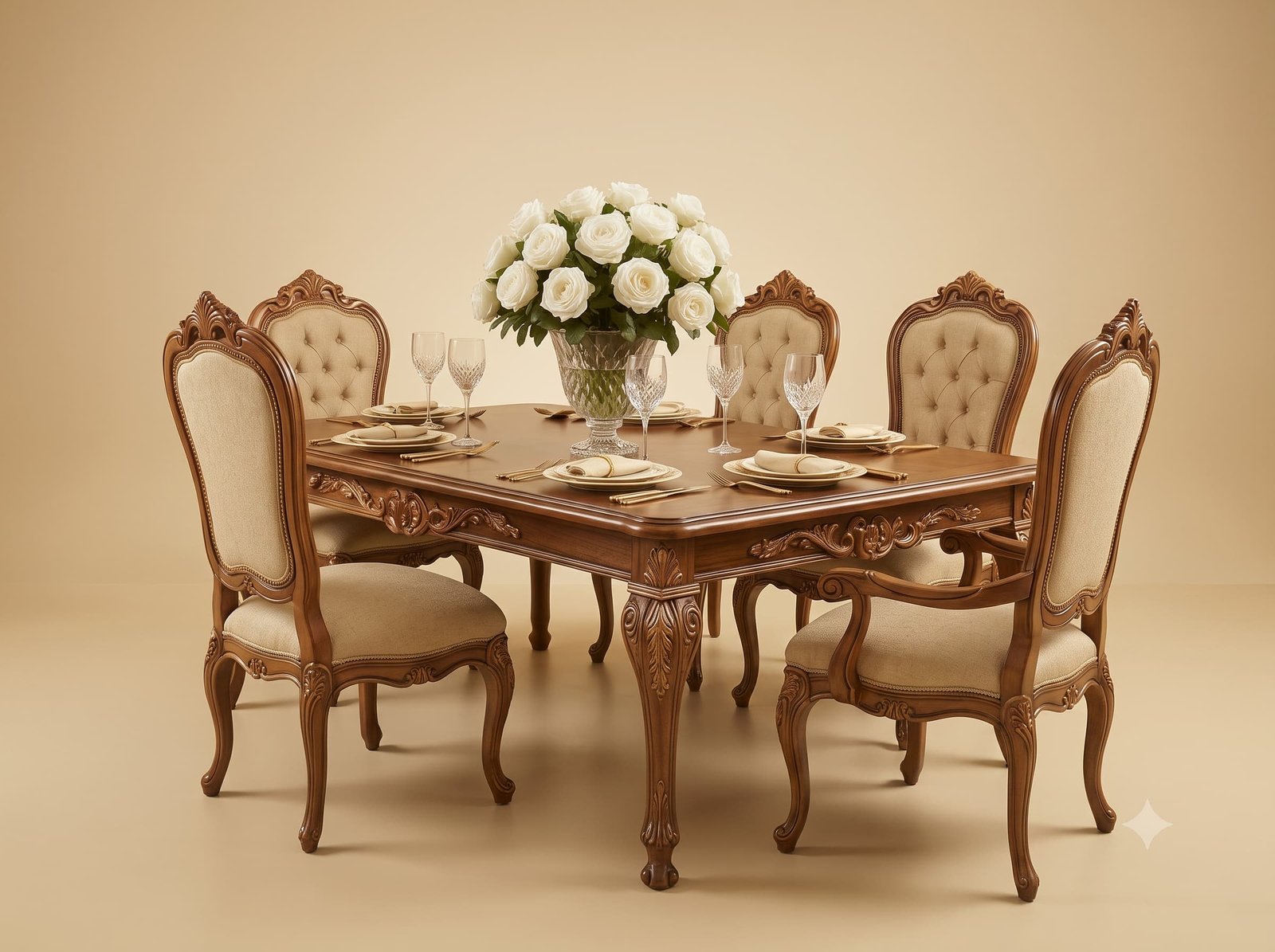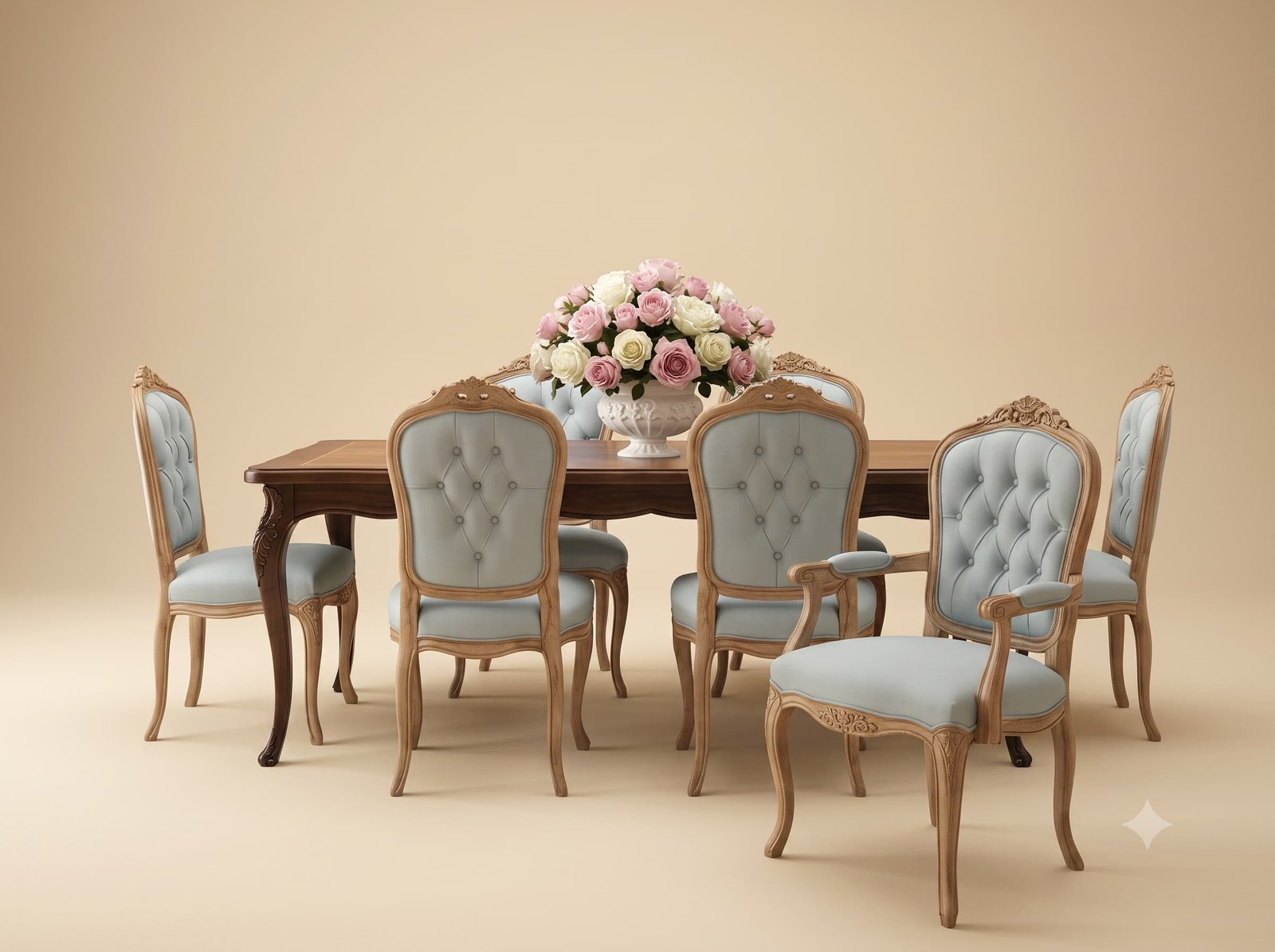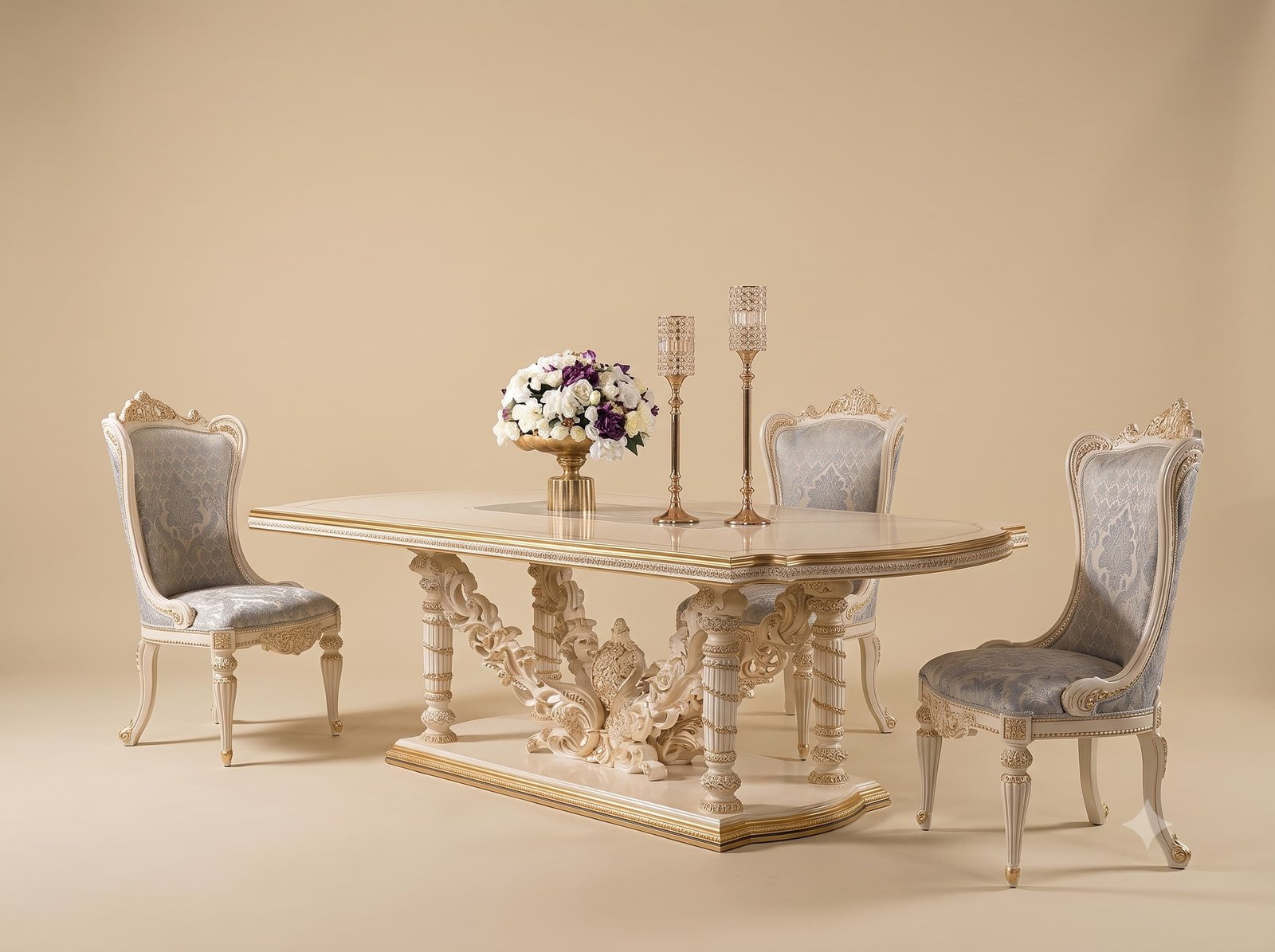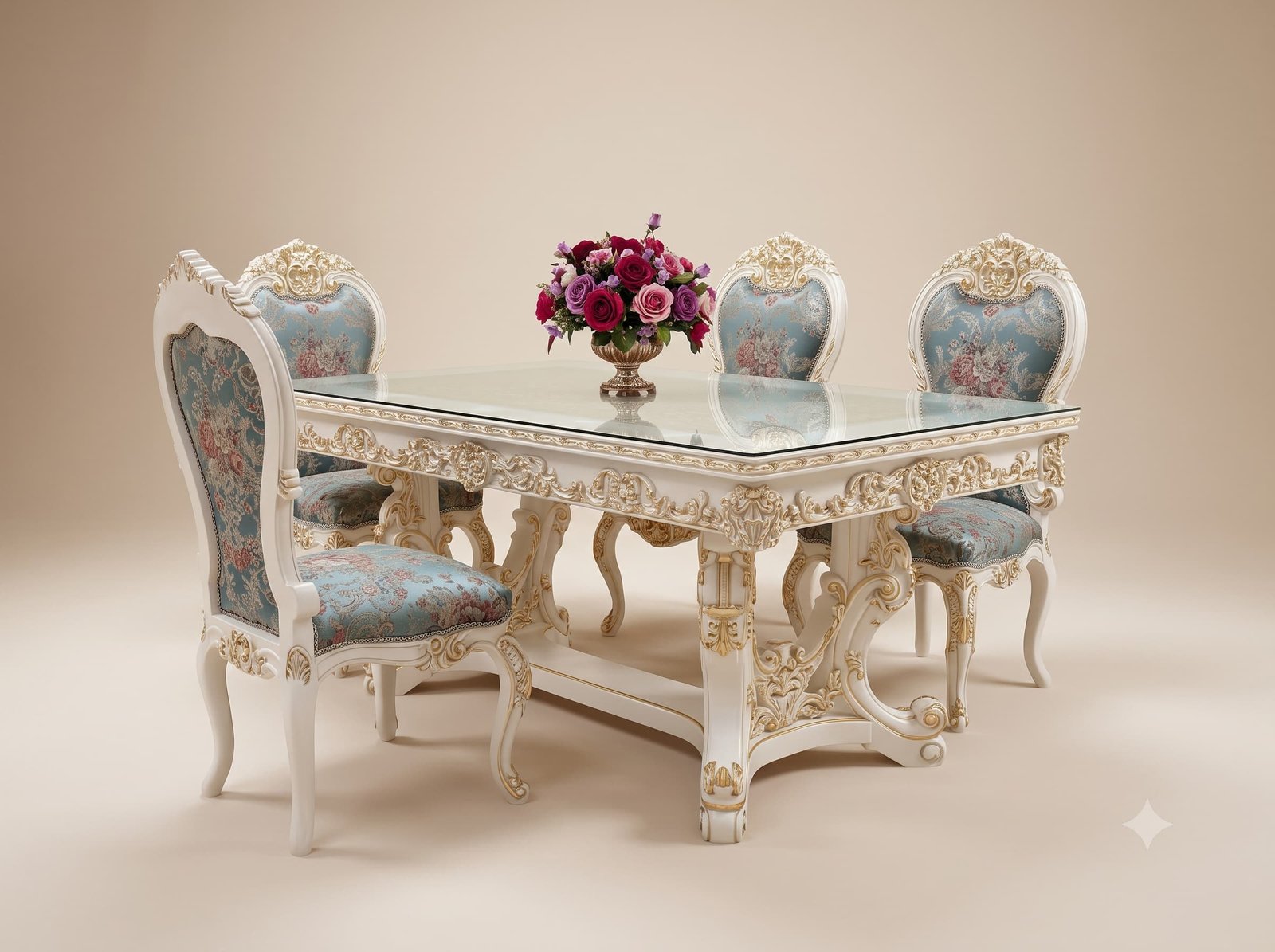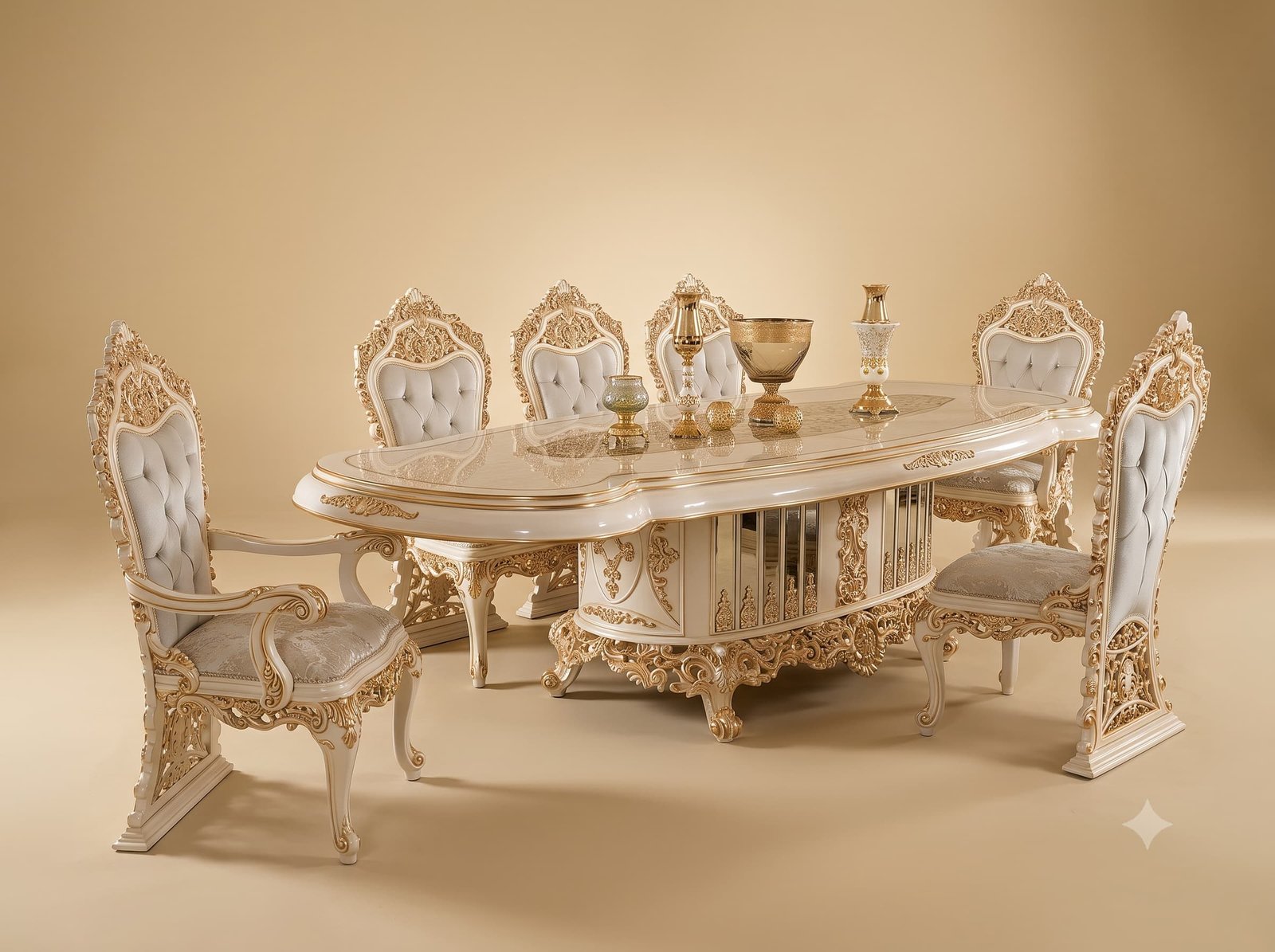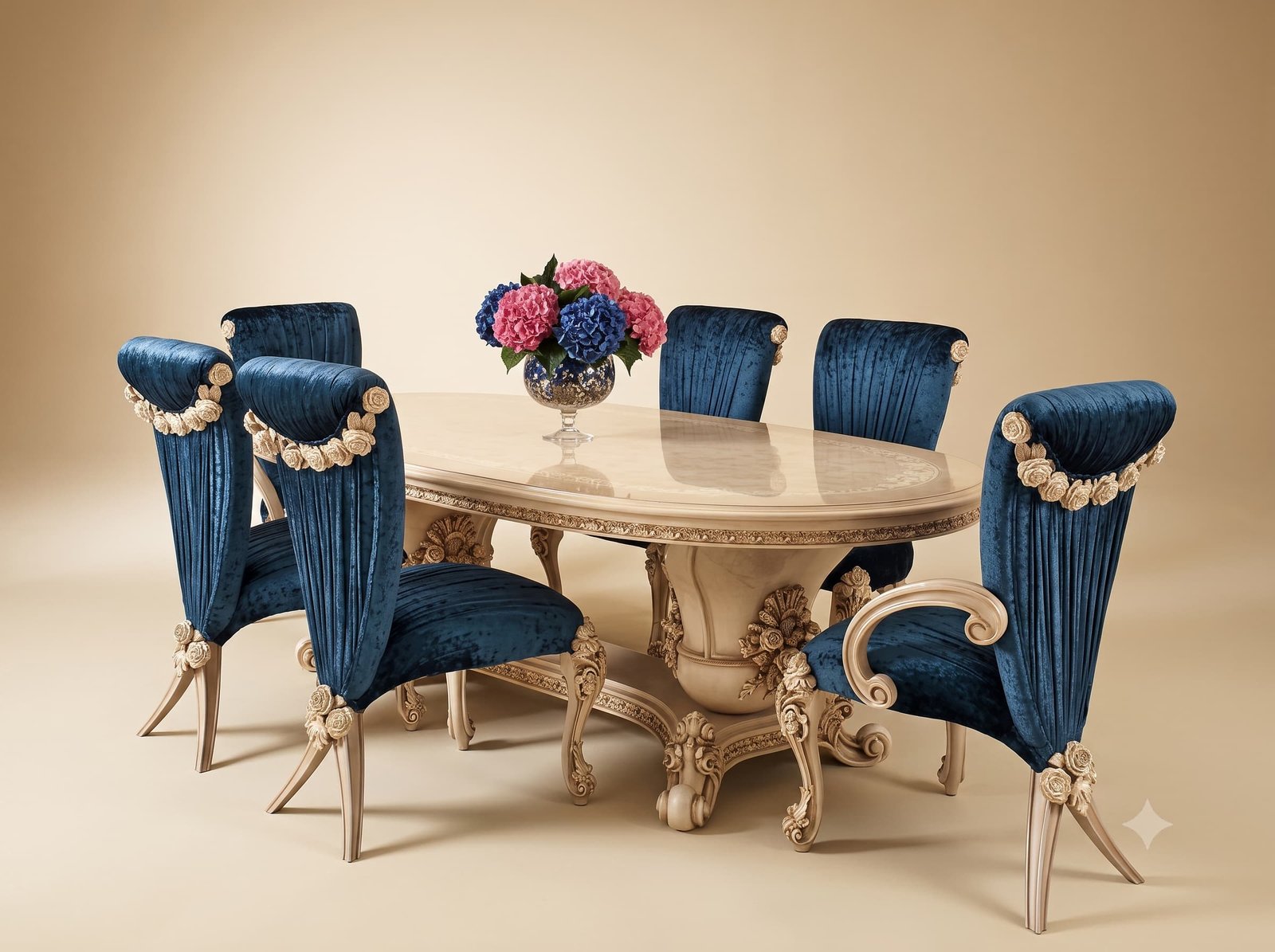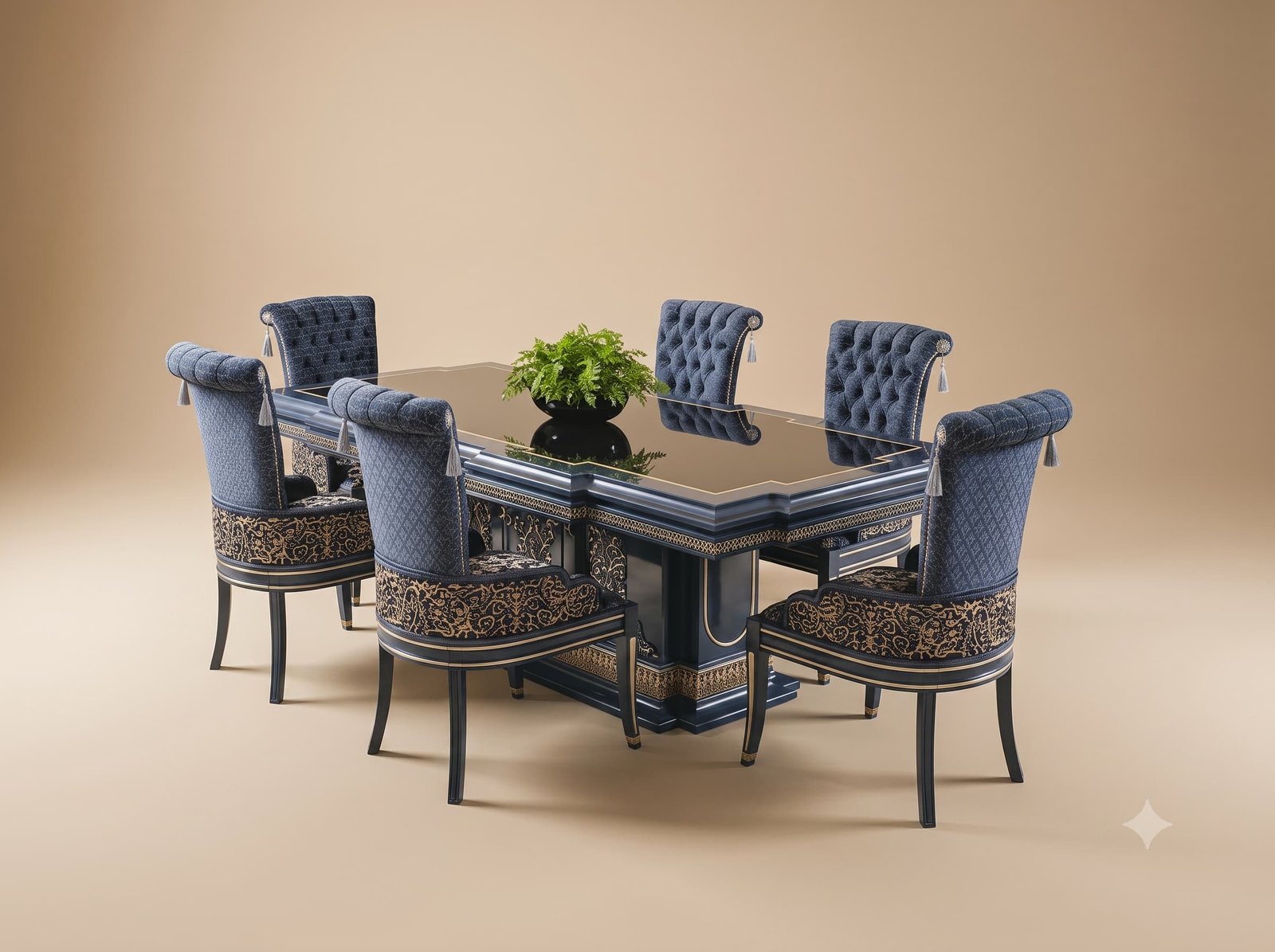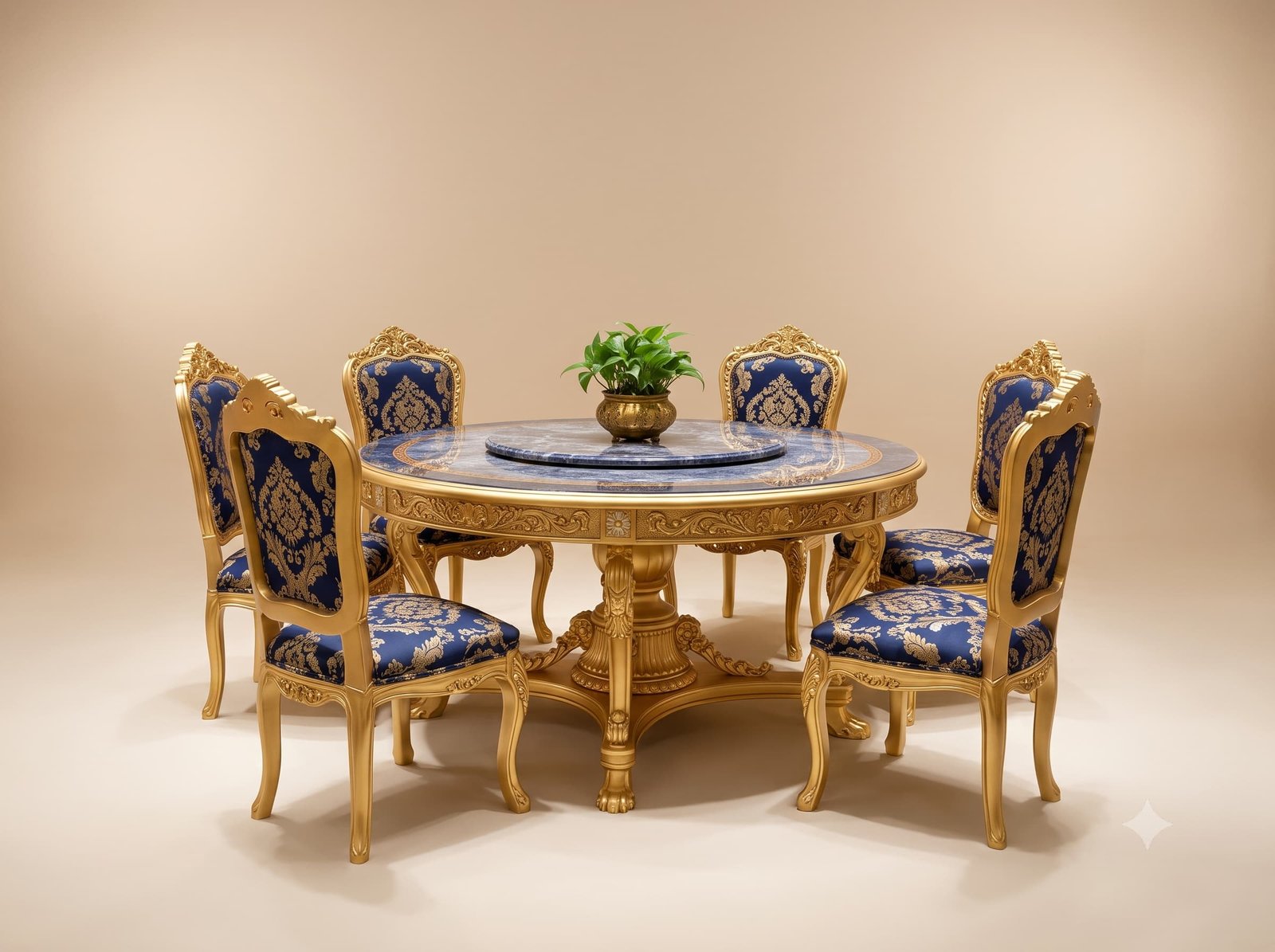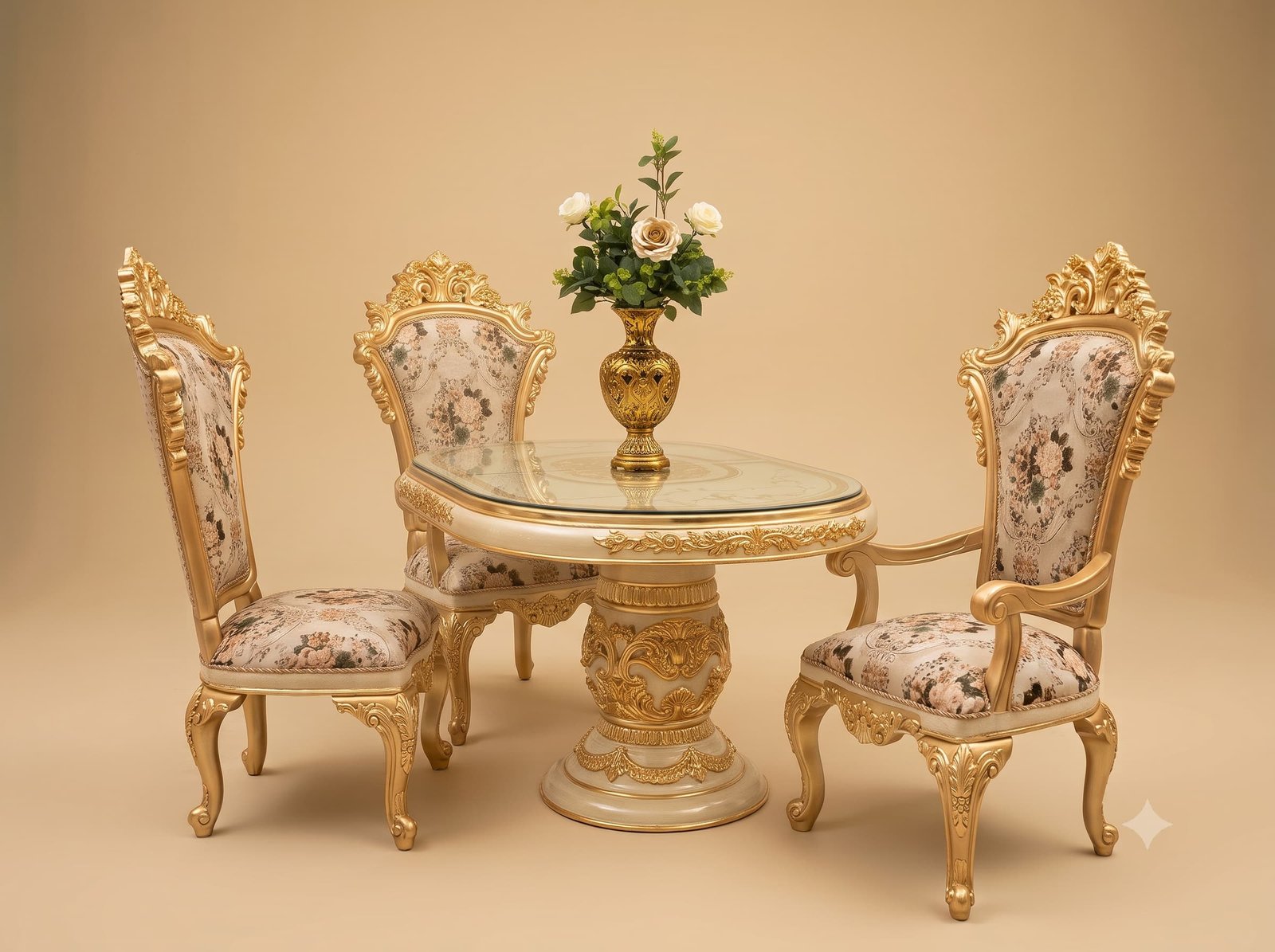
A carver at a round table has a problem a carver at a rectangular one does not: it never approaches the table square.
At a long table, a carver sits at the end and pushes straight in - its arms meet the apron at ninety degrees and clearing them is a single measurement. At a round table, a chair comes in on a radius, and as it is pushed home the arms meet a curved edge. One arm touches before the other unless the chair is dead on centre, and it very rarely is - people push a chair in from wherever they happen to be standing.
So the arm height on a carver for a round table is set with margin rather than to a minimum. We take the lowest point of the table's carved frieze anywhere around its circumference - not the average, the lowest - and clear that, so the chair slides in at any angle without hunting for the right one.
The arm is also shaped so its highest point sits behind the line where it meets the table, which means the elbow is still supported properly even though the front of the arm has been kept low.
Nobody notices a carver that pushes in. Everybody notices one that has to be lined up first, every single day.
 Ask Price On WhatsApp