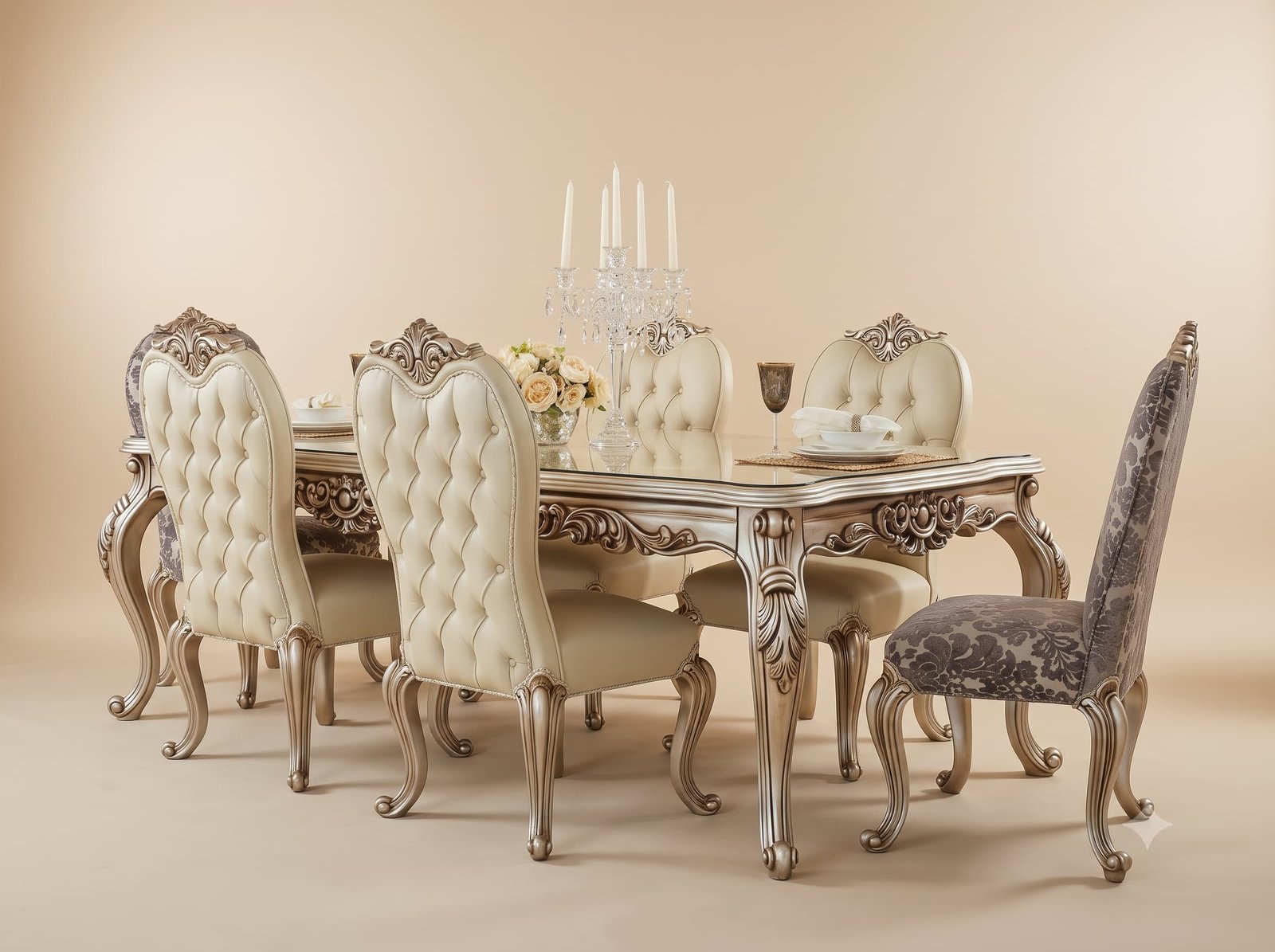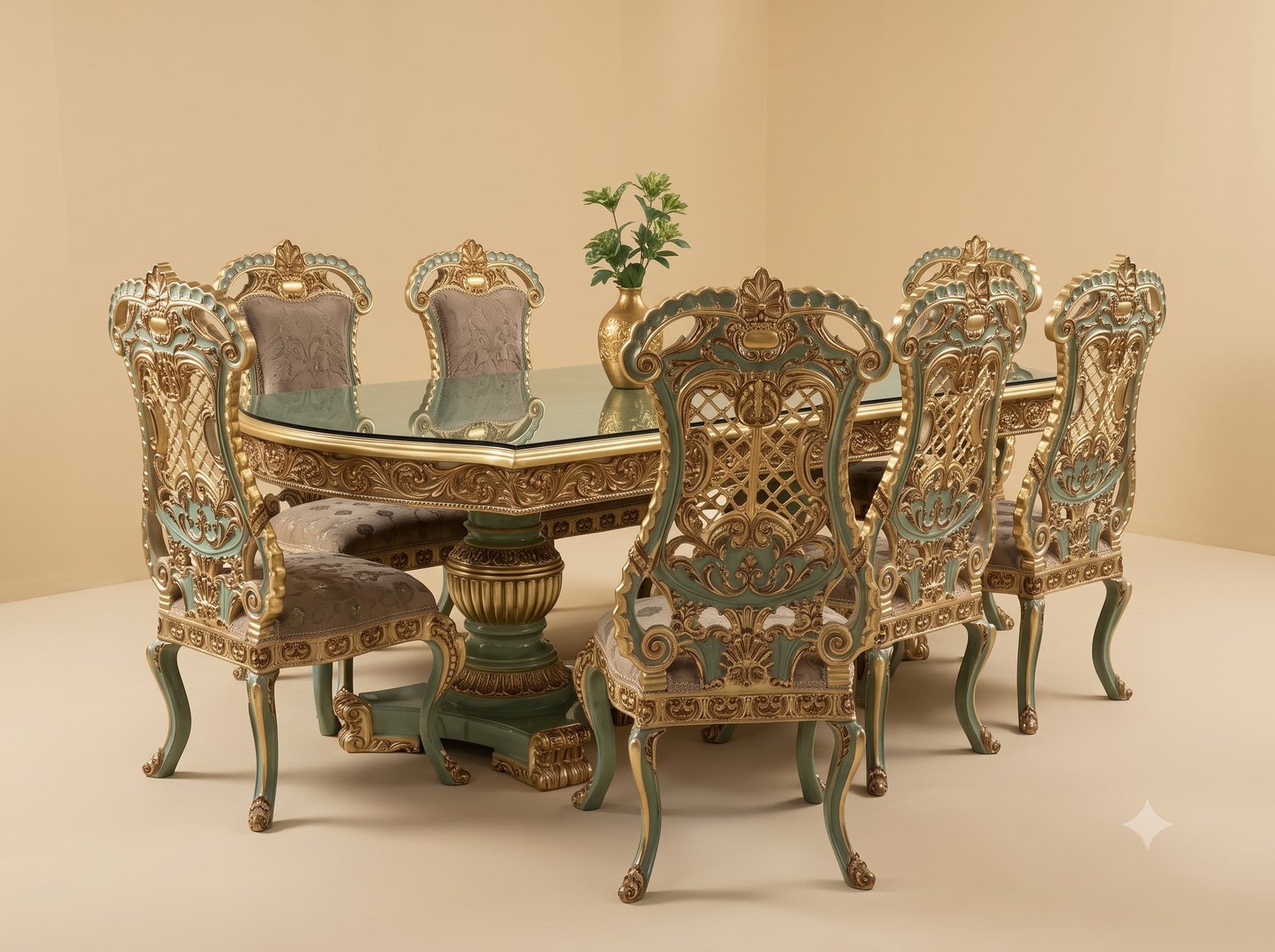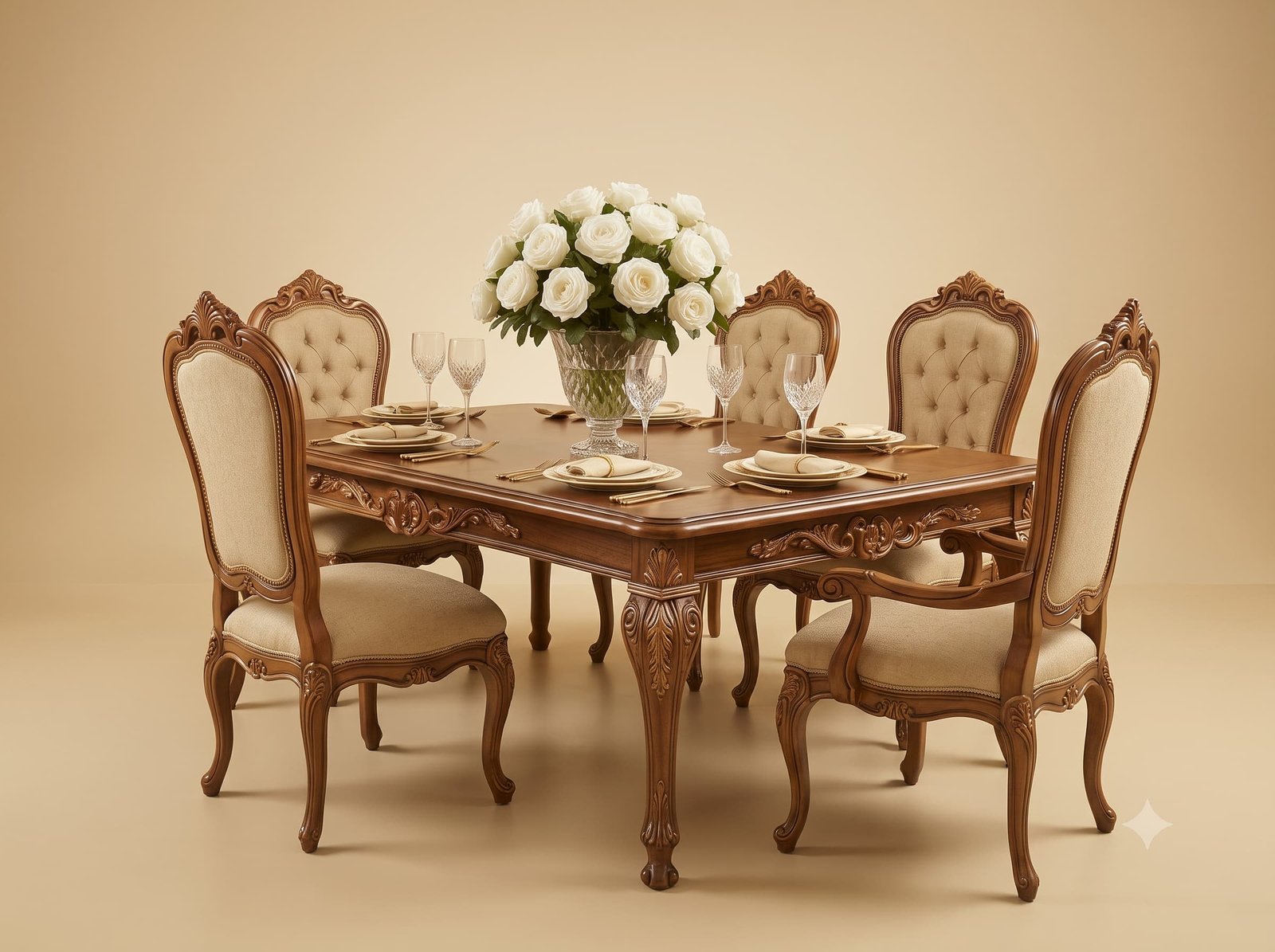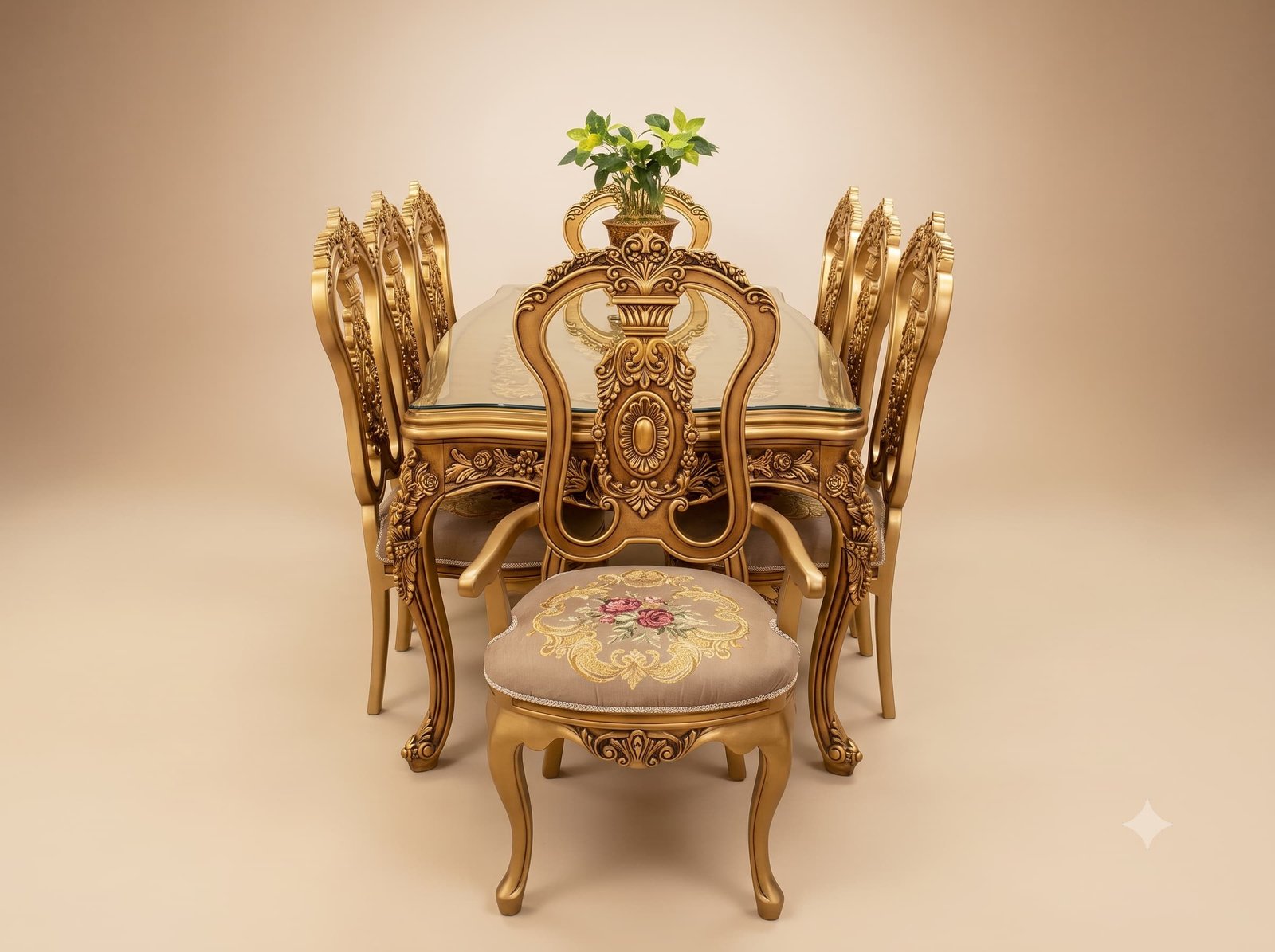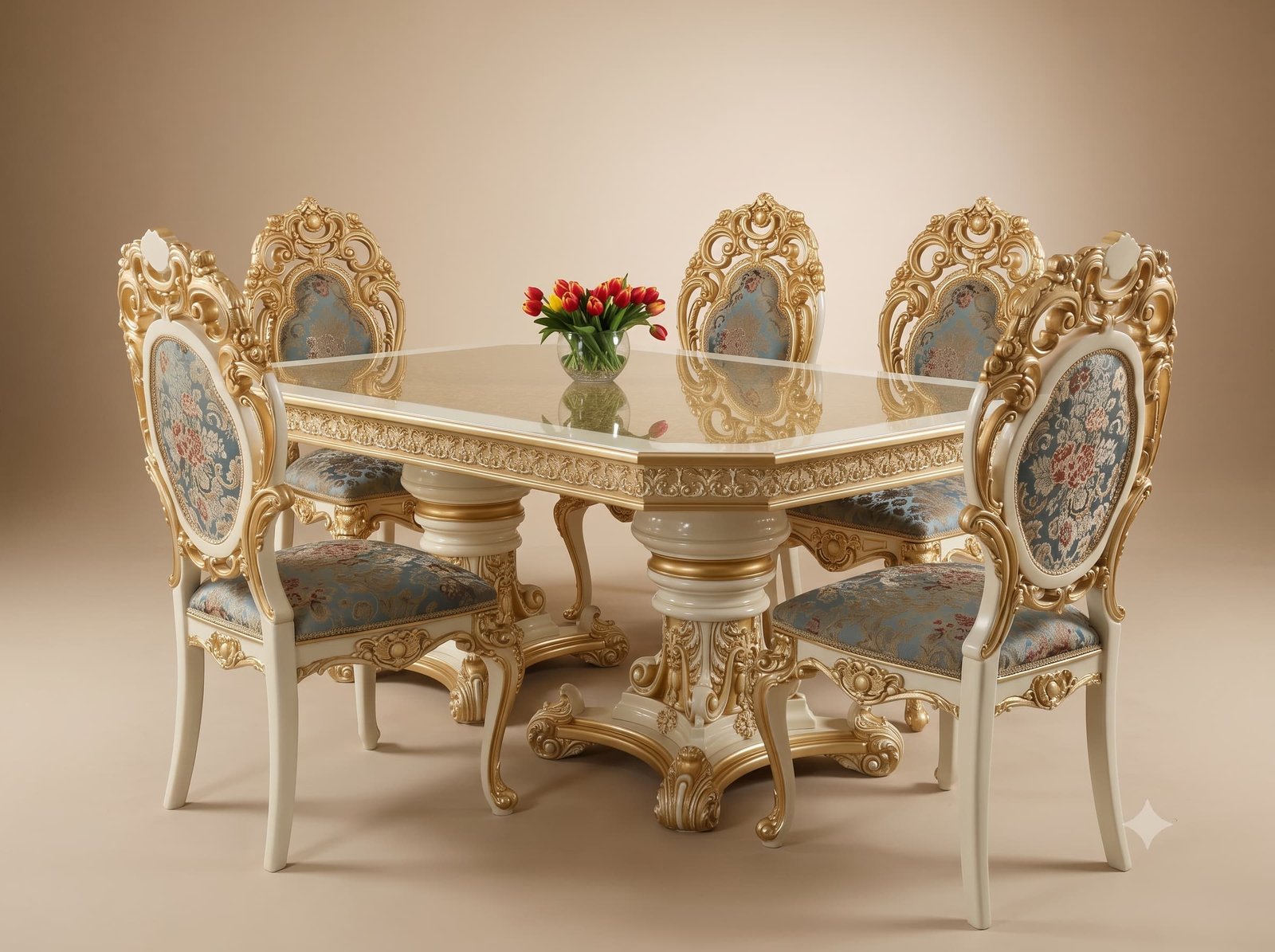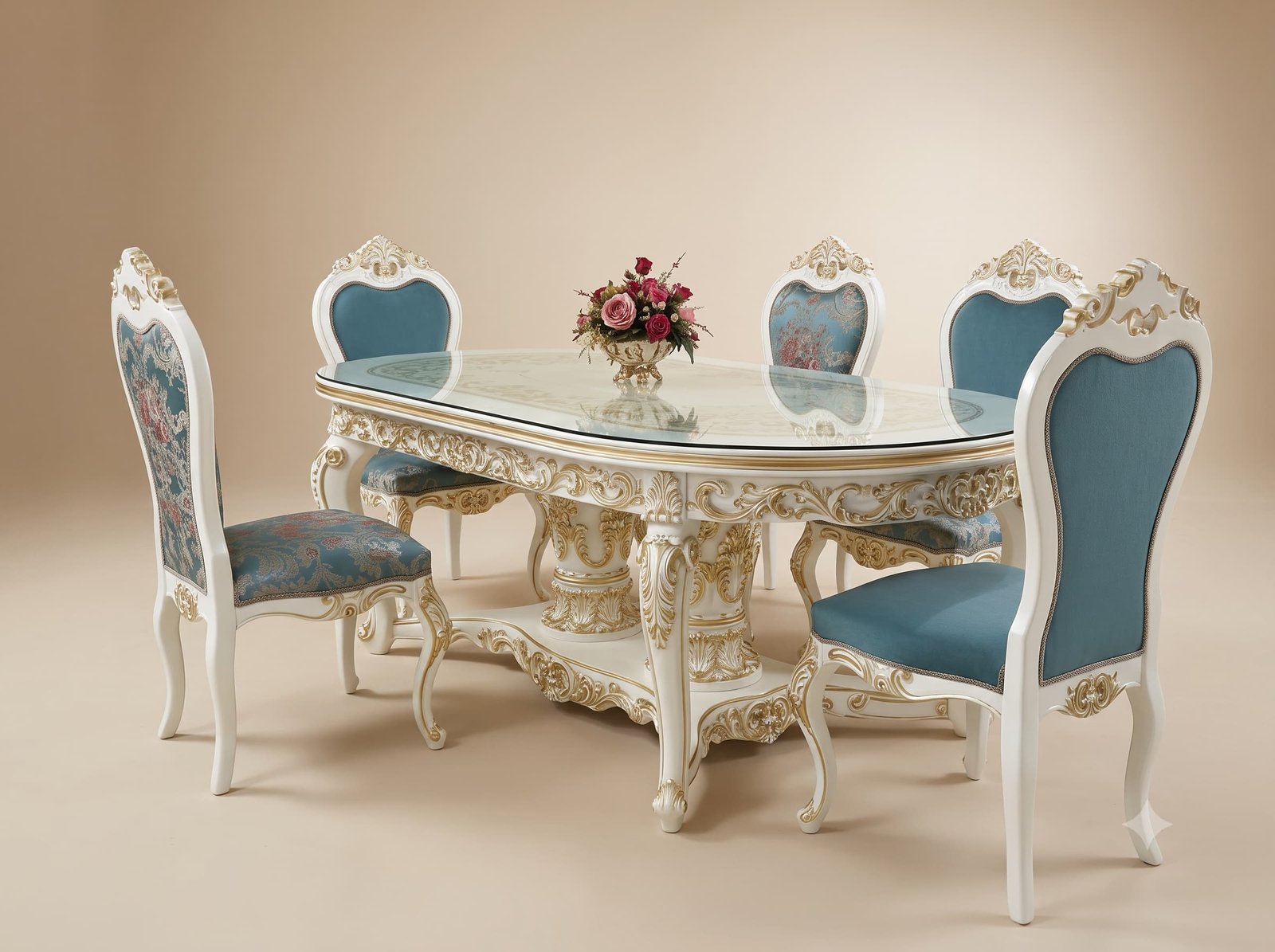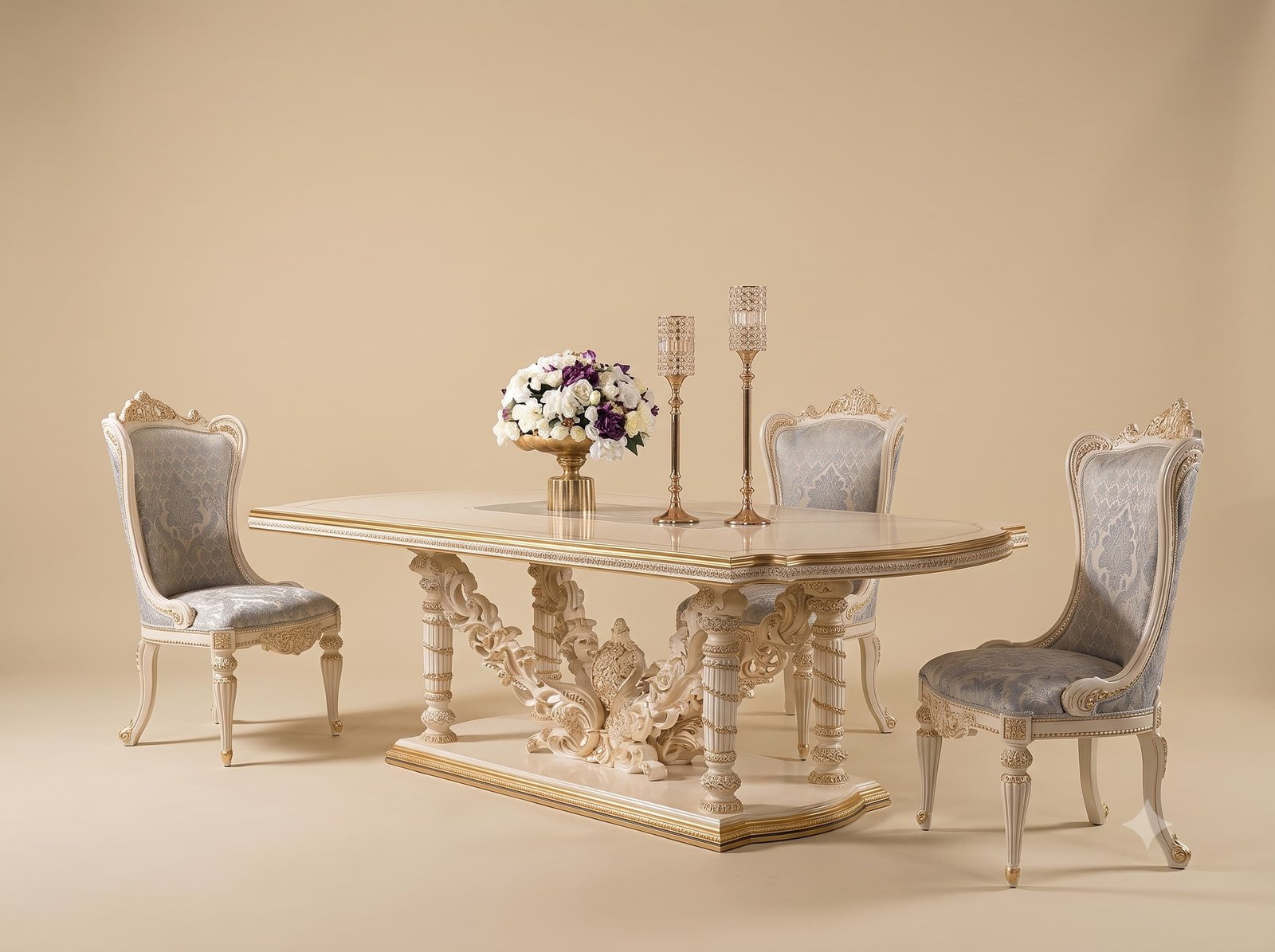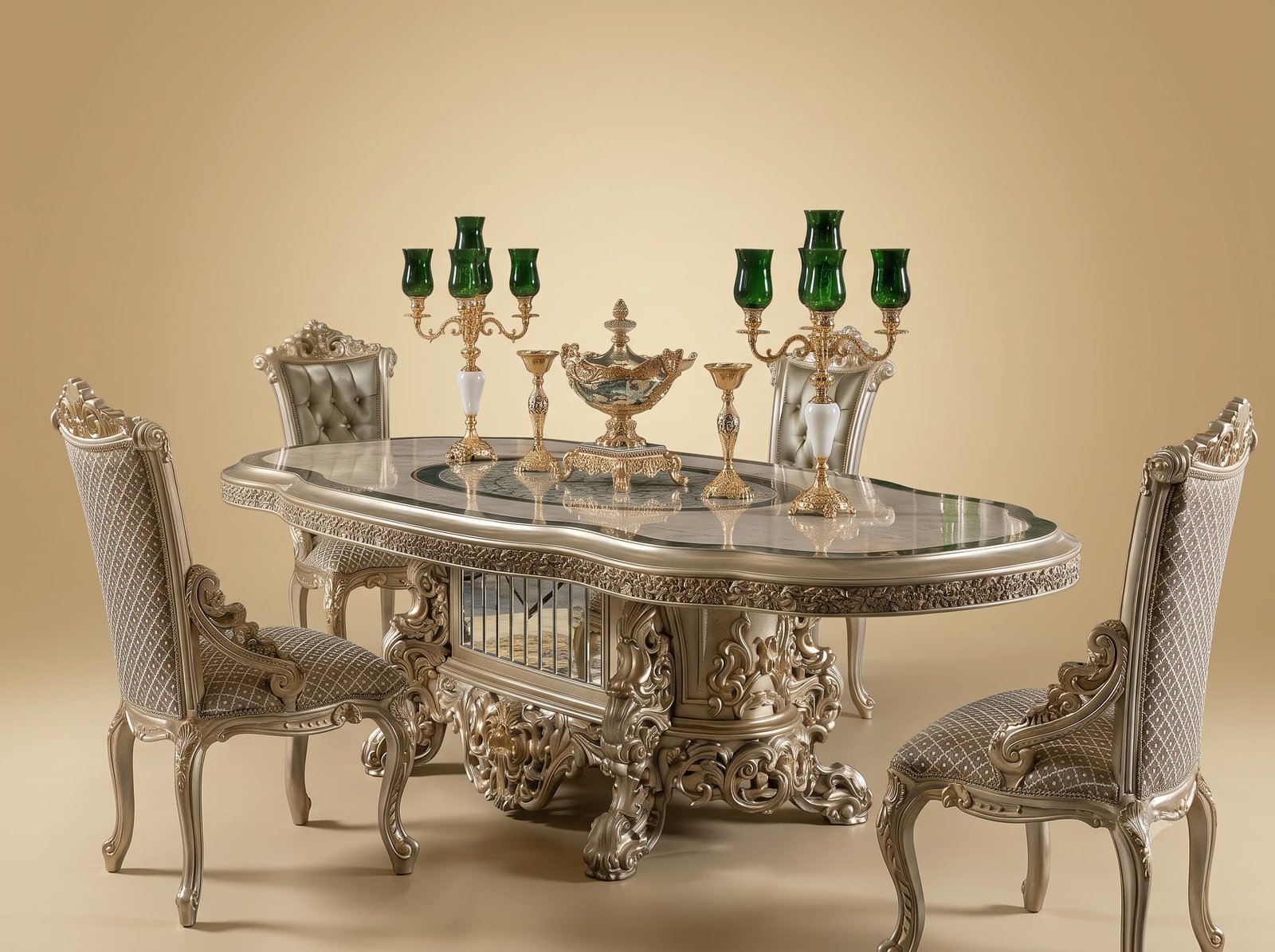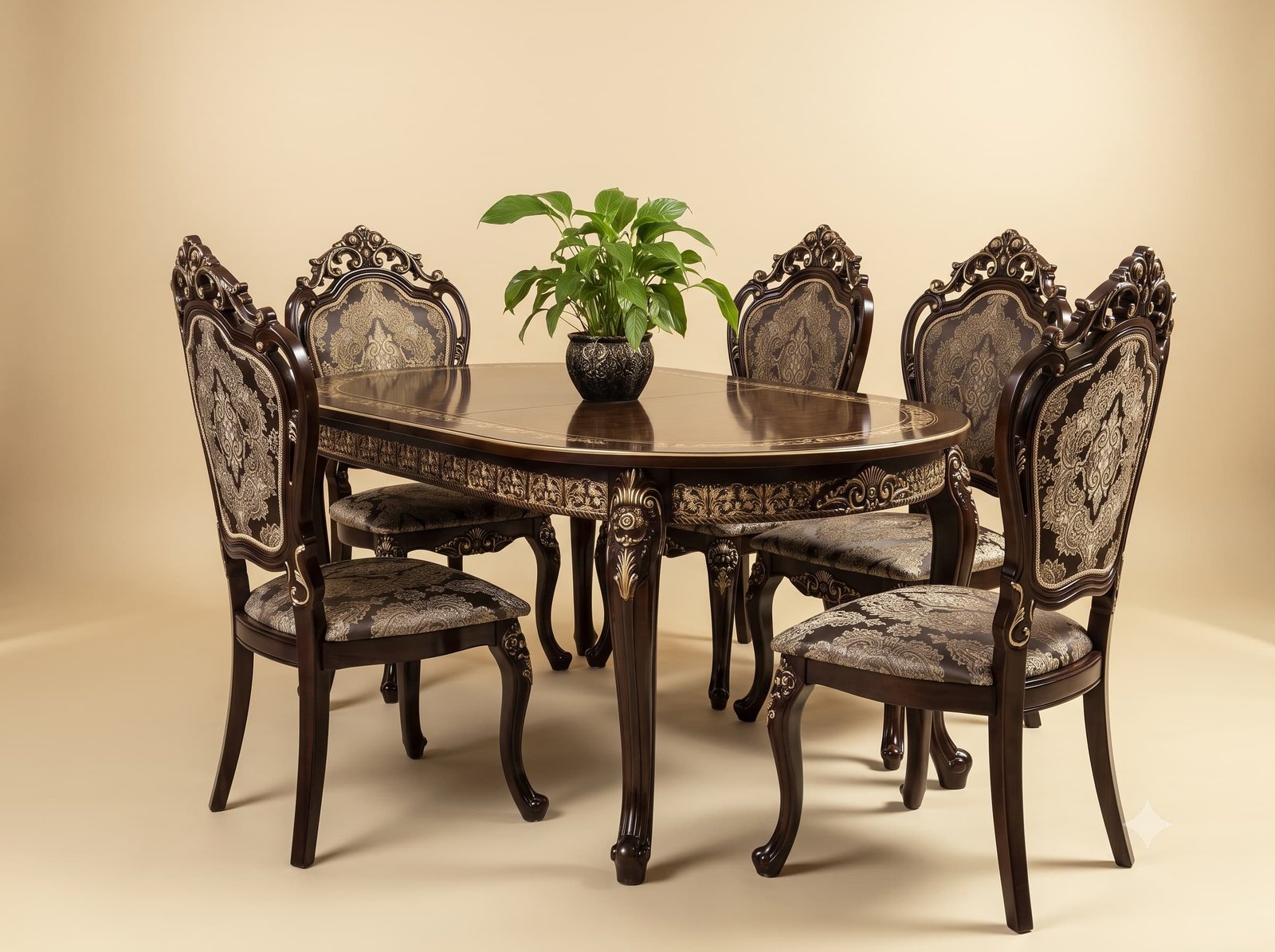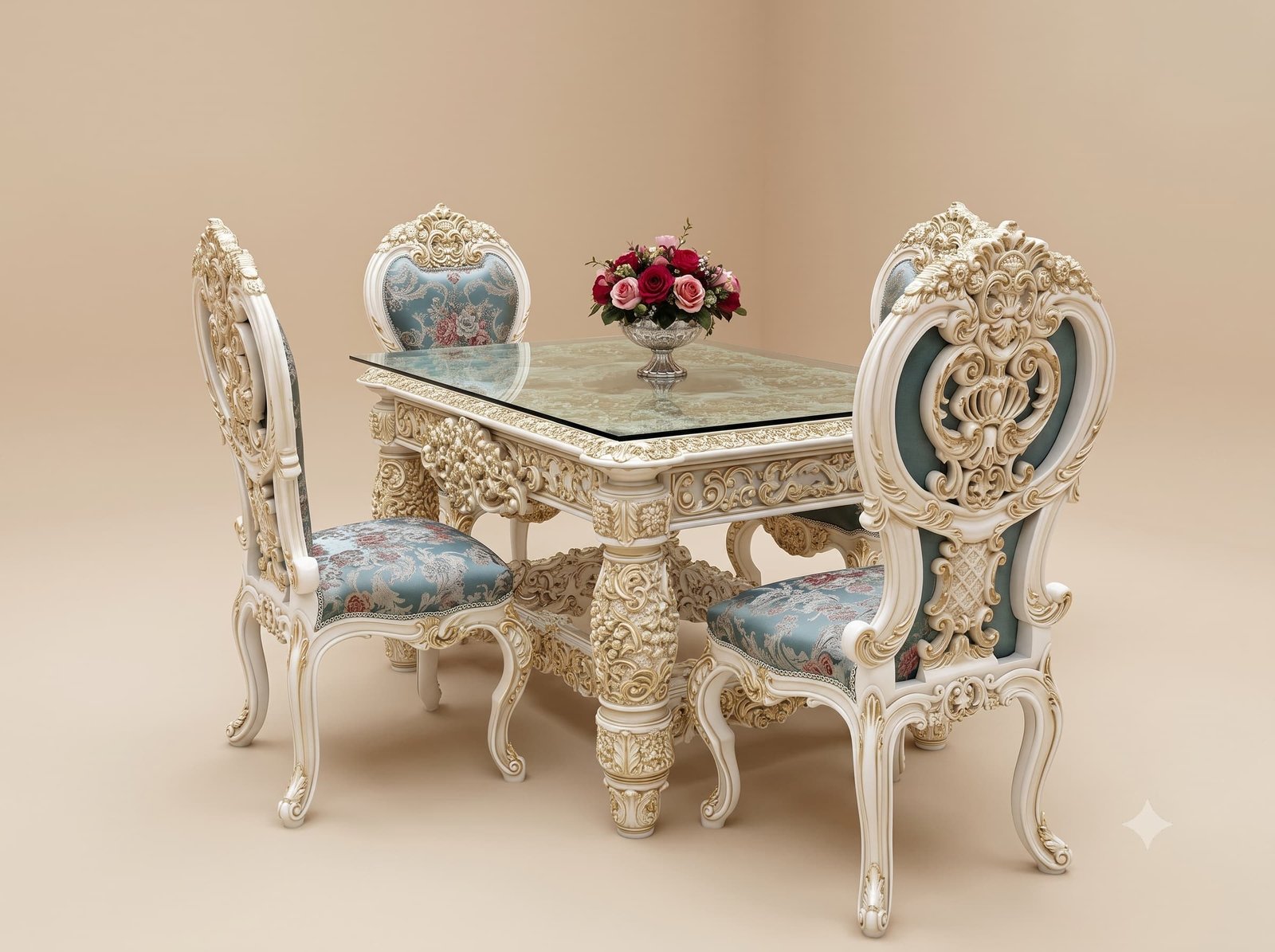
The hardest line on any upholstered chair is where the cloth stops and the timber starts. It has to be dead straight, it has to follow a curve, and it has to hide a staple line and a raw fabric edge - and on ruched upholstery it is harder still, because the gathers arrive at that line at slightly different thicknesses all the way along.
Most chairs solve it with a braid or a cord laid over the join. It works, and it is a strip of trim sitting on top of the problem.
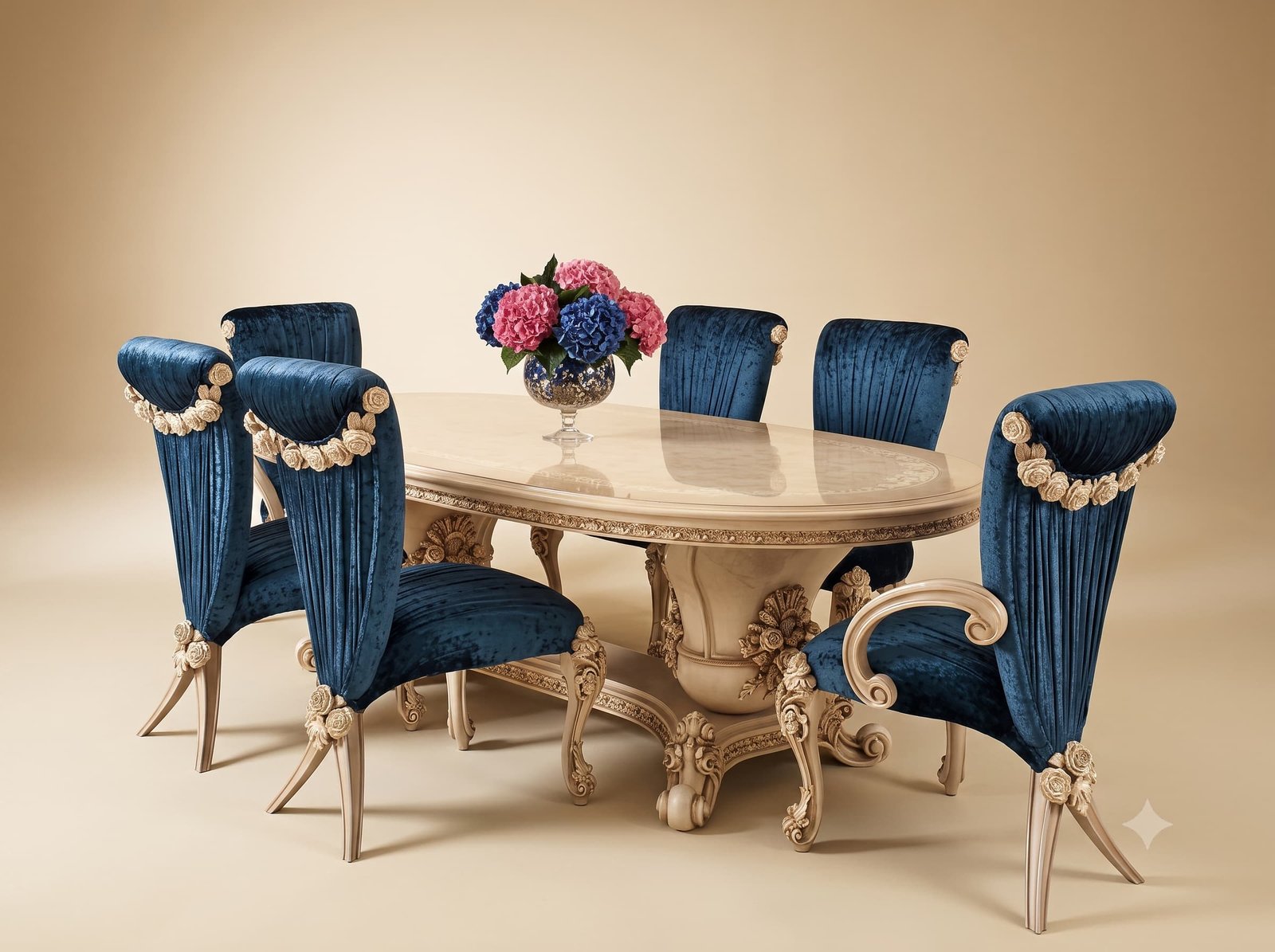
These chairs solve it with carving instead. The rose garland across the shoulder of the frame is not applied decoration in the usual sense - it is positioned so that its lower edge oversails the junction, and it is carved with a rebate along that edge so the upholstery tucks up underneath it. The gathers finish inside the rebate, where nothing has to be even, and what shows is roses.
Which means the carving has to be made after the upholstery is trial-fitted rather than before. The garland is cut, offered up, and the rebate adjusted to the actual thickness of the gathered cloth on that particular chair.
It is the reverse of the usual order of work, and it is why the join on these chairs is not visible at all rather than being covered up.
 Ask Price On WhatsApp