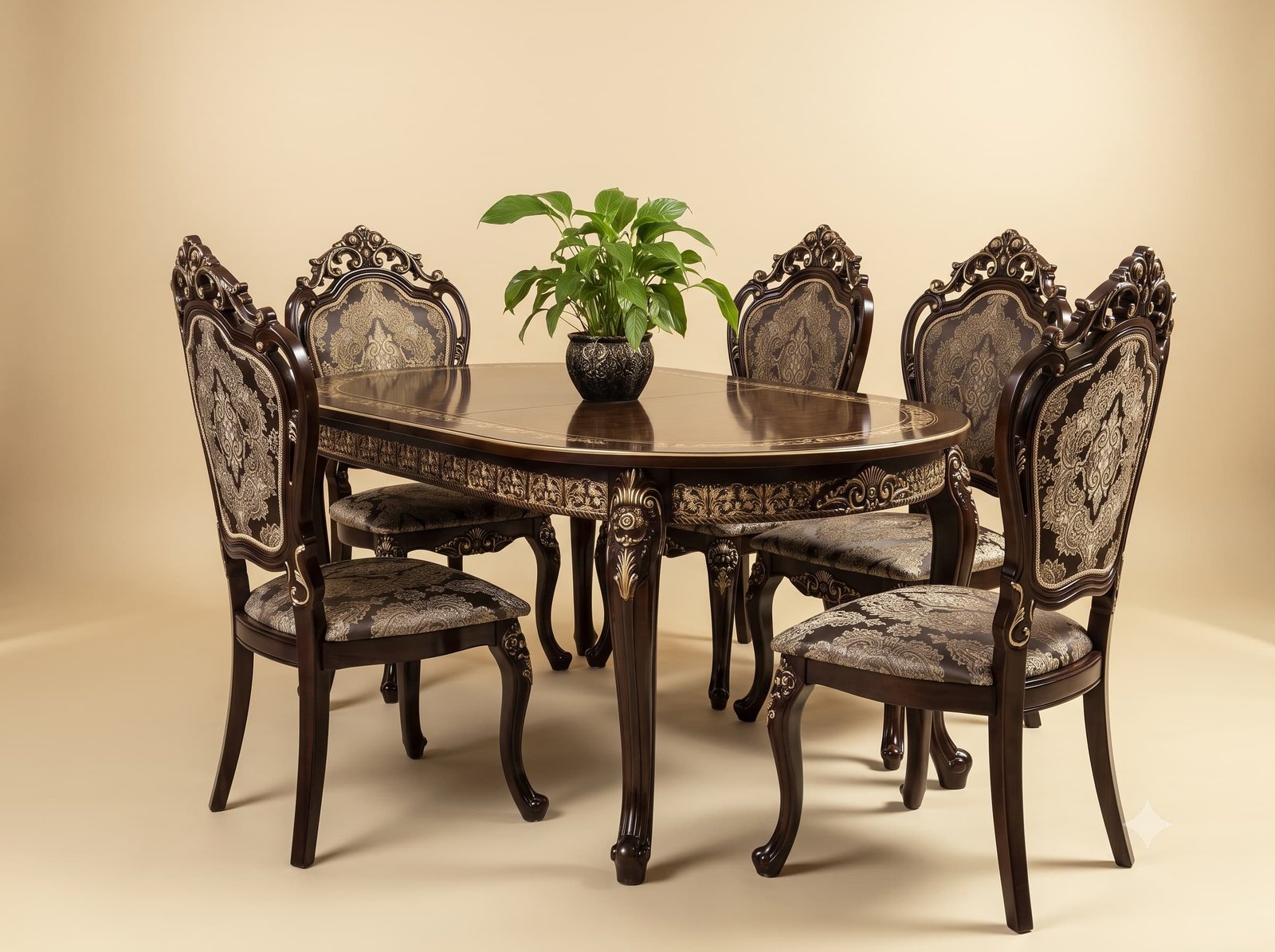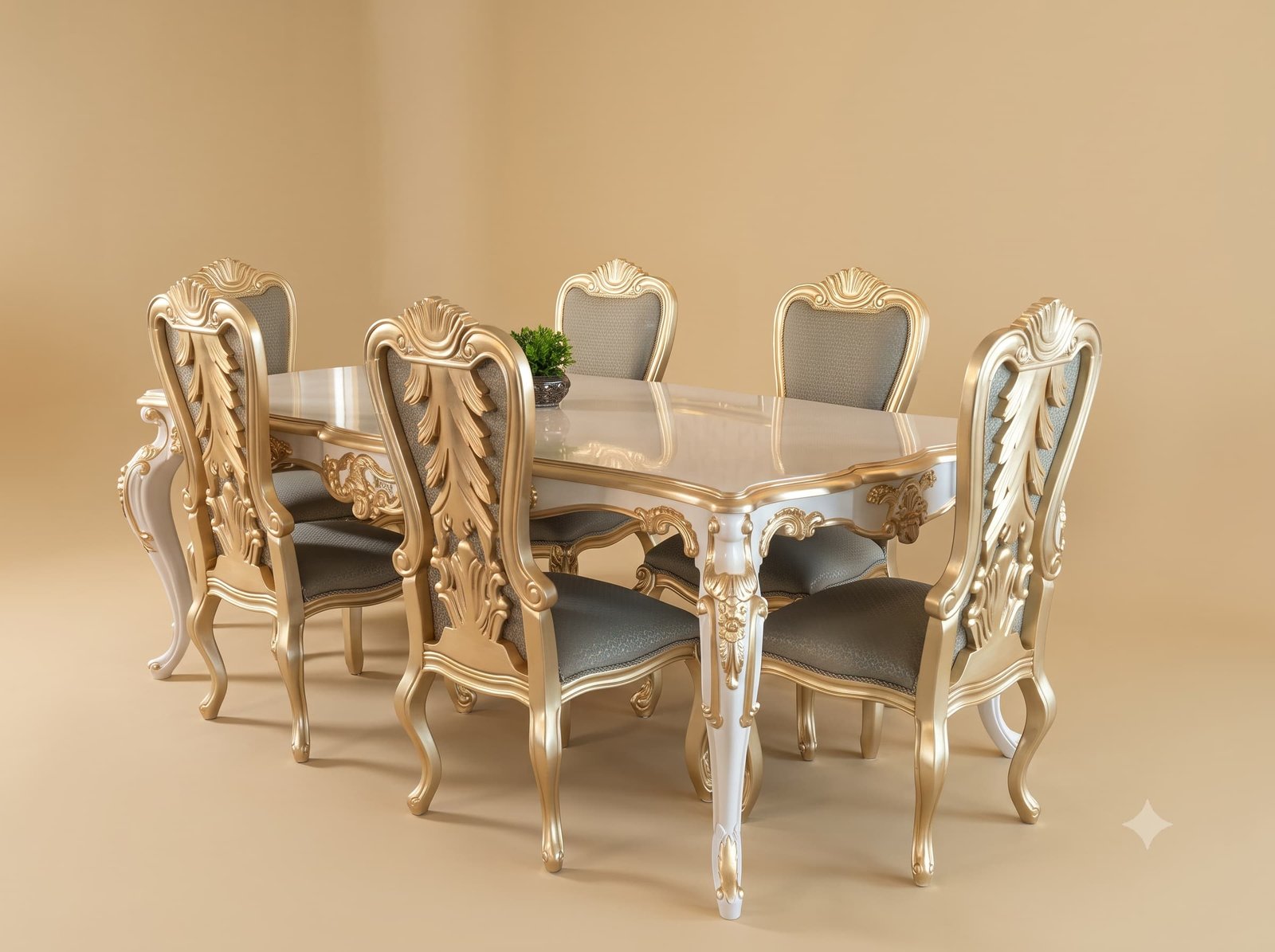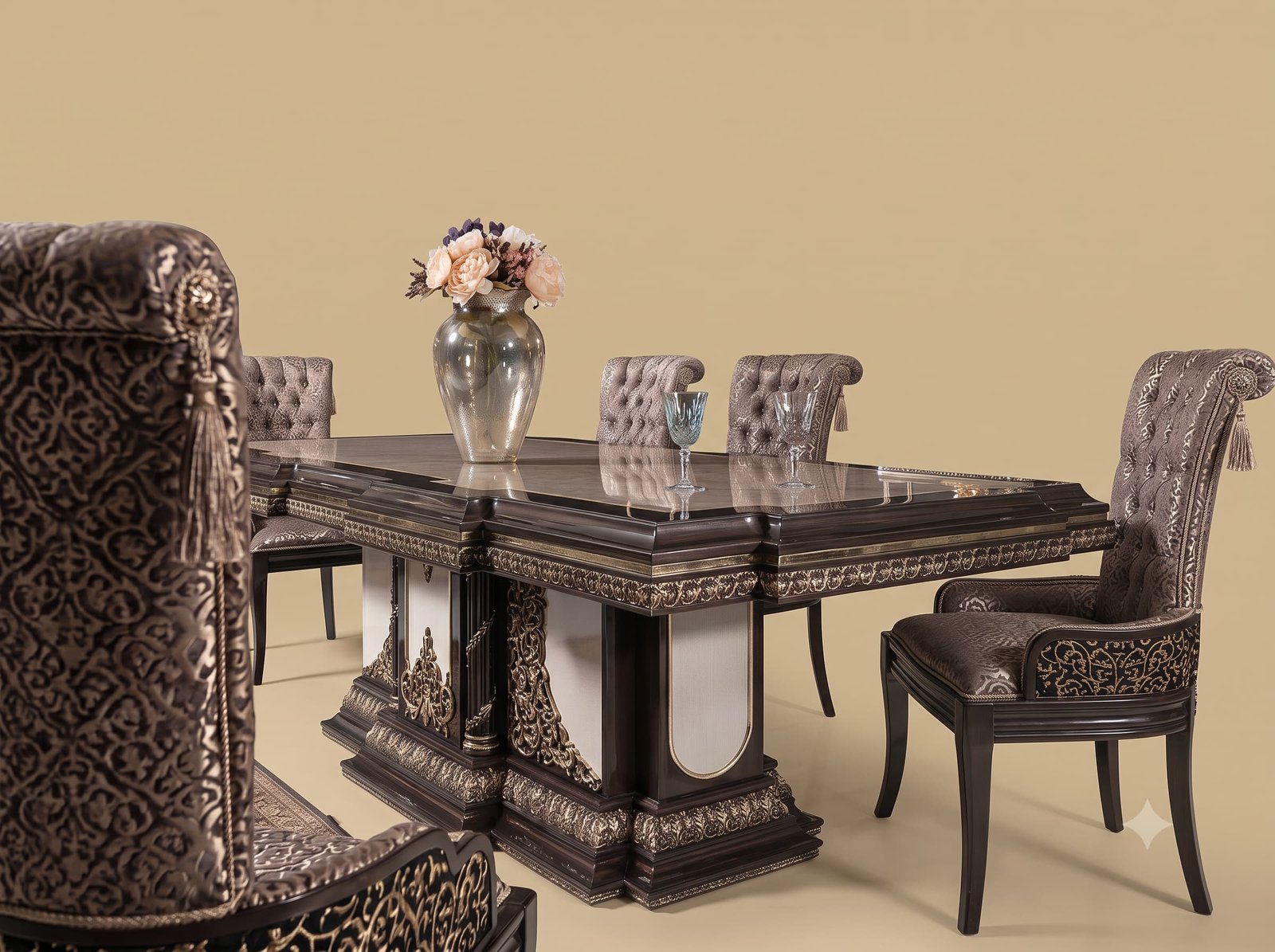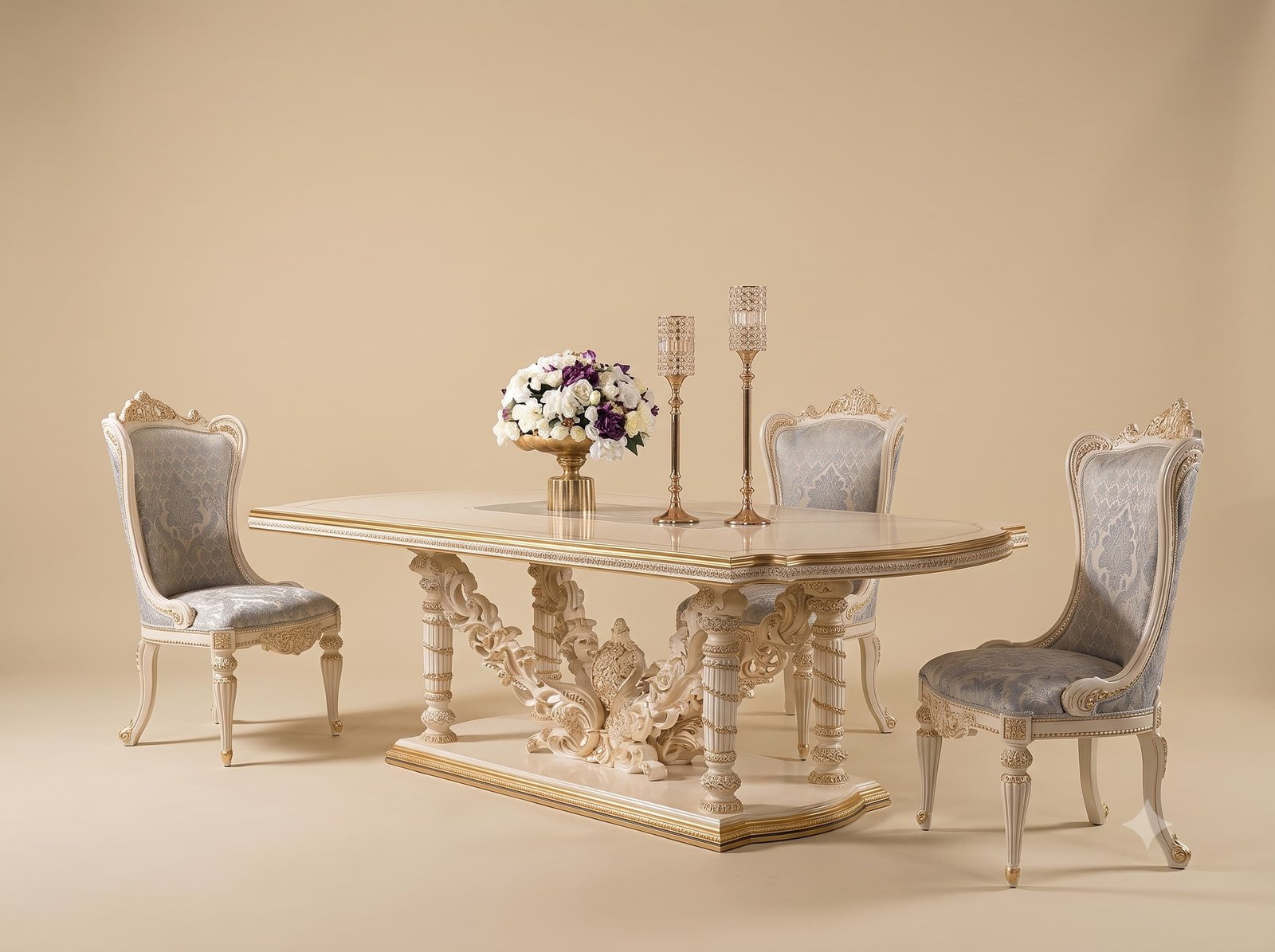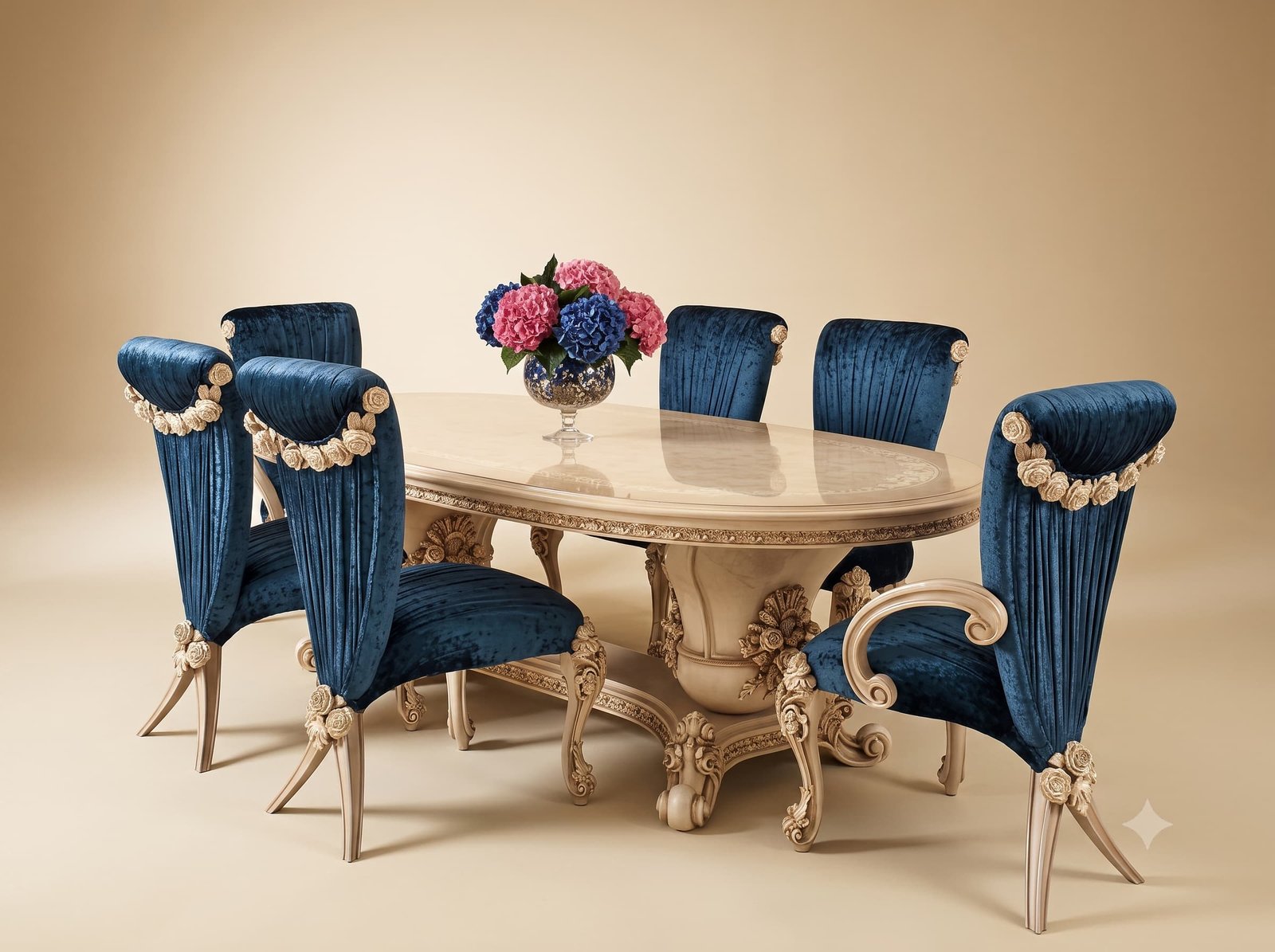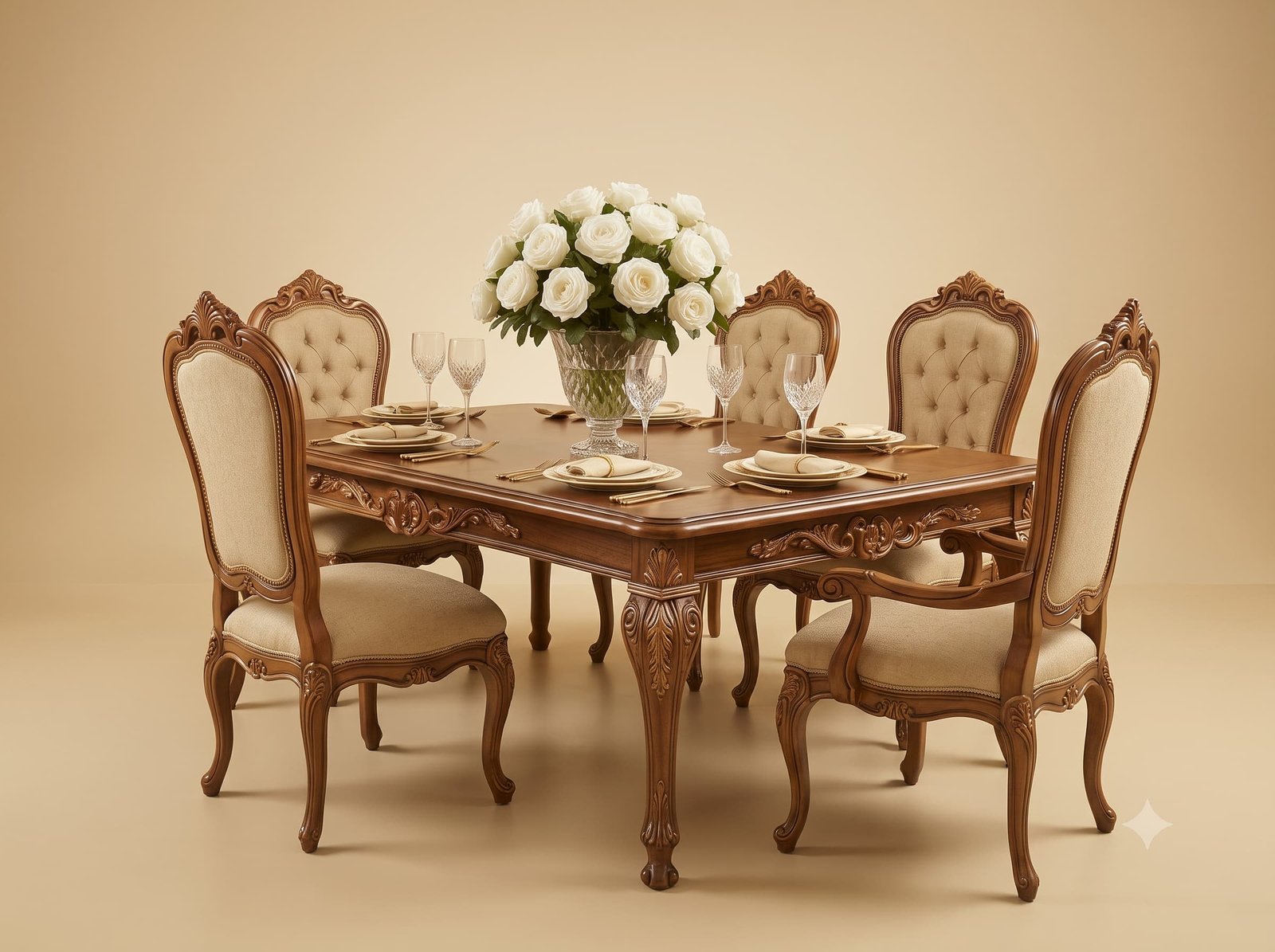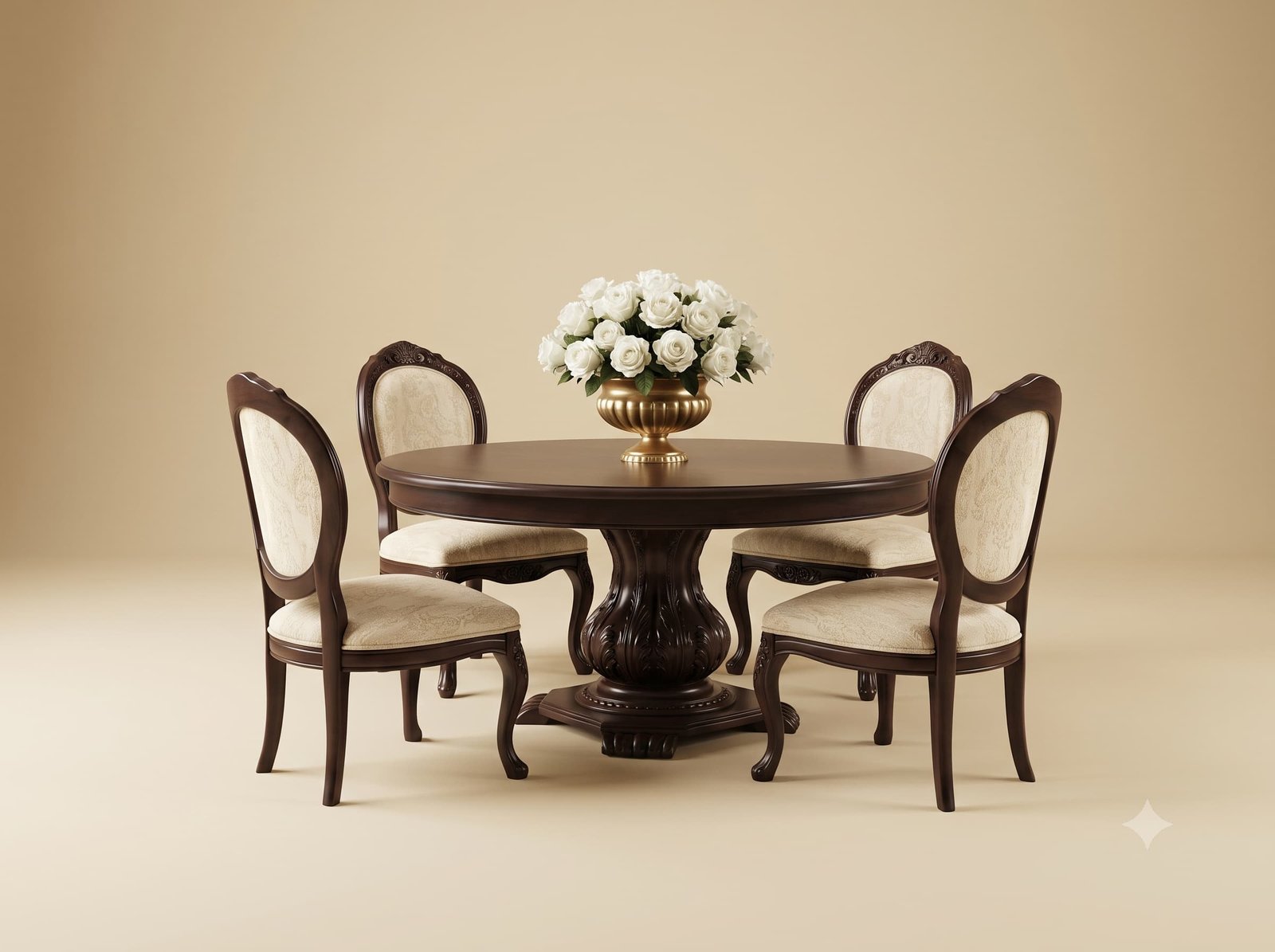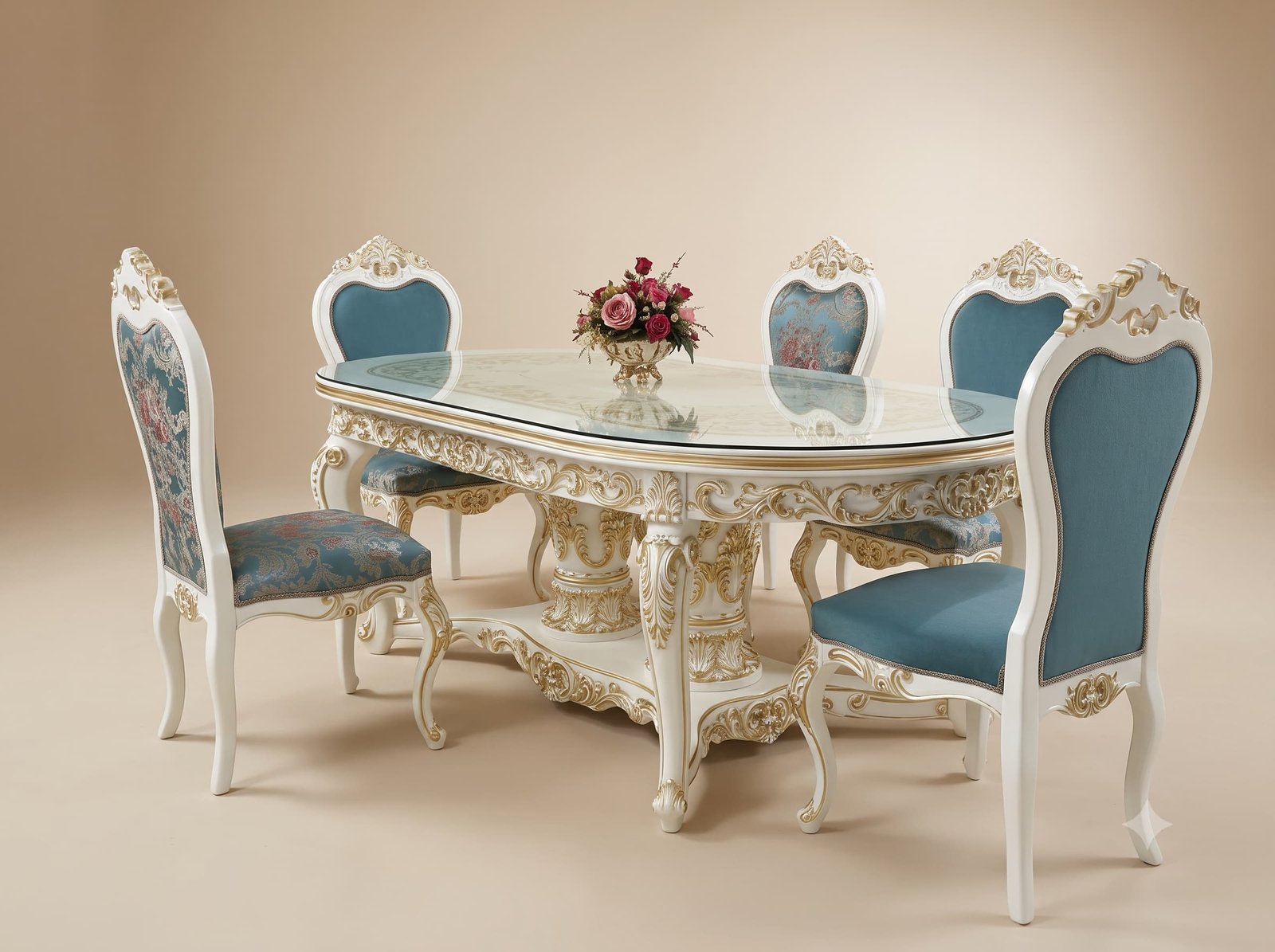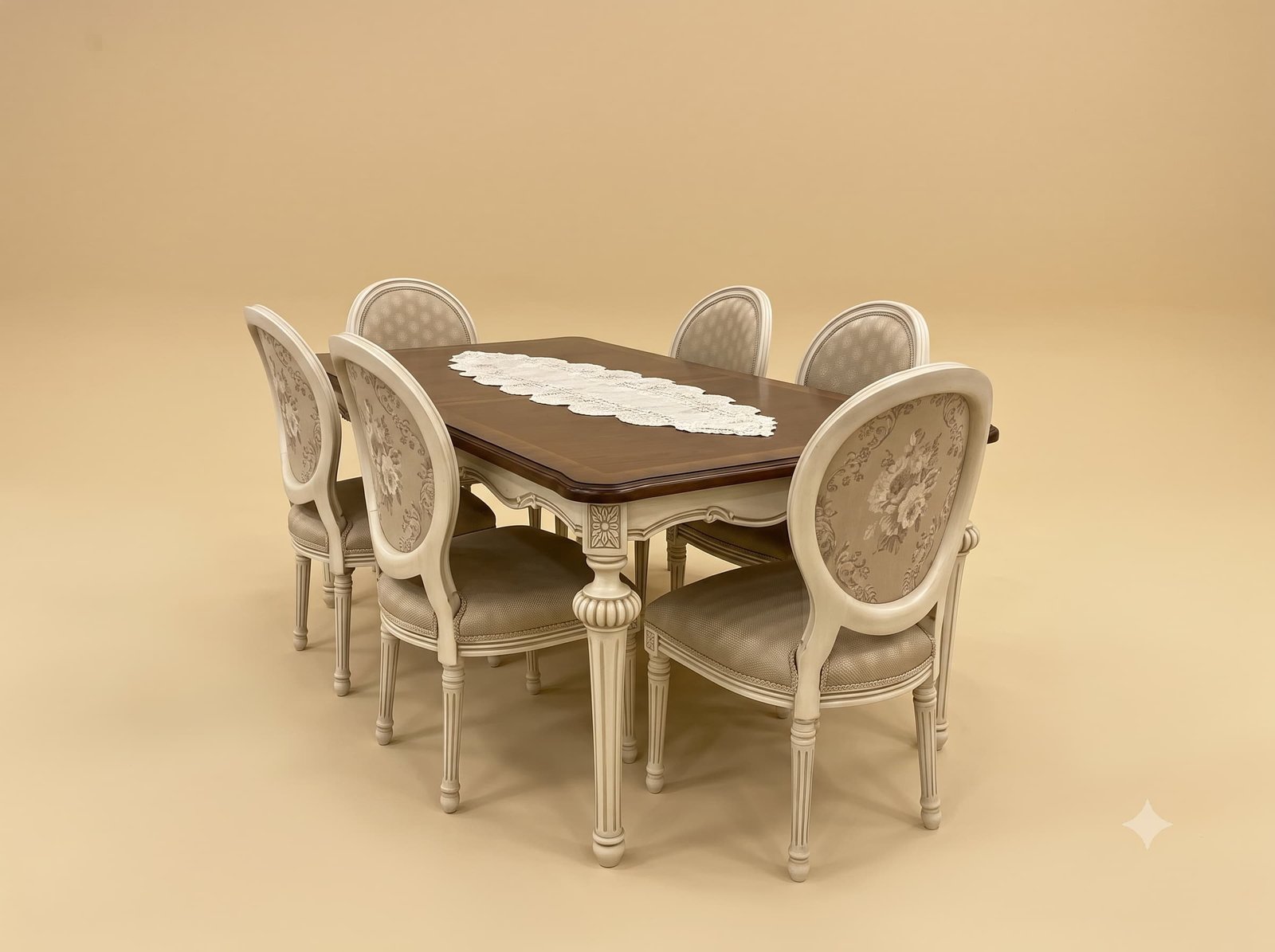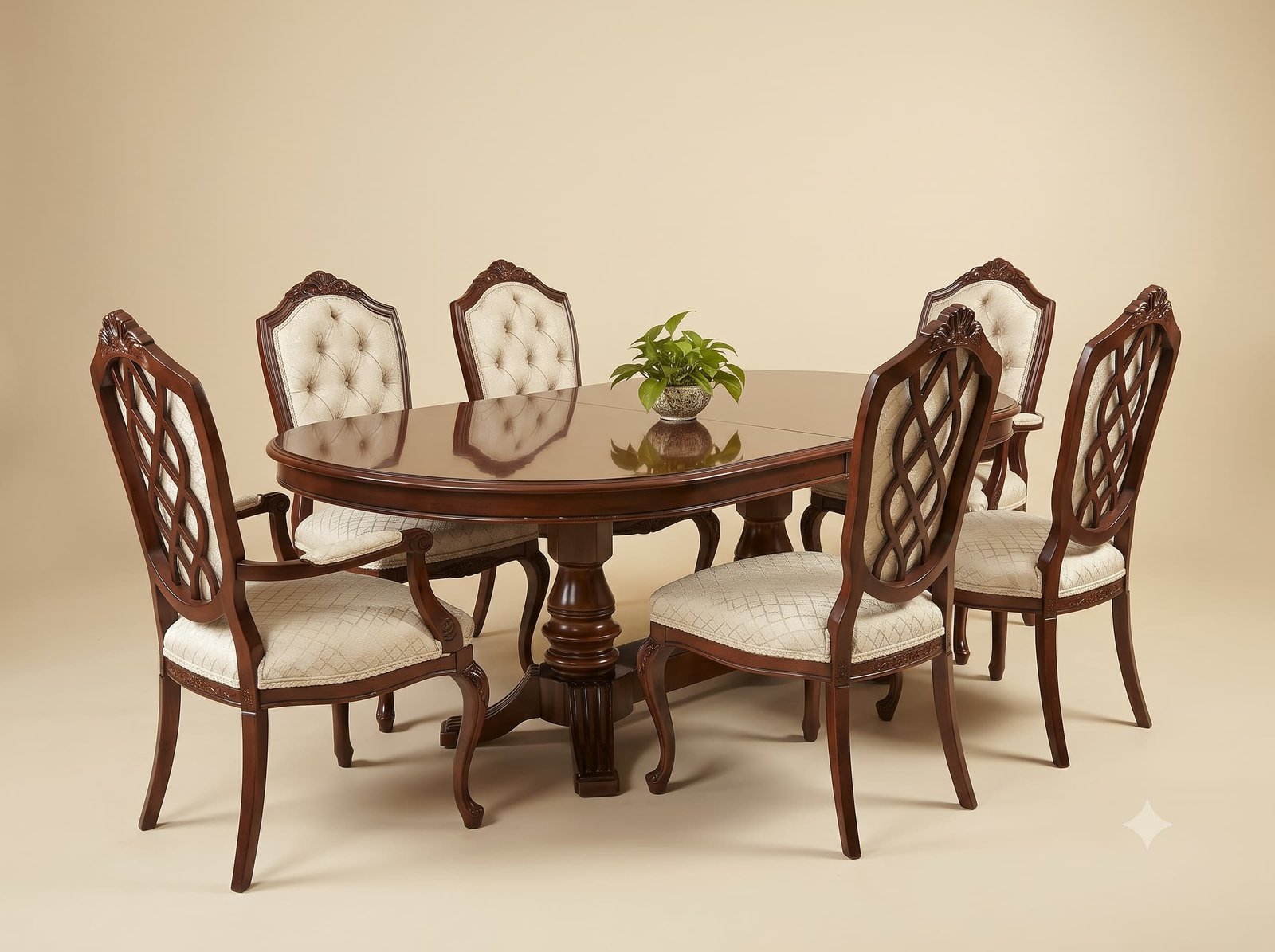
An oval that extends presents a problem a rectangle does not. A rectangle can be cut anywhere across its width and a parallel-sided leaf dropped in - the shape is unchanged. Cut an oval in the middle and insert a parallel leaf, and you no longer have an oval. You have two half-ovals with a straight-sided box between them, and it looks exactly like what it is.
The answer is in where the cut goes and what shape the table is drawn as in the first place. We do not draw a true ellipse. We draw an oval whose long sides include a section that is very nearly straight - a shallow, almost imperceptible flat through the middle third of each side - and the leaf is taken from within that section.
Closed, the near-straightness reads as an oval, because the curve at the ends carries the eye and the middle is too gentle to register as flat. Open, the inserted leaf continues the same near-straight line, and the table still reads as an oval, only longer.
The leaf itself is cut from the middle of the top, so the grain runs through the join in both states. And the alignment pins are bored from that same cut, which is why the leaf drops in rather than needing to be persuaded.
The whole thing is decided at the drawing stage. It cannot be added to a table that was drawn as a true ellipse.
 Ask Price On WhatsApp