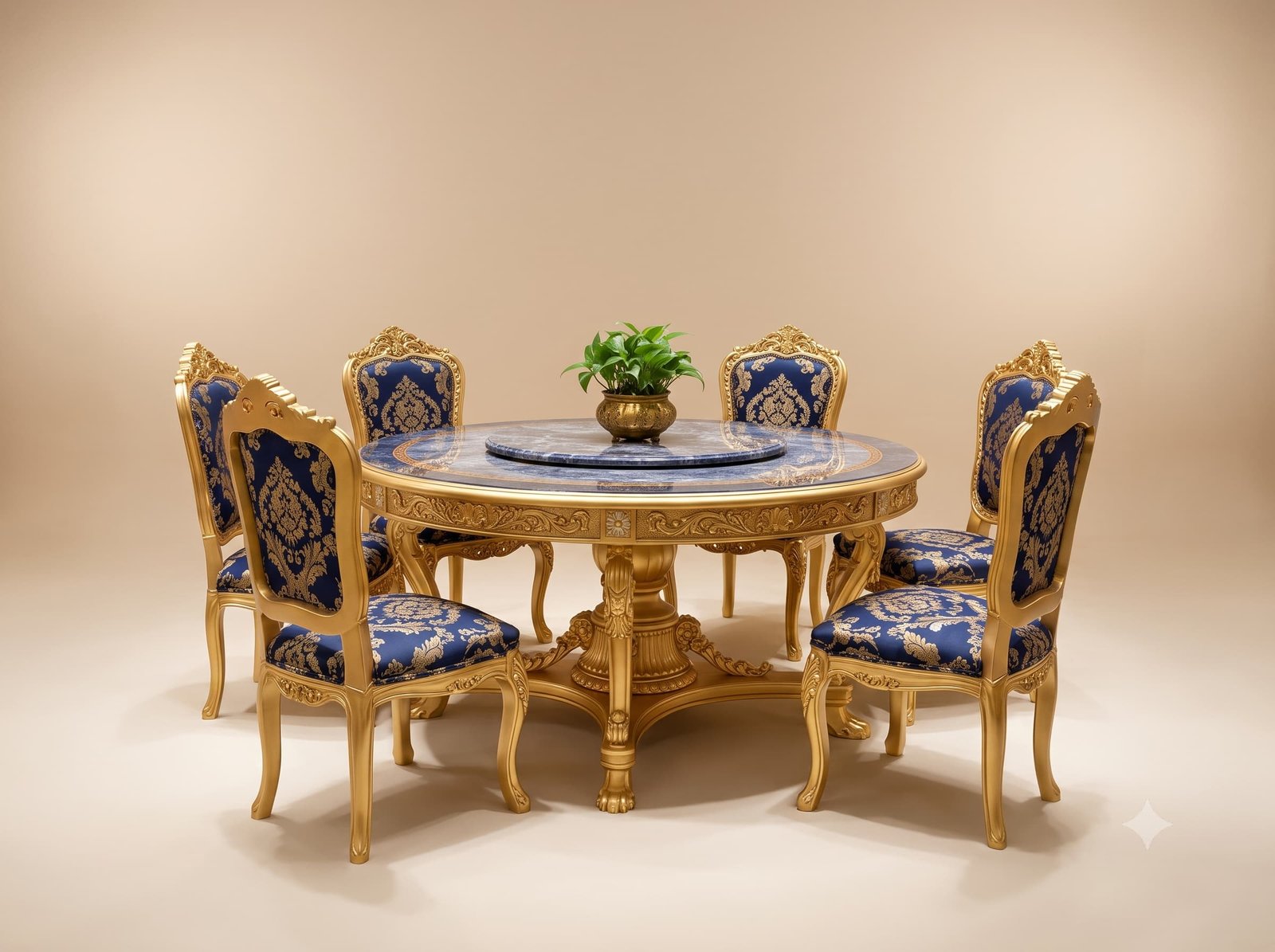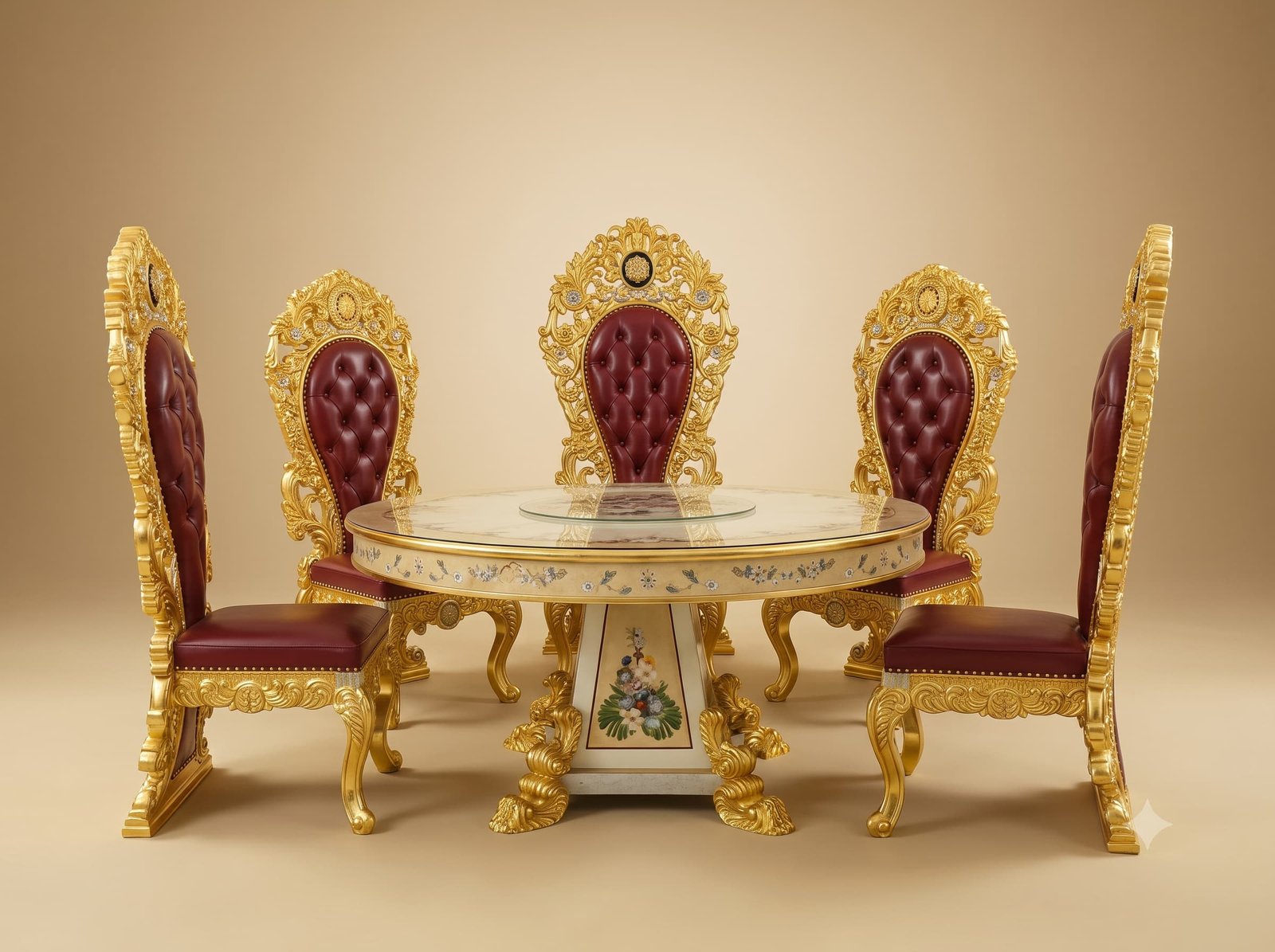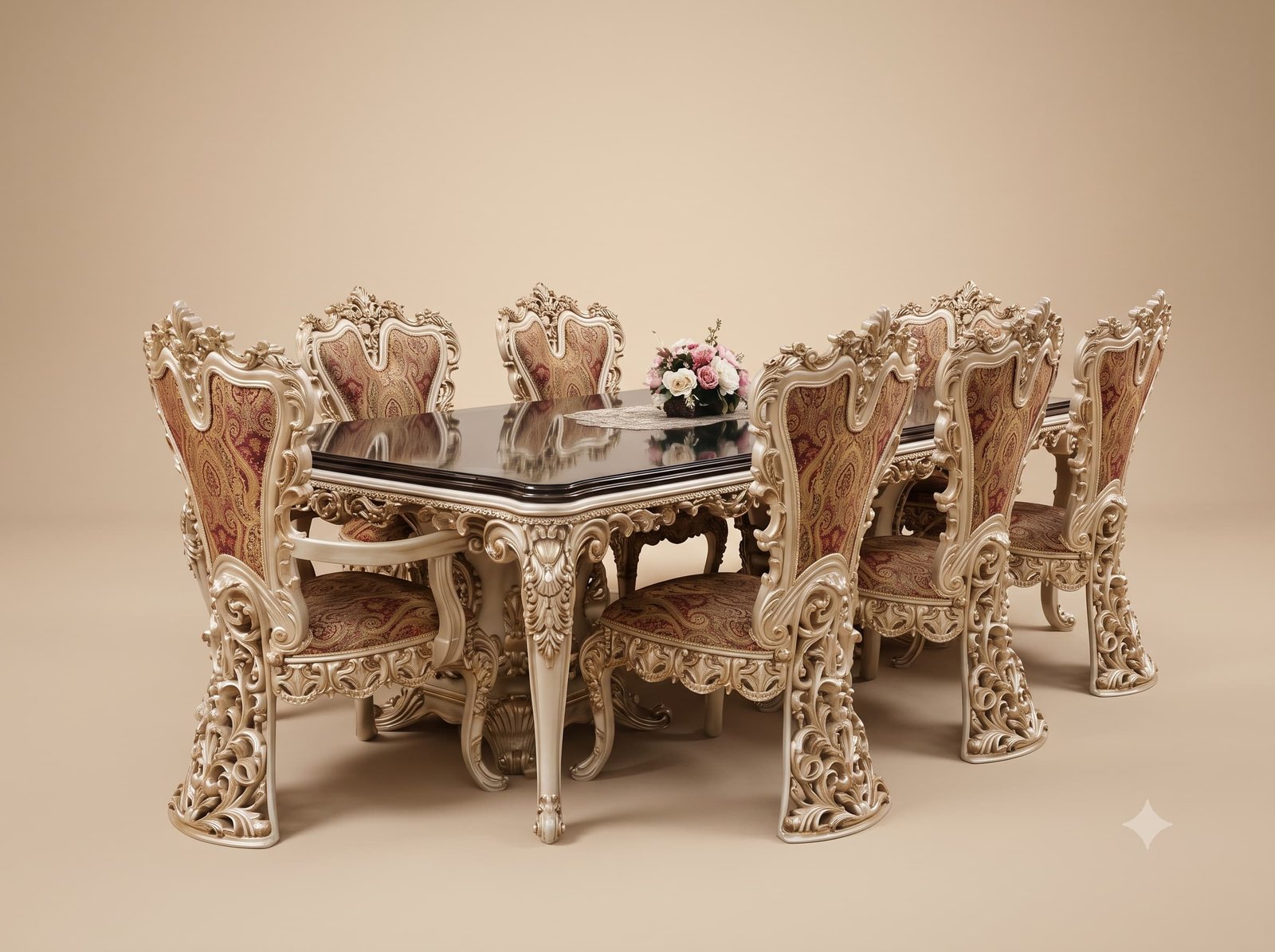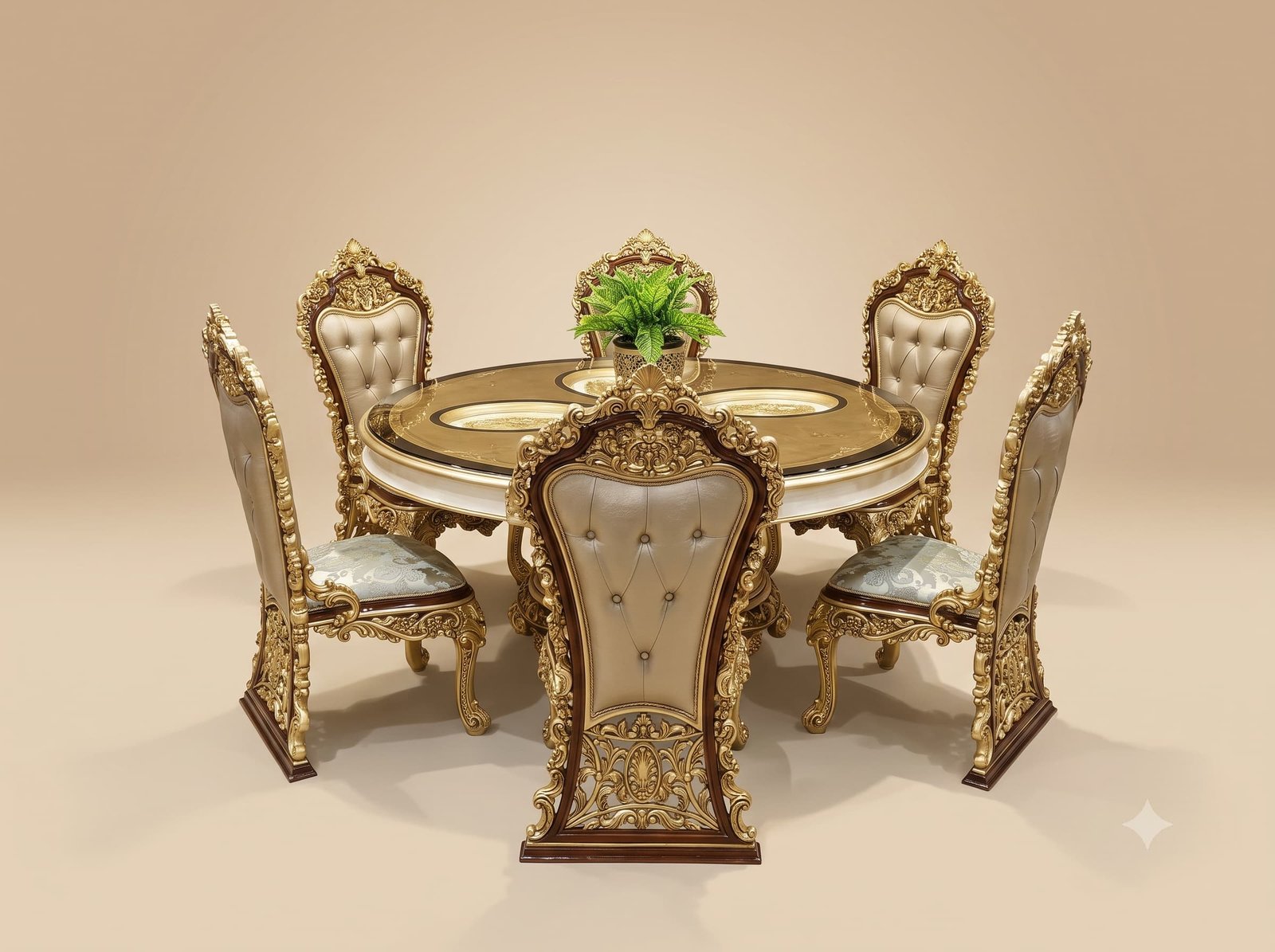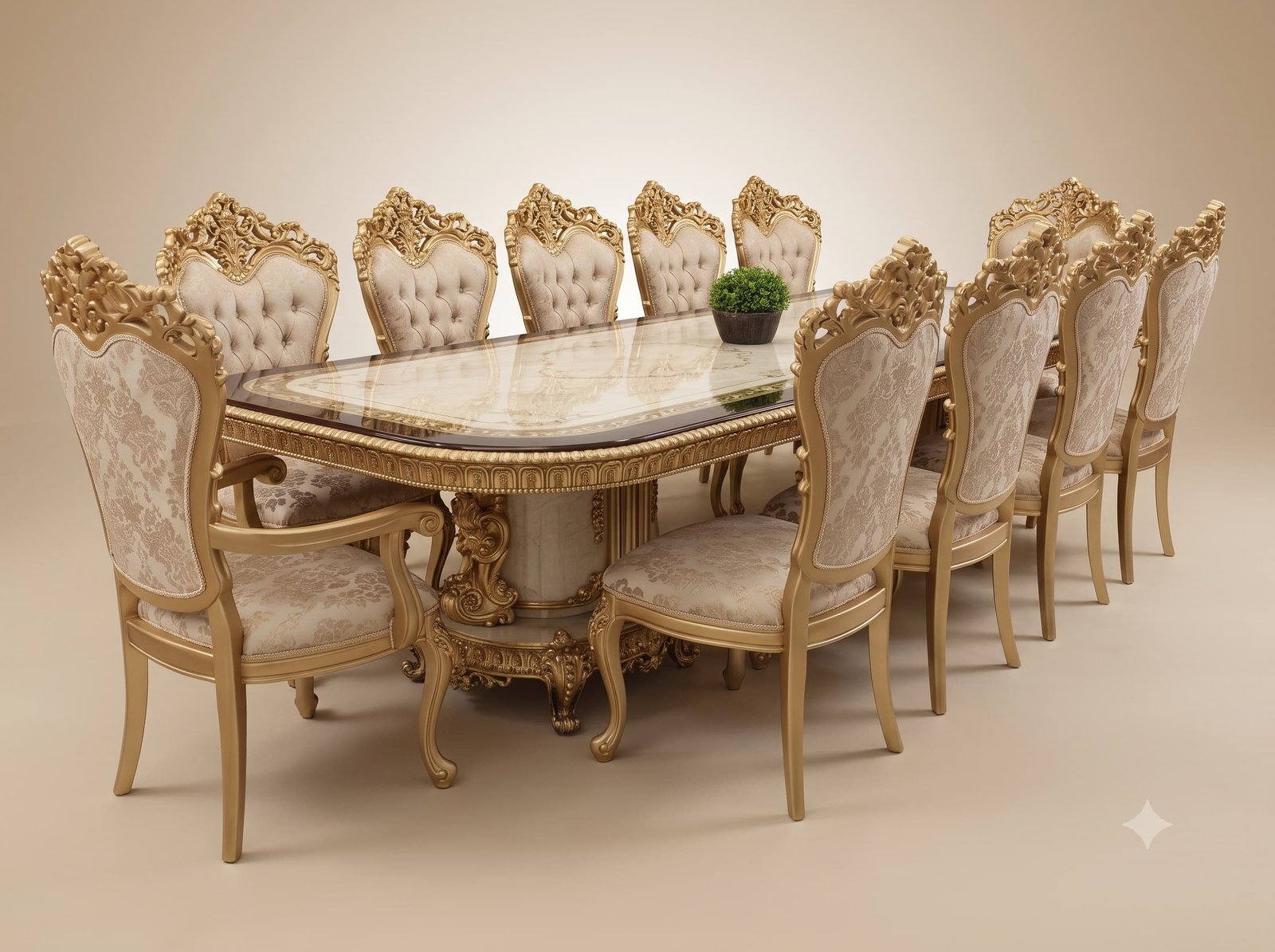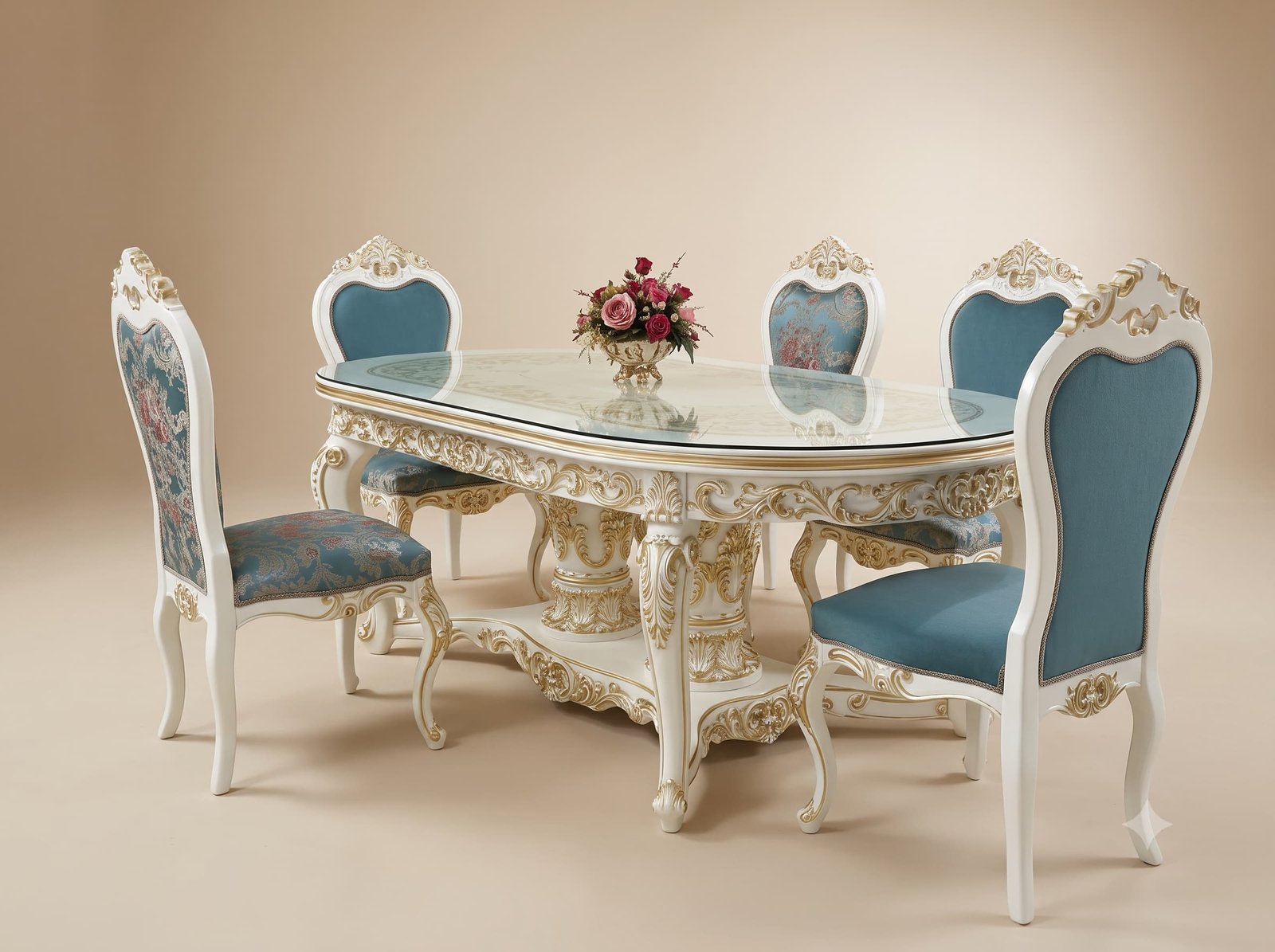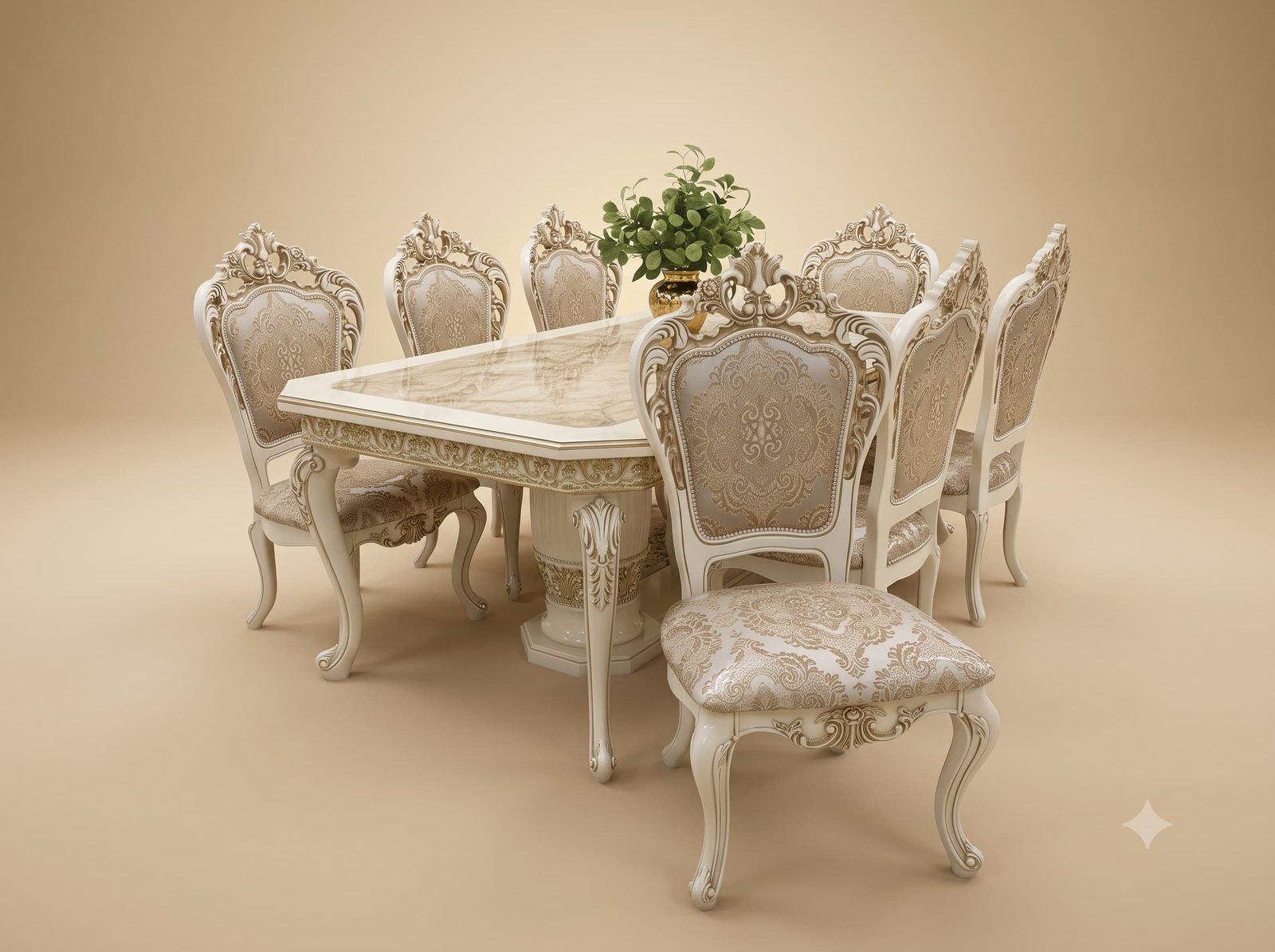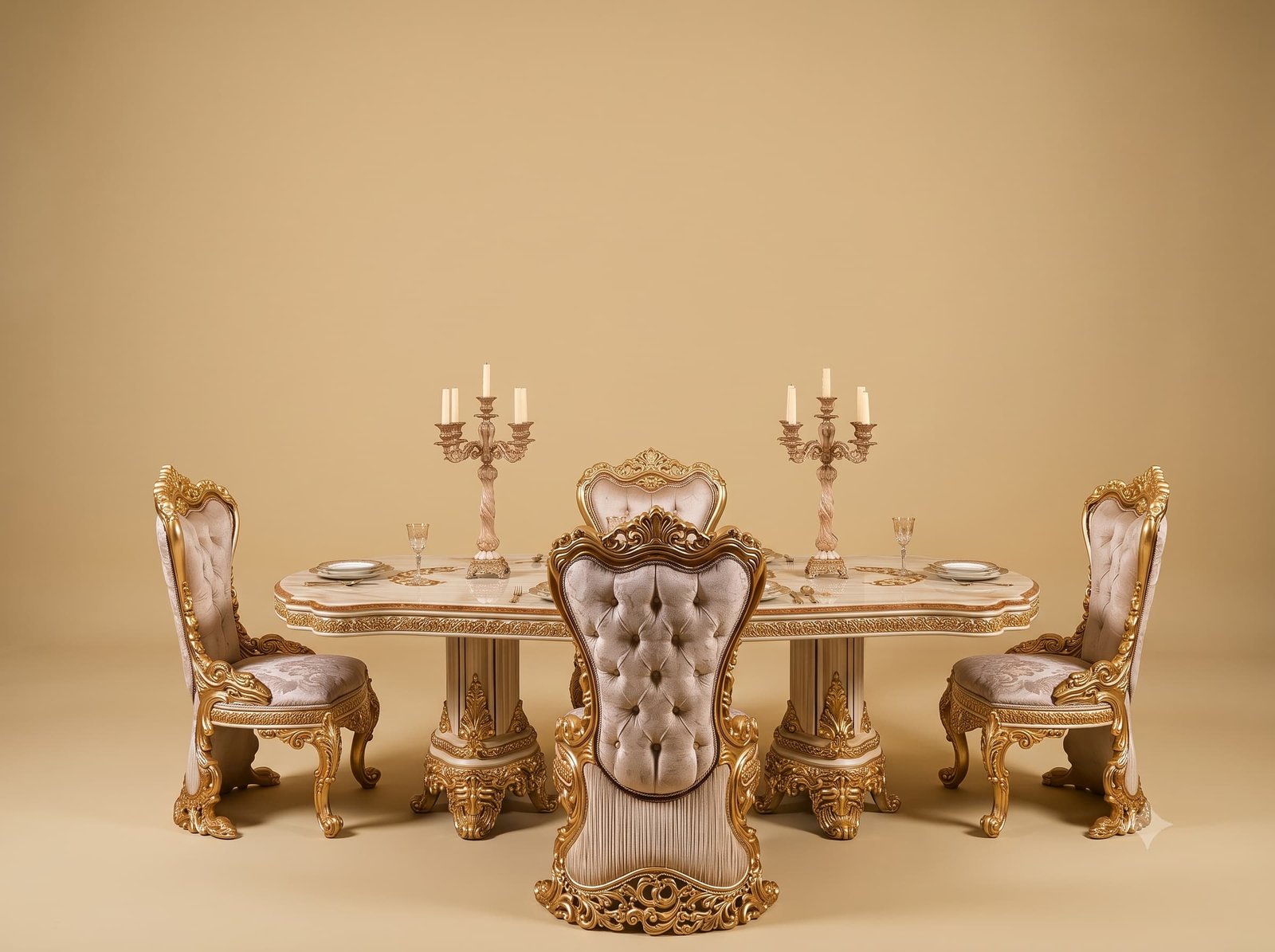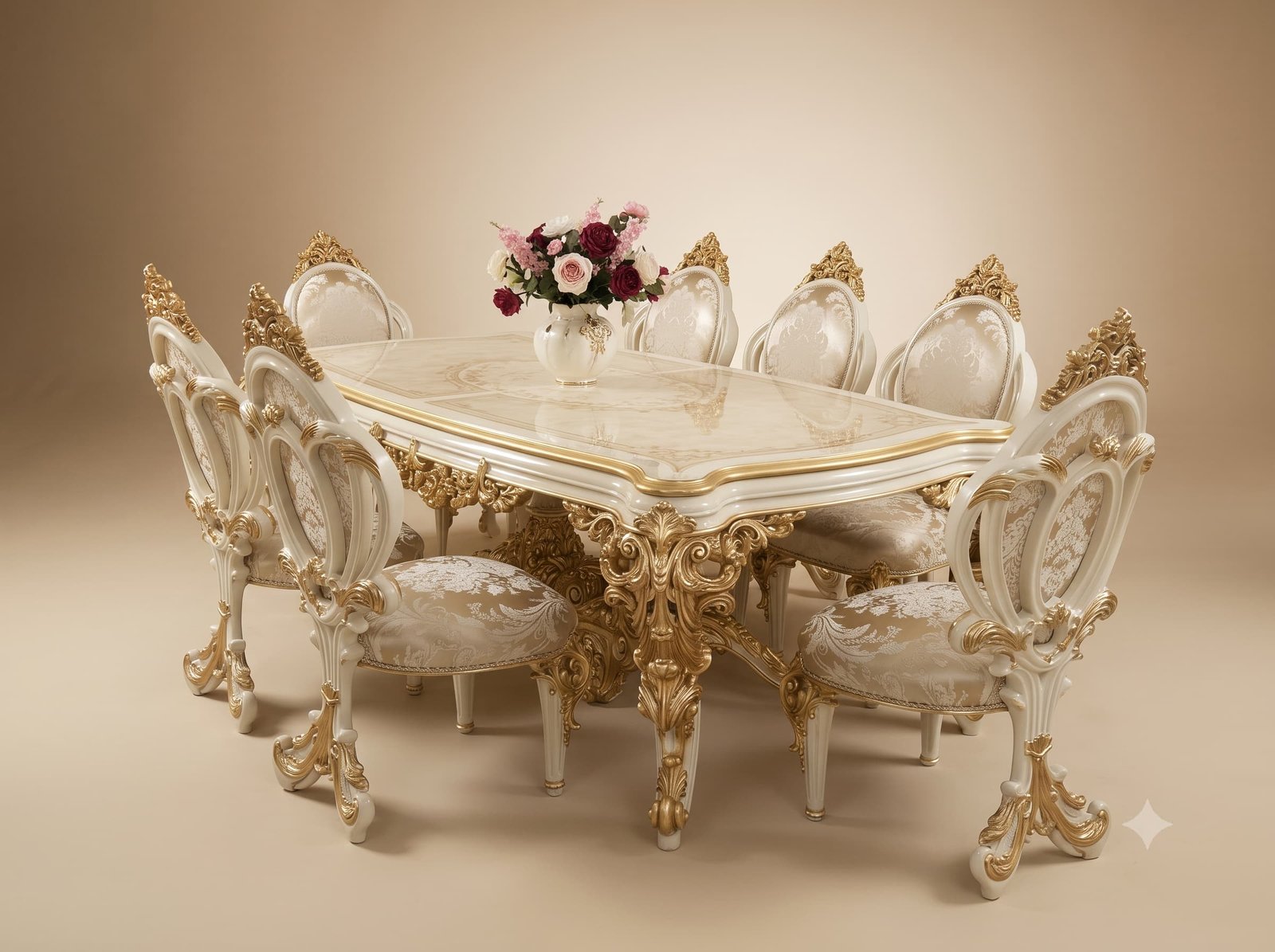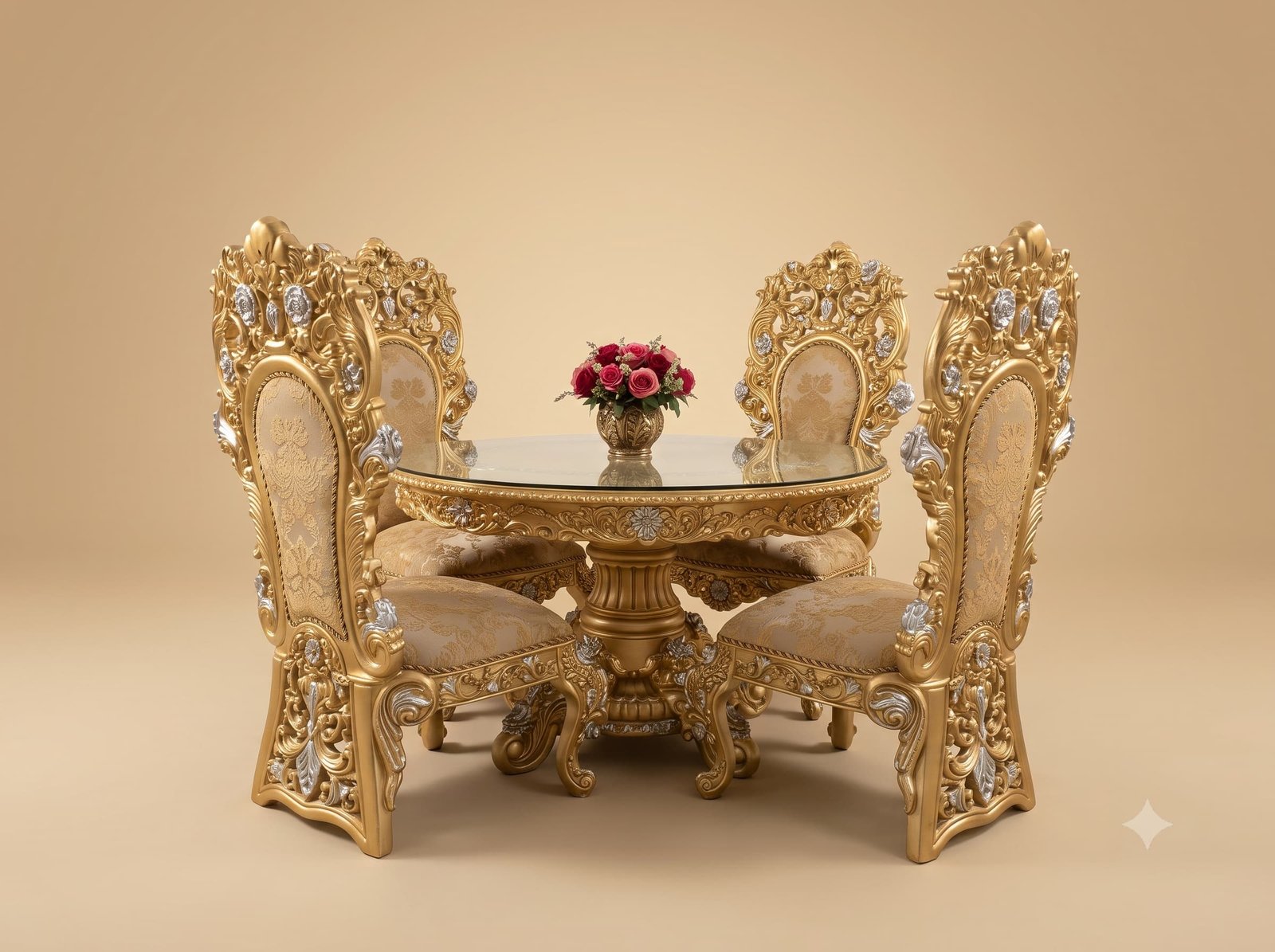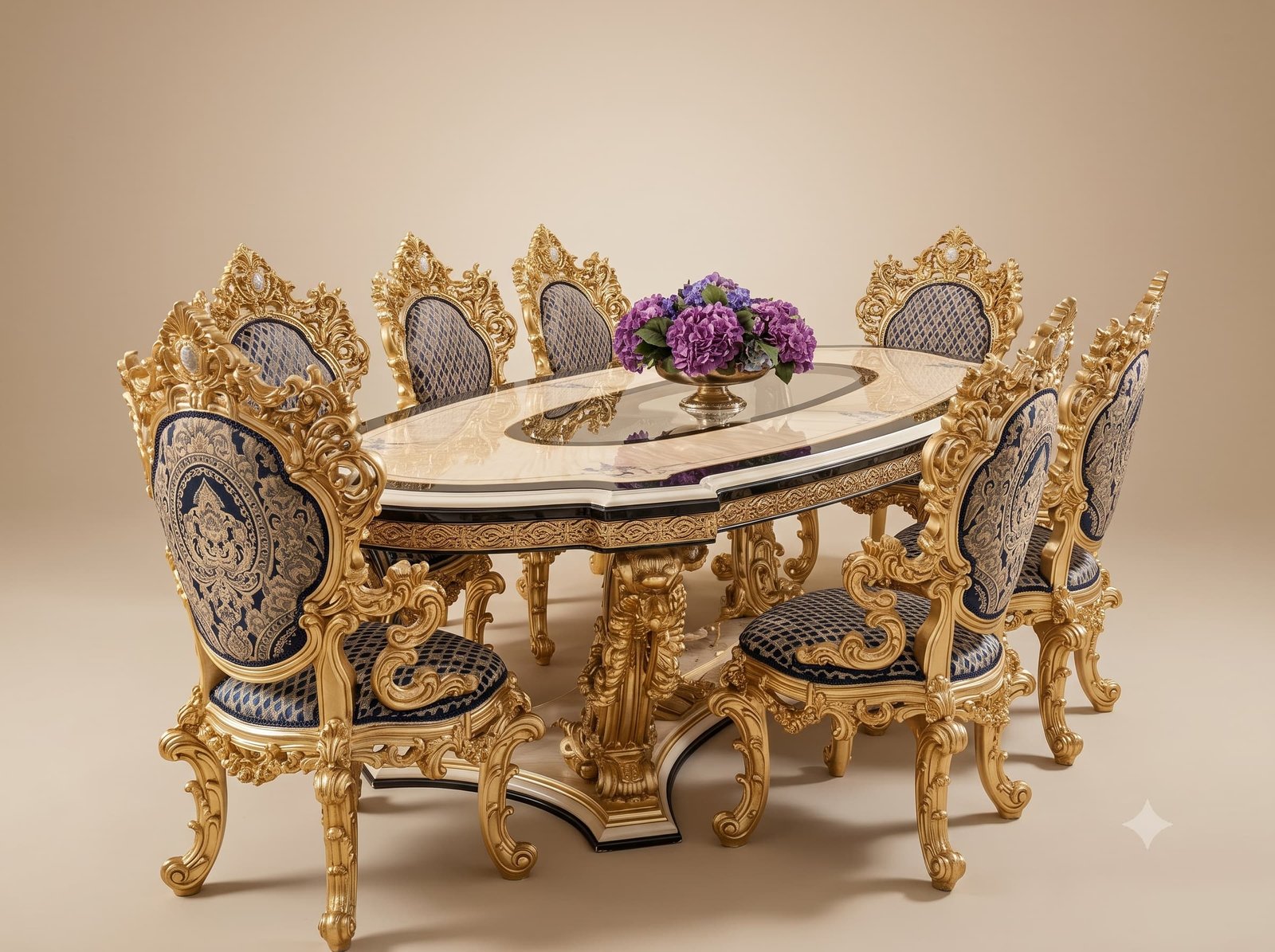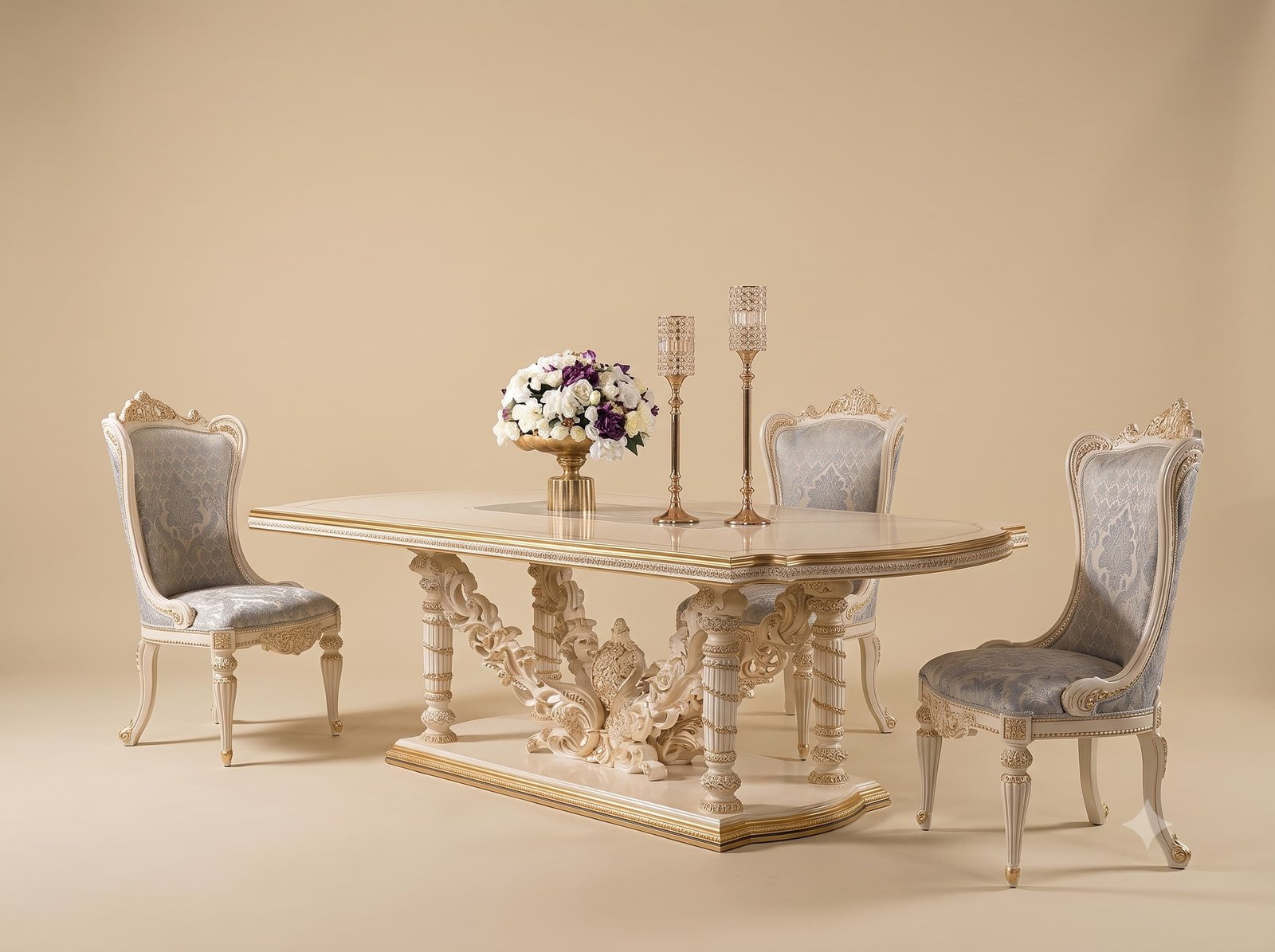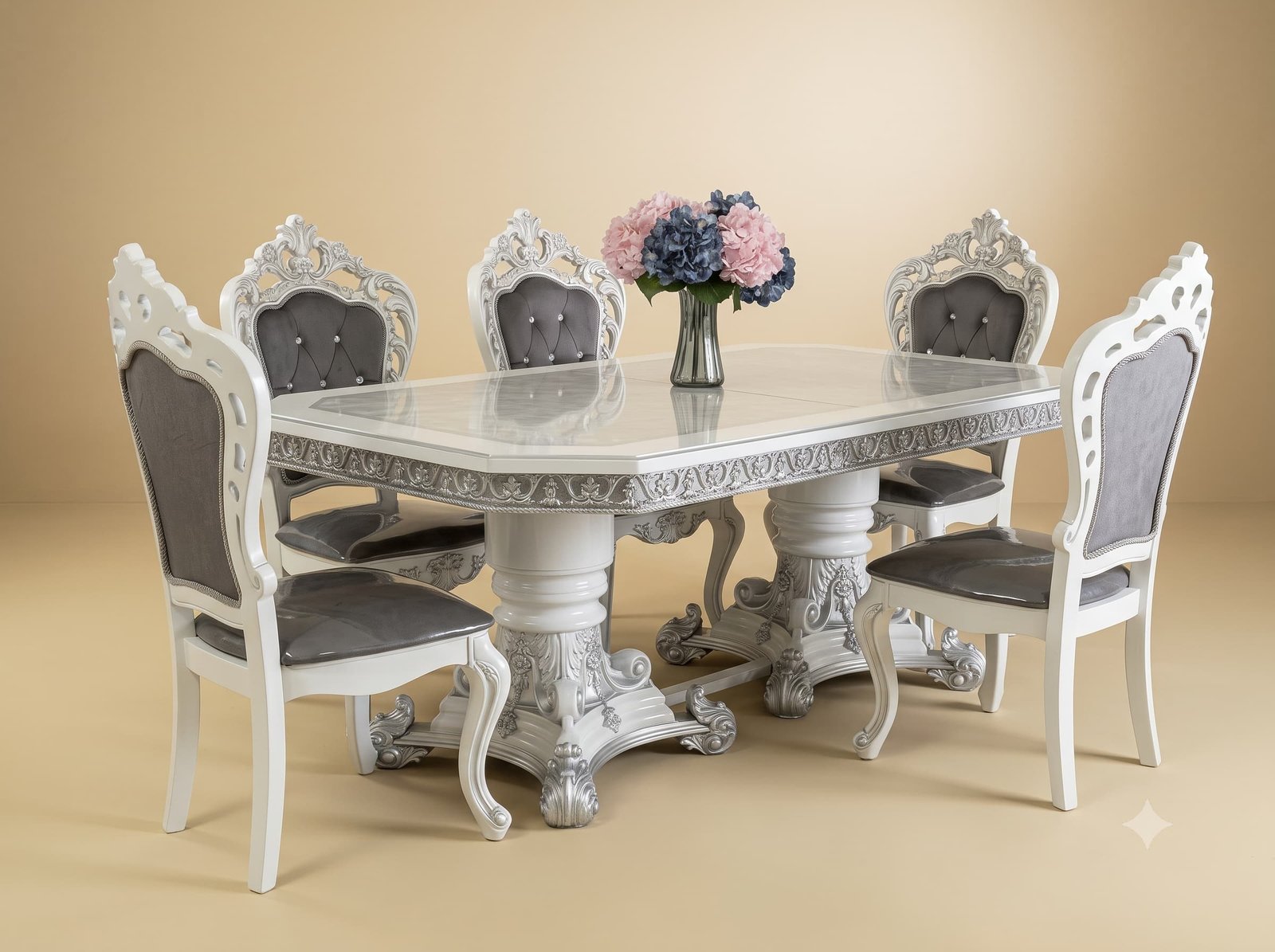
The seats on these chairs are a shade darker than the backs, and that is a decision about the next ten years rather than about today.
A dining chair does not wear evenly. The back stays close to how it was made - a little contact from shoulders, not much else. The seat takes everything: the weight, the friction of sitting down and sliding back, the dropped fork, the child's hands. In any dining set, the seats are the part that ages first, and on a pale cloth that ageing is visible long before there is anything actually wrong with the chair.
So where a client is choosing pale upholstery, we suggest taking the seats a shade or two deeper than the backs. It reads as a deliberate two-tone treatment - and it is - but it also means the seats start further from white, so the gradual shift of a well-used cloth is far less obvious against them.
The same reasoning goes the other way: if you want the seats and backs identical, we would rather use a cloth with some texture or a small pattern on the seat, because a flat pale weave shows every mark and a textured one hides it.
The chairs still look new for longer. That is the whole of the argument.
 Ask Price On WhatsApp