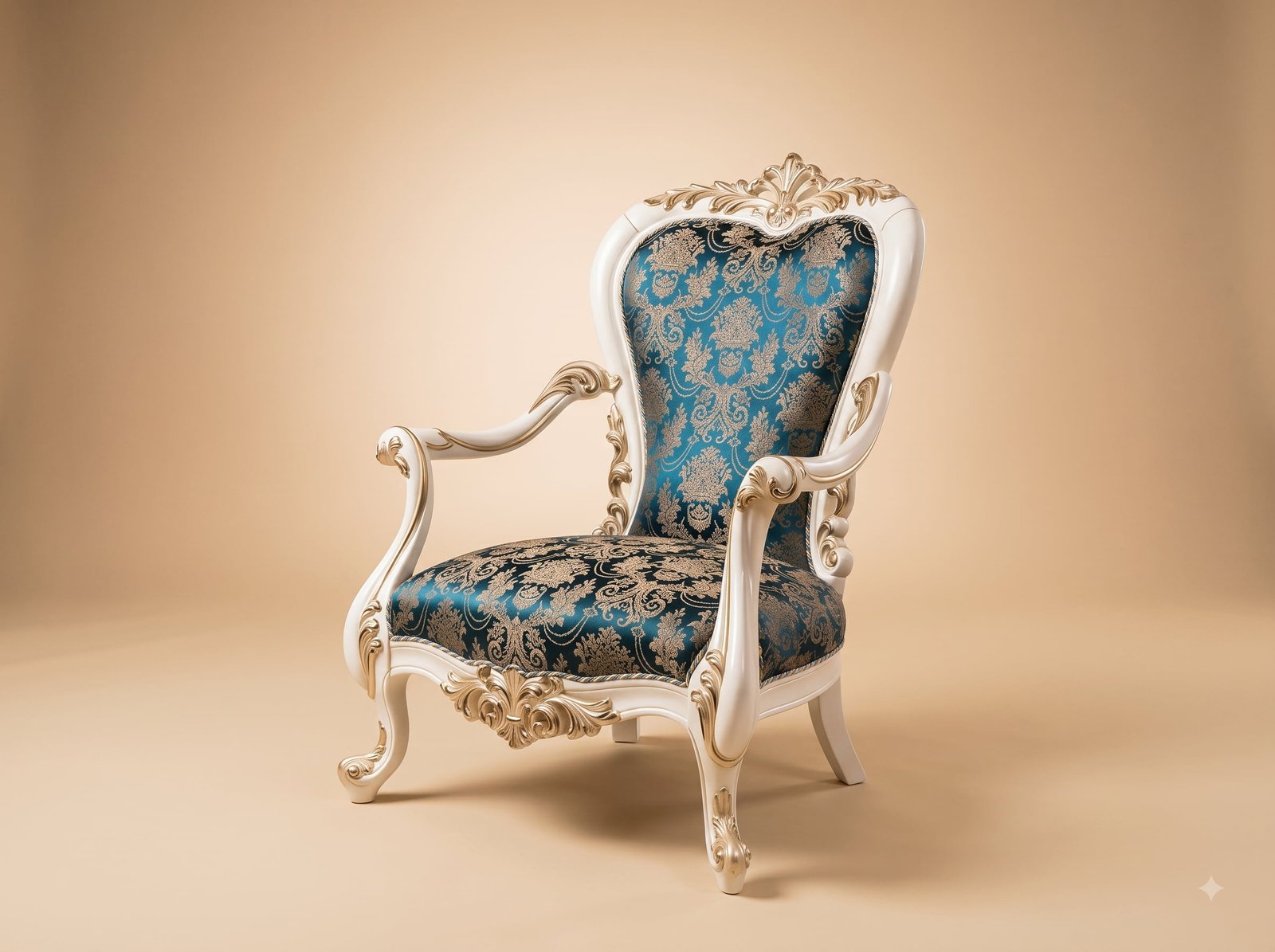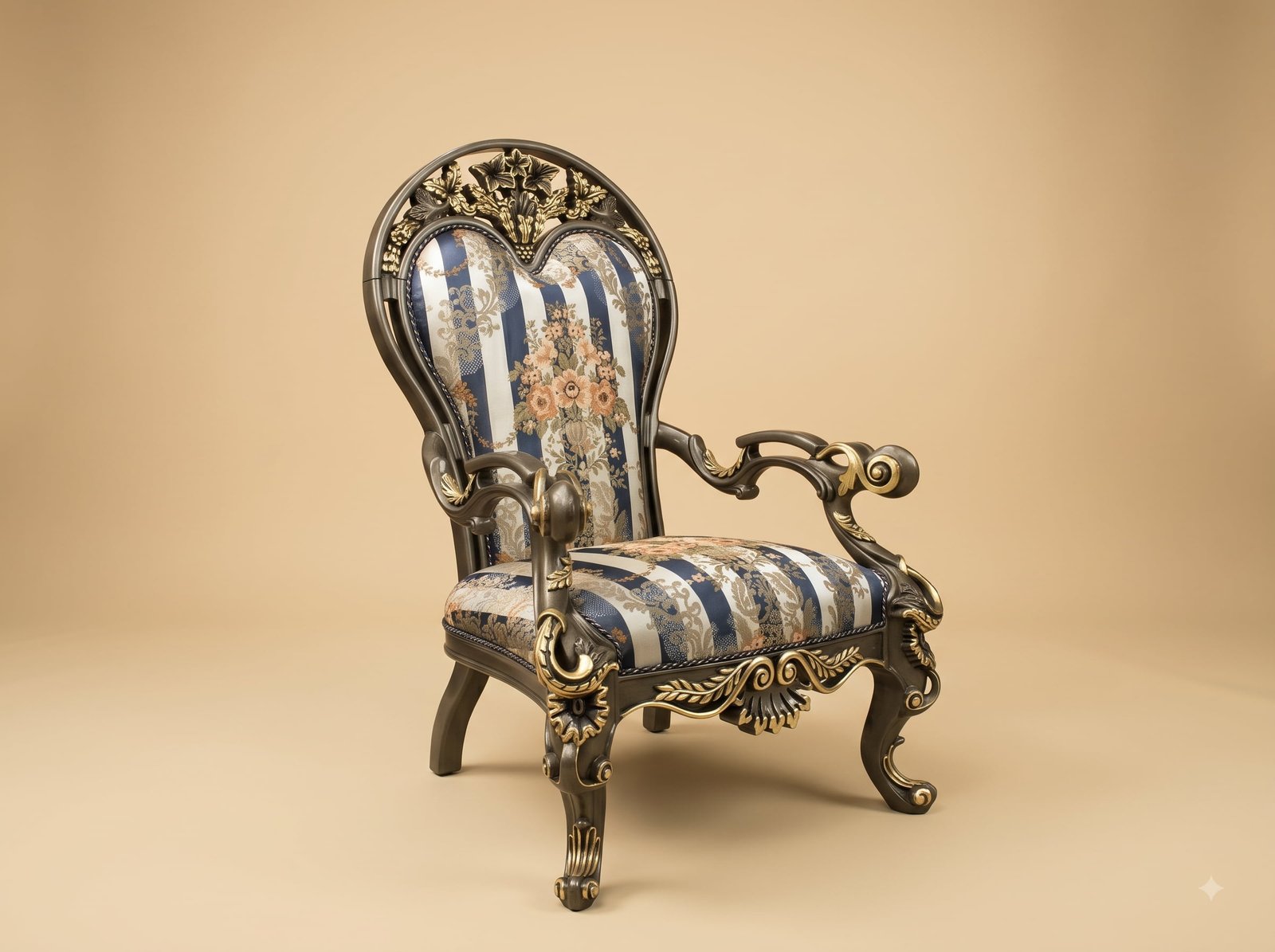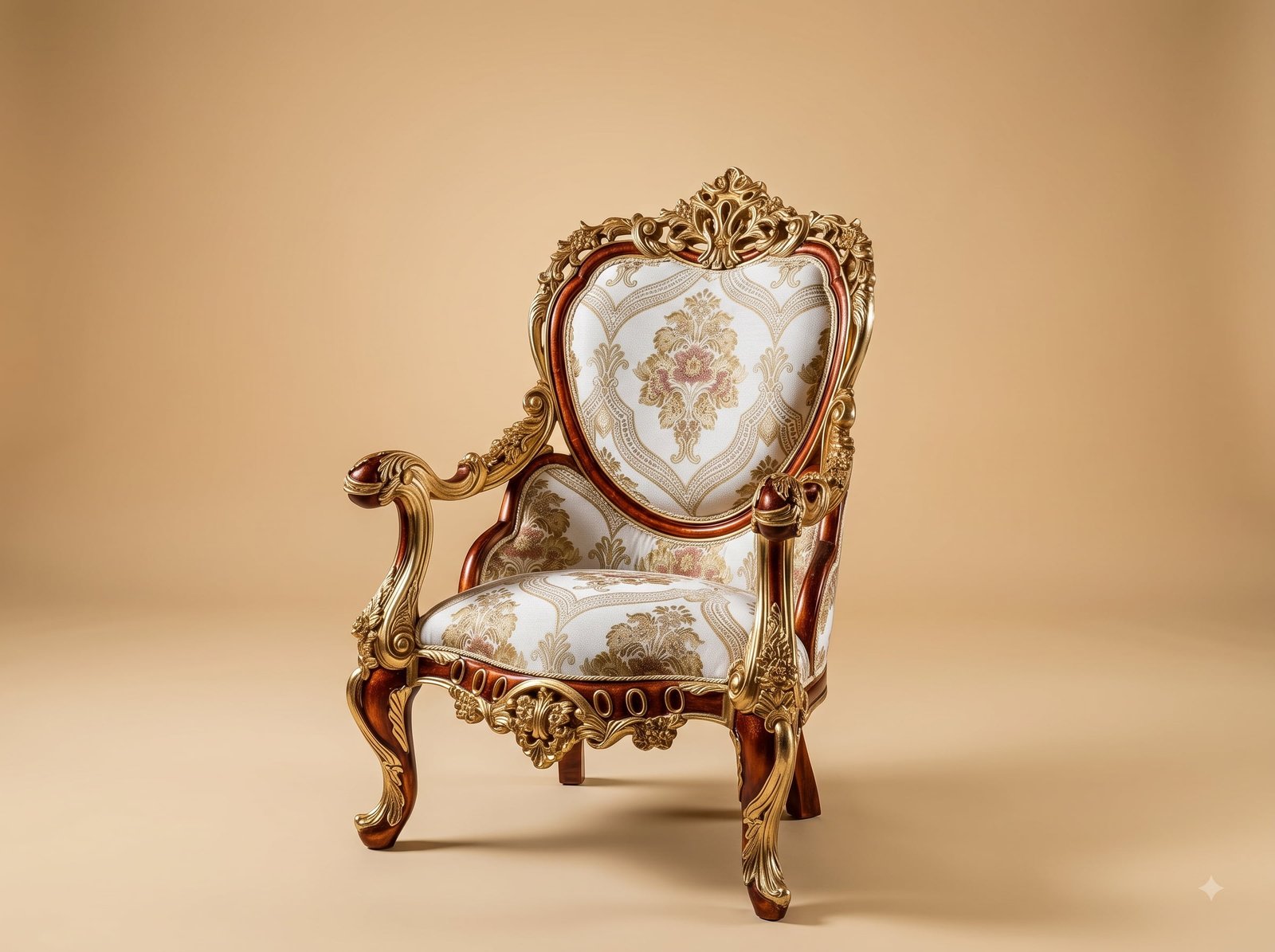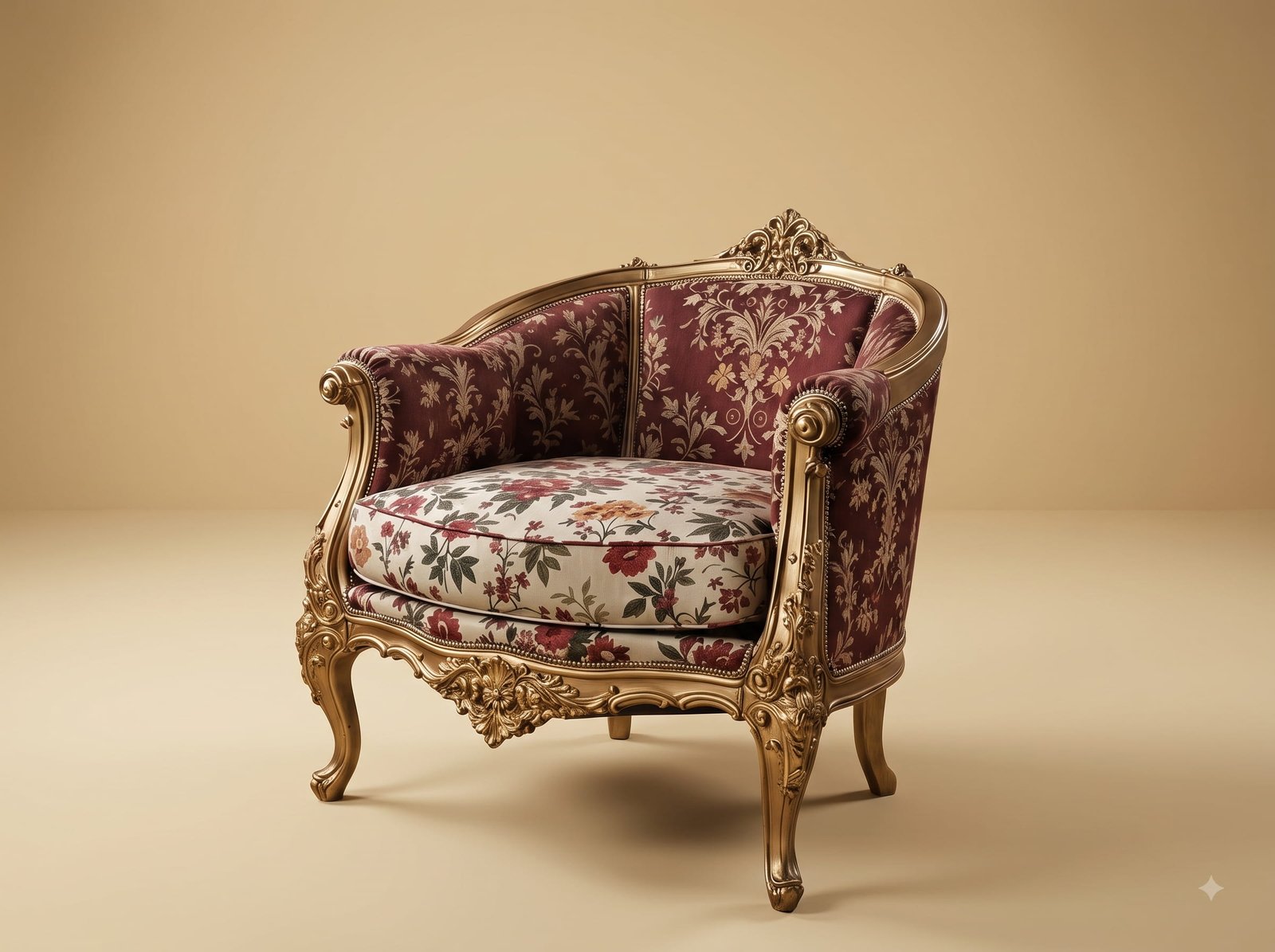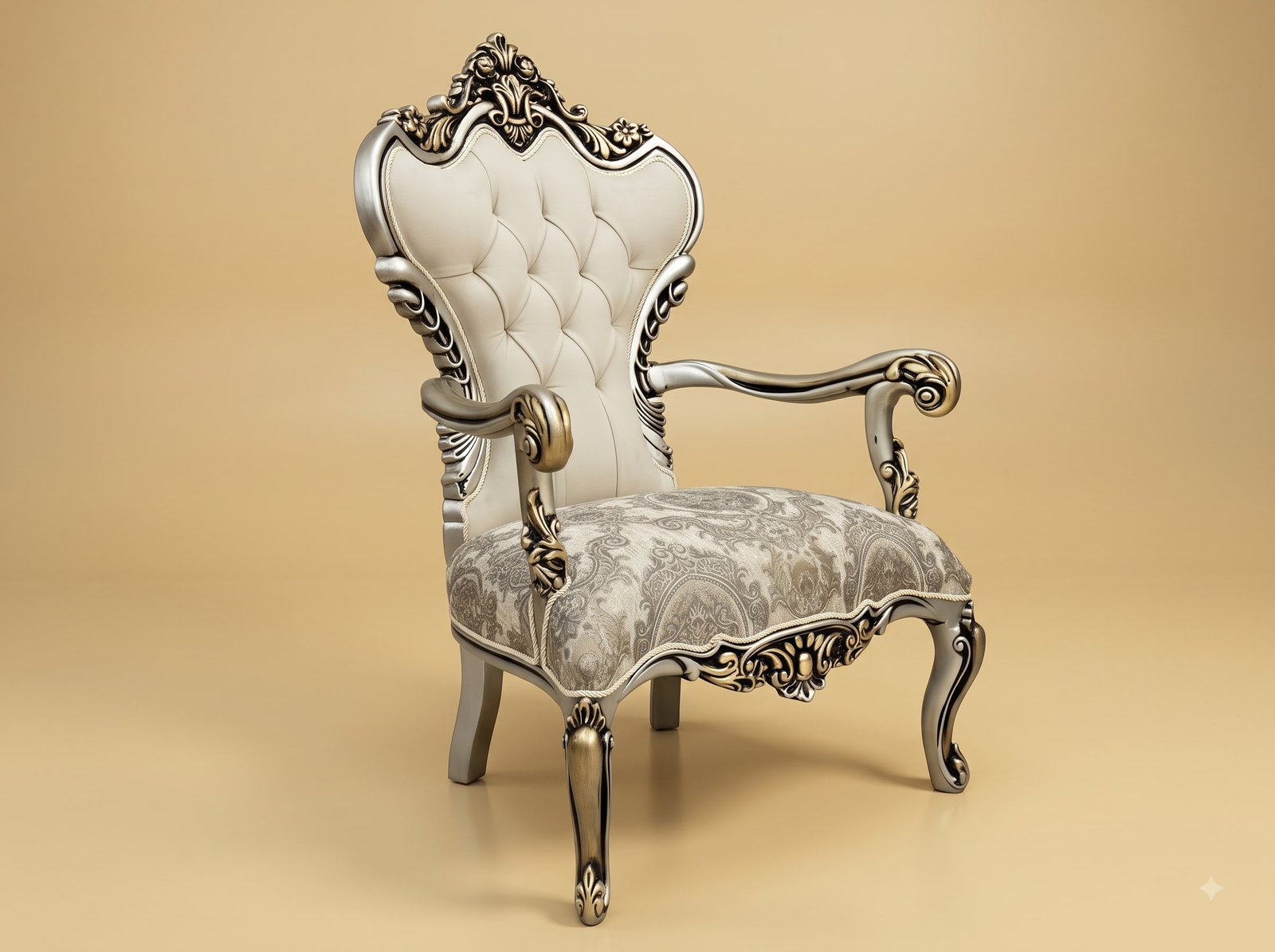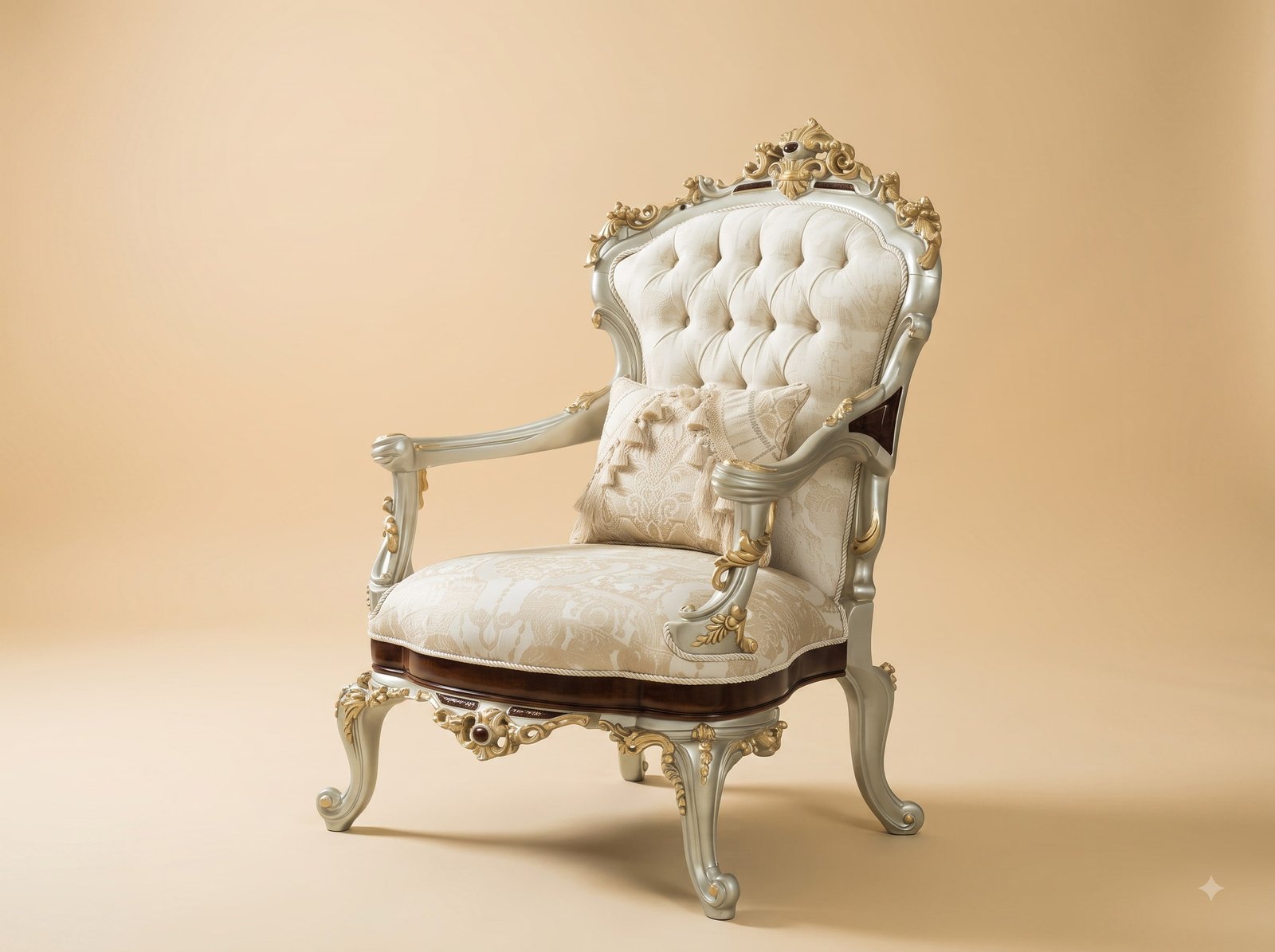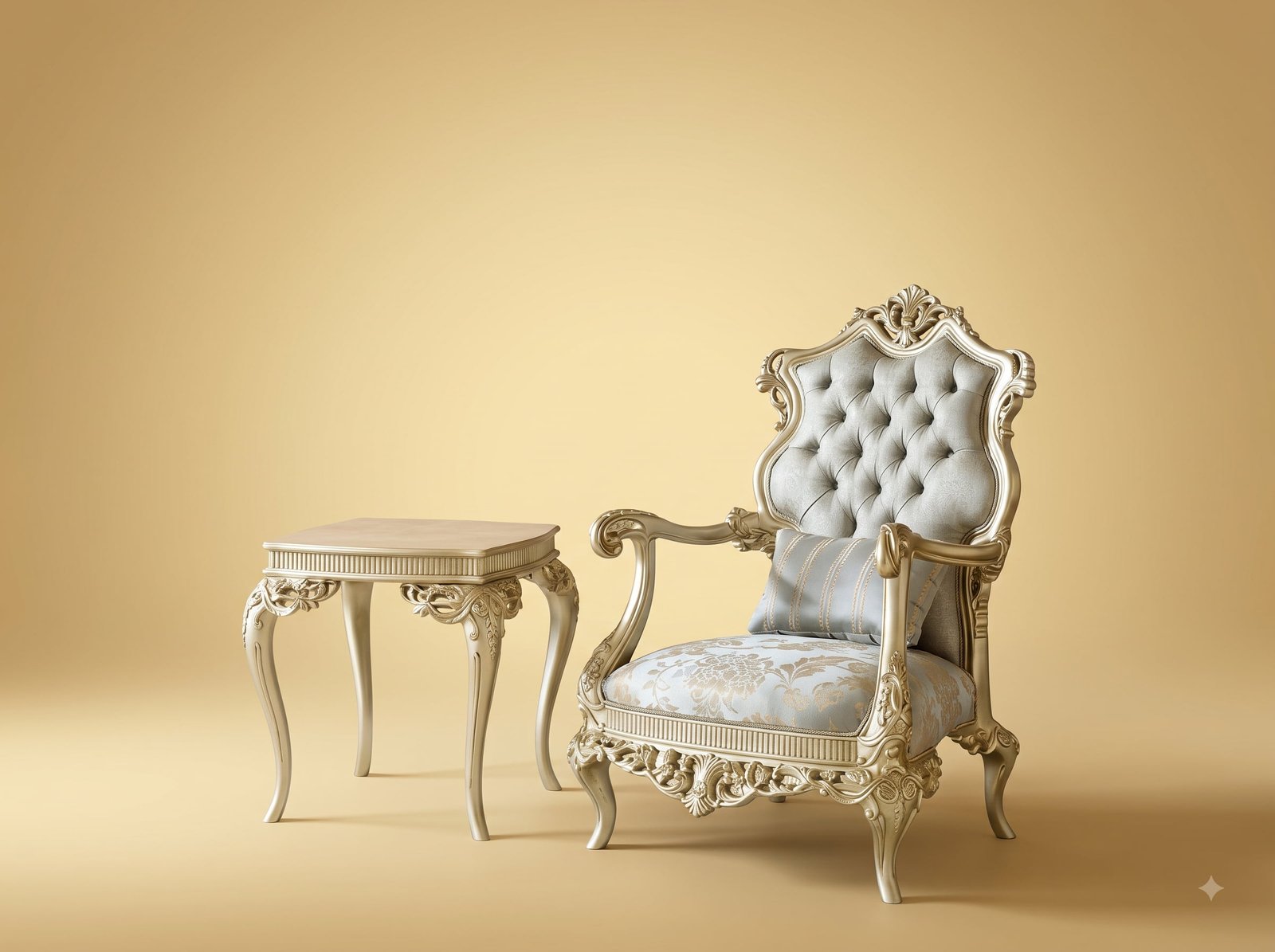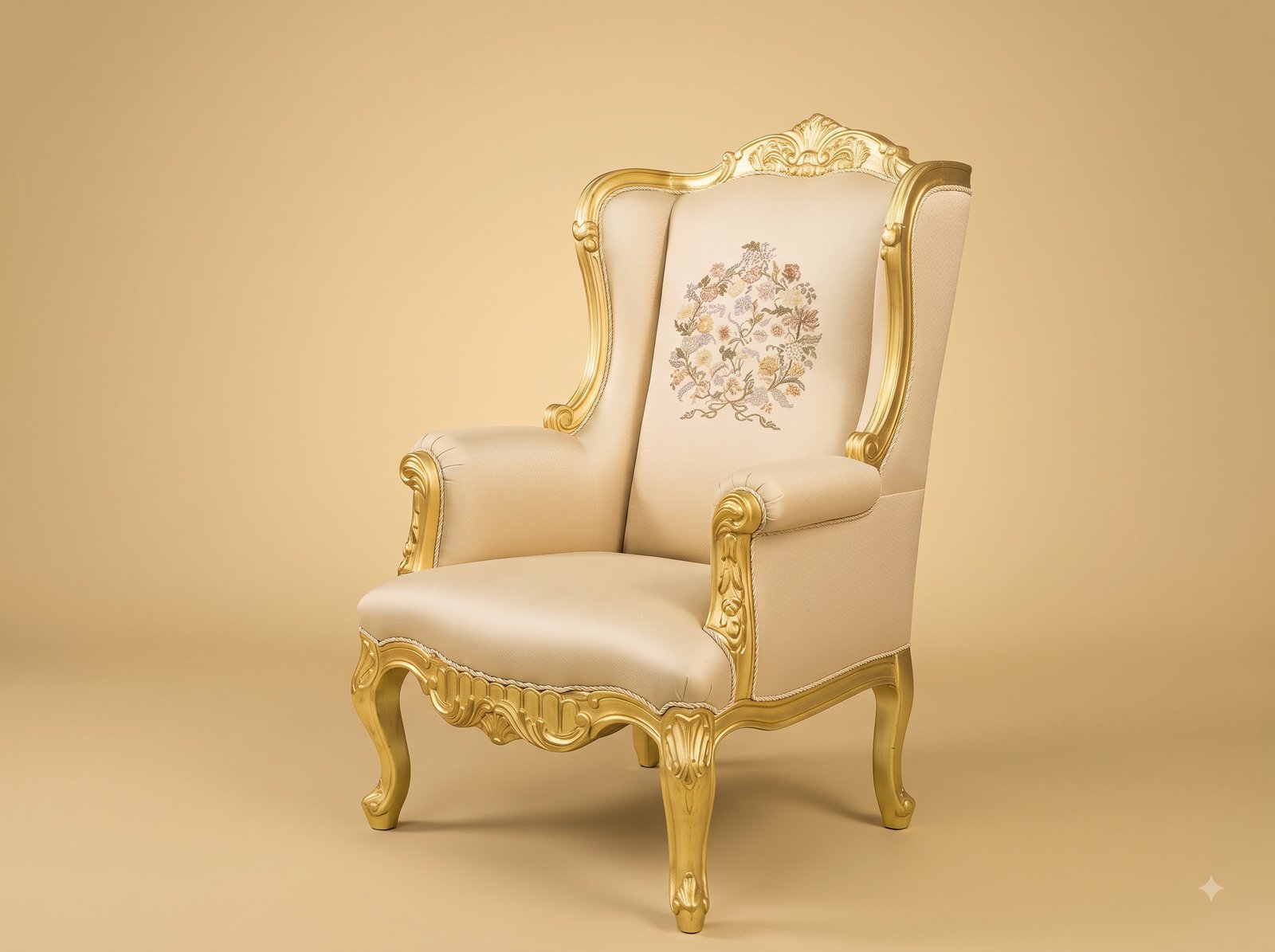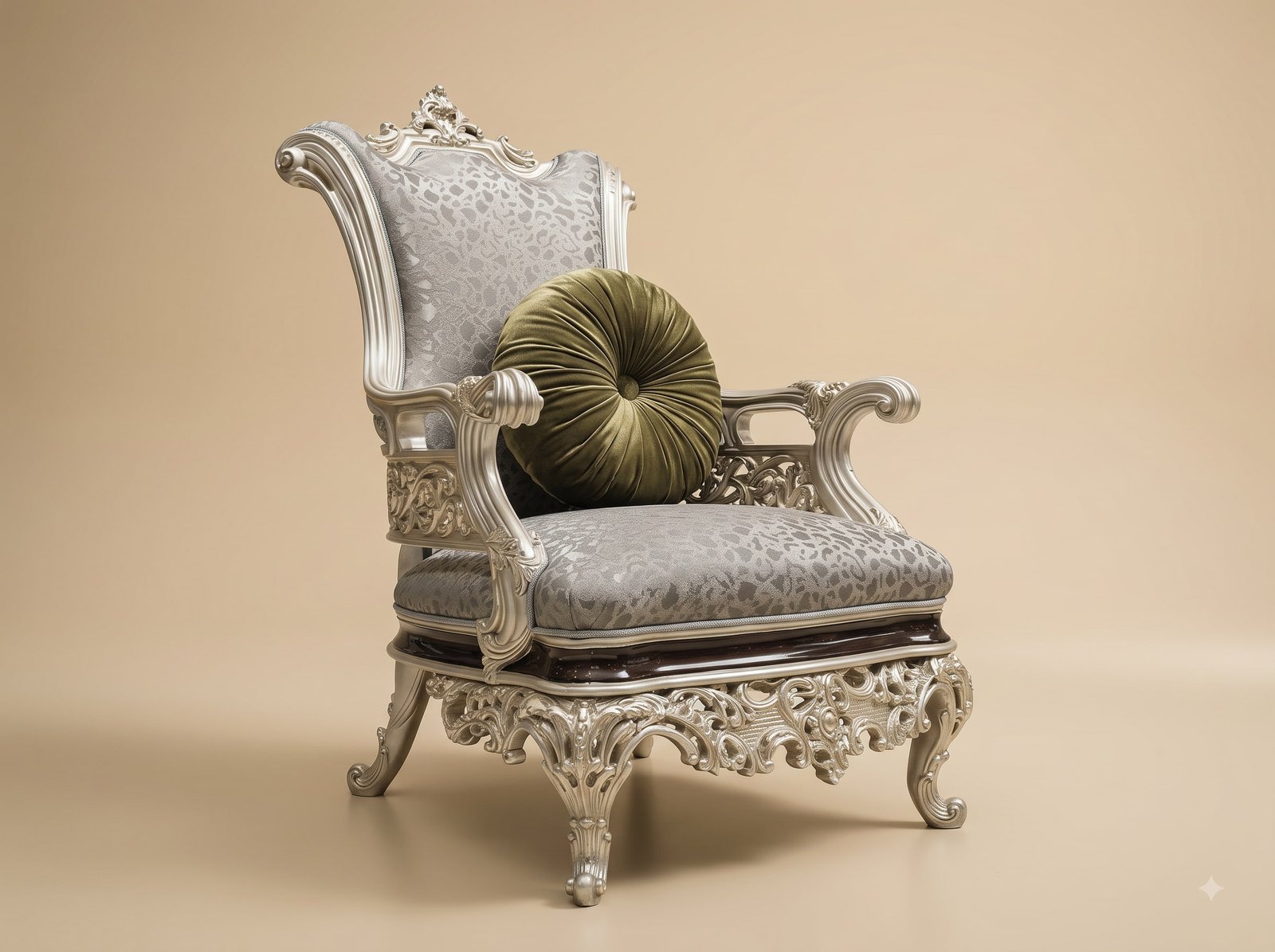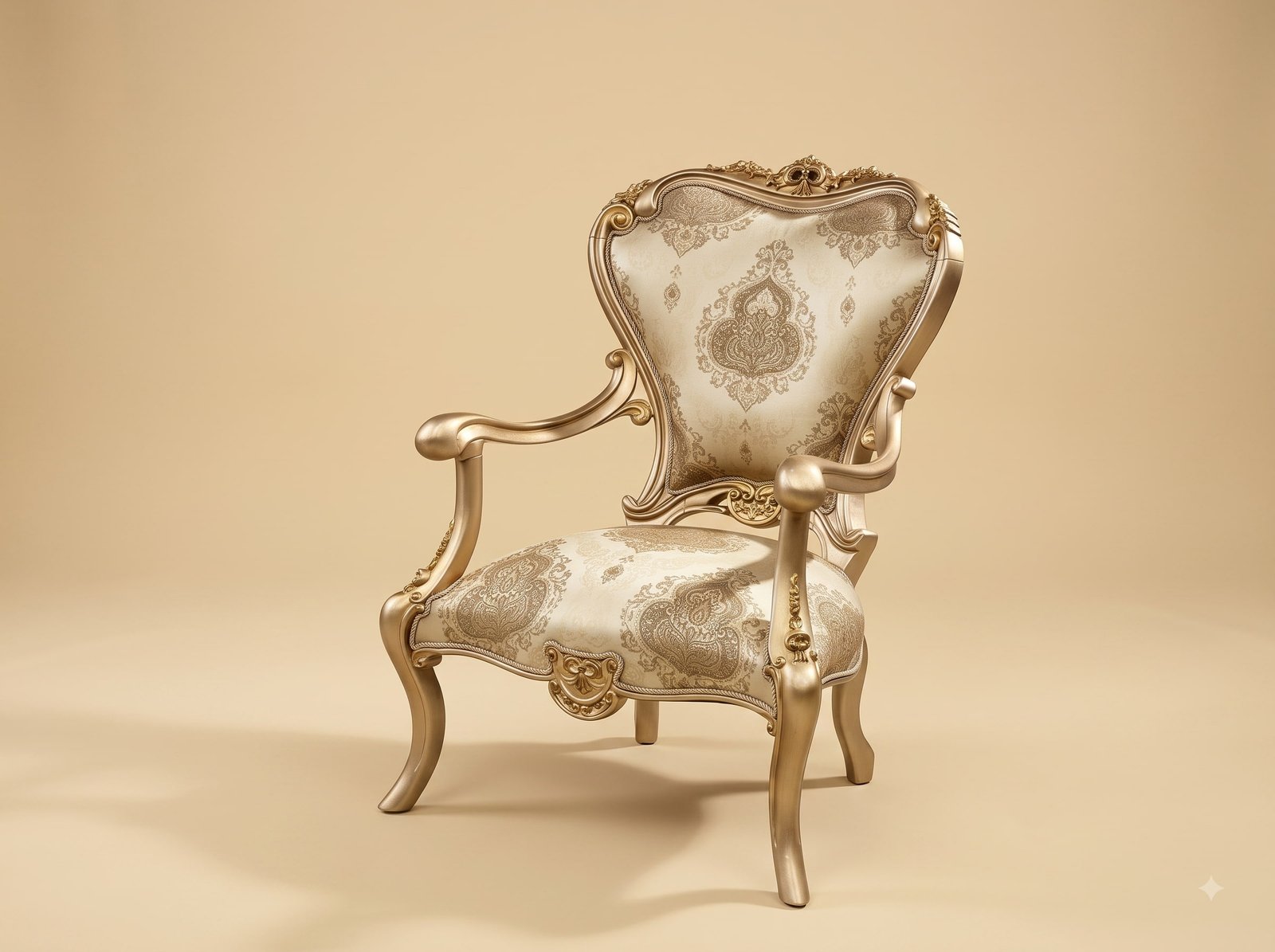
There is a rule in chair making that is almost never stated: carving stops where the body starts.
A carved surface is a series of raised edges and hollows. That is exactly what makes it worth looking at, and exactly what makes it wrong under a forearm. Rest your arm on a carved arm rest for ten minutes and the pattern is pressed into your skin; rest it there every evening for years and the high points of the carving wear smooth and shiny while the hollows stay sharp, and the carving ends up looking damaged rather than used.
So the arm rest on a well-made chair is left plain, rounded over on both edges, and finished smooth - and the carving is placed on the arm support below it, on the terminal in front of it and on the sprays behind it, where hands do not settle.
The same logic runs through the whole chair. The crest is carved because nobody leans on the top of a chair back. The seat rail is carved because it sits below the seat. The front of the arm is carved because the hand grips there briefly rather than resting.
Getting it wrong is a common fault on decorative chairs, and it is easy to check for: look at where the chair is carved and ask whether you would want to sit against it.
 Ask Price On WhatsApp