Depth Is What a Mandapa Gives You
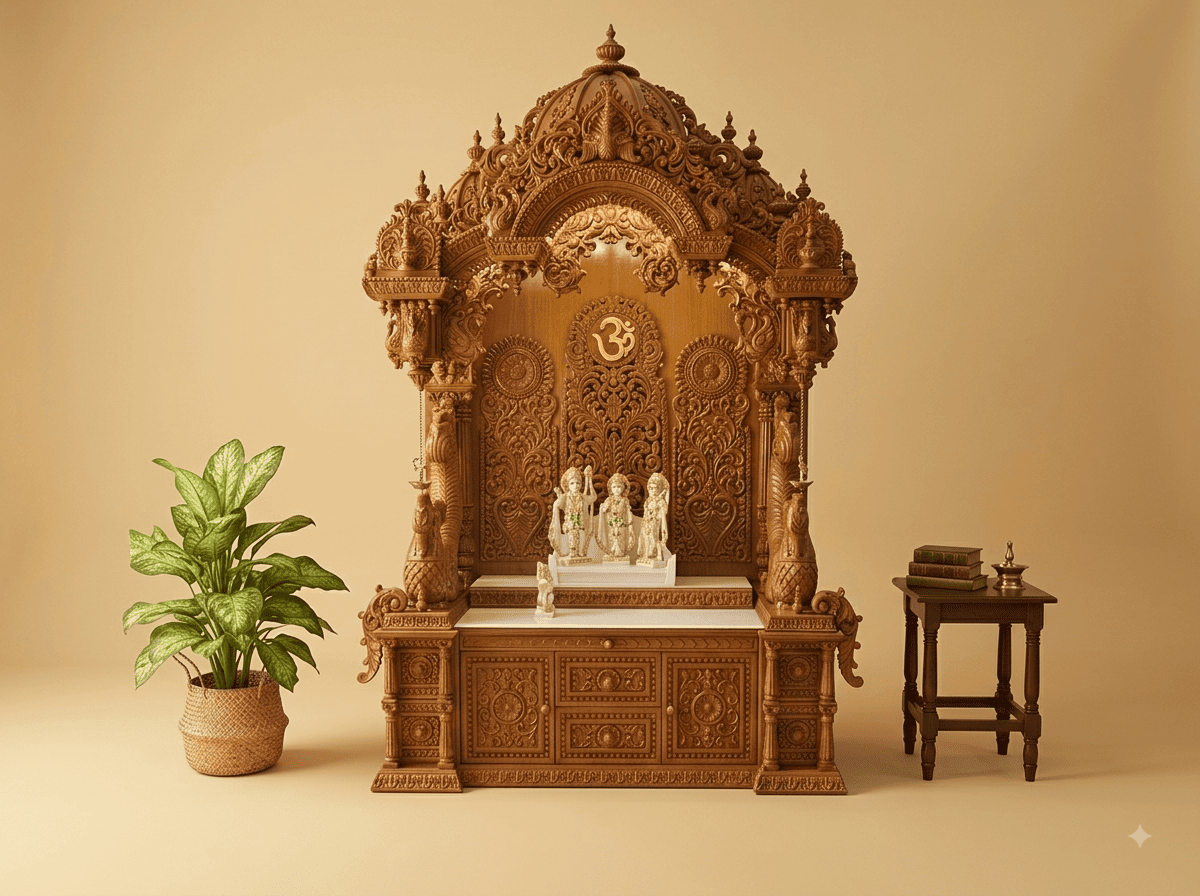
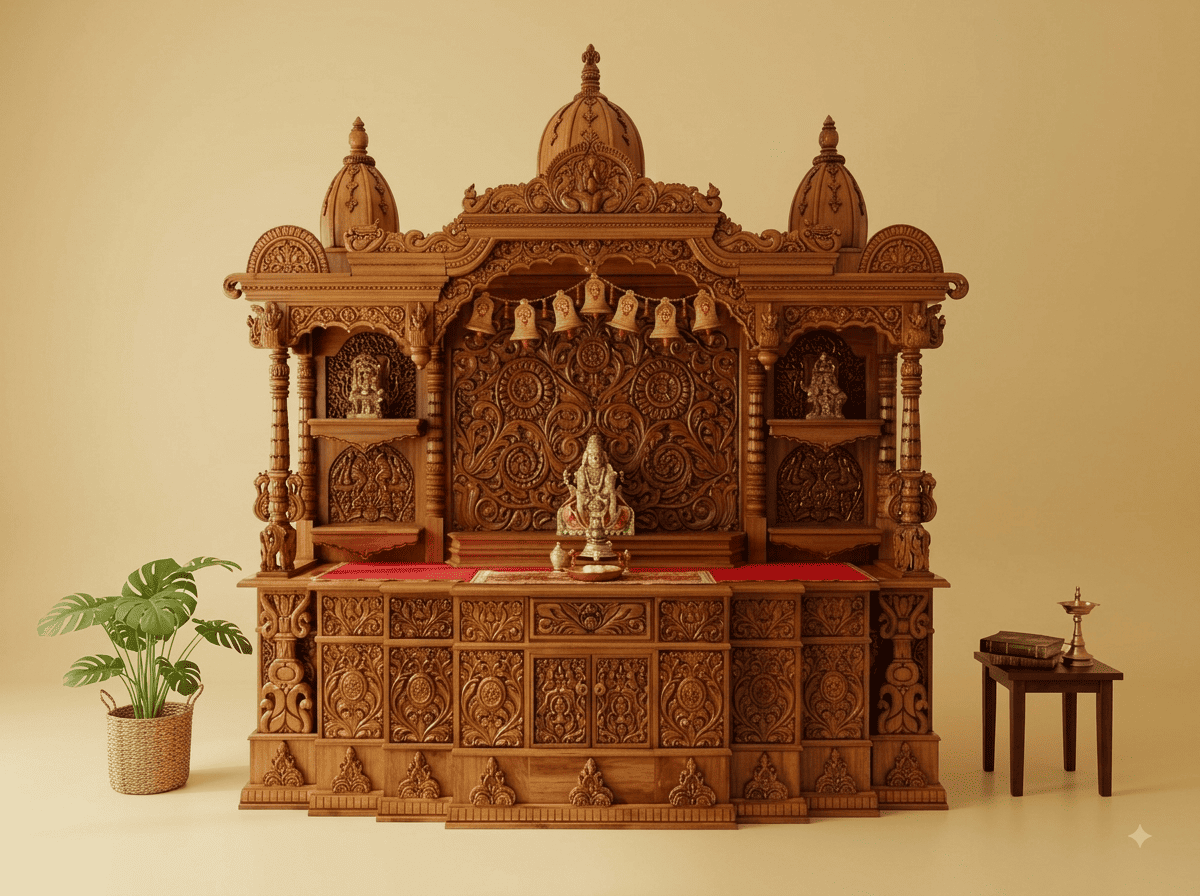
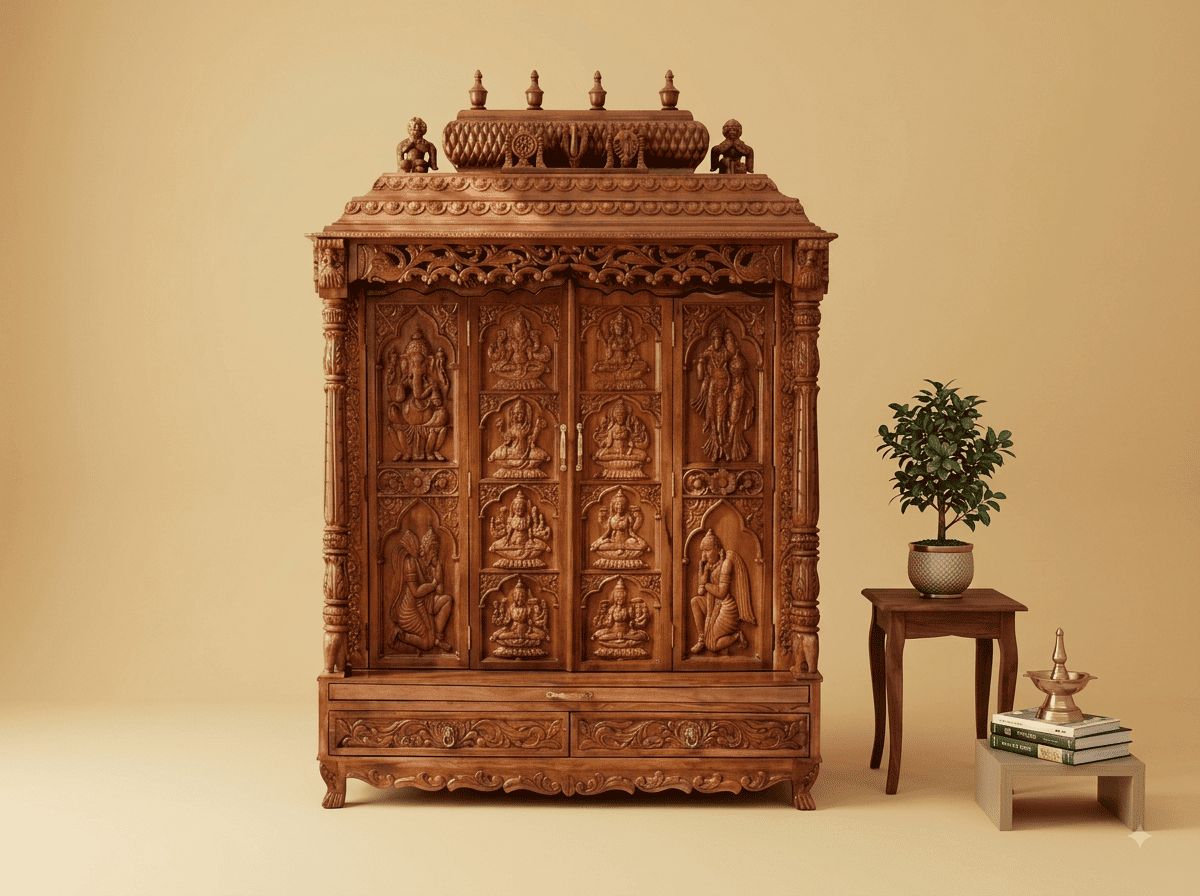
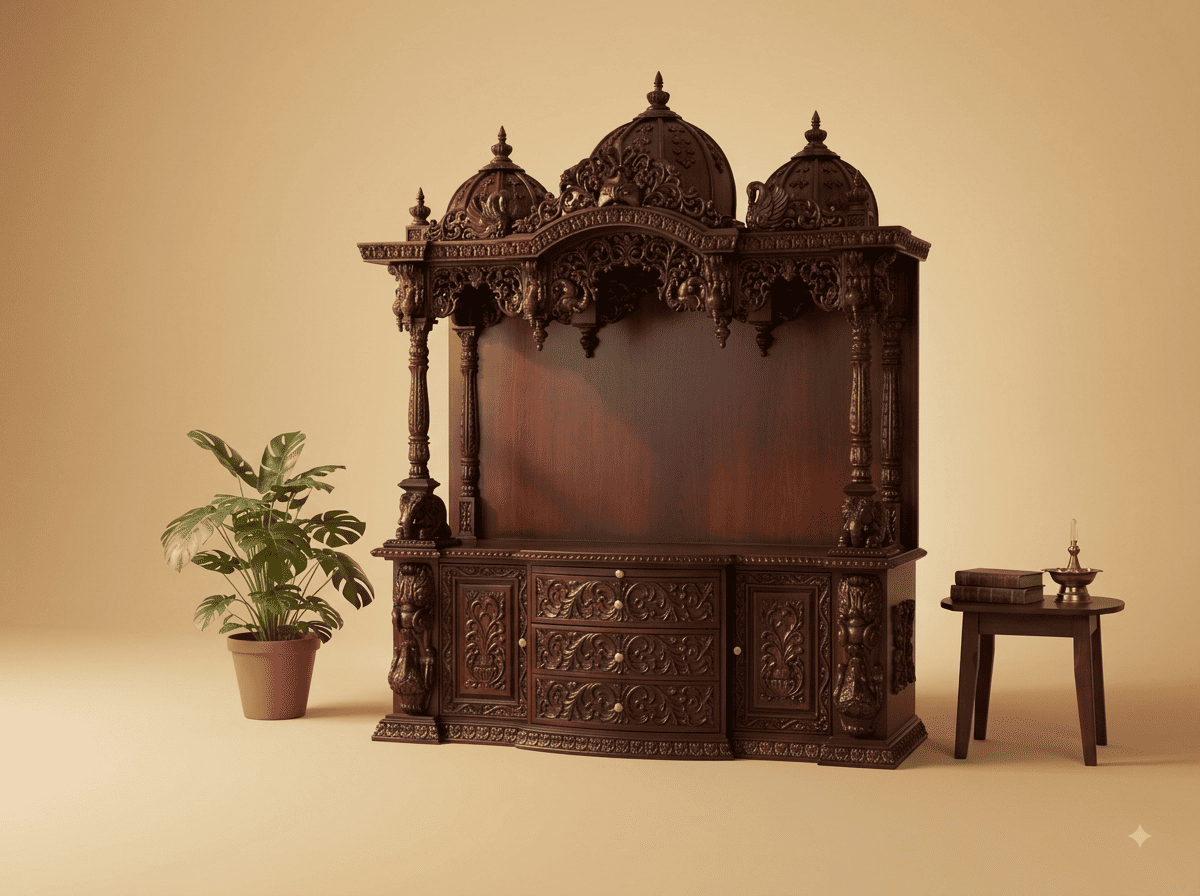
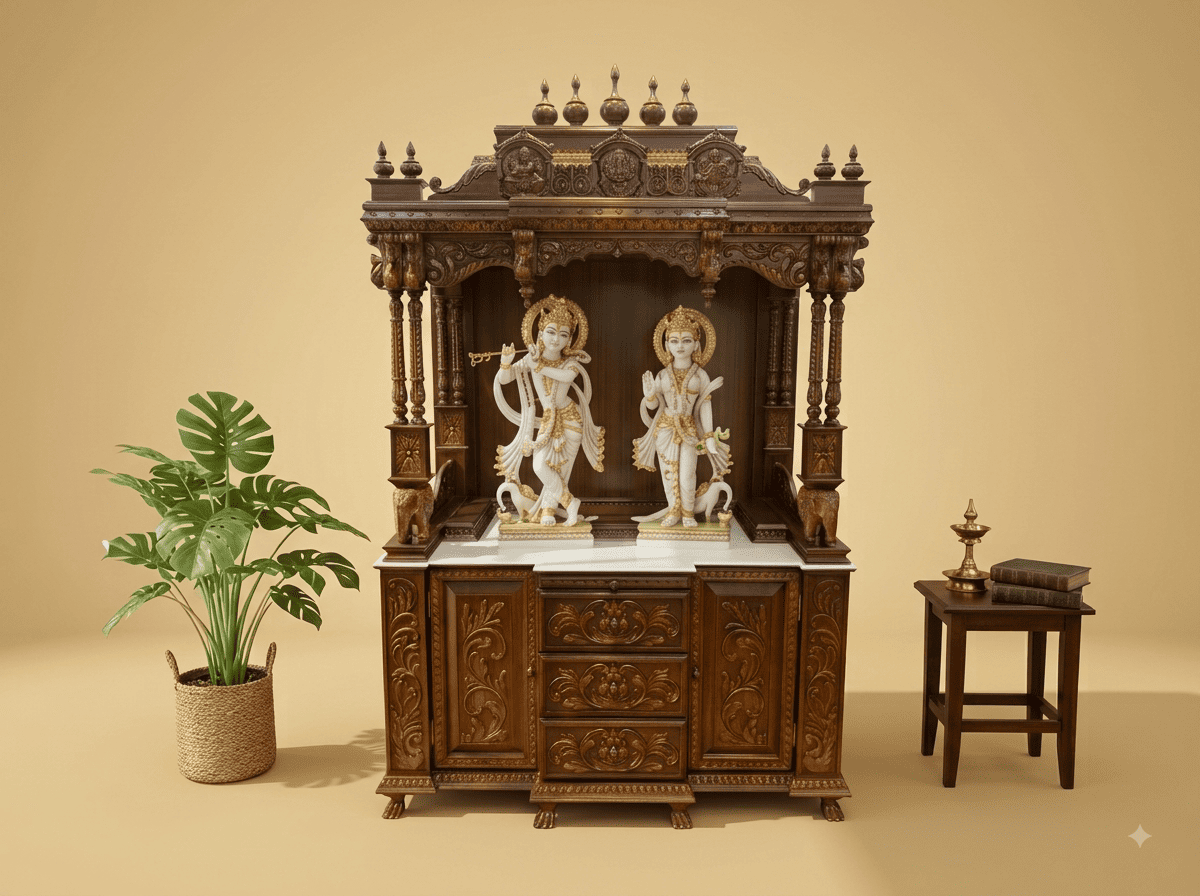
A temple in stone is not one space but several: the sanctum where the principal deity stands, and in front of it the mandapa, a pillared hall where people gather. This mandir brings that second space home. Four pillars set on a deeper platform give the canopy genuine front-to-back depth, and that depth is what lets you arrange deities the way families actually like to: principal figures forward and centred, smaller murtis and framed photographs set behind and to the sides at a slight rise, and a diya and thali standing comfortably on the platform itself.
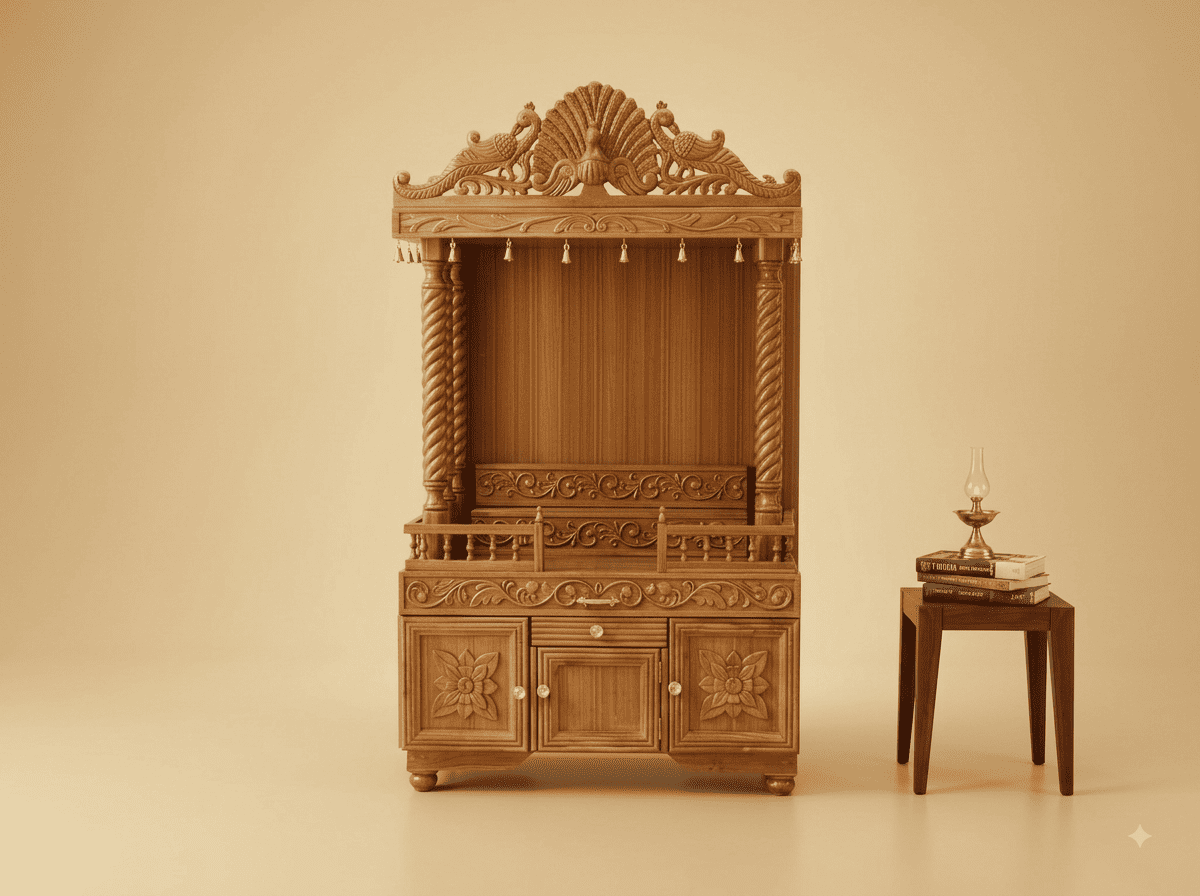
The roofline follows the same architectural logic. Above a mandapa in stone sits a flat cornice with a carved frieze and a row of kalash finials, and that is exactly what crowns this piece, rather than the single dome that belongs over a sanctum. The result is a mandir that reads as architecture from across the room and gives you room to arrange within it up close. Every element is carved and polished by hand by master Indian artisans, and the photographs on this page show the actual piece.
 Ask Price On WhatsApp