Full Lattice, and Why It Suits a Compact Mandir So Well
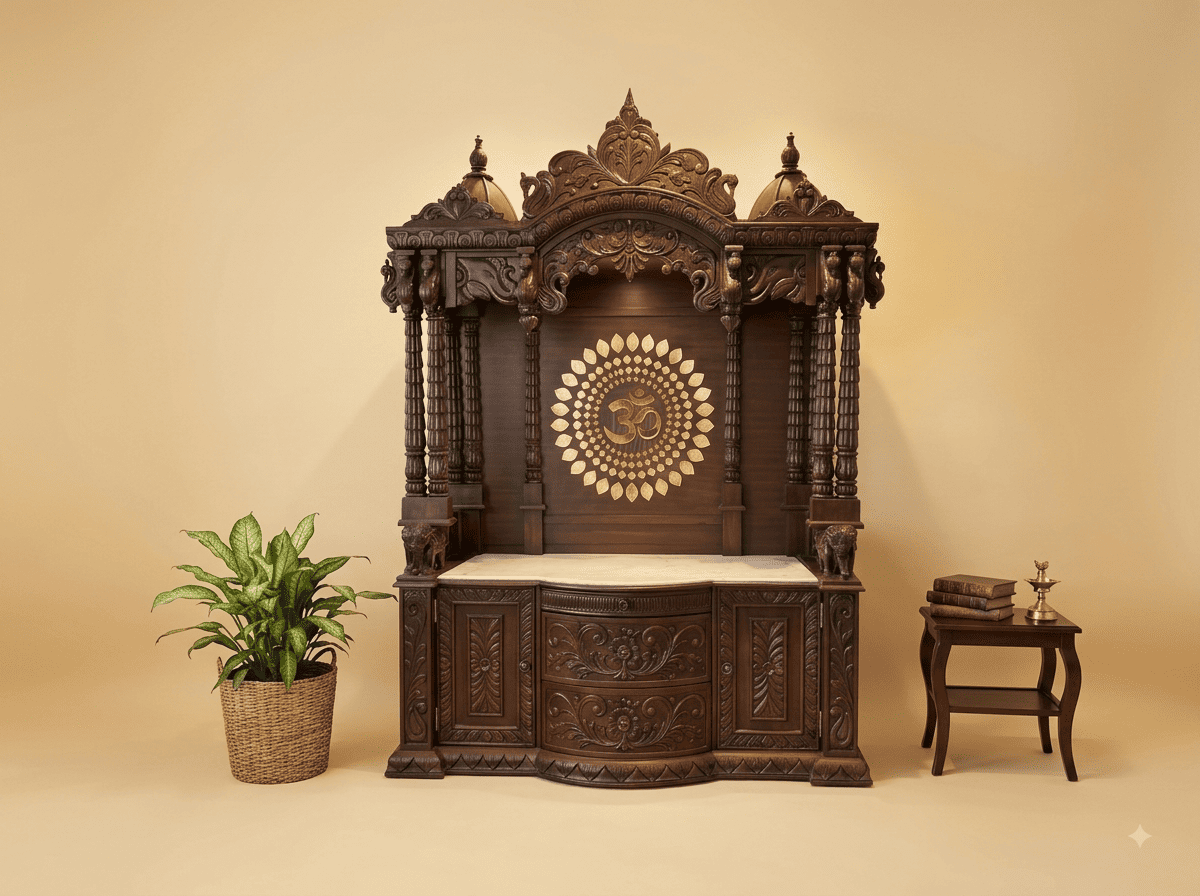
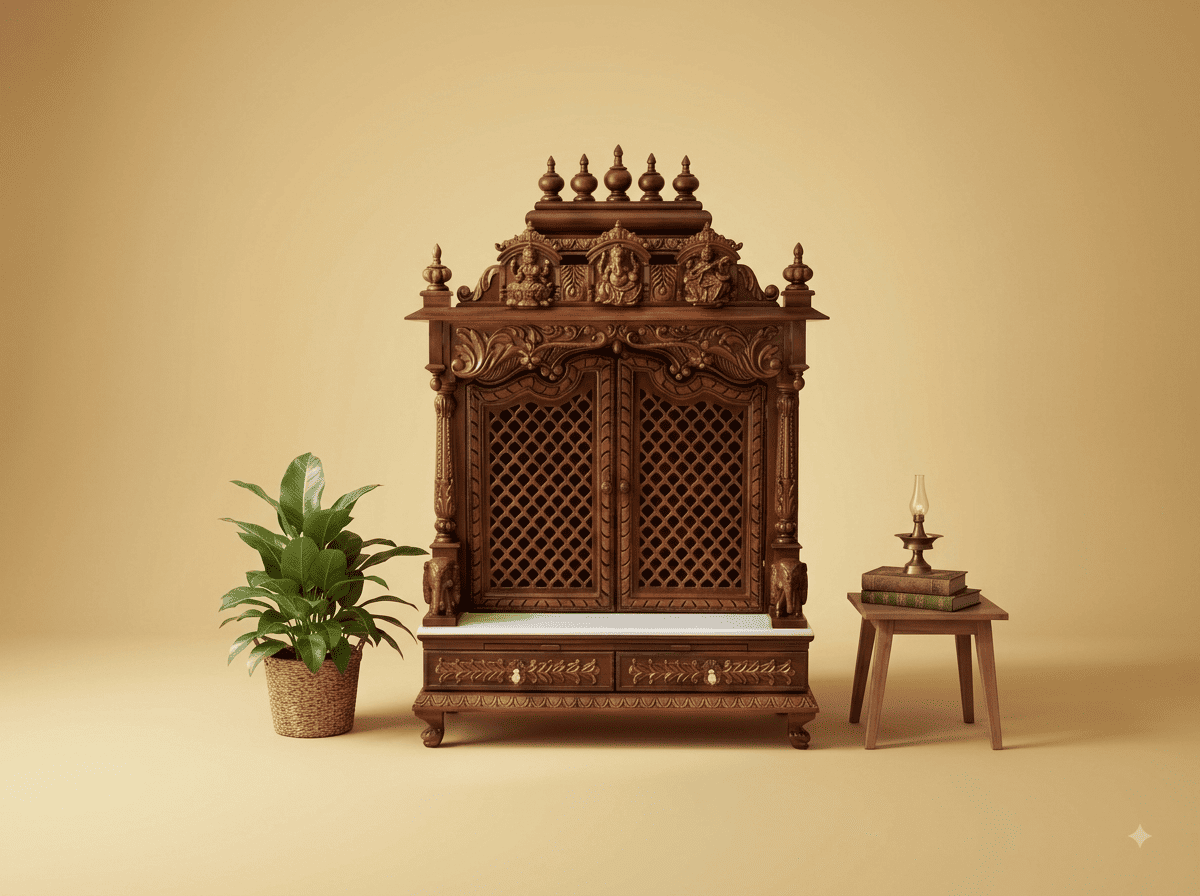
Cutting both doors as jaali across their whole area makes the entire front face open to air while still giving you a mandir you can close. On a compact piece that is exactly the right combination: you get full dust protection and the ability to shut the shrine, and at the same time air moves through freely, so the interior stays fresh and the timber above the lamps keeps its colour year after year.
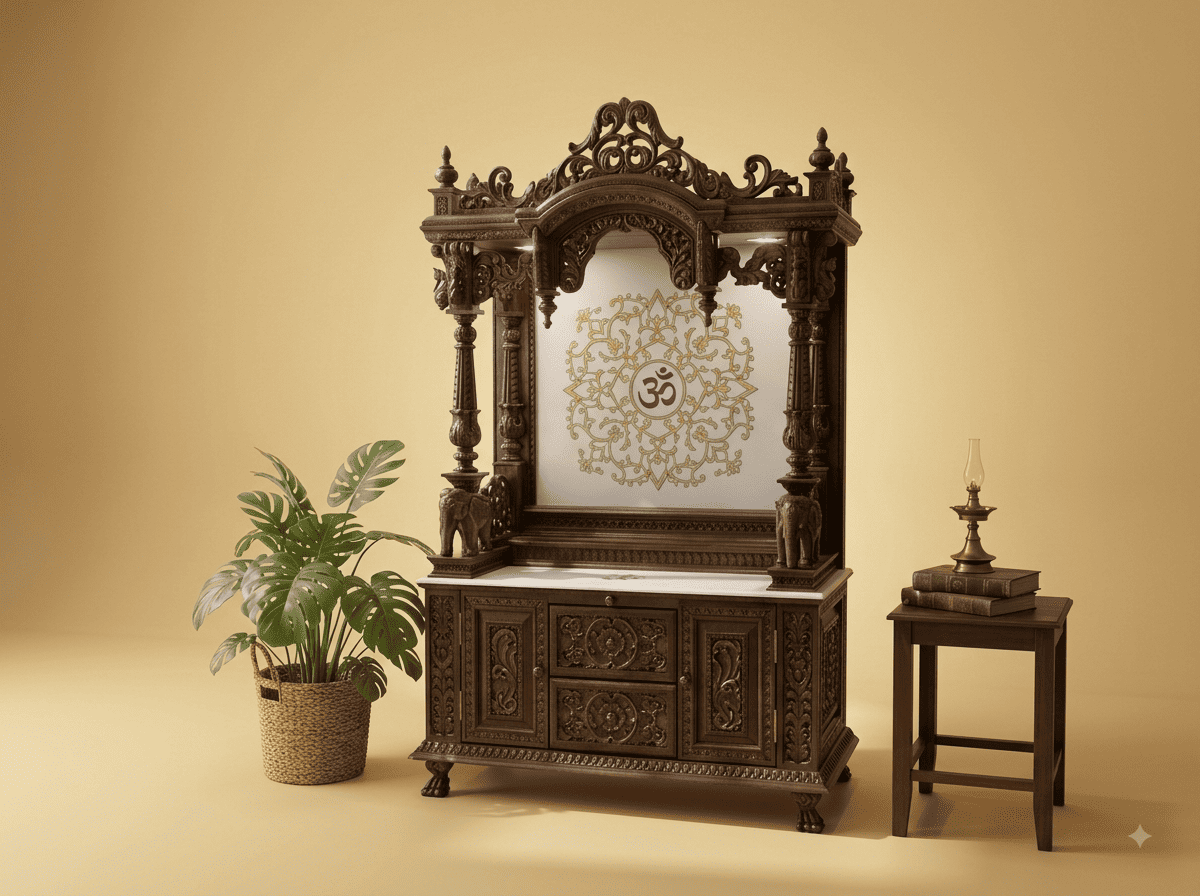
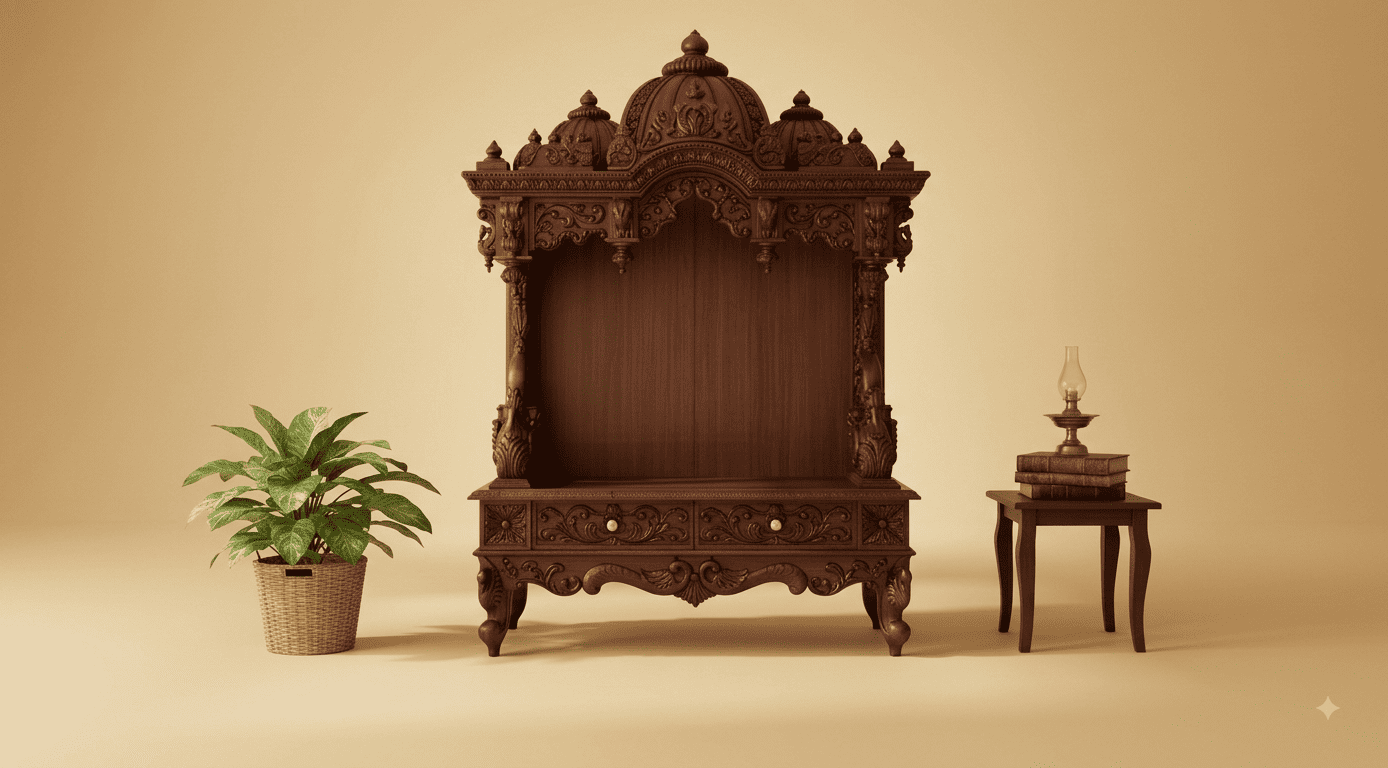
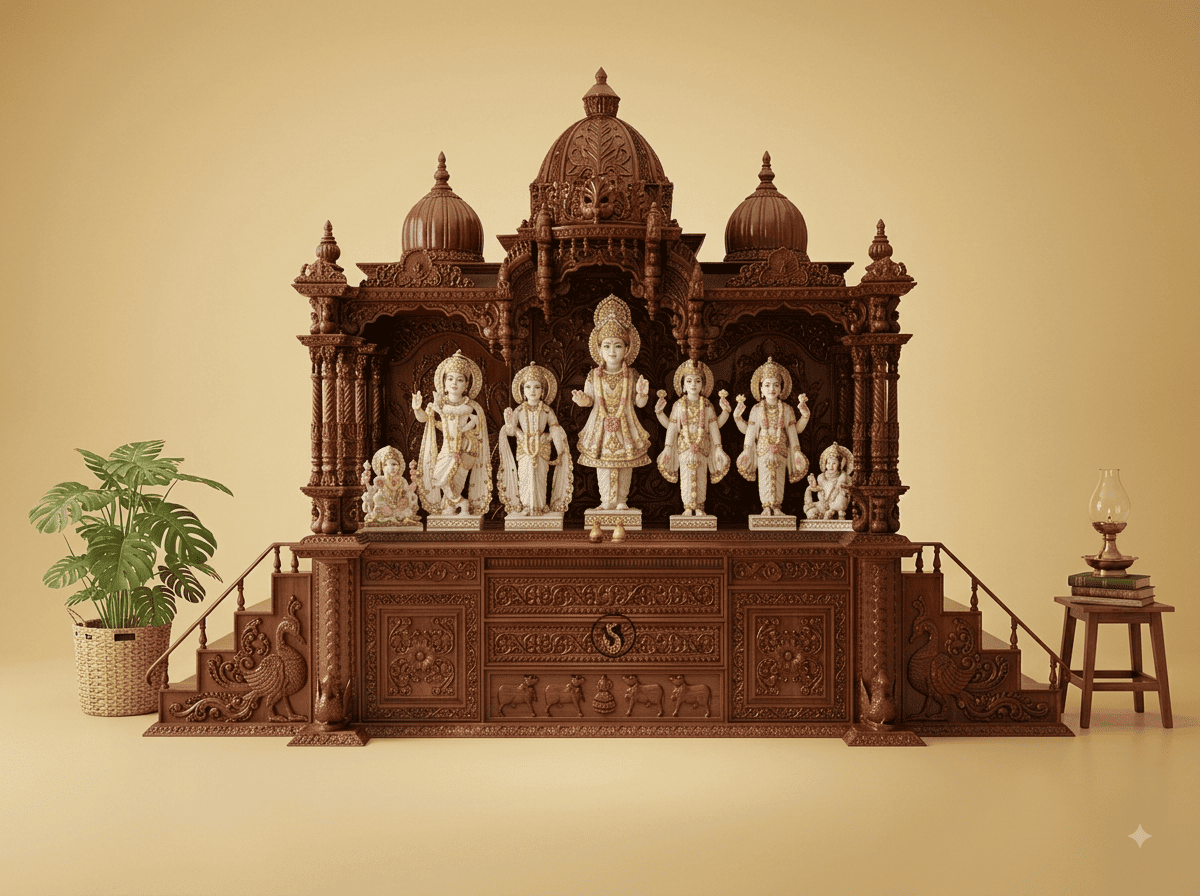
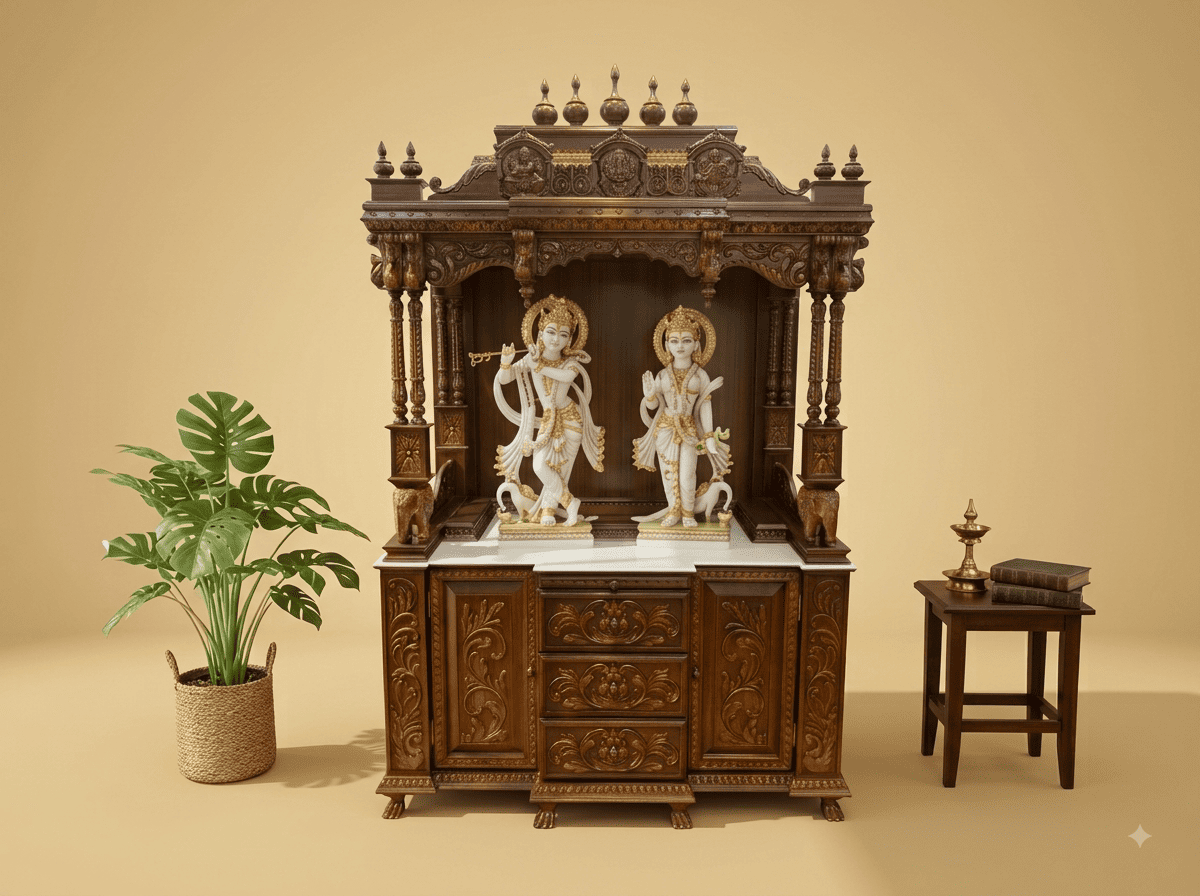
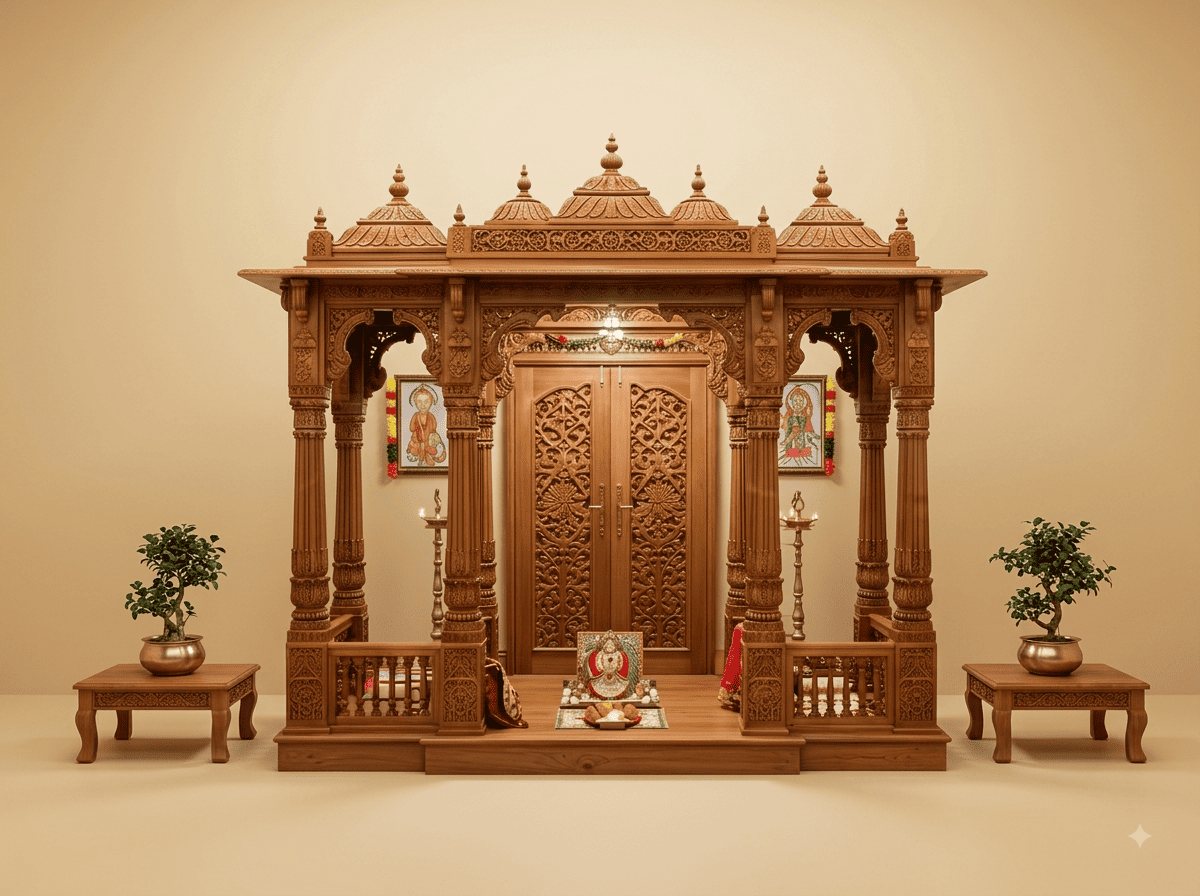
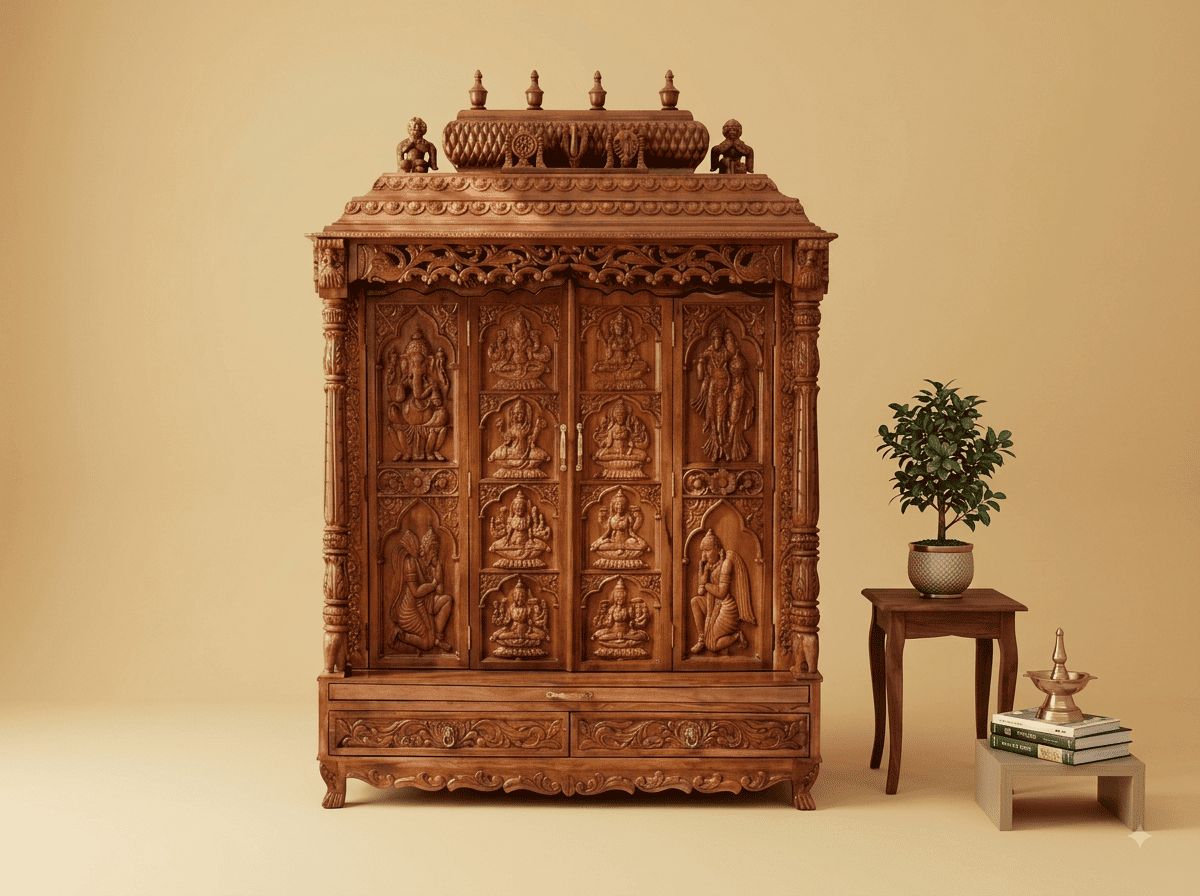
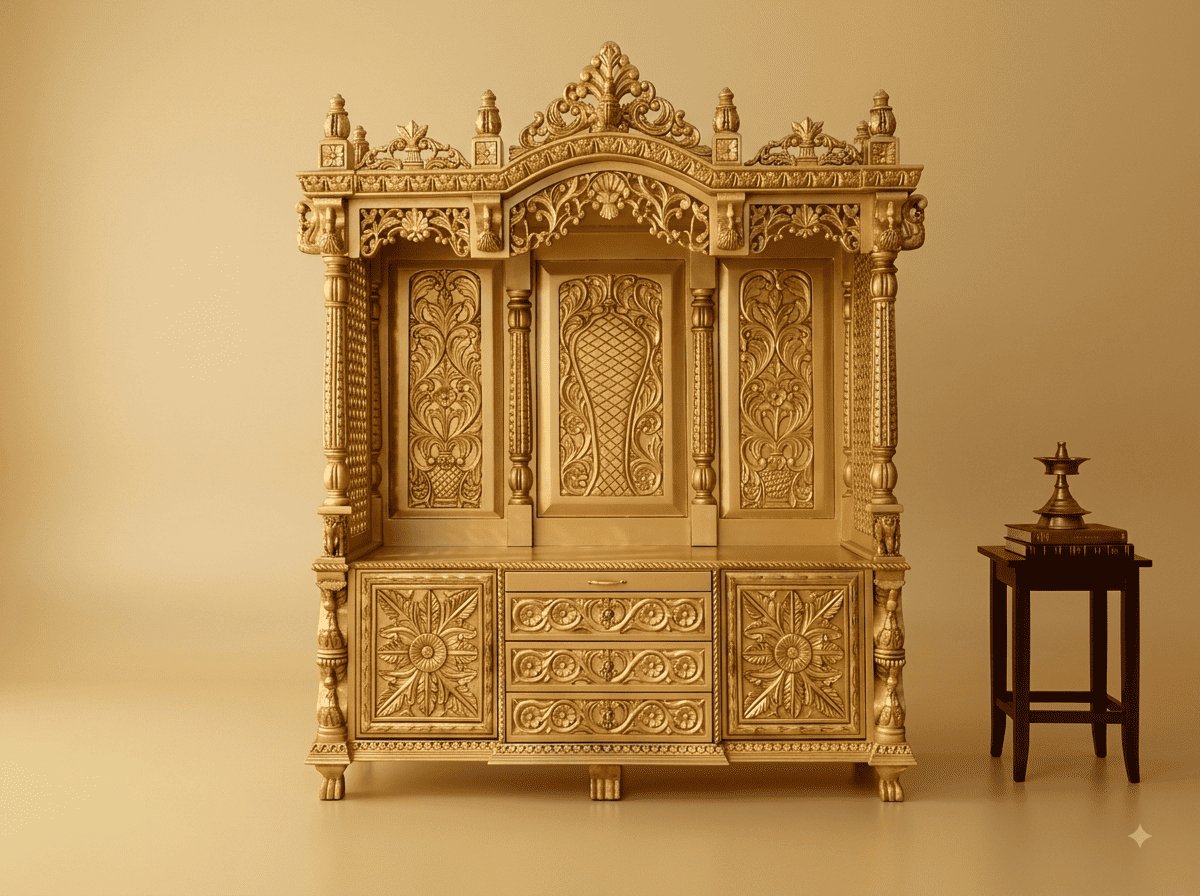
The scale is the other pleasure of this design. It suits a flat, a bedroom corner, a study wall or a second mandir in a guest room, and nothing is reduced except the size. The arch pelmets above the doors are carved, the cornice frieze carries carved deity figures, and the shikhar steps up in tiers to a row of turned finials exactly as on our largest pieces. A marble sill runs across the threshold beneath the doors, where lamps are most often set down, so that surface wipes clean in seconds. Everything is carved and polished by hand by master Indian artisans.
 Ask Price On WhatsApp