The Arch That Hangs Rather Than Spans
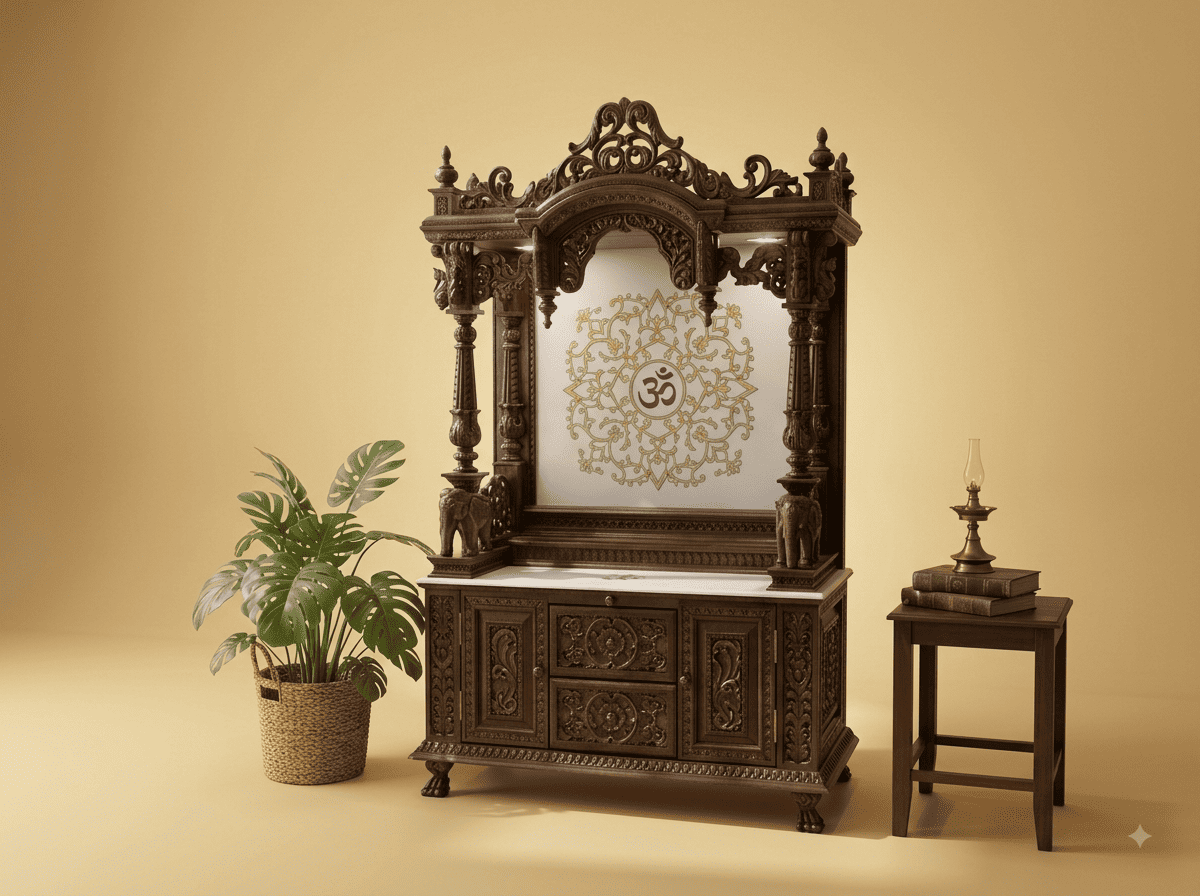
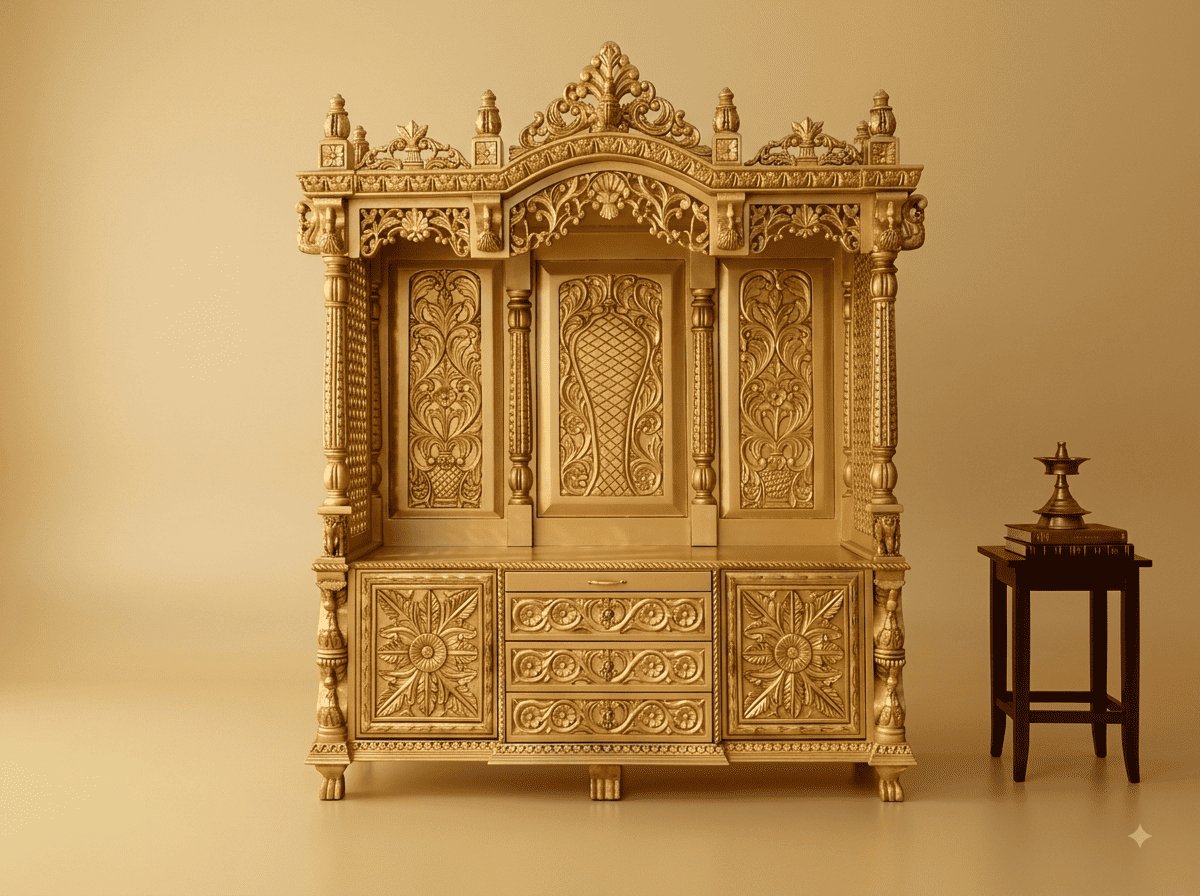
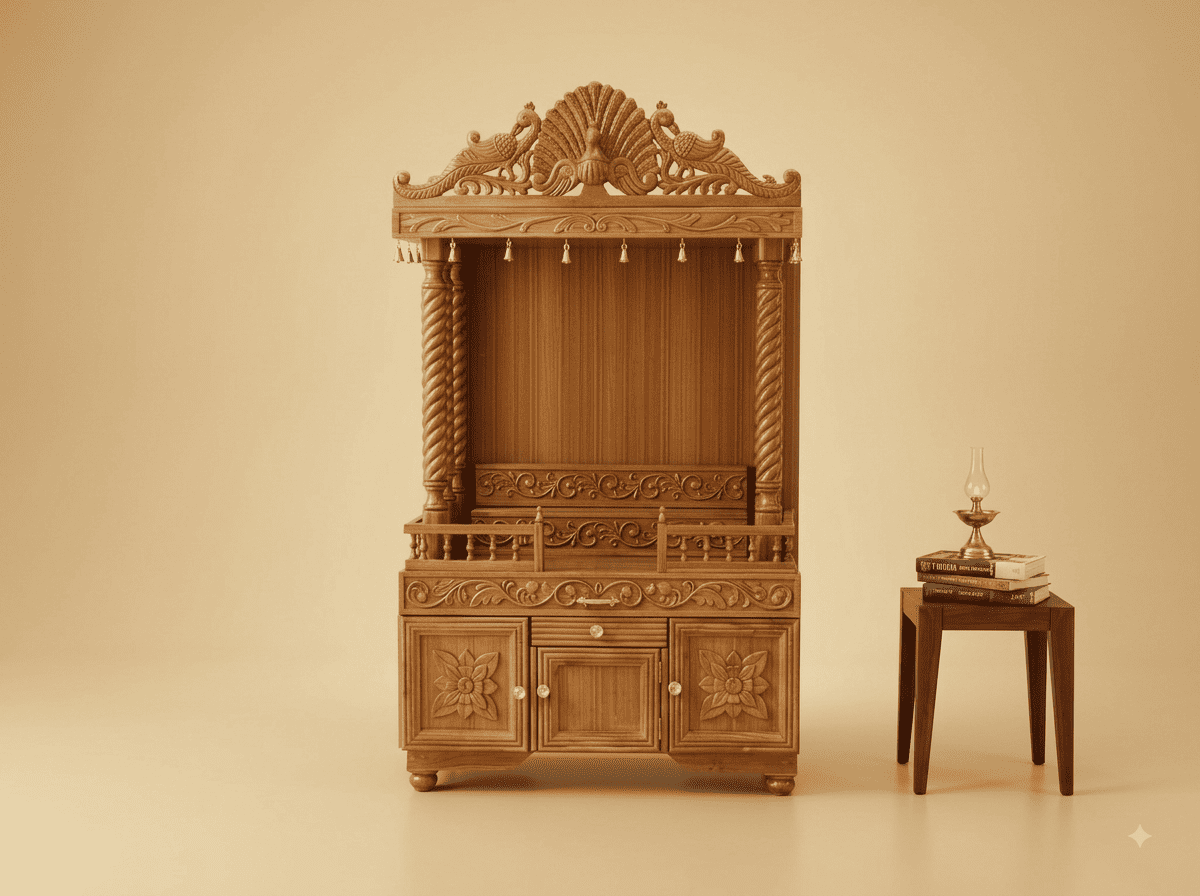
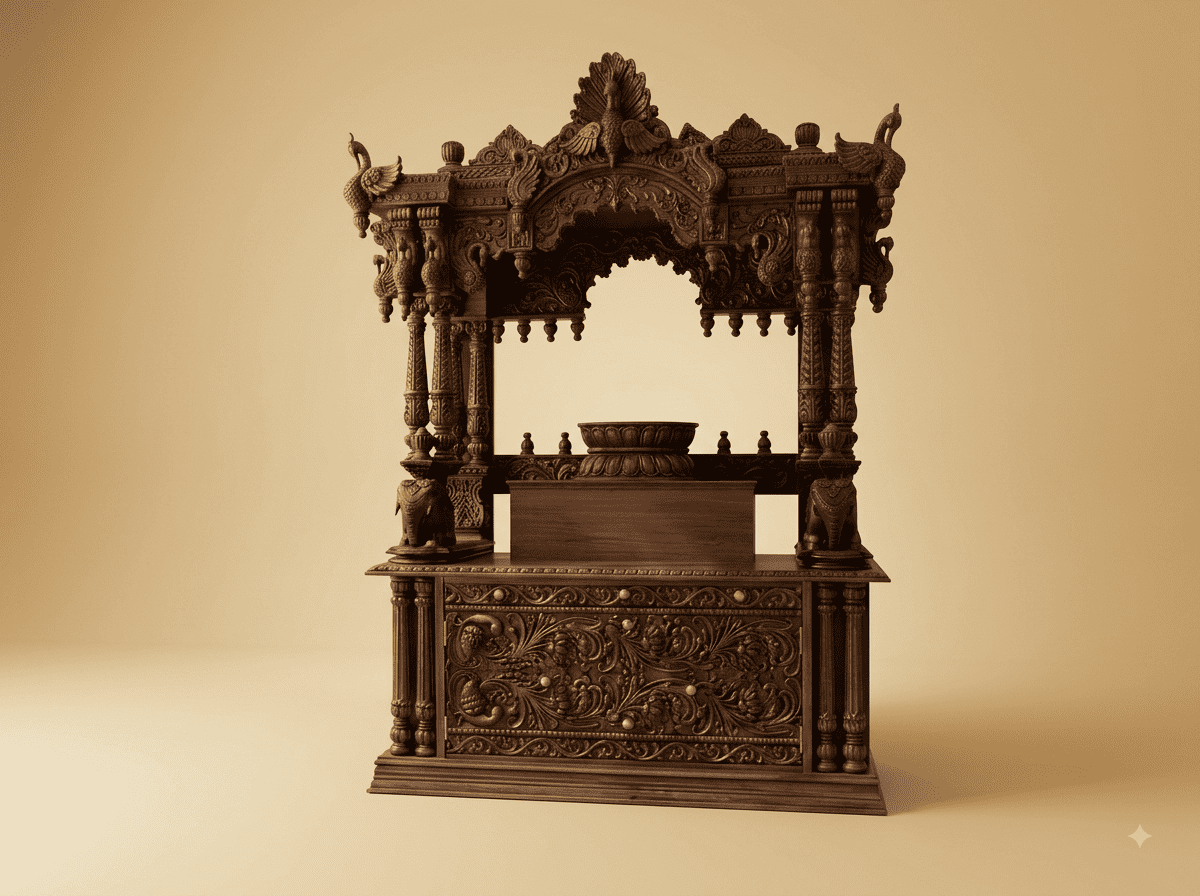
A toran is the decorated arch that marks the entrance to a shrine, and in stone it is carved as a series of cusps across the opening. Reproduced in wood it is usually simplified into a scalloped edge cut from a single board, which is quick and reads as a flat silhouette. On this mandir it is built the older way: the cusped arch is carved across the opening, and from the point of each cusp a small drop is turned separately on a lathe and hung so that it stands clear of the arch behind it. What you see is a fringe of pendants with daylight between them rather than a shape cut from a plank.
Each drop has to be turned to match its neighbours and hung so the line of the fringe stays true across the span, and there is no way to shortcut it. The other decision worth noting is the absence of a back. Finishing all four sides to the same standard doubles the carving on the rear elevation, which most makers avoid because the back of a mandir is usually never seen. Doing it means the piece can stand in the middle of a room and be oriented to face whichever direction your household observes, rather than being dictated to by where the wall is. Every element is carved and polished by hand by master Indian artisans.
 Ask Price On WhatsApp