Three Bays, and Jaali That Lets the Air Move
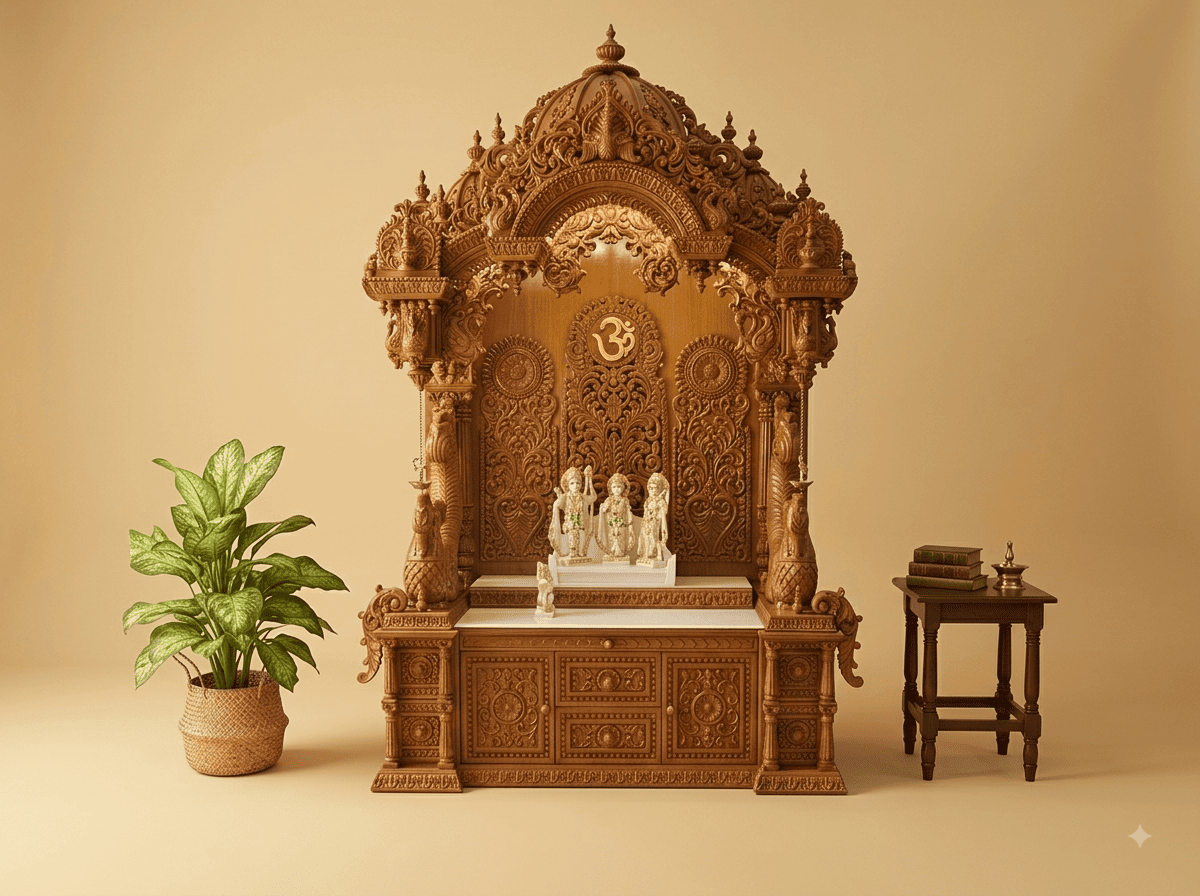
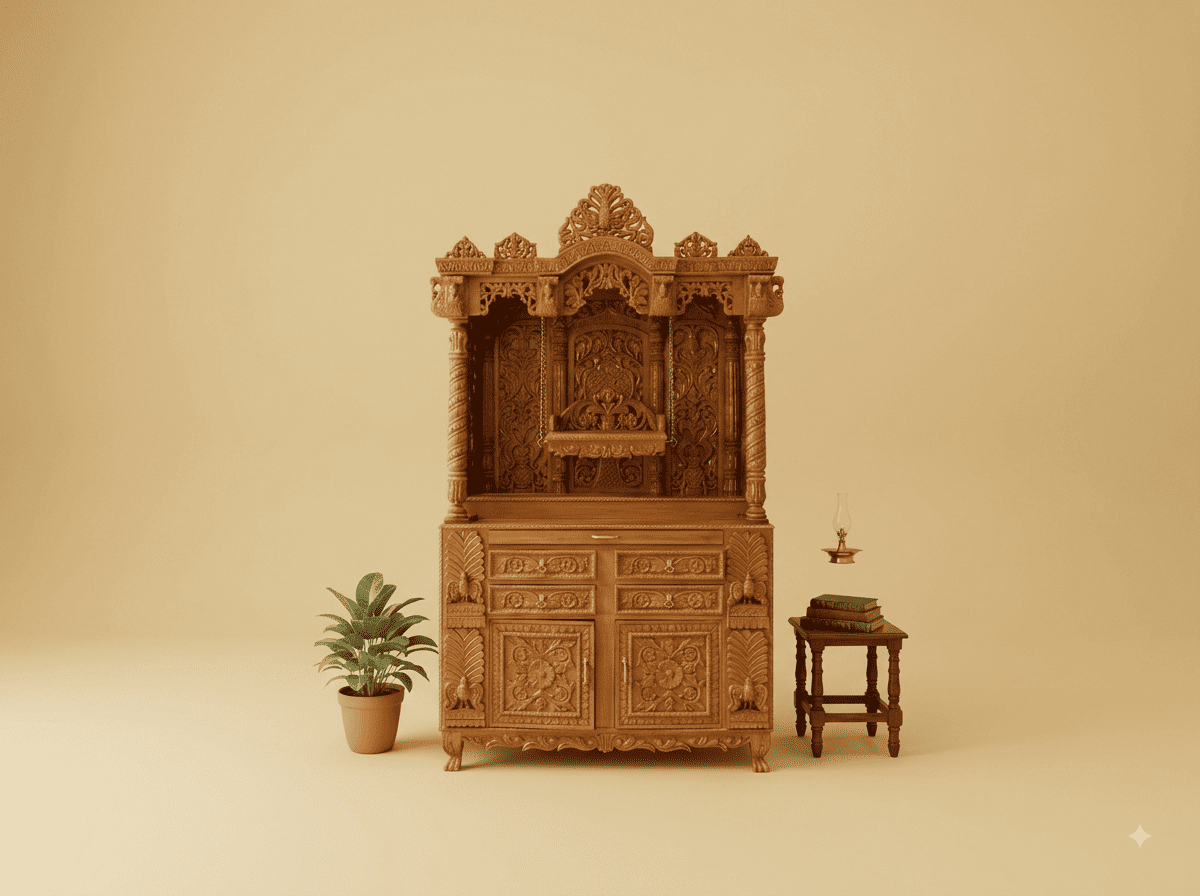
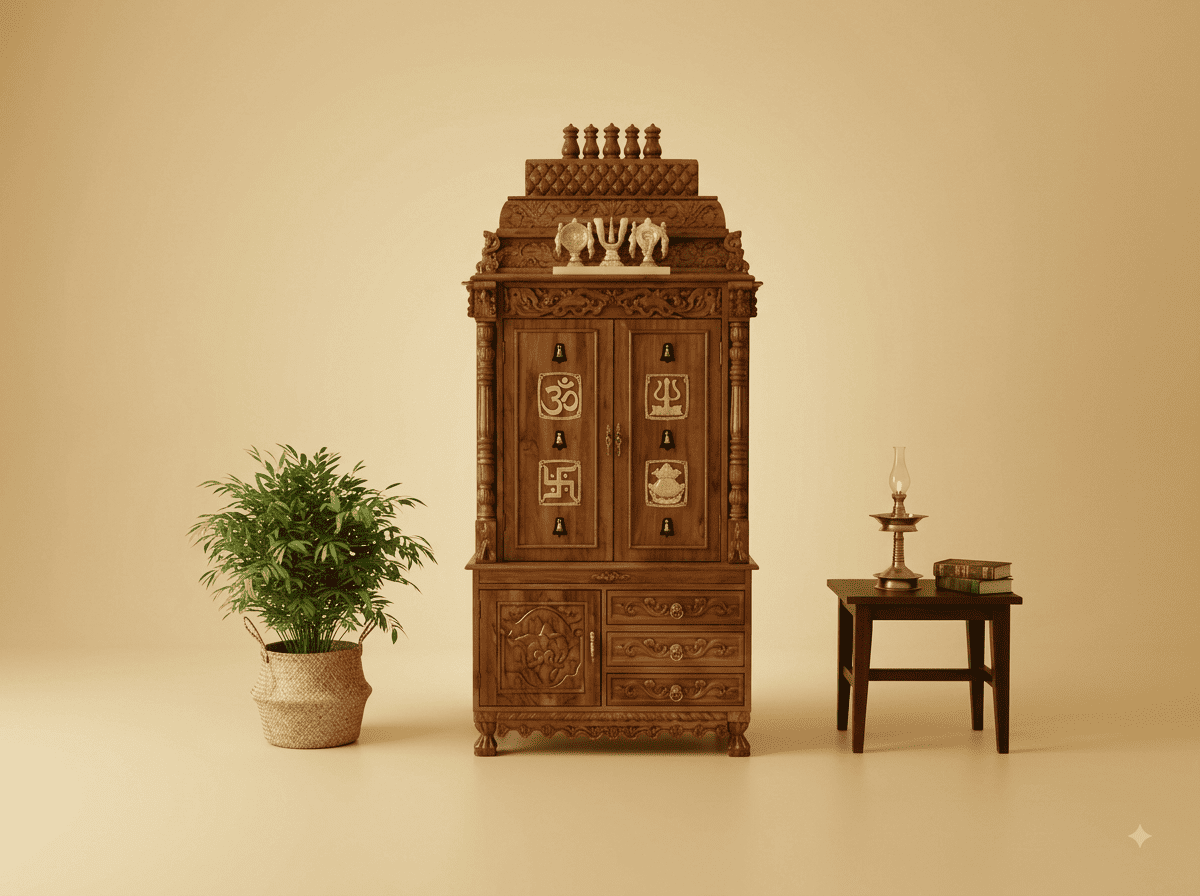
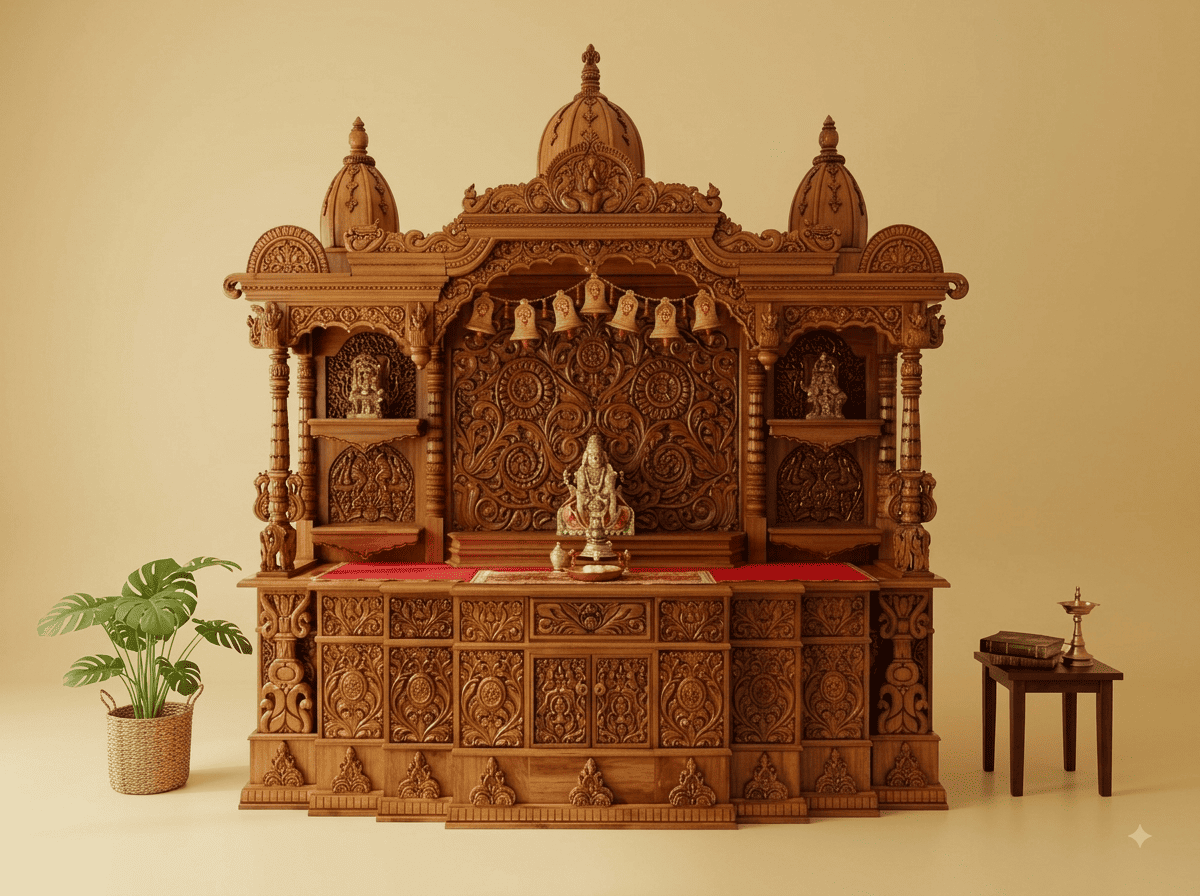
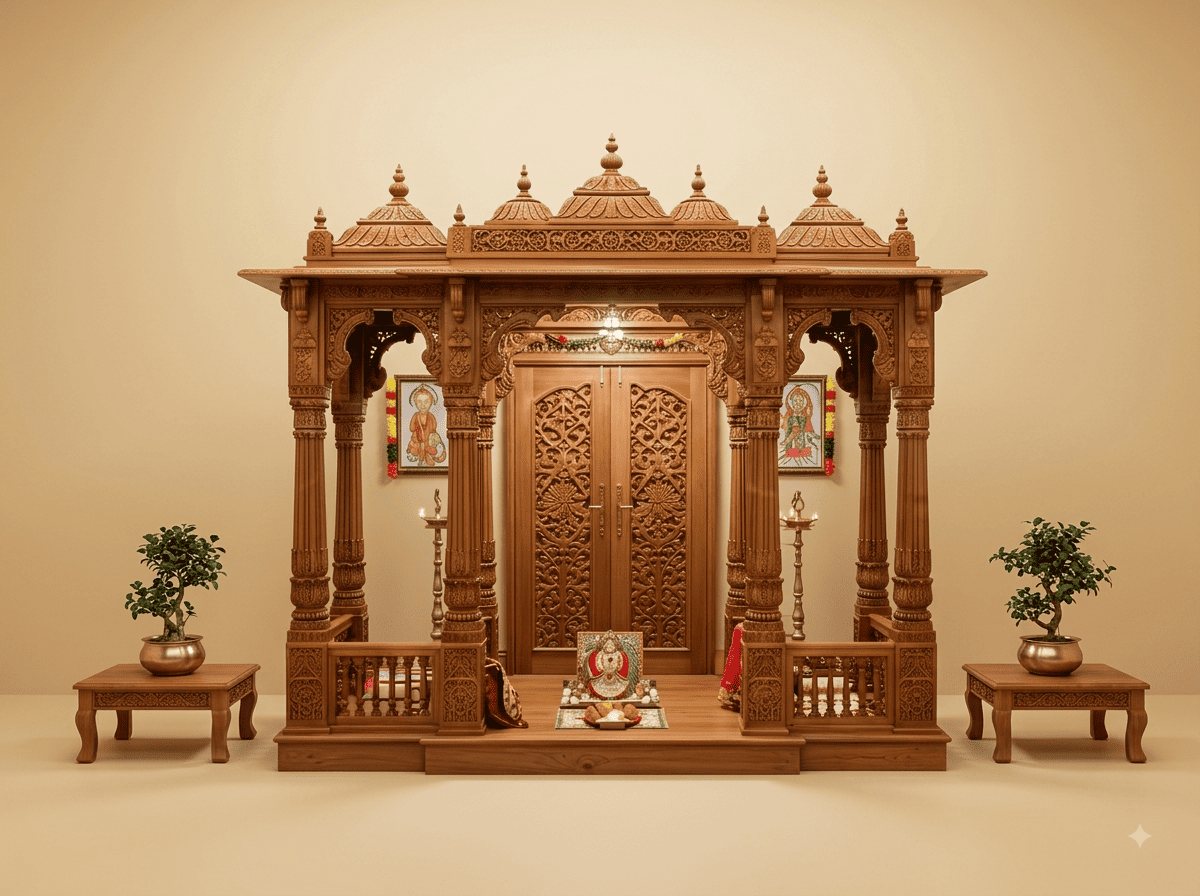
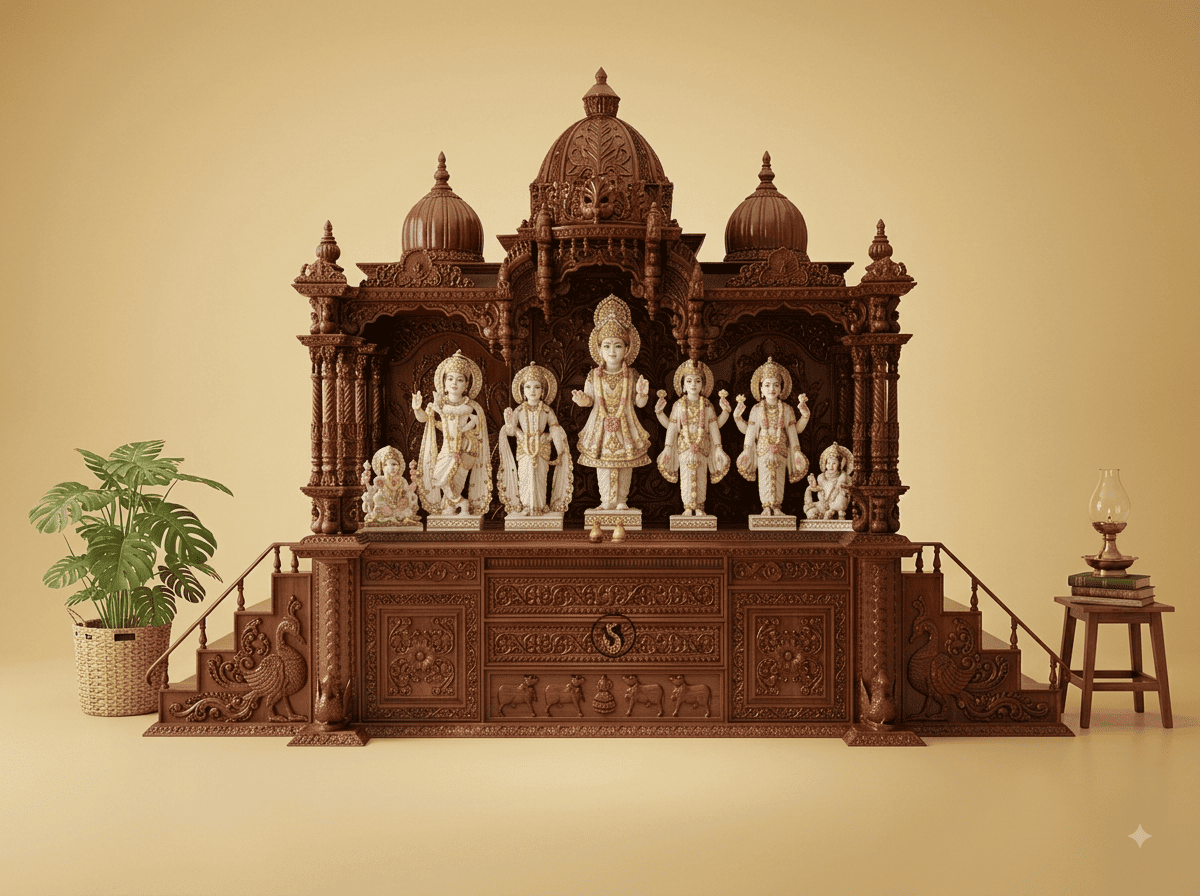
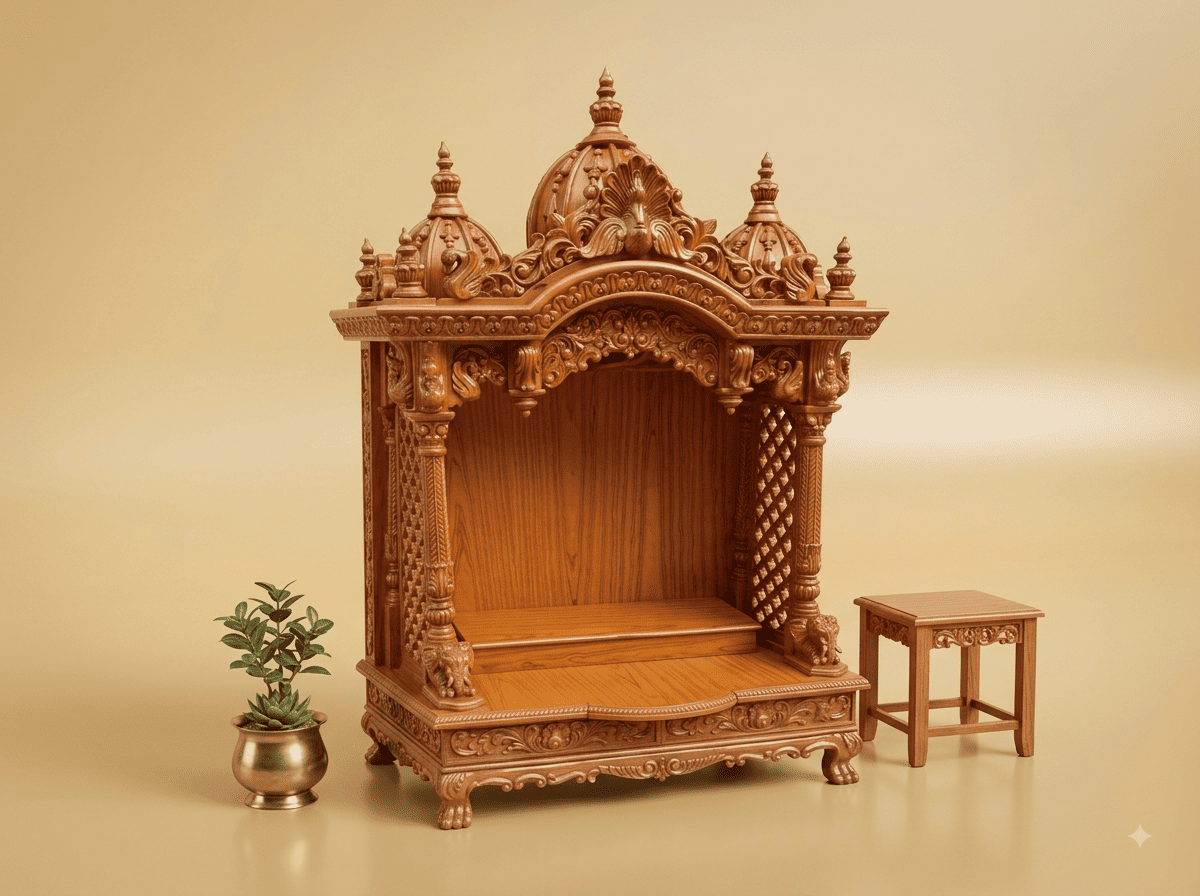
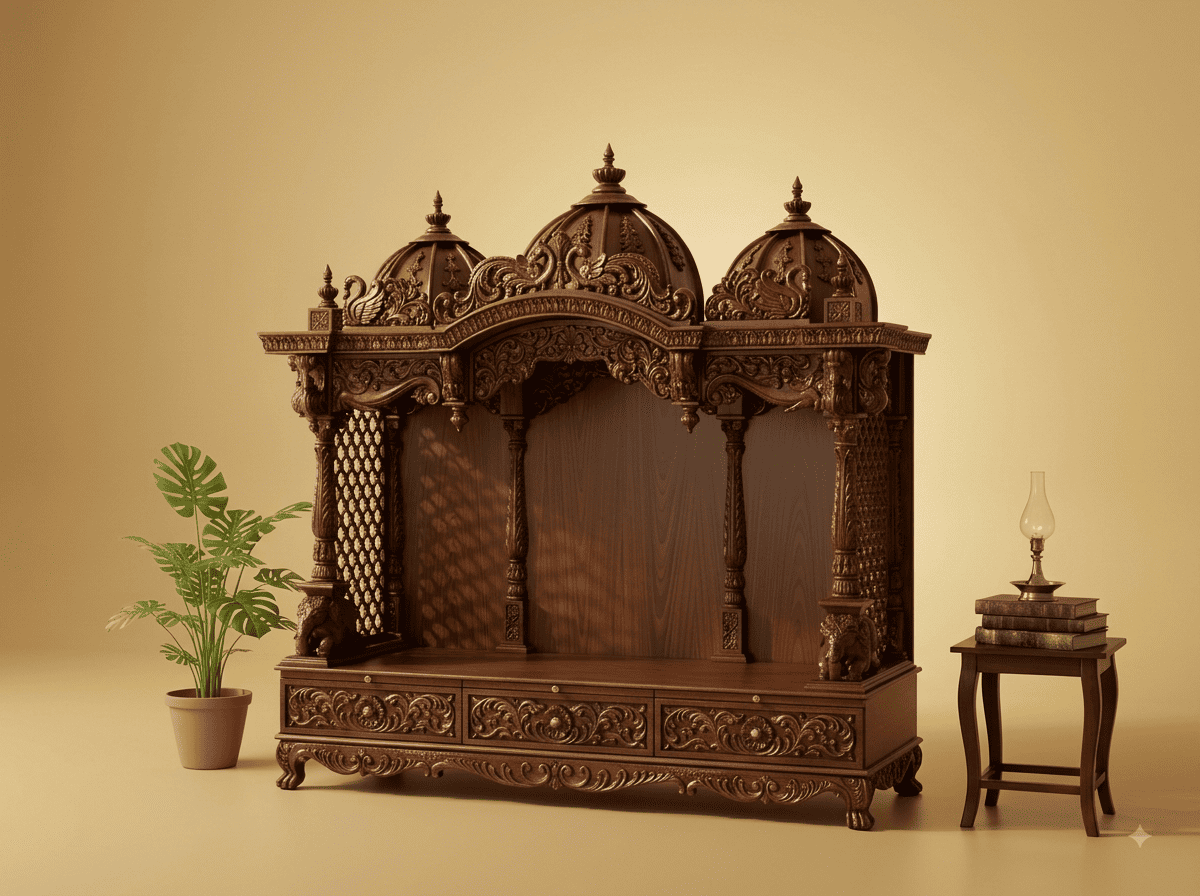
Families who keep more than one group of deities, a kuldevta alongside the deities of daily worship, or figures brought back from pilgrimage, know how much difference a defined place makes. Three bays under three domes give each group its own space with a column marking the boundary, and because the centre bay is taller and deeper than the flanking two, there is a clear principal position at the heart of the piece. It is the arrangement a temple uses, brought to a scale that lives in a home.
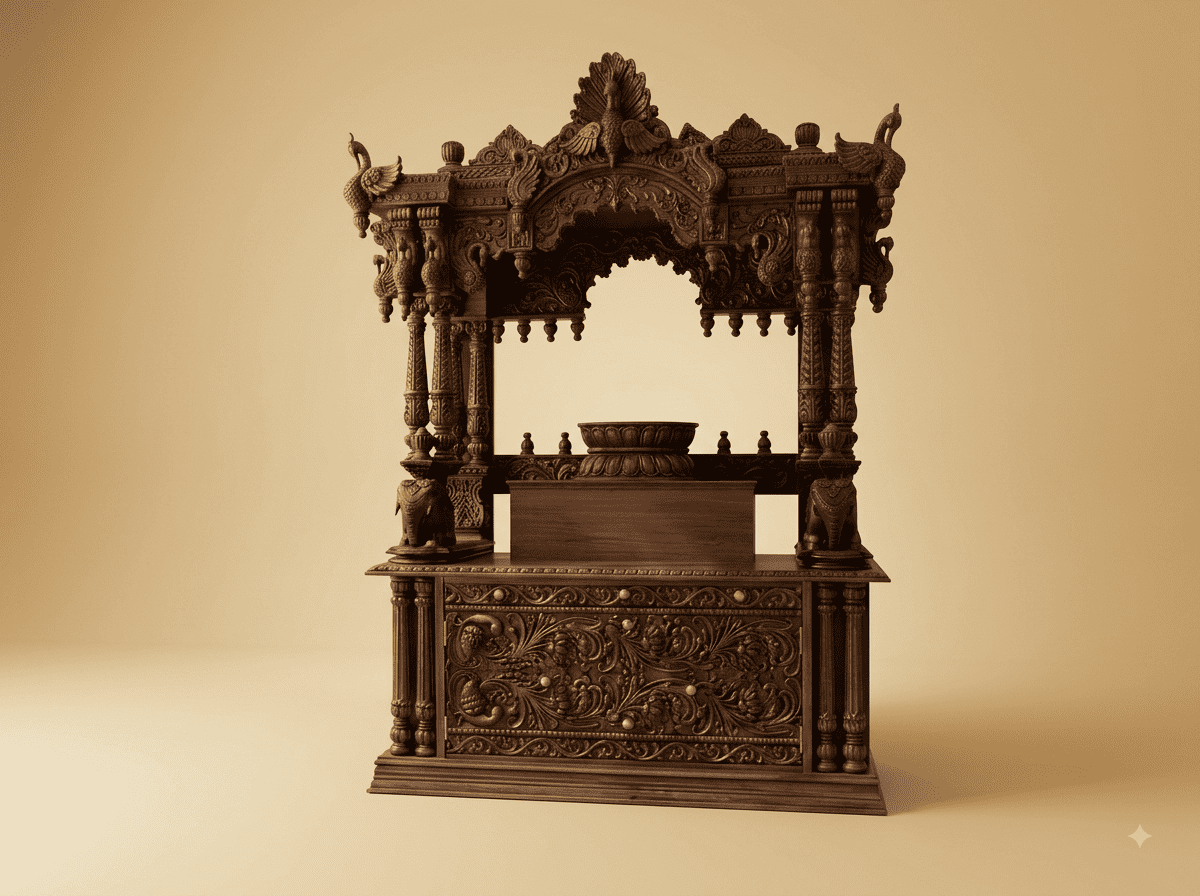
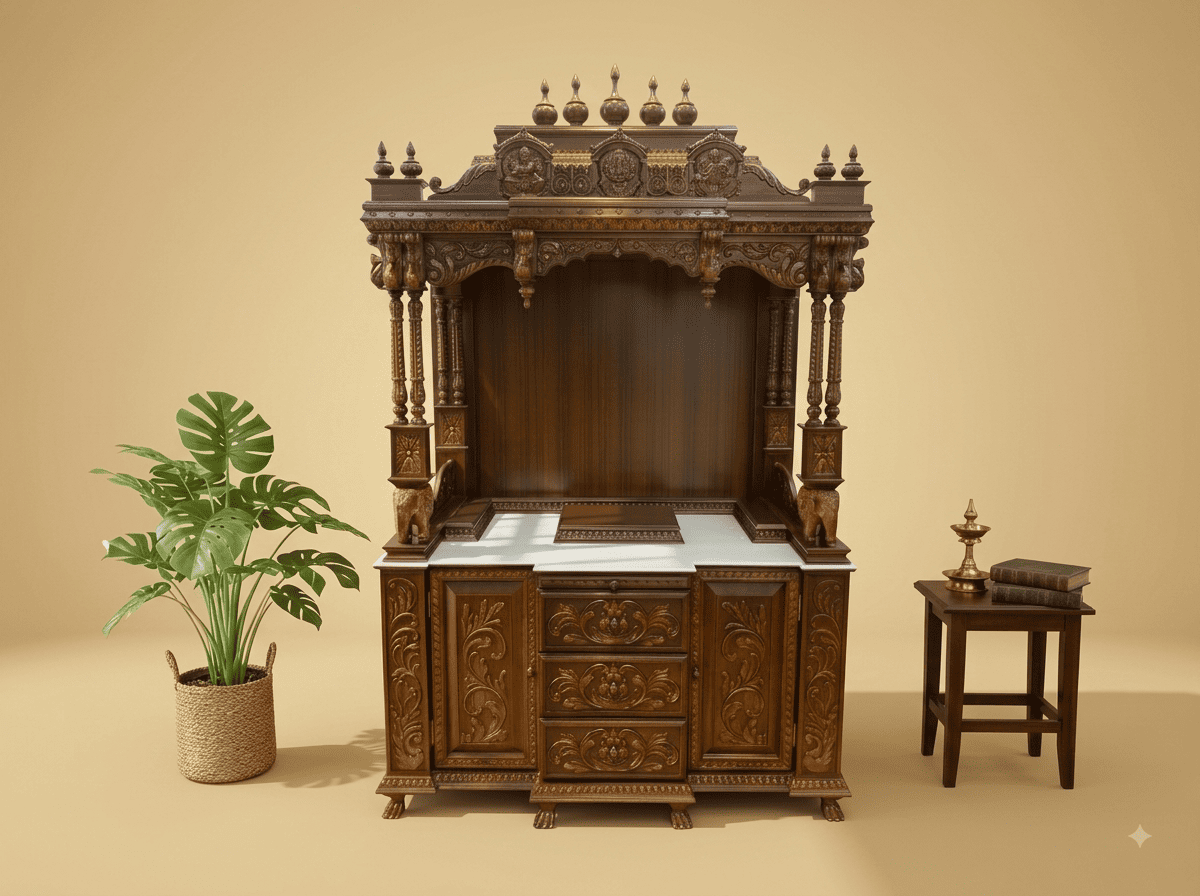
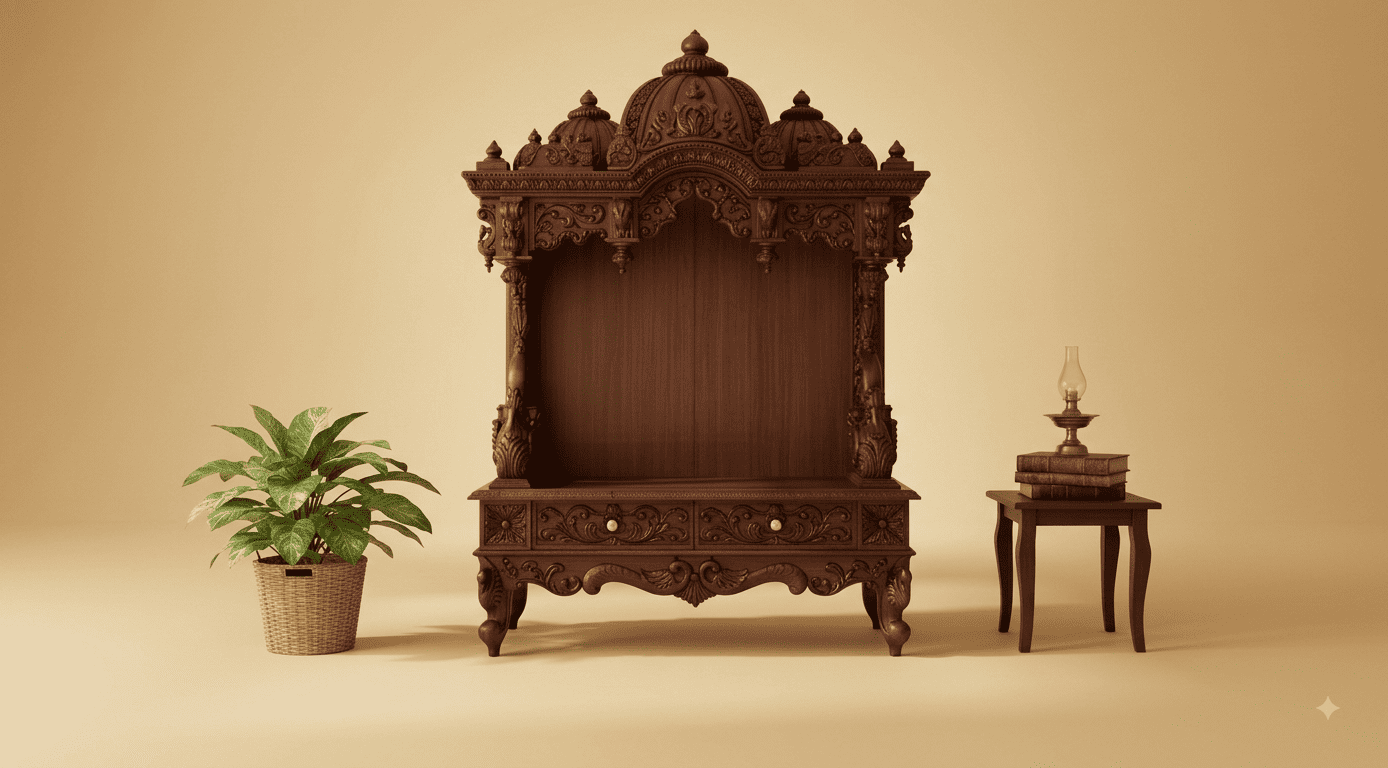
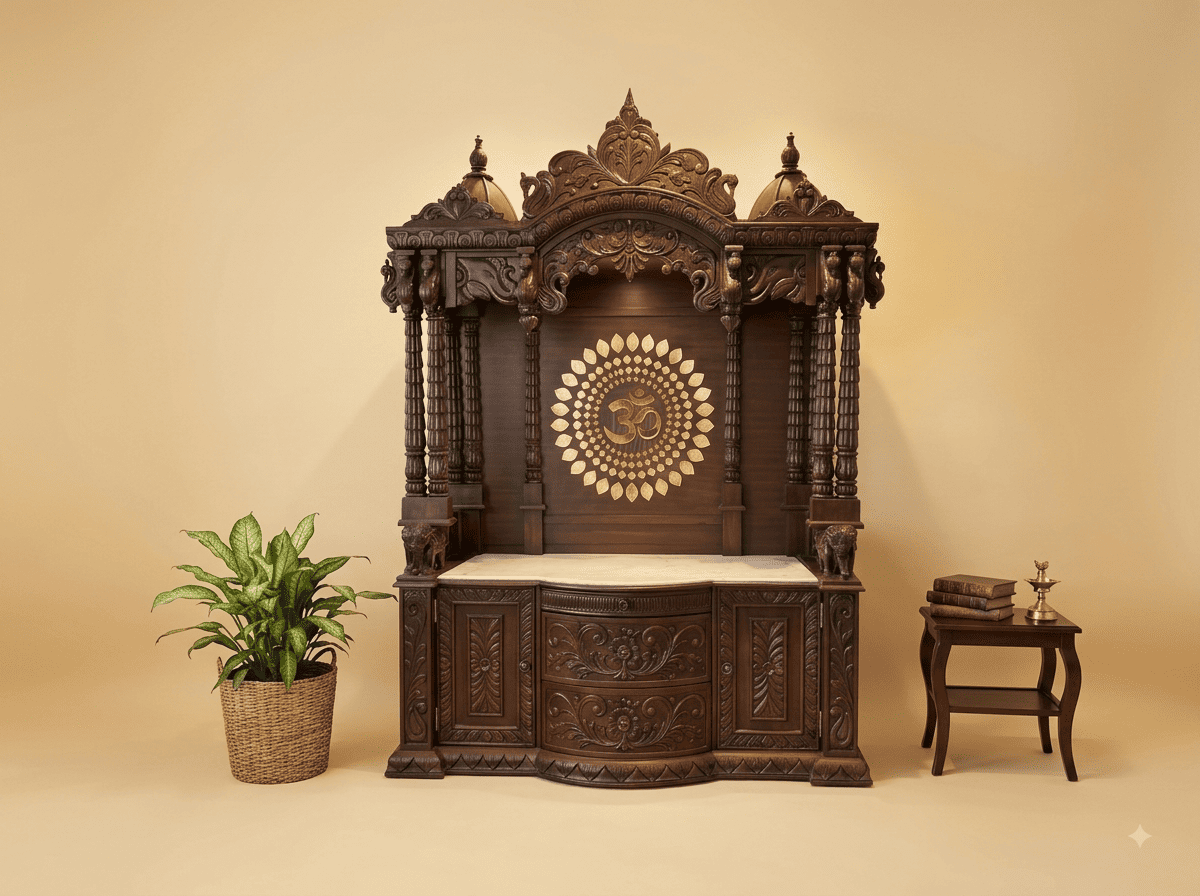
The jaali panels at the sides are a working detail as much as an ornamental one. Lattice cut through solid teak lets air pass through the mandir, which keeps the timber above three sets of lamps clean and fresh year after year. Cutting jaali by hand is slow, since each opening is worked individually and the bars between them are narrow, and it is one of the details that tells you the piece was made rather than assembled. Every element here is carved and polished by hand by master Indian artisans, and the photographs show the actual mandir.
 Ask Price On WhatsApp