Carving With a Light Hand
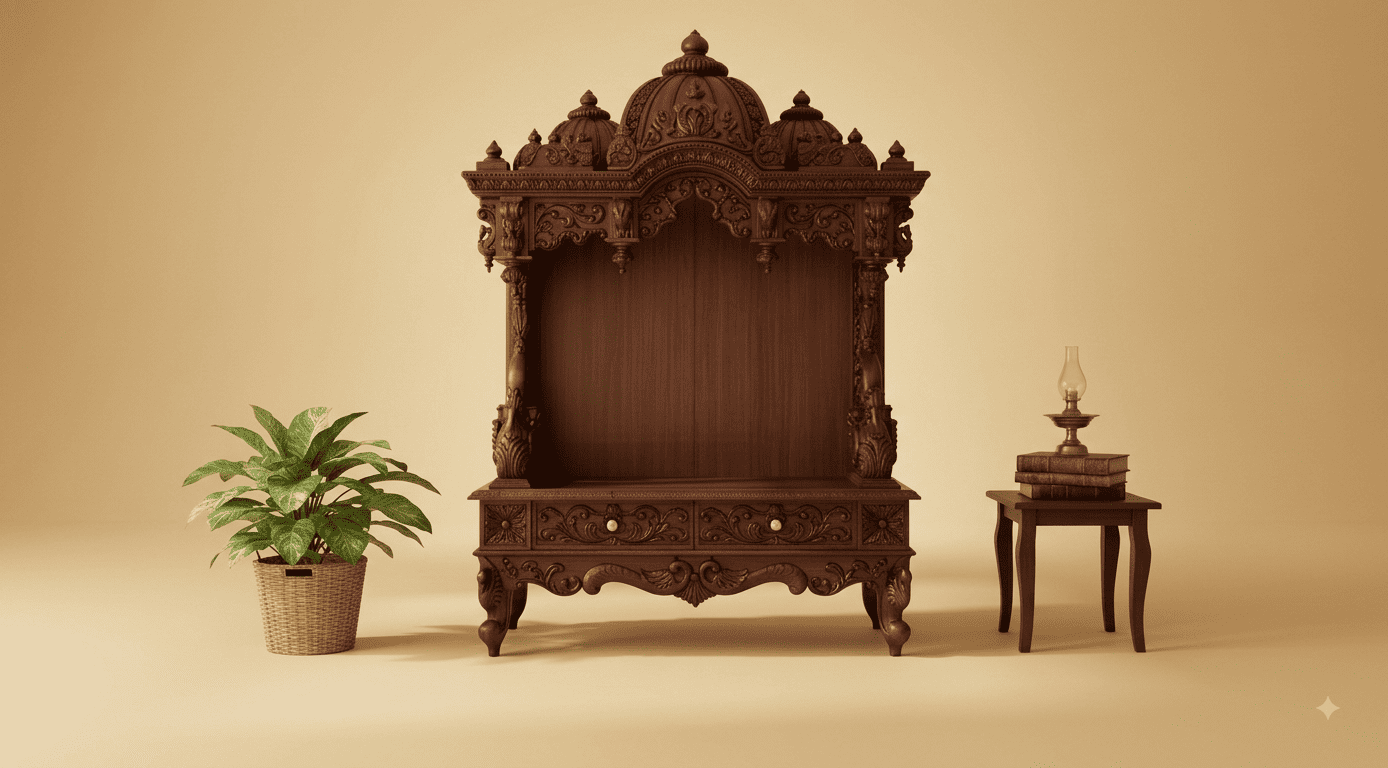
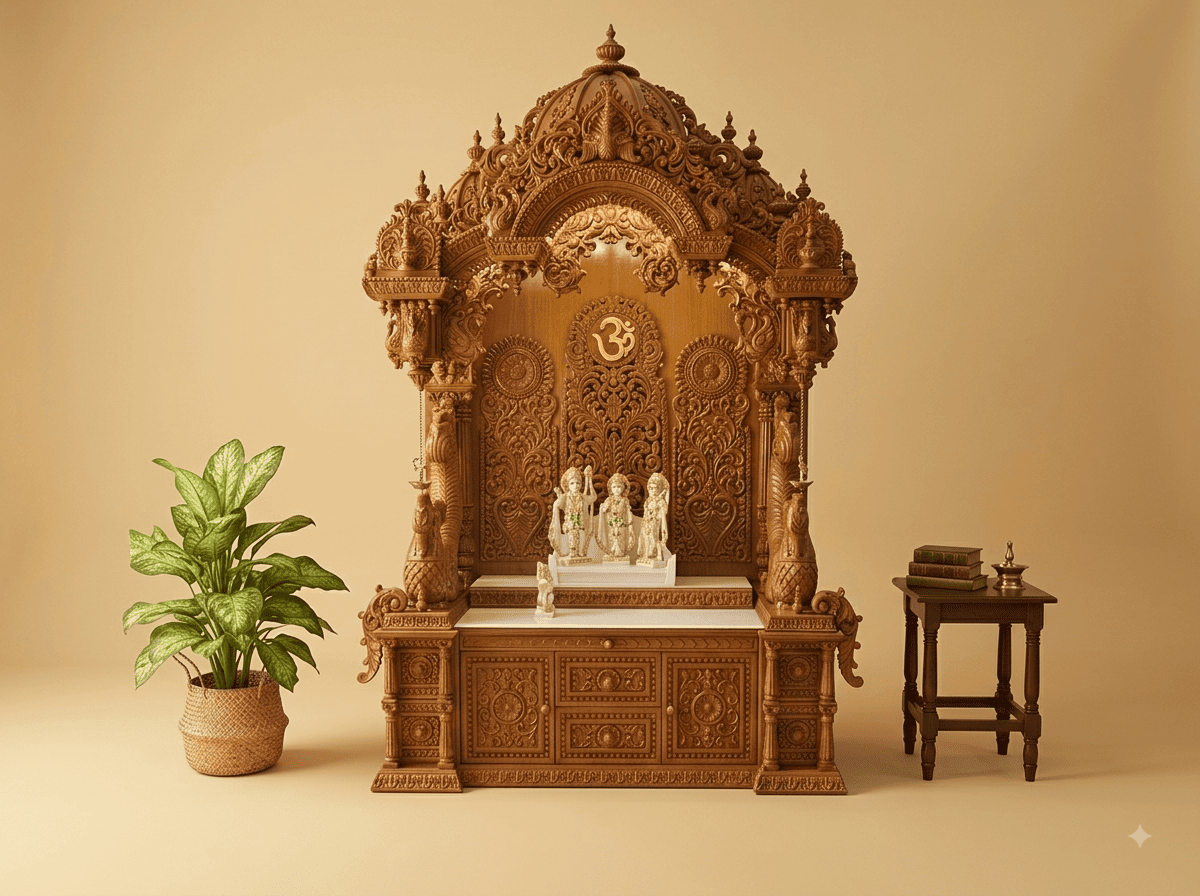
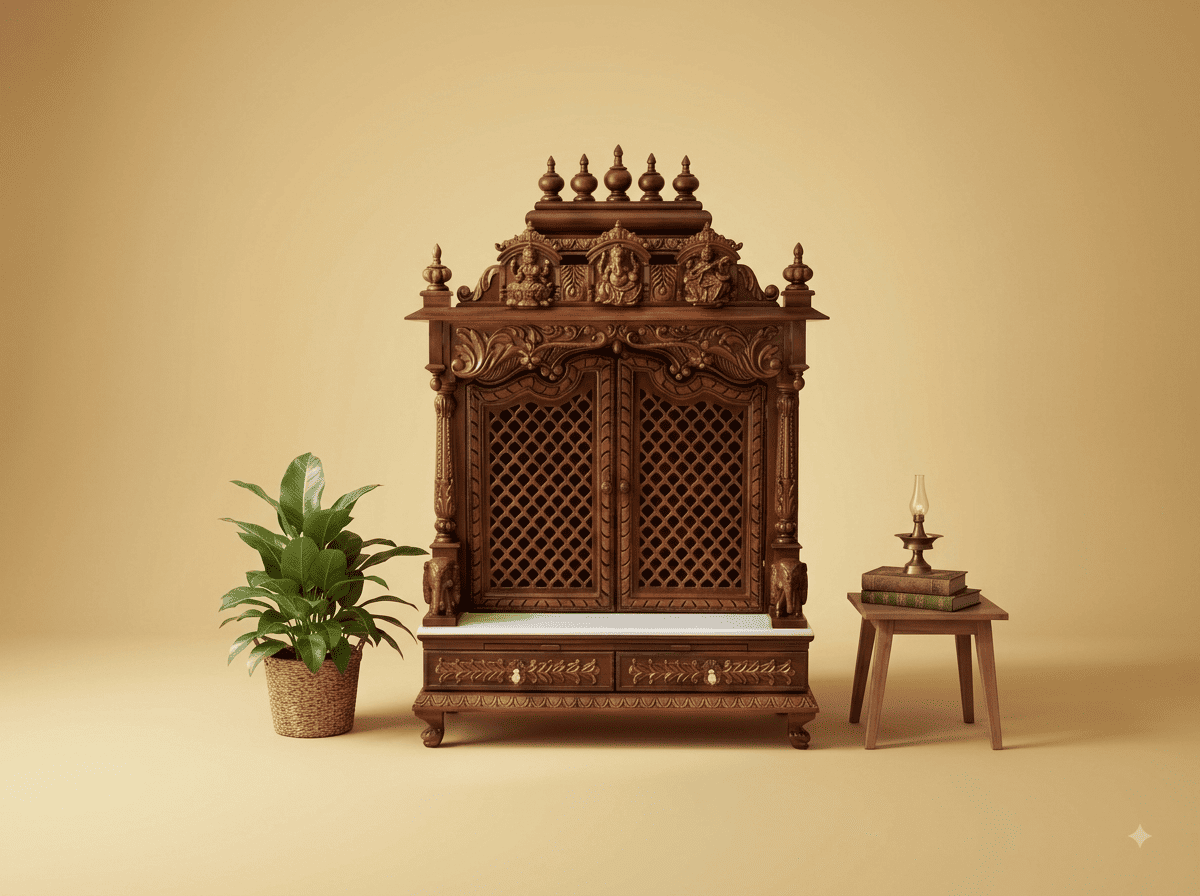
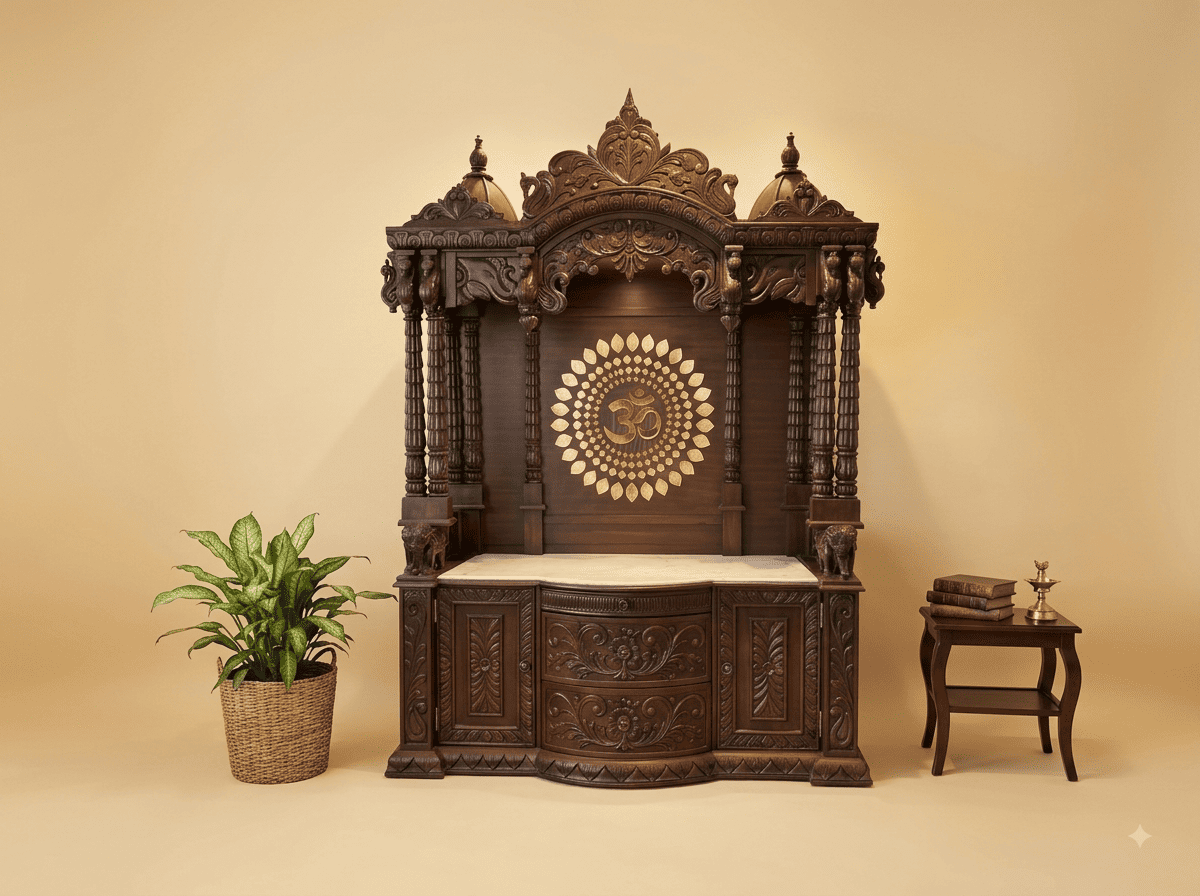
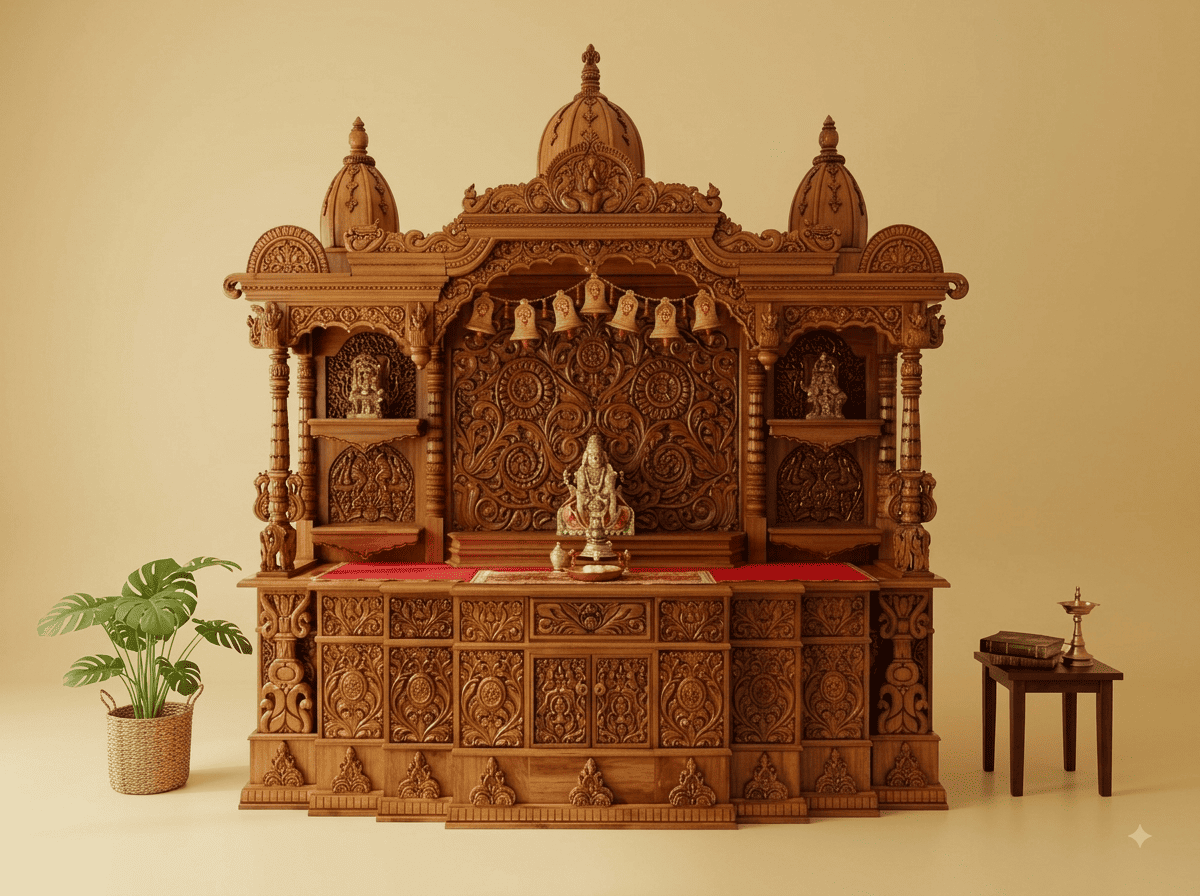
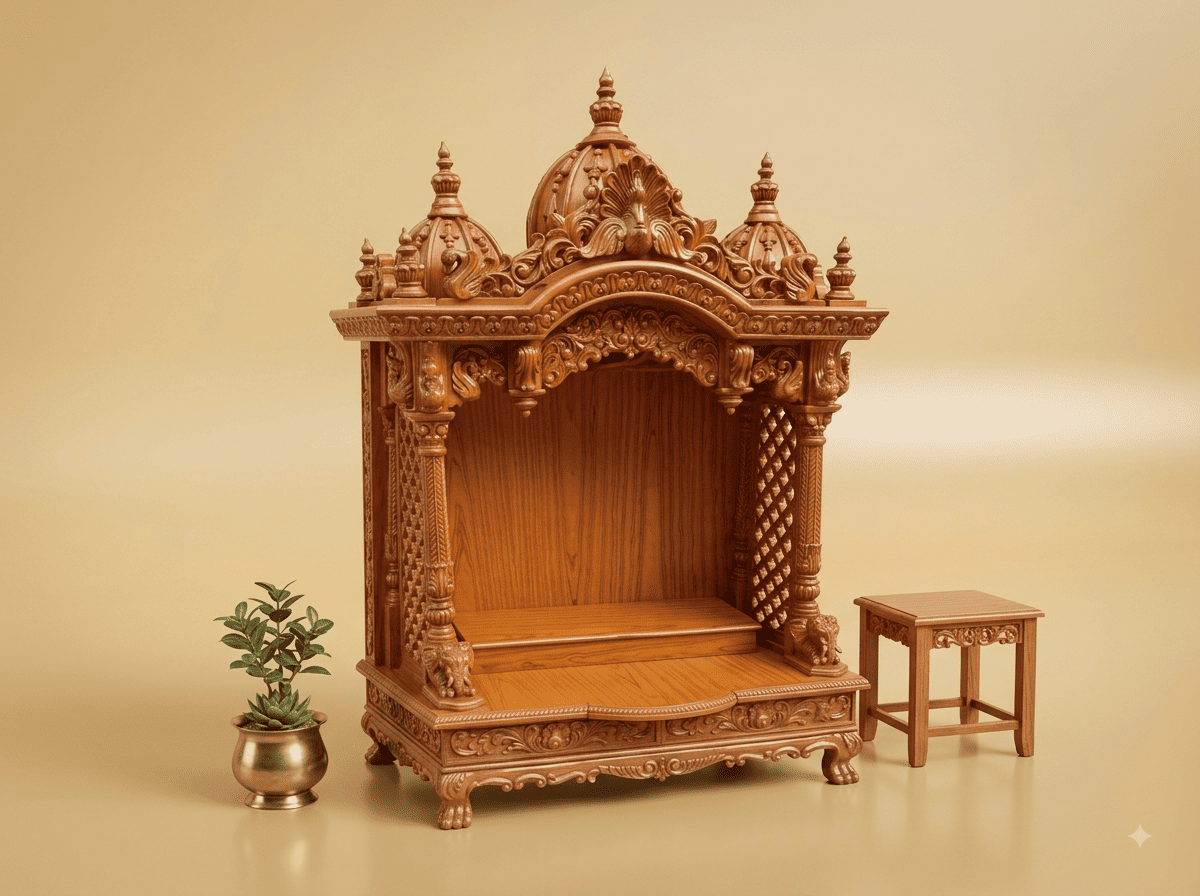
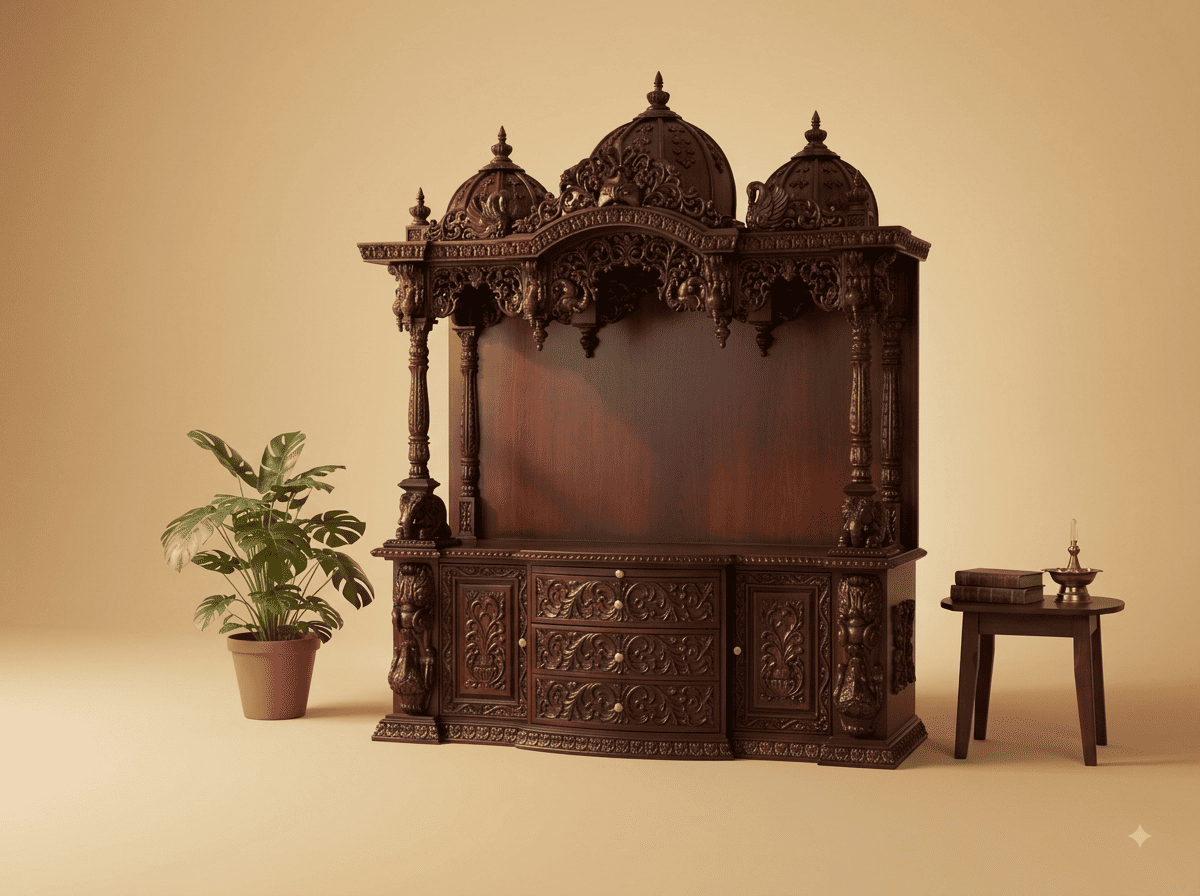
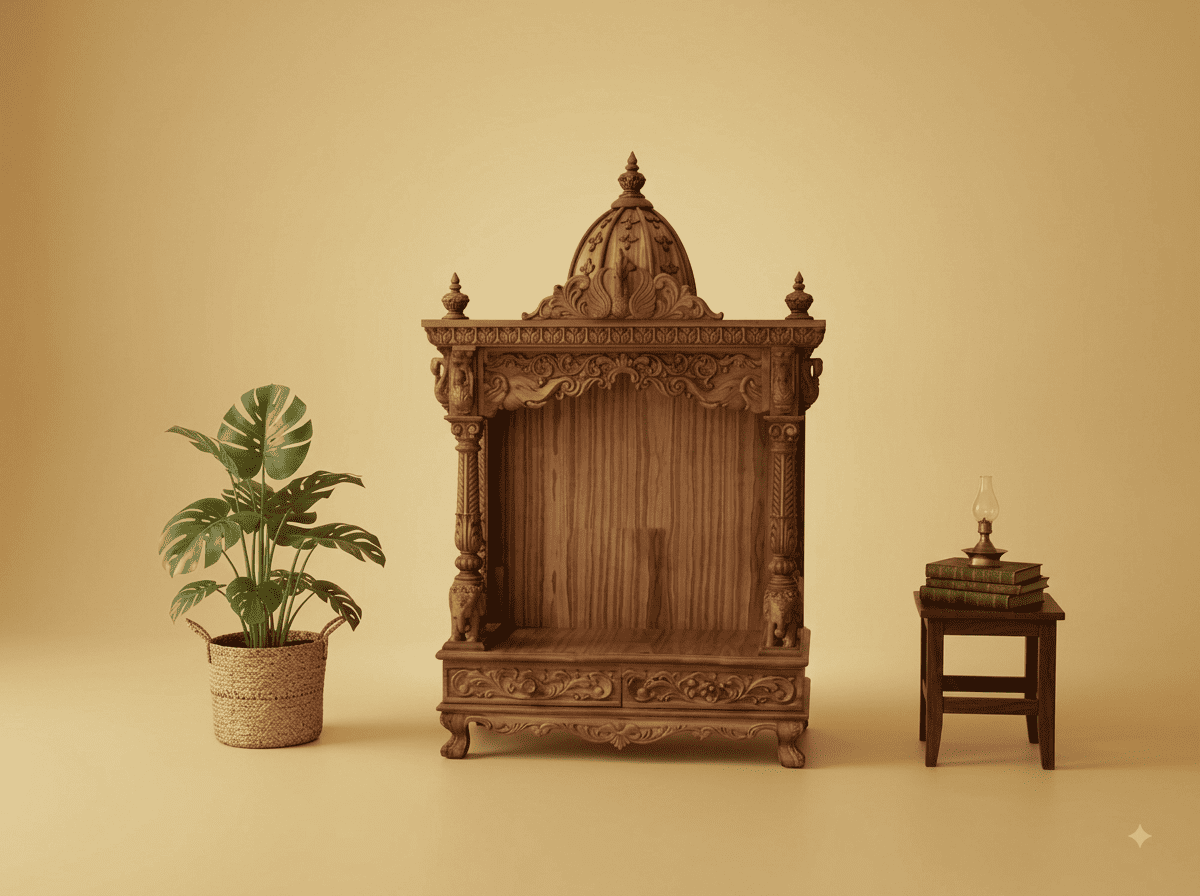
Not every mandir needs to fill a wall. This one is built for the quieter place in a home: a bedroom, a study corner, the end of a hallway, or a compact puja space where the piece is seen close up rather than from across a room. At that distance a lighter hand reads better, so the carving is gathered where it does the most work and the rest is left calm.
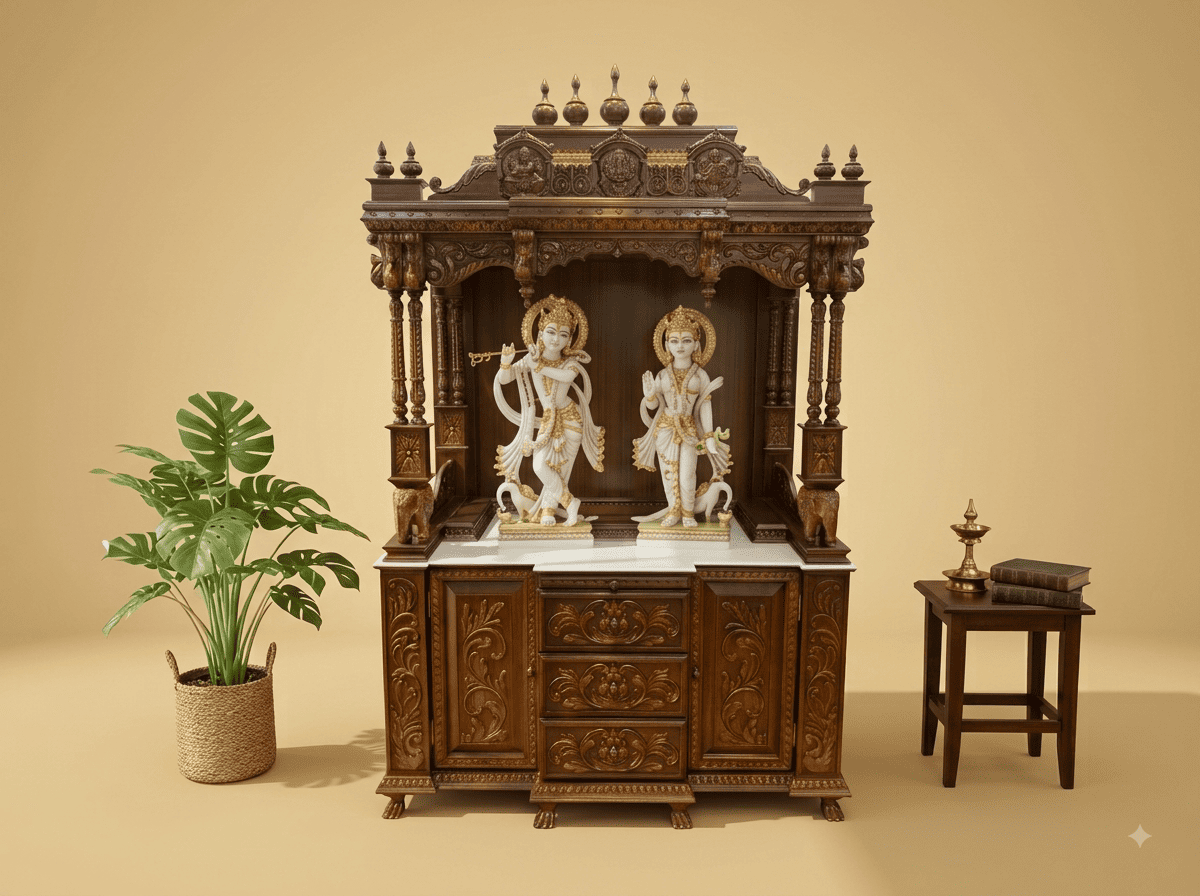
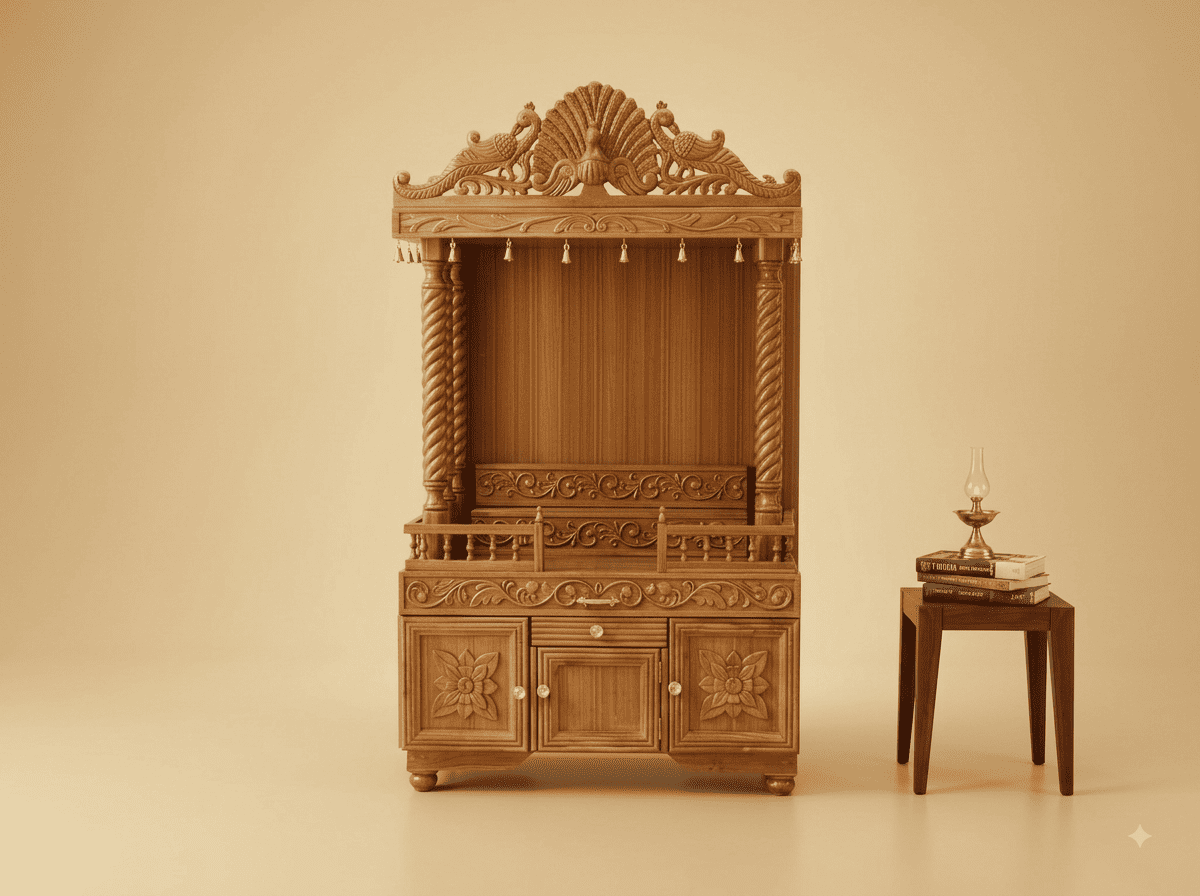
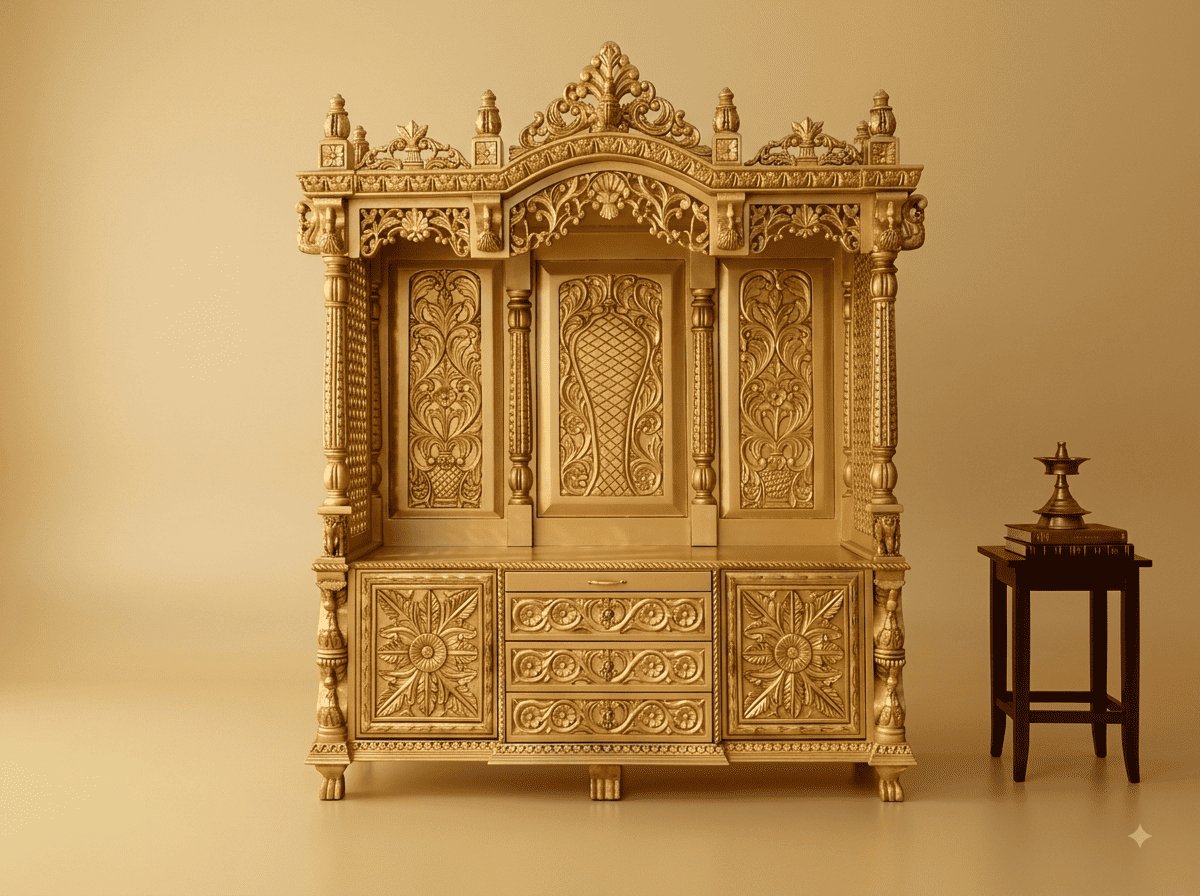
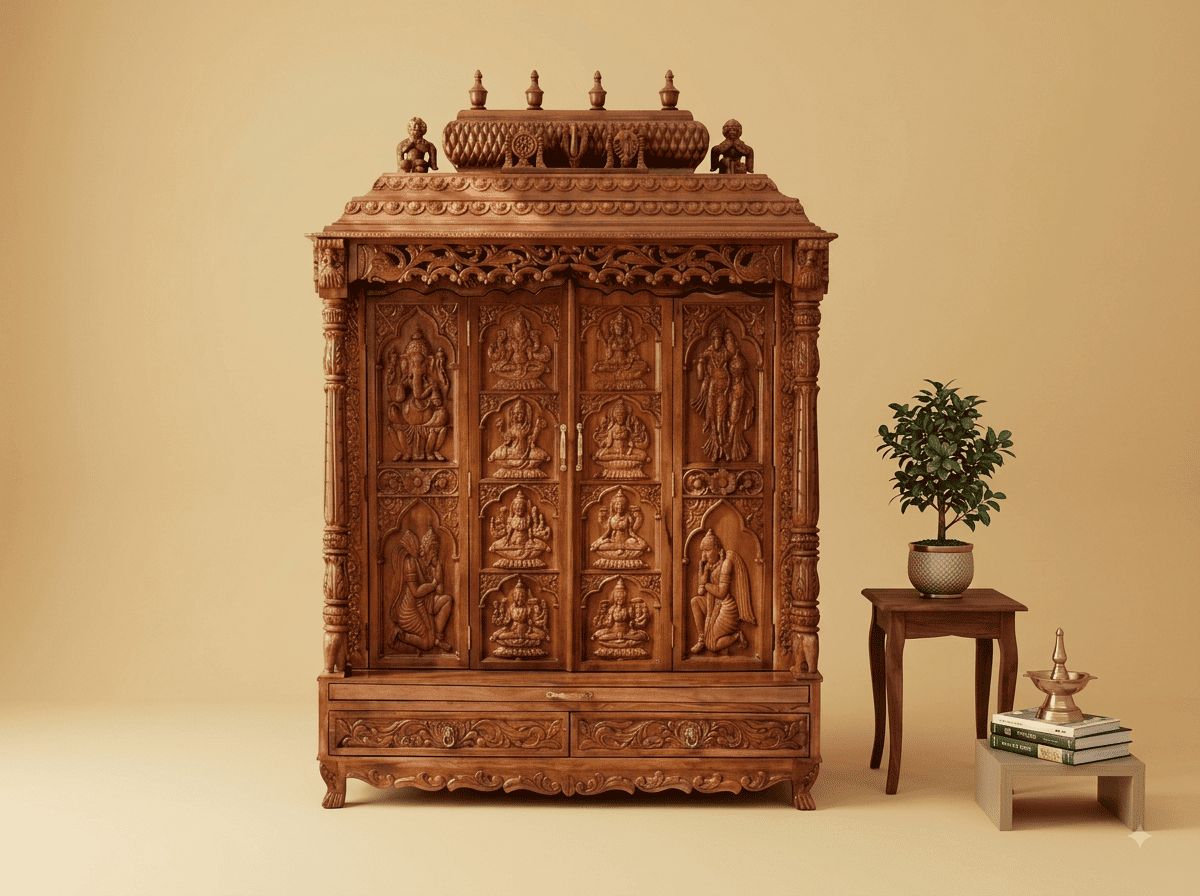
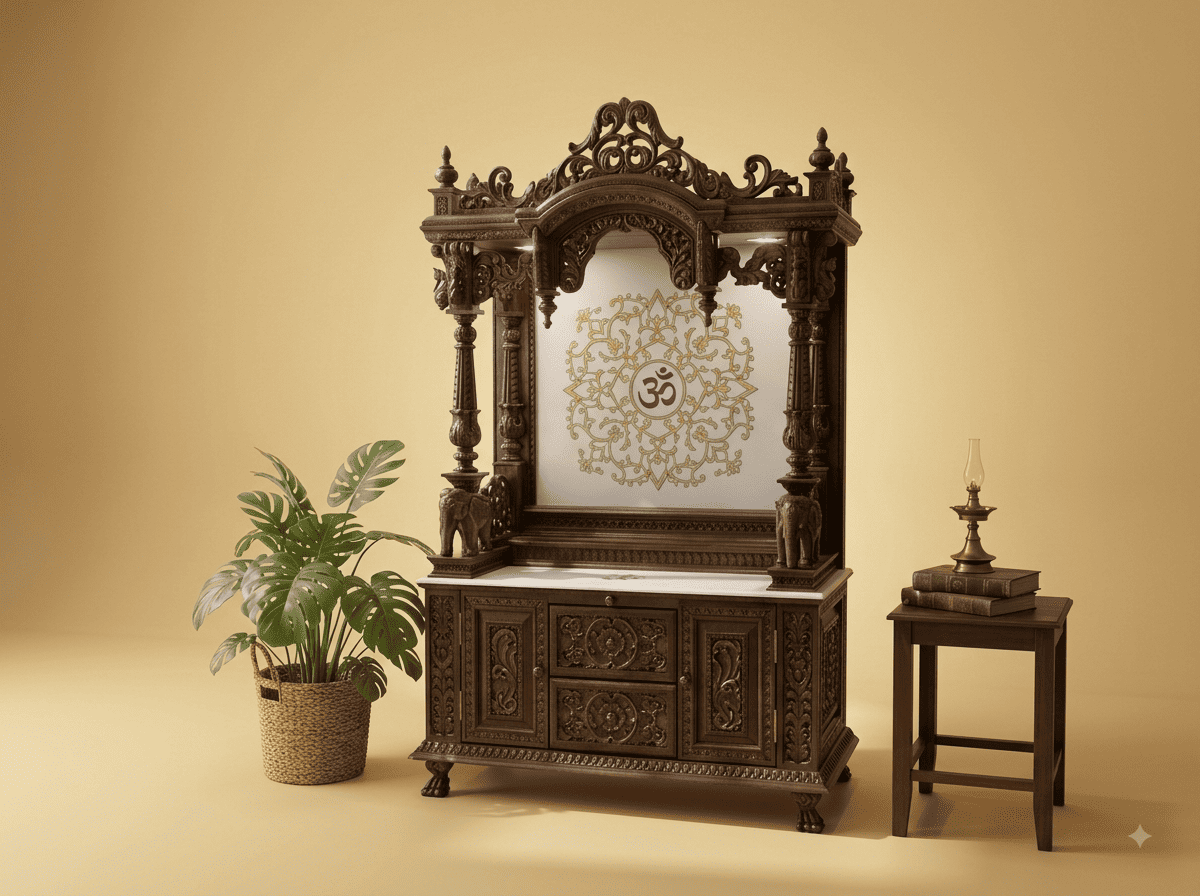
It sits in the ribbed dome and its finials, in the deep foliate pelmet across the opening, and in the carved apron and drawer fronts at the base. Between those two bands the mandir is quiet: rope-twist columns, a clear platform, and a back of book-matched teak with the grain running vertically behind the deities. Choosing boards for that back panel takes care, since a plain surface shows exactly the quality of the timber and nothing else, and it is the part of this mandir people run a hand over. Everything is carved and polished by hand by master Indian artisans, and the photographs on this page show the actual piece.
 Ask Price On WhatsApp