A Door That Closes Without Sealing
Closing a mandir gives you a great deal. It keeps the dust of a shared room off the deities, it lets the shrine be shut when the household is away, and it suits families who close the mandir at night as a matter of practice. What makes this design work so well is that it does all of that while keeping air moving: the carcass is vented at the back and above the canopy, so there is a continuous path for air even with the doors shut, and the interior stays fresh and clean year after year.
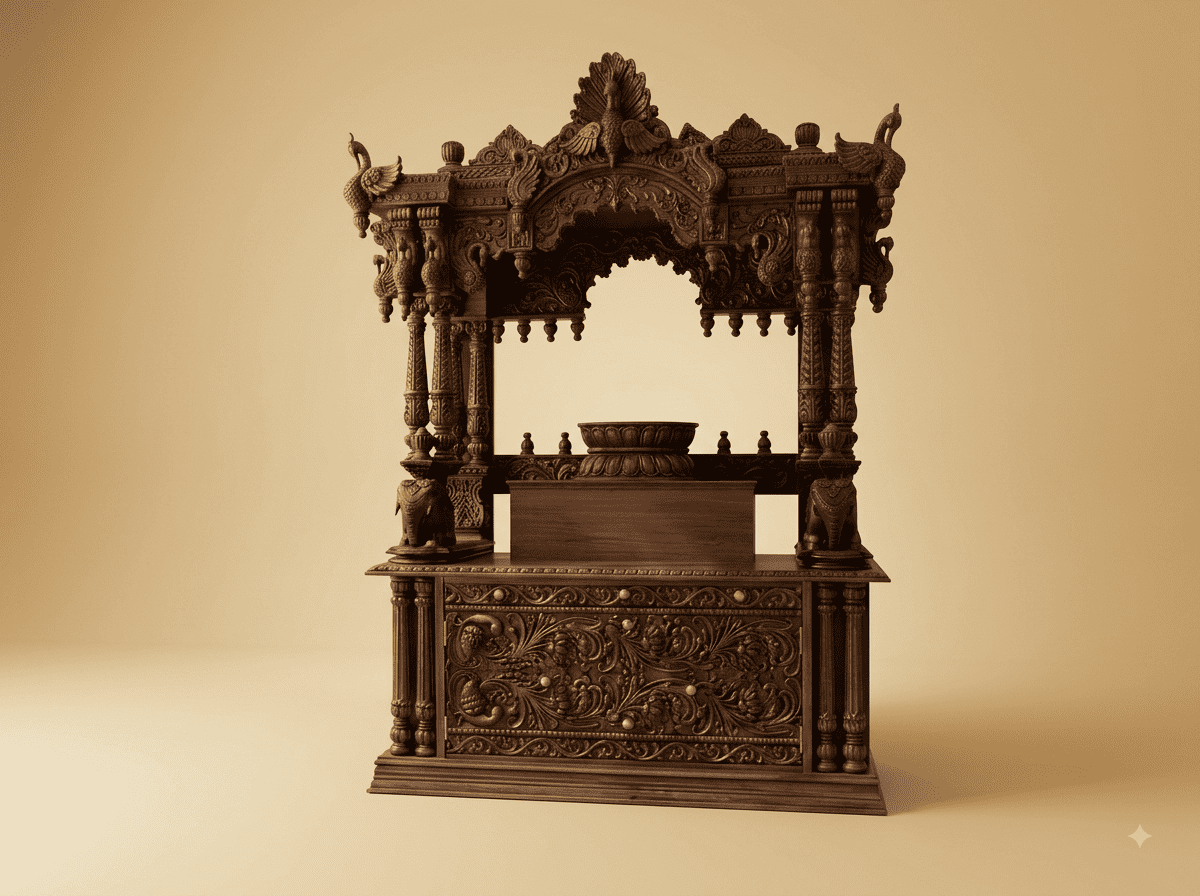
The inlay on the doors is worked in a pale material set into routed recesses in the teak rather than painted on the surface, so the symbols keep their crisp edges for the life of the piece. Each recess is cut individually, each piece fitted, and the whole panel then levelled and polished flush, which is why the inlay reads as part of the wood rather than as something applied to it. The small bells hanging down the door stiles catch the light as the doors move. Every element is carved, inlaid and polished by hand by master Indian artisans, and the photographs show the actual mandir.
 Ask Price On WhatsApp