A Sanctum With Shrines Around It
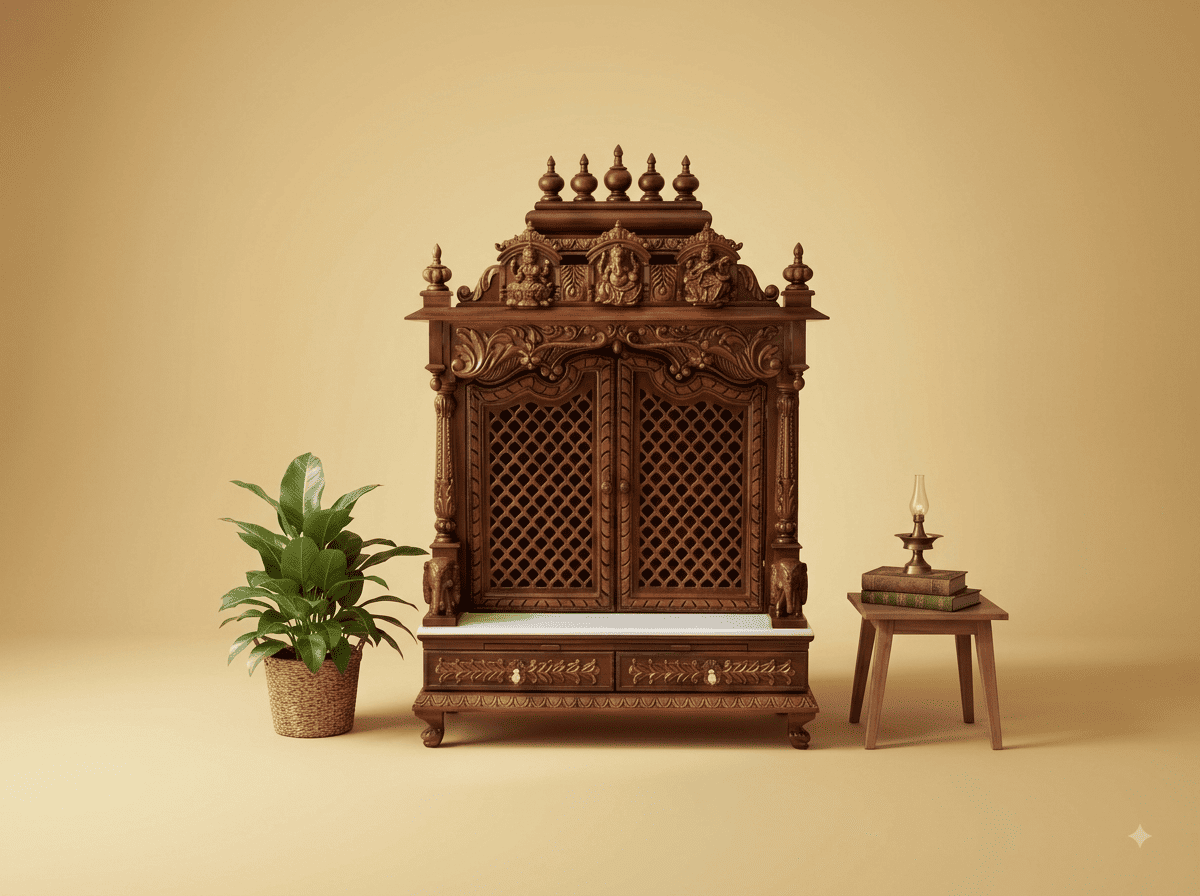
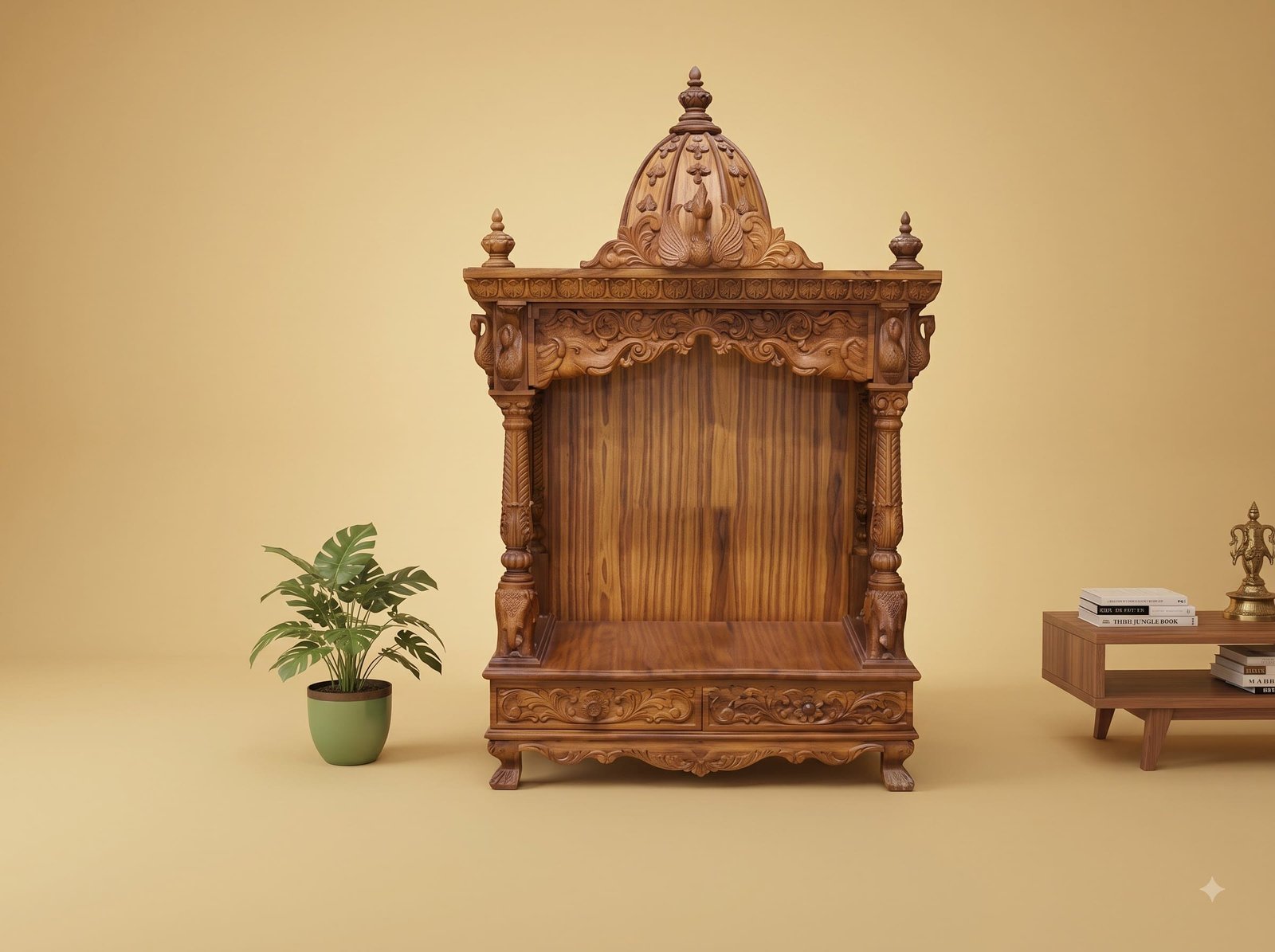
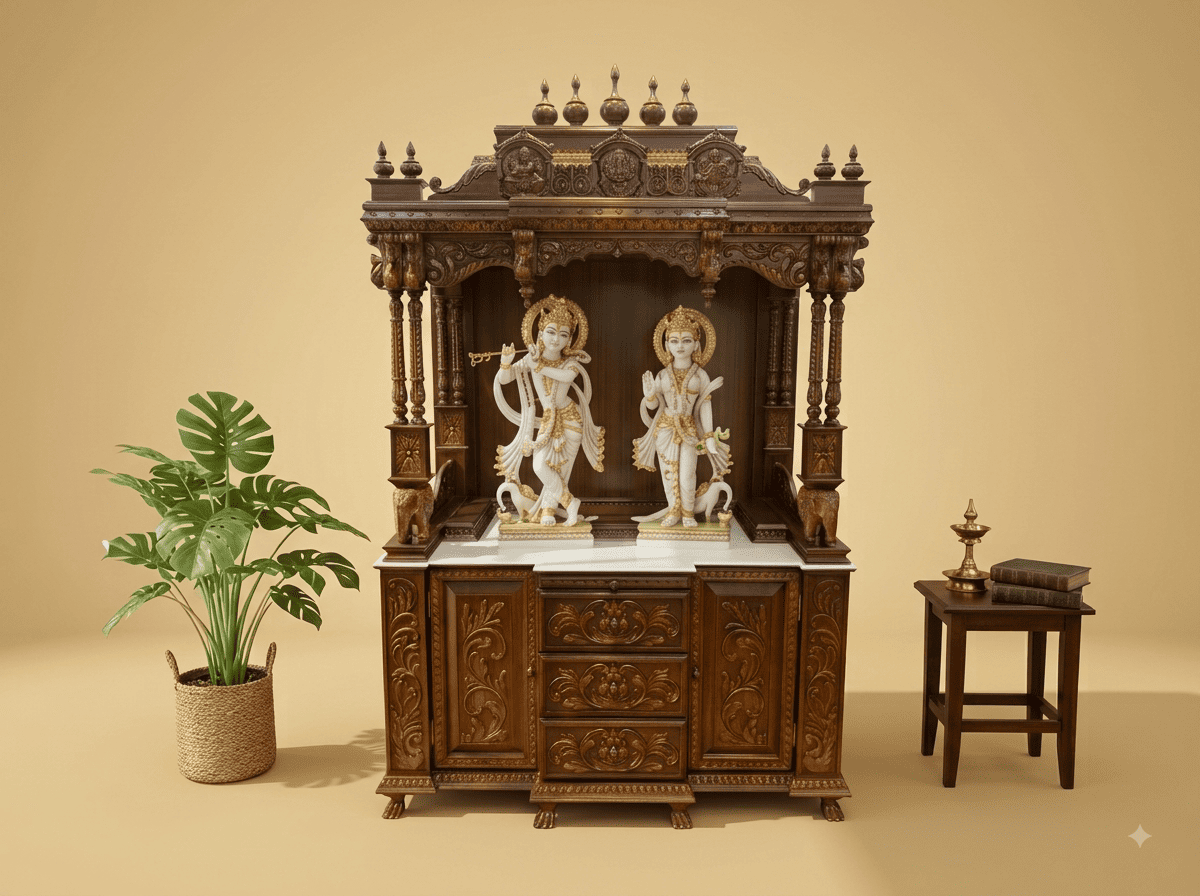
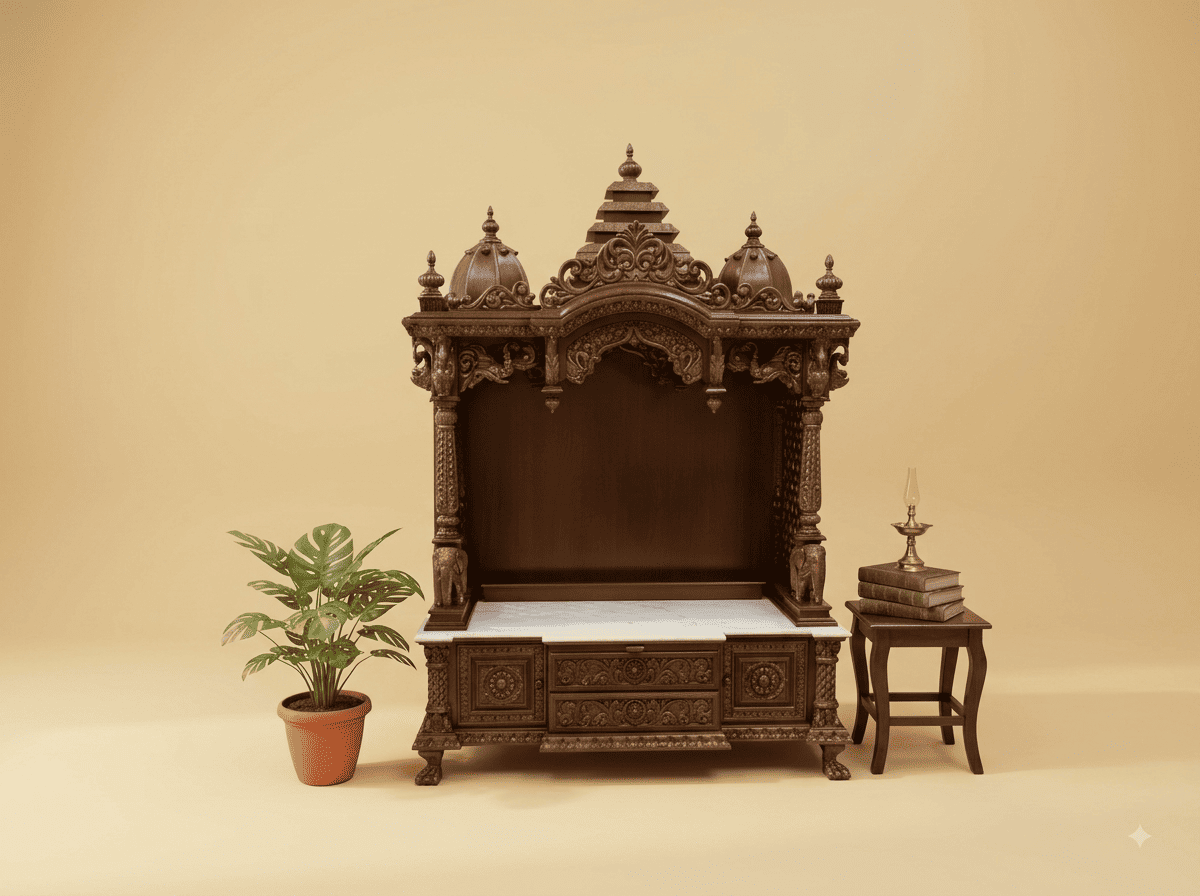
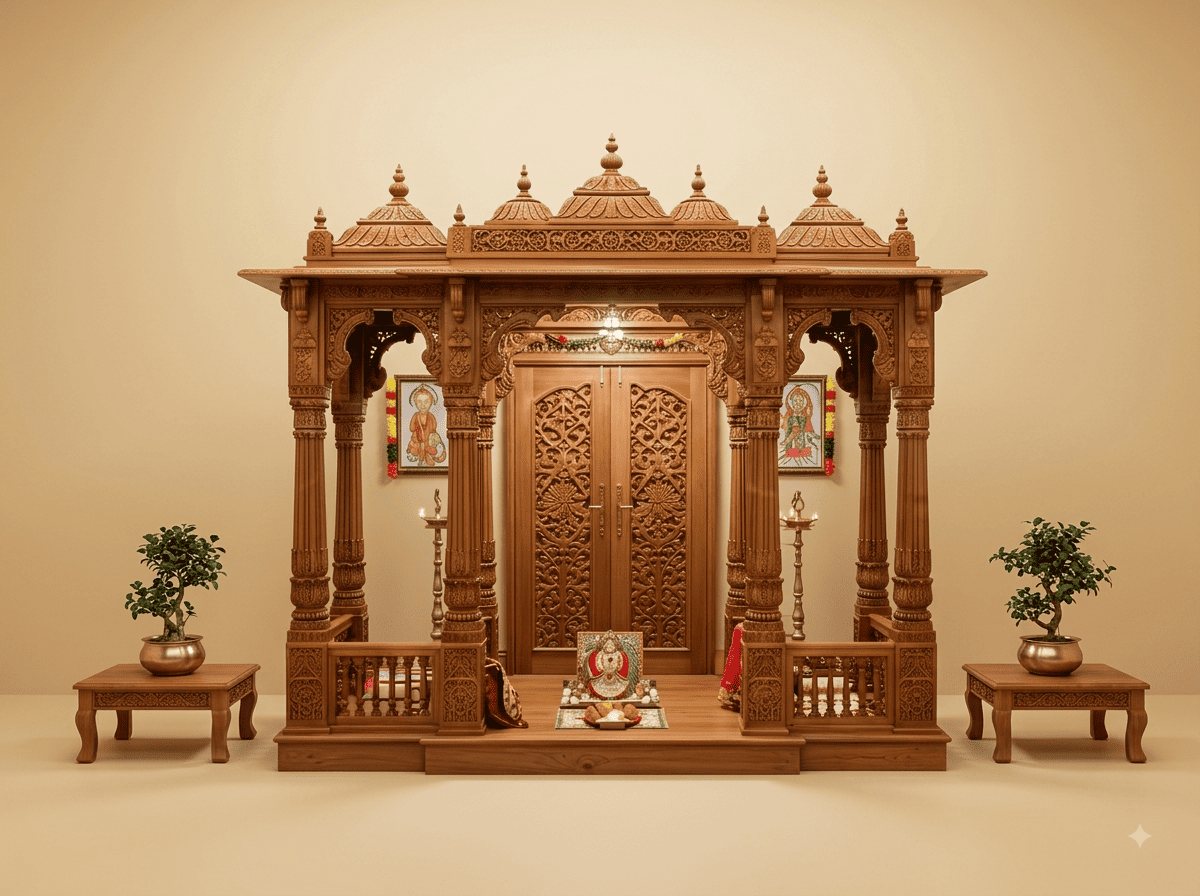
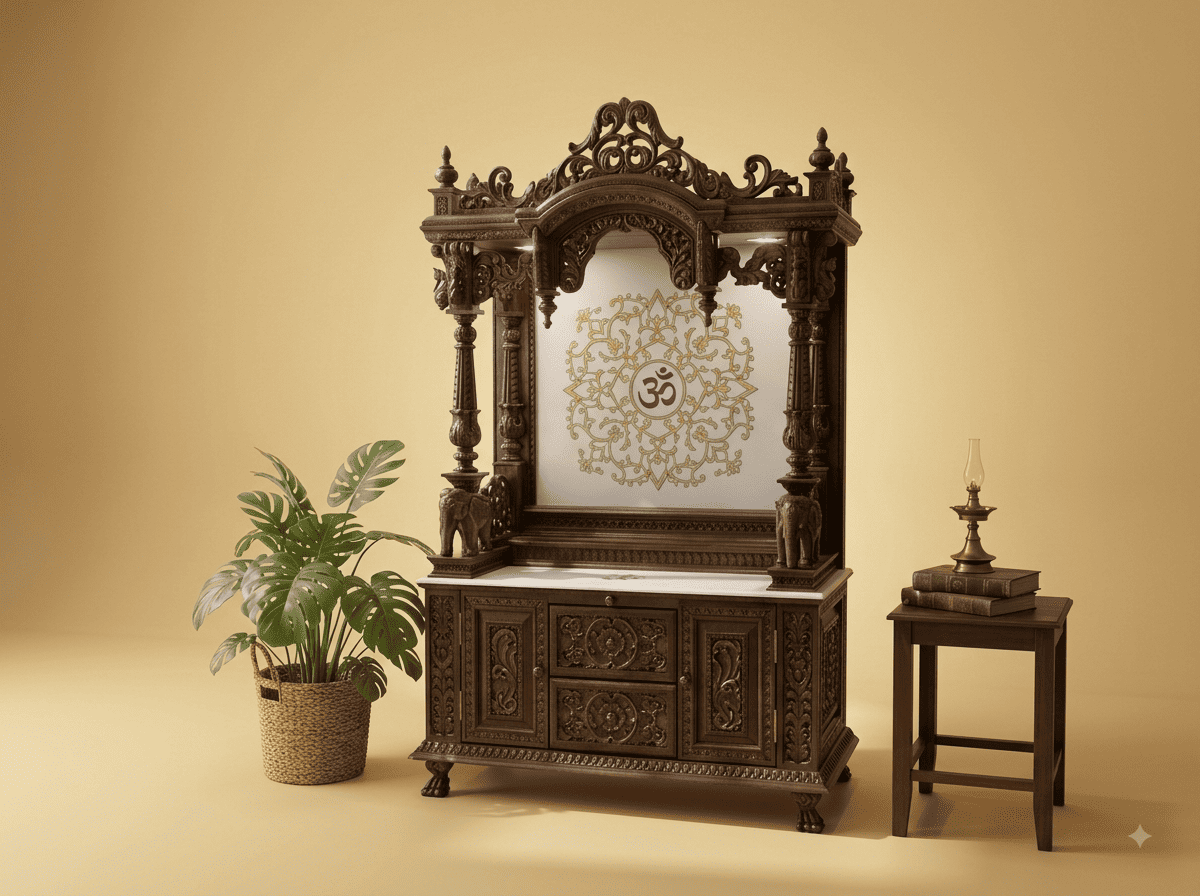
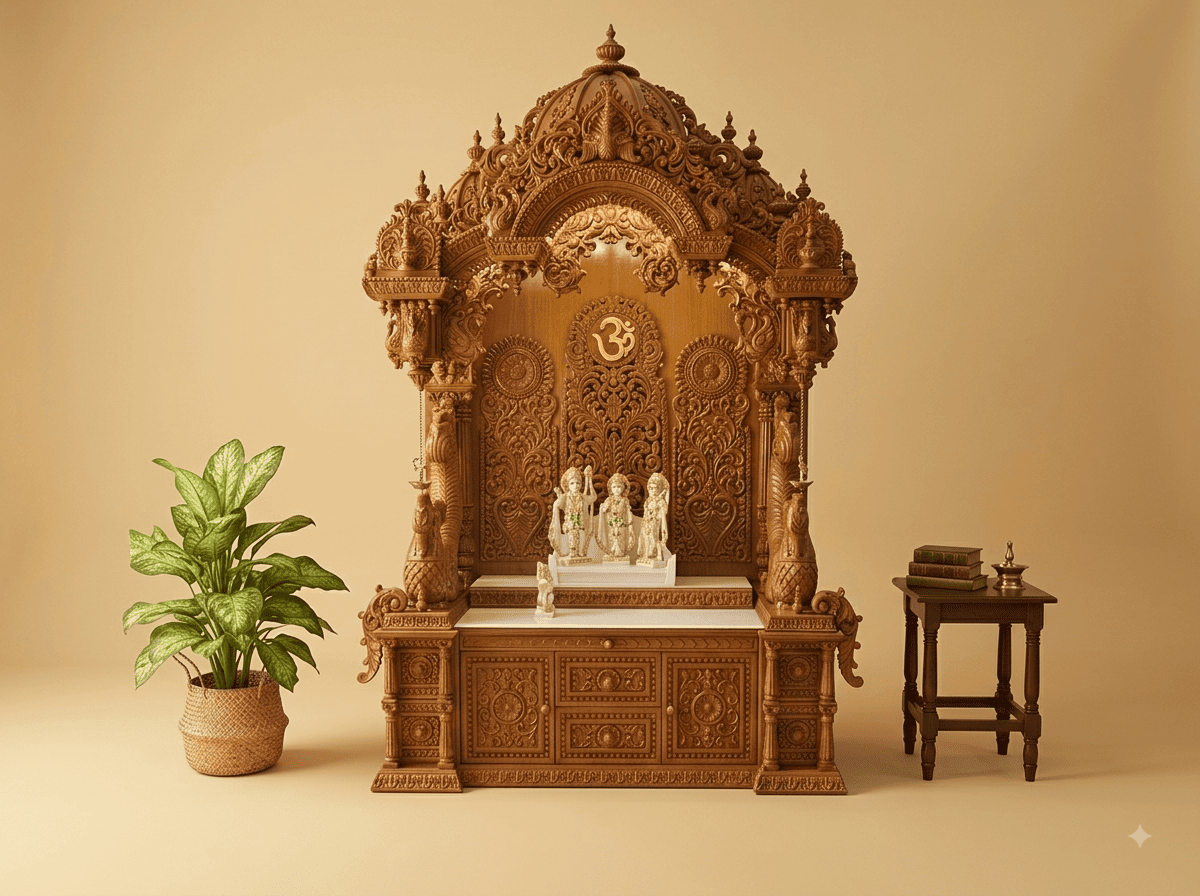
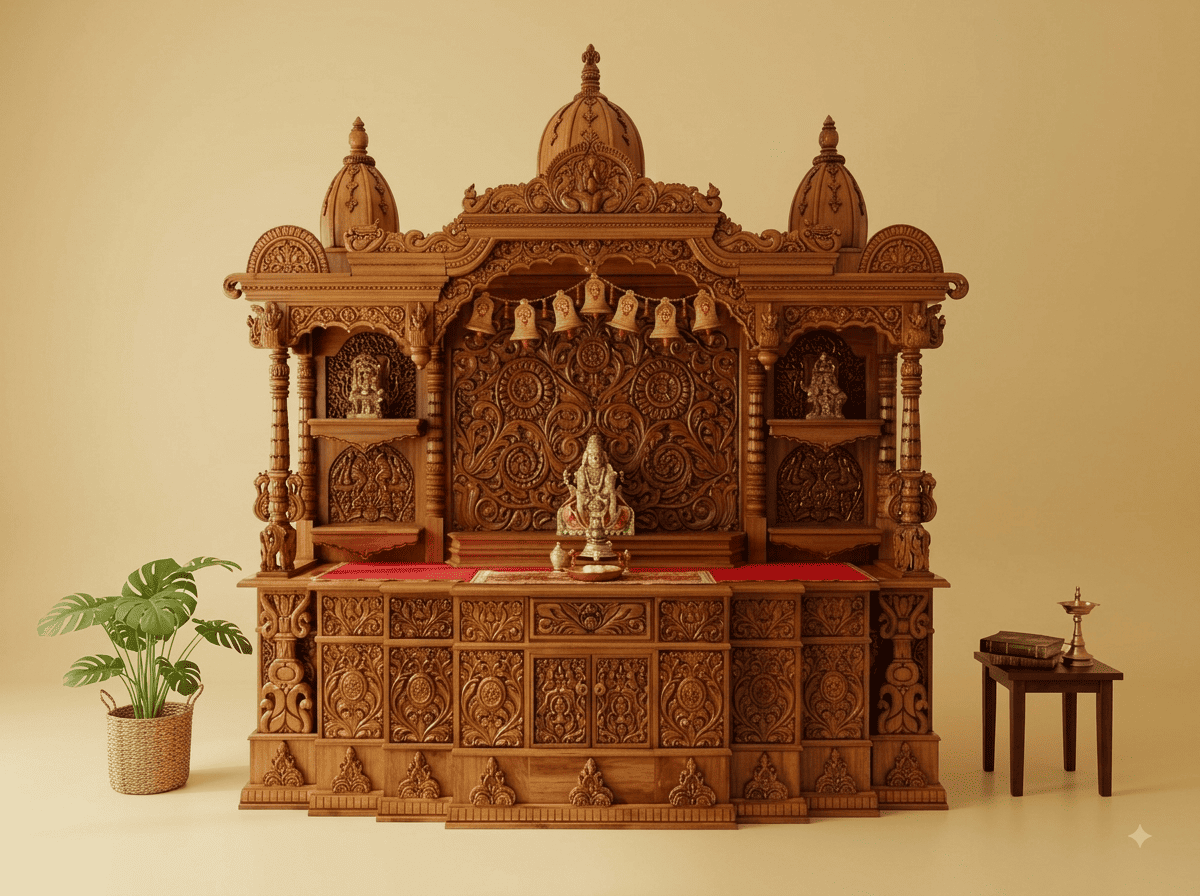
A temple is an arrangement of spaces in a clear order. The principal deity occupies the garbhagriha at the centre; subsidiary shrines sit around it, smaller and lower and to the sides. Anyone who has walked around a temple reads that hierarchy without being told, and this mandir brings it home. The centre bay is deeper and taller, set against a carved back panel that gives the principal deity a wall of its own, and on each side two alcoves at different heights give further deities their own defined places, supporting the centre rather than competing with it.
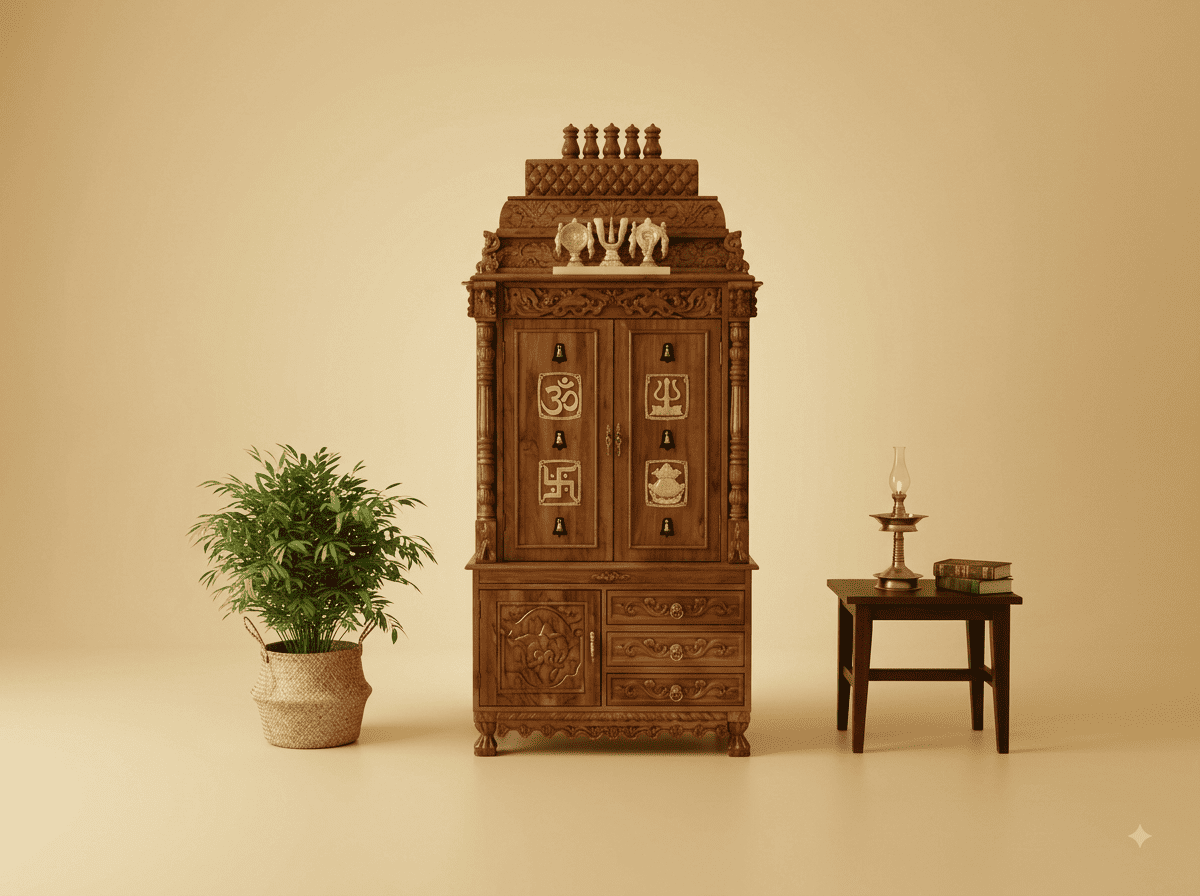
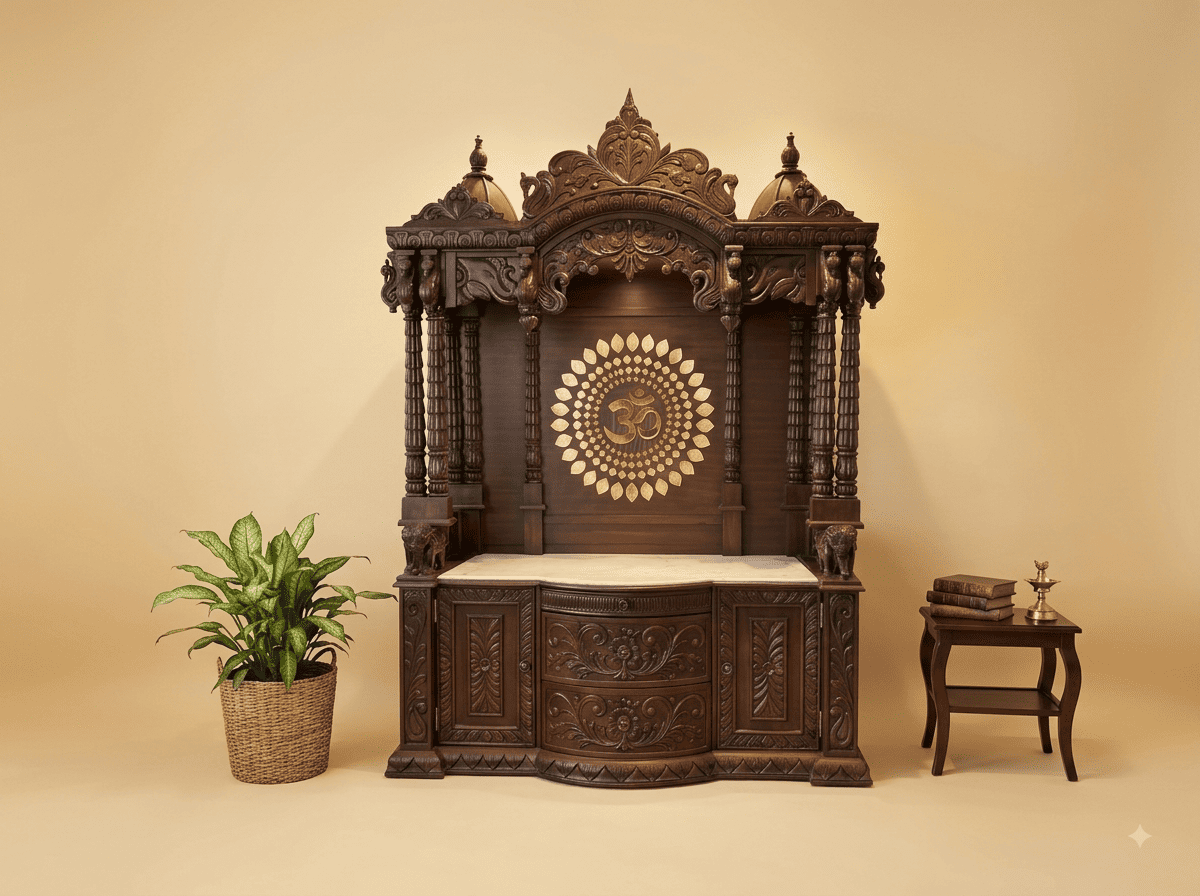
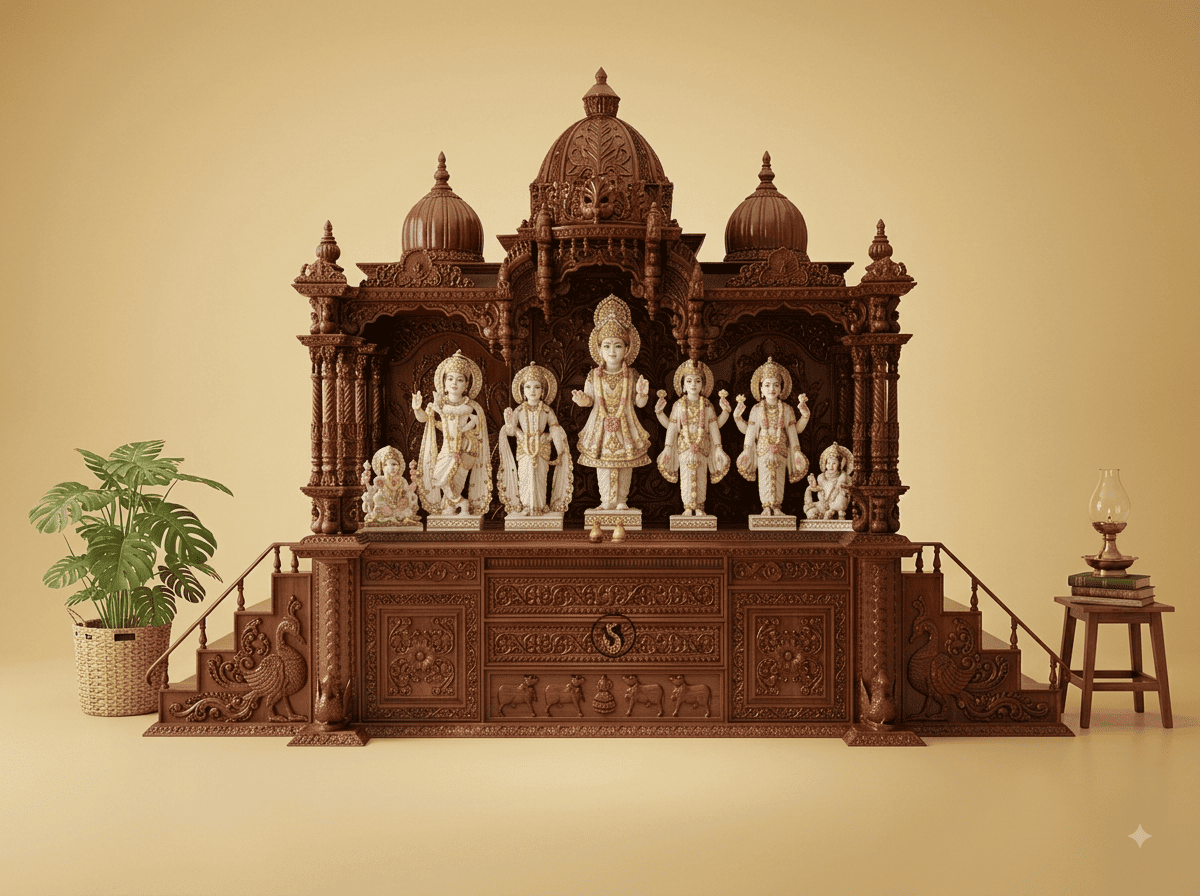
The base follows the same logic. Rather than a cabinet, it is a stepped plinth carved in bands and projecting forward in tiers, which is how a temple rises from the ground, and it is what makes this piece read as architecture from across the room. If you would like closed storage as well, drawers or cupboards can be built into the plinth and the carved banding laid out around them. Everything here is carved and polished by hand by master Indian artisans, and the photographs show the actual mandir.
 Ask Price On WhatsApp