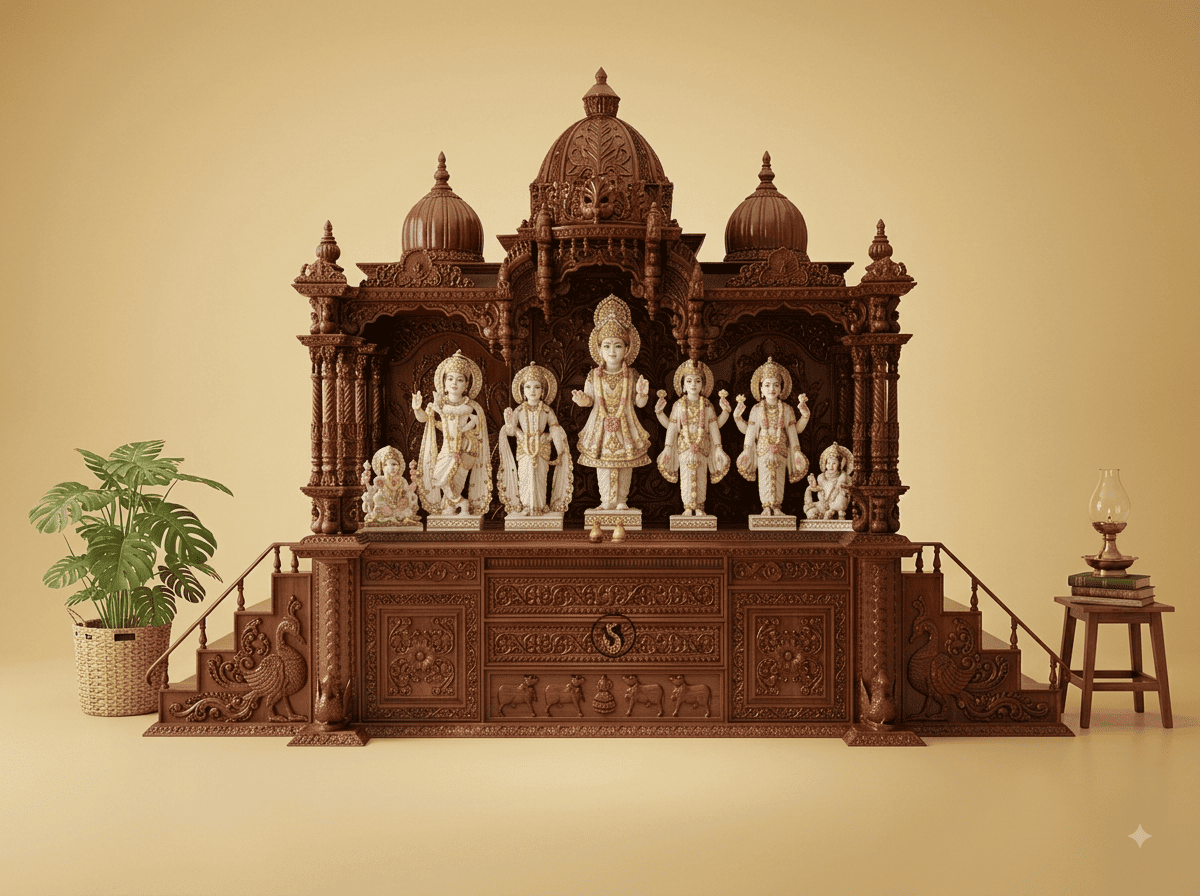
Why a Home Temple Should Have Steps
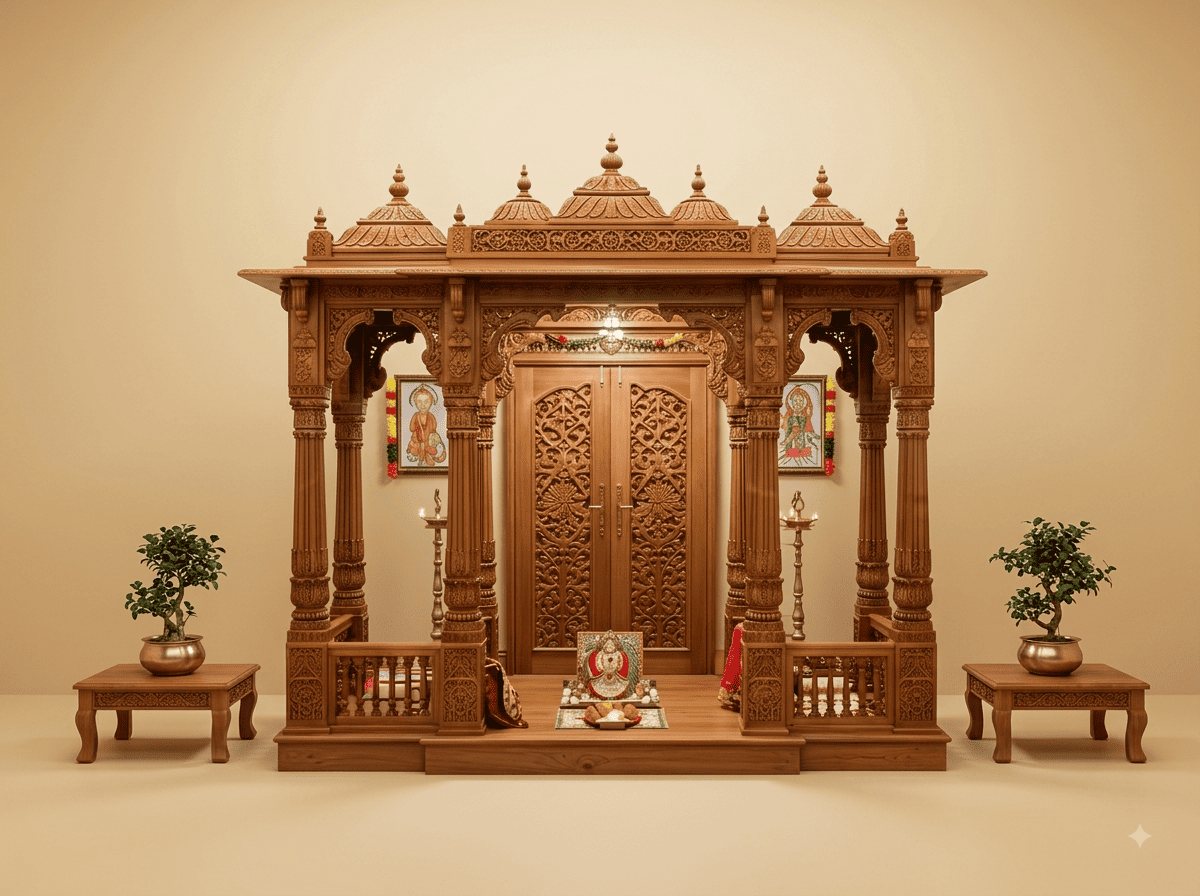
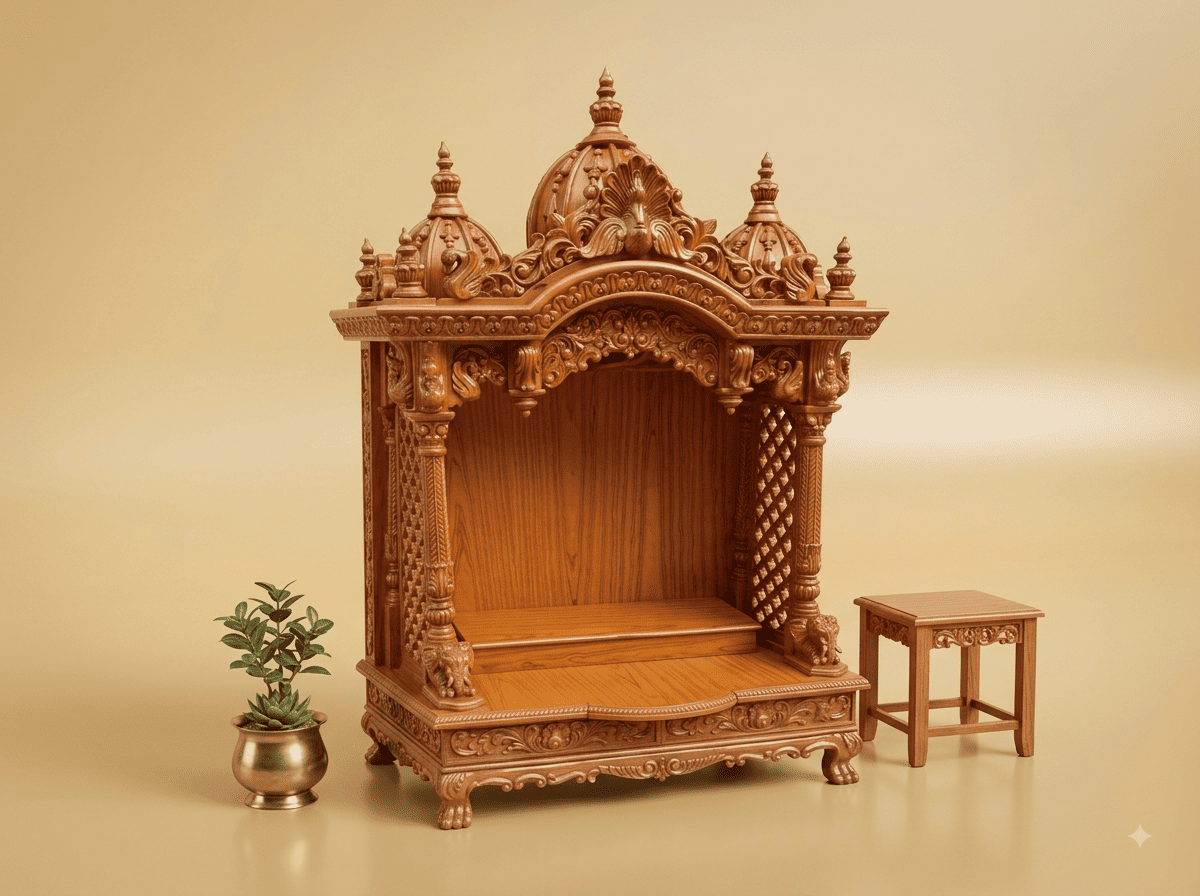
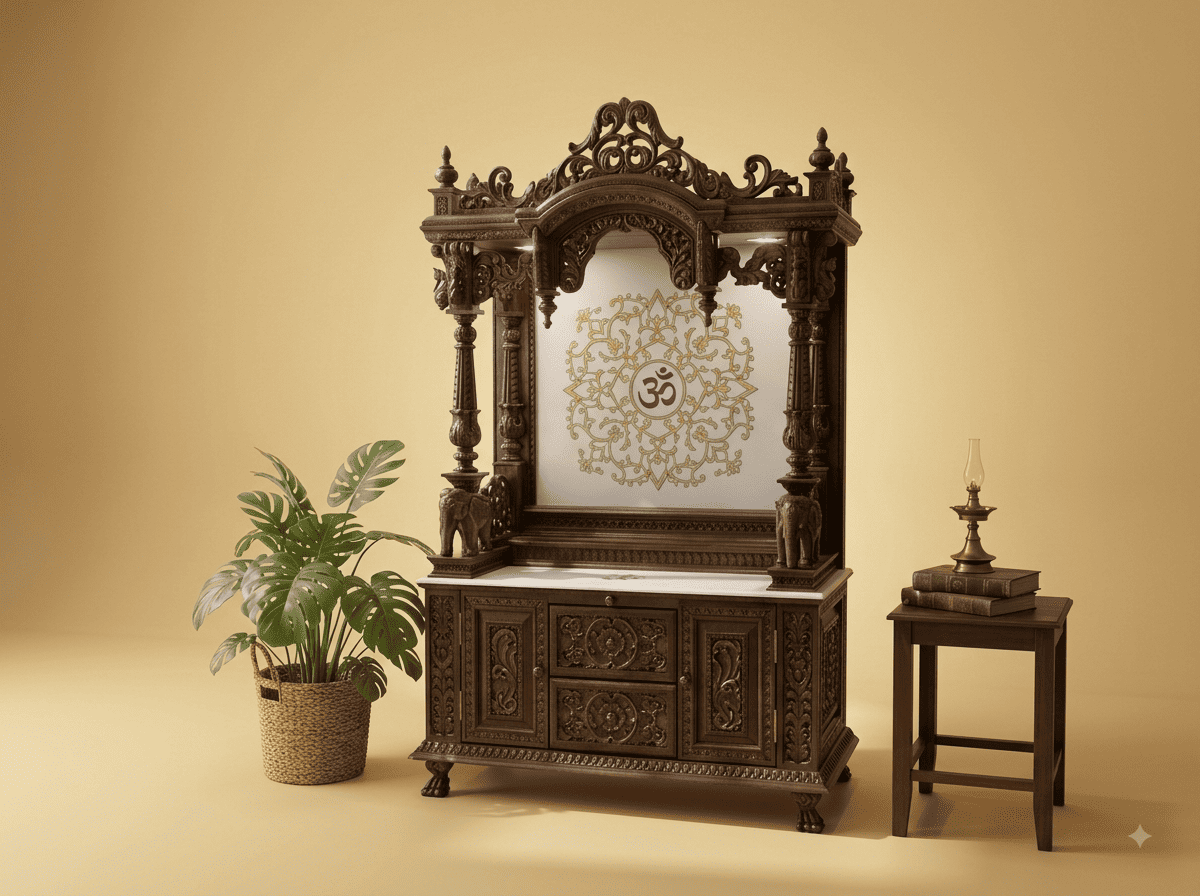
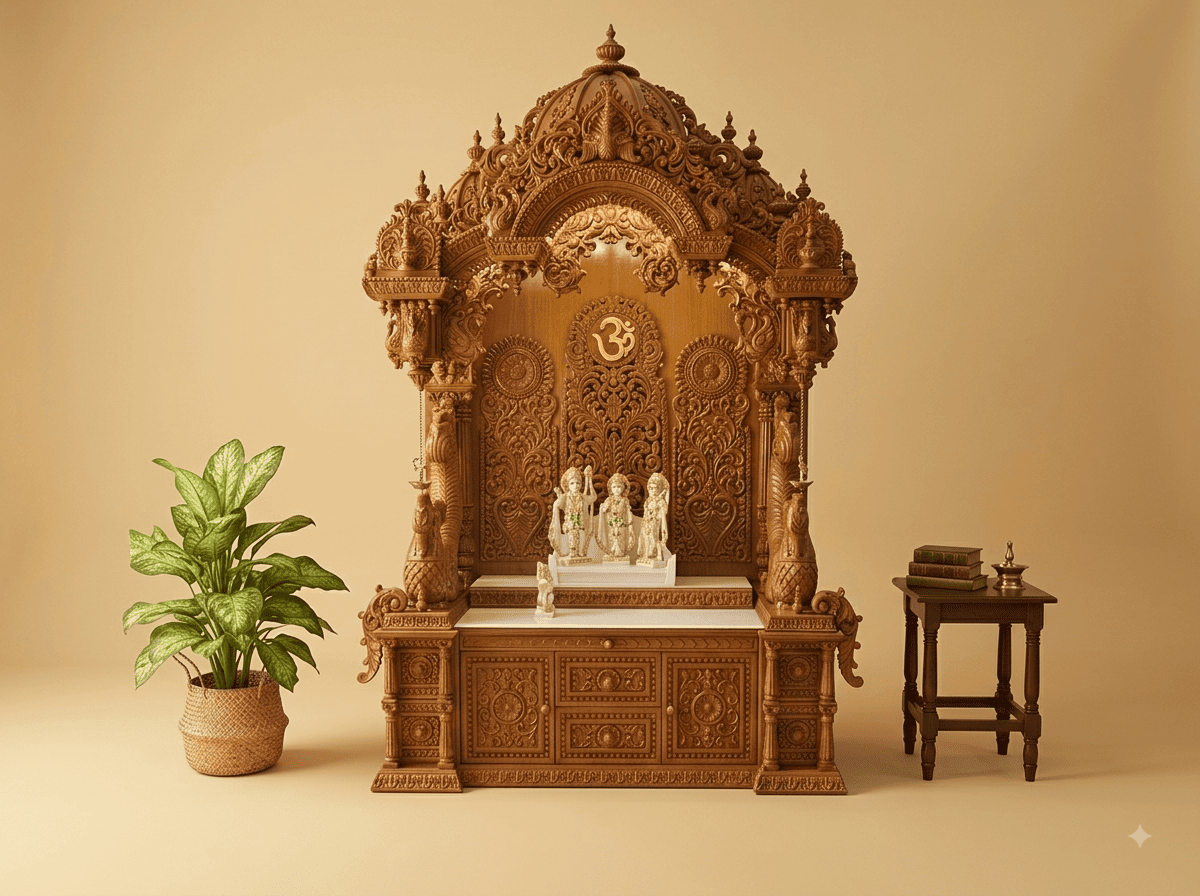
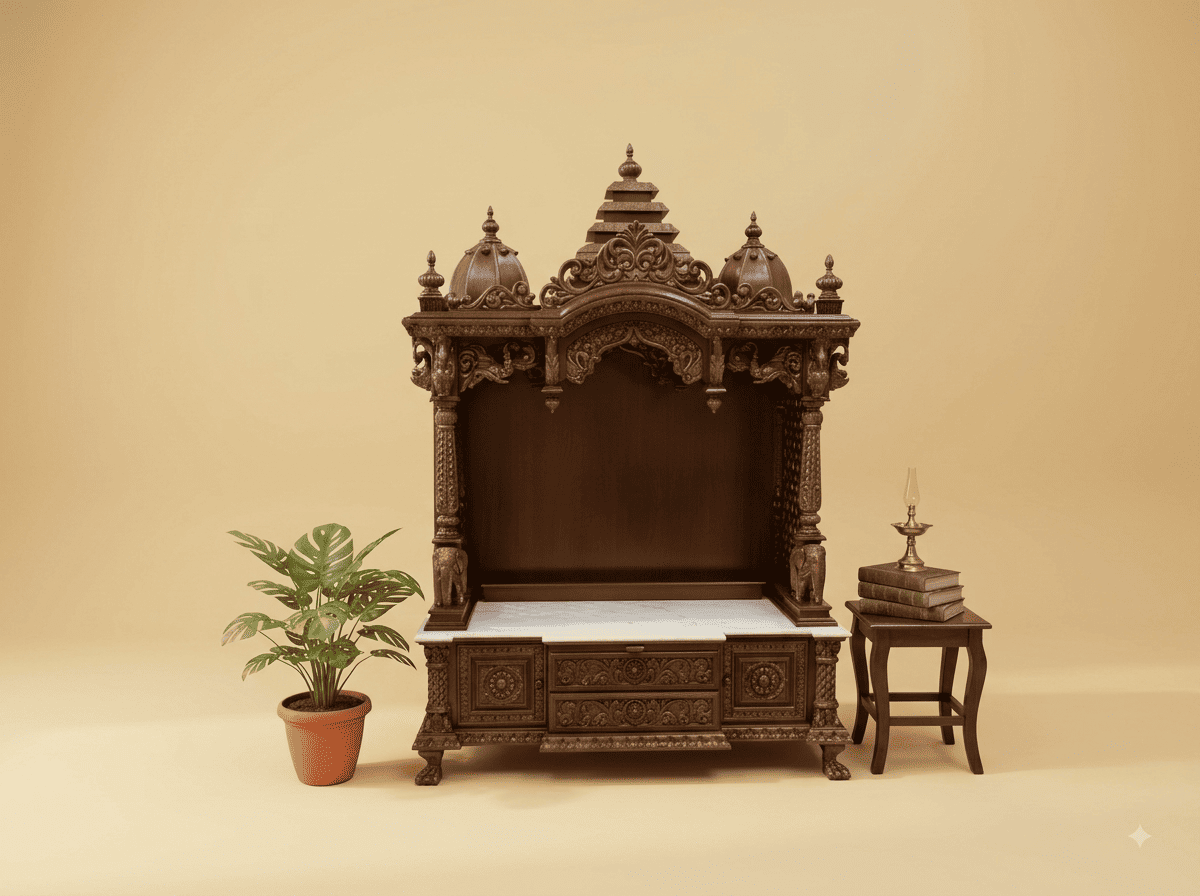
In a temple you go up to the deity. The sanctum stands on raised ground, a flight of steps leads to it, and a balustrade runs along each side of the approach. That sequence is not decorative; it is what tells you that the ground you are walking onto is different from the ground you were standing on. Domestic mandirs drop it almost universally, because steps consume width, take a great deal of carving and hold nothing. What is left is a platform at a convenient height, which is practical and says nothing.
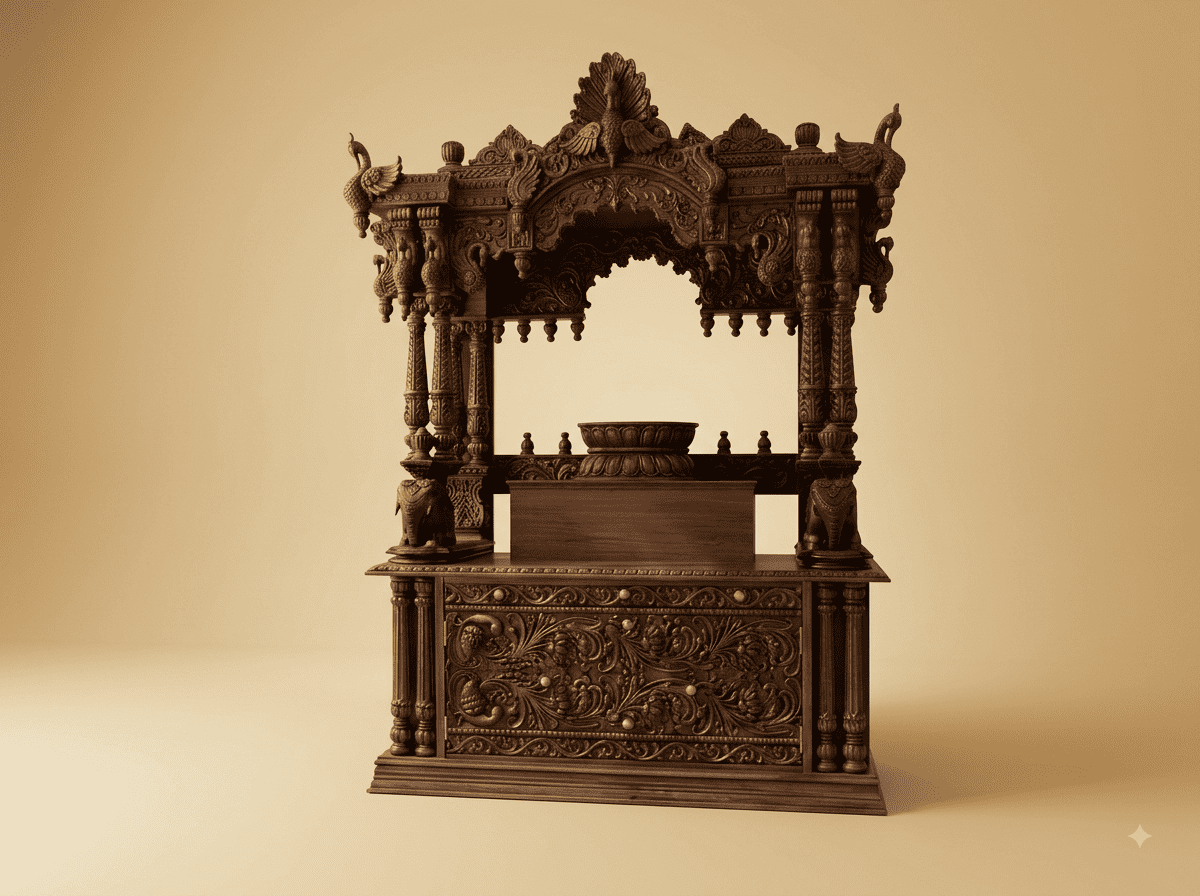
Putting the steps back changes the proportion of the whole piece. The platform stops reading as a shelf and starts reading as elevated ground with an approach to it, which is the difference between furniture and architecture. They also solve an arrangement problem that large mandirs always have: where to put the smaller murtis, the extra lamps, the photograph, without crowding the principal deities. Tiered treads descending from the platform give each of those a natural place at a lower level, which is exactly the hierarchy a temple uses. The balustrades are carved as peacocks, one to each flight, and every element is cut and polished by hand by master Indian artisans.
 Ask Price On WhatsApp