Why This Mandir Stands on Legs
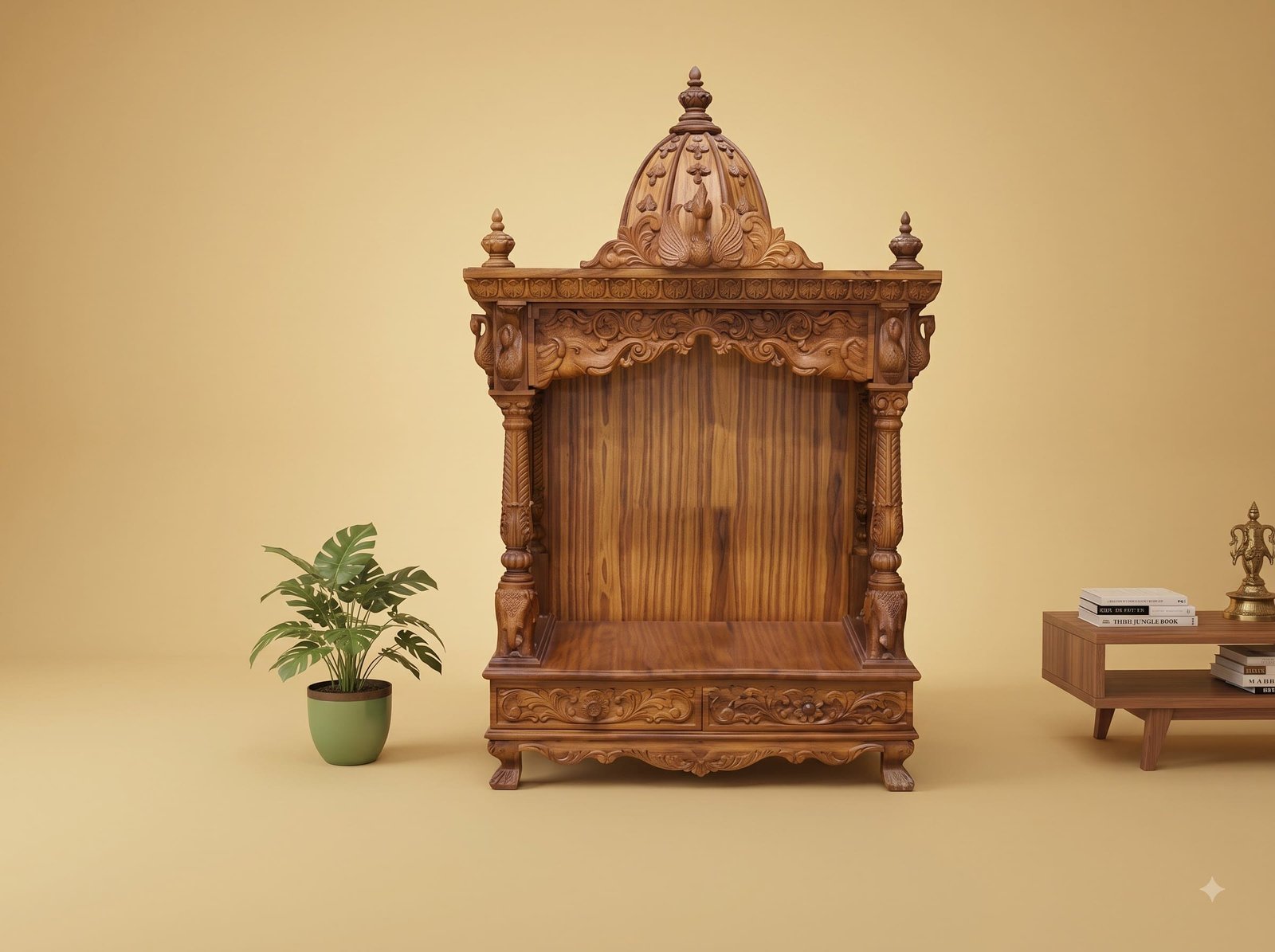
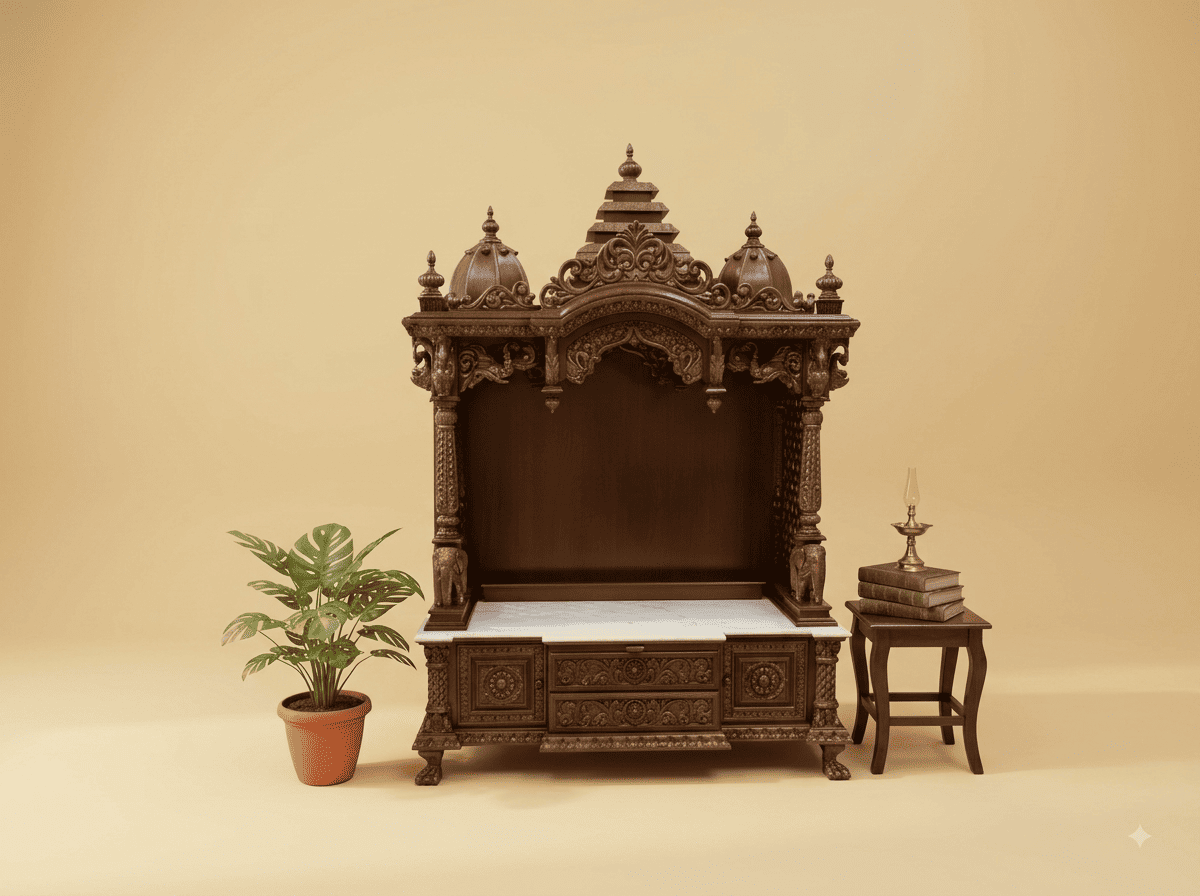
Raising the whole piece on shaped legs is the decision that shapes this design, and it pays you back every single day. Floors in most Indian homes are washed daily, and with clear space beneath the mandir the mop passes straight under it, the floor there is cleaned exactly like the rest of the room, and the timber base stays dry and sound for decades. It is a small thing that adds up to a mandir that still looks new years after it arrives.
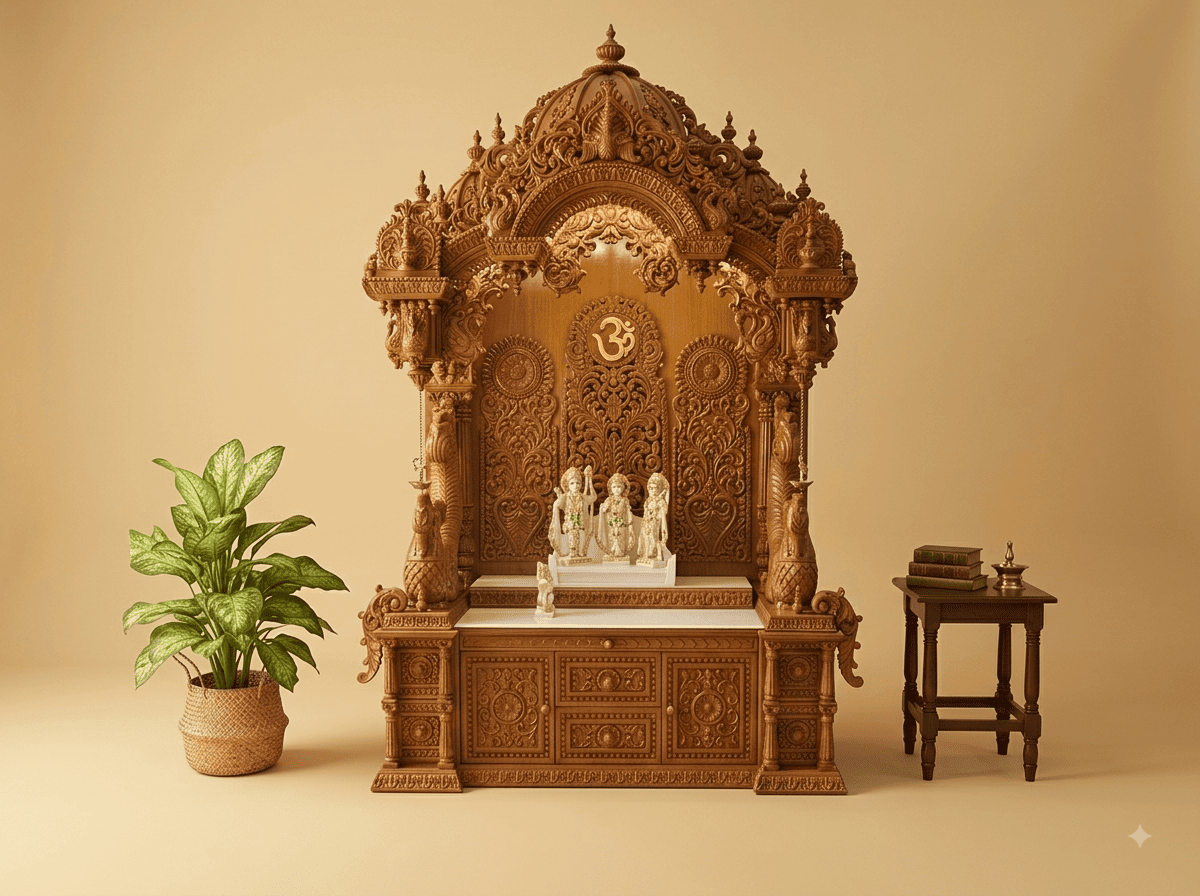
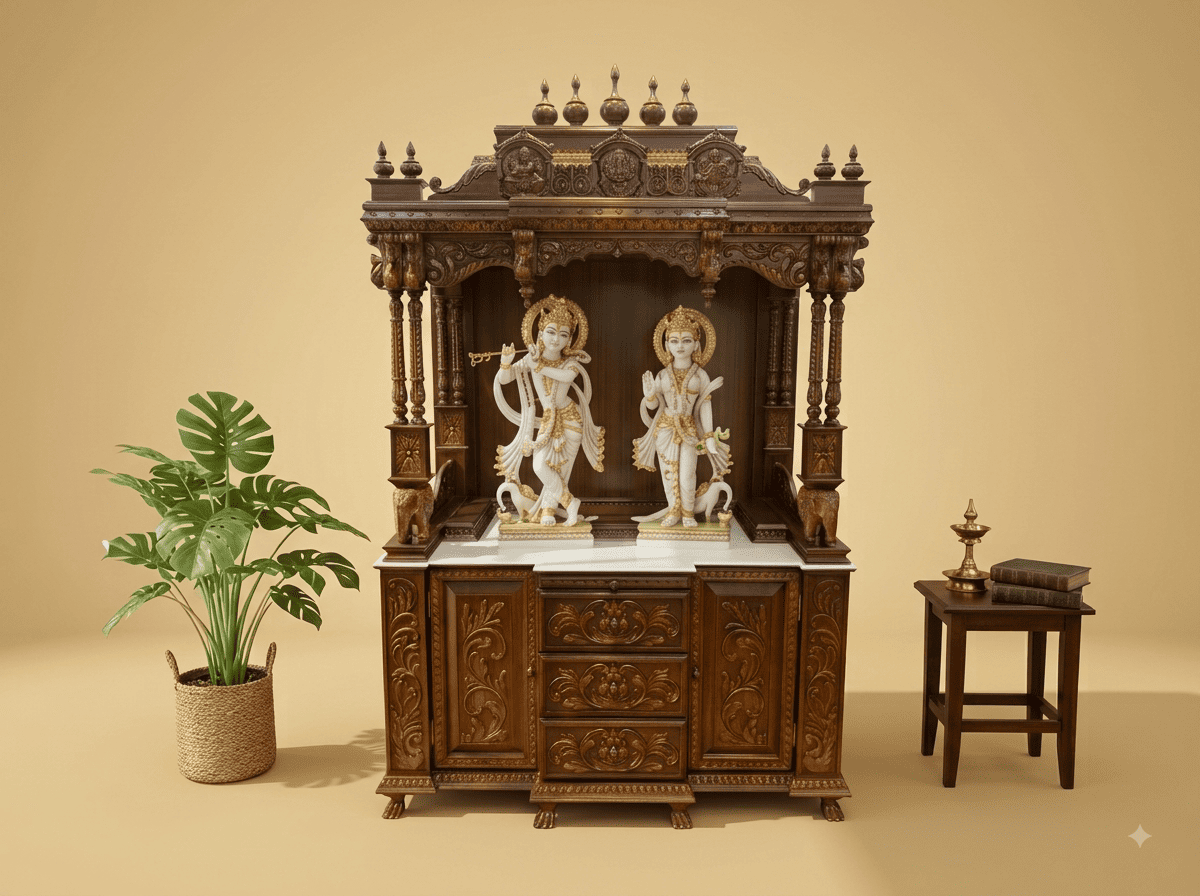
The height the legs give you is the second benefit. The deity platform reaches standing aarti height in a piece with a considerably smaller footprint than a full floor mandir would need to achieve the same, which is what makes this design such a comfortable fit in a flat or a compact puja room. The five-dome roofline keeps the full temple silhouette above it, so nothing is given up in presence. Every element is carved and polished by hand by master Indian artisans, and the photographs show the actual piece.
 Ask Price On WhatsApp