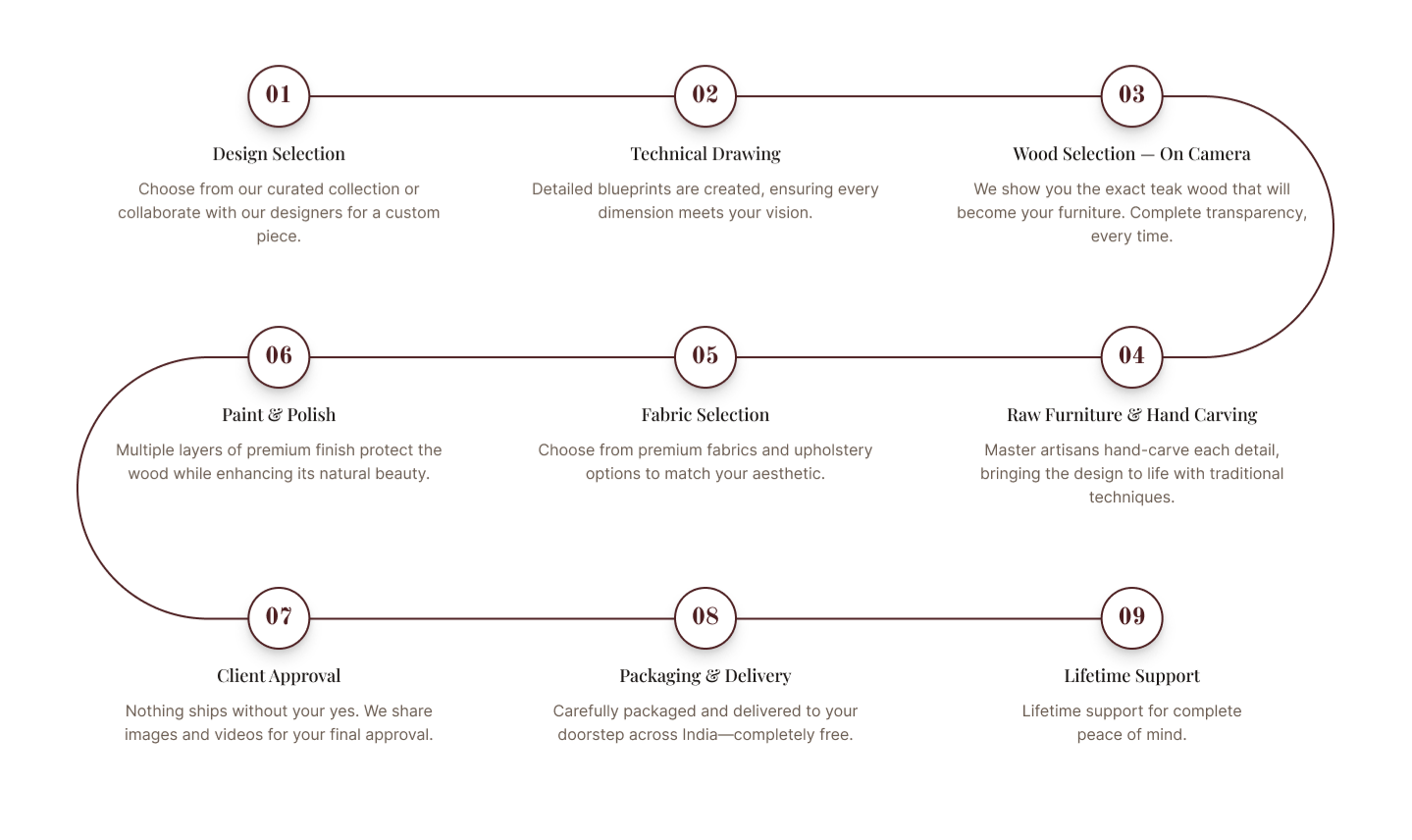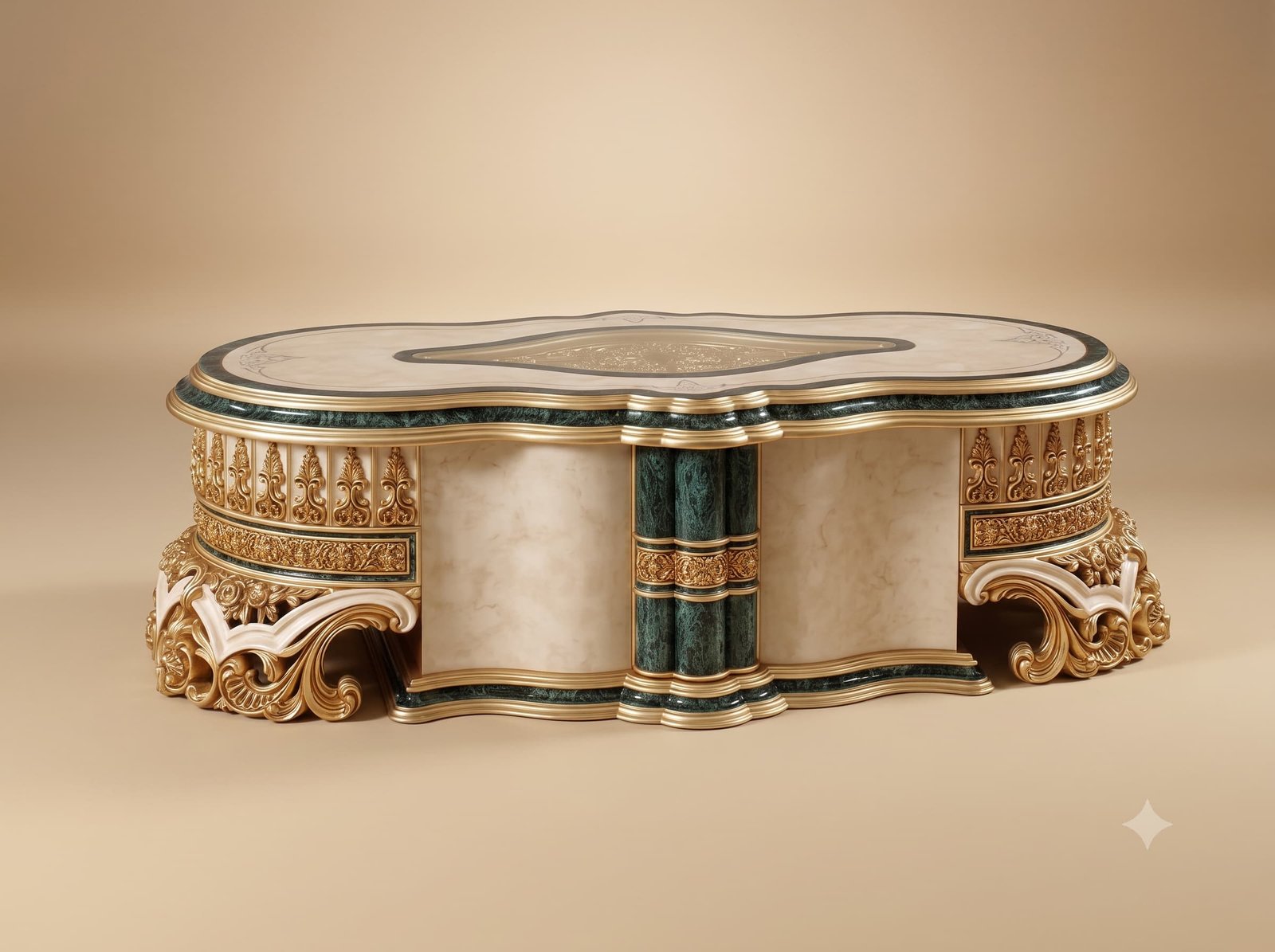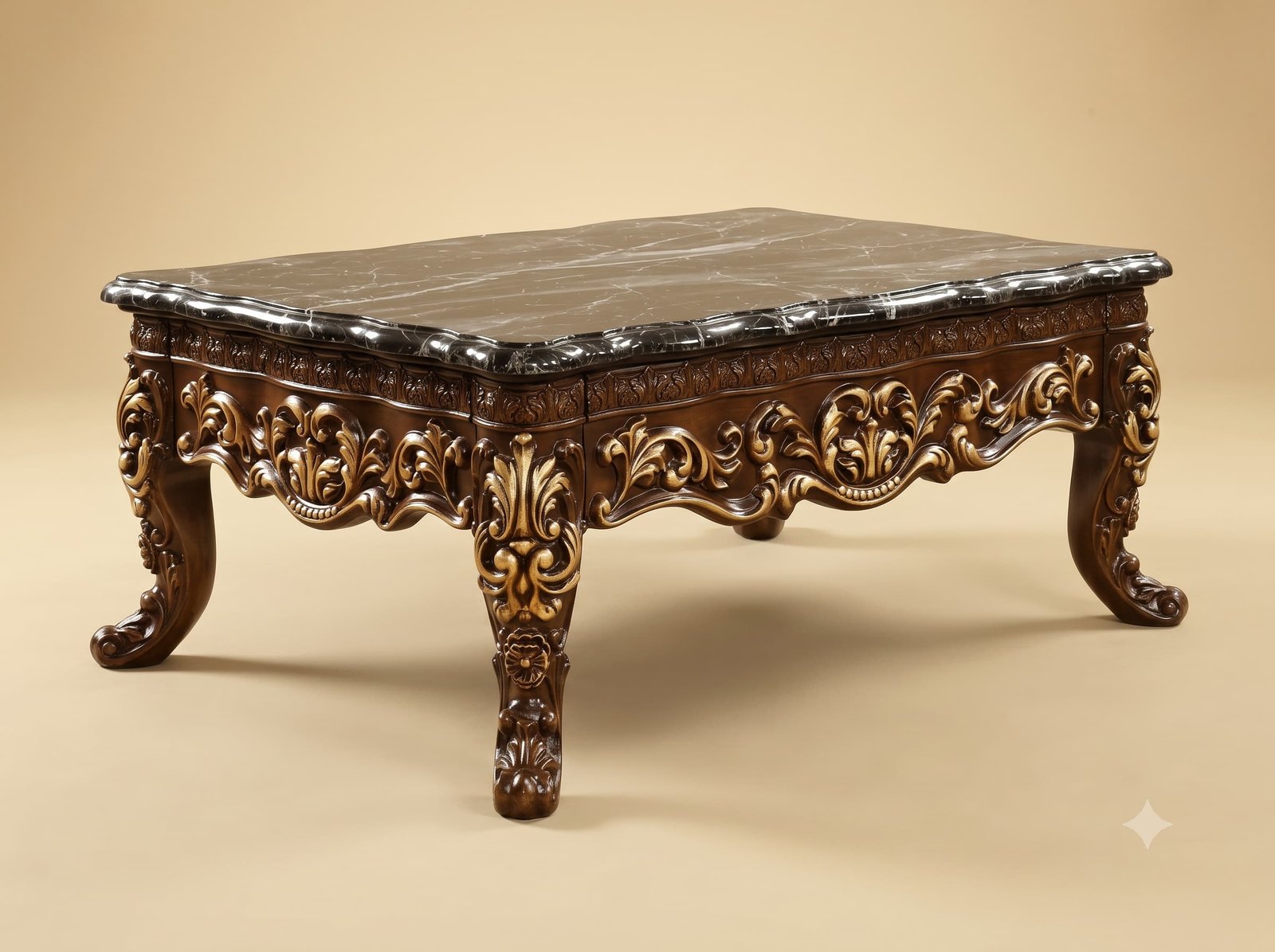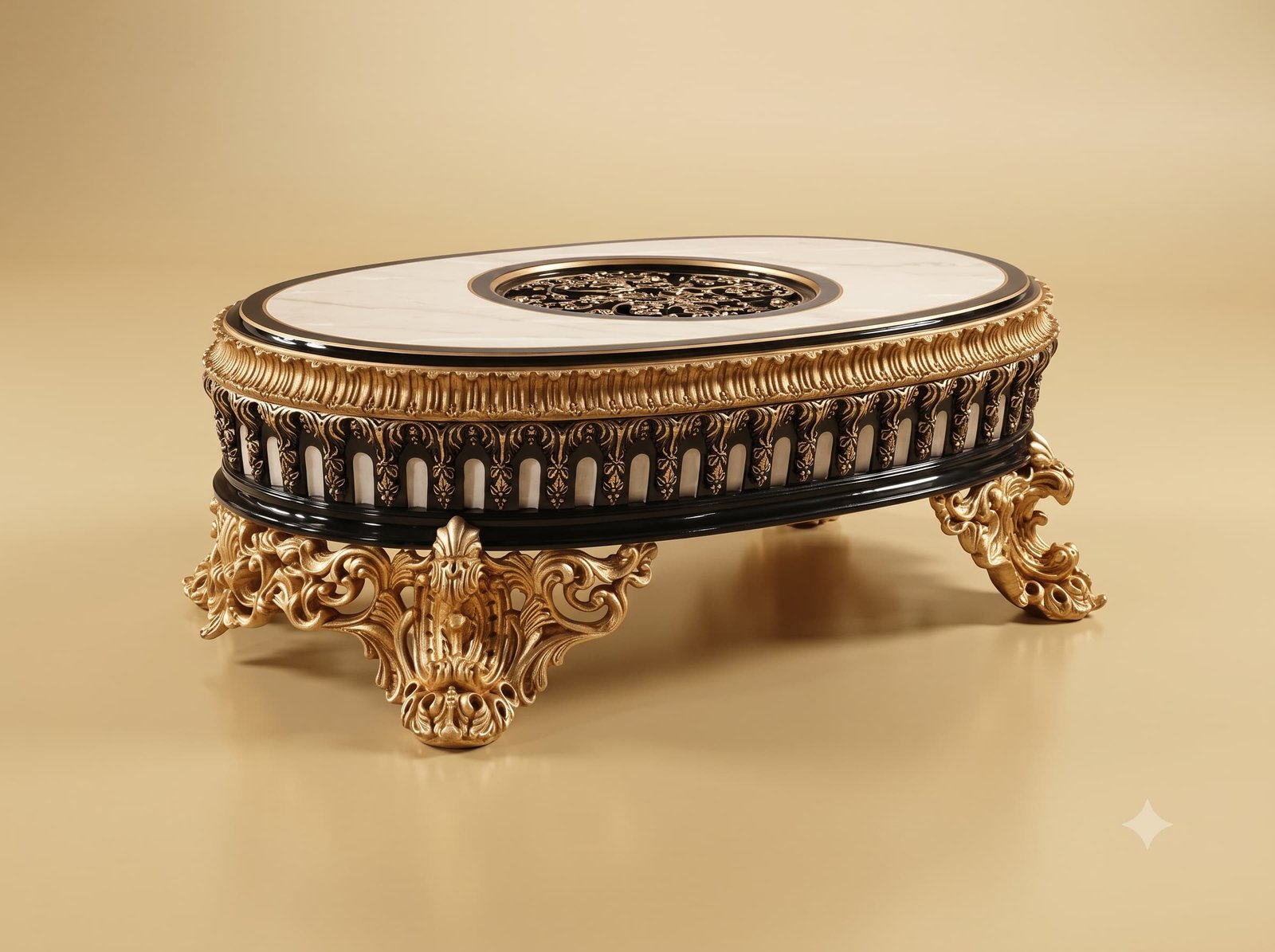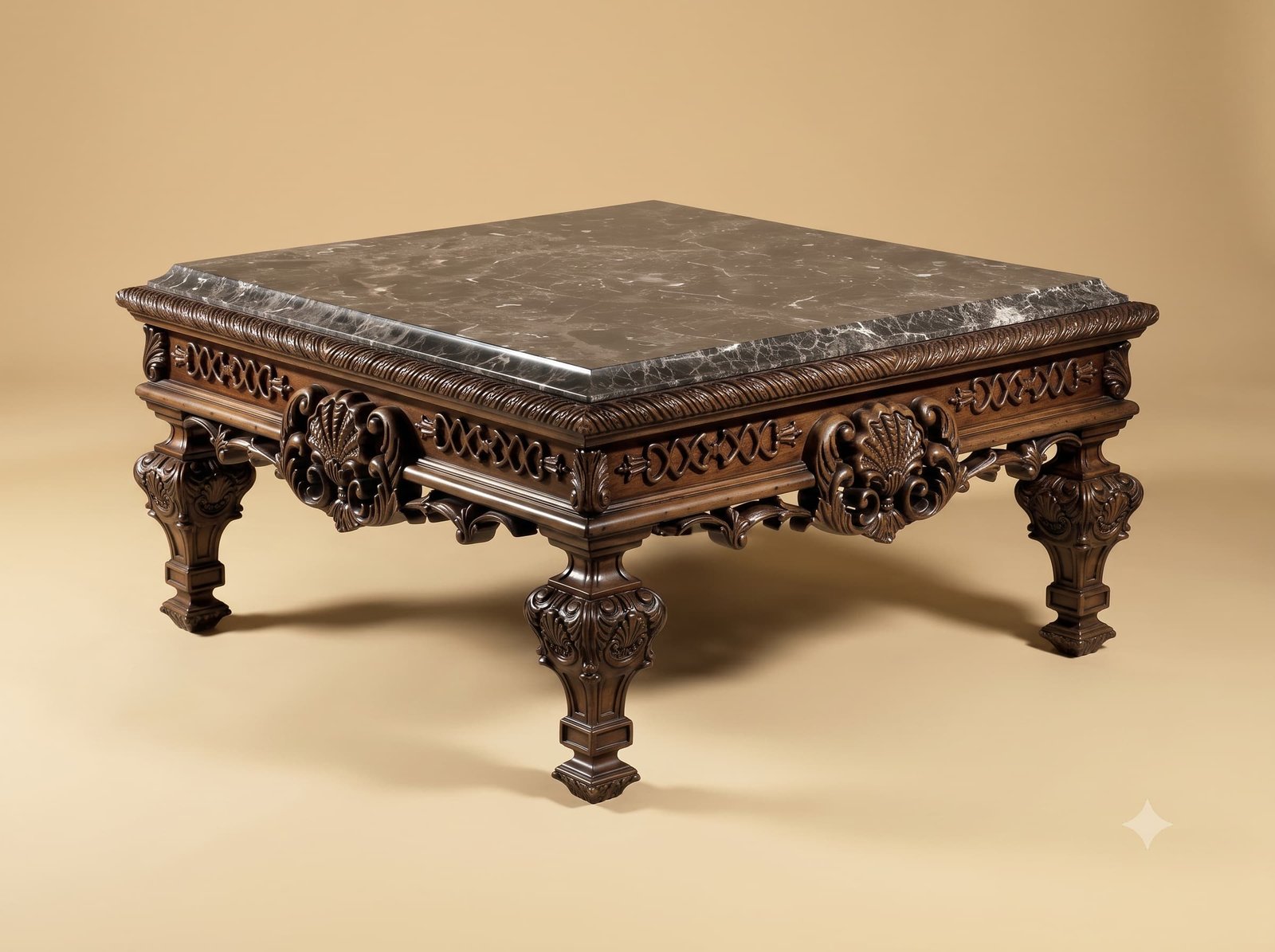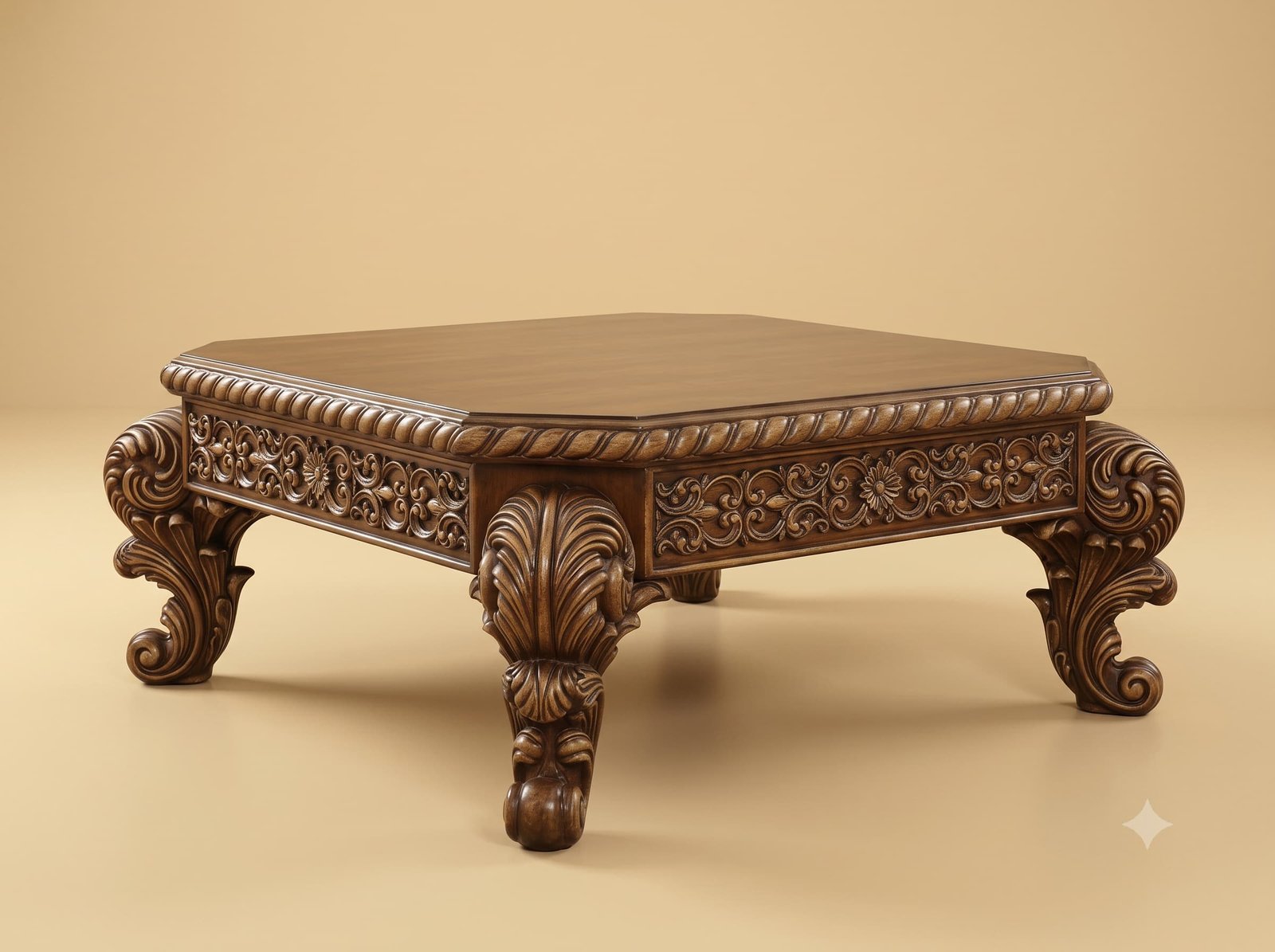
The rope moulding around the top of this table has to turn eight corners, and at each one the twist has to keep going in the same direction.
A rope moulding is a spiral, and a spiral has a handedness. Cut a length of rope moulding, mitre it at a corner and join it to the next length, and unless the two are set out from the same starting point the twist will jump - one strand will meet a hollow instead of another strand, and the rope will appear to reverse at the joint. On a plain square top that happens four times. Here, with canted corners, it happens eight.
So the moulding is not cut into eight pieces and fitted. The carver sets out the whole run first, marks every corner position on the blank, and calculates where each twist must fall so that after each mitre the pattern continues. The spacing is adjusted very slightly on each face to make the turns land correctly - the same trick a mason uses when running a moulding around a room.
Then it is cut by hand, one strand at a time, all the way round. Run a finger along it and the rope never stutters. That continuity is the whole job, and it is why it takes a day rather than an hour.
 Ask Price On WhatsApp