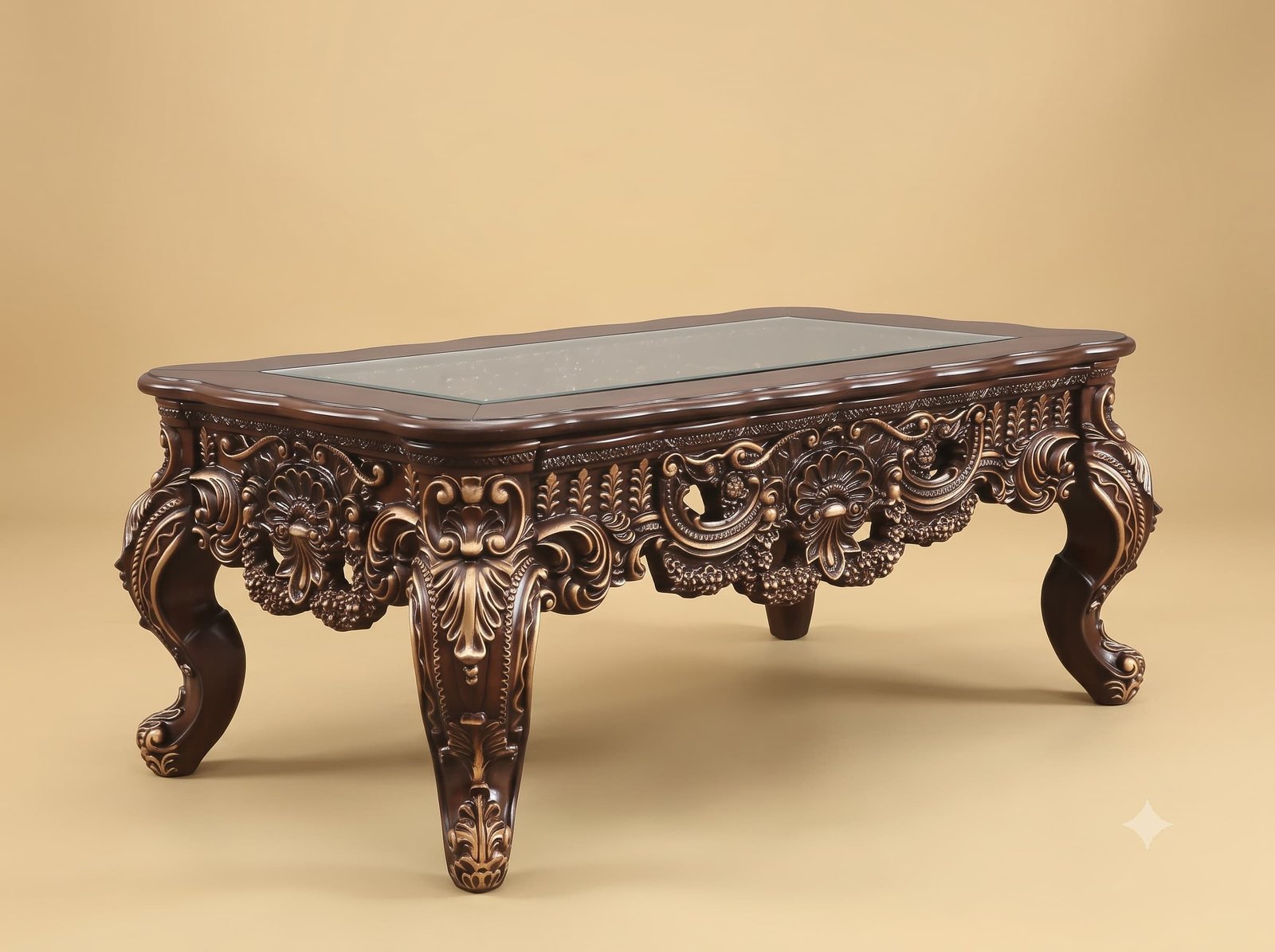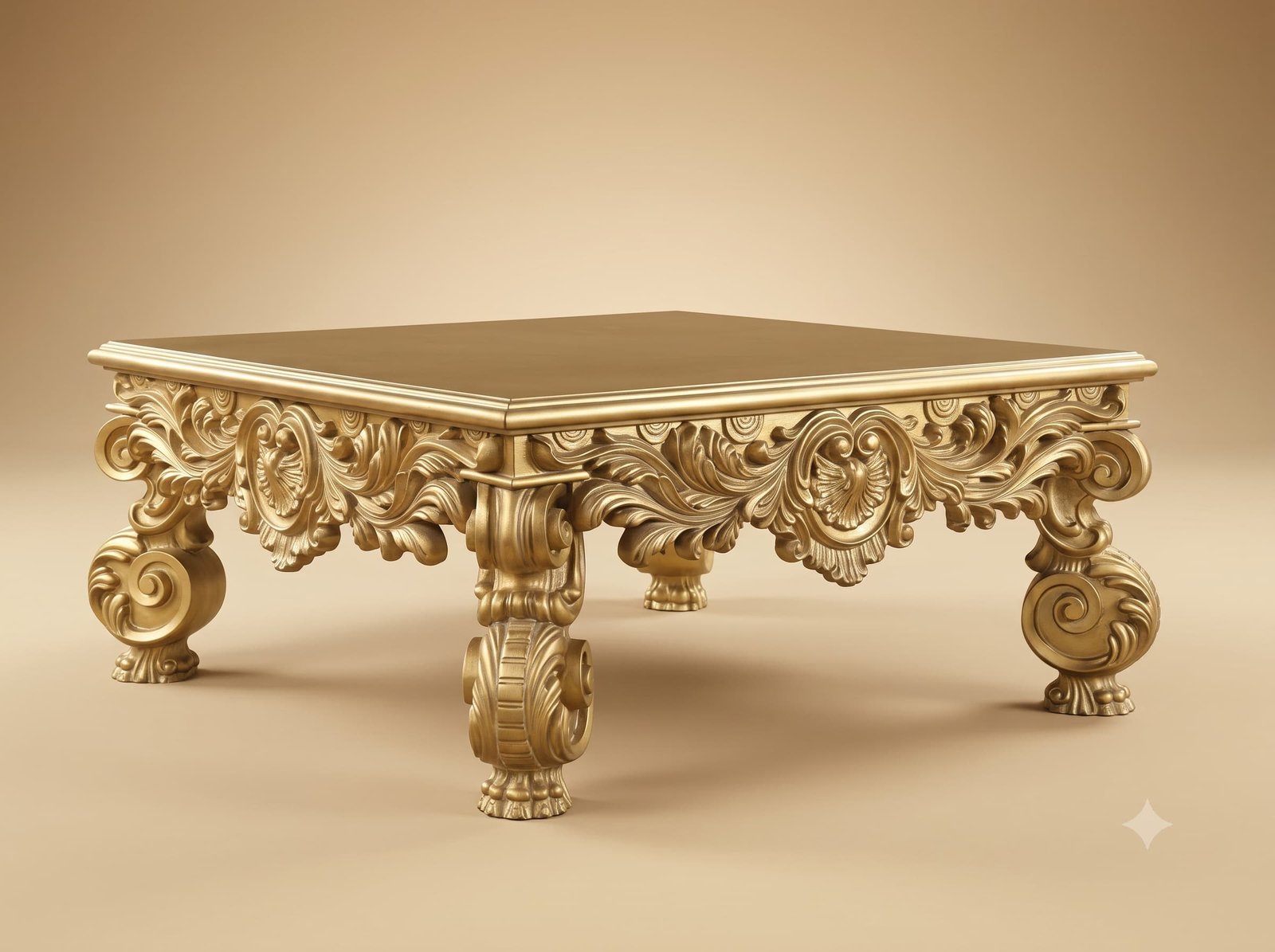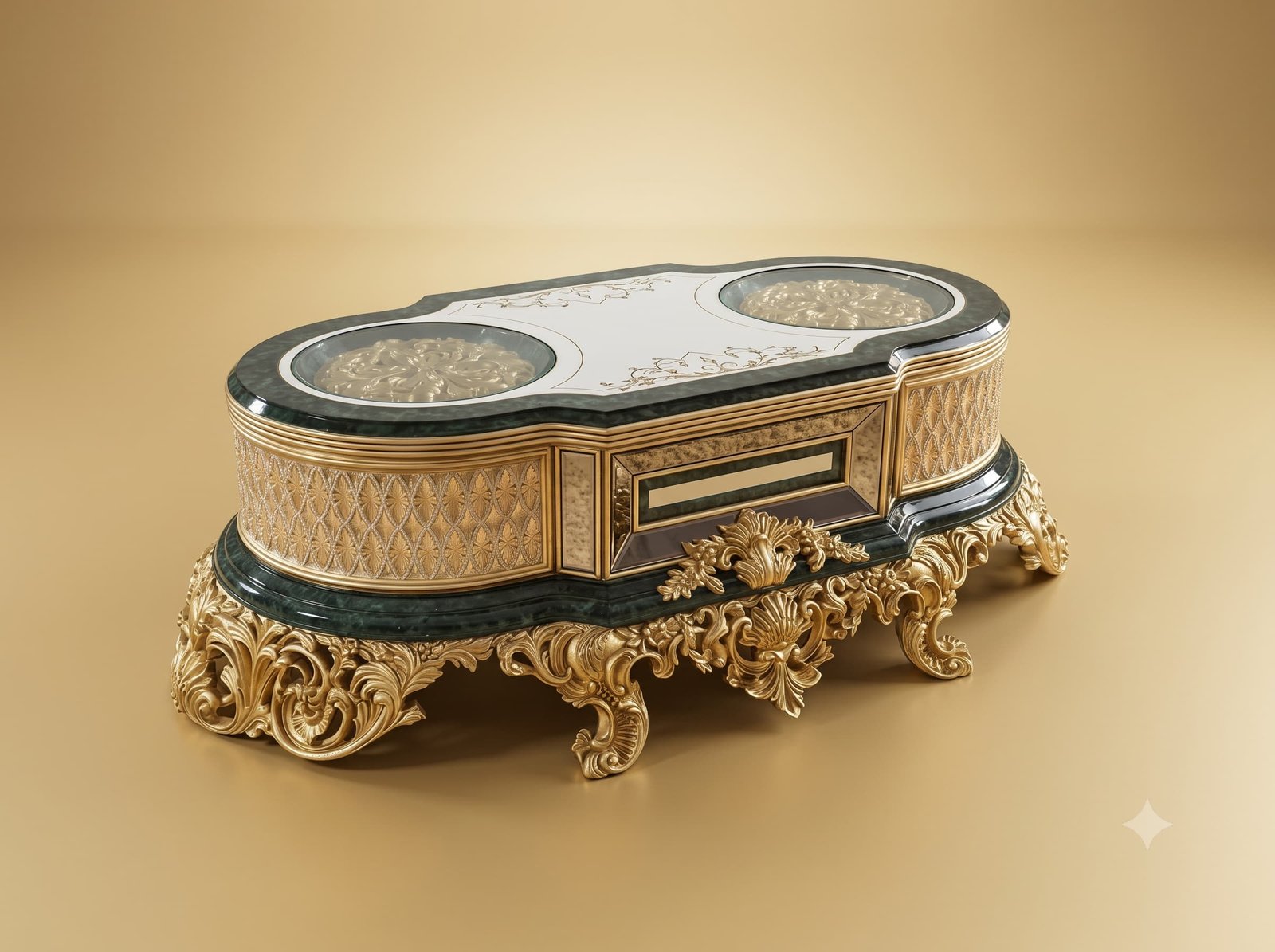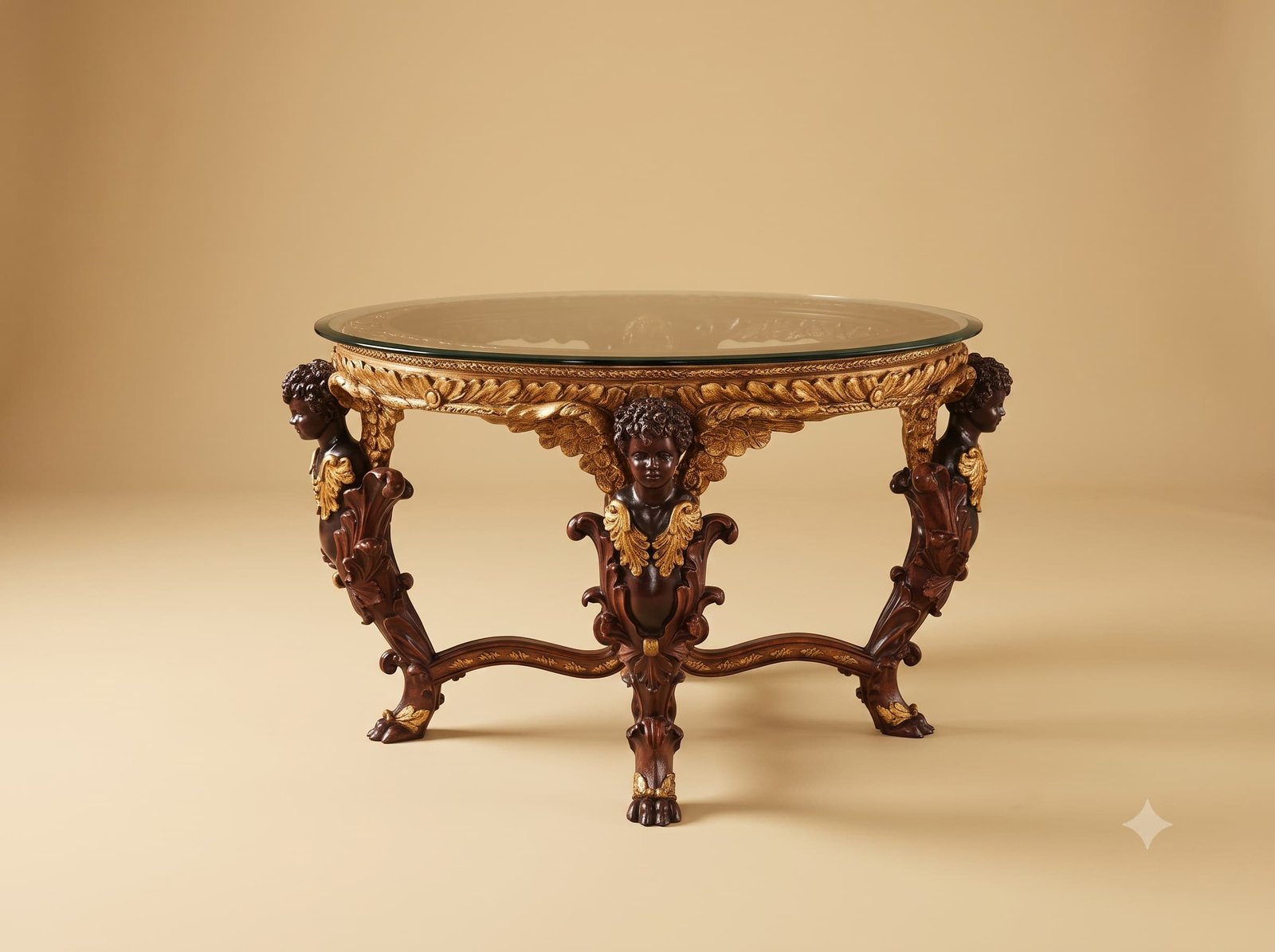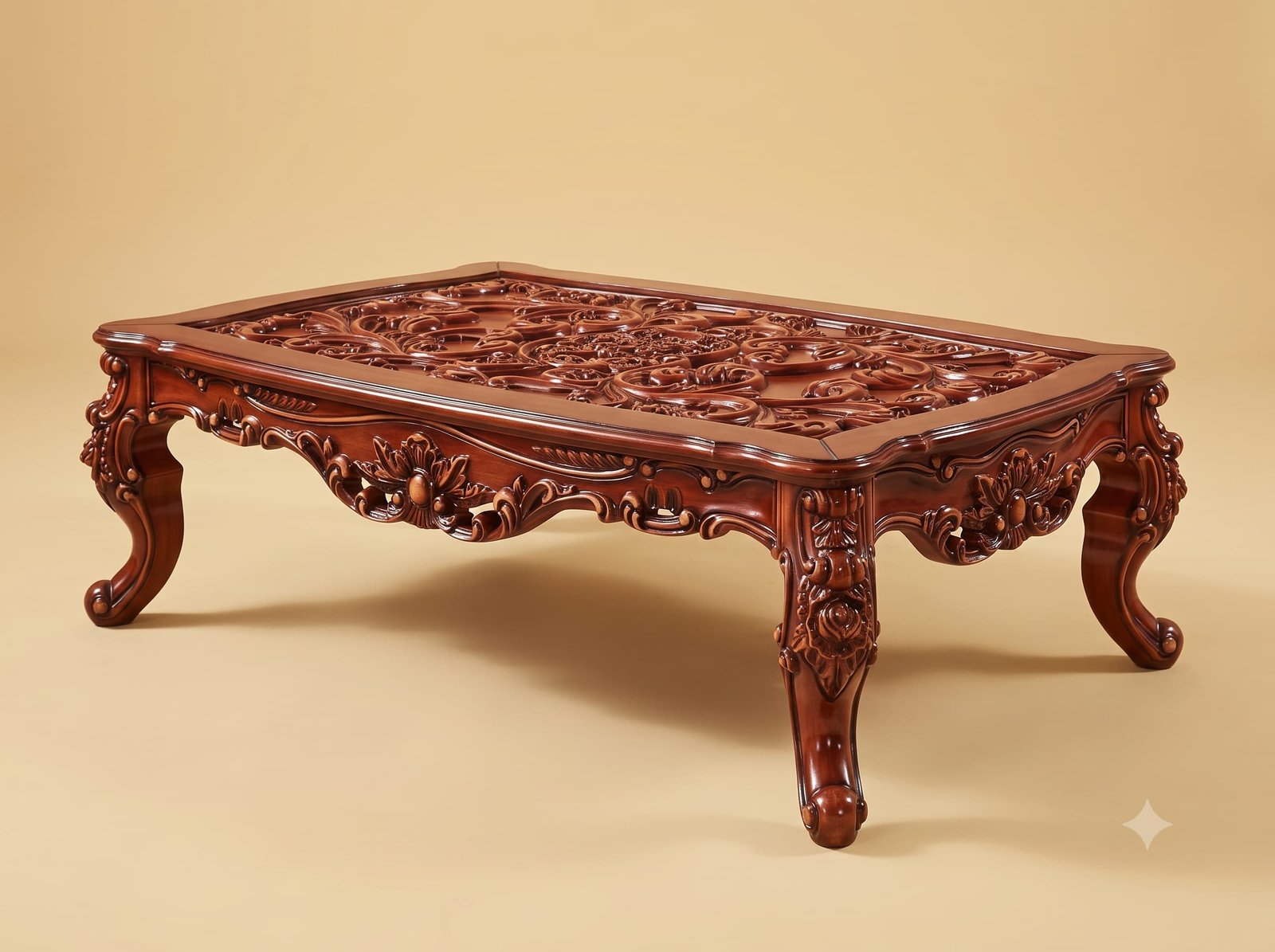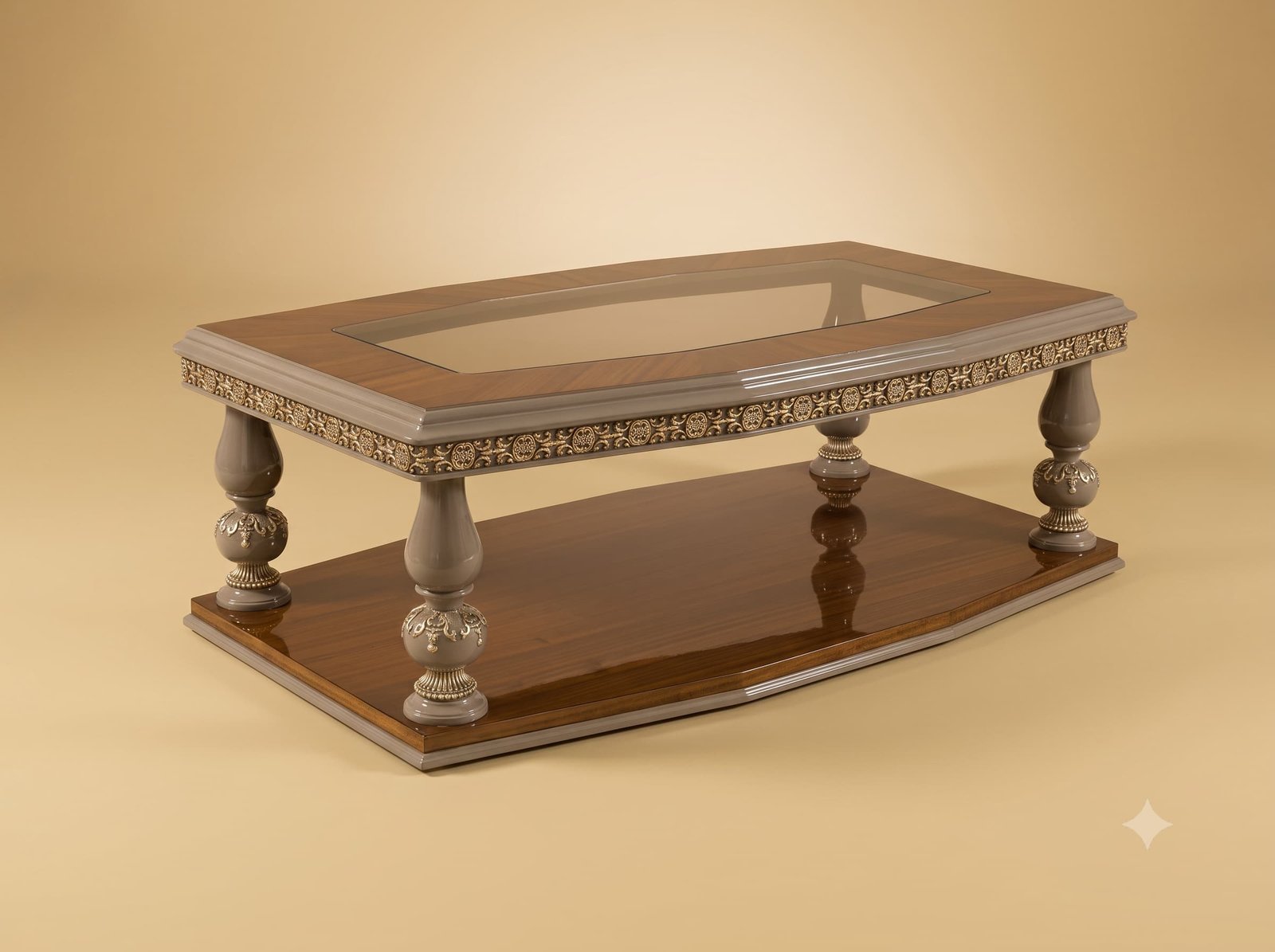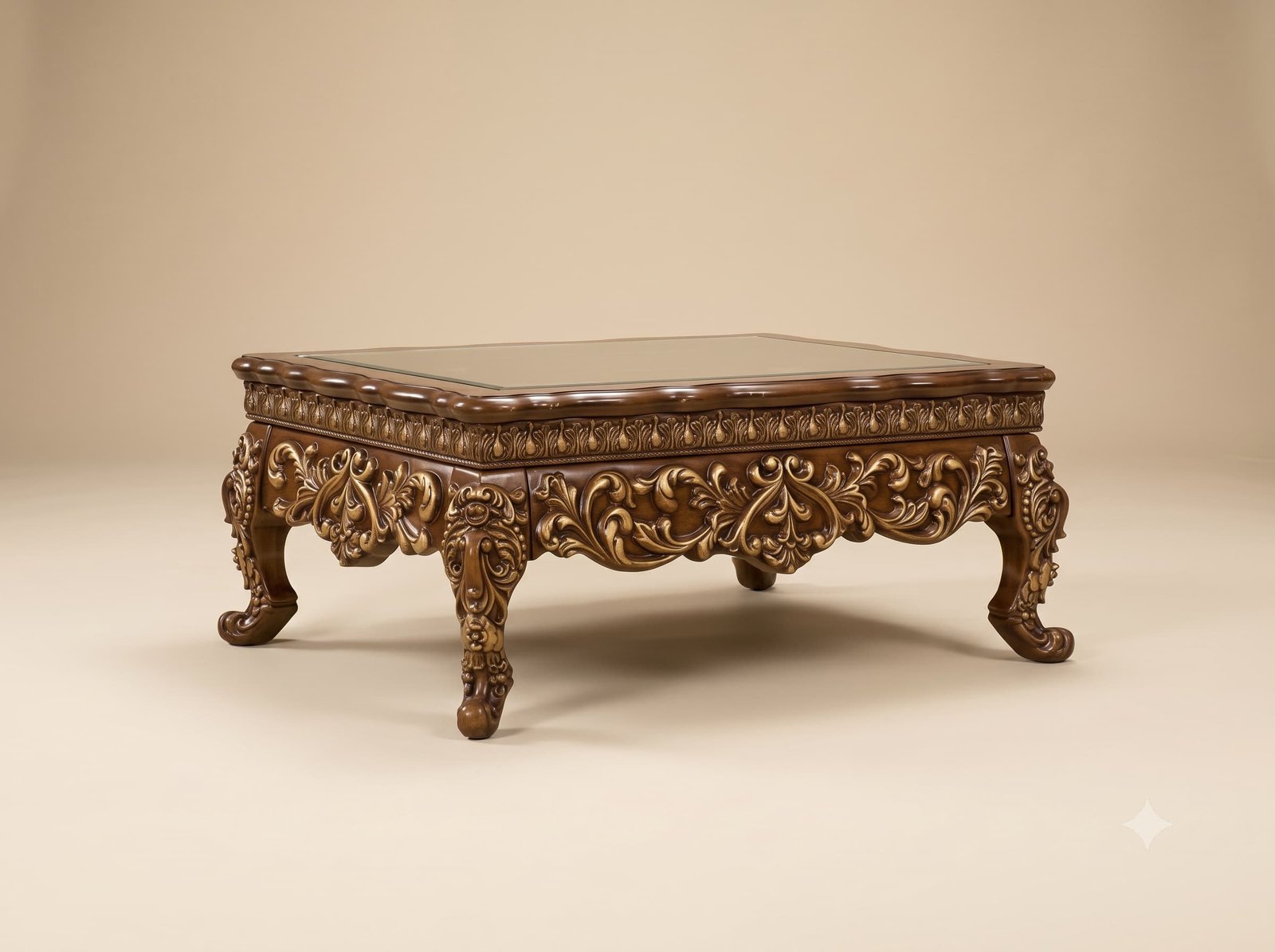
The gold on this table sits only on the tops of the leaves, and it was never painted on. It was dragged.
Painting gold into carving with a normal brush fills the hollows as well as the peaks, and the moment the recesses go gold the carving stops reading as three-dimensional - the shadows that gave it depth are lit up, and the whole apron flattens into a bright, busy surface. It is the commonest way to ruin good carving with a good material.
So the gold is applied nearly dry. The brush is loaded, then most of it is worked out onto a board until barely any is left, and what remains is dragged across the surface of the carving at a low angle. A brush in that state cannot reach into a hollow - it only touches what stands proudest. Every peak takes colour; every recess is missed.
The effect is that the carving looks lit from above, because the highlights fall exactly where light would fall. It also means the depth of the carving is doing the work, not the gold - which is why the same technique on shallow, machine-cut ornament looks like nothing at all.
 Ask Price On WhatsApp