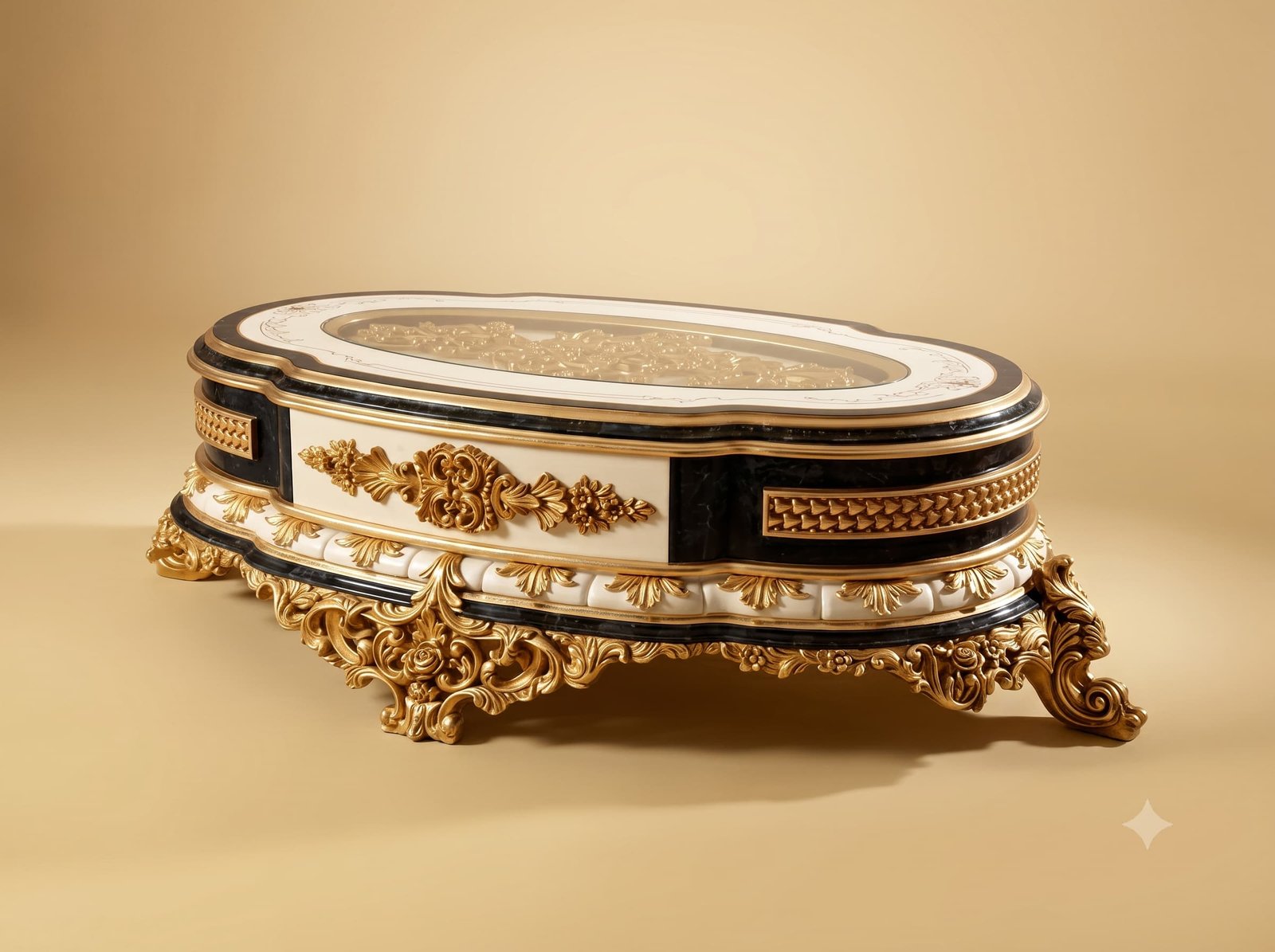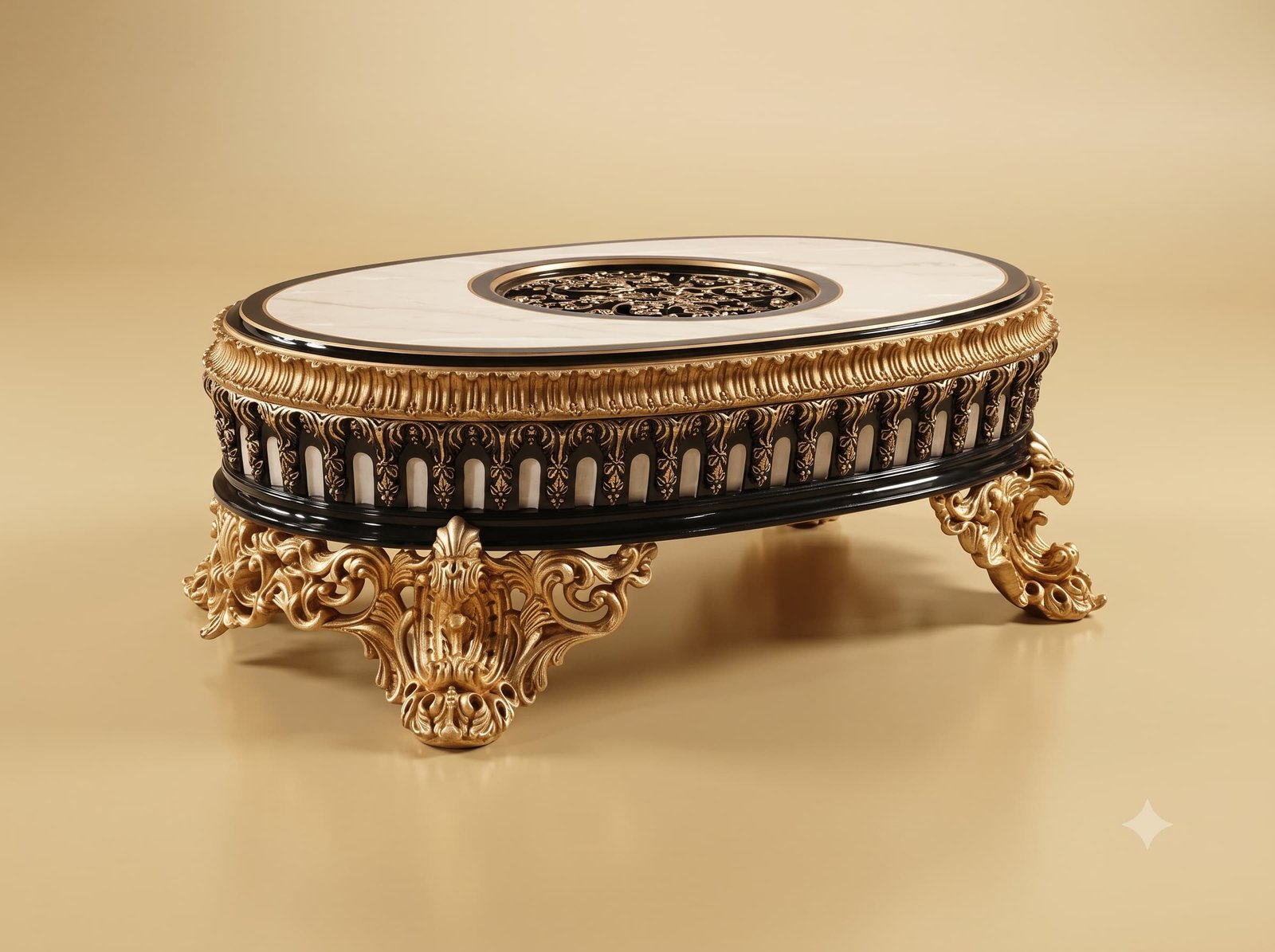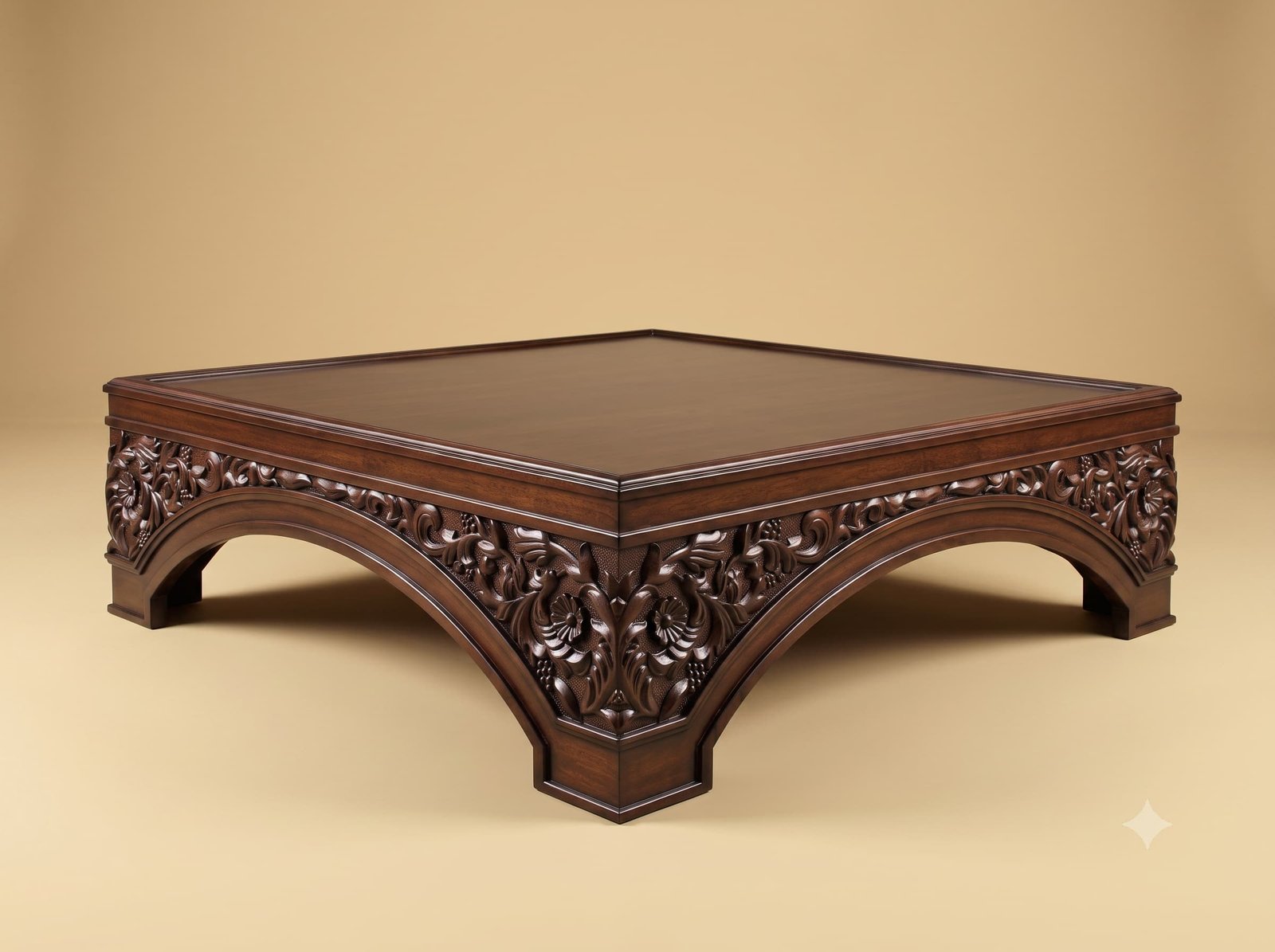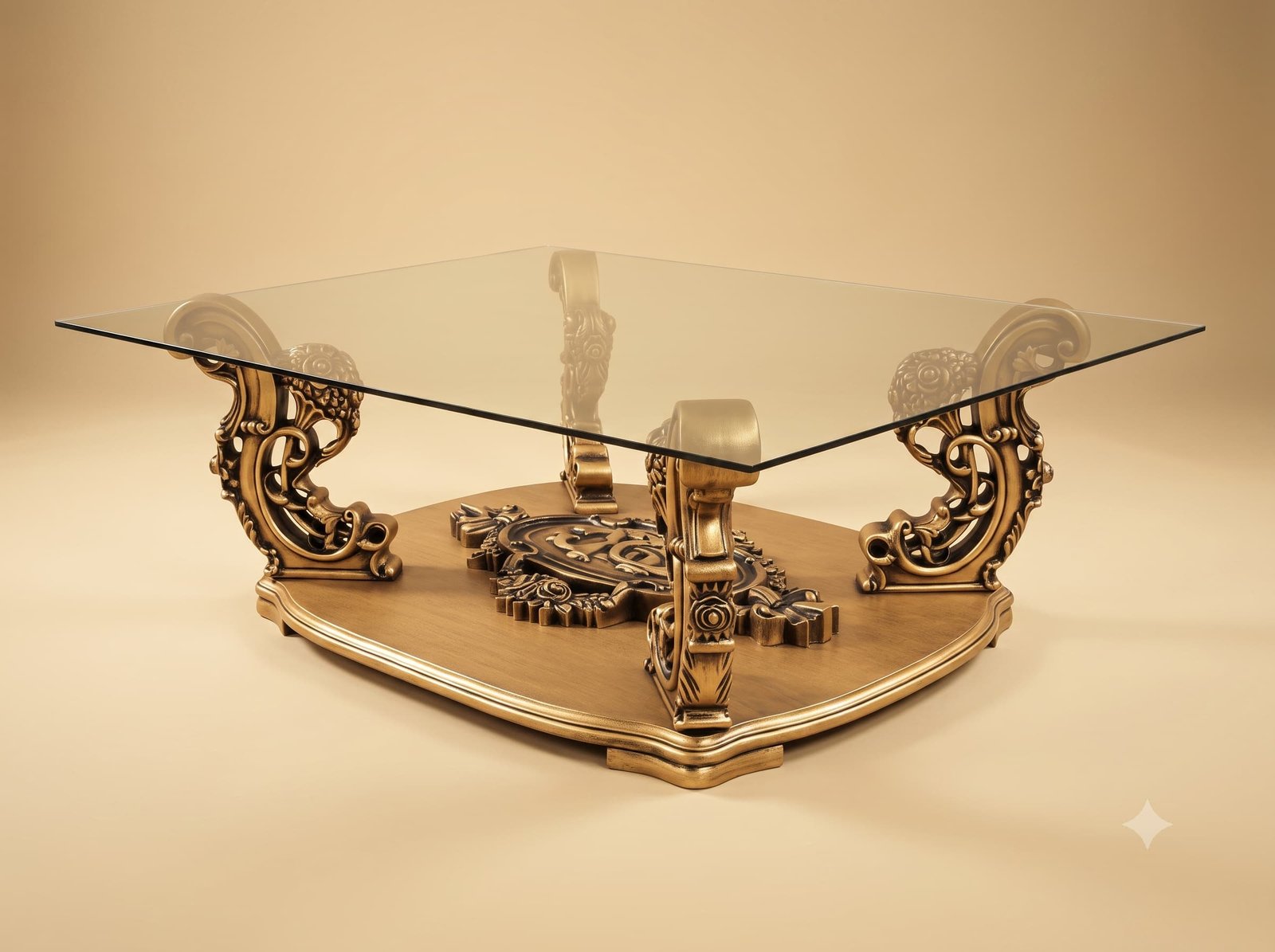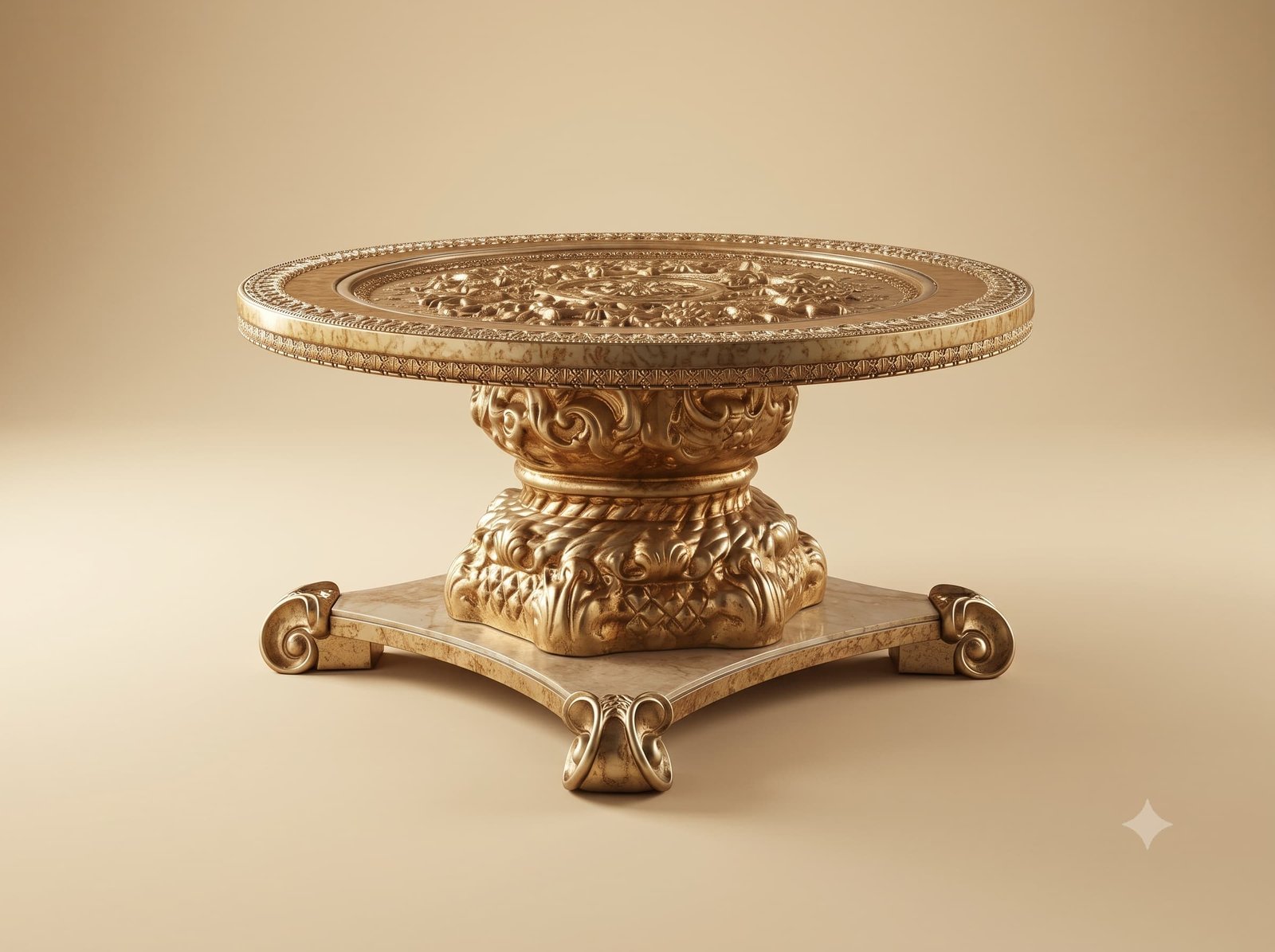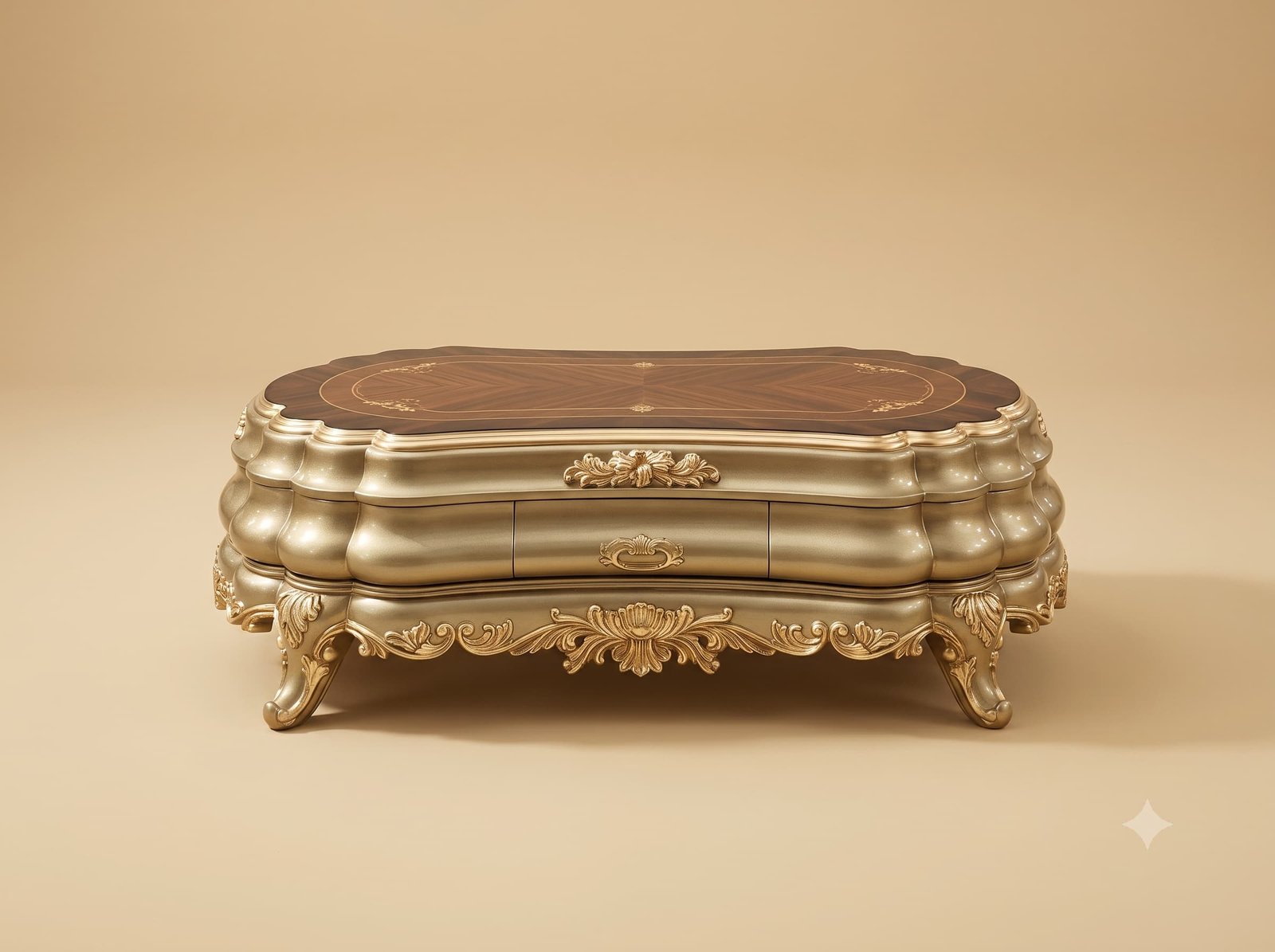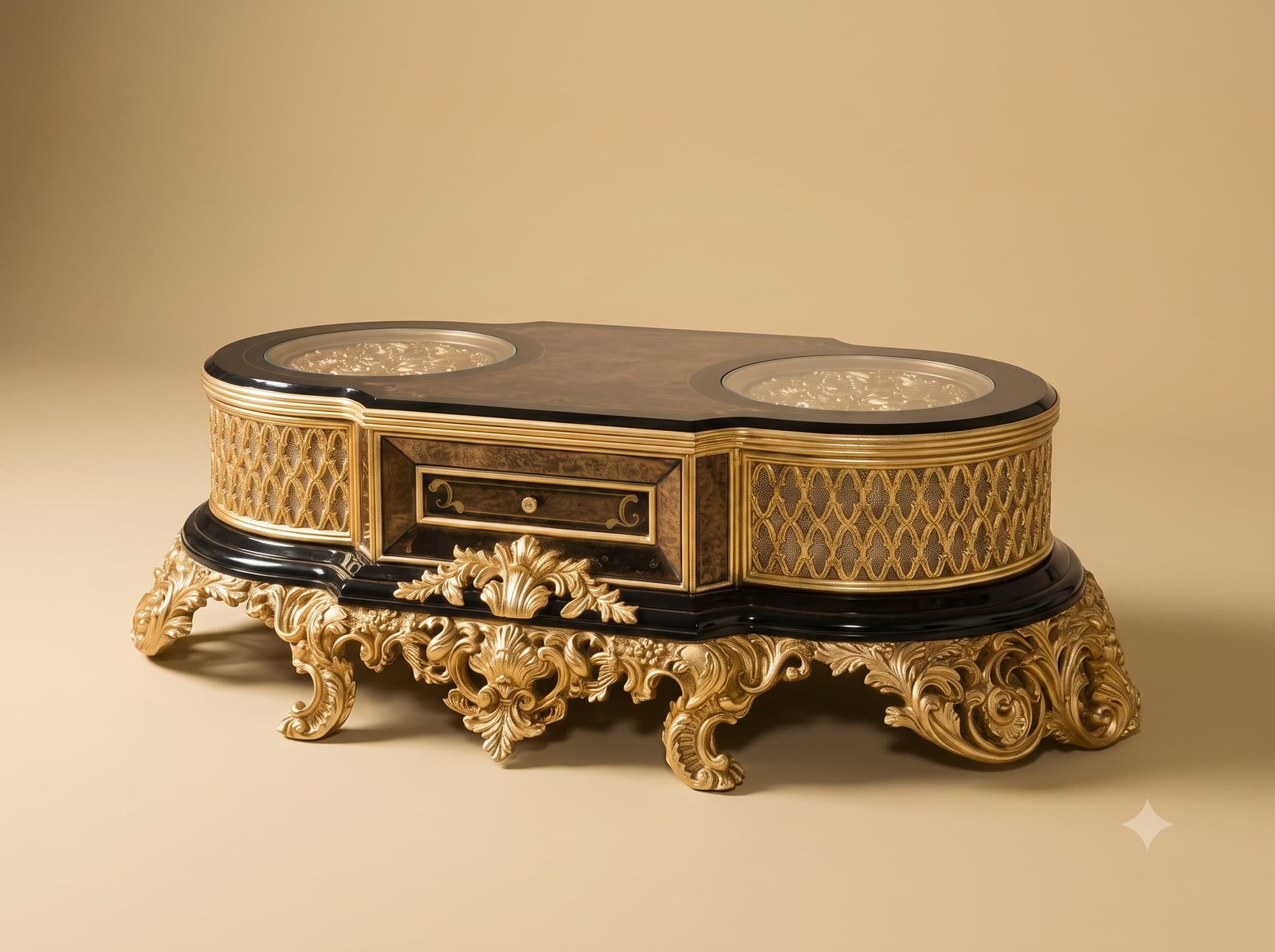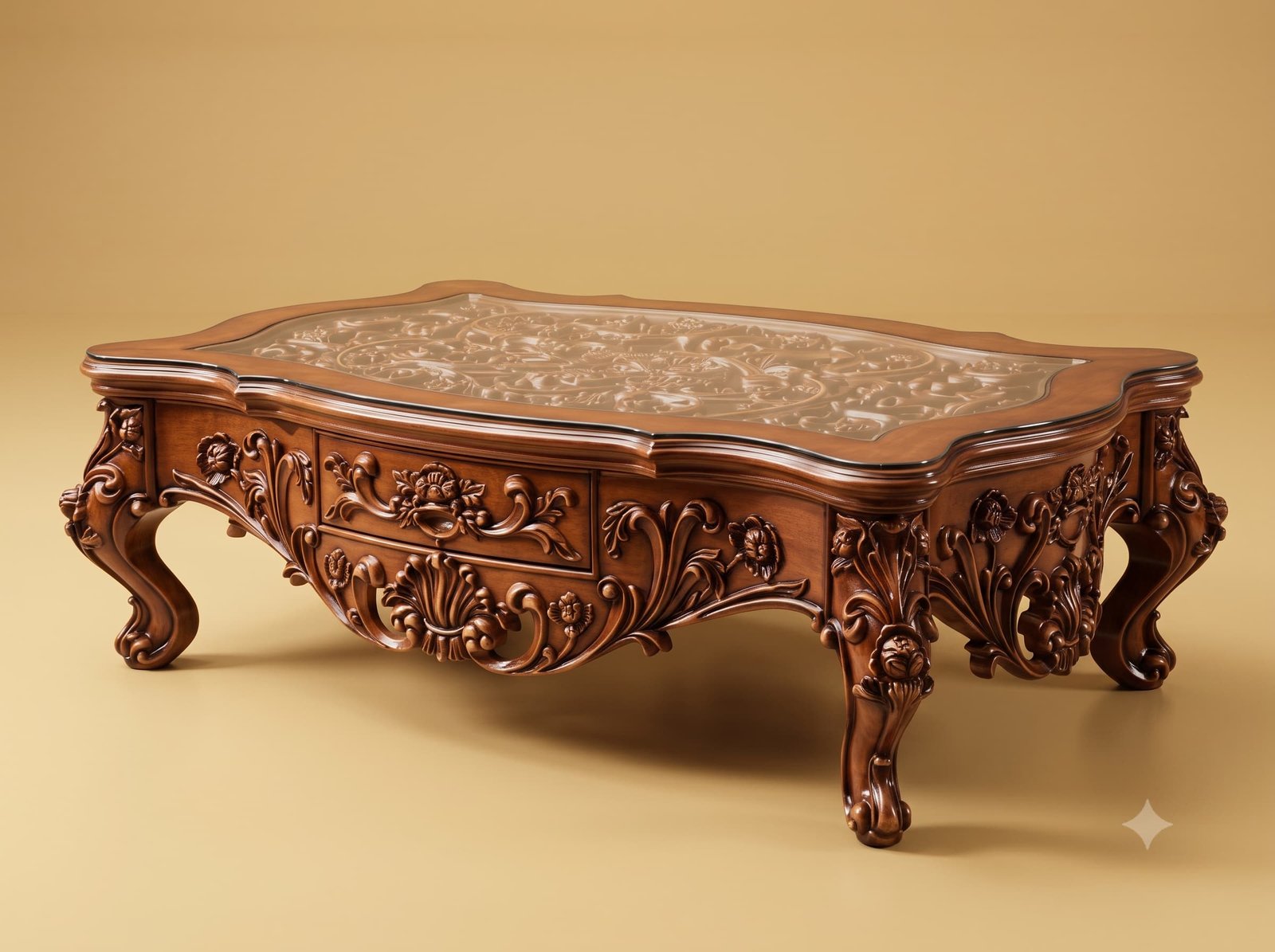
Look at the front of this table and the carving runs straight across the drawer as if the drawer were not there. That is only possible because of when the carving was done.
The obvious way to build it is to carve the drawer front on the bench, carve the rails around it separately, and assemble. It never quite works. Each piece is carved in its own position on its own bench, so the leaves meet the joint line at slightly different angles and heights, and the pattern jumps where the drawer starts. On a plain drawer nobody notices a millimetre; on a continuous carved run it reads as a break.
So the drawer is made and fitted first, in its opening, closed, with the gaps set exactly as they will be forever. Only then is the apron drawn out across the whole front - over rails and drawer alike - and only then does the carver begin. Every cut crosses the gaps as it goes.
The drawer is opened for the first time when the carving is finished. From that moment the pattern is committed: it lines up in one position only, which is the position it was carved in.
 Ask Price On WhatsApp