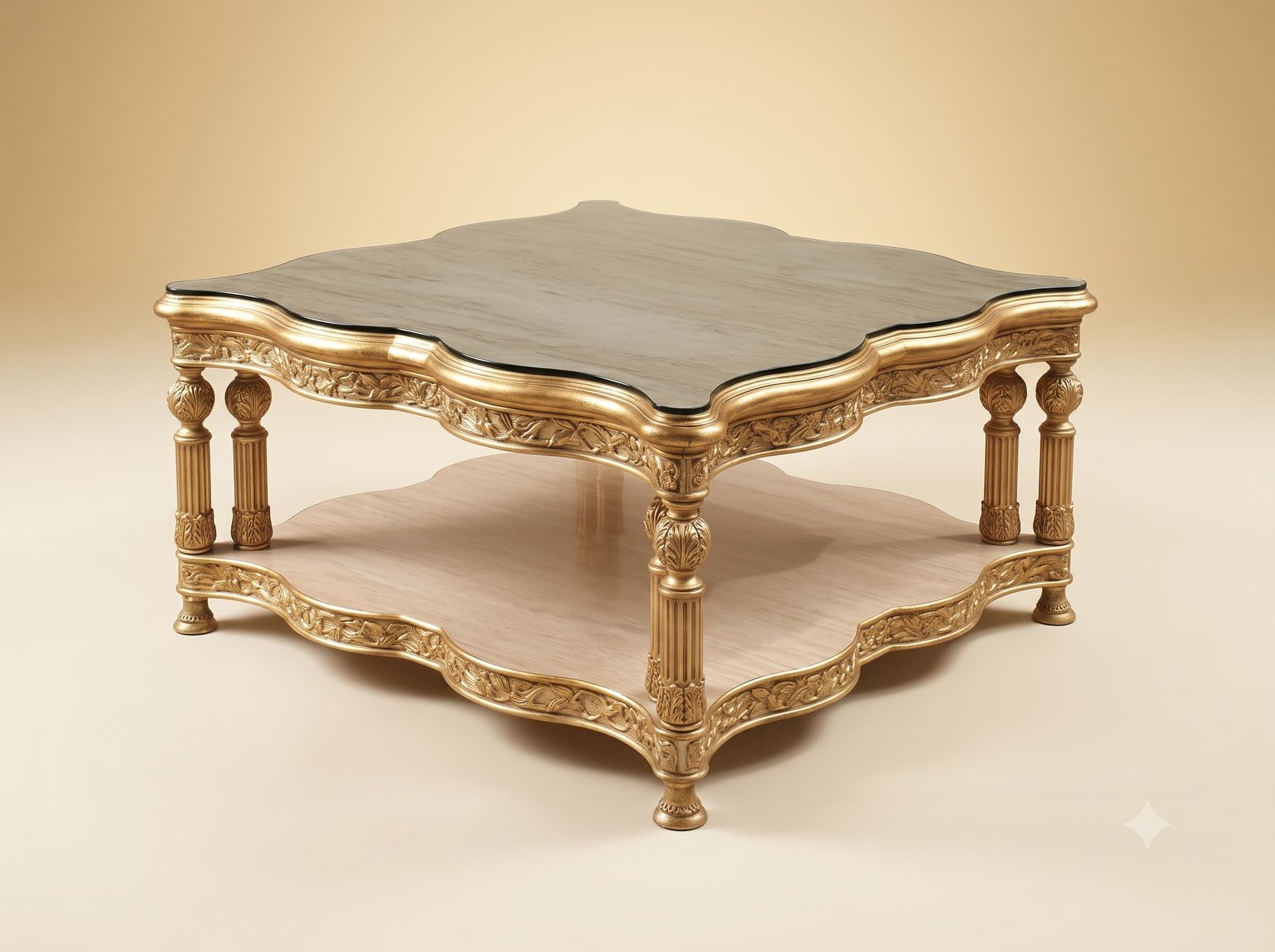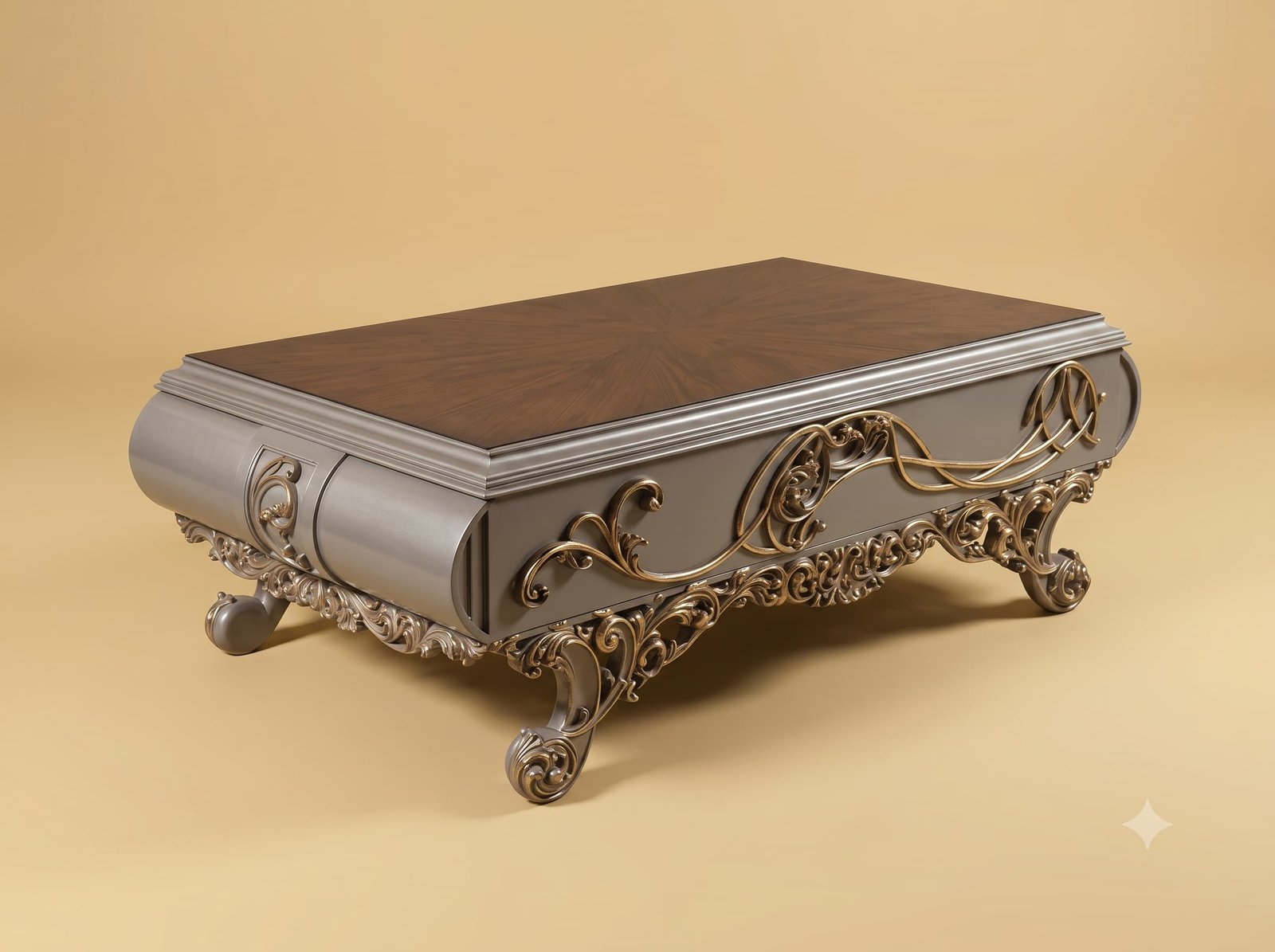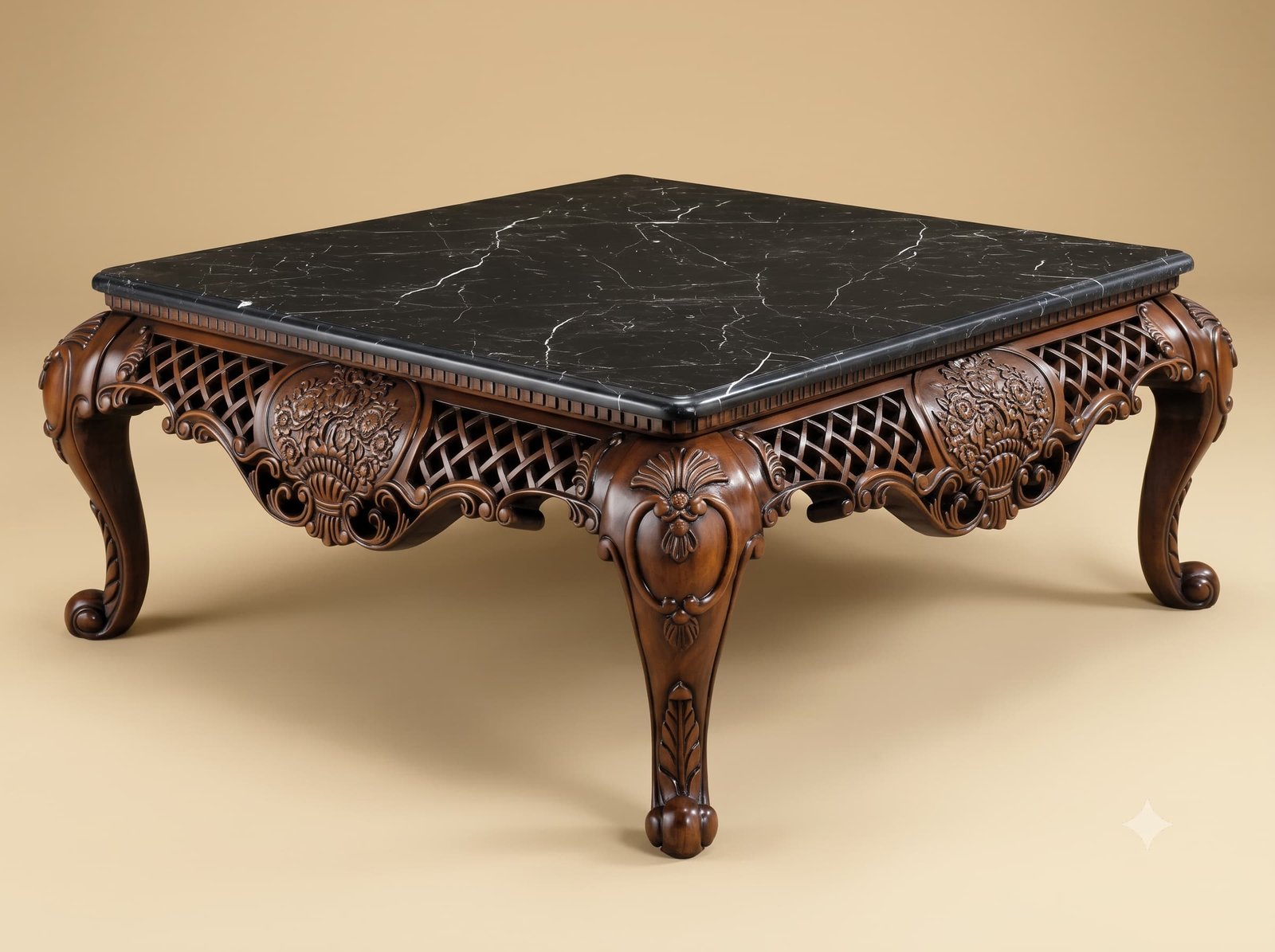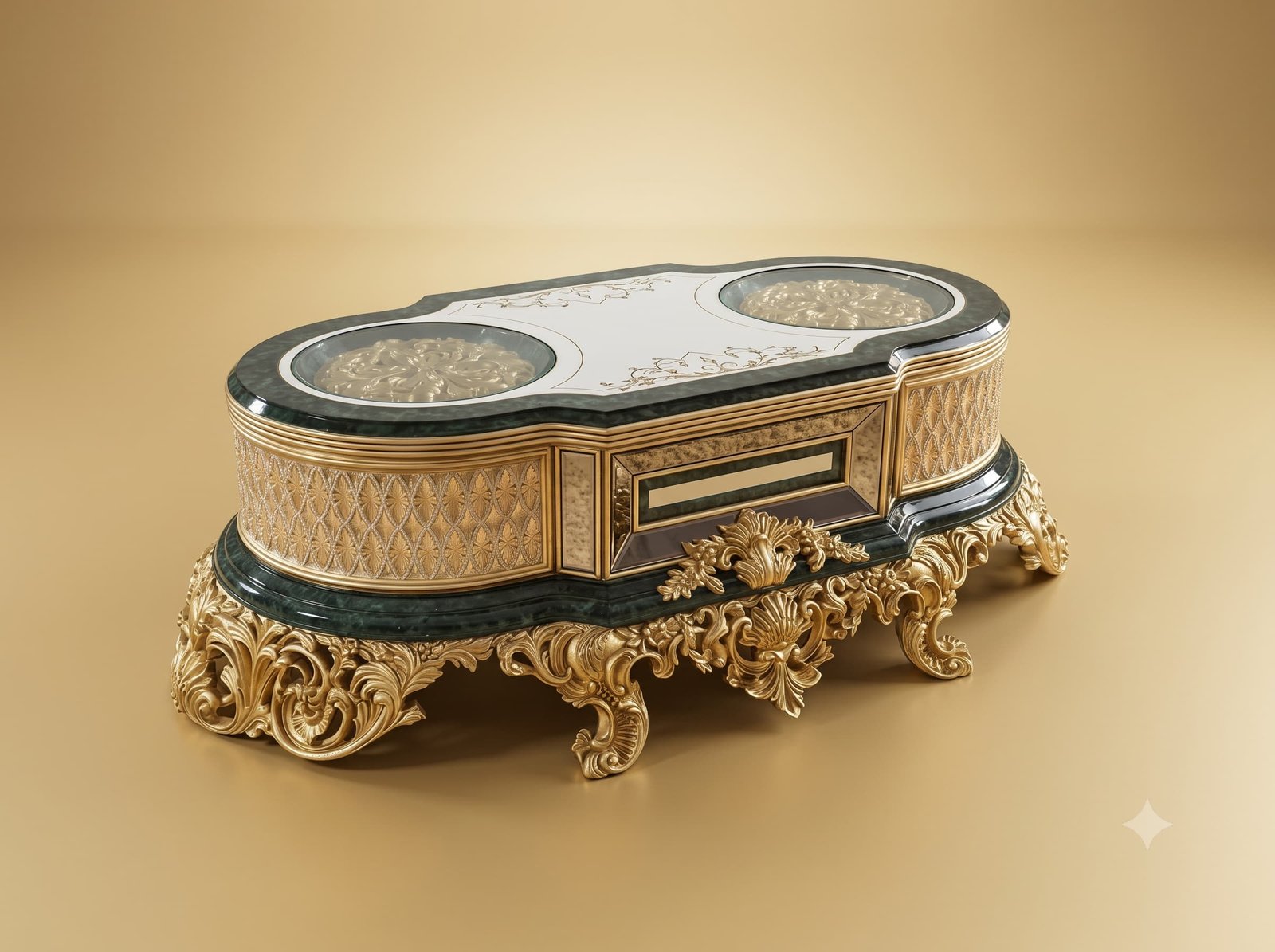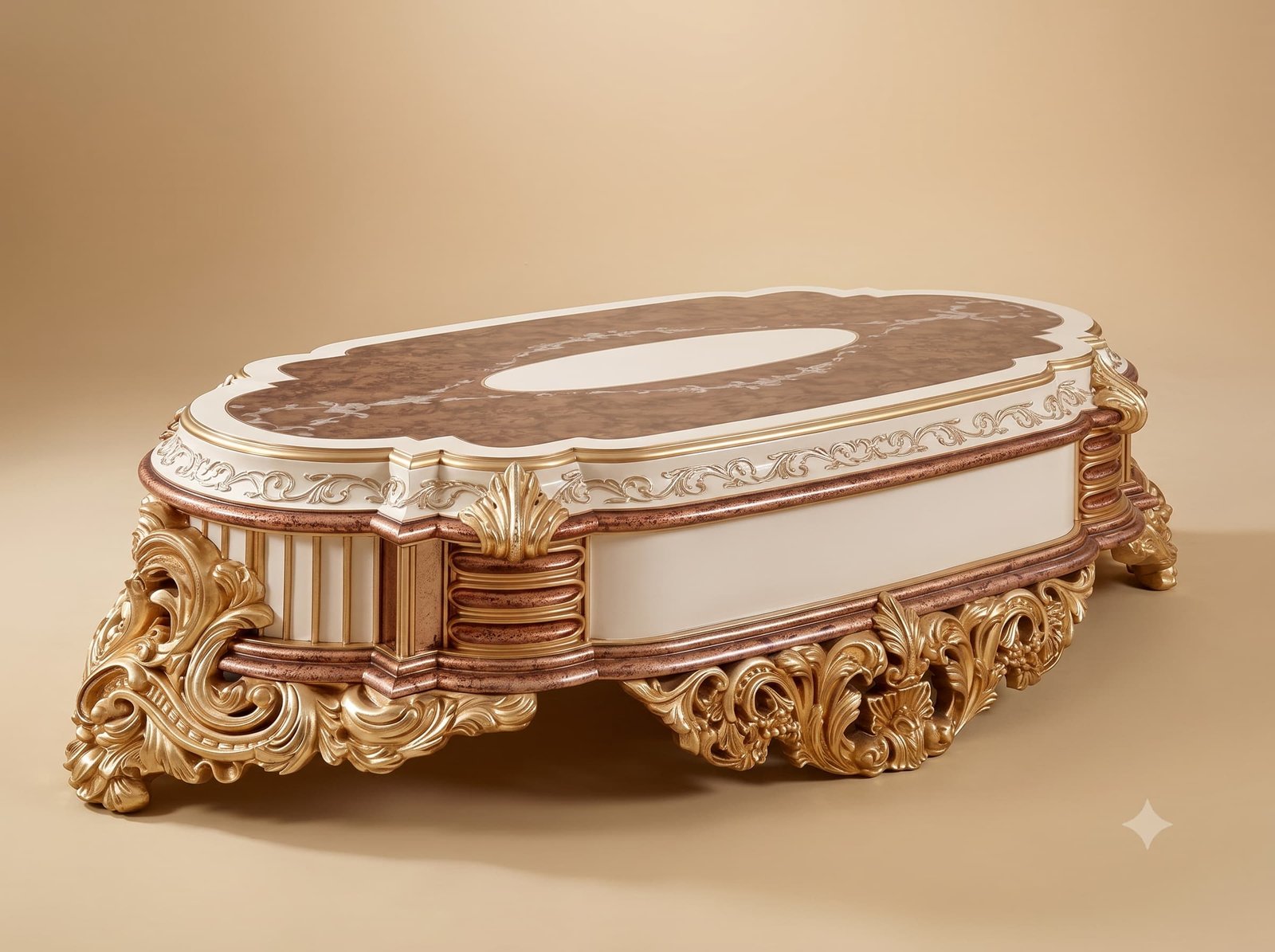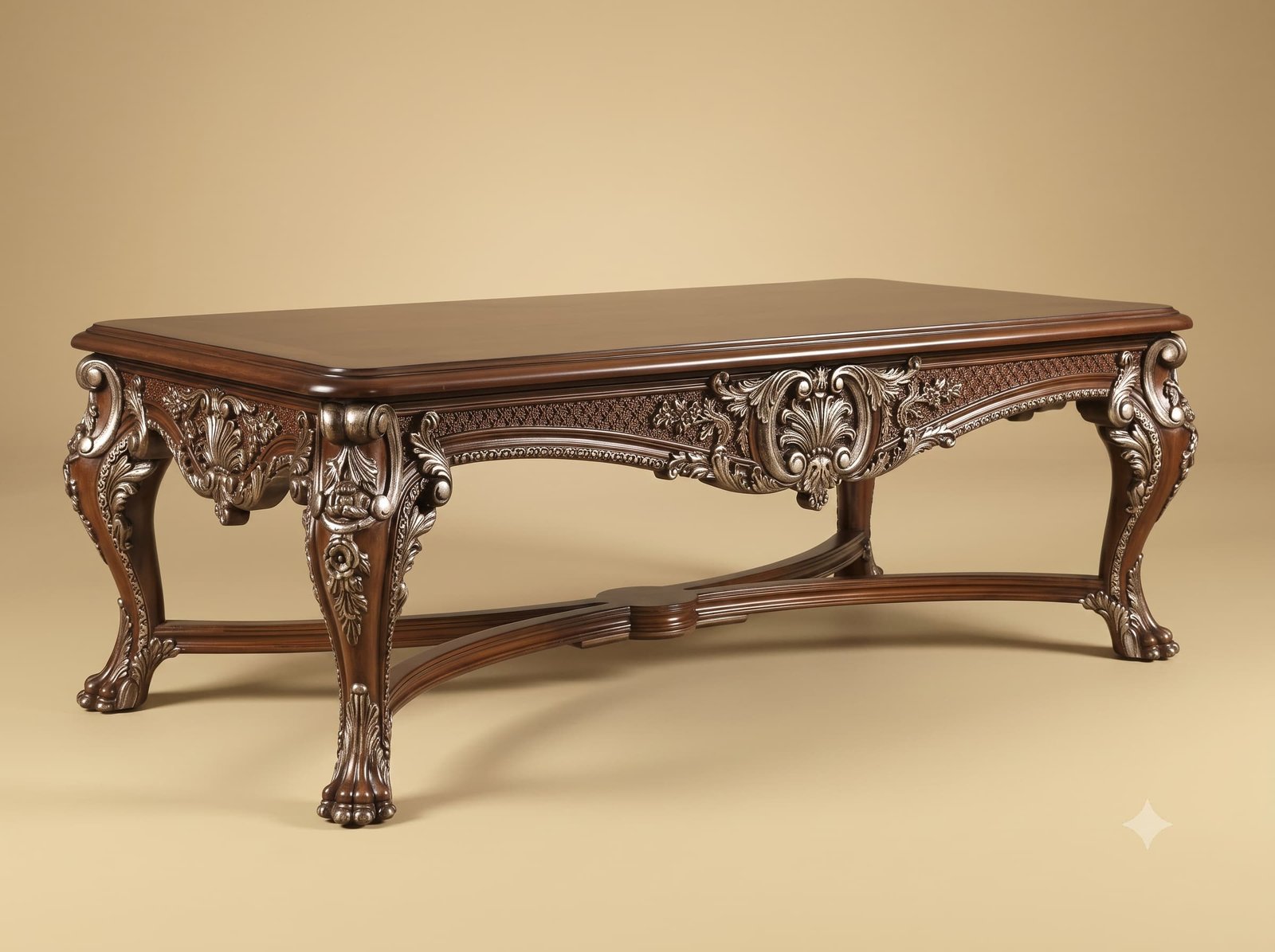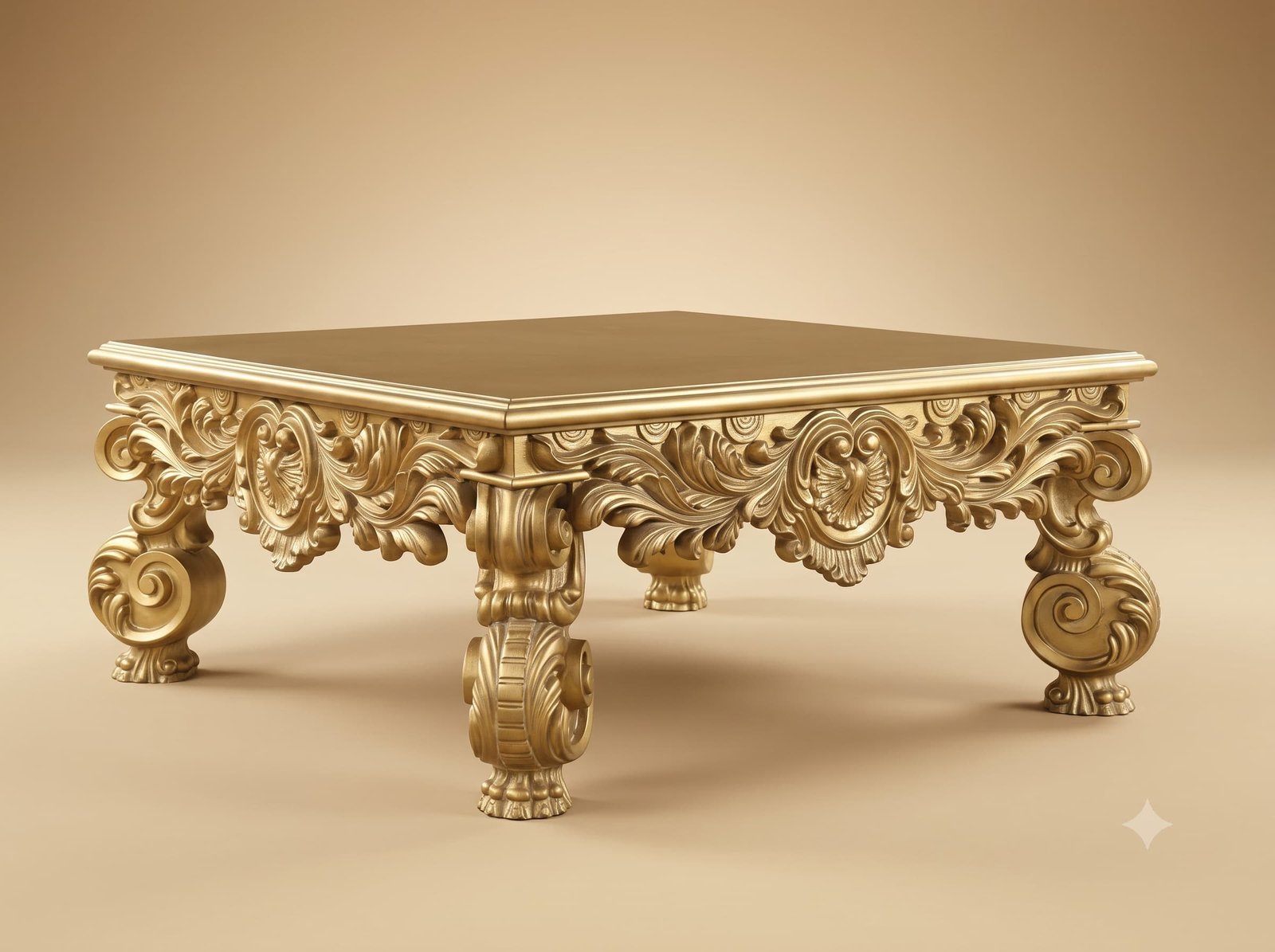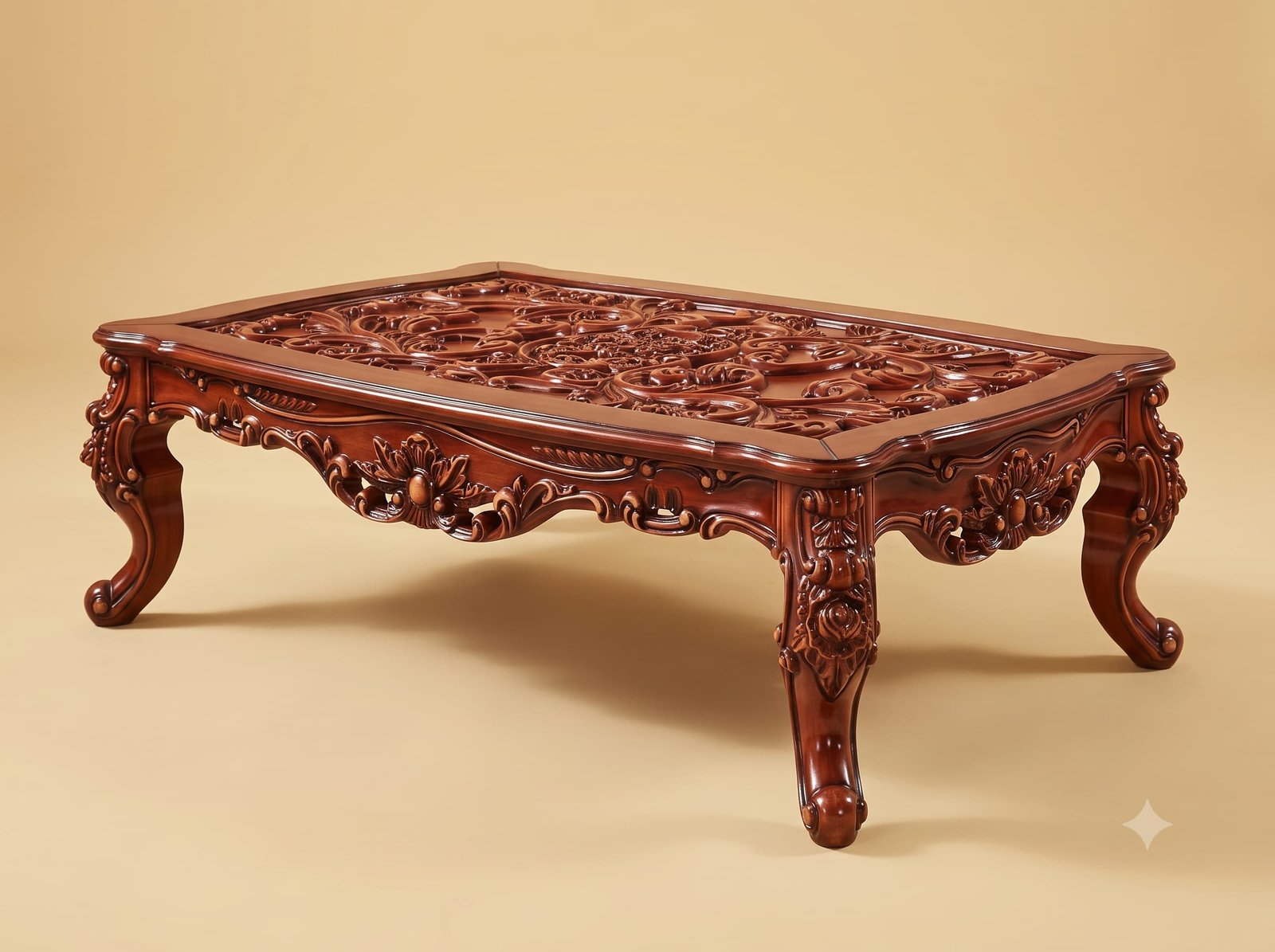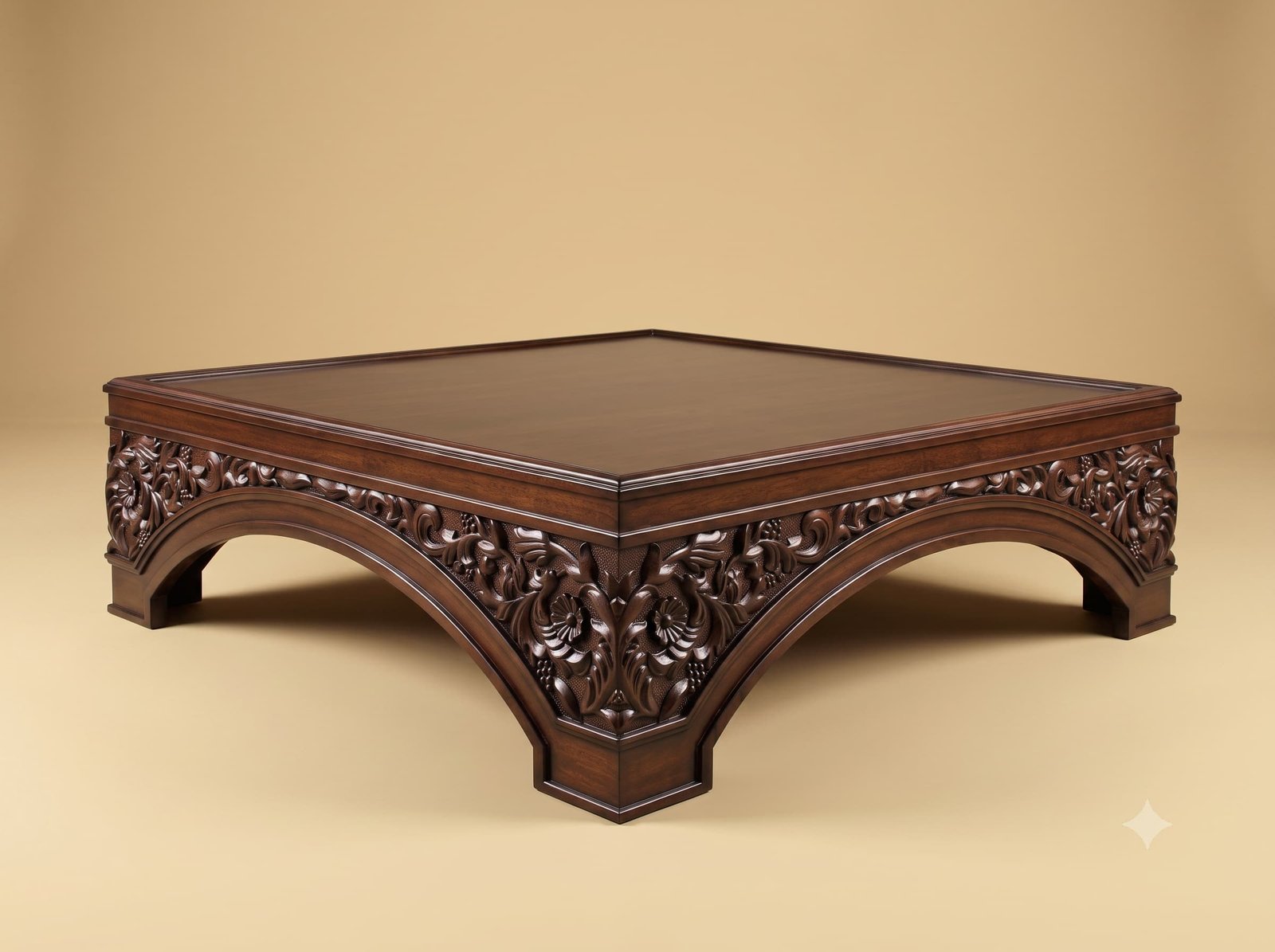
The arches on this table are not decoration applied to a frame. They are the frame - and they work the way an arch in a building works.
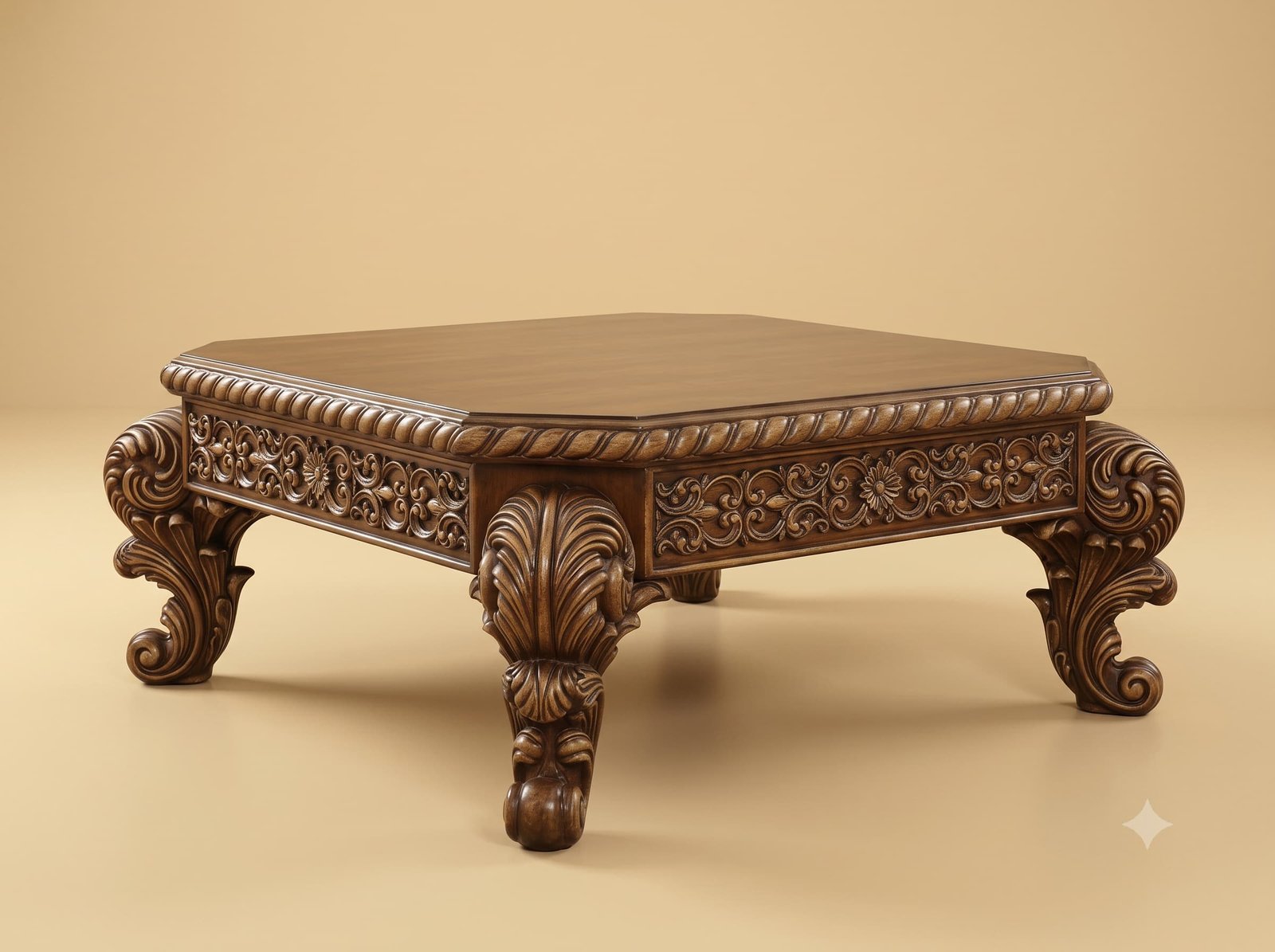
A conventional table carries its load down four legs, and its apron rails just tie those legs together. Here there are no legs. The load of the top travels along the curve of each arch, outward and downward, and lands on the solid corner blocks. Every part of that curve is in compression, which is the direction timber is strongest in, and nothing along it is being asked to bend.
That is why the sides can be pierced through under the arch and carved across the spandrels without weakening anything - the material removed is from the middle of the opening, where an arch carries no load anyway. The spandrels, which stay solid, are exactly where the forces run.
It also decides the shape of the feet. The arch pushes outward as well as down, so the corner blocks are made deep and squared rather than delicate, because their job is to resist that spread. A carved paw foot here would look better and last worse.
 Ask Price On WhatsApp